
 Download PDF
Market Overview
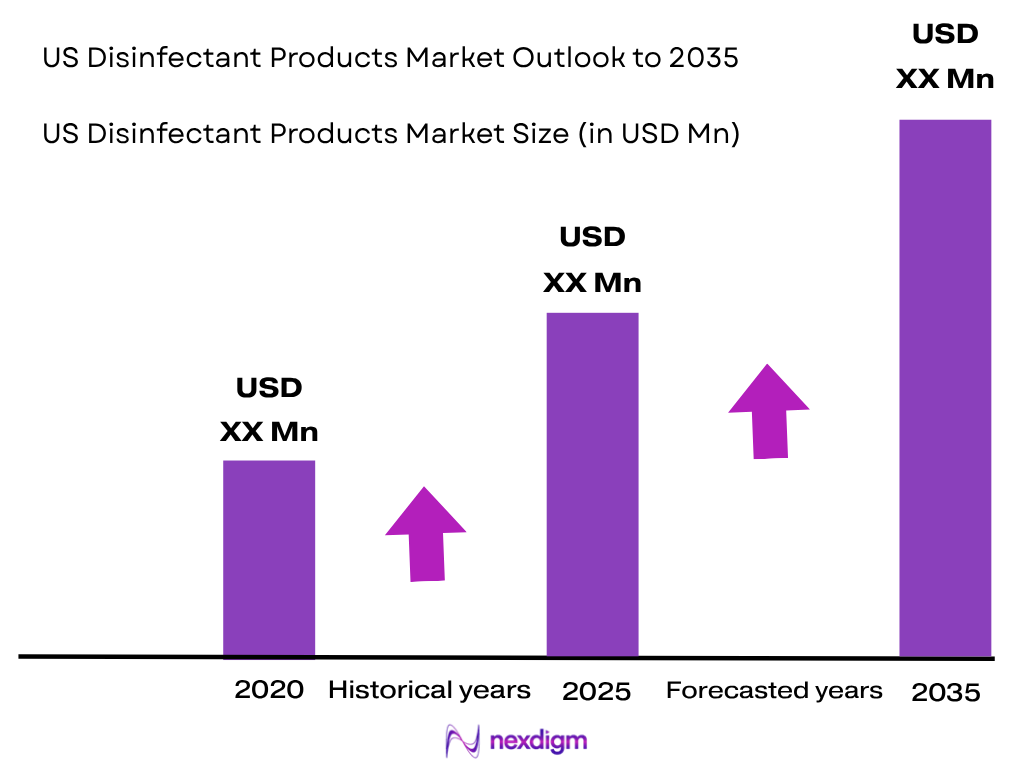
The US Disinfectant Products market is valued at approximately USD ~ billion in 2024, supported by demand from healthcare facilities, commercial establishments, households, food processing units, and industrial users. The market is driven by increasing infection prevention requirements, hygiene awareness, and regulatory compliance for sanitation practices. According to the Centers for Disease Control and Prevention (CDC), healthcare-associated infections continue to require strict environmental cleaning protocols across healthcare facilities. The US Census Bureau reported that the US population exceeded 340 million people in 2024, supporting continued household and institutional hygiene product consumption.
The US Disinfectant Products market is concentrated across major metropolitan and industrial regions including New York, California, Texas, Florida, Illinois, and Pennsylvania due to their large healthcare infrastructure, commercial activity, population density, and industrial presence. California and Texas represent significant demand centers due to extensive healthcare networks, manufacturing facilities, food processing operations, and commercial buildings. According to the American Hospital Association (AHA), the US healthcare system included more than 6,100 hospitals in 2024, creating sustained demand for hospital-grade disinfectants. Additionally, the National Restaurant Association reported continued expansion of foodservice establishments, supporting sanitation product requirements across restaurants and hospitality facilities.
Market Segmentation
By Product Type
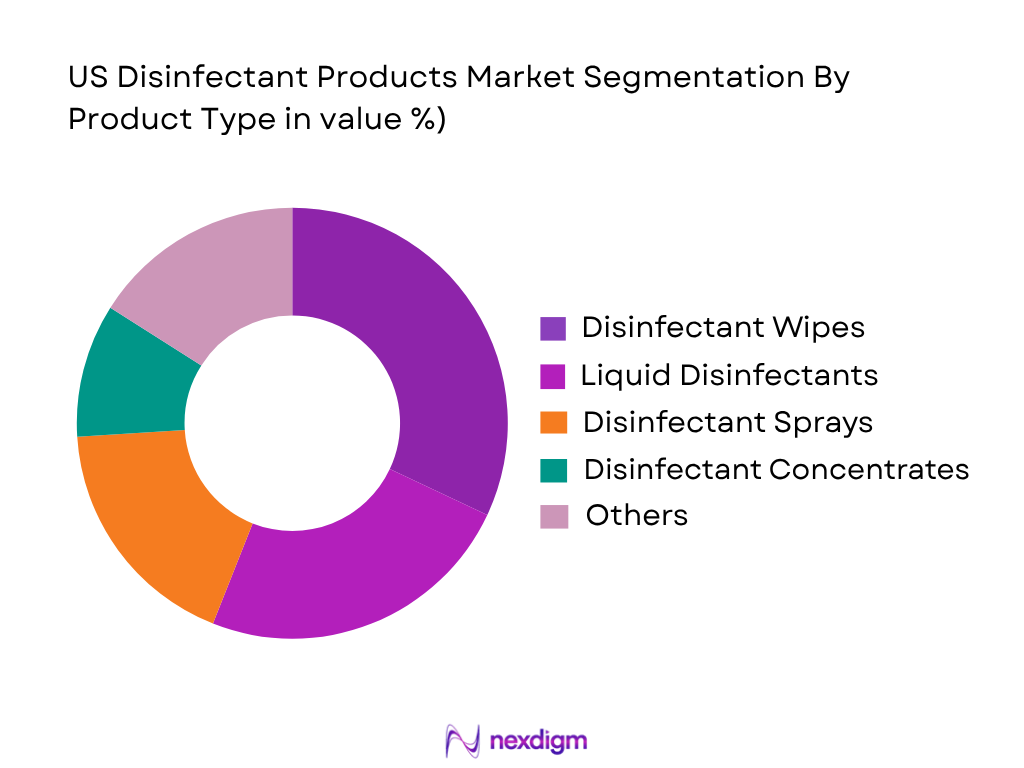
The US Disinfectant Products market is segmented by product type into liquid disinfectants, disinfectant sprays, disinfectant wipes, disinfectant concentrates, disinfectant foams, disinfectant powders, electrostatic disinfectant solutions, UV-C disinfection products, and antimicrobial coating products. Among these, disinfectant wipes hold a dominant market share due to their convenience, ready-to-use format, and widespread adoption across healthcare facilities, households, and commercial cleaning applications. Disinfectant wipes provide rapid surface cleaning, controlled application, and reduced preparation requirements compared with concentrated formulations. Hospitals, clinics, schools, offices, and foodservice facilities increasingly prefer wipes for routine surface sanitation because of their ease of use and portability. Leading hygiene manufacturers have expanded wipe product portfolios with formulations targeting bacteria, viruses, and healthcare pathogens. The increasing requirement for quick disinfection procedures across high-touch surfaces continues supporting the adoption of disinfectant wipes.
By Application
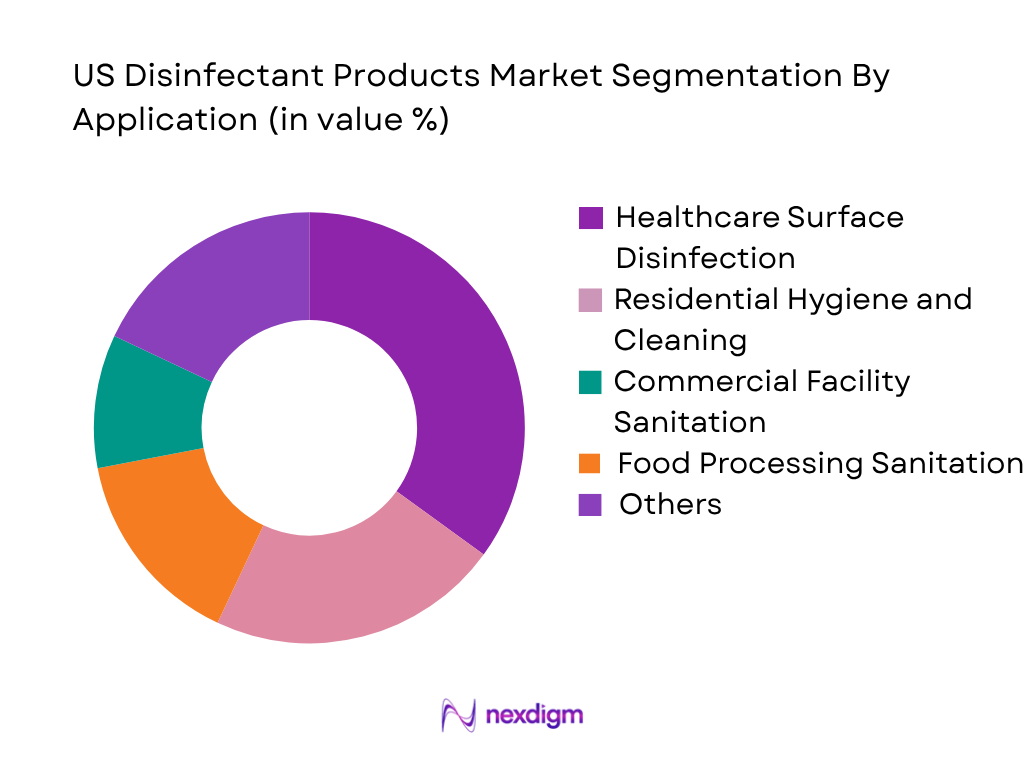
The US Disinfectant Products market is segmented by application into healthcare surface disinfection, residential hygiene and cleaning, commercial facility sanitation, food processing sanitation, pharmaceutical facility disinfection, industrial manufacturing disinfection, educational institution cleaning, hospitality sanitation, transportation disinfection, and water/environmental disinfection. The healthcare surface disinfection segment dominates due to strict infection prevention requirements and continuous demand from hospitals, clinics, and healthcare facilities. Healthcare providers require EPA-registered disinfectants with proven antimicrobial performance for patient rooms, operating areas, medical equipment surfaces, and high-contact areas. The growing focus on reducing healthcare-associated infections has increased demand for specialized disinfectant products. Hospitals and healthcare organizations maintain extensive sanitation protocols requiring frequent use of disinfectants, supporting consistent consumption. The expansion of outpatient facilities, diagnostic centers, and healthcare infrastructure further contributes to demand growth.
Competitive Landscape
The US Disinfectant Products market is characterized by strong competition among multinational hygiene companies, chemical manufacturers, healthcare sanitation providers, and consumer cleaning brands. Major companies including The Clorox Company, Reckitt, Ecolab, 3M, and Procter & Gamble compete through broad product portfolios, regulatory approvals, institutional contracts, and strong distribution networks. The market structure includes both professional-grade disinfectant suppliers serving healthcare and industrial customers and consumer brands targeting residential hygiene applications.
| Company | Establishment Year | Headquarters | Product Portfolio | Active Ingredient Expertise | Healthcare Presence | Consumer Brand Strength | Distribution Network | Regulatory Capability |
| The Clorox Company | 1913 | Oakland, USA | ~ | ~ | ~ | ~ | ~ | ~ |
| Reckitt Benckiser Group plc | 1823 | Slough, UK | ~ | ~ | ~ | ~ | ~ | ~ |
| Ecolab Inc. | 1923 | Saint Paul, USA | ~ | ~ | ~ | ~ | ~ | ~ |
| 3M Company | 1902 | Saint Paul, USA | ~ | ~ | ~ | ~ | ~ | ~ |
| Procter & Gamble Company | 1837 | Cincinnati, USA | ~ | ~ | ~ | ~ | ~ | ~ |
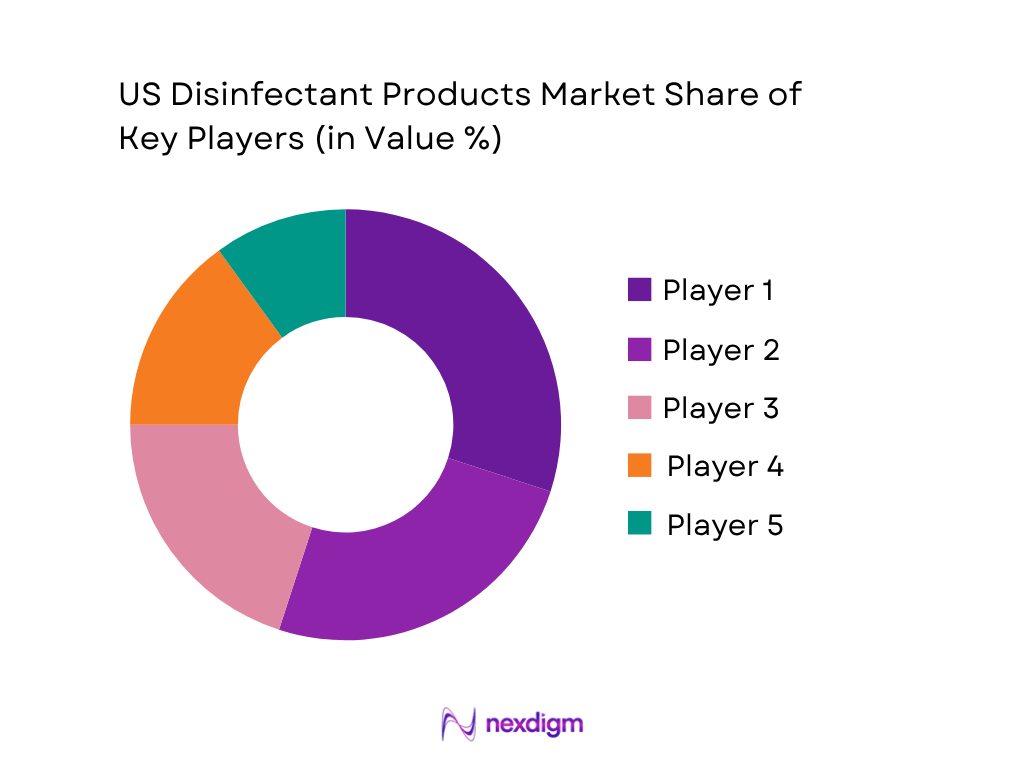
US Disinfectant Products Market Analysis
Growth Drivers
Increasing Healthcare Infection Prevention Requirements
The expansion of healthcare infrastructure and continuous focus on infection prevention protocols remain major demand drivers for disinfectant products across hospitals, ambulatory care centers, long-term care facilities, and specialized healthcare environments in the United States. Healthcare facilities require continuous usage of EPA-registered disinfectants for environmental cleaning, high-touch surface sanitation, medical equipment disinfection, and pathogen control programs. The CDC’s 2024 National and State Healthcare-Associated Infections Progress Report tracks healthcare-associated infections across acute care hospitals, critical access hospitals, inpatient rehabilitation facilities, and long-term acute care hospitals, with data contributed through the National Healthcare Safety Network (NHSN), which receives information from more than 38,000 active healthcare facilities and organizations. This extensive surveillance framework supports continued adoption of infection prevention products, including surface disinfectants, sporicidal formulations, and hospital-grade antimicrobial solutions. CDC guidance emphasizes that healthcare facilities must implement structured environmental cleaning programs covering cleaning supplies, disinfectant products, equipment management, staffing procedures, and monitoring systems. The growing complexity of healthcare environments, including intensive care units, surgical areas, outpatient facilities, and specialized treatment centers, increases the requirement for validated disinfectant technologies with broader pathogen coverage and shorter contact times. The U.S. healthcare system continues to represent a critical application area because infection control practices directly influence patient safety, operational compliance, and facility accreditation requirements.
Rising Demand for Commercial and Institutional Hygiene Solutions
Increasing activity across commercial buildings, foodservice facilities, educational institutions, hospitality properties, and public infrastructure is strengthening demand for professional disinfectant solutions designed for frequent cleaning cycles and regulatory compliance. The U.S. economy maintained broad service-sector activity, with the World Bank reporting that the United States recorded a population exceeding 340 million and GDP per capita above $80,000 during the current economic period, reflecting a large consumption base and extensive commercial infrastructure requiring routine hygiene management. Commercial facilities increasingly require disinfectant wipes, ready-to-use sprays, concentrated formulations, and automated dispensing-compatible products to support workplace sanitation standards. Food processing and foodservice operations represent important demand areas because sanitation programs require controlled cleaning and disinfection procedures to reduce contamination risks. The U.S. Department of Agriculture and Food and Drug Administration continue enforcing food safety frameworks that require regulated sanitation practices across food production environments. In addition, the CDC recommends structured environmental cleaning programs that include appropriate selection and use of cleaning and disinfectant supplies in institutional environments. Growth in office occupancy, public facility utilization, transportation activity, and hospitality operations contributes to higher consumption of surface disinfectants and specialized hygiene products. These macroeconomic and regulatory conditions create sustained demand for professional-grade disinfectant products beyond healthcare applications.
Market Challenges
Regulatory Compliance Complexity and Chemical Safety Requirements
The US disinfectant products market faces challenges due to stringent regulatory requirements associated with antimicrobial claims, active ingredient approvals, labeling compliance, environmental impact evaluation, and worker safety standards. Disinfectant manufacturers must comply with the U.S. Environmental Protection Agency’s Federal Insecticide, Fungicide, and Rodenticide Act framework for registering antimicrobial products and maintaining approved product claims. Increasing scrutiny around chemical exposure, volatile organic compounds, environmental persistence, and occupational safety creates additional formulation and compliance requirements for manufacturers. The EPA has increased regulatory attention toward chemicals used in sterilization and antimicrobial applications, including updated controls for ethylene oxide emissions from sterilization facilities, where regulations introduced measures targeting emission reductions of approximately 90% across nearly 90 commercial sterilization facilities. Similar regulatory focus on chemical safety influences future formulation strategies for disinfectant manufacturers, encouraging development of lower-toxicity, sustainable, and environmentally preferable solutions. Companies must balance pathogen efficacy, regulatory approval timelines, user safety, and sustainability requirements while maintaining product performance. The complexity of registering new active ingredients, modifying existing formulations, and supporting antimicrobial efficacy claims can increase operational requirements for manufacturers. These compliance pressures particularly affect companies developing advanced disinfectants based on hydrogen peroxide, peracetic acid, quaternary ammonium compounds, and other specialty antimicrobial technologies.
Raw Material Availability and Formulation Supply Chain Constraints
The disinfectant products market experiences challenges related to availability, sourcing stability, and cost fluctuations of critical raw materials including alcohols, quaternary ammonium compounds, hydrogen peroxide, surfactants, preservatives, fragrances, and packaging materials. The chemical manufacturing ecosystem depends on multiple upstream industries, including petrochemical processing, specialty chemical production, and industrial packaging supply chains. The World Bank and International Monetary Fund have highlighted continued volatility in global commodity and manufacturing supply conditions, influencing availability and logistics for chemical-based industries. Disinfectant manufacturers require consistent-quality active ingredients to meet EPA registration specifications and maintain product performance across healthcare, institutional, and consumer applications. Supply chain disruptions can affect production scheduling, inventory management, and product availability, particularly for specialized formulations requiring controlled chemical inputs. In addition, increasing demand for sustainable and environmentally preferable disinfectants creates additional complexity because manufacturers must identify alternative ingredients while maintaining antimicrobial efficacy. Packaging supply constraints also influence the market because disinfectants require chemically compatible containers, spray mechanisms, wipes substrates, and dispensing systems. These challenges require manufacturers to strengthen supplier networks, diversify sourcing strategies, and improve formulation flexibility to maintain reliable product supply across multiple end-use sectors.
Market Opportunities
Expansion of Sustainable and Environmentally Preferable Disinfectant Formulations
Growing regulatory emphasis on environmental protection and increasing preference for safer chemical solutions are creating opportunities for sustainable disinfectant technologies, including bio-based formulations, reduced-toxicity products, and environmentally preferable cleaning systems. Federal environmental policies continue encouraging reduced chemical exposure and improved sustainability practices across industrial and institutional operations. The EPA’s Safer Choice program and related environmental initiatives support adoption of products designed with improved human and environmental safety characteristics. The increasing focus on sustainable chemistry is encouraging manufacturers to develop disinfectants using alternative active ingredients, biodegradable components, recyclable packaging, and optimized formulations with lower environmental impact. Commercial facilities, healthcare organizations, and institutional buyers are increasingly integrating sustainability criteria into procurement decisions alongside antimicrobial performance requirements. The opportunity is supported by the broader U.S. transition toward sustainable manufacturing practices, with the International Energy Agency reporting continued expansion of clean technology investments and environmental efficiency initiatives across industrial sectors. Sustainable disinfectants can address emerging requirements from healthcare facilities, corporate buildings, educational institutions, and public organizations seeking effective hygiene solutions aligned with environmental objectives. This trend creates opportunities for innovation in hydrogen peroxide-based disinfectants, plant-derived antimicrobial solutions, concentrated formulations, and resource-efficient dispensing systems.
Growth of Advanced Infection Control Technologies and Specialized Disinfection Applications
Increasing complexity of pathogen control requirements is creating opportunities for advanced disinfectant technologies designed for healthcare, pharmaceutical, biotechnology, and specialized industrial environments. The CDC continues emphasizing risk-based environmental cleaning approaches where disinfectant selection, cleaning frequency, and application methods depend on contamination probability, patient vulnerability, and exposure risk. Healthcare facilities are increasingly adopting specialized solutions such as sporicidal disinfectants, equipment disinfectants, automated dispensing systems, and validated surface protection technologies. The U.S. healthcare sector includes thousands of hospitals and healthcare facilities requiring continuous environmental hygiene programs, with CDC’s NHSN network incorporating data from more than 38,000 participating facilities for infection prevention monitoring. Pharmaceutical and biotechnology manufacturing facilities also require highly controlled sanitation environments due to strict contamination prevention requirements. Expansion of advanced manufacturing, life sciences infrastructure, and specialized healthcare services creates additional demand for high-performance disinfectant solutions. Companies developing faster-acting formulations, broader-spectrum antimicrobial products, and application-specific disinfectants can address evolving requirements across healthcare, laboratory, industrial, and institutional markets.
Future Outlook
Over the next decade, the US Disinfectant Products market is expected to demonstrate steady growth driven by increasing healthcare hygiene requirements, rising demand for sustainable cleaning solutions, expansion of commercial sanitation services, and technological advancement in disinfection systems. The adoption of eco-friendly formulations, antimicrobial coatings, automated disinfection technologies, and professional-grade hygiene products is expected to create new opportunities across healthcare, residential, and industrial applications.
Major Players
- Reckitt Benckiser Group plc
- The Clorox Company
- Ecolab Inc.
- 3M Company
- Procter & Gamble Company
- SC Johnson & Son Inc.
- Diversey Holdings Ltd.
- Kimberly-Clark Corporation
- GOJO Industries Inc.
- STERIS Corporation
- PDI Healthcare Inc.
- Metrex Research LLC
- Medline Industries LP
- Henkel Corporation
- Kao Corporation
Key Target Audience
- Healthcare Facility Operators and Hospital Management Organizations
- Disinfectant Product Manufacturers and Hygiene Solution Providers
- Pharmaceutical and Biotechnology Manufacturing Companies
- Food Processing and Beverage Companies
- Commercial Cleaning Service Providers
- Industrial Manufacturing Companies
- Investments and Venture Capitalist Firms (Healthcare Technology Funds, Consumer Healthcare Investment Funds, Sustainable Chemistry Investment Funds)
- Government and Regulatory Bodies (Environmental Protection Agency (EPA), Centers for Disease Control and Prevention (CDC), Food and Drug Administration (FDA), Occupational Safety and Health Administration (OSHA))
Research Methodology
Step 1: Identification of Key Variables
The initial phase involves developing an ecosystem map covering all major stakeholders within the US Disinfectant Products market. This includes disinfectant manufacturers, active ingredient suppliers, healthcare institutions, regulatory bodies, commercial users, and distribution channels. Extensive secondary research is conducted to identify important market variables including product categories, application demand, regulatory requirements, and consumption patterns.
Step 2: Market Analysis and Construction
This phase involves compiling and analyzing historical data related to disinfectant product demand, production capabilities, application penetration, and distribution networks. The analysis evaluates healthcare usage, residential consumption, industrial sanitation requirements, and institutional procurement patterns. Market structure assessment is performed through supply-side and demand-side evaluation.
Step 3: Hypothesis Validation and Expert Consultation
Market hypotheses are developed and validated through discussions with industry professionals representing disinfectant manufacturers, healthcare organizations, sanitation providers, and distributors. These consultations provide operational insights regarding product performance, regulatory compliance, customer requirements, competitive developments, and adoption trends.
Step 4: Research Synthesis and Final Output
The final phase combines primary and secondary research findings to create a comprehensive market assessment. Direct industry interactions validate product segmentation, competitive positioning, application trends, and future opportunities. The final analysis provides strategic insights into market dynamics and growth factors.

- Executive Summary
- Research Methodology (Market Definition and Scope, US Disinfectant Products Market Classification, Disinfectant Product Category Mapping, Chemical Composition Assessment, Active Ingredient Analysis, Quaternary Ammonium Compound Evaluation, Alcohol-Based Disinfectant Assessment, Chlorine-Based Disinfectant Assessment, Hydrogen Peroxide-Based Disinfectant Evaluation, Peracetic Acid-Based Disinfectant Assessment, Phenolic Disinfectant Assessment, Formulation Technology Assessment, Ready-to-Use and Concentrated Formulation Mapping, Surface Disinfectant and Air Disinfectant Evaluation, Antimicrobial Claim Assessment, EPA Registration Assessment, EPA List N Product Mapping)

- Definition and Scope
- US Disinfectant Products Industry Evolution and Development of Infection Prevention Practices, Healthcare Hygiene Standards, Surface Disinfection Technologies, Antimicrobial Product Innovation, Institutional Cleaning Practices, Consumer Hygiene Awareness, Sustainable Disinfectant Solutions and Advanced Disinfection Technologies
- Disinfectant Products Value Chain Analysis
- Disinfectant Products Supply Chain Analysis
- Chemical Raw Material Suppliers, Active Ingredient Manufacturers, Formulation Developers, Disinfectant Product Manufacturers, Contract Manufacturers, Packaging Suppliers, Healthcare Cleaning Suppliers, Institutional Hygiene Suppliers, Retail Distributors, E-Commerce Platforms, Professional Cleaning Service Providers, Hospitals, Long-Term Care Facilities, Commercial Establishments and Residential Consumers

- Growth Drivers (Increasing Healthcare Infection Prevention Requirements, Rising Awareness of Hygiene and Sanitation, Growth of Healthcare Infrastructure, Expansion of Institutional Cleaning Demand, Increasing Use of Professional Disinfection Services, Food Safety Compliance Requirements, Growth of E-Commerce Distribution Channels, Demand for Multi-Surface Disinfectants, Increasing Public Health Preparedness Investments, Adoption of Advanced Antimicrobial Technologies)
- Market Challenges (Chemical Safety Concerns, Regulatory Compliance Complexity, Raw Material Price Volatility, Environmental Impact of Certain Active Ingredients, Product Differentiation Challenges, Supply Chain Disruptions, Increasing Demand for Sustainable Formulations, Competition from Private Label Products, Consumer Price Sensitivity, Disposal Challenges of Disinfectant Packaging Waste)
- Market Opportunities (Green and Sustainable Disinfectant Formulations, Bio-Based Disinfectant Development, Healthcare-Grade Disinfection Expansion, Antimicrobial Technology Innovation, Smart Dispensing Systems, Institutional Hygiene Growth, Infection Control Solutions for Aging Infrastructure, Advanced Surface Protection Technologies, Emerging Pathogen Preparedness Solutions, Expansion of Professional Cleaning Services)
- Market Trends (Shift Toward Eco-Friendly Disinfectants, Increased Demand for Ready-to-Use Formats, Growth of Disinfectant Wipes, Premiumization of Professional Cleaning Products, Rising Adoption of Hydrogen Peroxide Formulations, Increased Healthcare Hygiene Spending, Digital Procurement Expansion, Antimicrobial Surface Technologies, Low-Toxicity Formulation Development, Sustainable Packaging Adoption)
- Government Regulations and Standards (EPA Federal Insecticide, Fungicide, and Rodenticide Act Requirements, EPA Registered Disinfectant Standards, EPA List N Coronavirus Disinfectant Requirements, FDA Healthcare Product Regulations, OSHA Workplace Hygiene Requirements, CDC Infection Prevention Guidelines, USDA Food Safety Sanitation Requirements, State-Level Chemical Regulations, GHS Chemical Classification Standards, Environmental Sustainability Regulations)
- SWOT Analysis
- Porter’s Five Forces Analysis
- PESTLE Analysis
- Stakeholder Ecosystem
- Competition Ecosystem

- By Market Value (2020-2025)
- By Market Volume Consumption (2020-2025)
- By Average Selling Price (2020-2025)
- By Active Ingredient Consumption Volume (2020-2025)
- By Ready-to-Use Disinfectant Consumption Volume (2020-2025)
- By Concentrated Disinfectant Consumption Volume (2020-2025)
- By Professional-Grade Disinfectant Consumption Volume (2020-2025)

- By Product Type (In Value %)
Surface Disinfectants
Disinfectant Sprays and Aerosols
Disinfectant Wipes
Liquid Disinfectants
Concentrated Disinfectants
Ready-to-Use Disinfectants
Fogging and Misting Disinfectants
Air Disinfectants and Sanitizers
Instrument and Equipment Disinfectants
Hand and Skin Disinfectants - By Active Ingredient Type (In Value %)
Quaternary Ammonium Compounds (QACs)
Alcohol-Based Disinfectants
Chlorine-Based Disinfectants
Hydrogen Peroxide-Based Disinfectants
Peracetic Acid-Based Disinfectants
Phenolic Disinfectants
Iodophor-Based Disinfectants
Organic Acid-Based Disinfectants
Other Specialty Antimicrobial Formulations - By Application Area (In Value %)
Healthcare Facilities
Residential Cleaning
Commercial and Office Spaces
Food Processing and Foodservice
Pharmaceutical and Biotechnology Facilities
Industrial Manufacturing
Educational Institutions
Hospitality and Tourism Facilities
Transportation and Public Infrastructure
Water Treatment Facilities - By Distribution Channel (In Value %)
Supermarkets and Hypermarkets
Pharmacies and Drug Stores
Home Improvement Retailers
Specialty Cleaning Product Distributors
Professional Janitorial Supply Distributors
Healthcare Supply Distributors
Online Retail and E-Commerce Platforms
Direct Sales and Institutional Procurement - By End-Use Industry (In Value %)
Hospitals and Healthcare Facilities
Residential Households
Commercial Buildings
Food and Beverage Processing
Pharmaceutical Manufacturing
Industrial Manufacturing
Education Sector
Hospitality Industry
Government and Public Facilities
Transportation Industry - By Region (In Value %)
Northeast USA
Midwest USA
South USA
West USA

- Market Share of Major Players (By US Revenue, Product Portfolio Breadth, Disinfectant Category Coverage, Active Ingredient Portfolio, EPA Registered Product Count, Healthcare Application Coverage, Institutional Customer Base, Retail Presence, Distribution Network Coverage, Manufacturing Capacity, Sustainability Portfolio, Innovation Pipeline, Regional Presence)
- Cross Comparison Parameters (Disinfectant Product Portfolio Breadth, EPA Registered Disinfectant Product Count, Active Ingredient Technology Coverage, Healthcare-Grade Disinfectant Capability, Ready-to-Use Product Portfolio, Disinfectant Wipes Manufacturing Capability, Institutional Distribution Network Reach, Sustainable Disinfectant Formulation Capability)
- SWOT Analysis of Major Players
- Competitive Positioning Matrix
- Disinfectant Product Portfolio and Application Benchmarking
- EPA Registration and Antimicrobial Claim Assessment
- Industrial and Institutional Disinfection Solution Assessment
- Consumer Disinfectant Product Innovation Assessment
- Detailed Profiles of Major Companies
The Clorox Company
Reckitt Benckiser Group plc
Ecolab Inc.
Procter & Gamble Company
Diversey Holdings Ltd.
STERIS plc
PDI Healthcare
GOJO Industries Inc.
3M Company
Henkel AG & Co. KGaA
Kimberly-Clark Corporation
Unilever PLC
SC Johnson & Son Inc.
Ecolab Healthcare
Diversey Inc.

- Healthcare Facility Disinfectant Procurement Assessment
- Hospital Infection Prevention Requirement Analysis
- Long-Term Care Facility Disinfection Demand Assessment
- Commercial Building Cleaning Requirement Assessment
- Food Processing Sanitation Requirement Analysis
- Pharmaceutical Facility Disinfectant Qualification Assessment
- Industrial Hygiene Product Requirement Assessment
- Residential Consumer Disinfectant Usage Analysis
- Professional Cleaning Service Procurement Assessment
- Institutional Contract Purchasing Assessment
- Janitorial Supply Distributor Demand Analysis
- Disinfectant Product Brand Preference Assessment

- By Market Value (2026-2035)
- By Market Volume Consumption (2026-2035)
- By Average Selling Price (2026-2035)
- By Active Ingredient Consumption Volume (2026-2035)
- By Ready-to-Use Disinfectant Consumption Volume (2026-2035)
- By Concentrated Disinfectant Consumption Volume (2026-2035)
- By Professional-Grade Disinfectant Consumption Volume (2026-2035)


 Request a Sample
 Ask for Customization
 Get a Quote
 Enquire Now