
 Download PDF
Market Overview
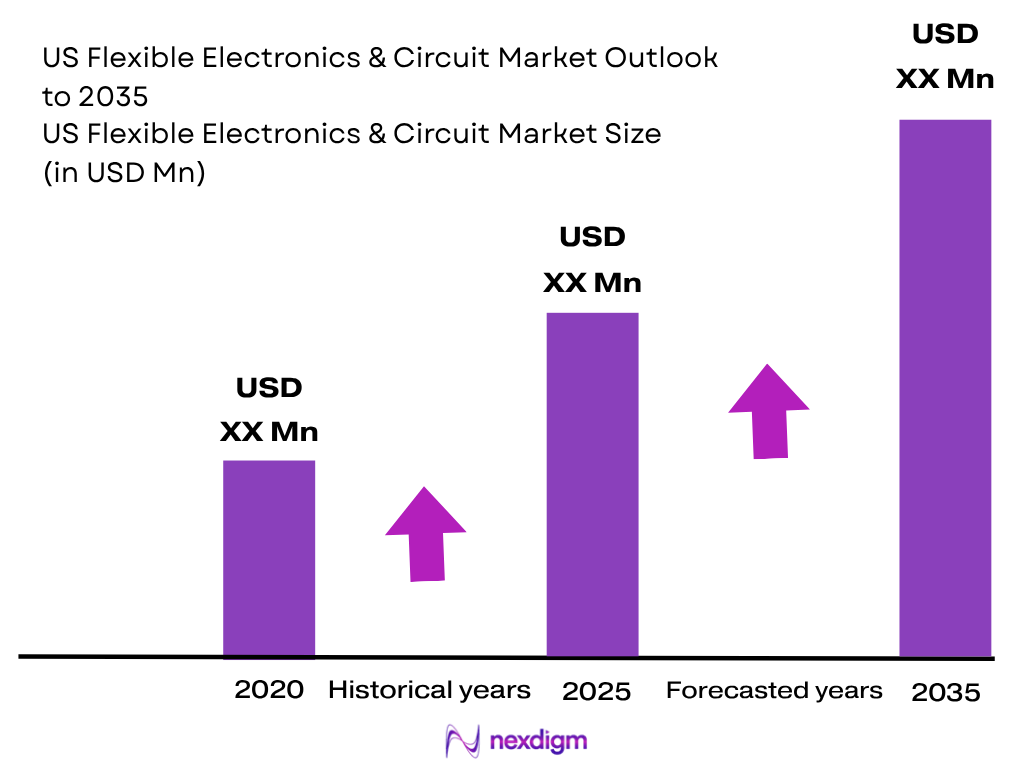
The US Flexible Electronics & Circuit Market is valued at USD ~ bn based on the analysis of flexible printed circuits, flexible displays, wearable electronics, sensor technologies, and advanced electronic components. The market is driven by increasing adoption of lightweight electronic systems, miniaturized components, automotive electronics integration, healthcare monitoring devices, and next-generation consumer electronics. The expansion of semiconductor manufacturing initiatives, investment in advanced manufacturing technologies, and demand for compact electronic architectures are supporting the adoption of flexible circuit solutions across multiple industries.
The US Flexible Electronics & Circuit Market is primarily concentrated in regions with strong semiconductor, electronics manufacturing, aerospace, healthcare technology, and automotive ecosystems. California, Texas, Massachusetts, Michigan, and Washington represent key technology hubs due to their established electronics research infrastructure, semiconductor manufacturing presence, automotive innovation centers, and high concentration of technology companies. These regions benefit from advanced research capabilities, government-supported manufacturing initiatives, and increasing collaboration between electronics manufacturers, material suppliers, and end-use industries developing flexible electronic applications.
Market Segmentation
By Application Type
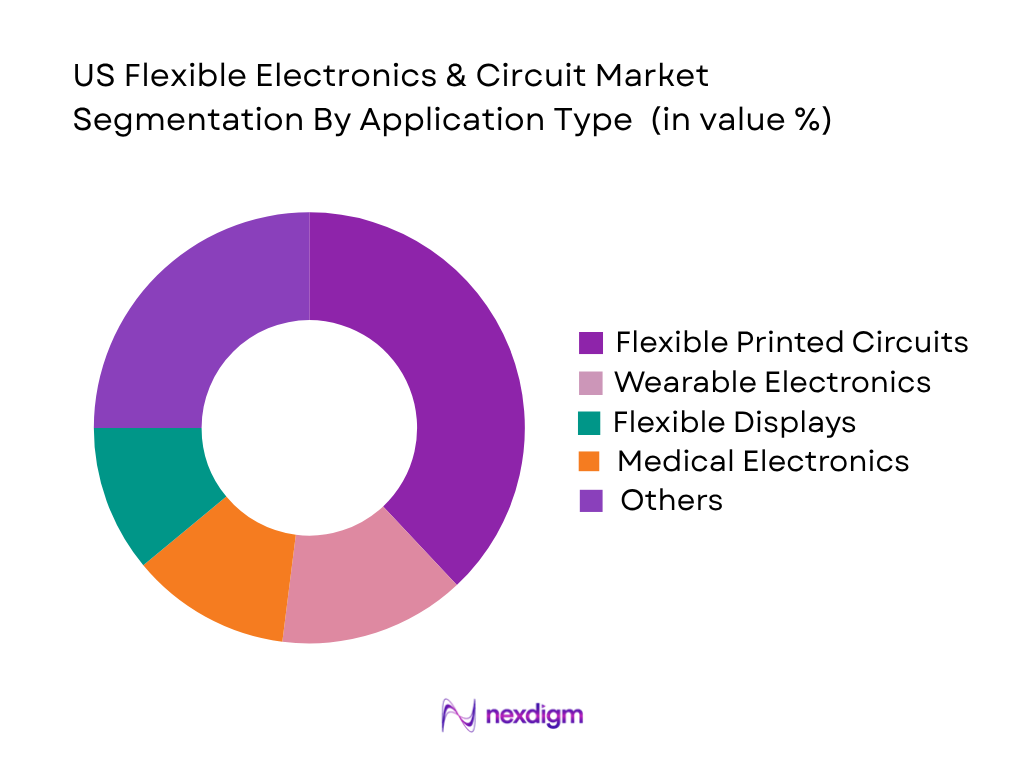
The US Flexible Electronics & Circuit Market is segmented by application type into flexible printed circuits, flexible displays, wearable electronics, medical electronics, automotive electronics, aerospace electronics, industrial sensors, and consumer electronics. Flexible printed circuits represent a dominant application segment due to their widespread integration across smartphones, automotive systems, medical devices, and industrial equipment. These circuits provide advantages such as reduced weight, space optimization, bending capability, and improved design flexibility compared with conventional rigid circuit boards. The growing adoption of compact electronic devices and advanced electronic architectures in automotive and healthcare applications is increasing demand for flexible circuit technologies. Consumer electronics manufacturers increasingly utilize flexible circuits for compact device designs, while medical device companies adopt them for wearable monitoring solutions and minimally invasive equipment.
By End-Use Industry
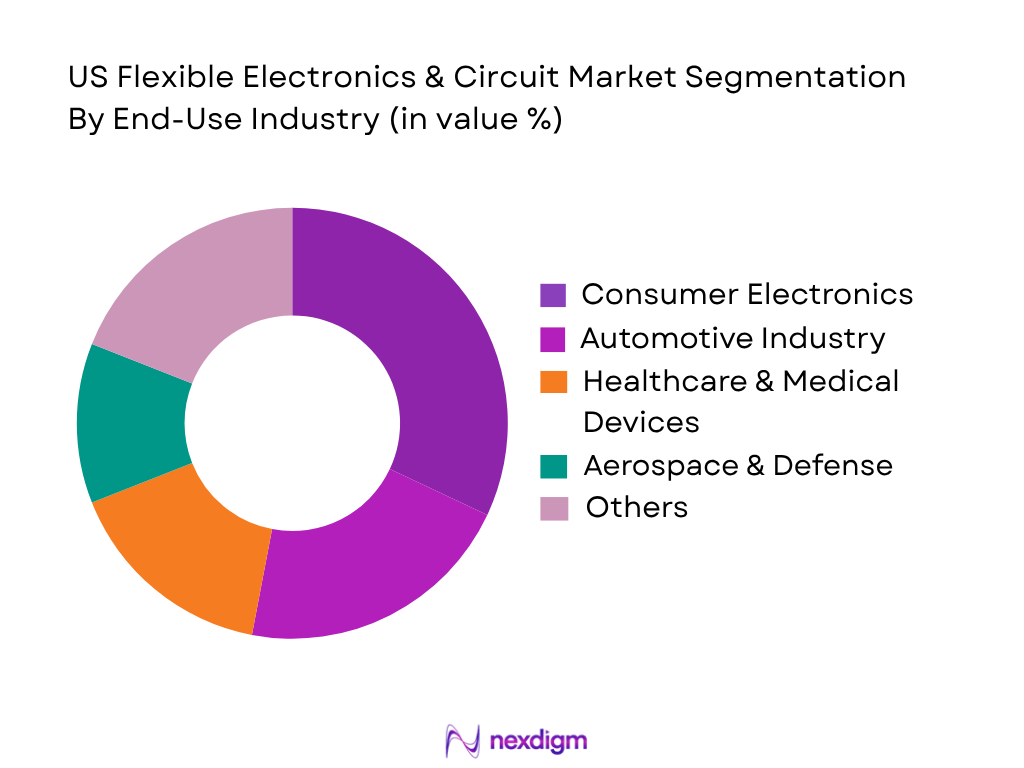
The US Flexible Electronics & Circuit Market is segmented by end-use industry into consumer electronics, automotive, healthcare, aerospace and defense, industrial automation, telecommunications, energy systems, and smart packaging. Consumer electronics represents the leading segment due to increasing demand for lightweight, compact, and high-performance electronic devices. Smartphones, smart wearables, tablets, and foldable electronic products require flexible circuit solutions to support thinner designs and enhanced functionality. Healthcare applications are also expanding due to increasing adoption of wearable medical monitoring devices and flexible biosensors. Automotive manufacturers are incorporating flexible electronics into advanced driver assistance systems, battery management systems, and interior electronic components. Aerospace and defense applications utilize flexible circuits due to their durability, reduced weight, and ability to operate in demanding environments.
Competitive Landscape
The US Flexible Electronics & Circuit Market consists of global electronic component manufacturers, flexible circuit producers, semiconductor companies, and specialized technology providers. Major participants compete through advanced manufacturing capabilities, flexible substrate technologies, high-density interconnect solutions, material innovation, and application-specific electronic designs. Companies focus on expanding production capabilities, improving circuit reliability, and developing solutions for automotive, healthcare, consumer electronics, and aerospace applications.
| Company | Establishment Year | Headquarters | Flexible Circuit Manufacturing Capability | Product Portfolio | Automotive Electronics Exposure | Healthcare Electronics Capability | Advanced Material Technology | Global Manufacturing Network | R&D Capability |
| Flex Ltd. | 1969 | Singapore | ~ | ~ | ~ | ~ | ~ | ~ | ~ |
| Molex | 1938 | Illinois, USA | ~ | ~ | ~ | ~ | ~ | ~ | ~ |
| TTM Technologies | 1998 | Arizona, USA | ~ | ~ | ~ | ~ | ~ | ~ | ~ |
| DuPont | 1802 | Delaware, USA | ~ | ~ | ~ | ~ | ~ | ~ | ~ |
| 3M Company | 1902 | Minnesota, USA | ~ | ~ | ~ | ~ | ~ | ~ | ~ |
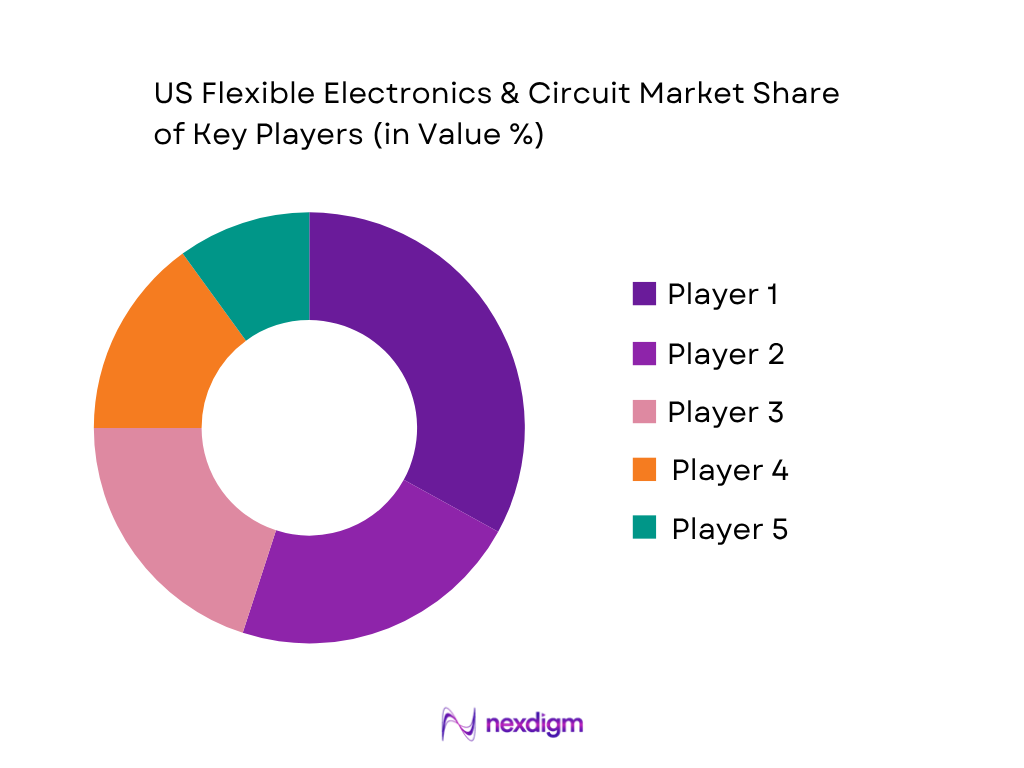
US Flexible Electronics & Circuit Market Analysis
Growth Drivers
Rising Adoption of Advanced Consumer Electronics and Wearable Devices
The increasing integration of flexible electronics and circuits into consumer electronics, wearable devices, and compact electronic systems is a major growth driver for the US Flexible Electronics & Circuit Market. Flexible circuits enable thinner, lighter, and more adaptable designs used in smartphones, foldable devices, smartwatches, fitness trackers, and next-generation connected products. The US consumer electronics ecosystem continues to support demand through high technology adoption and strong innovation capabilities. According to the International Telecommunication Union, the United States had more than 310 million internet users in 2024, supporting widespread adoption of connected electronic devices and IoT-enabled products. The US automotive sector produced approximately 10.6 million light vehicles in 2024, increasing demand for lightweight electronic components, advanced sensors, and flexible circuit solutions used in vehicle displays, control systems, and connectivity modules. Flexible printed circuits are increasingly preferred because they reduce weight, improve space utilization, and support complex device architectures. The growing requirement for miniaturized electronic systems across consumer, automotive, and industrial applications is encouraging manufacturers to expand flexible circuit capabilities and invest in advanced manufacturing technologies.
Expansion of Healthcare Electronics and Flexible Sensor Applications
The healthcare sector is creating significant demand opportunities for flexible electronics and circuit technologies due to increasing adoption of wearable monitoring devices, biosensors, smart patches, and remote patient monitoring solutions. Flexible electronic systems provide advantages such as lightweight structures, body-conforming designs, and continuous monitoring capabilities, making them suitable for healthcare applications including cardiovascular monitoring, rehabilitation devices, and diagnostic systems. The US healthcare industry remains one of the largest technology adopters globally, supported by high healthcare expenditure and increasing digital healthcare adoption. According to the Centers for Medicare & Medicaid Services, US national healthcare expenditure reached approximately USD 4.9 trillion in 2023, reflecting strong investment capacity for advanced medical technologies. The US population aged 65 years and above exceeded 58 million in 2024, increasing demand for continuous health monitoring solutions and remote care technologies. Flexible sensors and circuits are increasingly being integrated into wearable medical devices because they provide improved comfort and long-duration usability compared with traditional rigid electronics. These developments are supporting broader commercialization of flexible electronic technologies across healthcare, biotechnology, and medical device applications.
Market Challenges
Complex Manufacturing Processes and Material Integration Limitations
The US Flexible Electronics & Circuit Market faces challenges related to complex manufacturing processes, material compatibility requirements, and difficulties in achieving large-scale production consistency. Flexible electronic systems require specialized substrates, conductive materials, printing technologies, and integration processes that differ from conventional rigid circuit manufacturing. Maintaining reliability during repeated bending, stretching, and environmental exposure remains a technical challenge for manufacturers. Advanced flexible electronics often require precise material engineering involving polymers, conductive inks, thin-film technologies, and flexible semiconductor components. The National Institute of Standards and Technology has highlighted the importance of advanced manufacturing research in improving precision, reliability, and scalability of emerging electronic technologies. The US manufacturing sector employed more than 12 million workers in 2024, demonstrating the importance of scalable industrial production capabilities; however, advanced electronics manufacturing continues to require specialized expertise and infrastructure. Companies developing flexible circuits must address challenges related to durability testing, thermal management, electrical performance, and integration with existing electronic platforms. These technical barriers can increase development complexity and slow commercialization across applications requiring high reliability, including aerospace, automotive, and medical electronics.
Supply Chain Dependence for Advanced Materials and Electronic Components
The availability of specialized materials and electronic components remains a challenge for the US Flexible Electronics & Circuit Market. Flexible electronics production depends on advanced materials including flexible substrates, conductive inks, semiconductor components, display materials, and specialty polymers. Disruptions in semiconductor and electronic component supply chains can affect manufacturing timelines and increase dependency on international suppliers. The US Department of Commerce has identified semiconductor supply chain resilience as a strategic priority due to global concentration of semiconductor manufacturing capacity. The United States imported approximately USD 438 billion worth of semiconductor-related products and electronic components in 2024, highlighting the importance of maintaining reliable supply networks for advanced electronics manufacturing. Flexible circuit manufacturers must manage material availability, supplier diversification, and technology qualification processes to maintain production continuity. Additionally, geopolitical risks, transportation constraints, and specialized material sourcing requirements create challenges for companies operating in high-performance electronics segments. Strengthening domestic manufacturing capabilities and expanding advanced material production capacity remain important factors influencing the long-term development of flexible electronics and circuit technologies in the United States.
Market Opportunities
Growth of Automotive Electrification and Smart Vehicle Electronics
The increasing adoption of electric vehicles, connected vehicles, and advanced automotive electronics creates significant opportunities for flexible electronics and circuit manufacturers in the United States. Flexible circuits are increasingly used in automotive applications such as battery management systems, sensor modules, lighting systems, infotainment components, and interior electronic solutions due to their lightweight structure and space-saving advantages. The US electric vehicle ecosystem continues to expand, supported by government initiatives and increasing investments in domestic battery and vehicle manufacturing. According to the US Department of Energy, the United States had more than 180,000 public electric vehicle charging ports available in 2024, reflecting continued infrastructure development supporting vehicle electrification. The automotive manufacturing sector produced over 10 million vehicles in 2024, creating a large application base for advanced electronic components. Flexible electronics can support future automotive designs by enabling curved displays, embedded sensors, smart surfaces, and compact electronic architectures. Increasing vehicle connectivity, autonomous driving development, and demand for efficient electronic integration are expected to create additional opportunities for flexible circuit suppliers serving automotive manufacturers and technology providers.
Expansion of Smart Manufacturing and Industrial IoT Applications
The growth of industrial automation, smart factories, and Internet of Things (IoT) applications is creating new opportunities for flexible electronics and circuit technologies. Flexible sensors, printed electronics, and lightweight circuit solutions are increasingly being evaluated for industrial monitoring, robotics, equipment tracking, and predictive maintenance applications. The US manufacturing sector continues to invest in digital transformation, supported by demand for improved operational efficiency and real-time data collection. According to the International Federation of Robotics, the United States installed more than 40,000 industrial robots in 2023, indicating continued automation adoption across manufacturing industries. Flexible electronic components can support industrial applications by enabling conformable sensors, low-profile monitoring systems, and electronic integration in complex environments. The expansion of smart infrastructure, connected machinery, and industrial automation creates demand for electronics that can operate in compact and unconventional spaces. Flexible circuits provide opportunities for manufacturers to develop customized solutions for aerospace, energy, logistics, and industrial equipment applications where traditional rigid electronics may face design limitations.
Future Outlook
The US Flexible Electronics & Circuit Market is expected to experience continued expansion driven by increasing adoption of advanced electronic systems, growth of wearable technologies, automotive electrification, healthcare digitization, and demand for lightweight electronic components. Future market development will be supported by advancements in flexible substrates, printed electronics, conductive materials, and manufacturing processes. The increasing integration of sensors and smart electronic systems across industries will create new opportunities for flexible circuit applications.
Major Players
- Flex Ltd.
- Molex LLC
- TTM Technologies Inc.
- DuPont Electronics & Industrial
- 3M Company
- Jabil Inc.
- Panasonic Industry Corporation
- Samsung Electro-Mechanics
- LG Display
- BOE Technology Group
- Raytheon Technologies
- Lockheed Martin Corporation
- Honeywell International Inc.
- Nitto Denko Corporation
- Sumitomo Electric Industries
Key Target Audience
- Flexible Electronics Manufacturers
- Printed Circuit Board Manufacturers
- Semiconductor and Electronic Component Companies
- Automotive Electronics Manufacturers
- Medical Device Manufacturers
- Aerospace and Defense Electronics Companies
- Investments and Venture Capitalist Firms (Technology Investment Funds, Electronics Innovation Funds)
- Government and Regulatory Bodies (US Department of Commerce, National Institute of Standards and Technology, Department of Defense)
Research Methodology
Step 1: Identification of Key Variables
The initial phase involves developing an ecosystem map covering flexible electronics manufacturers, material suppliers, semiconductor companies, end-use industries, and technology providers. This stage includes evaluation of flexible substrates, circuit manufacturing processes, application areas, and demand drivers influencing the US Flexible Electronics & Circuit Market. Secondary research is conducted to identify important market variables and industry dynamics.
Step 2: Market Analysis and Construction
This phase involves analyzing historical market developments, technology adoption patterns, production capabilities, and application-level demand across consumer electronics, automotive, healthcare, aerospace, and industrial sectors. Supply-side assessment includes evaluation of manufacturers, technology providers, production capabilities, and material availability to understand market structure.
Step 3: Hypothesis Validation and Expert Consultation
Market assumptions are validated through discussions with industry professionals, manufacturers, technology developers, and supply chain participants. Expert consultations provide operational insights related to flexible circuit production, application adoption, material innovation, and future technology development trends.
Step 4: Research Synthesis and Final Output
The final stage combines quantitative and qualitative analysis to develop a comprehensive assessment of market size, segmentation, competitive landscape, growth factors, challenges, and future opportunities. Data validation is performed through multiple industry sources to ensure accuracy and reliability of market insights.

- Executive Summary
- Research Methodology (Market Definition and Scope, US Flexible Electronics & Circuit Market Classification, Flexible Substrate Mapping, Flexible Circuit Technology Assessment, Flexible Printed Circuit Board (FPCB) Evaluation, Flexible Hybrid Electronics Analysis, Organic and Printed Electronics Assessment, Thin-Film Electronics Evaluation, Conductive Ink Technology Mapping, Polymer and Metal Substrate Analysis, Roll-to-Roll Manufacturing Assessment, Flexible Sensor Technology Evaluation, Flexible Display Technology Assessment, Wearable Electronics Application Mapping, Medical Flexible Electronics Assessment, Automotive Flexible Electronics Assessment, Consumer Electronics Integration Analysis, Semiconductor Integration Assessment, Manufacturing Process Evaluation, Supply Chain Assessment, Raw Material Analysis, Demand-Side Assessment, Supply-Side Assessment, Top-Down Market Sizing, Bottom-Up Market Sizing, Primary Industry Interviews, Data Triangulation, Forecasting Framework, Market Share Validation, Limitations and Future Conclusions)

- Definition and Scope
- US Flexible Electronics & Circuit Industry Evolution and Development of Flexible Printed Circuit Technology, Wearable Electronics Innovation, Flexible Display Advancement, Medical Electronics Miniaturization, Automotive Electronic Integration, Printed Electronics Manufacturing, Internet of Things (IoT) Applications, Semiconductor Packaging Evolution and Advanced Flexible Electronic Systems
- Flexible Electronics & Circuit Value Chain Analysis
- Flexible Electronics & Circuit Supply Chain Analysis
- Polyimide Film Suppliers, Polyester Film Suppliers, Conductive Ink Manufacturers, Copper Foil Suppliers, Semiconductor Component Suppliers, Flexible PCB Manufacturers, Printed Electronics
- Developers, Sensor Manufacturers, Display Manufacturers, Electronics Assembly Providers, Original Equipment Manufacturers, Medical Device Companies, Automotive Electronics Suppliers, Consumer Electronics Companies and End-Use Industries

- Growth Drivers (Increasing Demand for Lightweight Electronic Components, Expansion of Wearable Electronics Applications, Growth of Electric Vehicle Electronics Integration, Rising Adoption of Medical Monitoring Devices, Advancement of Flexible Display Technologies, Increasing IoT Device Deployment, Demand for Miniaturized Electronics, Growth of Semiconductor Packaging Applications, Increasing Defense Electronics Requirements, Expansion of Smart Manufacturing Solutions)
- Market Challenges (High Manufacturing Complexity, Limited Large-Scale Production Capability, High Material Development Costs, Technical Challenges in Durability and Reliability, Supply Chain Dependency for Specialty Materials, Integration Challenges with Conventional Electronics, Limited Standardization Across Flexible Electronics Technologies, Complex Quality Control Requirements, Low Yield Rates in Advanced Manufacturing Processes, Competition from Rigid Electronics Solutions)
- Market Opportunities (Expansion of Flexible Medical Wearables, Smart Textile Electronics Development, Flexible Battery Technology Advancement, Automotive Interior Flexible Display Integration, Aerospace Lightweight Electronics Applications, Sustainable Printed Electronics Development, Advanced Sensor Network Expansion, Flexible Semiconductor Packaging Growth, Smart Label and RFID Applications, Bio-Integrated Electronics Development)
- Market Trends (Growth of Flexible Hybrid Electronics, Increasing Roll-to-Roll Manufacturing Adoption, Expansion of Wearable Health Monitoring Devices, Development of Stretchable Electronics, Growth of Printed Conductive Ink Applications, Increasing Use of Flexible OLED Displays, Miniaturization of Electronic Components, Integration of Artificial Intelligence with Flexible Sensors, Sustainable Electronics Development, Advanced Packaging Technology Adoption)
- Government Regulations and Standards (National Institute of Standards and Technology (NIST) Electronics Manufacturing Standards, Federal Communications Commission Requirements, Food and Drug Administration Medical Device Regulations, Department of Defense Electronics Standards, Automotive Electronics Safety Standards, Semiconductor Manufacturing Standards, Environmental Protection Agency Material Regulations, Restriction of Hazardous Substances (RoHS) Compliance Requirements, International Electrotechnical Commission Standards, Electronic Waste Management Regulations)
- SWOT Analysis
- Porter’s Five Forces Analysis
- PESTLE Analysis
- Stakeholder Ecosystem
- Competition Ecosystem

- By Market Value (2020-2025)
- By Production Volume (2020-2025)
- By Flexible Circuit Area Consumption (2020-2025)
- By Flexible Printed Circuit Board (FPCB) Consumption Volume (2020-2025)
- By Flexible Hybrid Electronics Consumption Volume (2020-2025)
- By Flexible Sensor Consumption Volume (2020-2025)
- By Flexible Display Component Consumption Volume (2020-2025)
- By Roll-to-Roll Manufactured Electronics Volume (2020-2025)

- By Technology Type (In Value %)
Flexible Printed Circuit Boards (FPCBs)
Flexible Hybrid Electronics (FHE)
Printed Electronics
Organic Electronics
Thin-Film Electronics
Stretchable Electronics
Embedded Flexible Electronics
Roll-to-Roll Electronics Manufacturing - By Substrate Material Type (In Value %)
Polyimide (PI) Substrates
Polyester (PET) Substrates
Polyethylene Naphthalate (PEN) Substrates
Metal Foil Substrates
Ultra-Thin Glass Substrates
Paper-Based Flexible Substrates
Bio-Based Flexible Substrates - By Component Type (In Value %)
Flexible Circuits
Flexible Sensors
Flexible Displays
Flexible Batteries
Flexible Antennas
Flexible Integrated Circuits
Flexible Lighting Components
Conductive Films and Inks - By Application Area (In Value %)
Consumer Electronics
Wearable Electronics
Healthcare and Medical Devices
Automotive Electronics
Aerospace and Defense Electronics
Industrial IoT Devices
Smart Packaging
Energy and Power Electronics - By End-Use Industry (In Value %)
Electronics Manufacturing
Healthcare and Medical Technology
Automotive Industry
Aerospace and Defense Sector
Telecommunications Industry
Industrial Automation
Consumer Technology Industry
Research and Development Organizations - By Region (In Value %)
West USA
Northeast USA
Midwest USA
South USA

- Market Share of Major Players (By US Revenue, Flexible Circuit Manufacturing Capacity, Flexible Electronics Technology Portfolio, FPCB Production Capability, Flexible Hybrid Electronics Capability, Sensor Technology Coverage, Display Technology Integration, Automotive Electronics Exposure, Medical Electronics Application Coverage, Consumer Electronics Customer Base, Manufacturing Facility Network, Innovation Pipeline, Patent Portfolio, Regional Presence)
- Cross Comparison Parameters (Flexible Circuit Product Portfolio Breadth, Flexible PCB Manufacturing Capability, Flexible Hybrid Electronics Technology Coverage, Flexible Sensor Development Capability, Roll-to-Roll Manufacturing Capability, Flexible Display Integration Expertise, Medical Electronics Application Coverage, Automotive Flexible Electronics Capability)
- SWOT Analysis of Major Players
- Competitive Positioning Matrix
- Flexible Circuit Product Portfolio and Technology Benchmarking
- Detailed Profiles of Major Companies
Flex Ltd.
Jabil Inc.
TTM Technologies Inc.
Nitto Denko Corporation
DuPont de Nemours Inc.
Molex LLC
Sumitomo Electric Industries Ltd.
Amphenol Corporation
TE Connectivity Ltd.
Samsung Electronics America Inc.
LG Electronics USA Inc.
3M Company
E Ink Corporation
PARC (Xerox Company)
Royole Corporation

- Consumer Electronics Flexible Circuit Requirement Assessment
- Wearable Device Electronics Demand Analysis
- Medical Device Flexible Electronics Procurement Assessment
- Automotive Electronics Integration Requirement Analysis
- Electric Vehicle Flexible Electronics Application Assessment
- Aerospace and Defense Electronics Requirement Analysis
- Industrial IoT Flexible Sensor Demand Assessment
- Smart Packaging Electronics Requirement Analysis
- Semiconductor Packaging Flexible Circuit Assessment
- Electronics Manufacturing Service Provider Demand Analysis
- Research and Development Organization Technology Assessment
- Flexible Electronics Component Procurement Analysis

- By Market Value (2026-2035)
- By Production Volume (2026-2035)
- By Flexible Circuit Area Consumption (2026-2035)
- By Flexible Printed Circuit Board (FPCB) Consumption Volume (2026-2035)
- By Flexible Hybrid Electronics Consumption Volume (2026-2035)
- By Flexible Sensor Consumption Volume (2026-2035)
- By Flexible Display Component Consumption Volume (2026-2035)
- By Roll-to-Roll Manufactured Electronics Volume (2026-2035)


 Request a Sample
 Ask for Customization
 Get a Quote
 Enquire Now