
 Download PDF
Market Overview
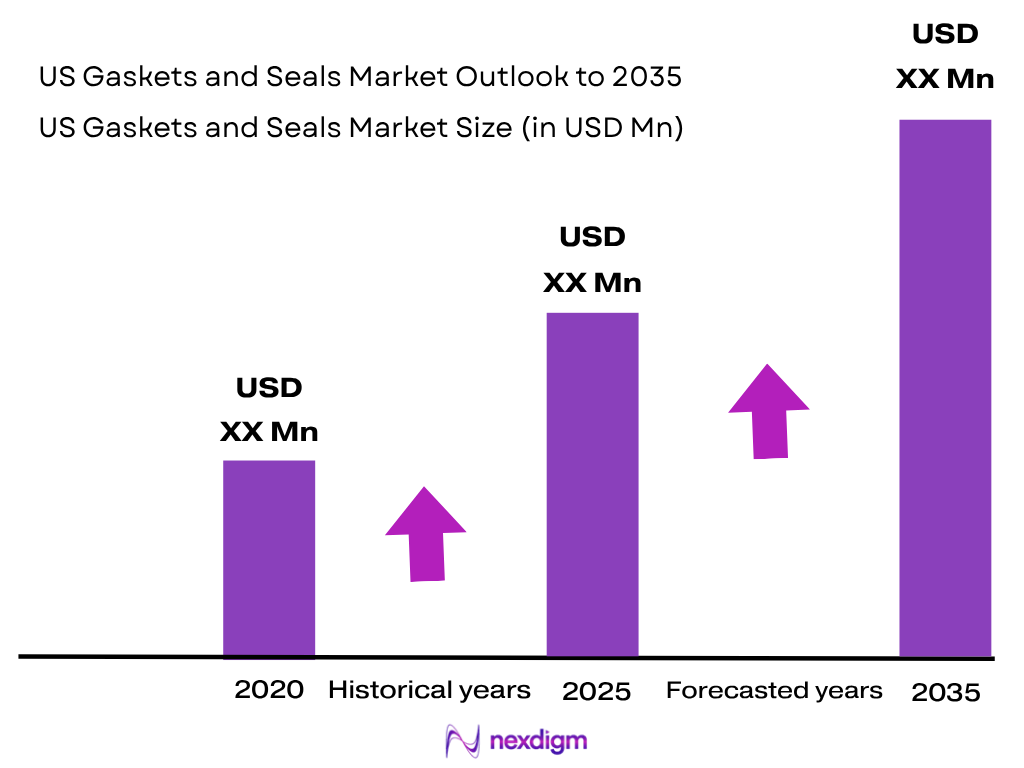
The US Gaskets and Seals Market is valued at approximately USD ~XX billion, supported by the country’s large energy, refining, automotive, semiconductor and process-manufacturing base. U.S. crude oil output increased from 12.9 million to 13.2 million barrels per day, while operable refinery capacity increased from 18.06 million to 18.38 million barrels per calendar day. These assets require mechanical seals, flange gaskets, packing, O-rings and precision elastomers for OEM installation, maintenance and shutdown replacement.
Houston and the broader Texas-Louisiana Gulf Coast dominate US sealing demand because of their concentration of refineries, petrochemical complexes, pipelines and upstream equipment. Gulf Coast refinery capacity increased from approximately 9.68 million to 9.99 million barrels per calendar day. Phoenix is emerging as another high-value cluster through semiconductor fabrication, including TSMC’s planned USD 65 billion-plus three-fab investment, while the Midwest remains critical because of its dense automotive and industrial-machinery manufacturing base.
Market Segmentation
By Product Type
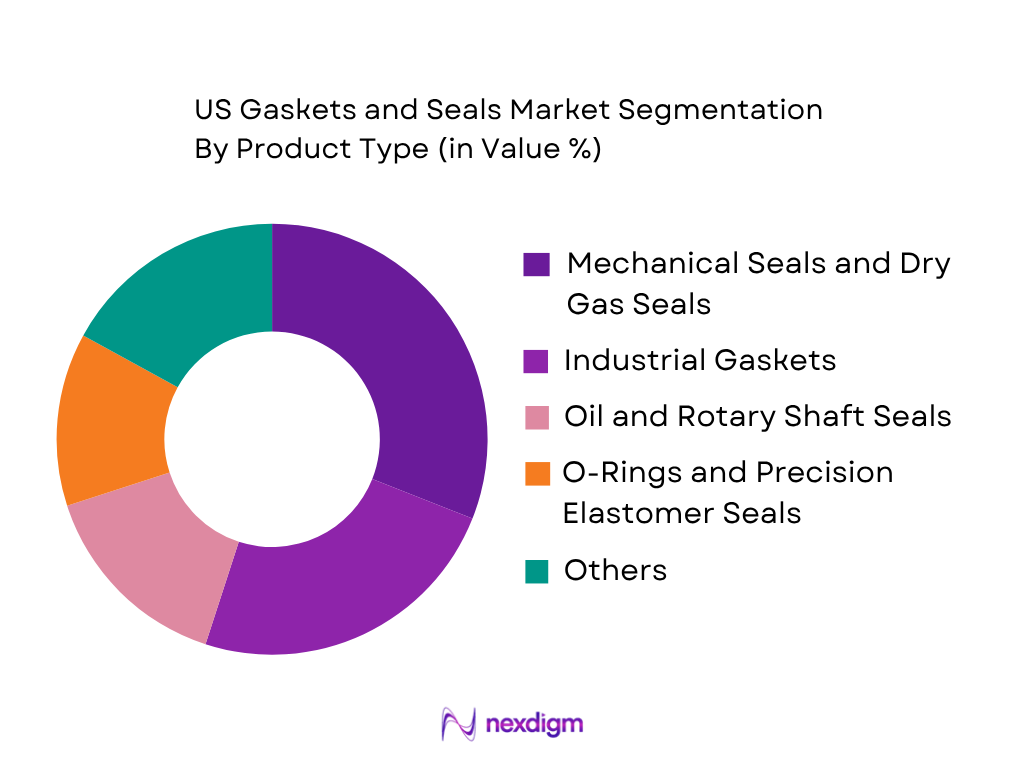
By Product Type: The US Gaskets and Seals Market is segmented into mechanical seals, industrial gaskets, oil and rotary shaft seals, O-rings and precision elastomers, hydraulic and pneumatic seals, compression packing and specialized high-purity sealing products. Mechanical seals account for the dominant value share because the United States operates an extensive population of pumps, compressors, mixers and other rotating equipment across oil and gas, refining, chemicals, power generation and water infrastructure. Crude production of 13.2 million barrels per day and refinery capacity exceeding 18.3 million barrels per calendar day illustrate the scale of sealing-intensive equipment. Mechanical seals also command relatively high value because demanding applications require cartridge assemblies, dry gas seals, silicon-carbide faces, engineered support systems and refurbishment services. EPA methane requirements covering compressor seals and equipment leaks further reinforce demand for reliable, lower-emission sealing systems across upstream and midstream installations.
By End-Use Industry
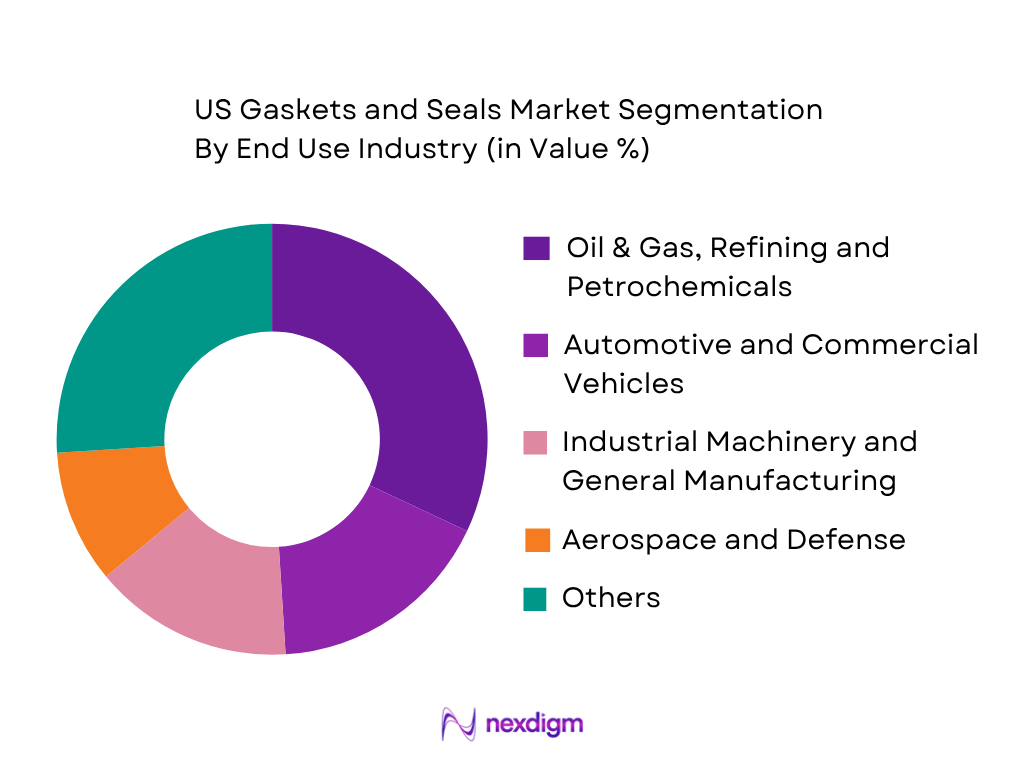
By End-Use Industry: The US Gaskets and Seals Market is segmented into oil and gas, refining and petrochemicals, automotive, aerospace and defense, semiconductors and electronics, power generation, water treatment and general manufacturing. Oil and gas together with refining and petrochemicals represent the dominant demand cluster because these industries use large populations of pumps, compressors, valves, flanged connections and pressure-processing equipment. U.S. crude production averaged 13.2 million barrels per day, natural-gas marketed production averaged around 113 billion cubic feet per day, and the country operated 132 refineries with more than 18.3 million barrels per calendar day of atmospheric distillation capacity. These applications require mechanical seals, dry gas seals, RTJ gaskets, spiral-wound gaskets, packing and high-performance elastomers. Automotive and semiconductor applications follow as increasingly technology-intensive categories requiring precision molded and contamination-controlled sealing solutions.
Competitive Landscape
The US Gaskets and Seals Market combines specialized mechanical-seal manufacturers, industrial gasket companies and diversified engineered-polymer suppliers. John Crane and Flowserve hold strong positions in energy and process-industry sealing; Garlock has a substantial U.S. industrial gasket and fluid-sealing footprint; Parker Hannifin spans industrial, automotive and aerospace applications; and Trelleborg Sealing Solutions competes strongly in precision polymer, aerospace and engineered sealing. Competition is driven by qualification, application engineering, domestic inventory, MRO capability and material performance rather than product breadth alone.
| Major Player | Establishment Year | Headquarters | Core Sealing Portfolio | Material Capability | Energy & Process Exposure | Semiconductor / Aerospace Exposure | US Manufacturing & Service Capability | Application Engineering & MRO |
| John Crane | 1917 | Slough, United Kingdom | ~ | ~ | ~ | ~ | ~ | ~ |
| Flowserve | 1997 | Irving, Texas, USA | ~ | ~ | ~ | ~ | ~ | ~ |
| Garlock | 1887 | Palmyra, New York, USA | ~ | ~ | ~ | ~ | ~ | ~ |
| Parker Hannifin | 1917 | Mayfield Heights, Ohio, USA | ~ | ~ | ~ | ~ | ~ | ~ |
| Trelleborg Sealing Solutions | 2003 | Stuttgart, Germany | ~ | ~ | ~ | ~ | ~ | ~ |
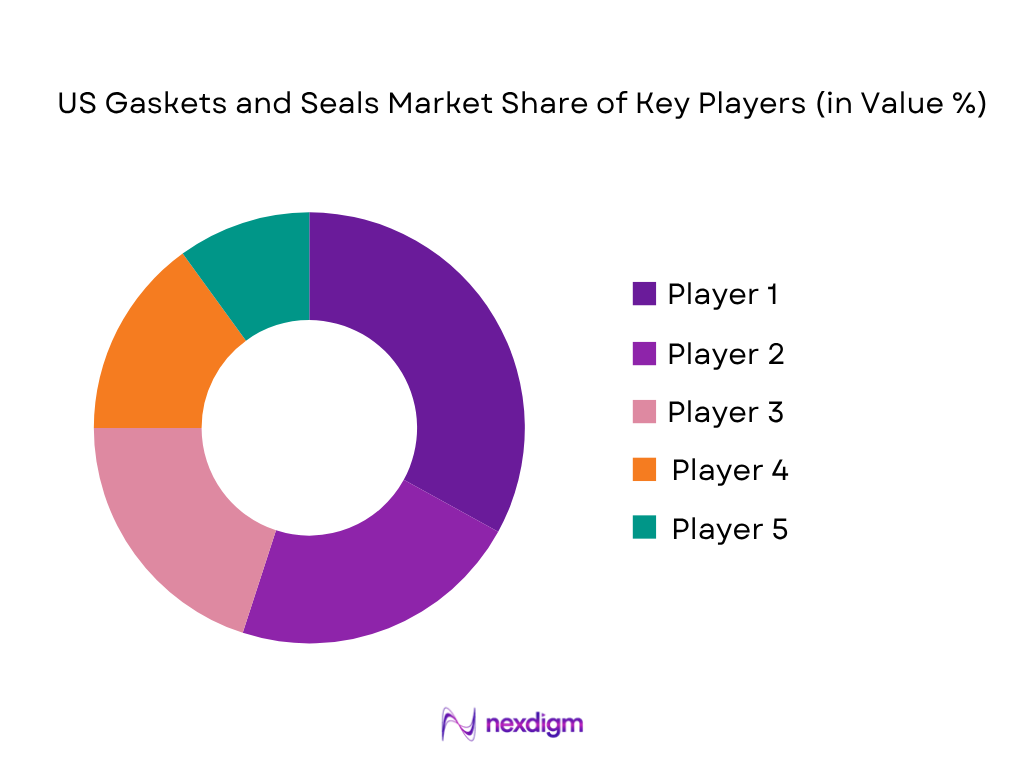
US Gaskets and Seals Market Analysis
Growth Drivers
Large Refinery, Petrochemical and Oil & Gas Rotating Equipment Installed Base
The extensive U.S. hydrocarbon processing and transportation infrastructure creates recurring demand for mechanical seals, dry gas seals, spiral-wound gaskets, ring-type joints, compression packing and engineered elastomers. According to the U.S. Energy Information Administration, crude oil production averaged a record 13.2 million barrels per day in 2024, increasing by 270,000 barrels per day from the preceding year, while the Permian region supplied roughly 6.3 million barrels per day. U.S. refinery infrastructure provided approximately 18.4 million barrels per calendar day of atmospheric crude-distillation capacity across 132 operable refineries, generating a large installed population of pumps, compressors, valves, heat exchangers and pressure vessels requiring routine sealing replacement. EIA also recorded U.S. LNG gross exports at approximately 12 billion cubic feet per day in 2024, supporting additional compressor and pipeline sealing requirements. The World Bank recorded U.S. GDP at USD 28.75 trillion and GDP per capita at USD 84,534 in 2024, demonstrating the industrial and economic scale supporting maintenance spending. High operating intensity, planned refinery turnarounds, compressor servicing and continuous pump operation consequently generate recurring aftermarket demand beyond seals installed with original equipment.
Semiconductor, Advanced Manufacturing and Industrial Equipment Expansion
Expansion of U.S. semiconductor and advanced manufacturing capacity is creating higher-value demand for FFKM O-rings, PTFE components, vacuum seals, precision elastomers and chemically resistant sealing systems. The U.S. Department of Commerce reported that CHIPS-related activity had generated nearly USD 450 billion in private semiconductor investment and more than 125,000 announced construction and manufacturing jobs in 2024. TSMC’s Arizona program alone involved more than USD 65 billion for 3 leading-edge fabs, while Samsung’s Central Texas program exceeded USD 37 billion and Intel’s supported domestic investment approached USD 90 billion. Commerce also reported 16 new semiconductor manufacturing facilities across 15 states among projects announced through August 2024. Semiconductor fabrication equipment requires contamination-controlled seals for vacuum chambers, plasma processing, gas delivery and wet-chemical systems, increasing demand for high-purity fluoropolymer and perfluoroelastomer solutions. Industrial manufacturing provides another demand layer: Bureau of Labor Statistics data recorded 49,570 industrial machinery mechanics within commercial and industrial equipment repair and maintenance activities in May 2024, illustrating the scale of equipment servicing. World Bank data place U.S. GDP at USD 28.75 trillion in 2024, supporting capital-intensive manufacturing and machinery investment that continuously expands the national sealing installed base.
Market Challenges
High Qualification Requirements Across Semiconductor, Aerospace and Critical Process Applications
The U.S. Gaskets and Seals Market faces increasingly complex qualification requirements as demand shifts toward semiconductor, aerospace and mission-critical process applications where standard industrial seals cannot automatically substitute for certified products. U.S. Department of Commerce data show semiconductor projects spanning 15 states and 16 new manufacturing facilities in 2024, while TSMC’s Arizona development covers 3 advanced fabs and Samsung’s Texas expansion incorporates 2 new leading-edge logic fabs plus an R&D fab. Each additional fabrication environment increases requirements for ultra-low outgassing, plasma resistance, traceability and controlled packaging for FFKM and fluoropolymer seals. Aerospace creates similarly demanding validation requirements because sealing materials must withstand temperature cycling, aggressive fluids, pressure changes and extended operating lives. FAA data for 2024 maintain detailed operating records across a U.S. general-aviation and Part 135 fleet exceeding 200,000 active aircraft, illustrating the scale and diversity of systems requiring qualified replacement components. Process industries add API- and equipment-specific qualification requirements for pumps and compressors operating within 132 U.S. refineries. World Bank data record U.S. GDP at USD 28.75 trillion in 2024. Suppliers therefore face substantial technical burdens involving material validation, customer qualification, documentation, application engineering and long approval cycles before entering high-value sealing applications.
Skilled MRO Capability and Complexity of the Legacy Industrial Installed Base
Maintaining the U.S. industrial sealing installed base requires skilled technicians capable of mechanical-seal rebuilding, seal-face lapping, gasket selection, rotating-equipment alignment, failure analysis and emergency replacement across highly diverse machinery. Bureau of Labor Statistics data show 49,570 industrial machinery mechanics employed specifically in commercial and industrial machinery repair and maintenance in May 2024, while machinery and equipment wholesalers employed another 44,200. Motor vehicle parts manufacturing employed 13,520 industrial machinery mechanics, plastics manufacturing employed 14,660, and chemical manufacturing employed 11,160, illustrating the breadth of equipment environments requiring maintenance expertise. This diversity complicates standardization because pumps, compressors, gearboxes, hydraulic cylinders and legacy process equipment may use different dimensions, seal-face materials and elastomer formulations. The energy sector further intensifies the servicing requirement because U.S. crude production averaged 13.2 million barrels per day in 2024, supported by thousands of wells, pipelines, processing units and rotating-equipment installations. EPA’s final methane rule was published on March 8, 2024, adding further operational attention to leakage control from oil and gas equipment. World Bank data record U.S. GDP at USD 28.75 trillion in 2024. Maintaining such a large installed base therefore creates a challenge around technician availability, rapid diagnostics, reverse engineering, inventory breadth and regional service coverage.
Market Opportunities
Low-Emission Mechanical Seals, Dry Gas Seals and Methane-Control Applications
Tighter methane and equipment-leak requirements create a significant future opportunity for suppliers of low-emission mechanical seals, dry gas seals, compressor sealing systems, engineered valve packing and upgraded flange gaskets. The U.S. Environmental Protection Agency published its final oil and natural gas methane rule on March 8, 2024 and issued technical corrections on June 11, 2024, extending emissions-control requirements across new and existing oil and gas sources. The addressable equipment base is substantial: EIA recorded average U.S. crude production of 13.2 million barrels per day in 2024, including around 6.3 million barrels per day from the Permian region, while LNG gross exports averaged approximately 12 billion cubic feet per day. These volumes depend on extensive compressor stations, processing plants, pipelines, valves and rotating machinery where sealing performance directly affects fugitive emissions and operational reliability. Continued deployment of cleaner industrial infrastructure also broadens the opportunity. The Department of Energy announced up to USD 2.2 billion in 2024 commitments for Gulf Coast and Midwest clean-hydrogen hubs, introducing additional compression and gas-handling applications requiring specialized seals. World Bank data record U.S. GDP at USD 28.75 trillion in 2024. Current energy and regulatory activity therefore supports future growth in compressor upgrades, seal retrofits, emissions monitoring and reliability-focused MRO services.
Semiconductor-Grade Seals, Hydrogen-Compatible Materials and Advanced Sealing Localization
Future growth opportunities are expanding around semiconductor-grade FFKM seals, advanced vacuum sealing, hydrogen-compatible elastomers and localized production of high-performance sealing materials. U.S. Department of Commerce data show nearly USD 450 billion of private semiconductor investment announced in 2024, including more than USD 65 billion for TSMC’s 3-fab Arizona program, over USD 37 billion for Samsung’s Texas semiconductor ecosystem, approximately USD 3.87 billion for SK hynix’s Indiana advanced-packaging facility, and more than USD 18 billion associated with Texas Instruments projects. These investments create future demand for plasma-resistant O-rings, vacuum seals, chemically resistant FFKM products and contamination-controlled components. Energy-transition infrastructure provides a second growth pathway. The Department of Energy announced up to USD 2.2 billion for Gulf Coast and Midwest hydrogen hubs and identified 7 regional clean-hydrogen hubs, while a separate 2024 program contemplated up to USD 1.8 billion for direct-air-capture facilities and infrastructure. Hydrogen and carbon-management systems require sealing solutions engineered for permeation control, pressure cycling and gas compatibility. World Bank data record U.S. GDP at USD 28.75 trillion in 2024 and GDP per capita at USD 84,534. These current investments create a strong foundation for future domestic compounding, precision moulding, CNC seal production and high-purity sealing capability.
Future Outlook
The US Gaskets and Seals Market is expected to expand at approximately ~XX% CAGR during 2026-2035, supported by energy infrastructure, semiconductor localization, advanced automotive manufacturing, aerospace production and the continuous replacement requirements of the country’s enormous industrial installed base. Growth will increasingly favor high-performance and application-engineered sealing rather than commodity products. Semiconductor investment will create one of the most technology-intensive growth areas. More than 90 semiconductor ecosystem projects representing nearly USD 450 billion of announced investment had been identified across 28 states during 2024. Major projects include TSMC’s planned investment exceeding USD 65 billion in three Arizona fabs and Intel’s broader U.S. manufacturing expansion. These facilities increase requirements for FFKM O-rings, vacuum seals, PTFE components and low-contamination materials used in etch, deposition and ultra-pure chemical systems.
Major Players
- John Crane
- EagleBurgmann
- Flowserve
- AESSEAL
- Garlock
- Flexitallic
- Lamons
- TEADIT
- Trelleborg Sealing Solutions
- Parker Hannifin
- Freudenberg Sealing Technologies
- SKF
- A.W. Chesterton
- Greene Tweed
- James Walker
Key Target Audience
- Gasket, Mechanical Seal and Engineered Sealing Product Manufacturers
- Oil & Gas, Refining, Petrochemical and Chemical Operators
- Automotive, EV and Transportation Equipment Manufacturers
- Semiconductor and Advanced Electronics Manufacturers
- Aerospace, Defense and Industrial Equipment Manufacturers
- Investments and Venture Capitalist Firms
- Government and Regulatory Bodies (US Environmental Protection Agency, US Department of Energy, National Institute of Standards and Technology, Federal Aviation Administration, Occupational Safety and Health Administration)
- Private Equity Firms, Industrial Distributors, MRO Groups and Strategic Investors
Research Methodology
Step 1: Identification of Key Variables
The initial phase develops a detailed ecosystem map covering gasket manufacturers, mechanical-seal OEMs, elastomer compounders, precision moulders, industrial distributors, equipment manufacturers and end users. Critical demand variables include crude and natural-gas production, refinery capacity, automotive assembly, semiconductor fabrication, aerospace activity, rotating-equipment populations, replacement cycles and environmental compliance requirements.
Step 2: Market Analysis and Construction
Historical market construction combines top-down and bottom-up approaches. Top-down analysis evaluates industrial output, refinery capacity, oil and gas equipment, vehicle production and semiconductor infrastructure, while bottom-up analysis assesses manufacturer revenue, gasket consumption, mechanical-seal replacements, precision elastomer demand, domestic production, imports and refurbishment activity by end-use sector.
Step 3: Hypothesis Validation and Expert Consultation
Market hypotheses are validated through computer-assisted telephone interviews with sealing manufacturers, distributors, mechanical-seal specialists, refinery maintenance personnel, pump and compressor OEMs, automotive suppliers and semiconductor-equipment companies. Interviews test assumptions concerning replacement cycles, material selection, FFKM adoption, API qualification, local inventory, refurbishment intensity, OEM demand and customer purchasing criteria.
Step 4: Research Synthesis and Final Output
Primary findings are triangulated with EIA operating statistics, Census manufacturing data, EPA regulations, Department of Commerce semiconductor information, industry disclosures and company-level data. Bottom-up product revenues are reconciled with application-level demand and equipment populations to minimize double counting between OEM installation, aftermarket replacement and seal refurbishment before producing final segmentation and forecasts.

- Executive Summary
- Research Methodology (Market Definition and Scope, US Gaskets and Seals Market Classification, Static and Dynamic Sealing Demand Assessment, Industrial Gasket Consumption Mapping, Mechanical Seal Installed Base Assessment, Mechanical Seal Replacement Cycle Analysis, Oil Seal and Rotary Shaft Seal Consumption Mapping, O-Ring and Precision Elastomer Demand Assessment, Hydraulic and Pneumatic Seal Demand Mapping, Semiconductor High-Purity Seal Assessment, Domestic Gasket Fabrication Capacity Assessment, Elastomer Moulding Capacity Assessment, Mechanical Seal Manufacturing and Repair Capacity Assessment, Imported Specialty Seal Dependency Analysis, Oil and Gas Equipment Installed Base Mapping, Refinery Turnaround Assessment, Automotive OEM and Aftermarket Demand Mapping, Aerospace and Defense Equipment Assessment, Semiconductor Fab Equipment Assessment, Primary Industry Interviews, Top-Down Market Sizing, Bottom-Up Company Revenue and Product Consumption Assessment, MRO Demand Analysis, Data Triangulation, Pricing Assessment, Forecasting Framework)

- Definition and Scope
- US Gaskets and Seals Industry Evolution
- US Gaskets and Seals Value Chain Analysis
- US Gaskets and Seals Supply Chain Analysis
- Domestic Manufacturing Versus Imported Specialty Sealing Product Structure

- Growth Drivers (Large Refinery and Petrochemical Rotating Equipment Installed Base, High Oil and Natural Gas Production, Automotive and Commercial Vehicle Manufacturing, Aerospace and Defense Equipment Production, Semiconductor Fab Expansion, Industrial Machinery Demand, Mechanical Seal Replacement Cycles, Pipeline Infrastructure, Water and Wastewater Equipment Maintenance, Fugitive Emission Reduction Requirements)
- Market Challenges (Specialty FFKM and Fluoropolymer Material Availability, OEM Qualification Requirements, API 682 Compliance Complexity, Semiconductor Purity Qualification, Aerospace Certification Requirements, Skilled Mechanical Seal Technician Availability, Low-Cost Imported Sealing Products, Raw Material Supply Volatility, Legacy Equipment Diversity, Long Industrial Qualification Cycles)
- Market Opportunities (Low-Emission Mechanical Seals, Dry Gas Seal Retrofits, Refinery Turnaround Services, Methane-Leak Reduction Sealing, Semiconductor-Grade FFKM Seals, Advanced Vacuum Sealing, EV Battery and Thermal Management Seals, Hydrogen-Compatible Seals, Carbon Capture Equipment Sealing, Aerospace High-Temperature Seals, Domestic Specialty Elastomer Localization, CNC-Machined Emergency Seals, Mechanical Seal Condition Monitoring, Predictive MRO Services)
- Market Trends (API 682 Cartridge Seal Adoption, Dry Gas Seal Expansion, Low-Emission Graphite Packing, Expanded PTFE Gaskets, FFKM Growth in Semiconductor Applications, Split Mechanical Seals, Bearing Isolators, Sensor-Enabled Seal Monitoring, Digital MRO Platforms, Additive Manufacturing of Seal Components, Electrified Powertrain Seals, Hydrogen-Compatible Elastomers, High-Purity Semiconductor Seals)
- Regulatory and Standards Landscape (EPA Fugitive Emission Requirements, Clean Air Act Oil and Gas Standards, API 682 Mechanical Seal Requirements, API 6A and API 6D Equipment Requirements, ASME B16.20 Metallic Gasket Requirements, ASME B16.21 Nonmetallic Gasket Requirements, ASTM Elastomer Testing Standards, FDA Food-Contact Requirements, USP Pharmaceutical Material Requirements, SAE Automotive Requirements, FAA Aerospace Qualification Requirements)
- SWOT Analysis
- Porter’s Five Forces Analysis
- PESTLE Analysis

- By Market Value (2020-2025)
- By Industrial Gasket Consumption Volume (2020-2025)
- By Mechanical Seal Consumption Volume (2020-2025)
- By Oil Seal and Rotary Shaft Seal Consumption Volume (2020-2025)
- By O-Ring and Precision Elastomer Consumption Volume (2020-2025)

- By Product Type (In Value %)
Spiral Wound Gaskets
Ring Type Joint Gaskets
Kammprofile Gaskets
Metal Jacketed Gaskets
Compressed Non-Asbestos Fibre Gaskets
Flexible Graphite Gaskets
PTFE and Expanded PTFE Gaskets
Mechanical Seals
Dry Gas Seals - By Material Type (In Value %)
NBR
HNBR
EPDM
FKM Fluoroelastomer
FFKM Perfluoroelastomer
Silicone
Fluorosilicone
Polyurethane
PTFE
Expanded PTFE
PEEK and Engineered Thermoplastics
Flexible Graphite
Compressed Non-Asbestos Fibre
Carbon and Graphite Seal Faces - By Equipment Application (In Value %)
Centrifugal Pumps
Positive Displacement Pumps
Compressors
Turbines
Valves and Actuators
Pipeline Flanges
Heat Exchangers
Pressure Vessels and Reactors
Mixers and Agitators
Industrial Gearboxes
Hydraulic Cylinders - By End-Use Industry (In Value %)
Upstream Oil and Gas
Midstream Pipelines and Gas Processing
Petroleum Refining
Petrochemicals and Chemicals
Automotive and Commercial Vehicles
Electric Vehicles and Battery Manufacturing
Aerospace and Defense
Semiconductor Manufacturing
Power Generation
Renewable Energy Equipment - By Demand Type (In Value %)
OEM Equipment Installation
Routine Industrial MRO
Refinery and Petrochemical Turnarounds
Mechanical Seal Replacement
Mechanical Seal Repair and Refurbishment
Emergency Gasket Replacement
Automotive OEM Sealing Demand
Semiconductor Equipment Maintenance
Aerospace MRO Sealing Demand - By Sales Channel (In Value %)
Direct Manufacturer Sales
Authorized Industrial Distributors
Gasket Fabricators and Converters
Mechanical Seal Service Centres
Pump and Rotating Equipment Service Providers
OEM Procurement
EPC and Project Procurement
Plant MRO Procurement
Automotive Tier Supplier Procurement
Aerospace Approved Supplier Procurement

- Market Share of Major Players (US Revenue, Industrial Gasket Consumption Volume, Mechanical Seal Consumption Volume, Automotive Seal Exposure, Semiconductor Seal Exposure, Oil and Gas-Refining Exposure, US Manufacturing Footprint, MRO and Technical Service Capability)
- Cross Comparison Parameters (US Gaskets and Seals Revenue, Static-Dynamic-High-Purity Sealing Portfolio Breadth, Oil and Gas-Refining-Semiconductor-Aerospace Application Coverage, US Manufacturing-Gasket Fabrication-Elastomer Moulding Capability, FFKM-PTFE-Graphite-Metallic Material Portfolio, Mechanical Seal Repair and Refurbishment Footprint, US Inventory-Distribution and Field-Service Network Coverage, API-OEM-Semiconductor-Aerospace Qualification and Application Engineering Capability)
- SWOT Analysis of Major Players (Technology Strength, Product Breadth, US Manufacturing Presence, Service Infrastructure, High-Performance Material Capability, Industry Exposure, Qualification Base, Supply Chain Resilience)
- Detailed Profiles of Major Companies
John Crane
EagleBurgmann
Flowserve
AESSEAL
Garlock
Flexitallic
Lamons
TEADIT
Trelleborg Sealing Solutions
Parker Hannifin
Freudenberg Sealing Technologies
SKF
A.W. Chesterton
Greene Tweed
James Walker

- Oil and Gas Operator Procurement Assessment
- Refinery and Petrochemical Customer Requirement Analysis
- Automotive OEM Seal Procurement Assessment
- Semiconductor Fab Seal Requirement Assessment
- Aerospace Customer Requirement Assessment

- By Market Value (2026-2035)
- By Industrial Gasket Consumption Volume (2026-2035)
- By Mechanical Seal Consumption Volume (2026-2035)
- By Oil Seal and Rotary Shaft Seal Consumption Volume (2026-2035)
- By O-Ring and Precision Elastomer Consumption Volume (2026-2035)


 Request a Sample
 Ask for Customization
 Get a Quote
 Enquire Now