
 Download PDF
Market Overview
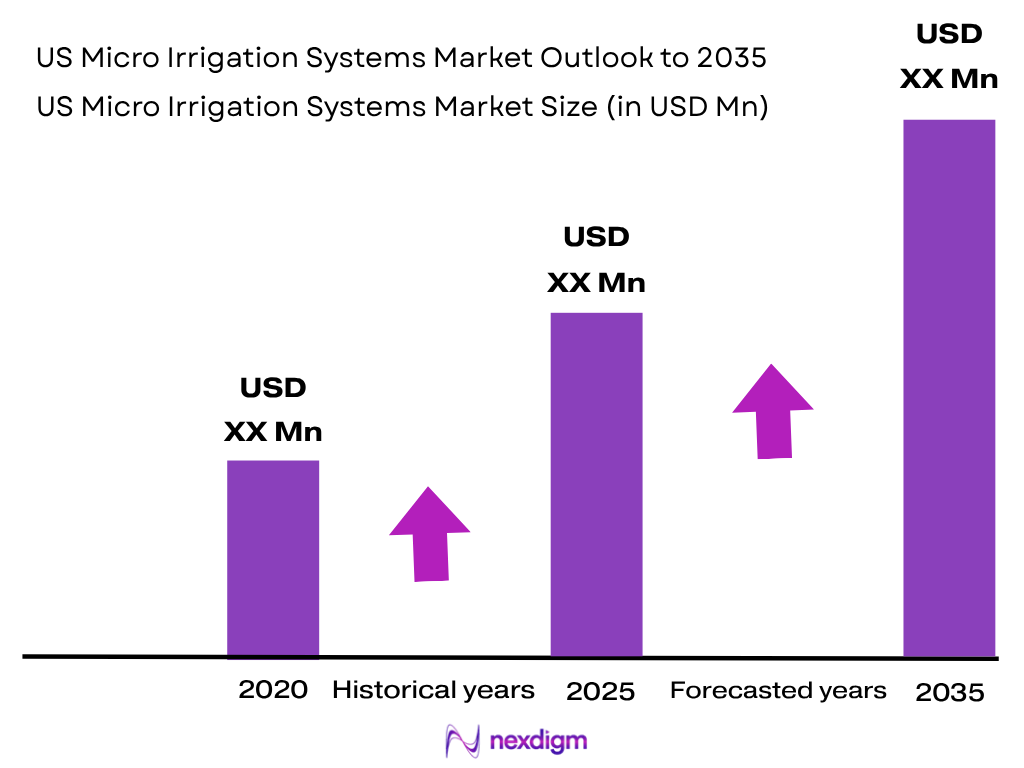
The US Micro Irrigation Systems Market is valued at USD ~ billion, based on historical industry analysis, supported by rising demand for efficient water management solutions across agriculture and landscaping applications. The adoption of drip irrigation and precision irrigation technologies is increasing due to water scarcity concerns, especially in western agricultural states. The United States has more than 900 million acres of agricultural land, creating significant demand for irrigation modernization. Increasing investment in conservation-focused farming practices and efficient water utilization is driving adoption of micro irrigation systems among commercial growers.
The US Micro Irrigation Systems Market is concentrated in regions with intensive agricultural production and water management requirements. California remains a major demand center due to extensive cultivation of fruits, vegetables, nuts, and specialty crops requiring precise irrigation solutions. Texas and Florida contribute significantly due to large-scale agricultural operations and expanding horticulture production. The United States agricultural sector generated more than USD 200 billion in farm output, supporting demand for advanced irrigation infrastructure. Growing greenhouse cultivation, landscaping projects, and municipal water conservation initiatives are further strengthening regional adoption.
Market Segmentation
By System Type
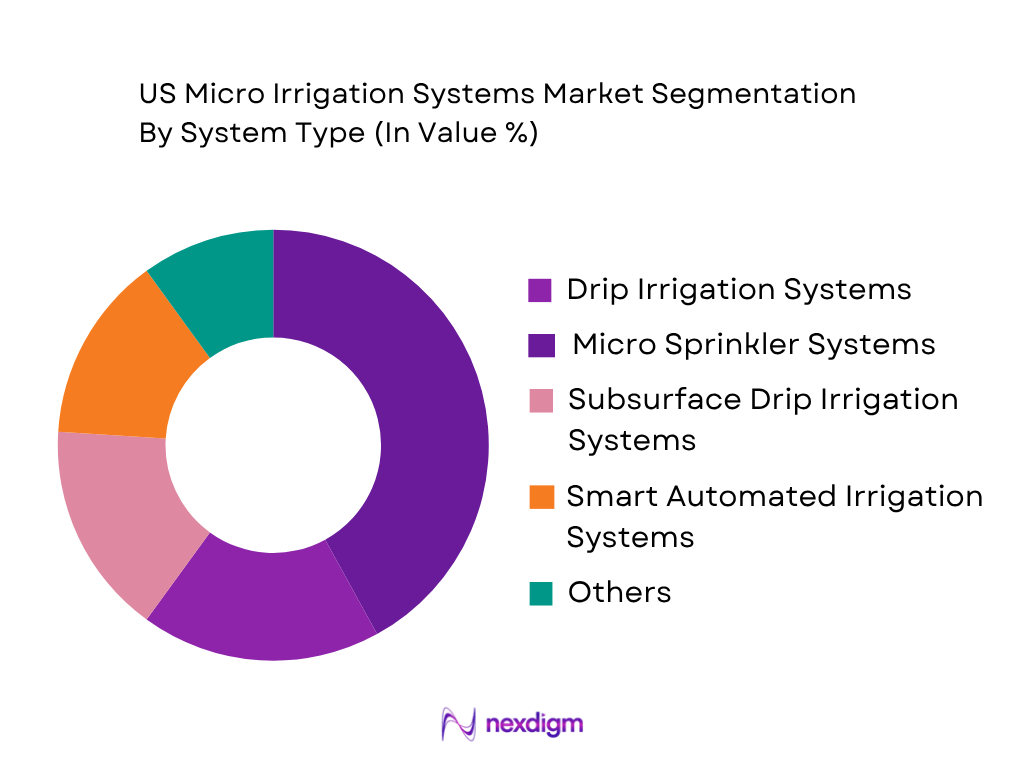
The US Micro Irrigation Systems Market is segmented by system type into drip irrigation systems, micro sprinkler systems, subsurface drip irrigation systems, emitter-based irrigation systems, and smart automated irrigation systems. Recently, drip irrigation systems have a dominant market share under the system type segmentation due to their high water efficiency, suitability for high-value crops, and extensive adoption among commercial farms. Drip irrigation delivers water directly to plant roots, reducing evaporation losses and improving fertilizer application efficiency through fertigation practices. The increasing cultivation of fruits, vegetables, vineyards, and specialty crops has strengthened demand for drip systems. Government-supported conservation programs and increasing awareness regarding water-saving agricultural practices have further encouraged growers to replace conventional irrigation methods with drip-based solutions.
By Component Type
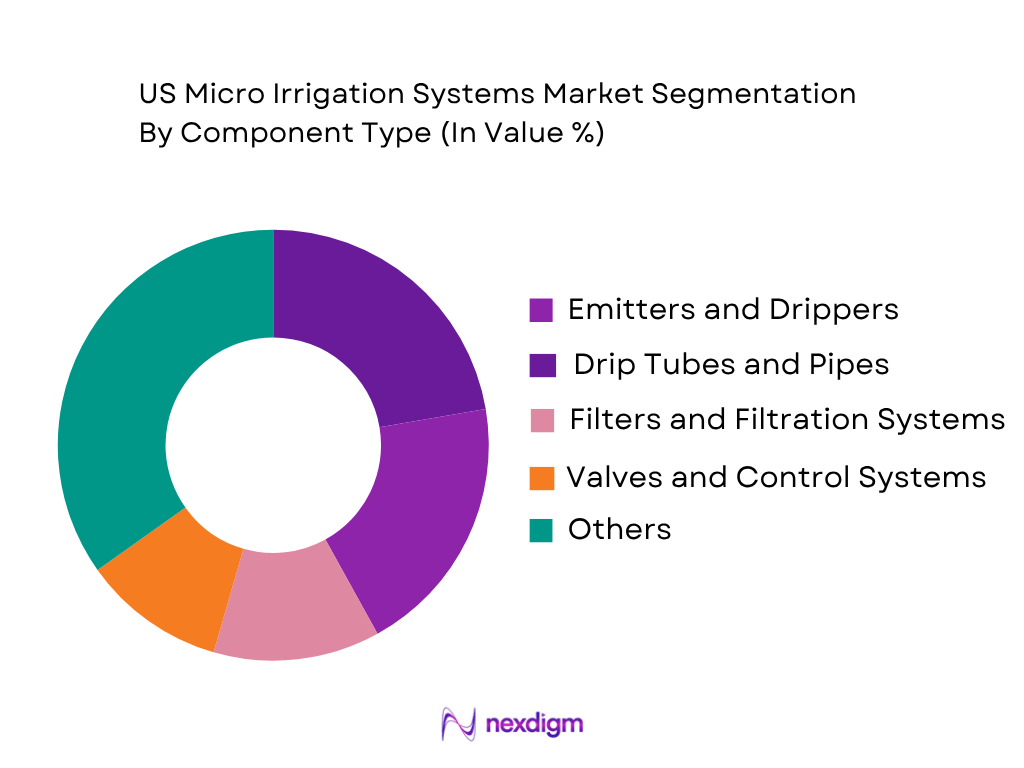
The US Micro Irrigation Systems Market is segmented by component type into emitters and drippers, drip tubes and pipes, filtration systems, valves and control systems, pumps, sensors, smart controllers, and fertigation equipment. Emitters and drippers account for a leading market share due to their critical role in controlling water discharge and improving irrigation precision. Modern agricultural operations increasingly require reliable water distribution systems capable of maintaining uniform crop growth. The replacement demand for damaged emitters, expansion of drip irrigation networks, and increasing adoption of automated irrigation systems are supporting component demand. Smart emitters integrated with sensors and controllers are gaining attention among large farms seeking improved resource management and operational efficiency.
Competitive Landscape
The US Micro Irrigation Systems Market is characterized by the presence of established irrigation technology providers, agricultural equipment manufacturers, and smart irrigation solution companies. The competitive environment is shaped by companies offering drip irrigation systems, micro sprinklers, automated controllers, water management solutions, and precision agriculture technologies. Major players compete through product innovation, distribution network expansion, integration of IoT-based irrigation monitoring, and customized solutions for commercial farming, specialty crops, and landscape applications. The US market is supported by strong adoption of water-efficient irrigation technologies due to increasing emphasis on water conservation and precision farming practices.
| Company | Establishment Year | Headquarters | Drip Irrigation Portfolio | Smart Irrigation Capability | Agricultural Application Coverage | Distribution Network | Product Innovation Focus | US Market Presence |
| Netafim | 1965 | Tel Aviv, Israel | ~ | ~ | ~ | ~ | ~ | ~ |
| The Toro Company | 1914 | Bloomington, Minnesota, USA | ~ | ~ | ~ | ~ | ~ | ~ |
| Rain Bird Corporation | 1933 | Azusa, California, USA | ~ | ~ | ~ | ~ | ~ | ~ |
| Lindsay Corporation | 1955 | Omaha, Nebraska, USA | ~ | ~ | ~ | ~ | ~ | ~ |
| Valmont Industries | 1946 | Omaha, Nebraska, USA | ~ | ~ | ~ | ~ | ~ | ~ |
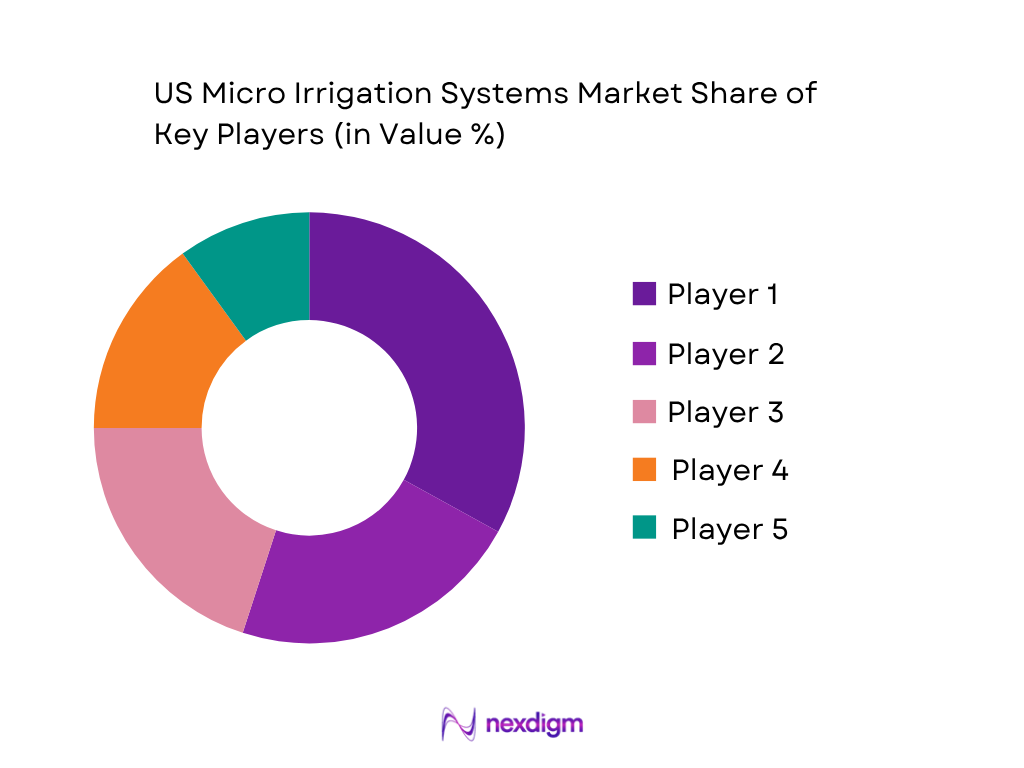
US Micro Irrigation Systems Market Analysis
Growth Drivers
Increasing Water Scarcity and Conservation Requirements
The US Micro Irrigation Systems Market is strongly supported by increasing pressure on agricultural water conservation and efficient resource utilization. Water availability constraints across western agricultural regions, particularly California, Arizona, and parts of the Great Plains, are encouraging farmers to transition from conventional irrigation methods toward drip and precision irrigation systems. The United States Geological Survey reported that irrigation remains one of the largest categories of freshwater withdrawals in the country, with agriculture accounting for approximately 118 billion gallons of water withdrawals per day. The Natural Resources Conservation Service has continued supporting irrigation efficiency improvements through conservation programs, including funding for improved water management infrastructure. The United States has more than 900 million acres of farmland, creating significant demand for technologies that optimize water usage while maintaining agricultural productivity. Increasing groundwater management regulations, drought conditions, and climate-related water stress are accelerating the replacement of inefficient irrigation methods with micro irrigation technologies. Drip irrigation systems enable targeted water delivery directly to plant roots, reducing unnecessary water losses and improving resource management across high-value crops, vineyards, orchards, and vegetable farms. These factors are strengthening long-term adoption of micro irrigation solutions across the agricultural sector.
Expansion of Precision Agriculture Adoption
The US Micro Irrigation Systems Market is benefiting from the rapid adoption of precision agriculture technologies that integrate irrigation systems with sensors, automation platforms, and data analytics. Farmers are increasingly implementing digital farming practices to improve crop yields, reduce resource wastage, and optimize farm operations. According to the United States Department of Agriculture, the US agricultural sector operates across more than 2 million farms, creating a large base for technology-enabled farming solutions. Precision agriculture adoption is expanding through the use of GPS-based equipment, soil moisture monitoring systems, automated irrigation controllers, and remote farm management platforms. The integration of smart irrigation technologies allows growers to monitor soil conditions, weather patterns, and crop water requirements in real time. Increasing availability of broadband connectivity in rural areas is also supporting the deployment of connected agricultural technologies. Government initiatives promoting sustainable agriculture and conservation practices are encouraging producers to adopt resource-efficient solutions. Micro irrigation systems integrated with precision farming platforms enable improved water distribution, reduced input waste, and better crop management, supporting adoption among commercial farms, specialty crop growers, and greenhouse operators across the United States.
Market Challenges
High Initial Installation Costs
The US Micro Irrigation Systems Market faces adoption challenges due to the relatively high upfront investment required for system installation, particularly for small and medium-sized agricultural producers. Micro irrigation systems require investment in drip lines, emitters, filtration units, pumps, pressure regulation equipment, automation controllers, and installation services. The complexity of designing irrigation networks according to crop type, soil characteristics, and field conditions increases initial implementation requirements. According to the United States Department of Agriculture, the US agricultural sector includes more than 1.9 million farms, with many small and family-operated farms managing limited capital resources for technology upgrades. Although micro irrigation systems provide long-term benefits through improved water efficiency and crop productivity, the initial financial requirement can delay adoption among smaller producers. Additional expenses related to maintenance infrastructure, replacement components, and technical support further influence purchasing decisions. Regional differences in farm economics, irrigation requirements, and access to financing create uneven adoption patterns across states. The challenge is more significant in areas where conventional irrigation methods remain widely established and farmers require additional incentives or support programs to transition toward advanced irrigation technologies.
Maintenance Requirements for Filters and Emitters
The US Micro Irrigation Systems Market experiences operational challenges due to the maintenance requirements associated with filtration systems, emitters, pipes, and control equipment. Micro irrigation systems depend on precise water delivery mechanisms, making them sensitive to clogging caused by sediment, mineral deposits, and biological materials present in irrigation water. Effective operation requires regular monitoring, filtration management, and replacement of damaged components. Agricultural operations using groundwater sources may face additional challenges due to variations in water quality and mineral concentration. According to the United States Geological Survey, groundwater provides an important source of irrigation water in several agricultural regions, particularly across western states where water quality management is essential. The requirement for skilled technicians to inspect, maintain, and optimize irrigation networks can increase operational complexity for farmers. Small-scale producers may face difficulties accessing specialized maintenance services, resulting in reduced system efficiency over time. As irrigation systems become increasingly automated through sensors and digital controllers, users also require technical knowledge to manage software-based monitoring platforms. These maintenance and operational requirements can influence adoption decisions among agricultural users unfamiliar with advanced irrigation technologies.
Market Opportunities
Expansion of IoT-Based Irrigation Solutions
The US Micro Irrigation Systems Market has significant growth opportunities through increasing integration of Internet of Things (IoT) technologies into irrigation management systems. Connected irrigation solutions enable real-time monitoring of soil moisture, weather conditions, water flow, and crop requirements, allowing farmers to optimize irrigation schedules. The United States Department of Agriculture has highlighted the growing importance of digital technologies in improving agricultural productivity and resource efficiency across American farms. The US agricultural sector includes more than 2 million farms, creating a broad opportunity for adoption of connected irrigation platforms. IoT-based irrigation systems combine sensors, cloud platforms, automated controllers, and mobile applications to provide remote monitoring and decision-making capabilities. Increasing availability of rural connectivity and advancements in agricultural technology are supporting adoption among commercial farms, greenhouse operators, and specialty crop producers. These solutions help reduce unnecessary water application, improve operational efficiency, and support sustainable farming practices. The integration of IoT with micro irrigation infrastructure creates opportunities for manufacturers to offer advanced water management solutions beyond traditional irrigation equipment. Growing demand for data-driven farming practices is expected to encourage further development of smart irrigation ecosystems across the United States.
Increasing Demand from Controlled Environment Agriculture
The US Micro Irrigation Systems Market is gaining opportunities from the expansion of controlled environment agriculture, including greenhouses, vertical farming facilities, and indoor cultivation systems. These agricultural models require precise water delivery, nutrient management, and environmental control, making micro irrigation technologies highly suitable for optimized production. According to the United States Department of Agriculture, protected agriculture and specialty crop production continue expanding as producers seek efficient methods to improve productivity and resource utilization. Controlled environment agriculture relies on drip irrigation, fertigation systems, automated controllers, and sensor-based monitoring to maintain consistent growing conditions. Increasing interest in local food production, year-round cultivation, and resource-efficient farming is encouraging investment in greenhouse technologies across the United States. Micro irrigation systems enable accurate delivery of water and nutrients while reducing losses, making them essential components of modern controlled farming environments. The combination of automation, precision irrigation, and digital monitoring creates opportunities for irrigation technology providers to develop customized solutions for greenhouse operators and specialty crop producers. This trend is expected to strengthen demand for advanced micro irrigation systems designed for highly controlled agricultural environments.
Future Outlook
Over the next decade, the US Micro Irrigation Systems Market is expected to demonstrate steady expansion driven by increasing water conservation requirements, adoption of precision agriculture technologies, and growing demand for sustainable farming solutions. The integration of smart sensors, automated controllers, and digital irrigation platforms will reshape irrigation management practices across commercial farms and landscape applications. Rising climate variability and increasing focus on efficient water utilization are expected to encourage replacement of conventional irrigation systems with advanced micro irrigation technologies. The market will also benefit from expanding greenhouse cultivation, specialty crop production, and government-supported agricultural conservation initiatives.
Major Players
- Netafim
- The Toro Company
- Rain Bird Corporation
- Jain Irrigation Systems
- Lindsay Corporation
- Valmont Industries
- Hunter Industries
- Rivulis Irrigation
- Nelson Irrigation Corporation
- Irritec
- Reinke Manufacturing
- Kifco Inc.
- Orbit Irrigation Products
- Advanced Drainage Systems
- DripWorks
Key Target Audience
- Agricultural Equipment Manufacturers
- Micro Irrigation System Manufacturers
- Drip Irrigation Technology Providers
- Smart Farming Technology Companies
- Commercial Farming Enterprises
- Greenhouse and Controlled Environment Agriculture Operators
- Investments and Venture Capitalist Firms
- Government and Regulatory Bodies (United States Department of Agriculture, Natural Resources Conservation Service, Environmental Protection Agency)
Research Methodology
Step 1: Identification of Key Variables
The initial phase involves developing a comprehensive ecosystem map covering manufacturers, irrigation technology providers, agricultural users, distribution partners, regulatory bodies, and technology developers operating within the US Micro Irrigation Systems Market. Secondary research is conducted to identify critical variables including irrigation adoption, technology penetration, agricultural application trends, water management requirements, and supply chain dynamics.
Step 2: Market Analysis and Construction
In this phase, historical and current market information is analyzed through demand-side and supply-side assessment approaches. The analysis includes evaluation of irrigation technology adoption across agricultural regions, installation trends, component demand, application areas, and evolving preferences toward drip irrigation, micro sprinklers, and smart irrigation systems.
Step 3: Hypothesis Validation and Expert Consultation
Market assumptions are validated through discussions with industry participants including irrigation manufacturers, agricultural technology providers, distributors, contractors, and farming stakeholders. These interactions provide operational insights related to product demand, technology adoption barriers, competitive positioning, and future market development.
Step 4: Research Synthesis and Final Output
The final stage combines quantitative and qualitative findings obtained from industry analysis, stakeholder assessment, and market evaluation. The collected information is validated to develop a comprehensive assessment of market size, segmentation, competitive landscape, growth drivers, challenges, and future opportunities within the US Micro Irrigation Systems Market.

- Executive Summary
- Research Methodology (Market Definition and Scope, US Micro Irrigation Systems Market Classification, Irrigation Technology Mapping, Drip Irrigation System Assessment, Micro Sprinkler System Evaluation, Subsurface Drip Irrigation Analysis, Smart Irrigation Technology Assessment, Water Conservation Technology Mapping, Agricultural Application Assessment, Residential Irrigation Application Assessment, Commercial Landscape Irrigation Evaluation, Top-Down Market Sizing Approach, Bottom-Up Market Estimation Approach, Demand-Side Assessment, Supply-Side Assessment, Primary Industry Interviews, Data Triangulation, Forecasting Framework, Limitations and Future Conclusions)

- Definition and Scope
- Market Evolution and Industry Genesis Timeline
- Micro Irrigation Systems Value Chain Analysis
- Micro Irrigation Systems Supply Chain Analysis

- Growth Drivers (Increasing Water Scarcity and Conservation Requirements, Expansion of Precision Agriculture Adoption, Rising Demand for Efficient Irrigation Technologies, Government Support for Water Management Programs, Growth of High-Value Crop Cultivation, Increasing Adoption of Smart Farming Technologies, Expansion of Greenhouse Agriculture, Rising Climate Variability Impacting Agriculture, Growing Commercial Landscaping Demand, Increasing Agricultural Productivity Requirements)
- Market Challenges (High Initial Installation Costs, Complex System Design Requirements, Maintenance Requirements for Filters and Emitters, Lack of Awareness Among Small Farmers, Dependence on Skilled Installation Services, Water Quality Issues Affecting System Performance, Replacement and Repair Challenges, Fragmented Irrigation Supply Chain, Regional Variations in Water Regulations, Competition from Traditional Irrigation Methods)
- Market Opportunities (Expansion of IoT-Based Irrigation Solutions, Integration of Artificial Intelligence in Irrigation Management, Growth of Regenerative and Sustainable Agriculture, Increasing Adoption of Solar-Powered Irrigation Systems, Expansion of Subsurface Drip Irrigation, Development of Low-Cost Irrigation Solutions for Small Farms, Growth of Precision Fertigation Systems, Increasing Demand from Controlled Environment Agriculture, Municipal Water Conservation Projects, Digital Irrigation Monitoring Platforms)
- Market Trends (Smart Irrigation Controller Adoption, IoT-Based Water Management Systems, Sensor-Based Irrigation Scheduling, Precision Fertigation Technology Growth, Subsurface Drip Irrigation Expansion, Sustainable Water Management Practices, AI-Based Irrigation Optimization, Remote Irrigation Monitoring, Automated Valve Management Systems, Integration with Farm Management Software)
- Government Regulations and Standards (US Department of Agriculture Conservation Programs, Environmental Protection Agency Water Efficiency Guidelines, Natural Resources Conservation Service Irrigation Standards, State-Level Water Conservation Regulations, California Sustainable Groundwater Management Act, Irrigation Association Standards, Agricultural Water Management Policies, Smart Irrigation Technology Guidelines)
- SWOT Analysis
- Porter’s Five Forces Analysis
- PESTLE Analysis
- Stakeholder Ecosystem
- Competition Ecosystem

- By Market Value (2020-2025)
- By Installed Area Coverage (2020-2025)
- By Irrigated Acre Adoption (2020-2025)
- By System Component Consumption Volume (2020-2025)
- By Water Saving Technology Deployment (2020-2025)

- By System Type (In Value %)
Drip Irrigation Systems
Surface Drip Irrigation Systems
Inline Drip Systems
Online Drip Systems
Bubbler Irrigation Systems
Emitter-Based Irrigation Systems
Low Pressure Irrigation Systems
Smart Automated Micro Irrigation Systems - By Component Type (In Value %)
Emitters and Drippers
Drip Tubes and Pipes
Filters and Filtration Systems
Pressure Regulators
Valves and Control Systems
Pumps and Pumping Equipment
Sensors and Monitoring Devices
Smart Irrigation Controllers
Fittings and Connectors
Fertigation Equipment - By Application Area (In Value %)
Agricultural Crops
Row Crops
Fruits and Orchards
Vegetables and Horticulture Crops
Vineyards and Specialty Crops
Greenhouse and Nursery Applications
Commercial Landscaping
Golf Courses and Sports Grounds
Residential Landscaping
Municipal Green Spaces - By Farm Size (In Value %)
Large Commercial Farms
Medium-Sized Farms
Small Farms
Family-Owned Farms
Specialty Crop Farms
Greenhouse Operators - By Technology Type (In Value %)
Conventional Micro Irrigation Systems
Automated Irrigation Systems
Sensor-Based Irrigation Systems
IoT-Enabled Smart Irrigation Systems
Weather-Based Irrigation Systems
Remote Monitoring Irrigation Solutions - By Region (In Value %)
California
Texas
Florida
Arizona
Washington
Oregon
Georgia
Colorado
Other US Regions

- Market Share of Major Players (By US Revenue, System Type Coverage, Drip Irrigation Portfolio, Smart Irrigation Technology Presence, Agricultural Application Coverage, Residential Irrigation Presence, Distribution Network Reach, Installed Irrigation Area Coverage, Manufacturing Capability, Product Innovation Pipeline, Digital Irrigation Solutions, Regional Presence)
- Cross Comparison Parameters (Micro Irrigation Product Portfolio Breadth, Drip Irrigation Technology Capability, Smart Irrigation Solution Integration, Emitter Technology Portfolio, Water Efficiency Performance, Agricultural Crop Application Coverage, Distribution Network Strength, Digital Monitoring and Automation Capability)
- SWOT Analysis of Major Players
- Detailed Profiles of Major Companies
Netafim
Jain Irrigation Systems
The Toro Company
Lindsay Corporation
Rain Bird Corporation
Hunter Industries
Rivulis Irrigation
Valmont Industries
Kifco Inc.
DripWorks
Irritec
Aquatec International
Reinke Manufacturing
Orbit Irrigation Products
Advanced Drainage Systems

- Agricultural Producer Irrigation Requirement Assessment
- Crop-Specific Water Management Analysis
- Precision Farming Technology Adoption Assessment
- Large Farm Irrigation Investment Analysis
- Small and Medium Farm Adoption Barrier Assessment
- Greenhouse and Controlled Environment Agriculture Requirement Analysis
- Commercial Landscape Irrigation Requirement Assessment

- By Market Value (2026-2035)
- By Installed Area Coverage (2026-2035)
- By Irrigated Acre Adoption (2026-2035)
- By System Component Consumption Volume (2020-2025)
- By Water Saving Technology Deployment (2020-2025)


 Request a Sample
 Ask for Customization
 Get a Quote
 Enquire Now