

 Download PDF
 Download PDF
Market Overview
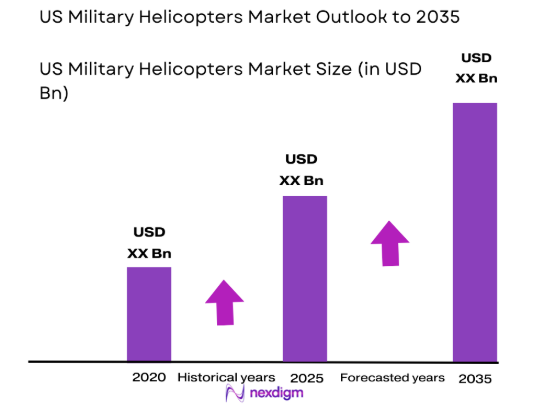
The US military helicopters market is projected to achieve significant growth, driven by continuous advancements in aviation technology and increasing military budgets. Recent assessments place the market size at approximately USD ~ billion, supported by rising defense expenditures. Growth in this market is fueled by modernizations within military forces, emphasizing the integration of advanced technologies such as autonomous systems, hybrid propulsion, and advanced avionics. The demand for versatile and multifunctional platforms, including combat, transport, and reconnaissance helicopters, is bolstering the market.
The dominance of the US military helicopter market can be attributed to several key factors. The US, as a global military leader, invests heavily in advanced technologies and military assets. Key military hubs such as Washington, California, and Texas play significant roles, with major manufacturing facilities and defense contractors like Lockheed Martin and Boeing located in these regions. Additionally, the US military’s strategic initiatives, including counterterrorism operations and joint defense efforts with allied nations, maintain a strong demand for cutting-edge helicopter platforms.
Market Segmentation
By Product Type
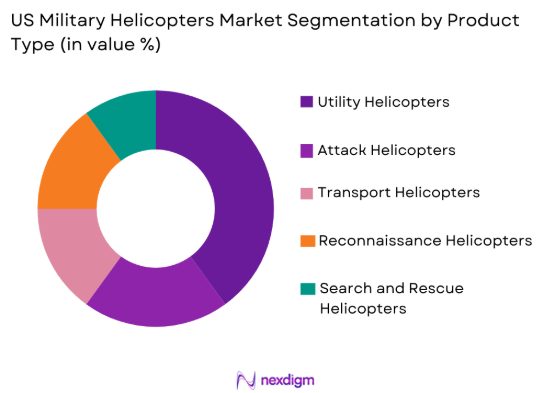
The US military helicopters market is segmented by product type into utility helicopters, attack helicopters, transport helicopters, reconnaissance helicopters, and search and rescue helicopters. Recently, attack helicopters have emerged as the dominant segment due to their crucial role in modern military operations. With ongoing geopolitical tensions and evolving security needs, the demand for high-performance, armed helicopters capable of tactical strikes has surged. This growth is supported by advancements in targeting systems, armament integration, and enhanced survivability, making attack helicopters a key focus for military forces.
By Platform Type
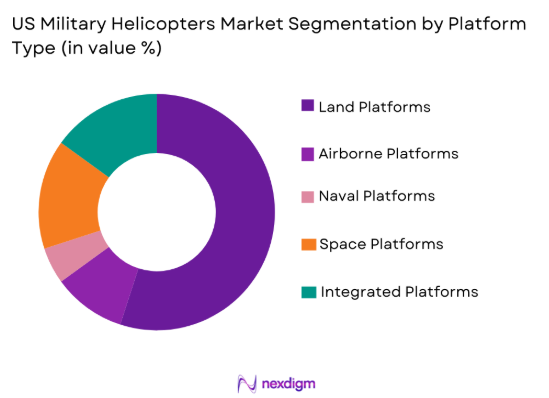
The US military helicopters market is segmented by platform type into land platforms, airborne platforms, naval platforms, space platforms, and integrated platforms. Recently, airborne platforms have dominated the market share due to their versatility and high deployment rates in military operations. The increasing demand for rapid mobility and tactical flexibility, along with the advanced capabilities offered by these platforms, such as enhanced avionics, sensors, and propulsion systems, has made airborne helicopters critical for both combat and humanitarian missions.
Competitive Landscape
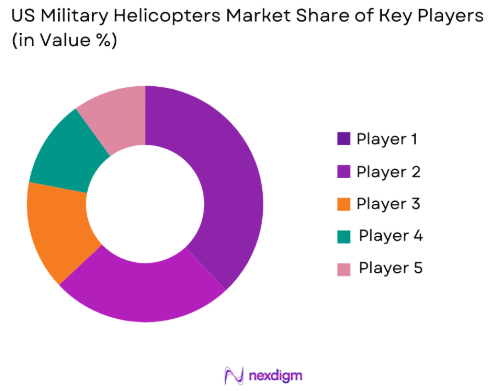
The competitive landscape in the US military helicopters market is characterized by strong consolidation and dominance by a few major defense contractors. Companies like Boeing, Lockheed Martin, and Sikorsky lead the sector due to their advanced technological capabilities and strong government ties. These players are continuously investing in research and development to create next-generation platforms, often focusing on the integration of autonomous systems, hybrid technologies, and AI-driven features.
| Company Name | Establishment Year | Headquarters | Technology Focus | Market Reach | Key Products | Revenue | Innovation Focus |
| Boeing | 1916 | Chicago, USA | ~ | ~ | ~ | ~ | ~ |
| Lockheed Martin | 1995 | Bethesda, USA | ~ | ~ | ~ | ~ | ~ |
| Sikorsky Aircraft | 1923 | Stratford, USA | ~ | ~ | ~ | ~ | ~ |
| Bell Helicopter | 1935 | Fort Worth, USA | ~ | ~ | ~ | ~ | ~ |
| Airbus Helicopters | 2000 | Toulouse, France | ~ | ~ | ~ | ~ | ~ |
US Military Helicopters Market Analysis
Growth Drivers
Technological Advancements in Rotorcraft Design
Technological advancements in rotorcraft design have been a significant growth driver for the US military helicopters market. The integration of autonomous systems, advanced avionics, and enhanced fuel efficiency is revolutionizing helicopter operations. These innovations improve operational effectiveness and reduce the need for manpower, allowing for quicker, more precise missions. Furthermore, technologies such as fly-by-wire systems and digital cockpit advancements increase the performance and safety of military helicopters, making them more appealing to military buyers. These developments not only drive the modernization of current fleets but also ensure that military forces can adapt to future warfare scenarios, making them a key factor in the ongoing demand for new platforms.
Geopolitical Tensions and Global Military Engagement
The growing geopolitical tensions around the world and the increasing focus on military readiness and defense strategies contribute to the demand for advanced military helicopters. As security concerns evolve, the US military continues to prioritize enhancing its fleet of helicopters to address various defense challenges. This includes counterterrorism operations, humanitarian aid missions, and complex combat scenarios. With the rise of hybrid warfare and the increased use of helicopters in diverse roles, the need for versatile platforms capable of operating in hostile environments becomes essential. The US military’s strategic priorities are a key driver behind the surge in procurement and technology investments in the sector, ensuring continued growth in the market.
Market Challenges
High Procurement Costs and Budget Constraints
High procurement costs and budget constraints are significant challenges for the US military helicopters market. The acquisition of advanced helicopters involves substantial financial outlays, including research, development, and testing costs. This is particularly relevant for next-generation systems that incorporate cutting-edge technology such as autonomous flight control and advanced weaponry. With defense budgets being scrutinized, maintaining the balance between affordability and cutting-edge technology is a continual challenge. The high capital investment associated with military helicopters can limit procurement capabilities, especially for smaller defense contractors and allied nations relying on US defense support.
Technological Integration and Interoperability Issues
The integration of new technologies and systems into existing platforms poses a major challenge for the US military helicopter market. As new features like advanced sensors, autonomous systems, and hybrid propulsion systems are integrated, ensuring compatibility with existing infrastructure and operational procedures becomes increasingly complex. These interoperability issues not only extend the development timelines but also increase the risk of operational inefficiencies and the need for expensive upgrades. Balancing technological innovation with legacy system compatibility remains a crucial hurdle that must be addressed to ensure smooth deployment across military forces.
Opportunities
Development of Autonomous and Hybrid Helicopters
One of the most promising opportunities in the US military helicopters market is the development of autonomous and hybrid helicopters. Autonomous systems, which are capable of performing various mission-critical tasks without direct human intervention, offer increased operational efficiency and reduced risk to personnel. Additionally, hybrid propulsion systems that combine conventional and electric technologies present opportunities for more fuel-efficient, environmentally friendly, and quieter operations. These technologies offer cost savings in long-term operations and provide enhanced strategic capabilities, making them highly attractive for military forces looking to stay ahead in modern warfare. The push towards developing these technologies provides an opportunity for both established defense contractors and startups specializing in aerospace innovations to lead the charge.
Collaboration with Private Sector for Technological Advancements
The increasing collaboration between the military and private sector companies presents a valuable opportunity for growth in the US military helicopters market. Technology firms specializing in artificial intelligence, sensor technology, and autonomous systems are increasingly partnering with defense contractors to integrate these cutting-edge technologies into military helicopters. This collaboration allows for the rapid development and deployment of advanced helicopter platforms, bringing innovative solutions to the forefront. Moreover, private sector partnerships help overcome budgetary constraints by sharing the financial burden and leveraging expertise from both the defense and tech industries, making it an important avenue for future market growth.
Future Outlook
The US military helicopters market is poised for steady growth over the next five years, driven by advancements in helicopter technology, increasing defense budgets, and the rising demand for versatile, multi-role platforms. Technological developments in areas like autonomous flight systems, hybrid propulsion, and enhanced avionics will likely lead to more efficient and capable platforms. Regulatory support, especially through government defense contracts and funding for innovation, will further contribute to the market’s expansion. The demand for helicopters that can operate in diverse and high-risk environments will continue to rise, ensuring sustained market development.
Major Players
- Lockheed Martin
- Boeing
- Sikorsky Aircraft
- Bell Helicopter
- Airbus Helicopters
- Northrop Grumman
- Textron Aviation
- General Dynamics
- Leonardo
- Thales Group
- MD Helicopters
- Honeywell Aerospace
- L3 Technologies
- Kaman Aerospace
- UTC Aerospace Systems
Key Target Audience
- Investments and venture capitalist firms
- Government and regulatory bodies
- Military forces and defense ministries
- Aerospace manufacturers
- Helicopter maintenance and service providers
- Security and surveillance agencies
- Defense contractors and system integrators
- Private sector technology firms
Research Methodology
Step 1: Identification of Key Variables
This step involves identifying the critical factors affecting market growth, including technological advancements, geopolitical factors, and regulatory influences.
Step 2: Market Analysis and Construction
Market analysis involves studying historical trends, current market conditions, and relevant economic and political factors.
Step 3: Hypothesis Validation and Expert Consultation
Engaging with industry experts to validate assumptions and refine hypotheses based on real-world market conditions.
Step 4: Research Synthesis and Final Output
Synthesizing data from multiple sources to produce a comprehensive market report that addresses key trends, drivers, and challenges.

- Executive Summary
- Research Methodology (Definitions, Scope, Industry Assumptions, Market Sizing Approach, Primary & Secondary Research Framework, Data Collection & Verification Protocol, Analytic Models & Forecast Methodology, Limitations & Research Validity Checks)

- Market Definition and Scope
- Value Chain & Stakeholder Ecosystem
- Regulatory / Certification Landscape
- Sector Dynamics Affecting Demand
- Strategic Initiatives & Infrastructure Growth

- Growth Drivers
Increased Military Modernization and Upgrades
Technological Advancements in Helicopter Design
Growing Demand for Multi-role Capabilities in Combat
Rising Military Budgets in Defense-focused Countries
Strategic Military Operations in High-risk Areas - Market Challenges
High Capital Investment Requirements
Complexity in Integrating Advanced Technologies
Regulatory and Compliance Challenges
Maintenance and Operational Costs
Limited Availability of Skilled Pilots - Market Opportunities
Development of Autonomous and Unmanned Helicopters
Partnerships for Military Helicopter Upgrades
Expanding Demand for Helicopter-based ISR Solutions - Trends
Increasing Role of Helicopters in Special Operations
Enhanced Use of Hybrid and Electric Propulsion Systems
Growing Integration of AI in Flight Control Systems
Rising Investments in Multi-functional Helicopter Platforms
Advancements in Autonomous Helicopter Technology - Government Regulations & Defense Policy
Export Control and Compliance Policies
Government Funding for Military Helicopter R&D
Safety and Airworthiness Standards

- By Market Value, 2020-2025
- By Installed Units, 2020-2025
- By Average System Price, 2020-2025
- By System Complexity Tier, 2020-2025

- By System Type (In Value%)
Utility Helicopters
Attack Helicopters
Transport Helicopters
Reconnaissance Helicopters
Search and Rescue Helicopters - By Platform Type (In Value%)
Land Platforms
Airborne Platforms
Naval Platforms
Space Platforms
Integrated Platforms - By Fitment Type (In Value%)
On-premise Solutions
Cloud-based Solutions
Hybrid Solutions
Modular Solutions
Integrated Solutions - By End User Segment (In Value%)
Military Forces
Defense Contractors
Government Agencies
Security Services
Private Sector / Technology Firms - By Procurement Channel (In Value%)
Direct Procurement
Government Tenders
Private Sector Procurement
Online Bidding Platforms
Third-party Distributors - By Material / Technology (In Value%)
Advanced Composite Materials
Autonomous Flight Technology
Hybrid Propulsion Systems
Advanced Avionics and Sensors
Weaponized Systems

- Market structure and competitive positioning
- Market share snapshot of major players
- Cross Comparison Parameters (System Type, Platform Type, Procurement Channel, End User Segment, Fitment Type, Material / Technology, Geographic Presence, Pricing Strategy, Innovation, Operational Efficiency)
- SWOT Analysis of Key Players
- Pricing & Procurement Analysis
- Porter’s Five Forces
- Key Players
Lockheed Martin
Boeing
Northrop Grumman
Bell Helicopter
Sikorsky Aircraft
Leonardo
Airbus Helicopters
Textron Aviation
General Dynamics
Thales Group
MD Helicopters
Honeywell Aerospace
L3 Technologies
Kaman Aerospace
UH-60 Black Hawk

- Increasing Demand for Advanced Helicopter Platforms in Military Forces
- Government Agencies Focusing on Helicopter Procurement Programs
- Private Sector Partnerships in Helicopter Maintenance Services
- Security Services Relying on Helicopters for Surveillance and Rescue Operations

- Forecast Market Value, 2026-2035
- Forecast Installed Units, 2026-2035
- Price Forecast by System Tier, 2026-2035
- Future Demand by Platform, 2026-2035


 Request a Sample
 Ask for Customization
 Get a Quote
 Enquire Now