

 Download PDF
Market Overview
The US Native Starch Market is characterized by extensive utilization of unmodified starch extracted from corn, wheat, potato, and tapioca sources across food processing, beverage, pharmaceutical, paper, and industrial applications. The market is driven by increasing demand for clean-label ingredients, functional food formulations, and plant-based raw materials. The US agricultural ecosystem supports native starch production, with the country producing 15.3 billion bushels of corn during the latest reported crop cycle, creating a strong domestic feedstock base for corn starch manufacturing. Food and beverage processing remains a major consumption area due to starch applications in thickening, binding, and texture enhancement.
The US Native Starch Market is concentrated in agricultural and industrial hubs including Iowa, Illinois, Indiana, Nebraska, and Minnesota due to their proximity to corn-growing regions, processing infrastructure, and established food manufacturing networks. The Midwest dominates production activities because it benefits from large-scale corn cultivation, efficient logistics networks, and integrated starch processing facilities. The US produced approximately 389 million metric tons of grains and oilseeds in the latest agricultural reporting period, supporting availability of starch-based raw materials. Major food processing clusters in states such as California, Texas, and Illinois further strengthen demand through applications in bakery, dairy, sauces, beverages, and convenience food manufacturing.
Market Segmentation
By Source Type
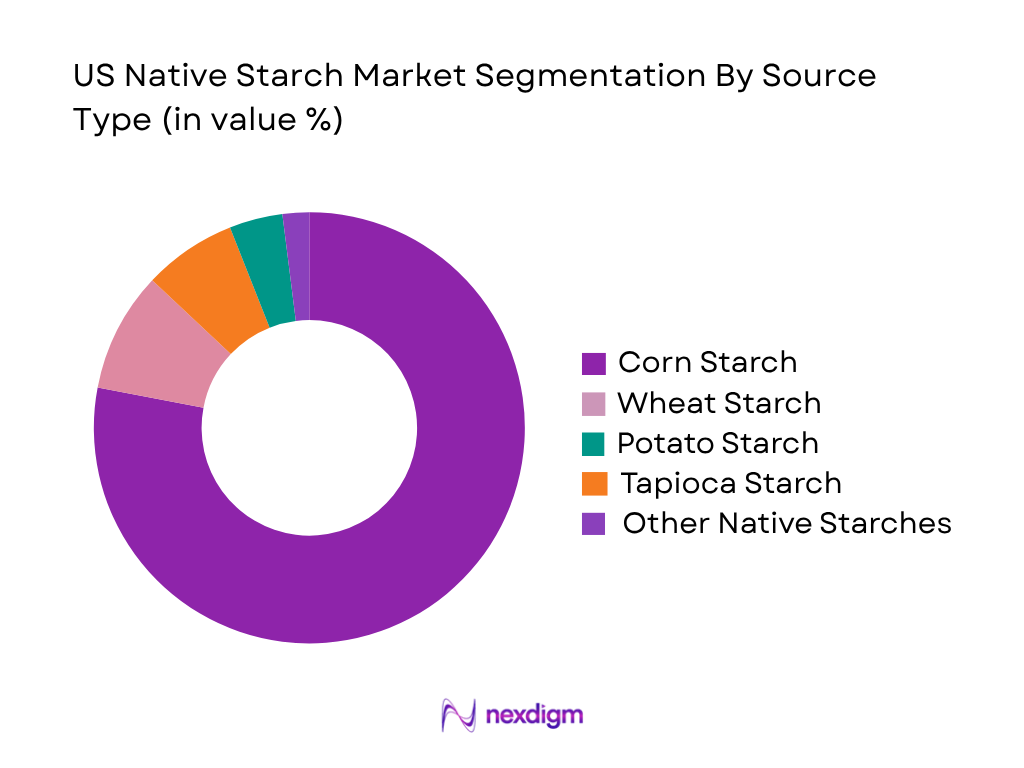
US Native Starch Market is segmented by source type into corn starch, wheat starch, potato starch, tapioca starch, and other specialty starch sources. Corn starch represents the dominant segment due to the extensive availability of corn as a raw material and the highly developed corn processing industry across the United States. The country harvested more than 90 million acres of corn, creating a stable supply chain for starch extraction. Corn starch is widely used in processed foods, bakery products, sauces, confectionery, and industrial applications because of its cost efficiency, neutral flavor profile, and functional properties. The presence of integrated corn wet milling facilities enables manufacturers to produce starch alongside other co-products, improving operational efficiency. Demand from food manufacturers seeking natural thickening and stabilizing ingredients continues to support corn starch consumption.
By Application Type
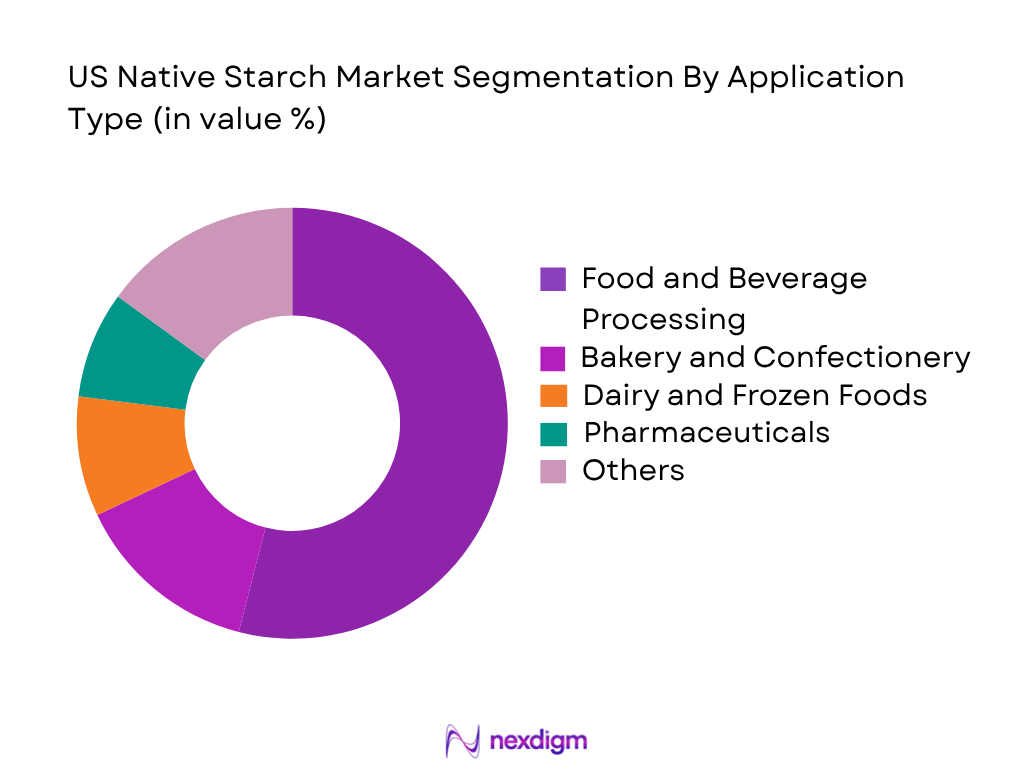
US Native Starch Market is segmented by application type into food and beverage processing, bakery and confectionery, dairy and frozen foods, pharmaceuticals, paper and packaging, and industrial applications. Food and beverage processing dominates the application segment due to widespread starch usage as a natural thickener, stabilizer, and texture modifier. The US food manufacturing sector generated significant economic activity, supported by more than 40,000 food and beverage processing establishments, creating continuous demand for functional ingredients. Native starch is preferred by manufacturers developing clean-label products because it provides formulation benefits without chemical modification. Bakery, dairy, and processed food producers use native starch to improve consistency, moisture retention, and product stability. Growing demand for convenience foods, ready-to-eat meals, and plant-based formulations further supports adoption across multiple food categories.
Competitive Landscape
The US Native Starch Market competitive landscape is characterized by the presence of integrated starch processors, agricultural commodity companies, and specialty ingredient manufacturers offering corn, wheat, potato, and tapioca-based starch solutions. Major players compete through raw material sourcing capabilities, processing capacity, application expertise, customized starch formulations, and distribution networks serving food, beverage, pharmaceutical, and industrial customers. Companies with vertically integrated agricultural supply chains maintain advantages due to stable access to corn and other starch-producing crops, while specialty starch manufacturers focus on clean-label and functional ingredient solutions.
| Company | Establishment Year | Headquarters | Primary Native Starch Portfolio | Major Raw Material Focus | Key End-Use Industries | Manufacturing Capability | Distribution Network | Product Innovation Focus |
| Archer Daniels Midland Company (ADM) | 1902 | Chicago, Illinois, USA | ~ | ~ | ~ | ~ | ~ | ~ |
| Cargill Incorporated | 1865 | Minneapolis, Minnesota, USA | ~ | ~ | ~ | ~ | ~ | ~ |
| Ingredion Incorporated | 1906 | Westchester, Illinois, USA | ~ | ~ | ~ | ~ | ~ | ~ |
| Tate & Lyle PLC | 1921 | London, United Kingdom | ~ | ~ | ~ | ~ | ~ | ~ |
| Roquette Frères | 1933 | Lestrem, France | ~ | ~ | ~ | ~ | ~ | ~ |

US Native Starch Market Analysis
Growth Drivers
Increasing Demand for Clean-Label and Plant-Based Food Ingredients
The US Native Starch Market is supported by the increasing adoption of natural, minimally processed, and plant-derived ingredients across food and beverage manufacturing. Native starch is widely used as a functional ingredient for thickening, binding, stabilizing, and improving texture in bakery products, sauces, dairy products, beverages, processed foods, and ready-to-eat meals. The market benefits from the strong presence of the US food processing industry, which contributes more than USD 1 trillion to the national economy according to government economic statistics. The country produced approximately 15.1 billion bushels of corn in the latest agricultural production cycle, ensuring a strong domestic supply base for corn starch manufacturing. The rising preference for recognizable ingredients and transparent labeling is encouraging food manufacturers to replace synthetic additives with naturally sourced starch solutions. Additionally, the expansion of plant-based foods, gluten-free products, and functional nutrition categories is increasing the requirement for starch-based formulation ingredients. Native starch is preferred because of its compatibility with clean-label positioning, cost efficiency, and ability to improve product consistency. Increasing consumer awareness regarding ingredient quality, sustainability, and healthier food choices continues to encourage manufacturers to develop products using natural starch-based solutions. The growing presence of specialty food manufacturers and innovation in food formulations further supports demand expansion.
Expansion of Food Processing and Industrial Applications
The US Native Starch Market benefits from broad application adoption across food processing, pharmaceuticals, paper manufacturing, adhesives, and other industrial sectors. Native starch provides functional properties such as viscosity control, adhesion, moisture retention, binding ability, and texture improvement, making it suitable for multiple manufacturing processes. The United States maintains one of the largest food manufacturing ecosystems globally, supported by thousands of processing facilities producing bakery products, confectionery items, beverages, frozen foods, dairy alternatives, and prepared meals requiring starch-based ingredients. Agricultural production remains a major supporting factor, with the country producing more than 15 billion bushels of corn, supporting continuous availability of starch feedstock. Pharmaceutical applications are also expanding due to the utilization of starch as a binder, filler, and disintegrant in tablet production. Industrial demand is supported by the paper sector, where starch-based solutions are used for coating, strengthening, and improving paper quality. Growth in packaged food production, increasing demand for convenience meals, and adoption of renewable bio-based materials are creating additional consumption opportunities. Manufacturers are also investing in improved extraction technologies and application-specific starch formulations to meet the requirements of food, healthcare, and industrial customers.
Market Challenges
Raw Material Price Volatility and Agricultural Supply Dependency
The US Native Starch Market faces challenges due to its dependence on agricultural commodities such as corn, wheat, potato, and other starch-producing crops, where production conditions directly influence raw material availability and supply stability. Weather conditions, crop yields, transportation limitations, and commodity market fluctuations create uncertainty for starch processors. The United States produced more than 15 billion bushels of corn during the latest production cycle, but agricultural variability continues to affect procurement planning and inventory management. Native starch manufacturers require consistent raw material quality to maintain production efficiency and fulfill customer requirements across food and industrial applications. Changes in fertilizer availability, energy consumption, labor costs, and farming economics can influence agricultural production conditions. Additionally, competition for corn supply from animal feed production, ethanol manufacturing, and export markets creates pressure on raw material allocation. Starch processors must maintain strong supplier relationships and efficient sourcing networks to reduce supply chain risks. Increasing focus on sustainable agricultural practices and traceability requirements also adds operational complexity. Companies need to improve supply chain resilience, enhance storage capabilities, and develop diversified sourcing strategies to manage fluctuations in agricultural input availability.
Competition from Modified Starch and Alternative Functional Ingredients
The US Native Starch Market experiences competitive pressure from modified starches and alternative functional ingredients that provide enhanced performance characteristics for specialized applications. Native starch offers natural functionality and clean-label advantages; however, modified starch products are often selected by manufacturers requiring higher resistance to heat, acidity, freezing, and processing stress. The US processed food sector includes a wide range of manufacturers requiring customized ingredient solutions for improving texture, stability, and shelf life. Alternative ingredients such as gums, fibers, hydrocolloids, and other plant-based functional additives compete with native starch in applications requiring thickening and stabilization properties. Regulatory expectations regarding food labeling, ingredient transparency, and product performance are encouraging companies to continuously improve starch formulations. Furthermore, food manufacturers increasingly demand ingredients that provide specific technical benefits while meeting consumer expectations for natural and sustainable products. Native starch producers face the challenge of differentiating their offerings through improved functionality, application support, and sustainable sourcing practices. Investment in research and development, customized formulations, and customer collaboration is becoming increasingly important for maintaining competitiveness against advanced starch alternatives.
Market Opportunities
Growth of Functional Foods and Specialty Food Formulations
The US Native Starch Market has significant opportunities due to increasing development of functional foods, specialty diets, and innovative food formulations requiring natural ingredient solutions. Native starch is increasingly used in bakery products, plant-based foods, dairy alternatives, nutritional products, sauces, and prepared meals where manufacturers require natural texture enhancement and formulation stability. The United States food manufacturing industry contributes more than USD 1 trillion to economic activity, creating a large customer base for ingredient suppliers. Domestic agricultural strength, including corn production exceeding 15 billion bushels, provides a reliable foundation for expanding starch processing capabilities. The increasing focus on clean-label foods is encouraging manufacturers to reformulate products using recognizable plant-based ingredients. Native starch producers can benefit from growing demand for gluten-free products, plant-based alternatives, and functional foods requiring improved texture and processing performance. Additionally, food companies are investing in product innovation to address consumer preferences for healthier and more sustainable products. Expansion of specialty food categories, premium packaged foods, and customized formulations creates opportunities for starch manufacturers to develop application-specific solutions. Companies that provide technical support, sustainable sourcing, and differentiated starch products are positioned to capture emerging demand from advanced food applications.
Increasing Adoption of Sustainable Bio-Based Industrial Materials
The US Native Starch Market presents opportunities through rising adoption of renewable and biodegradable materials across industrial applications. Native starch is gaining attention as a bio-based raw material for paper manufacturing, adhesives, packaging solutions, and other sustainable industrial formulations. Growing environmental concerns and efforts to reduce dependence on petroleum-based materials are encouraging industries to explore agricultural-derived alternatives. The United States has a strong agricultural ecosystem, with large-scale production of starch-producing crops supporting the availability of renewable feedstocks. Industrial manufacturers are increasingly evaluating starch-based materials because they provide biodegradability, renewable sourcing advantages, and improved environmental performance. The paper and packaging industries represent important opportunity areas where starch-based products are used for coating, bonding, and strengthening applications. Development of sustainable packaging solutions and increasing emphasis on circular economy practices are creating additional pathways for native starch utilization. Manufacturers investing in advanced processing technologies, improved functional performance, and sustainable production methods can expand applications beyond traditional food markets. The growing integration of bio-based materials into industrial manufacturing provides opportunities for native starch producers to diversify revenue streams and serve emerging sustainability-focused industries.
Future Outlook
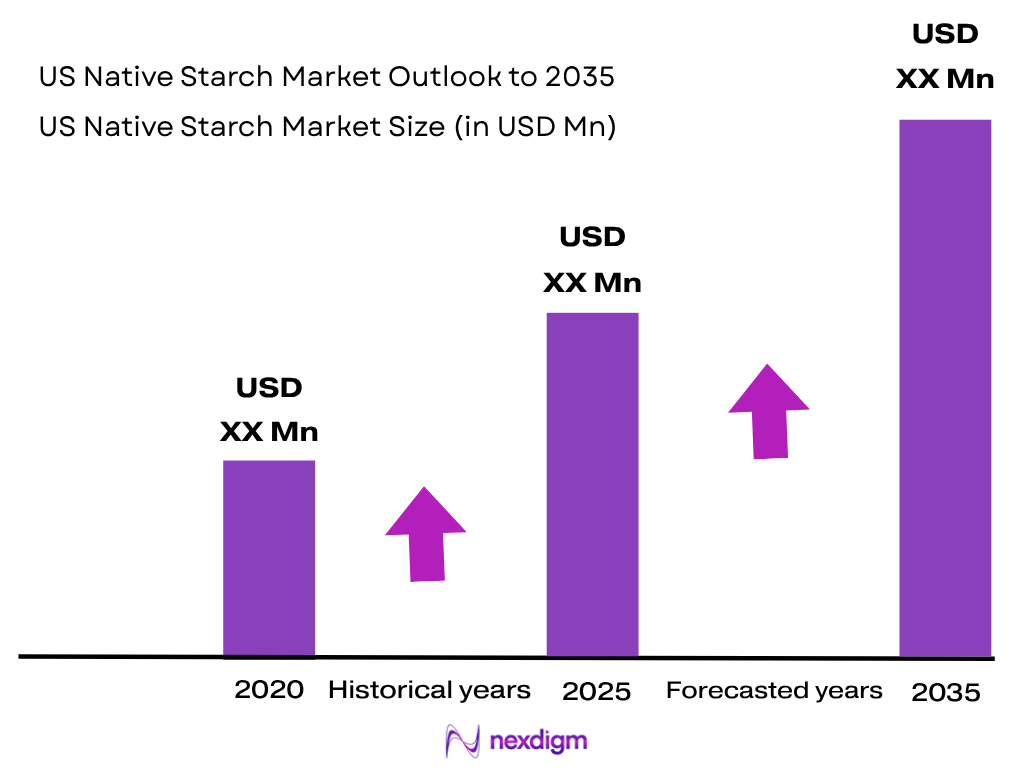
The US Native Starch Market is expected to experience continued development driven by increasing adoption of natural ingredients, expansion of processed food manufacturing, and growing preference for plant-derived functional ingredients. Demand will be supported by applications requiring viscosity control, binding properties, moisture management, and texture improvement across food and industrial sectors. Manufacturers are expected to focus on sustainable sourcing, traceable agricultural supply chains, and application-specific starch solutions to address evolving customer requirements.
Major Players
- Archer Daniels Midland Company (ADM)
- Cargill Incorporated
- Ingredion Incorporated
- Tate & Lyle PLC
- Roquette Frères
- The Archer-Daniels-Midland Company
- Tereos
- Agrana Beteiligungs-AG
- Global Bio-Chem Technology Group
- Grain Processing Corporation
- Bunge Limited
- Louis Dreyfus Company
- Everest Spices and Food Products
- Universal Starch-Chem Allied Ltd.
- Amalgam Foods
Key Target Audience
- Food and Beverage Manufacturers
- Bakery and Confectionery Product Manufacturers
- Dairy and Frozen Food Producers
- Pharmaceutical Ingredient Manufacturers
- Paper and Packaging Manufacturers
- Investments and Venture Capitalist Firms
- Government and Regulatory Bodies (United States Department of Agriculture, Food and Drug Administration, Environmental Protection Agency)
- Starch Processing and Agricultural Commodity Companies
Research Methodology
Step 1: Identification of Key Variables
The initial phase involves developing an ecosystem map covering raw material suppliers, starch processors, food manufacturers, industrial users, distributors, and regulatory stakeholders operating within the US Native Starch Market. Extensive secondary research is conducted to identify production trends, agricultural availability, application demand patterns, processing capabilities, and supply chain dynamics. Key market variables such as source type, application segment, end-use demand, and regional consumption patterns are established during this stage.
Step 2: Market Analysis and Construction
This phase focuses on compiling historical market information related to native starch production, consumption patterns, application adoption, and industry developments. The analysis evaluates demand from food processing, bakery, beverage, pharmaceutical, and industrial sectors while assessing raw material availability, manufacturing infrastructure, and distribution channels. Market estimates are developed through evaluation of supply-side production capacity and demand-side consumption indicators.
Step 3: Hypothesis Validation and Expert Consultation
Market assumptions are validated through discussions with industry participants including starch manufacturers, food processors, agricultural suppliers, and application specialists. These consultations provide operational insights related to production processes, customer preferences, product innovation, and competitive strategies. Expert feedback is used to verify market dynamics and refine the assessment framework.
Step 4: Research Synthesis and Final Output
The final stage integrates primary and secondary research findings to create a comprehensive assessment of the US Native Starch Market. Information gathered from manufacturers, distributors, and industry stakeholders is analyzed to validate segmentation, competitive positioning, application trends, and future market opportunities. The final output provides structured insights for business planning and strategic decision-making.

- Executive Summary
- Research Methodology (Market Definition and Scope, US Native Starch Market Classification, Corn Native Starch Demand Assessment, Potato Native Starch Consumption Analysis, Wheat Native Starch Production Evaluation, Tapioca Native Starch Import Assessment, Native Starch Processing Capacity Mapping, Food and Beverage Application Demand Analysis, Industrial Starch Utilization Assessment, Bakery and Confectionery Starch Requirement Analysis, Meat Processing and Convenience Food Starch Demand Evaluation, Pharmaceutical and Nutraceutical Starch Application Assessment, Paper and Textile Industry Starch Consumption Analysis)

- Definition and Scope
- US Native Starch Industry Evolution and Development of Starch Processing Infrastructure
- Corn Native Starch, Potato Native Starch, Wheat Native Starch, Tapioca Native Starch, Rice Native Starch, Specialty Native Starch Varieties
- US Native Starch Value Chain Analysis
- US Native Starch Supply Chain Analysis
- Corn and Agricultural Raw Material Suppliers, Starch Processors, Refiners, Food Ingredient Manufacturers, Industrial Users, Distributors, End-Use Industries
- Native Starch Integration Across Food Processing, Bakery Products, Dairy Applications, Confectionery Products, Meat Processing, Pharmaceutical Manufacturing, Paper Production, Textile Processing, Industrial Applications

- Growth Drivers (Expansion of Processed Food Manufacturing, Increasing Demand for Clean Label Ingredients, Growth of Bakery and Confectionery Production, Rising Consumption of Convenience Foods, Expansion of Pharmaceutical Excipients Applications, Growth of Plant-Based Food Products, Increasing Utilization in Industrial Applications, Development of Sustainable Bio-Based Ingredients)
- Market Challenges (Volatility in Corn and Agricultural Commodity Prices, Dependence on Crop Yield Conditions, Competition from Modified Starch Alternatives, Processing Energy Requirements, Supply Chain Disruptions, Regulatory Compliance Requirements, Fluctuation Industrial Demand, Limited Functional Performance Compared with Modified Starches)
- Market Opportunities (Growth of Clean Label Food Ingredients, Expansion of Gluten-Free Food Products, Increasing Demand for Natural Texturizers, Growth of Plant-Based Meat and Dairy Alternatives, Sustainable Packaging Applications, Bio-Based Industrial Material Development, Specialty Native Starch Innovation, Increasing Export Opportunities)
- Market Trends (Clean Label Ingredient Adoption, Non-GMO Native Starch Demand, Organic Starch Product Development, Plant-Based Food Application Growth, Sustainable Ingredient Sourcing, Advanced Starch Processing Technologies, Functional Native Starch Innovation, Premium Food Ingredient Demand)
- Regulatory and Standards Landscape (Food and Drug Administration Food Ingredient Regulations, USDA Organic Standards, Non-GMO Labeling Requirements, Food Safety Modernization Act Compliance, Codex Starch Standards, Pharmaceutical Excipient Regulations, Industrial Food Processing Standards)
- SWOT Analysis
- Porter’s Five Forces Analysis
- PESTLE Analysis
- Stakeholder Ecosystem
- Competition Ecosystem

- By Market Value (2020-2025)
- By Native Starch Production Volume (2020-2025)
- By Native Starch Consumption Volume (2020-2025)
- By Corn Native Starch Production Volume (2020-2025)
- By Potato Native Starch Consumption Volume (2020-2025)
- By Wheat Native Starch Consumption Volume (2020-2025)
- By Tapioca Native Starch Import Volume (2020-2025)

- By Raw Material Type (In Value %)
Corn Native Starch
Potato Native Starch
Wheat Native Starch
Tapioca Native Starch
Rice Native Starch
Other Specialty Native Starches - By Application Type (In Value %)
Food and Beverage Processing
Bakery and Confectionery Applications
Dairy and Frozen Food Applications
Meat and Processed Food Applications
Sauces, Dressings and Convenience Foods
Pharmaceutical and Nutraceutical Applications
Paper and Packaging Applications
Textile and Industrial Applications
Animal Feed Applications - By Functionality Type (In Value %)
Thickening Starch
Binding Starch
Gelling Starch
Stabilizing Starch
Texture Modification Starch
Moisture Retention Starch
Film Forming Starch - By End-Use Industry (In Value %)
Food Manufacturing Industry
Beverage Industry
Bakery Industry
Confectionery Industry
Dairy Processing Industry
Pharmaceutical Industry
Nutraceutical Industry
Paper Manufacturing Industry
Textile Industry
Chemical and Industrial Processing Industry - By Distribution Channel (In Value %)
Direct Manufacturer Supply
Food Ingredient Distributors
Industrial Ingredient Distributors
Wholesale Distribution Channels
Online Ingredient Platforms
Contract Manufacturing Supply Networks - By Region (In Value %)
Midwest USA
South USA
West USA
Northeast USA

- Market Share of Major Players (By US Revenue, Native Starch Production Volume, Corn Starch Sales Volume, Potato Starch Sales Volume, Food Application Exposure, Industrial Application Exposure, Manufacturing Capacity, Processing Technology, Distribution Network Coverage, Product Portfolio Breadth, Customer Industry Coverage, Certification Coverage)
- Cross Comparison Parameters (Native Starch Revenue, Raw Material Processing Capability Across Corn-Potato-Wheat-Tapioca, Starch Production Capacity, Food Application Portfolio Breadth, Industrial Application Capability, Specialty Native Starch Development Capability, Distribution Network Reach, Food Safety and Sustainability Certification Coverage)
- SWOT Analysis of Major Players
- Competitive Positioning Matrix
- Native Starch Product Portfolio and Application Benchmarking
- Starch Extraction, Refining and Processing Technology Assessment
- Detailed Profiles of Major Companies
Ingredion Incorporated
Cargill Incorporated
Archer Daniels Midland Company (ADM)
Tate & Lyle PLC
Roquette Frères
Tereos
Grain Processing Corporation
The Andersons Inc.
Agrana Beteiligungs-AG
Emsland Group
Avebe
Royal Cosun
KMC Kartoffelmelcentralen
Japan Corn Starch Co., Ltd.
Global Bio-Chem Technology Group Company Limited

- Food Manufacturer Native Starch Procurement Assessment
- Bakery Product Manufacturer Ingredient Requirement Analysis
- Confectionery Manufacturer Starch Application Assessment
- Dairy Processing Industry Texture Ingredient Analysis
- Meat Processing Industry Binding Ingredient Assessment
- Pharmaceutical Manufacturer Excipient Requirement Analysis
- Nutraceutical Industry Starch Application Assessment
- Paper Manufacturing Industry Starch Consumption Analysis
- Textile Industry Starch Application Assessment
- Industrial Manufacturer Bio-Based Ingredient Assessment
- Foodservice Ingredient Procurement Assessment
- Ingredient Distributor Inventory and Procurement Assessment

- By Market Value (2026-2035)
- By Native Starch Production Volume (2026-2035)
- By Native Starch Consumption Volume (2026-2035)
- By Corn Native Starch Production Volume (2026-2035)
- By Potato Native Starch Consumption Volume (2026-2035)
- By Wheat Native Starch Consumption Volume (2026-2035)


 Request a Sample
 Ask for Customization
 Get a Quote
 Enquire Now