
 Download PDF
Market Overview
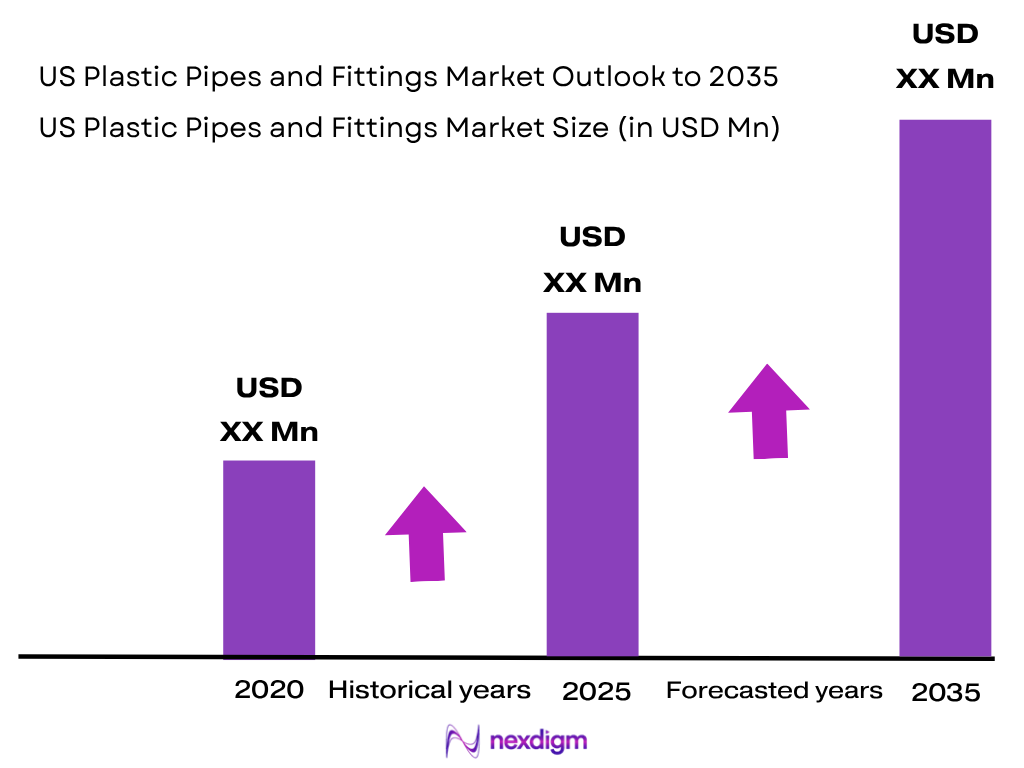
The US Plastic Pipes and Fittings market is valued at ~USD XX billion, supported by extensive demand from municipal water infrastructure, residential plumbing, wastewater networks, stormwater management, gas distribution and industrial applications. The market size is driven by replacement of aging water pipelines, expansion of housing construction, increasing adoption of HDPE and PEX systems, and infrastructure modernization programs. Industry sources including Plastics Pipe Institute (PPI), American Water Works Association (AWWA), and U.S. Census construction data indicate sustained demand from utility and construction sectors.
The US Plastic Pipes and Fittings market is concentrated in regions with high construction activity, infrastructure investment and manufacturing presence. Cities and states including Houston, Dallas, Atlanta, Phoenix, Los Angeles, Chicago and New York demonstrate strong demand due to population expansion, residential development, water network upgrades and commercial construction. Southern and Western regions experience significant consumption due to rapid urbanization, water management requirements, gas distribution expansion and large-scale infrastructure projects.
Market Segmentation
By Material Type
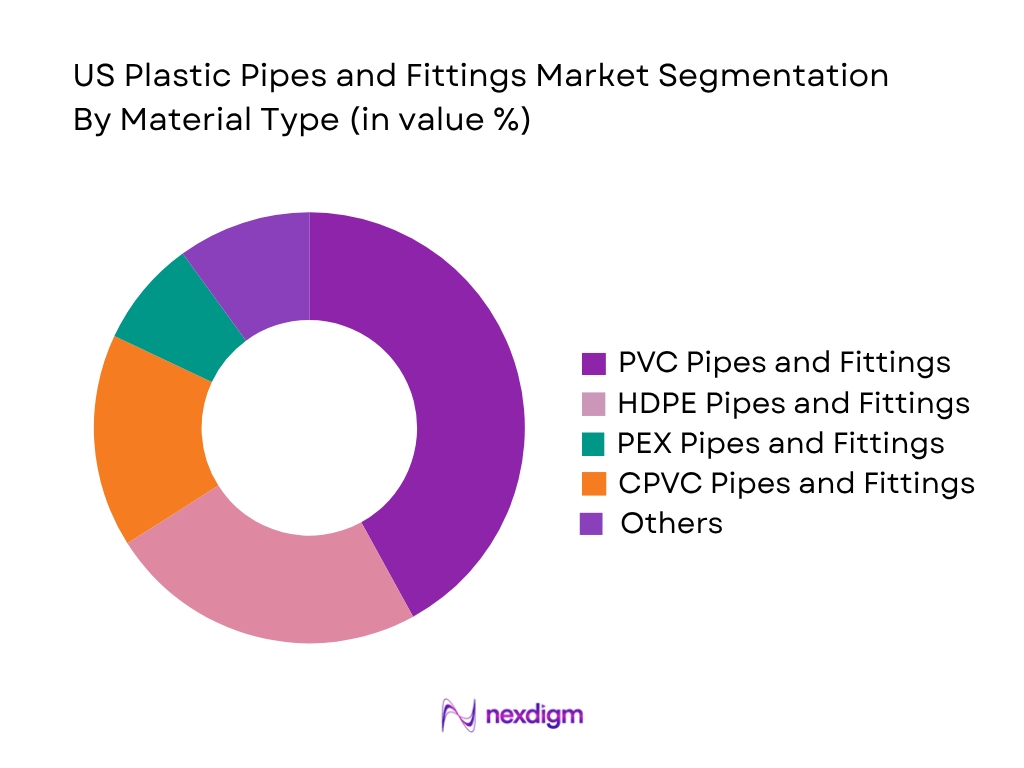
The US Plastic Pipes and Fittings market is segmented by material type into PVC, HDPE, PEX, CPVC, ABS, polypropylene and specialty thermoplastic pipes. PVC pipes and fittings hold a dominant market position due to their extensive utilization in municipal water distribution, sewer networks, drainage systems and electrical conduit applications. The material is preferred because of its corrosion resistance, long service life, cost efficiency and established acceptance among utilities and contractors. HDPE is also widely adopted in gas distribution, trenchless installation and industrial applications due to its flexibility and fusion joining capability. PEX has gained significant penetration in residential plumbing because of faster installation, reduced labor requirements and compatibility with modern plumbing systems.
By Application Type
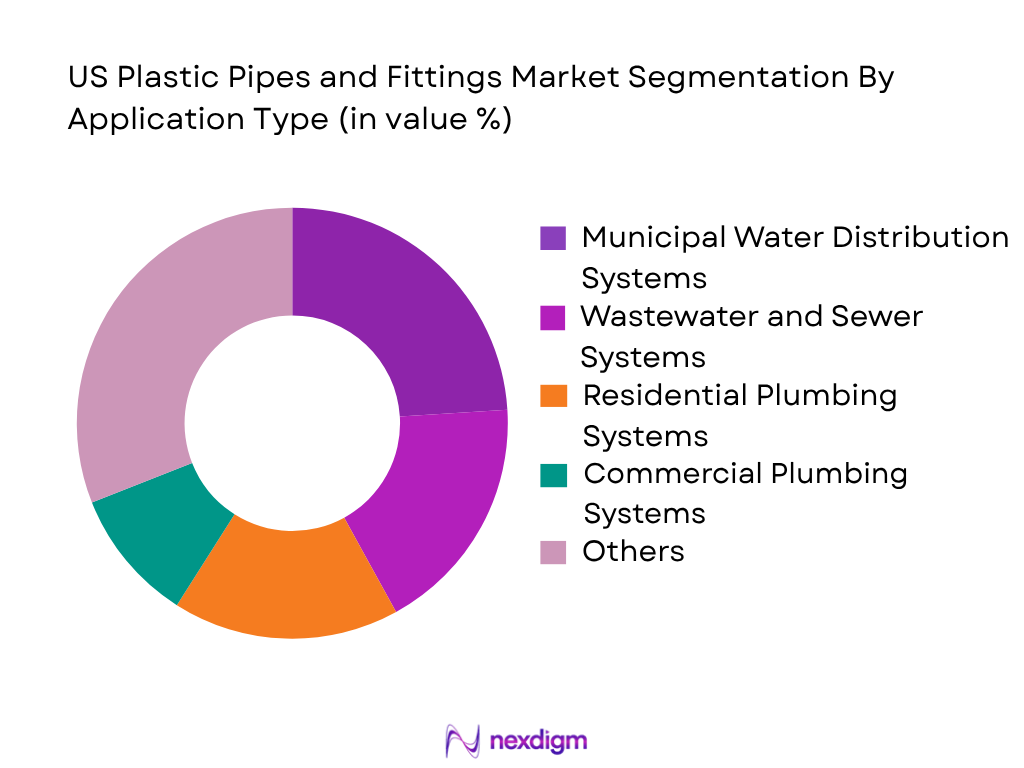
The US Plastic Pipes and Fittings market is segmented by application into municipal water distribution, wastewater and sewer systems, residential plumbing, commercial construction, gas distribution, stormwater management, industrial piping and electrical conduit applications. Municipal water and wastewater infrastructure applications represent a leading segment due to extensive replacement requirements for aging underground pipelines and increasing investment in water system rehabilitation. Plastic piping systems are increasingly selected by utilities because of their lightweight characteristics, corrosion resistance, hydraulic efficiency and lower installation requirements compared with traditional materials. Residential plumbing is another significant application supported by housing construction, remodeling activities and increasing preference for PEX and CPVC systems.
Competitive Landscape
The US Plastic Pipes and Fittings market is characterized by the presence of large integrated manufacturers with extensive production capacity, diversified material portfolios and strong distribution networks. Major companies compete through product innovation, manufacturing scale, certifications, utility approvals, contractor relationships and regional availability. Companies such as JM Eagle, Westlake Pipe & Fittings, Advanced Drainage Systems and IPEX maintain strong positions through broad PVC, HDPE, drainage and plumbing product portfolios.
| Company | Establishment Year | Headquarters | Major Materials | Key Applications | Manufacturing Capability | Distribution Presence | Certification Coverage | Strategic Focus |
| JM Eagle | ~1949 | USA | ~ | ~ | ~ | ~ | ~ | ~ |
| Westlake Pipe & Fittings | ~1950 | USA | ~ | ~ | ~ | ~ | ~ | ~ |
| Advanced Drainage Systems | ~1966 | USA | ~ | ~ | ~ | ~ | ~ | ~ |
| IPEX USA | ~1951 | Canada/USA Operations | ~ | ~ | ~ | ~ | ~ | ~ |
| Charlotte Pipe and Foundry | ~1901 | USA | ~ | ~ | ~ | ~ | ~ | ~ |
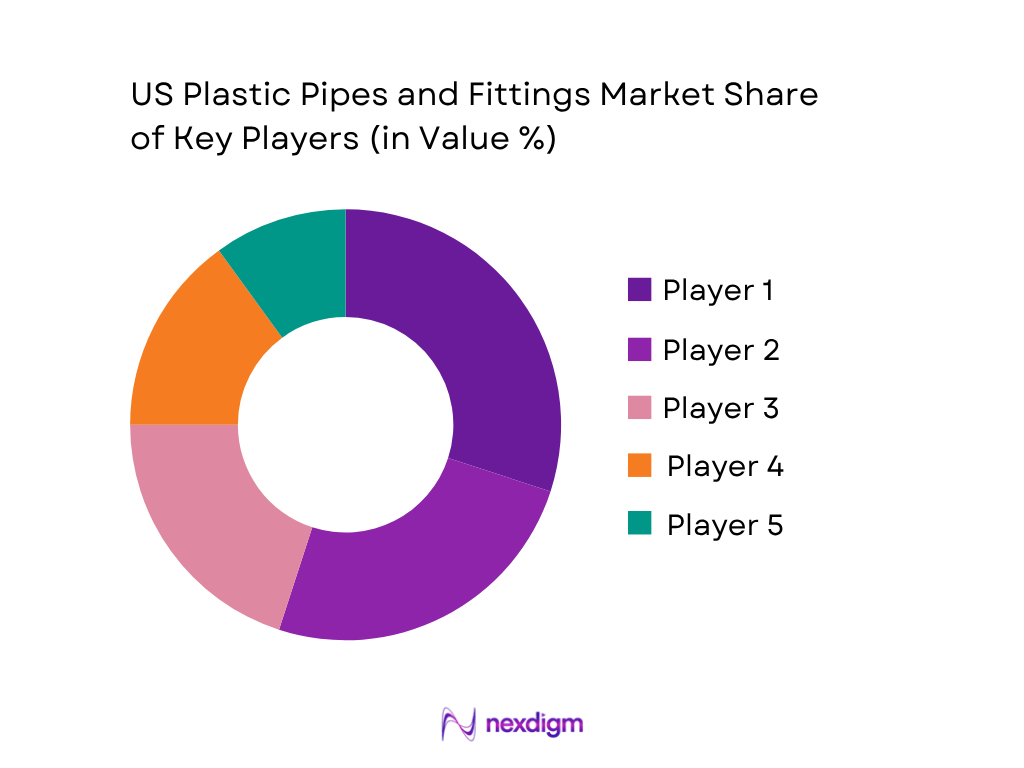
US Plastic Pipes and Fittings Market Analysis
Growth Drivers
Aging Water Infrastructure Replacement and Municipal Pipeline Rehabilitation
The US Plastic Pipes and Fittings market is significantly driven by the replacement requirement of aging water distribution and wastewater networks across the country. The Environmental Protection Agency (EPA) estimates that the United States has approximately 2.2 million miles of underground water distribution pipelines requiring continuous maintenance, rehabilitation and replacement activities. The American Society of Civil Engineers (ASCE) reported that the US drinking water infrastructure received a grade of C- in its infrastructure assessment, highlighting the requirement for modernization of water systems. The Infrastructure Investment and Jobs Act (IIJA) allocated USD 50 billion toward water infrastructure improvements through programs administered by EPA, including the Drinking Water State Revolving Fund and Clean Water State Revolving Fund. These investments are supporting demand for PVC, HDPE and other thermoplastic piping systems used in municipal water mains, service lines and sewer rehabilitation projects. Plastic pipes are increasingly selected for infrastructure renewal due to corrosion resistance, lower installation complexity and compatibility with trenchless rehabilitation methods. The replacement of aging metallic pipelines and increasing utility investment in water network upgrades continue to support long-term adoption of plastic pipe systems.
Growth in Residential Construction and Expansion of Modern Plumbing Systems
Expansion of residential construction and renovation activity is supporting demand for plastic pipes and fittings, particularly PEX, CPVC and PVC plumbing systems. According to the US Census Bureau, privately owned housing completions reached approximately 1.62 million units in 2024, reflecting continued construction activity requiring plumbing installations. The US Census Bureau also recorded around 1.36 million privately owned housing starts during the same period, creating ongoing demand for residential piping systems. The National Association of Home Builders highlighted that residential construction continues to represent a major consumer of building materials due to new housing demand and replacement activities. PEX adoption has increased among residential contractors because of flexible installation characteristics, reduced connection requirements and suitability for modern plumbing layouts. Remodeling and renovation activity further contributes to market expansion, with the Joint Center for Housing Studies of Harvard University reporting that US homeowners continued significant spending on residential improvement projects. The combination of new housing development, replacement of older plumbing systems and preference for efficient installation methods continues to strengthen demand for plastic pipes and fittings across residential applications.
Market Challenges
Volatility in Plastic Resin Supply and Dependence on Petrochemical Feedstocks
The US Plastic Pipes and Fittings market faces challenges due to dependence on polymer-based raw materials including PVC resin, polyethylene and polypropylene. The US Energy Information Administration (EIA) reported that US crude oil production averaged approximately 13.2 million barrels per day in 2024, highlighting the continued importance of petrochemical feedstock availability for plastics manufacturing. Polymer production is directly influenced by fluctuations in energy markets, natural gas availability and chemical industry operating conditions. According to the American Chemistry Council (ACC), the US chemical industry remains highly integrated with domestic oil and natural gas production, making plastic manufacturers sensitive to changes in feedstock economics. PVC pipe producers rely on chlorine and ethylene-based production chains, while HDPE manufacturers depend on polyethylene derived from ethane-based processes. Supply disruptions, transportation constraints and changes in raw material availability can affect manufacturing stability and production planning. These factors create operational challenges for pipe and fittings manufacturers while requiring companies to maintain flexible procurement strategies and inventory management systems.
Competition from Alternative Pipe Materials and Installation Constraints
The US Plastic Pipes and Fittings market faces competition from traditional materials including ductile iron, copper, steel and concrete piping systems, particularly in large infrastructure projects and specialized industrial applications. The US Census Bureau reported that construction spending remained above USD 2 trillion annually in 2024, creating competition among multiple construction material categories for infrastructure and building applications. While plastic piping systems offer corrosion resistance and lightweight installation benefits, certain applications continue to require alternative materials due to pressure requirements, temperature conditions or engineering specifications. The American Water Works Association highlights that utility pipe selection depends on factors including service conditions, operating pressure, expected lifespan and local requirements. Additionally, plastic pipe installation requires trained contractors for fusion joining, solvent cementing and specialized connection methods. Shortages of skilled construction workers remain a challenge, with the US Bureau of Labor Statistics reporting millions of workers employed across construction trades and continued workforce replacement requirements. These factors influence adoption speed in certain market segments.
Market Opportunities
Infrastructure Modernization and Lead Service Line Replacement Programs
The replacement of aging water service infrastructure represents a significant opportunity for plastic pipe manufacturers due to increasing federal and state investment in water system modernization. The Environmental Protection Agency estimates that approximately 9 million to 10 million lead service lines exist across the United States, creating demand for replacement programs using approved piping materials. The Infrastructure Investment and Jobs Act provides USD 15 billion specifically for lead service line identification and replacement activities through the Drinking Water State Revolving Fund. Plastic piping materials such as HDPE, PVC and PEX are increasingly considered for service line replacement because they provide corrosion resistance and meet potable water application requirements when certified under NSF/ANSI standards. Utilities across multiple states are developing replacement programs to improve drinking water safety and infrastructure reliability. These initiatives create opportunities for manufacturers supplying service lines, fittings, connection systems and related installation products. Increasing government focus on water quality improvement and infrastructure resilience is expected to support future demand for plastic piping solutions.
Expansion of Data Centers, Broadband Infrastructure and Industrial Facilities
Growth in digital infrastructure and industrial development is creating new opportunities for plastic pipe applications beyond traditional construction markets. The US Department of Energy reported that electricity demand from data centers is increasing significantly due to expansion of artificial intelligence, cloud computing and digital services, driving investment in supporting infrastructure. The US Census Bureau recorded continued growth in private-sector construction activity, including manufacturing and technology-related facilities requiring advanced utility systems. Plastic pipes are increasingly utilized in data centers, semiconductor facilities and industrial plants for cooling water systems, process piping, drainage and electrical conduit applications. The National Telecommunications and Information Administration continues broadband expansion initiatives through infrastructure programs, supporting demand for underground conduit and telecom duct systems. HDPE and PVC conduit products are widely used in underground communication networks because of durability, installation flexibility and resistance to environmental conditions. Expansion of technology infrastructure, industrial facilities and utility networks provides additional application opportunities for plastic pipe and fittings manufacturers.
Future Outlook
Over the forecast period, the US Plastic Pipes and Fittings market is expected to demonstrate steady growth driven by infrastructure renewal, replacement of aging pipelines, increasing adoption of trenchless technologies and rising demand for efficient plumbing systems. Growth will also be supported by residential construction activity, water conservation requirements, industrial expansion and increasing deployment of HDPE and PEX solutions. The market is projected to register a CAGR of ~XX% during 2026-2035.
Major Players
- JM Eagle
- Westlake Pipe & Fittings
- Advanced Drainage Systems (ADS)
- IPEX USA
- Charlotte Pipe and Foundry
- GF Central Plastics
- Uponor
- NIBCO
- Spears Manufacturing
- Atkore
- Reliance Worldwide Corporation (SharkBite)
- LASCO Fittings
- REHAU
- Prinsco
- ISCO Industries
Key Target Audience
- Plastic Pipe and Fittings Manufacturers
- Pipe Extrusion and Fittings Manufacturing Companies
- Water Infrastructure Companies and Utility Operators
- Plumbing Product Manufacturers and Distribution Companies
- Construction and Infrastructure Development Companies
- Investments and Venture Capitalist Firms (Private Equity Firms, Infrastructure Investment Funds, Industrial Investment Groups)
- Government and Regulatory Bodies (Environmental Protection Agency, American Water Works Association, Department of Transportation, State Water Resource Agencies)
- Raw Material Producers and Polymer Suppliers
Research Methodology
Step 1: Identification of Key Variables
The initial phase involves developing a comprehensive ecosystem map covering resin suppliers, pipe manufacturers, fittings producers, distributors, contractors, utilities and end-use industries operating within the US Plastic Pipes and Fittings market. Extensive secondary research is conducted through industry databases, manufacturer publications, infrastructure reports and regulatory documents. The objective is to identify critical market variables including material demand, production capacity, application penetration and pricing factors.
Step 2: Market Analysis and Construction
This phase involves compiling historical market information related to plastic pipe production, shipment volumes, resin consumption and application demand. Analysis includes evaluation of municipal infrastructure spending, residential construction activity, commercial development and industrial demand patterns. Bottom-up assessment is performed through manufacturer revenues, production capacity analysis and product category evaluation to estimate market size.
Step 3: Hypothesis Validation and Expert Consultation
Market assumptions are validated through discussions with industry participants including pipe manufacturers, distributors, contractors, utility representatives and material suppliers. Computer-assisted telephone interviews and direct expert interactions are conducted to understand operational trends, pricing dynamics, product adoption patterns and competitive developments. These insights are used to refine market estimates and validate findings.
Step 4: Research Synthesis and Final Output
The final stage involves consolidating primary and secondary research findings into a comprehensive market assessment. Data obtained from manufacturers, infrastructure stakeholders and industry experts is cross-verified with statistical sources to ensure accuracy. The final report provides analysis of market size, segmentation, competition, growth factors and future opportunities within the US Plastic Pipes and Fittings market.

- Executive Summary
- Research Methodology (Market Definition and Scope, US Plastic Pipes and Fittings Market Classification, Thermoplastic Pipe Demand Assessment, Plastic Pipe Shipment Volume Analysis, Plastic Fittings Consumption Mapping, PVC Pipe Demand Assessment, HDPE Pipe Consumption Analysis, PEX Plumbing System Adoption Assessment, CPVC and ABS Pipe Demand Evaluation, Municipal Water and Wastewater Infrastructure Pipe Requirement Analysis, Residential Plumbing Pipe Consumption Mapping, Commercial Construction Plumbing Demand Assessment, Natural Gas Distribution Pipe Demand Analysis, Stormwater and Drainage Pipe Requirement Assessment, Electrical Conduit and Telecom Duct Demand Assessment)

- Definition and Scope
- US Plastic Pipes and Fittings Industry Evolution and Development of Thermoplastic Piping Infrastructure
- PVC Pressure Pipes, PVC DWV Pipes, CPVC Pipes, HDPE Pipes, MDPE Pipes, PEX Pipes, ABS Pipes, Polypropylene Pipes, PVCO Pipes
- US Plastic Pipes and Fittings Value Chain Analysis
- US Plastic Pipes and Fittings Supply Chain Analysis
- Plastic Resin Supplier, Compound Manufacturer, Pipe Extruder, Fittings Manufacturer, Distributor, Contractor, Utility End User
Plastic Pipe Integration Across Municipal Water Networks, Residential Plumbing Systems, Commercial Buildings, Industrial Facilities, Gas Distribution Networks, Stormwater Infrastructure, Electrical and Telecom Networks

- Growth Drivers (Aging Water Infrastructure Replacement, Municipal Water Main Rehabilitation, Lead Service Line Replacement Programs, Wastewater Infrastructure Modernization, Residential Construction Growth, Commercial Building Expansion, Increasing PEX Adoption, HDPE Trenchless Installation Growth, Natural Gas Distribution Modernization, Stormwater Infrastructure Investment, Broadband and Fiber Infrastructure Expansion, Data Center Construction Growth, Replacement of Corrosion-Prone Metal Pipes)
- Market Challenges (Volatility in PVC and Polyethylene Resin Prices, Dependence on Petrochemical Feedstocks, Fluctuation in Construction Activity, High Competition Among Plastic Pipe Manufacturers, Specification Barriers in Utility Projects, Skilled Labor Availability Challenges, Installation Quality Requirements, Competition from Ductile Iron, Copper, Steel and Concrete Pipes, Environmental Concerns Related to Plastic Waste Management)
- Market Opportunities (Water Infrastructure Replacement Backlog, Lead Service Line Replacement Market, Trenchless Pipe Installation Growth, Large Diameter HDPE and PVC Pipe Expansion, Data Center Infrastructure Development, Semiconductor Manufacturing Facility Expansion, Sustainable Plastic Pipe Solutions, Recycled Resin Adoption, Smart Infrastructure Development, Industrial Fluid Handling Applications, Advanced Fusion Technology Adoption)
- Market Trends (PEX Plumbing System Expansion, HDPE Fusion Technology Growth, Large Diameter Plastic Pipe Adoption, Municipal Plastic Pipe Replacement Projects, Trenchless Rehabilitation Technology, Electrofusion Fittings Adoption, Low Carbon Plastic Pipe Manufacturing, Digital Pipe Design and BIM Integration, Prefabricated Plumbing Systems, Smart Water Infrastructure Development)
- Regulatory and Standards Landscape (ASTM Plastic Pipe Standards, AWWA Water Pipe Standards, NSF/ANSI Drinking Water Standards, International Plumbing Code Requirements, Uniform Plumbing Code Requirements, EPA Water Infrastructure Regulations, Buy America Requirements, Infrastructure Funding Compliance Requirements, Plastic Pipe Certification Standards)
- SWOT Analysis
- Porter’s Five Forces Analysis
- PESTLE Analysis
- Stakeholder Ecosystem
- Competition Ecosystem

- By Market Value (2020-2025)
- By Plastic Pipe Consumption Volume (2020-2025)
- By Plastic Fittings Consumption Volume (2020-2025)
- By PVC Pipe Consumption Volume (2020-2025)
- By HDPE Pipe Consumption Volume (2020-2025)
- By PEX Pipe Consumption Volume (2020-2025)
- By CPVC Pipe Consumption Volume (2020-2025)

- By Material Type (In Value %)
PVC Pipes and Fittings
CPVC Pipes and Fittings
HDPE Pipes and Fittings
MDPE Pipes and Fittings
PEX Pipes and Fittings
ABS Pipes and Fittings
Polypropylene Pipes and Fittings
PVCO Pipes and Fittings
PE-RT Pipes and Fittings
PVDF and Specialty Thermoplastic Pipes - By Product Type (In Value %)
Pressure Pipes
Non-Pressure Pipes
DWV Pipes
Corrugated Pipes
Solid Wall Pipes
Flexible Pipes and Tubing
Conduit Pipes
Telecom Ducts
Injection Molded Fittings
Fabricated Fittings
Electrofusion Fittings
Mechanical Connection Fittings
PEX Connection Fittings - By Application Type (In Value %)
Municipal Water Distribution Systems
Wastewater and Sewer Systems
Residential Plumbing Systems
Commercial Plumbing Systems
Natural Gas Distribution Systems
Stormwater Management Systems
Agricultural Irrigation Systems
Industrial Process Piping Systems
Electrical Conduit Systems
Telecommunication and Fiber Optic Duct Systems
Fire Protection Systems
Radiant Heating and Cooling Systems
Mining and Slurry Transportation Systems
Pool and Recreational Water Systems - By End-Use Industry (In Value %)
Municipal Water Utilities
Wastewater Utilities
Residential Construction
Commercial Construction
Industrial Manufacturing Facilities
Oil and Gas Utilities
Agriculture Sector
Electrical Utilities
Telecommunication Infrastructure
Data Centers
Healthcare Facilities
Educational Institutions
Government Infrastructure Projects
Mining Industry - By Pipe Diameter (In Value %)
Below 2 Inches
2–4 Inches
Above 4–8 Inches
Above 8–12 Inches
Above 12–24 Inches
Above 24–36 Inches
Above 36 Inches - By Joining Technology (In Value %)
Solvent Cement Joining
Bell and Spigot Joining
Butt Fusion Joining
Electrofusion Joining
Socket Fusion Joining
PEX Expansion Joining
PEX Crimp and Clamp Joining
Press Connection Systems
Push-to-Connect Systems
Mechanical Coupling Systems
Flanged Connection Systems - By Pressure Classification (In Value %)
Schedule 40 Pipes
Schedule 80 Pipes
SDR Pressure Pipes
DR Rated Pipes
AWWA Pressure Pipes
Gravity Flow Pipes
CTS Tubing Systems
IPS Piping Systems - By Distribution Channel (In Value %)
Waterworks Distributors
Plumbing Wholesale Distributors
Industrial Distributors
Electrical Distributors
Irrigation Distributors
Home Improvement Retailers
Direct Manufacturer Sales
Contractor Procurement
OEM Procurement
Online Distribution Channels - By Demand Type (In Value %)
New Infrastructure Installation
Replacement and Rehabilitation Projects
Residential Repiping Projects
Commercial Retrofit Projects
Repair and Maintenance Demand
Infrastructure Expansion Projects - By Region (In Value %)
Northeast USA
Midwest USA
South USA
West USA

- Market Share of Major Players (By US Revenue, Plastic Pipe Sales Volume, Plastic Fittings Sales Volume, PVC Pipe Sales Volume, HDPE Pipe Sales Volume, PEX Pipe Sales Volume, Municipal Infrastructure Exposure, Residential Plumbing Exposure, Manufacturing Footprint, Distribution Network Coverage, Product Portfolio Breadth, Certification Coverage)
- Cross Comparison Parameters (US Plastic Pipe and Fittings Revenue, Material Portfolio Breadth Across PVC-HDPE-PEX-CPVC, Pipe Extrusion and Fittings Manufacturing Capacity, Large Diameter Pipe Production Capability, Municipal Water and Infrastructure Project Exposure, Joining Technology Portfolio and Fusion Capability, Distribution Network and Contractor Reach, ASTM-AWWA-NSF Certification Coverage)
- SWOT Analysis of Major Players
- Competitive Positioning Matrix
- Detailed Profiles of Major Companies
JM Eagle
Westlake Pipe & Fittings
Advanced Drainage Systems (ADS)
Charlotte Pipe and Foundry
IPEX USA
GF Central Plastics
Uponor
NIBCO
Spears Manufacturing
Atkore
Reliance Worldwide Corporation (SharkBite)
LASCO Fittings
REHAU
Prinsco
ISCO Industries

- Municipal Water Utility Plastic Pipe Procurement Assessment
- Wastewater Utility Sewer Pipe Replacement Requirement Analysis
- Residential Builder Plumbing System Material Selection Assessment
- Commercial Building Plumbing Specification Analysis
- Industrial Facility Process Piping Requirement Assessment
- Natural Gas Utility PE Pipe Procurement Analysis
- Stormwater Infrastructure Contractor Pipe Requirement Assessment
- Electrical Contractor Conduit Procurement Assessment
- Telecommunication Fiber Duct Installation Requirement Analysis
- Agricultural Irrigation Pipe Procurement Assessment
- Architect and Engineering Consultant Plastic Pipe Specification Analysis
- Plumbing Contractor Material Preference Assessment
- Distributor Inventory and Procurement Assessment

- By Market Value (2026-2035)
- By Plastic Pipe Consumption Volume (2026-2035)
- By Plastic Fittings Consumption Volume (2026-2035)
- By PVC Pipe Consumption Volume (2026-2035)
- By HDPE Pipe Consumption Volume (2026-2035)
- By PEX Pipe Consumption Volume (2026-2035)
- By CPVC Pipe Consumption Volume (2026-2035)


 Request a Sample
 Ask for Customization
 Get a Quote
 Enquire Now