

 Download PDF
Market Overview
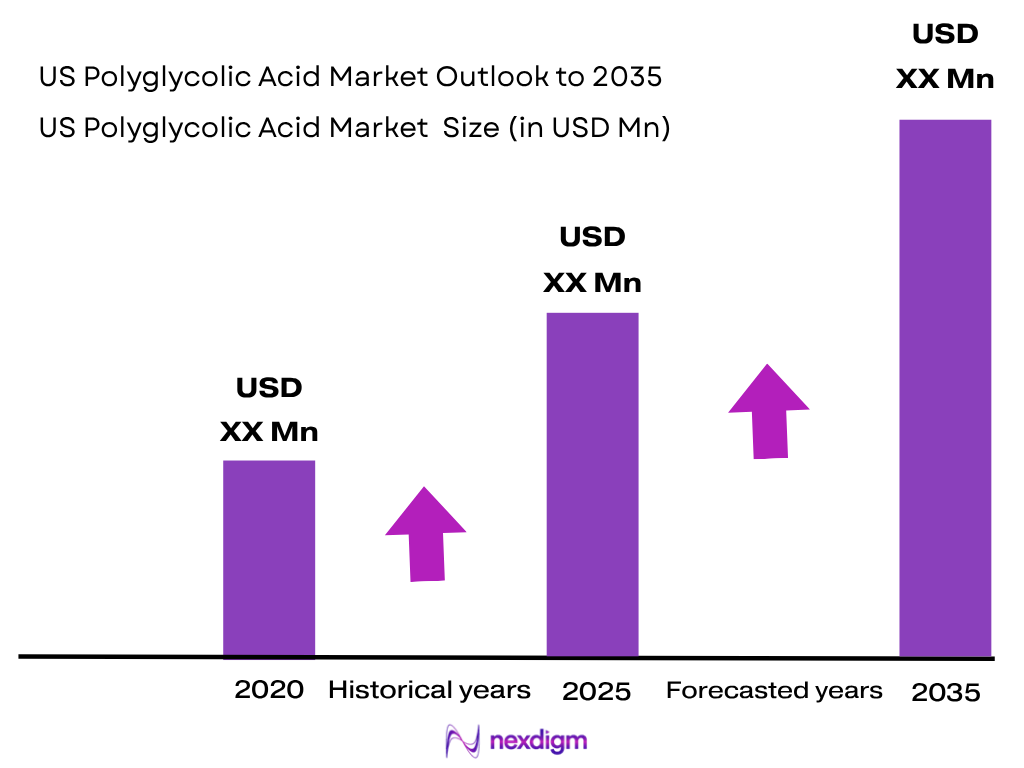
The US Polyglycolic Acid market is estimated at ~USD XX billion in 2024, compared with ~USD XX billion in 2023, with demand concentrated in medical devices, absorbable surgical sutures, drug-delivery systems, oil & gas applications and biodegradable packaging. PGA’s controlled degradation, high mechanical strength and bioresorbability support adoption where temporary material functionality is required. The US market also benefits from an established medical-device ecosystem and FDA-recognized regulatory pathways for synthetic PGA absorbable sutures, which are classified as Class II devices.
The US PGA market is concentrated around major healthcare, advanced-materials and energy hubs, particularly Boston, New York, Philadelphia, Minneapolis, Houston and California’s major medical-technology clusters. These locations combine medical-device manufacturers, hospitals, biotechnology companies, polymer processors and oilfield-service providers. Houston is particularly relevant to oilfield applications, while California, Massachusetts and Minnesota provide strong medical-device and biotechnology ecosystems. The presence of established PGA-based surgical products and multiple FDA-cleared absorbable suture products reinforces the importance of the US healthcare manufacturing base.
Market Segmentation
By Form
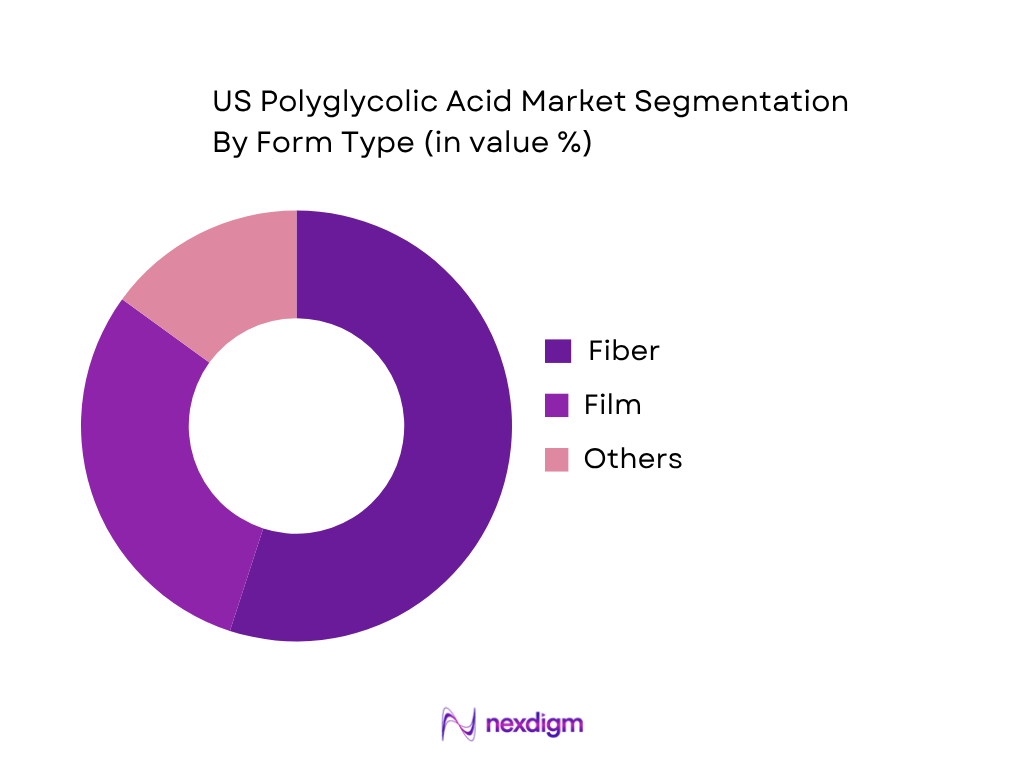
The US Polyglycolic Acid market is segmented by form into fibers, films, sheets, tubes and molded products. Fibers represent the dominant form because PGA’s established use in absorbable surgical sutures provides a mature downstream application base. PGA fibers can be engineered into braided or monofilament structures and combined with coatings or copolymers to achieve application-specific handling and degradation characteristics. FDA records specifically identify synthetic absorbable PGA sutures as Class II medical devices, while historical FDA submissions document PGA-based surgical sutures from established medical-device manufacturers. The form also benefits from established conversion technologies and product qualification procedures within the medical-device industry. Beyond sutures, fiber-based PGA structures have relevance in tissue engineering and other bioresorbable applications where mechanical integrity is needed temporarily before degradation.
By Application
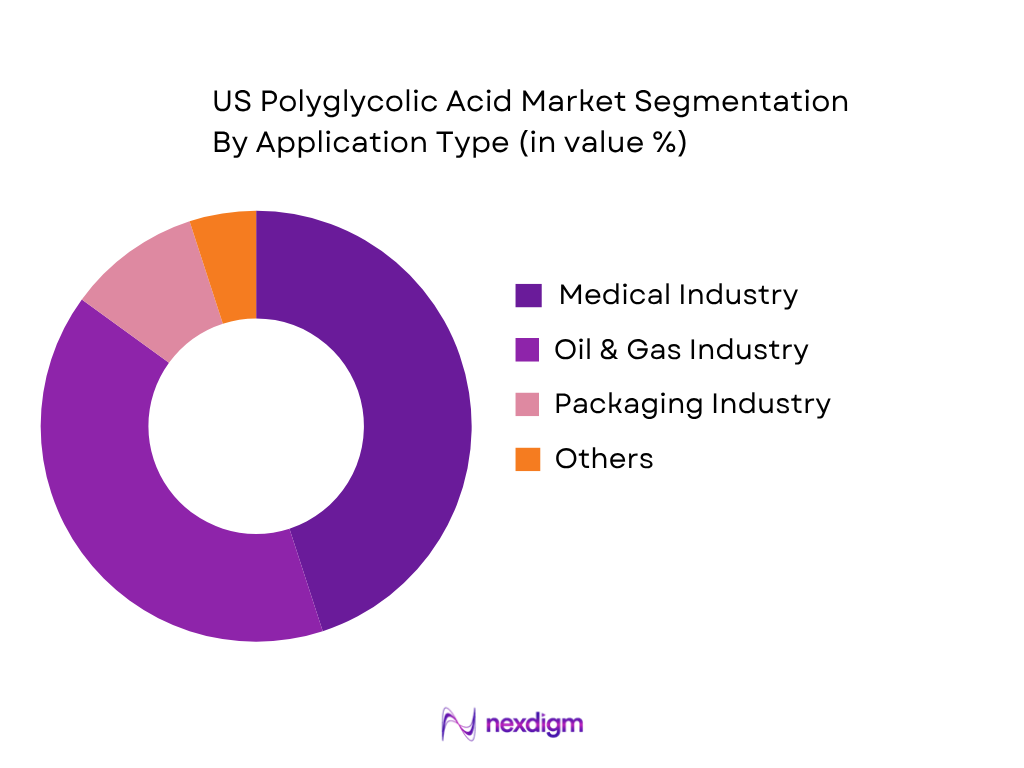
The US Polyglycolic Acid market is segmented by application into medical, oil & gas extraction, packaging, drug delivery, tissue engineering and other advanced-material applications. Medical applications are expected to represent the dominant segment because PGA already has established use in absorbable surgical sutures and other bioresorbable medical technologies. FDA’s product classification database explicitly identifies synthetic absorbable polyglycolic-acid sutures under 21 CFR §878.4493 as Class II devices. FDA’s recognized standards framework also identifies standards applicable to absorbable surgical sutures, reducing uncertainty around qualification and performance requirements. PGA’s degradation characteristics, mechanical properties and biocompatibility make it suitable for temporary medical applications, while oil & gas and packaging provide additional commercialization pathways.
Competitive Landscape
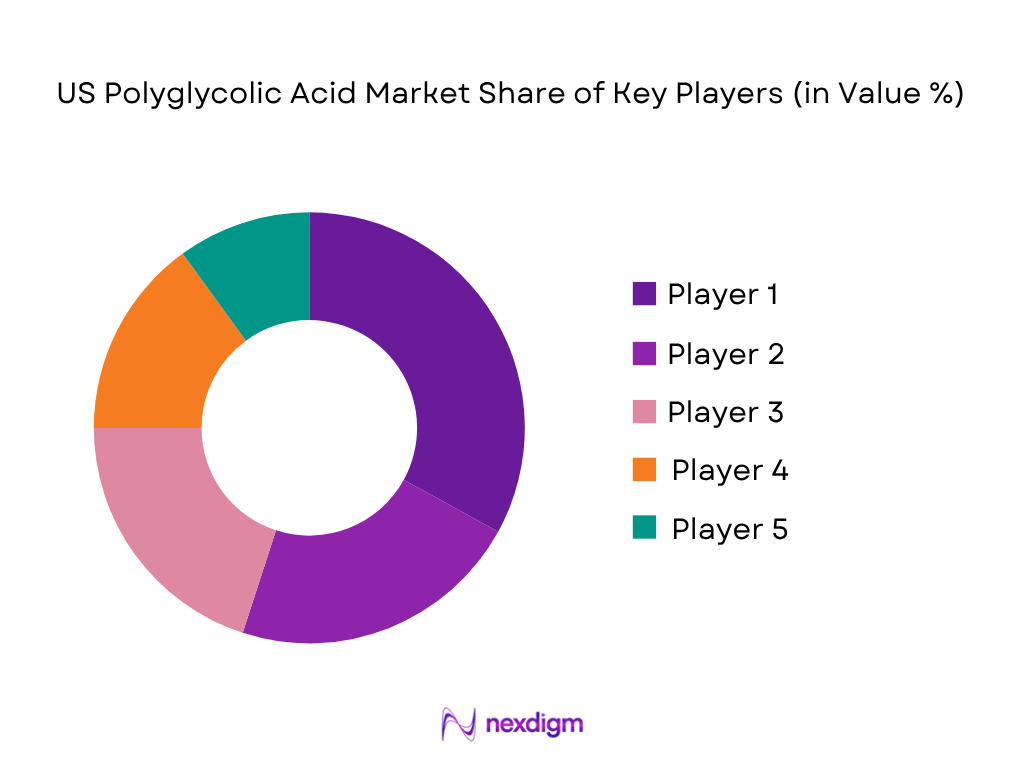
The US Polyglycolic Acid market comprises specialty polymer producers, advanced-material manufacturers and downstream medical-device companies. Competition is shaped by polymer-grade consistency, degradation control, processing capabilities, regulatory documentation, application engineering and relationships with medical-device manufacturers. The medical segment has an established competitive ecosystem, with FDA records documenting PGA-based products from companies including Ethicon and other international medical-device manufacturers. At the upstream level, specialty-material suppliers compete through polymer technology, production consistency and application-specific grades, while downstream companies compete through proprietary device designs and regulatory approvals.
| Company | Establishment | Headquarters | PGA Value-Chain Position | Key Application | Product/Technology Focus | Regulatory Capability | US Market Relevance |
| Kureha Corporation | 1944 | Tokyo, Japan | ~ | ~ | ~ | ~ | ~ |
| Corbion | 1933 | Amsterdam, Netherlands | ~ | ~ | ~ | ~ | ~ |
| Mitsubishi Chemical Group | 1933 | Tokyo, Japan | ~ | ~ | ~ | ~ | ~ |
| Ethicon / Johnson & Johnson MedTech | 1886 | New Brunswick, New Jersey, US | ~ | ~ | ~ | ~ | ~ |
| Evonik Industries | 2007 | Essen, Germany | ~ | ~ | ~ | ~ | ~ |
US Polyglycolic Acid Market Analysis
Growth Drivers
Expansion of Absorbable Surgical Procedures
Expansion of surgical activity in the United States supports demand for polyglycolic acid (PGA) because PGA is used extensively in absorbable surgical sutures and other bioabsorbable medical applications. The U.S. healthcare system remains a major demand base, with the World Bank reporting U.S. population at approximately 340 million and GDP at more than USD 28 trillion in the latest 2024 data framework. The FDA continues to classify synthetic absorbable PGA sutures under Product Code GAM, while a PGA suture application received FDA clearance in July 2024, demonstrating continued regulatory activity around PGA-based surgical products. The material’s predictable hydrolytic degradation and temporary mechanical support make it relevant for soft-tissue approximation where permanent foreign material is undesirable. Increasing procedure complexity, minimally invasive interventions, wound closure requirements and demand for absorbable materials strengthen the addressable application base. Within medical applications, PGA can also support development of advanced scaffolds, drug-delivery structures and resorbable fixation components. The IMF’s 2024 assessment of the U.S. economy also reflects continued expansion in healthcare-related economic activity. Together, these conditions support continued investment in PGA-based medical products and encourage manufacturers to develop higher-performance grades for specialized surgical applications.
Oilfield Downhole Applications
Oilfield activity provides a second important demand pathway for PGA, particularly where degradable downhole components can simplify well-completion operations. U.S. Energy Information Administration data show that the country averaged 599 rotary rigs in operation during 2024, including 491 crude-oil rigs and 105 natural-gas rigs. The Permian Basin alone averaged 308 active drilling rigs, while U.S. crude-oil production reached approximately 13.2 million barrels per day in 2024. PGA’s controlled degradation makes it suitable for temporary downhole components used in completion and stimulation processes, where operators require materials that can perform under demanding conditions and subsequently disappear without conventional retrieval. The continued scale of U.S. drilling therefore provides an established industrial application base for degradable polymers. IMF data also indicate continued U.S. economic activity, supporting industrial investment and energy-sector demand. PGA suppliers capable of producing consistent molecular weight, thermal stability and degradation profiles can address applications requiring predictable temporary performance. The combination of active drilling infrastructure, high oil production and advanced completion practices creates a technically relevant market environment for degradable PGA components, particularly in applications where operational efficiency and reduced intervention requirements are priorities. Sources: U.S. Energy Information Administration, IMF, World Bank.
Market Challenges
High PGA Production Complexity and Glycolide Feedstock Availability
PGA production presents technical and supply-chain challenges because commercial-grade material requires tightly controlled polymerization, molecular-weight management and moisture control. Glycolide, the principal cyclic dimer used to manufacture PGA, must meet demanding purity specifications because impurities and residual moisture can materially affect polymer molecular weight, crystallinity and degradation behavior. This becomes particularly important for medical-grade PGA, where manufacturers must maintain consistent performance across batches and comply with stringent device-quality requirements. The U.S. industrial environment adds pressure because chemical manufacturing remains closely linked to energy and feedstock conditions. World Bank data place U.S. GDP above USD 28 trillion in 2024, illustrating the scale of the industrial economy but also the large number of competing chemical and manufacturing applications for feedstocks, energy and processing capacity. The IMF’s 2024 U.S. economic assessment similarly indicates continued economic activity rather than a low-demand industrial environment. For PGA producers, therefore, securing reliable glycolide supply, maintaining polymerization consistency and scaling specialized production without compromising quality remain significant challenges. These constraints can be particularly consequential for smaller producers attempting to qualify PGA for medical, packaging or oilfield applications.
Medical Regulatory Barriers and Material Qualification Requirements
PGA manufacturers face substantial qualification requirements when targeting medical applications because the polymer becomes part of products that interact directly with the human body. The FDA classifies synthetic absorbable PGA sutures under 21 CFR 878.4493 and Product Code GAM, requiring manufacturers to demonstrate conformity with applicable safety and performance requirements. A relevant FDA 510(k) decision issued in July 2024 illustrates that PGA-based surgical products continue to undergo formal regulatory review. Qualification can require extensive assessment of molecular characteristics, degradation behavior, biocompatibility, sterilization compatibility and finished-device performance. These requirements increase development timelines and create barriers for companies without established medical-device manufacturing capabilities. PGA is also moisture-sensitive and hydrolytically degradable, meaning processing, storage and sterilization conditions must be carefully controlled. The U.S. economy’s scale, with GDP exceeding USD 28 trillion according to the World Bank, creates a large potential healthcare market, but access requires compliance with a highly developed regulatory system. Competition from PGA-containing copolymers and other resorbable polymers further raises the technical threshold because developers can select materials based on degradation period, strength retention and handling characteristics.
Market Opportunities
Advanced Bioabsorbable Medical Devices and Drug Delivery Systems
The development of advanced bioabsorbable devices represents a significant opportunity for PGA suppliers because the polymer combines biodegradability, established medical use and controllable hydrolytic degradation. FDA records continue to recognize PGA-based absorbable surgical materials, including a 2024 510(k) clearance for an absorbable suture using PGA-related chemistry. This established regulatory precedent can provide a foundation for developing more sophisticated PGA-based structures, including resorbable fixation components, tissue-engineering scaffolds, drug-delivery matrices and specialized surgical meshes. The U.S. healthcare ecosystem provides a substantial addressable base, supported by a population of approximately 340 million and GDP exceeding USD 28 trillion, according to World Bank data. PGA’s relatively rapid degradation compared with some other bioresorbable polymers can be advantageous where temporary mechanical support is required. Opportunities therefore extend beyond conventional sutures toward engineered materials with controlled porosity, tailored degradation and localized therapeutic delivery. Manufacturers that can improve molecular-weight control, processing stability and sterilization compatibility can potentially address higher-value medical applications. The combination of established FDA-recognized PGA use, advanced U.S. medical-device manufacturing and continued healthcare activity creates a pathway for expanding PGA from conventional absorbable products into more specialized bioabsorbable technologies.
High-Barrier Packaging and Sustainable Polymer Applications
PGA’s high barrier performance creates an opportunity to develop specialized packaging structures where oxygen and moisture resistance are important, particularly when combined with other polymers or used in multilayer structures. The opportunity is supported by the scale of the U.S. packaging-conversion industry. U.S. Census Bureau data identify 426 employer establishments in plastics packaging film and sheet manufacturing, demonstrating a substantial domestic converting base capable of processing and commercializing advanced polymer materials. The Census Bureau’s 2024 economic-survey framework also provides current industry-level measurements for this manufacturing segment. PGA can be evaluated for specialty films, barrier layers and controlled-degradation structures where conventional polymers face sustainability or end-of-life limitations. The World Bank’s U.S. population figure of approximately 340 million further indicates a large domestic consumer and industrial base generating demand for packaged food, healthcare products and manufactured goods. For PGA producers, the opportunity lies less in replacing commodity plastics across all applications and more in targeting technically demanding packaging where barrier performance, biodegradability and material differentiation justify specialized polymer development. Partnerships between resin producers, film converters and packaging manufacturers could accelerate qualification of PGA-based structures for niche high-performance applications.
Future Outlook
Over the next decade, the US Polyglycolic Acid market is expected to benefit from the convergence of bioresorbable medical technologies, advanced drug delivery, tissue engineering, biodegradable packaging and specialized oilfield applications. Medical applications are likely to remain the principal commercial anchor because PGA already has an established regulatory and product-development ecosystem.
Future growth is expected to depend increasingly on higher-value PGA grades, application-specific formulations, composite materials and improved processing technologies. The ability of suppliers to demonstrate consistent degradation, mechanical performance and regulatory suitability will remain central to commercialization.
Major Players
- Kureha Corporation
- Corbion
- Mitsubishi Chemical Group
- Ethicon / Johnson & Johnson MedTech
- Evonik Industries
- DuPont
- Teijin Limited
- Toray Industries
- Samyang Biopharmaceuticals
- Medtronic
- B. Braun
- Teleflex
- Zimmer Biomet
- Stryker
- Poly-Med, Inc.
Key Target Audience
- Medical Device Manufacturers
- Pharmaceutical and Drug-Delivery Companies
- Oilfield Service Providers
- Advanced Polymer and Biomaterials Manufacturers
- Packaging and Sustainable Materials Companies
- Investments and Venture Capitalist Firms
- Government and Regulatory Bodies (US Food and Drug Administration, US Department of Energy)
- Healthcare Procurement and Surgical Product Manufacturers
Research Methodology
Step 1: Identification of Key Variables
The initial phase involves mapping the US PGA ecosystem across polymer producers, medical-device manufacturers, pharmaceutical companies, oilfield-service providers, packaging converters and downstream users. Key variables include polymer grade, molecular characteristics, form, application, regulatory status, production capability and end-use demand.
Step 2: Market Analysis and Construction
Historical market information is compiled using company disclosures, regulatory databases, trade information, technical publications and industry datasets. The analysis separates upstream PGA production from downstream product conversion to avoid double counting and applies application-level demand assessment across medical, oil & gas, packaging and emerging applications.
Step 3: Hypothesis Validation and Expert Consultation
Market hypotheses are validated through discussions with polymer producers, medical-device developers, material processors, distributors and application specialists. Technical discussions focus on grade selection, processing requirements, qualification cycles, end-use adoption and competitive positioning.
Step 4: Research Synthesis and Final Output
The final stage triangulates supply-side production information with downstream application demand, regulatory evidence and company-level assessments. Bottom-up calculations are cross-checked against top-down industry indicators to develop a consistent market model and forecast framework.

- Executive Summary
- Research Methodology (Market Definition and Scope, PGA Value-Chain Mapping, Market Sizing Framework, Top-Down Assessment, Bottom-Up Assessment, Demand-Side Assessment, Supply-Side Assessment, Application-Level Validation, Primary Industry Interviews, FDA Regulatory Review, Data Triangulation, Forecasting Framework, Assumptions and Limitations)

- Definition and Scope
- Polyglycolic Acid Material Characteristics and Commercial Ecosystem
- PGA Industry Evolution and Technology Development
- US PGA Value Chain Analysis
- US PGA Supply Chain Analysis
- US PGA Manufacturing and Conversion Landscape

- Growth Drivers (Expansion of Absorbable Surgical Procedures, Increasing Demand for Bioabsorbable Medical Materials, Oilfield Downhole Applications, Demand for High-Barrier Materials, Biodegradable Polymer Adoption, Specialty Polymer Innovation)
- Market Challenges (High PGA Production Complexity, Glycolide Feedstock Availability, Moisture Sensitivity, Hydrolytic Degradation During Processing, Limited Large-Scale Supplier Base, High Material Qualification Requirements, Medical Regulatory Barriers, Competition From PLA/PGA Copolymers and Other Resorbable Polymers)
- Market Opportunities (Advanced Bioabsorbable Medical Devices, Degradable Oilfield Components, High-Barrier Packaging, PGA-Based Composites, Drug Delivery Systems, Tissue Engineering, Sustainable Polymer Applications, Advanced Filtration Materials)
- Market Trends (Bioabsorbable Material Development, PGA/PLA Copolymer Innovation, High-Barrier Packaging, Dissolvable Oilfield Materials, Sustainable Polymer Substitution, Medical Device Miniaturization, Advanced Fiber Applications)
- Regulatory and Standards Analysis (FDA 510(k), Medical Device Classification, USP Suture Requirements, ASTM D6400, ISO 14855, Biocompatibility, Sterilization Compatibility, Labeling Requirements)
- SWOT Analysis
- Porter’s Five Forces Analysis
- PESTLE Analysis

- By Market Value (2020-2025)
- By Volume Consumption (2020-2025)
- By PGA Resin Consumption (2020-2025)
- By PGA Fiber Consumption (2020-2025)
- By PGA Film Consumption (2020-2025)
- By Domestic Production (2020-2025)
- By Imports (2020-2025)
- By Exports (2020-2025)

- By Form (In Value %)
PGA Fibers
PGA Films
PGA Resins
PGA Plates
PGA Rods
PGA Composites
Other PGA Forms - By End-Use Industry (In Value %)
Medical
Oil & Gas
Packaging
Civil EngineeringFiltration
Industrial
Other Applications - By Medical Application (In Value %)
Absorbable Surgical Sutures
Tissue Reinforcement Materials
Staple-Line Reinforcement
Bioabsorbable Implants
Drug Delivery Systems
Tissue Engineering Scaffolds
Other Medical Devices - By Oil & Gas Application (In Value %)
Degradable Frac Plugs
Temporary Downhole Tools
Frac Balls
Dissolvable Components
Wellbore Isolation Components
Enhanced Oil and Gas Recovery Components
Other Downhole Applications - By Processing Technology (In Value %)
Melt Polymerization
Solid-State Polymerization
Extrusion
Fiber Spinning
Film Extrusion
Injection Molding
Compression Molding
Composite Processing - By Grade (In Value %)
Medical Grade
Oilfield Grade
Packaging Grade
Industrial Grade
High-Performance Grade
Biodegradable Grade

- Market Share of Major Players (By Value, Volume, Form, End-Use Industry, Medical Application, Oil & Gas Application)
- Cross Comparison Parameters (PGA Production Capability, PGA Grade Portfolio, Form Portfolio Breadth, Medical-Grade Manufacturing Capability, Oilfield Application Capability, Polymer Processing Technology, US Manufacturing and Distribution Footprint, R&D and Product Innovation Capability)
- SWOT Analysis of Major Players
- Detailed Profiles of Major Companies
Kureha Corporation
Corbion
BMG Incorporated
Teleflex Incorporated
Huizhou Foryou Medical Devices
Shenzhen Polymtek Biomaterial
Advanced Medical Solutions Group
Healthium Medtech
Gunze
Resorba
Henry Schein
Integra LifeSciences
CONMED
Integer Holdings
Cook Medical

- Purchase Decision-Making Behavior
- Application-Specific Consumer Requirements
- Product Attribute Preferences
- Regulatory Influence on Customer Adoption
- Customer Loyalty and Supplier Selection

- By Market Value (2026-2035)
- By Volume Consumption (2026-2035)
- By PGA Resin Consumption (2026-2035)
- By PGA Fiber Consumption (2026-2035)
- By PGA Film Consumption (2026-2035)
- By Domestic Production (2026-2035)
- By Imports (2026-2035)
- By Exports (2026-2035)


 Request a Sample
 Ask for Customization
 Get a Quote
 Enquire Now