

 Download PDF
Market Overview
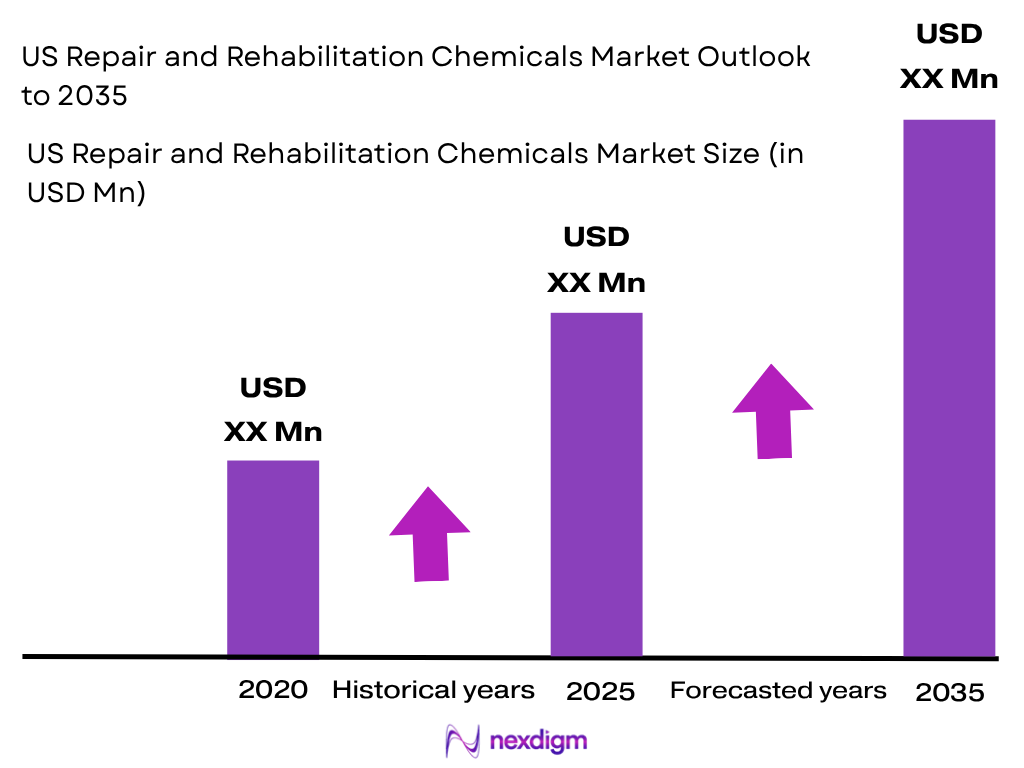
The US Repair and Rehabilitation Chemicals Market is valued at approximately ~USD XX million, supported by bridge preservation, concrete restoration, water-infrastructure renewal and building maintenance. The national bridge inventory increased from 621,581 structures in the preceding reporting period to 623,218 structures in the latest comparable period, while bridges classified in poor condition declined from 42,404 to 42,080, sustaining large requirements for repair mortars, corrosion mitigation and protective treatments.
California, Texas, the Northeast, Great Lakes and Florida are important US Repair and Rehabilitation Chemicals demand centres because they combine large bridge inventories, dense urban structures, parking assets, water infrastructure and aggressive deterioration environments. Texas contains 56,729 bridges and California 25,848, while national public construction expenditure increased from USD450.7 billion in the preceding reporting period to USD492.7 billion in the latest period, supporting extensive rehabilitation and preservation activity.
Market Segmentation
By Product Type
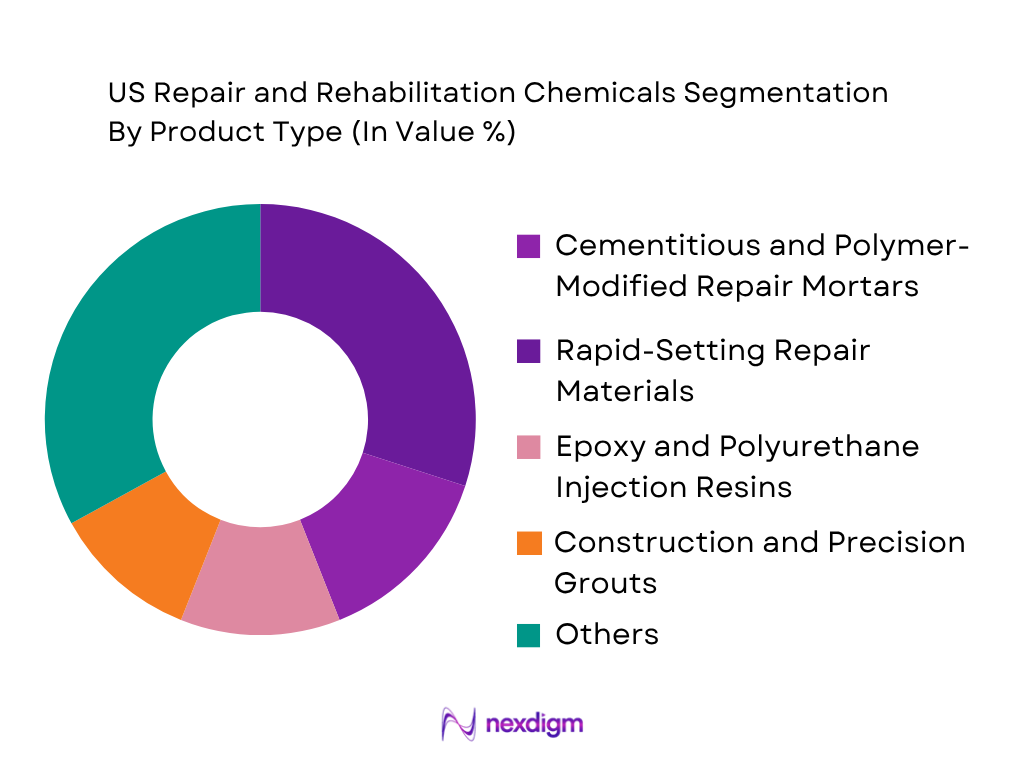
The US Repair and Rehabilitation Chemicals Market is segmented into cementitious repair mortars, polymer-modified mortars, rapid-setting materials, epoxy and polyurethane injection resins, construction grouts, corrosion-control systems, protective coatings and structural-strengthening materials. Cementitious and polymer-modified repair mortars hold the dominant position because bridge decks, parking structures, industrial floors, water facilities and commercial concrete frequently require localized removal and reinstatement of deteriorated concrete. Rapid-hardening grades are particularly important where traffic or facilities must return to service quickly. Polymer modification improves adhesion, permeability control and freeze-thaw durability, making these systems suitable for vertical, overhead and horizontal restoration. Repair mortar demand is supported by the scale of the installed infrastructure base: FHWA recorded 623,218 highway bridges, including 306,279 in fair condition and 42,080 in poor condition in the latest comparable inventory. These conditions create continuous requirements for patching, section restoration, bridge-deck repairs and structural concrete rehabilitation.
By Repair Application
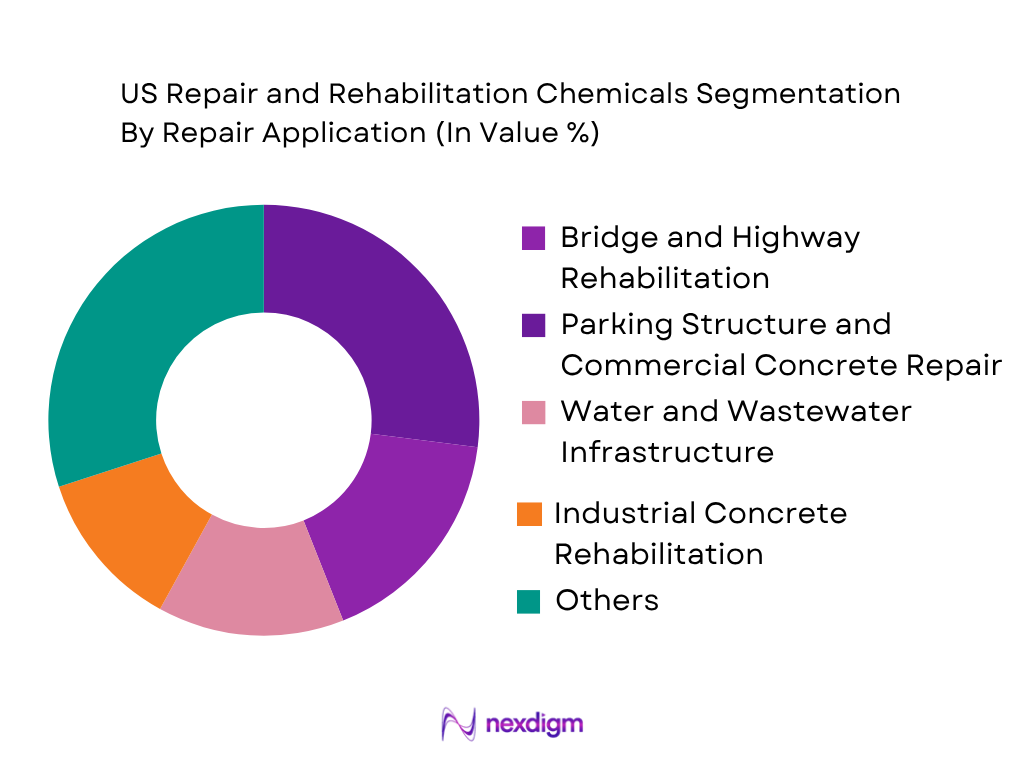
The US Repair and Rehabilitation Chemicals Market is segmented into bridge and highway rehabilitation, parking-structure restoration, commercial building repair, water and wastewater rehabilitation, industrial concrete maintenance, crack injection, structural strengthening and marine restoration. Bridge and highway rehabilitation represents the dominant application because the country operates an exceptionally large inventory of ageing transportation structures exposed to traffic loading, freeze-thaw cycles, deicing salts and chloride-induced reinforcement corrosion. FHWA recorded 623,218 bridges, with 306,279 classified as fair and 42,080 as poor, creating a substantial addressable preservation base. Bridge work requires rapid-set patching mortars, overlay materials, epoxy bonding systems, galvanic anodes, silane impregnation and crack-repair products. Federal funding reinforces the application: the Bridge Investment Program announced USD635 million for 22 projects across 19 states in its 2024 bridge-grant round. Water and wastewater rehabilitation represents another important application because concrete structures face chemical attack, leakage and immersion exposure requiring coatings, grouts and injection technologies.
Competitive Landscape
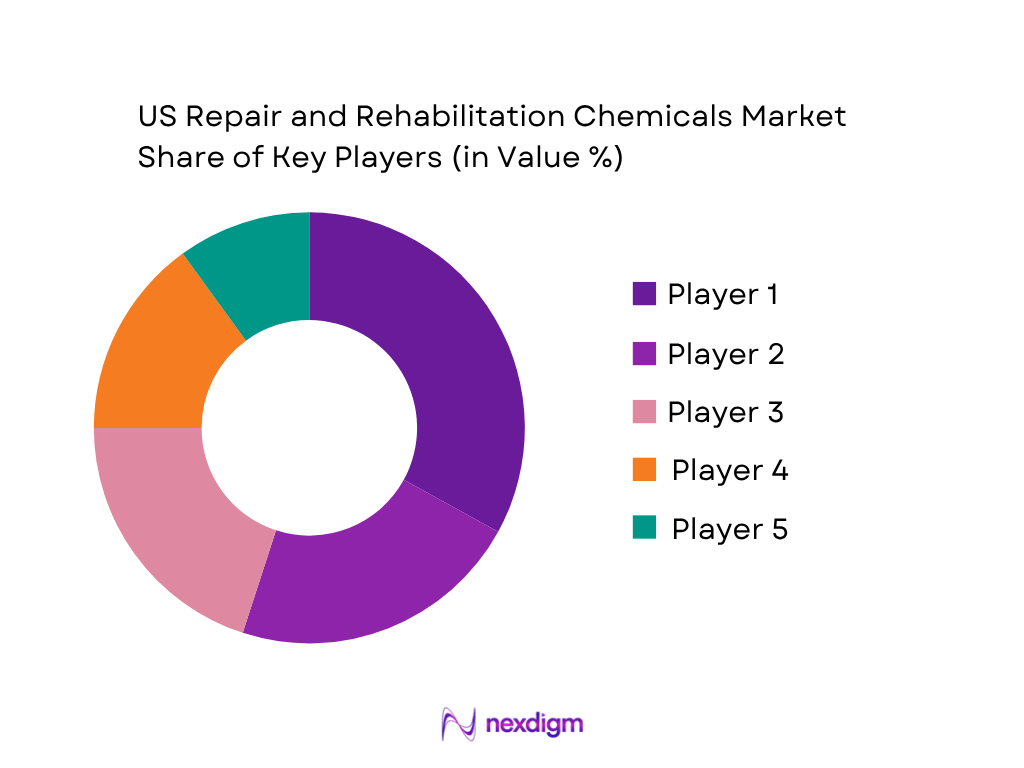
The US Repair and Rehabilitation Chemicals Market includes large multinational construction-chemical suppliers and specialized domestic concrete-restoration companies. Competition is driven by DOT approvals, rapid-setting repair capability, epoxy and polyurethane injection technologies, corrosion mitigation, CFRP strengthening, protective coatings and field engineering support. Companies with broad manufacturing networks and state-specific approved-product-list presence have an advantage because infrastructure projects frequently require prequalified products and strict ASTM, ACI, ICRI and state DOT compliance.
| Major Player | Establishment Year | Headquarters | Repair Mortars | Injection / Grouting | Corrosion Control | Structural Strengthening | Infrastructure Exposure | US Technical Support |
| Sika | 1910 | Baar, Switzerland | ||||||
| Master Builders Solutions | 1909 | Mannheim, Germany | ||||||
| MAPEI | 1937 | Milan, Italy | ||||||
| Euclid Chemical | 1910 | Cleveland, Ohio | ||||||
| W. R. Meadows | 1926 | Hampshire, Illinois |
US Repair and Rehabilitation Chemicals Market Analysis
Growth Drivers
Aging Bridge Inventory Is Sustaining Concrete Repair and Corrosion-Mitigation Demand
The US Repair and Rehabilitation Chemicals Market is strongly supported by the scale and condition of the national bridge inventory. Federal Highway Administration data recorded 623,218 bridges in 2024, including 306,279 bridges in fair condition and 42,080 in poor condition. California alone contained 25,848 bridges, including 1,527 in poor condition, while state and local agencies collectively manage thousands of structures exposed to chloride ingress, traffic loading, freeze-thaw cycling and reinforcement corrosion. This installed infrastructure base creates recurring demand for polymer-modified repair mortars, bridge-deck patching compounds, rapid-setting materials, galvanic anodes, silane treatments and structural injection products. Federal support further reinforces rehabilitation activity: the FHWA Bridge Investment Program awarded USD635 million to 22 bridge projects across 19 states in 2024, including replacement and rehabilitation work. The broader macroeconomic environment provides a substantial public-investment base, with World Bank data recording US nominal GDP of USD29.298 trillion in 2024. These conditions support a continuous pipeline of bridge preservation and structural repair rather than dependence on new infrastructure construction alone.
Water and Public Infrastructure Modernization Is Expanding Rehabilitation Applications
Water, wastewater and public infrastructure modernization is another major growth driver for the US Repair and Rehabilitation Chemicals Market because treatment facilities, sewer structures, pumping stations, reservoirs and public concrete assets require recurring repair and protection. The US Environmental Protection Agency announced USD5.8 billion in 2024 for drinking-water, wastewater and stormwater infrastructure improvements and also made USD7.5 billion available through the Water Infrastructure Finance and Innovation Act program. These projects create direct application opportunities for chemical-resistant repair mortars, epoxy linings, injection grouts, crack-sealing systems, protective coatings and waterproofing rehabilitation materials. Public construction activity also remained substantial: US Census Bureau data show USD492.7 billion of public construction spending in 2024, including USD142.7 billion for highway construction and USD105.2 billion for educational facilities. Each of these asset groups contains reinforced-concrete structures requiring lifecycle maintenance. The broader economy provides substantial fiscal and infrastructure capacity, with World Bank data recording nominal GDP of USD29.298 trillion in 2024. Together, federal water funding and public-asset spending create a diversified rehabilitation demand base extending beyond bridges into municipal, institutional and utility infrastructure.
Market Challenges
Skilled Concrete Repair Labor Availability Constrains Complex Rehabilitation Work
The US Repair and Rehabilitation Chemicals Market faces a significant execution challenge because structural concrete repair requires trained workers capable of diagnosing defects, removing unsound concrete, preparing reinforcement, placing repair materials and applying injection or strengthening systems correctly. Bureau of Labor Statistics data show that highway, street and bridge construction employed 88,960 construction laborers, 56,670 operating engineers, 36,540 first-line supervisors, 17,330 cement masons and concrete finishers and 14,100 construction managers in May 2024. At the same time, foundation, structure and building exterior contractors employed 104,790 cement masons and concrete finishers, illustrating both the scale and specialized nature of the workforce required. Rehabilitation work is more demanding than routine placement because incomplete surface preparation, incorrect moisture conditioning or poor curing can cause premature debonding and corrosion recurrence. These risks become more significant on bridge, parking and wastewater projects with restricted access and active operations. World Bank data place US nominal GDP at USD29.298 trillion in 2024, supporting extensive infrastructure spending but not automatically solving specialist labor constraints. Consequently, contractor training, approved applicator networks and field technical support remain critical competitive requirements for repair-material suppliers.
Traffic Closures and Rapid Return-to-Service Requirements Increase Technical Complexity
Traffic management and limited closure windows create another major challenge for the US Repair and Rehabilitation Chemicals Market because bridge decks, highways, parking facilities and transportation structures often cannot remain closed for conventional curing periods. US Census Bureau data show USD142.7 billion of highway construction spending in 2024, indicating the scale of roadway activity where repair operations compete with traffic-access requirements. FHWA recorded 623,218 bridges, including 306,279 in fair condition and 42,080 in poor condition, meaning a large volume of repair must be executed on operating transportation networks rather than isolated structures. Highway, street and bridge contractors employed 88,960 construction laborers, 56,670 equipment operators and 17,330 cement masons in May 2024, but even a large workforce must work within lane-closure, curing and reopening constraints. This raises demand for specialized rapid-hardening mortars, high-early-strength repair materials and fast-cure coatings, while increasing failure risk if products are placed outside required temperature or moisture conditions. World Bank data record US nominal GDP of USD29.298 trillion in 2024, underscoring the scale of economic activity dependent on maintaining transportation availability during rehabilitation.
Market Opportunities
Rapid-Setting DOT Repair Materials and Bridge Preservation Systems Offer Significant Growth Scope
Rapid-setting repair materials represent a strong future opportunity in the US Repair and Rehabilitation Chemicals Market because transportation agencies increasingly need to rehabilitate deteriorated concrete while minimizing lane closures. Current infrastructure data provide a large addressable base: FHWA recorded 623,218 bridges in 2024, including 42,080 in poor condition and 306,279 in fair condition. The Bridge Investment Program also awarded USD635 million to 22 projects in 19 states during 2024, creating active rehabilitation opportunities for bridge decks, piers, abutments and approach structures. Highway construction spending reached USD142.7 billion in the same period, providing further demand for rapid-return repair materials in pavement and structure maintenance. Products capable of delivering early strength, low shrinkage and strong bond within compressed work windows can reduce closure duration and improve contractor productivity. This favors ASTM C928-compliant rapid-setting mortars, polymer-modified systems, epoxy bonding agents and overlay technologies. World Bank data record US nominal GDP of USD29.298 trillion in 2024. Current bridge condition and transportation spending therefore provide a substantial platform for future growth in specification-driven rapid repair systems without relying on speculative future infrastructure volumes.
Corrosion Mitigation and Structural Strengthening Technologies Create High-Value Expansion Opportunities
Corrosion-control and structural-strengthening technologies offer substantial future potential because many US concrete assets can be preserved more economically through targeted rehabilitation than through full replacement. FHWA’s 2024 inventory identified 42,080 bridges in poor condition and 306,279 in fair condition, while California alone recorded 1,527 poor-condition bridges among 25,848 total structures. These assets are exposed to chloride ingress, deicing salts, moisture and reinforcement corrosion, supporting demand for galvanic anodes, migrating corrosion inhibitors, silane impregnation, protective coatings and cathodic-protection-compatible repair materials. Structural strengthening adds another opportunity where existing bridges, parking structures and commercial buildings require additional capacity without extensive reconstruction; CFRP fabrics, laminates and structural epoxies can reinforce beams, slabs and columns while limiting added dead load. Public construction spending reached USD492.7 billion in 2024, broadening the stock of assets that will ultimately require preservation. World Bank data record US nominal GDP of USD29.298 trillion in 2024. These current conditions create a durable future opportunity for suppliers combining concrete repair, corrosion mitigation and CFRP strengthening into integrated lifecycle-extension systems.
Future Outlook
The US Repair and Rehabilitation Chemicals Market is expected to expand at approximately ~X.X% CAGR during 2026-2035, supported by a shift from reactive structural repair toward systematic asset preservation and lifecycle extension. Aging bridges, water systems, parking structures and industrial assets will remain major sources of demand. Infrastructure rehabilitation will increasingly favor rapid-return-to-service products because agencies and facility owners must minimize lane closures and operational downtime. Rapid-hardening mortars, flowable repair materials and fast-cure coatings are therefore likely to gain strategic importance.
Major Players
- Sika Corporation
- Master Builders Solutions
- MAPEI Corporation
- The Euclid Chemical Company
- W. R. Meadows, Inc.
- Tremco CPG Inc.
- GCP Applied Technologies / Saint-Gobain
- Hilti North America
- Simpson Strong-Tie
- Five Star Products, Inc.
- Vector Corrosion Technologies
- Cortec Corporation
- PROSOCO, Inc.
- Penetron USA
- Kryton International / US Operations
Key Target Audience
- Concrete Repair and Construction Chemical Manufacturers
- Bridge, Highway and Structural Rehabilitation Contractors
- Water and Wastewater Infrastructure Contractors
- Commercial Property and Parking Structure Owners
- Construction Material Distributors and Specialty Applicators
- Investments and Venture Capitalist Firms
- Government and Regulatory Bodies (Federal Highway Administration, US Environmental Protection Agency, Federal Transit Administration, US Army Corps of Engineers, State Departments of Transportation)
- Municipal Infrastructure and Transportation Authorities
Research Methodology
Step 1: Identification of Key Variables
The initial phase involves developing an ecosystem map covering repair-chemical manufacturers, raw-material suppliers, DOT contractors, structural engineers, municipal authorities, distributors and specialty applicators. Secondary and proprietary sources are reviewed to identify bridge condition, repair technologies, deterioration mechanisms and infrastructure exposure. Critical variables include repair area, defect type, asset condition, material technology, application intensity and project specification requirements.
Step 2: Market Analysis and Construction
Historical demand is evaluated using bridge inventories, public construction spending, water-infrastructure funding and rehabilitation-program activity. The top-down approach estimates demand from the addressable infrastructure and building asset base, while the bottom-up methodology analyses supplier revenues, contractor consumption and material quantities by repair type. Results are reconciled across mortars, injections, grouts, corrosion systems, coatings and strengthening technologies.
Step 3: Hypothesis Validation and Expert Consultation
Market hypotheses are validated through computer-assisted telephone interviews with repair-material suppliers, DOT contractors, structural engineers, parking restoration specialists and water-infrastructure contractors. Discussions assess product approval requirements, repair depth, surface preparation, corrosion recurrence, rapid-return-to-service needs and specification practices. The findings are used to refine application-level consumption and distinguish routine maintenance from major structural rehabilitation.
Step 4: Research Synthesis and Final Output
The final phase triangulates FHWA bridge statistics, EPA infrastructure programs, Census construction data, manufacturer disclosures and primary interviews. Market demand is validated across product type, application, asset class and geography. Forecasting incorporates bridge preservation, water-system renewal, parking restoration, corrosion mitigation, structural strengthening, rapid-setting technology and low-carbon asset-life-extension solutions.

- Executive Summary
- Research Methodology (Market Definitions and Assumptions, US Repair and Rehabilitation Chemicals Market Classification, Cementitious Repair Mortar Assessment, Polymer-Modified Repair Mortar Assessment, Rapid-Setting Repair Material Assessment, Flowable Micro-Concrete Assessment, Epoxy Repair Assessment, Crack Injection Resin Assessment, Polyurethane Injection Assessment, Cementitious Injection Grout Assessment, Non-Shrink Grout Assessment, Precision Grout Assessment, Reinforcement Corrosion Protection Assessment, Galvanic Anode Assessment, Migrating Corrosion Inhibitor Assessment, Silane and Siloxane Treatment Assessment, Protective Coating Assessment, Structural Strengthening Assessment, CFRP System Assessment, Epoxy Bonding Assessment, Traffic Deck Rehabilitation Assessment, Bridge Deck Rehabilitation Assessment, Parking Structure Rehabilitation Assessment, Water and Wastewater Structure Rehabilitation Assessment, Building Façade Repair Assessment, Marine and Coastal Concrete Assessment, ACI 562 Assessment, ACI 546R Assessment, ICRI Surface Preparation Assessment, ASTM C928 Repair Mortar Assessment, ASTM C881 Epoxy Assessment, ASTM C1583 Pull-Off Adhesion Assessment, ASTM C876 Corrosion Potential Assessment, State DOT Approved Product List Assessment, FHWA Asset Condition Assessment, Top-Down Market Sizing, Bottom-Up Market Sizing, Contractor Interviews, DOT Specification Mapping, Distributor Mapping, Data Triangulation, Forecasting Framework)

- Definition and Scope
- US Repair and Rehabilitation Chemicals Industry Evolution and Development of Conventional Cementitious Patching, Polymer-Modified Repair Mortars, Rapid-Setting DOT Repair Materials, Flowable Repair Concrete, Non-Shrink Grouts, Precision Grouts, Epoxy Injection Resins, Polyurethane Injection Systems, Reinforcement Passivation, Galvanic Anode Systems, Migrating Corrosion Inhibitors, Silane Water Repellents, Anti-Carbonation Coatings, Traffic Deck Coatings, Structural Epoxy Bonding, CFRP Strengthening Systems, Bridge Deck Overlays, Parking Structure Restoration Systems, Wastewater Protective Linings and Low-Carbon Rehabilitation Technologies
- Repair and Rehabilitation Chemicals Value Chain Analysis
- Repair and Rehabilitation Chemicals Supply Chain Analysis
- Cement and SCM Suppliers, Polymer Modifier Suppliers, Epoxy Resin Suppliers, Polyurethane Resin Suppliers, Corrosion Inhibitor Suppliers, Zinc Anode Suppliers, Silane and Siloxane Suppliers, Carbon Fibre Suppliers, Mineral Filler Suppliers, Specialty Additive Suppliers, Repair Chemical Manufacturers, Regional Blenders, Importers, Construction Material Distributors, DOT Contractors, Structural Repair Contractors, Parking Structure Contractors, Waterproofing Contractors, Injection Contractors, Industrial Flooring Contractors, Water Infrastructure Contractors, Structural Engineers, State DOTs, Municipal Asset Owners and Facility Managers

- Growth Drivers (Aging Bridge Inventory, FHWA Bridge Preservation Programs, State DOT Rehabilitation Spending, Water and Wastewater Infrastructure Modernization, Parking Structure Deterioration, Deicing Salt Exposure, Freeze-Thaw Damage, Commercial Building Restoration, Industrial Asset Maintenance, Infrastructure Resilience, Preventive Maintenance, Asset-Life Extension)
- Market Challenges (Skilled Concrete Repair Labor Availability, Traffic Closure Constraints, Surface Preparation Errors, Hidden Chloride Contamination, Corrosion Recurrence, Repair-Material Compatibility, Freeze-Thaw Exposure, Moisture Behind Repairs, Crack Reopening, DOT Approval Complexity, State-by-State Specification Variation, Fast Return-to-Service Requirements, Occupied Facility Constraints)
- Market Opportunities (Rapid-Setting DOT Repair Materials, Galvanic Anode Systems, Migrating Corrosion Inhibitors, Silane Treatments, CFRP Strengthening, Ultra-Low-Viscosity Injection Epoxies, Bridge Deck Overlays, Parking Structure Restoration, Water and Wastewater Protective Linings, Low-Carbon Repair Mortars, Predictive Maintenance-Linked Repair, High-Durability Asset-Life Extension Systems)
- Market Trends (Rapid-Hardening Repair Mortars, Polymer-Modified Structural Mortars, Galvanic Corrosion Mitigation, Ultra-Low-Viscosity Epoxy Injection, CFRP Strengthening, Silane Hydrophobic Treatment, Polyurea Joint Fillers, Traffic-Bearing Deck Membranes, Low-Carbon Repair Systems, DOT Product Prequalification, Digital Condition Assessment, Drone and Sensor-Assisted Inspection)
- Government Regulations and Standards (ACI 562 Repair Code, ACI 546R Concrete Repair Guide, ICRI Concrete Surface Profile Requirements, ASTM C928 Rapid-Hardening Repair Materials, ASTM C881 Epoxy Bonding Systems, ASTM C1583 Pull-Off Bond Strength, ASTM C876 Corrosion Potential Testing, AASHTO Bridge Preservation Requirements, FHWA National Bridge Inspection Standards, State DOT Approved Product Lists, EPA Water Infrastructure Requirements, OSHA Construction Safety Requirements)
- SWOT Analysis
- Porter’s Five Forces Analysis
- PESTLE Analysis
- Stakeholder Ecosystem

- By Market Value (2020-2025)
- By Repair Chemical Consumption Volume (2020-2025)
- By Cementitious Repair Mortar Consumption (2020-2025)
- By Polymer-Modified Repair Mortar Consumption (2020-2025)
- By Rapid-Setting Repair Material Consumption (2020-2025)
- By Flowable Repair Concrete Consumption (2020-2025)

- By Product Type (In Value %)
Cementitious Repair Mortars
Polymer-Modified Repair Mortars
Rapid-Setting Repair Mortars
Flowable Repair Concrete and Micro-Concrete
Epoxy Repair Mortars
Low-Viscosity Epoxy Injection Resins
Polyurethane Injection Resins
Cementitious Injection Grouts
Precision Grouts - By Repair Application (In Value %)
Spalled Concrete Repair
Delaminated Concrete Repair
Structural Crack Injection
Non-Structural Crack Sealing
Reinforcement Corrosion Repair
Concrete Section Reinstatement
Bridge Deck Patching
Bridge Pier and Abutment Repair
Parking Deck Rehabilitation
Industrial Floor Repair - By Deterioration Mechanism (In Value %)
Chloride-Induced Reinforcement Corrosion
Carbonation-Induced Corrosion
Freeze-Thaw Deterioration
Deicing Salt Attack
Water Ingress
Concrete Cracking
Delamination
Spalling
Sulfate Attack
Chemical Attack
Abrasion and Erosion - By Structure Type (In Value %)
Highway Bridges
Bridge Decks
Parking Garages
Commercial Buildings
Multifamily Residential Buildings
Hospitals
Schools and Universities
Stadiums and Arenas
Industrial Plants - By Repair Technology (In Value %)
Hand-Applied Patching
Form-and-Pour Repair
Wet-Spray Repair
Dry-Spray Repair
Rapid-Set Horizontal Repair
Epoxy Pressure Injection
Polyurethane Injection
Cementitious Pressure Grouting - By Performance Requirement (In Value %)
High Early Strength
Rapid Return to Traffic
High Bond Strength
Shrinkage Compensation
Freeze-Thaw Resistance
Deicing Salt Resistance
Low Permeability
Chloride Resistance
Chemical Resistance

- Market Share of Major Players (By US Revenue, Repair Mortar Volume, Rapid-Set Repair Portfolio, Injection Resin Portfolio, Grouting Portfolio, Corrosion Mitigation Portfolio, Protective Coating Portfolio, CFRP Strengthening Exposure, Bridge and DOT Exposure, Parking Structure Exposure, Water Infrastructure Exposure, US Manufacturing Capacity, Distributor Network, Approved Product List Presence, Technical Specification Support)
- Cross Comparison Parameters (Structural Repair Mortar Rapid-Set and Grout Portfolio Breadth, Epoxy Polyurethane and Cementitious Injection Technology Capability, Galvanic Anode Corrosion Inhibitor and Chloride Protection Capability, CFRP Structural Strengthening and Structural Bonding Capability, FHWA State DOT Bridge and Highway Rehabilitation Reference Base, Parking Water Wastewater and Industrial Rehabilitation Capability, US Manufacturing Warehousing and Construction Distribution Network Reach, Engineering Specification Contractor Training Field Testing and Technical Support Capability)
- SWOT Analysis of Major Players
- Major Companies
Sika Corporation
Master Builders Solutions
MAPEI Corporation
The Euclid Chemical Company
W. R. Meadows, Inc.
Tremco CPG Inc.
GCP Applied Technologies / Saint-Gobain
Hilti North America
Simpson Strong-Tie
Five Star Products, Inc.
Vector Corrosion Technologies
Cortec Corporation
PROSOCO, Inc.
Penetron USA
Kryton International / US Operations

- State DOT Contractor Requirement Assessment
- Bridge Repair Contractor Requirement Assessment
- Structural Repair Contractor Requirement Assessment
- Parking Structure Contractor Requirement Assessment
- Injection Specialist Requirement Assessment
- Waterproofing Contractor Requirement Assessment
- Industrial Maintenance Contractor Requirement Assessment

- By Market Value (2020-2035)
- By Repair Chemical Consumption Volume (2020-2035)
- By Cementitious Repair Mortar Consumption (2020-2035)
- By Polymer-Modified Repair Mortar Consumption (2020-2035)
- By Rapid-Setting Repair Material Consumption (2020-2035)
- By Flowable Repair Concrete Consumption (2020-2035)


 Request a Sample
 Ask for Customization
 Get a Quote
 Enquire Now
