

 Download PDF
 Download PDF
Market Overview
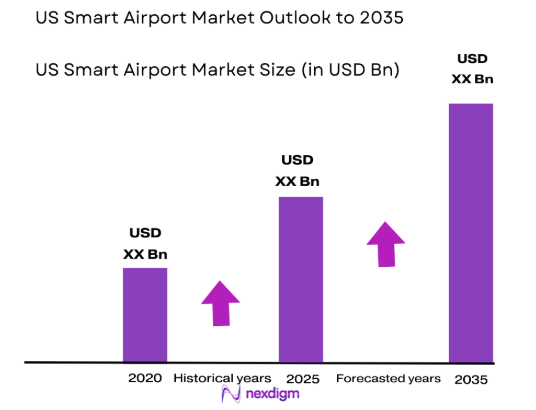
The US Smart Airport market is anticipated to witness substantial growth in the upcoming years, driven by the increasing adoption of digital technologies, automation, and the demand for enhanced passenger experiences. Based on a recent historical assessment, the market size is projected to reach USD ~ billion. The surge in air travel, along with the growing emphasis on operational efficiency, security, and sustainability, are primary factors propelling market expansion. Furthermore, government initiatives supporting the modernization of airport infrastructure will play a significant role in shaping the market dynamics.
In the US, the dominance of smart airport technologies is most noticeable in major aviation hubs such as New York, Los Angeles, and Chicago. These cities are leading the charge due to their extensive passenger volumes and advanced airport infrastructure. The high level of international connectivity, along with large-scale government investments, is helping shape their continued dominance. Additionally, airports in these regions are increasingly adopting smart solutions to streamline operations and meet the evolving needs of travelers, enhancing operational efficiency.
Market Segmentation
By Product Type
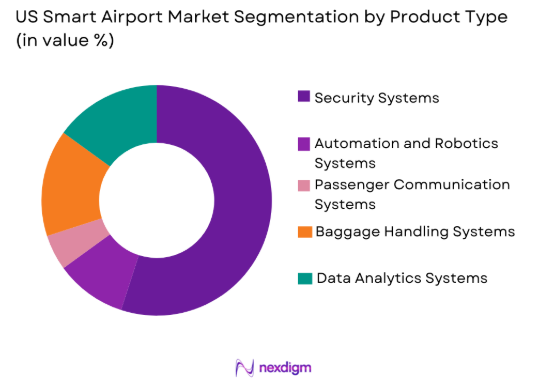
The US Smart Airport market is segmented by product type into security systems, automation and robotics systems, passenger communication systems, baggage handling systems, and data analytics systems. Recently, security systems have seen the dominant market share due to increasing global security concerns, stringent regulations, and growing threats to airport infrastructure. These systems are being increasingly integrated with advanced surveillance technologies, including biometrics, AI-based recognition tools, and facial recognition systems to meet the rising demand for secure, seamless passenger processing.
By Platform Type
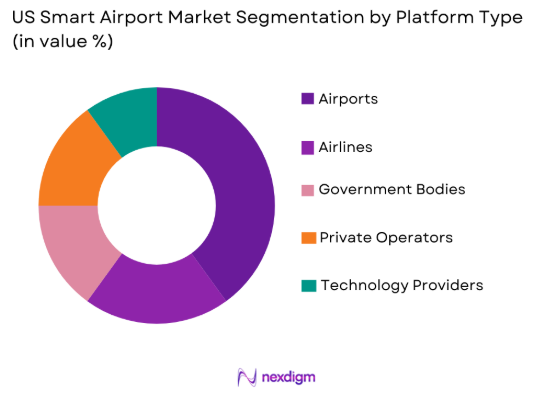
The US Smart Airport market is segmented by platform type into airports, airlines, government bodies, private operators, and technology providers. Recently, airports have gained a dominant market share driven by increasing investments in infrastructure modernization, passenger services, and the integration of new technologies. Airports are rapidly becoming digital hubs, with a focus on creating smart environments for passengers, enhancing security measures, and optimizing operational processes. These advancements are being driven by both public-private partnerships and airport authority initiatives aimed at improving passenger experience and safety.
Competitive Landscape
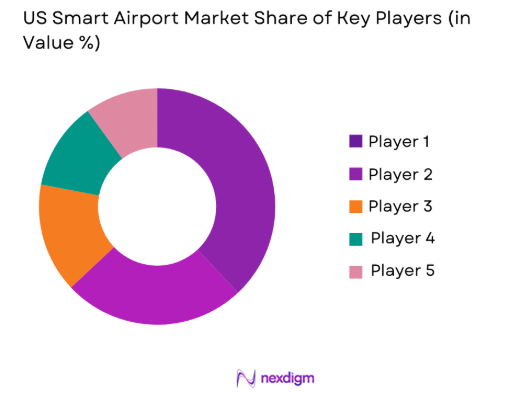
The US Smart Airport market is highly competitive, characterized by the presence of several well-established players. Key players have focused on consolidating their market position by offering advanced technological solutions, strategic partnerships, and innovative service offerings. Companies are also investing heavily in R&D to introduce next-generation smart airport technologies that can meet the increasing demand for enhanced security, seamless operations, and improved passenger experiences.
| Company Name | Establishment Year | Headquarters | Technology Focus | Market Reach | Key Products | Revenue (in USD) | Market-Specific Parameter |
| Honeywell | 1906 | Morris Plains, NJ, USA | ~ | ~ | ~ | ~ | ~ |
| Siemens | 1847 | Munich, Germany | ~ | ~ | ~ | ~ | ~ |
| SITA | 1949 | Geneva, Switzerland | ~ | ~ | ~ | ~ | ~ |
| Thales Group | 2000 | Paris, France | ~ | ~ | ~ | ~ | ~ |
| IBM | 1911 | Armonk, NY, USA | ~ | ~ | ~ | ~ | ~ |
US Smart Airport Market Analysis
Growth Drivers
Increasing demand for operational efficiency
Increasing demand for operational efficiency is a major growth driver in the US Smart Airport market. As air travel continues to rise, the need for smarter, more efficient airport operations becomes essential. Airports are adopting automation and digital technologies to streamline processes such as check-in, baggage handling, and security checks. These solutions reduce wait times, minimize human error, and increase throughput, allowing airports to handle higher passenger volumes without compromising service quality. With travelers demanding faster and more convenient airport experiences, airports are prioritizing operational efficiency to enhance customer satisfaction and ensure smooth operations. Additionally, by implementing AI and data analytics, airports can predict and address potential bottlenecks in real-time, further optimizing resources. This ongoing need for enhanced efficiency, along with rising passenger expectations, continues to fuel the adoption of smart technologies across US airports.
Government support for infrastructure modernization
Government support for infrastructure modernization is another key growth driver in the US Smart Airport market. With increasing air travel demand, the US government is investing heavily in upgrading airport infrastructure to meet the evolving needs of the aviation industry. Federal and state agencies are providing funding for the integration of advanced technologies such as biometric screening, smart security systems, and automated baggage handling systems. These government investments not only improve operational efficiency but also contribute to enhancing passenger safety and reducing security risks. Furthermore, with the growing emphasis on sustainable practices, governments are encouraging airports to incorporate green technologies, including energy-efficient systems and renewable energy sources, into their modernization efforts. These investments are helping airports modernize their facilities and adopt smart technologies that improve both passenger experience and operational effectiveness.
Market Challenges
High capital expenditure for technology implementation
High capital expenditure for technology implementation remains one of the key challenges in the US Smart Airport market. The initial cost of installing smart technologies, such as biometric systems, automated baggage handling, and advanced security solutions, can be prohibitively expensive. Smaller airports, in particular, may struggle to secure the necessary funding to adopt these technologies, especially when facing competition for government and private sector investment. Although long-term operational savings and improved passenger experience may justify the investment, the upfront cost of modernizing infrastructure presents a significant financial hurdle. Airports must also consider ongoing maintenance and system upgrades, which add to the overall cost of ownership. As a result, despite the clear benefits, the financial barriers to adopting smart technologies can delay or limit the implementation of these systems, especially in less economically developed regions.
Cybersecurity risks due to increased digitalization
As airports increasingly adopt digital technologies and interconnected systems, cybersecurity risks have become a significant market challenge. The integration of IoT devices, biometric identification, and cloud-based solutions exposes airports to potential cyberattacks and data breaches. Sensitive passenger information, such as travel history and personal details, is stored and transmitted across multiple platforms, making it vulnerable to unauthorized access. Any breach in security could not only result in severe financial losses but also damage the reputation of the affected airport. Additionally, the complexity of managing cybersecurity across various interconnected systems creates significant operational challenges for airport authorities. Protecting the digital infrastructure, ensuring compliance with data protection regulations, and preventing cyberattacks require ongoing investment in security protocols, which adds an additional layer of complexity and cost to the implementation of smart technologies at airports.
Opportunities
Expansion of autonomous airport technologies
The expansion of autonomous airport technologies presents a significant opportunity for growth in the US Smart Airport market. Autonomous systems such as self-driving vehicles, drones, and robots are increasingly being integrated into airport operations. These technologies are being used for a variety of tasks, including baggage handling, security surveillance, and maintenance, significantly improving operational efficiency and reducing labor costs. As automation continues to evolve, airports can expect greater adoption of autonomous systems, leading to enhanced resource optimization, faster operations, and a reduction in human errors. Moreover, the integration of autonomous vehicles and drones can also contribute to a more sustainable airport ecosystem, as these technologies are often more energy-efficient than traditional systems. As the technology matures and becomes more cost-effective, it is expected that a broader range of airports will adopt autonomous solutions, presenting a significant opportunity for market growth.
Demand for sustainable and eco-friendly solutions
The growing demand for sustainable and eco-friendly solutions in airport operations presents another opportunity for the US Smart Airport market. With increasing concerns over climate change and environmental impact, airports are focusing on adopting green technologies and practices. These include energy-efficient lighting, water conservation systems, waste reduction initiatives, and the use of renewable energy sources. By integrating sustainable technologies, airports can reduce their carbon footprint, improve resource efficiency, and lower operational costs in the long term. Moreover, regulatory bodies are offering incentives and grants to support the adoption of green technologies, further encouraging airports to prioritize sustainability. As the focus on environmental responsibility intensifies, the demand for eco-friendly solutions in airport operations is expected to grow, providing significant opportunities for companies offering green technologies in the smart airport market.
Future Outlook
The future outlook of the US Smart Airport market is promising, with continued investments in infrastructure modernization, technological advancements, and government support. Over the next five years, we can expect growth in automation and AI-driven solutions that will improve passenger experiences and operational efficiency. Advancements in biometric technology, AI-based data analytics, and autonomous vehicles will drive the transformation of airport operations. Furthermore, sustainable initiatives and regulatory support will contribute to a more efficient and environmentally friendly airport ecosystem.
Major Players
- Honeywell
- Siemens
- SITA
- Thales Group
- IBM
- Amadeus IT Group
- Accenture
- Cisco
- Indra Sistemas
- Rockwell Collins
- Veovo
- Vanderlande Industries
- NEC Corporation
- ZTE Corporation
- LG Electronics
Key Target Audience
- Investments and venture capitalist firms
- Government and regulatory bodies
- Airlines
- Airport authorities
- Technology providers
- Private sector contractors
- System integrators
- End-users of smart airport solutions
Research Methodology
Step 1: Identification of Key Variables
The key variables for the US Smart Airport market are identified based on secondary research, including industry reports, government publications, and company data. These variables help determine the scope of the market.
Step 2: Market Analysis and Construction
Market analysis involves segmentation, trend identification, and competitive analysis based on historical data and current market conditions. This analysis forms the base for constructing a comprehensive market forecast.
Step 3: Hypothesis Validation and Expert Consultation
Experts are consulted to validate the hypotheses and assumptions drawn from secondary research. Interviews with industry stakeholders and technology experts help refine market trends.
Step 4: Research Synthesis and Final Output
The final output is synthesized from the research findings and presented as a comprehensive report, incorporating validated data and forecasts to provide a detailed market assessment.

- Executive Summary
- Research Methodology (Definitions, Scope, Industry Assumptions, Market Sizing Approach, Primary & Secondary Research Framework, Data Collection & Verification Protocol, Analytic Models & Forecast Methodology, Limitations & Research Validity Checks)

- Market Definition and Scope
- Value Chain & Stakeholder Ecosystem
- Regulatory / Certification Landscape
- Sector Dynamics Affecting Demand
- Strategic Initiatives & Infrastructure Growth

- Growth Drivers
Rising Air Passenger Traffic
Government Investment in Airport Infrastructure
Technological Advancements in Automation
Demand for Enhanced Security Systems
Increasing Focus on Operational Efficiency - Market Challenges
High Initial Capital Investment
Technological Integration and Interoperability Issues
Cybersecurity Risks
Regulatory and Compliance Barriers
Limited Skilled Workforce - Market Opportunities
Expansion of Autonomous Systems in Airports
Partnerships with Technology Firms for Smart Solutions
Increasing Demand for Contactless Travel Solutions - Trends
Increase in Use of AI and IoT for Airport Operations
Adoption of Biometric Technology for Passenger Identification
Growing Demand for Sustainable and Green Airports
Shift Toward Cloud-based Solutions
Rise in Use of Automation and Robotics - Government Regulations & Defense Policy
Data Protection and Privacy Regulations
Government Funding and Grants for Airport Modernization
Regulations for Passenger Screening and Security

- By Market Value, 2020-2025
- By Installed Units, 2020-2025
- By Average System Price, 2020-2025
- By System Complexity Tier, 2020-2025

- By System Type (In Value%)
Security Systems
Automation and Robotics Systems
Passenger Communication Systems
Baggage Handling Systems
Data Analytics Systems - By Platform Type (In Value%)
Airports
Airlines
Government Bodies
Private Operators
Technology Providers - By Fitment Type (In Value%)
On-premise Solutions
Cloud-based Solutions
Hybrid Solutions
Modular Solutions
Integrated Solutions - By EndUser Segment (In Value%)
Airport Authorities
Airlines
Government Agencies
Security Services
Technology Firms - By Procurement Channel (In Value%)
Direct Procurement
Government Tenders
Private Sector Procurement
Online Bidding Platforms
Third-party Distributors - By Material / Technology (in Value%)
IoT-based Solutions
AI & Machine Learning
Robotics & Automation
Cloud Computing
Advanced Analytics

- Market structure and competitive positioning
- Market share snapshot of major players
- Cross Comparison Parameters (System Type, Platform Type, Procurement Channel, End User Segment, Fitment Type)
- SWOT Analysis of Key Players
- Pricing & Procurement Analysis
- Porter’s Five Forces
- Key Players
Honeywell
Siemens
SITA
Thales Group
CISCO
IBM
Schneider Electric
Microsoft
Indra Sistemas
NEC Corporation
Amadeus IT Group
Vanderlande Industries
Zebra Technologies
Rockwell Collins
G4S Security

- Airport Authorities’ Growing Focus on Security
- Airlines Increasing Investment in Automation
- Government Agencies’ Role in Regulation and Procurement
- Technology Providers Driving Smart Airport Solutions

- Forecast Market Value, 2026-2035
- Forecast Installed Units, 2026-2035
- Price Forecast by System Tier, 2026-2035
- Future Demand by Platform, 2026-20


 Request a Sample
 Ask for Customization
 Get a Quote
 Enquire Now