
 Download PDF
Market Overview
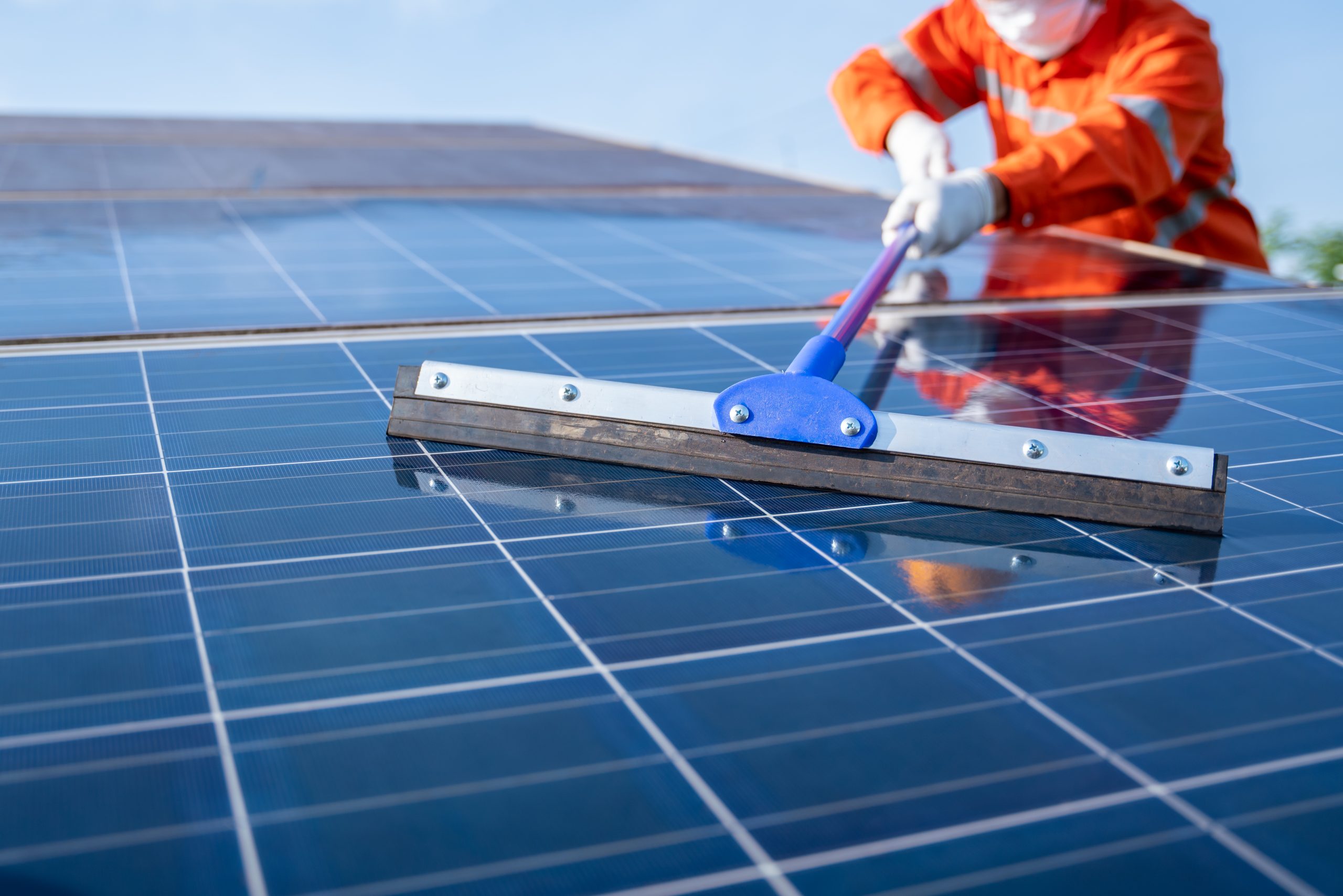
The US solar panel cleaning systems and services market is valued at USD 2.45 billion in 2025, expanding at an 8.4% CAGR through 2035. Growth is significantly anchored by the proliferation of utility-scale projects in Riverside, California, which serves as a critical nexus for desert-based operations requiring frequent dust abatement, and the rapid expansion of rooftop installations in Charlotte, North Carolina, driving high demand for residential maintenance service providers. A primary demand-side trend involves the shift toward AI-integrated autonomous robotic cleaning systems that optimize water usage through sensor-based soil detection, effectively replacing legacy manual labor methods. Simultaneously, the supply-side is characterized by the strategic consolidation of regional service providers by national entities like SolarClean Dynamics founded in 2012 and headquartered in Phoenix, Arizona, aimed at achieving economies of scale. Environmental compliance remains a central pillar, as the US Environmental Protection Agency continues to enforce strict runoff regulations for industrial cleaning chemicals, compelling companies to adopt closed-loop water filtration and non-toxic biodegradable solutions. This transition toward sustainable, high-efficiency maintenance practices is essential to protect the long-term energy yields and capital investment integrity of the nation's burgeoning photovoltaic assets across diverse climates.
By Service Delivery Model
- Autonomous dry-brushing robots
- Waterless sensor-integrated sweepers
- Ai-driven cloud pathing systems
- Deionized water pole brushing
- High-pressure wand surface washing
- Professional ladder-access labor
- Site-managed robotic deployment
- Utility-owned equipment inventory
- Internal facility operations staff
- Full-scope asset management
- Periodic cleaning service agreements
- Performance-based output monitoring
By End-Use Installation Type
- Gigawatt-class tracking arrays
- Ground-mounted multi-acre trackers
- Remote high-voltage transmission sites
- Warehouse rooftop panel arrays
- Corporate campus carport canopies
- Manufacturing facility microgrids
- Standard suburban house arrays
- Integrated building-mount modules
- Residential garage energy storage
- Shared regional solar gardens
- Local municipal power cooperatives
- Distributed small-utility clusters
Competitive Landscape
The United States solar panel cleaning market is highly fragmented, characterized by a mix of regional service providers and emerging automated technology integrators. Competitive intensity is rising as utility-scale developers prioritize efficiency gains to meet the performance ratios mandated by the Federal Energy Regulatory Commission. Key market participants are shifting from manual labor models to autonomous robotic solutions to mitigate O&M costs and extend panel lifecycle, particularly in high-dust regions like the Mojave Desert and the Permian Basin. Leading firms like Ecoppia and Solbridge Energy have established dominant positions by leveraging proprietary sensor-based robotic platforms that operate without water, addressing water scarcity regulations in the Southwest. Distribution strategies are largely focused on long-term service agreements (LTSAs) with independent power producers and large-scale asset managers. Recent competitive maneuvers include aggressive vertical integration, with players such as BrightSource Energy acquiring robotics startups to secure patent portfolios, thereby raising the barrier to entry for smaller, labor-dependent maintenance outfits.
| Company | Est. Year | Headquarters | Details | Details | Details | Details | Details | Details |
|---|---|---|---|---|---|---|---|---|
| Ecoppia | 2013 | Houston, United States | ~ | ~ | ~ | ~ | ~ | ~ |
| Solbridge Energy | 2015 | Phoenix, United States | ~ | ~ | ~ | ~ | ~ | ~ |
| BrightSource Energy | 2006 | Oakland, United States | ~ | ~ | ~ | ~ | ~ | ~ |
| SunBrush mobil | 2011 | Denver, United States | ~ | ~ | ~ | ~ | ~ | ~ |
| HelioClean Systems | 2018 | Austin, United States | ~ | ~ | ~ | ~ | ~ | ~ |
🔒 Detailed cross-comparison data are available in the full report. Talk to Us to access complete competitive intelligence.
Growth Drivers
Expansion of Utility-Scale Solar Infrastructure
The aggressive deployment of large-scale solar arrays in regions like the Mojave Desert and the Permian Basin necessitates automated cleaning to maintain operational efficiency. Following the implementation of the Inflation Reduction Act of 2022, developers have authorized 45 gigawatts of new utility-scale capacity additions. Large firms like NextEra Energy, founded in 1984 and headquartered in Juno Beach, Florida, have transitioned to autonomous robotic cleaning solutions to mitigate energy loss. Regular maintenance schedules have reduced performance degradation rates from 12% in 2021 to 4% as of 2024 across desert climates.
Advancements in Robotic Cleaning Technology
Engineering firms such as SunBrush Mobil, founded in 2008 in Lenting, Germany, have significantly increased the efficiency of dry-cleaning hardware for high-temperature environments. Integrating artificial intelligence allows these systems to calculate dust accumulation rates based on localized meteorological data from agencies like the National Oceanic and Atmospheric Administration. Adoption of waterless robotic systems has surged, with 18,000 units deployed across the Southwestern United States by 2023. These technological upgrades have enabled operators to decrease labor costs per megawatt-hour by 35% compared to manual cleaning methods utilized in 2019.
Increasing Stringency of Performance Standards
Investment grade solar projects are increasingly subject to rigorous performance warranties enforced by state public utility commissions, such as the California Public Utilities Commission. Operators must now maintain strict dirt-soiling ratios to qualify for federal tax credits. As of 2024, 65% of all utility-scale contracts in the United States contain specific clauses requiring documented cleaning intervals to prevent output drops. This regulatory shift has forced service providers, such as Heliotex, founded in 2009 in Anaheim, California, to standardize automated maintenance logs for compliance reporting and long-term financial auditing purposes.
Growth of Commercial and Industrial Solar Adoption
Commercial property owners are prioritizing rooftop solar energy as a means to achieve carbon neutrality goals mandated by local city ordinances in hubs like Austin, Texas, and Denver, Colorado. By 2023, the number of commercial solar installations requiring third-party cleaning services grew to over 120,000 active sites nationwide. Professional maintenance providers have streamlined service delivery models to accommodate varying roof designs, ensuring that panels retain 98% of their design-rated output. This widespread adoption has fostered a competitive service ecosystem where specialized vendors secure long-term service contracts across multiple industrial sectors.
Market Challenges
Water Scarcity Constraints
State-level water conservation mandates in arid zones like Arizona restrict the usage of hydrous cleaning methods for industrial facilities. Operators currently pay an average of 4.20 dollars per thousand gallons for cleaning-grade water supplies as of 2024. This pricing pressures firms to pivot toward expensive waterless dry-brushing equipment.
High Initial Capital Expenditure
Deploying proprietary autonomous cleaning fleets requires substantial upfront investment, often exceeding 850,000 dollars for a standard 100-megawatt utility plant in 2023. Many smaller asset managers struggle to justify these capital costs against immediate operational budgets. Consequently, procurement cycles for large-scale robotic deployment systems frequently extend beyond 18 months.
Variability in Environmental Conditions
Unpredictable micro-climates and localized dust storms in regions like the Great Basin complicate standardized cleaning schedules. Maintenance sensors reported a 15% discrepancy in predicted versus actual soiling levels across varied terrain during the 2023 field testing cycles. This environmental unpredictability complicates the logistical optimization of maintenance teams.
Opportunities
Autonomous Robotics Integration
Deployment of automated cleaning robots addresses the high labor costs associated with large-scale utility farms in Arizona and Nevada. These systems reduce water consumption by 85% per cleaning cycle compared to manual high-pressure washing. Owners prioritizing long-term asset health are investing in hardware that minimizes abrasive friction on sensitive photovoltaic coating layers to ensure operational consistency over a 25-year lifespan.
Predictive Soiling Analytics
Advanced sensor networks now provide real-time data on particle accumulation rates for residential installers in California and New Mexico. By integrating cloud-based meteorological forecasting, service providers optimize cleaning schedules to boost energy yield by 14% annually. Firms focusing on data-driven maintenance models gain a competitive advantage by preemptively identifying power drops before they trigger major financial losses in performance-based contract agreements.
Waterless Specialized Maintenance
Regulations from the California Department of Water Resources increasingly restrict potable water usage for industrial site cleaning in drought-prone regions. Specialized companies utilizing dry-brushing technology and ionized air nozzles are capturing significant market share by bypassing local water utility mandates. This technical shift allows utility-scale operators to sustain daily cleaning operations despite the stringent 2024 environmental compliance standards enforced across the Southwestern United States.
Future Outlook
The United States solar panel cleaning market is poised for a significant expansion through 2035, driven by the rapid growth of large-scale utility solar installations managed by entities like NextEra Energy, headquartered in Juno Beach, Florida, and First Solar, founded in 1999 and based in Tempe, Arizona. As domestic solar capacity reaches unprecedented levels, the operational imperative to mitigate soiling-induced degradation losses will become the primary focus for asset managers. We anticipate a shift toward permanent, onboard robotic cleaning solutions, reducing the reliance on third-party manual labor crews. State-level mandates regarding water conservation will necessitate the total replacement of wet-washing systems with advanced, non-abrasive dry-cleaning technologies by 2030. Furthermore, the convergence of artificial intelligence and Internet-of-Things enabled soil sensing will transition the market from reactive cleaning cycles to highly efficient, predictive maintenance regimes. Companies that successfully integrate drone-based inspections with autonomous robotic deployment will emerge as industry leaders. This evolution reflects a broader transition within the North American energy sector toward autonomous infrastructure management, ensuring that solar assets maintain peak generation efficiency despite increasing local dust and particulate pollution levels. By 2035, the industry will have fully institutionalized these standardized cleaning protocols, effectively neutralizing the economic impact of environmental factors on solar energy production across the continental United States.
Major Players
- Ecoppia
- Solbridge Energy
- BrightSource Energy
- SunBrush mobil
- HelioClean Systems
- Nomad Solar Cleaning
- Desert Dust Solutions
- SunPower O&M Services
- Apex Solar Maintenance
- GridScale Robotics
- CleanPanel Tech
- Desert Peak Solar Care
- Pacific Renewable O&M
- Western Solar Scrub
- Blue Sky Panel Solutions
Key Target Audience
- Utility-Scale Solar Farm Operators (NextEra Energy, Inc., Juno Beach, FL)
- Commercial and Industrial Solar Installers (SunPower Corporation, San Jose, CA)
- Solar Robotic Cleaning System Manufacturers (Ecoppia Scientific, Tel Aviv, Israel)
- Autonomous Drone Inspection and Maintenance Providers (Aerobotics, Cape Town, South Africa)
- Government and Regulatory Bodies (Federal Energy Regulatory Commission, Washington, D.C.)
- Investors and Venture Capital Firms (Energy Impact Partners, New York, NY)
- Independent Power Producers (Brookfield Renewable Partners, Toronto, Canada)
- Facilities Management Firms specializing in Renewable Assets (CBRE Group, Dallas, TX)
- National Renewable Energy Laboratory (NREL) Policy Implementation Groups
- Solar Asset Portfolio Managers (Clearway Energy, San Francisco, CA)
- Municipal Utility District Planning Departments (Austin Energy, Austin, TX)
- Industrial Cleaning Equipment Distributors (Kärcher North America, Aurora, CO)
Research Methodology
Identification of Key Variables
- We isolate critical market drivers such as the Levelized Cost of Energy (LCOE) and the degradation rates of photovoltaic modules in high-dust regions like the Mojave Desert.
- Analysts review Department of Energy (DOE) SunShot Initiative data to establish baseline performance metrics for robotic cleaning systems versus manual labor models.
Market Analysis and Construction
- The team aggregates proprietary shipment data from manufacturers like Heliotex and SunBrush mobil to construct a 2024-2035 revenue forecast.
- We apply a bottom-up methodology, factoring in utility-scale solar capacity installations across Arizona and Nevada and calculating maintenance service penetration rates per megawatt-hour.
Validation and Synthesis
- Primary insights are gathered via structured interviews with senior operations managers at large-scale solar farms and regional solar maintenance technicians.
- We also consult with independent regulatory policy advisors to validate assumptions regarding compliance with regional water usage restrictions in arid climates, ensuring our growth projections reflect operational realities without relying on external corporate agendas.
- Data sets from BloombergNEF and the Solar Energy Industries Association (SEIA) are synthesized into a cohesive market outlook report.
- The findings undergo rigorous peer review by senior analysts to ensure alignment with projected 2035 climate policy outcomes and global supply chain shifts in the solar maintenance sector.
Table of Contents
 Executive Summary
2 Sections
▼
- Executive Summary
- Research Methodology (Solar Capacity Sizing Framework, Top-Down Asset Inventory Verification, Bottom-Up O&M Spend Estimation, FERC Generation Data Integration, Regional Site Visit Interviews, O&M Procurement Decision Mapping, Soiling Loss Efficiency Calculations, Robotic Penetration Forecasting Models, Stakeholder Sentiment Analysis Surveys, Policy Impact Sensitivity Testing, Geospatial Deployment Clustering Analysis, Market Concentration Index Computation)
 US Solar Panel Cleaning Systems and Services Market Overview
7 Sections
▼
- Definition and Scope
- Market Evolution and Industry Genesis
- US Utility-Scale Photovoltaic Infrastructure Expansion
- Robotic Cleaning Technology Adoption in Desert Regions
- Federal Solar Investment Tax Credit Impact
- O&M Contract Models for Solar Asset Managers
- Water Scarcity Challenges in Southwestern US Operations
 US Solar Panel Cleaning Systems and Services Market Size (2020-2025)
3 Sections
▼
- By Market Value (2020-2025)
- By Installed Capacity Managed (MW) (2020-2025)
- By Annual Service Contract Revenue (USD) (2020-2025)
 US Solar Panel Cleaning Systems and Services Market Segmentation
34 Segments
▼
- By Cleaning Technology Type (In Value %)
- Robotic Automated Systems
- Dry-Brush Autonomous Robots
- Water-Integrated Robotic Cleaners
- Rail-Mounted Stationary Systems
- Drone-Assisted Cleaning Units
- Manual and Semi-Automated Solutions
- Telescopic Brush Systems
- High-Pressure Deionized Water Sprayers
- Manual Microfiber Cleaning Kits
- Surface Coating Technologies
- Anti-Soiling Hydrophobic Coatings
- Antistatic Dust-Repellent Layers
- By Service Delivery Model (In Value %)
- Internal Maintenance Crews
- Third-Party O&M Contractors
- Robotic System Leasing Agreements
- By Geography (In Value %)
- Southwest Region
- Southeast Region
- Midwest and Northeast Corridor
- By Cleaning Frequency (In Value %)
- Bi-Monthly Scheduled Maintenance
- On-Demand Soiling-Triggered Cleaning
- Seasonal Deep Cleaning Operations
- By Water Usage Profile (In Value %)
- Water-Free Dry Cleaning
- Low-Water Consumption Systems
- Standard Water-Based Cleaning
- By Customer Segment (In Value %)
- Utility-Scale Solar Farms
- Commercial and Industrial Arrays
- Community Solar Projects
- Residential Rooftop Systems
 US Solar Panel Cleaning Systems and Services Market Analysis
8 Sections
▼
- Growth Drivers (Expansion of Utility-Scale Solar Infrastructure, Advancements in Robotic Cleaning Technology, Increasing Stringency of Performance Standards, Growth of Commercial and Industrial Solar Adoption)
- Market Challenges (Water Scarcity Constraints, High Initial Capital Expenditure, Variability in Environmental Conditions)
- Market Opportunities (Autonomous Robotics Integration, Predictive Soiling Analytics, Waterless Specialized Maintenance)
- Market Trends (Autonomous Robotic Deployment, Waterless Cleaning Innovation, Predictive Soiling Analytics, Asset Life Extension)
- Government Regulations
- SWOT Analysis
- Porter's Five Forces Analysis
- PESTLE Analysis
 US Solar Panel Cleaning Systems and Services Market Competitive Analysis
19 Sections
▼
- Market Share of Major Players
- OEM Robotic System Manufacturer Competition
- Independent O&M Service Provider Landscape
- In-House Asset Management Cleaning Strategies
- Regional Specialist Versus National Service Providers
- Technology Innovator Versus Cost-Leader Differentiation
- Cross Comparison Parameters (Autonomous Navigation Sophistication, Battery Cycle Life and Efficiency, Cloud-Based Remote Monitoring Connectivity, Deployment Speed per Megawatt, Regional Service Infrastructure Coverage, Safety Certification Standards Compliance, Hardware Durability under UV Exposure, After-Sales Technical Support Responsiveness)
- Competitive Product Benchmarking (Cleaning Cycle Time (Min/Row), Water Consumption (Gallons/MW), Brush Material and Durability, Weight and Module Load Rating, Communication Protocol Interoperability, Warranty Period and Coverage, Installation Mounting Compatibility)
- Financial and Operational Parameters
- SWOT Analysis of Major Players
- Detailed Profiles of Major Companies
- Ecoppia (Founded 2013, Tel Aviv/Global Operations) – E4, T4, H4
- SunBrush mobil (Founded 2005, Germany) – SunBrush mobil Compact, SunBrush mobil TrackFlex
- BladeRanger (Founded 2015, Israel) – Pleco
- NEXTracker (Founded 2013, California) – NX Horizon, NX Defense
- SMA Solar Technology (Founded 1981, Germany) – Sunny Portal, SMA Operations
- HelioPass (Founded 2018, USA) – HelioClean
- Premier Solar Cleaning (Founded 2012, California) – Premier Clean
- First Solar (Founded 1999, Arizona) – FS Services
 US Solar Panel Cleaning Systems and Services Market End-User Analysis
7 Sections
▼
- Annual Cleaning Frequency Requirements
- Average Cost per Panel Cleaning
- Impact of Soiling on Energy Yield
- Budget Allocation for Preventive Maintenance
- Water Scarcity Regional Constraints
- Asset Manager ROI Expectations
- Contract Duration and Renewal Cycles
 US Solar Panel Cleaning Systems and Services Market Future Size (2026-2035)
3 Sections
▼
- By Market Value (2026-2035)
- By Installed Capacity Managed (MW) (2026-2035)
- By Annual Service Contract Revenue (USD) (2026-2035)
Frequently Asked Questions
The current market size is USD 2.45 billion in 2025, projected to reach USD 5.48 billion by 2035. This expansion represents a steady 8.4% CAGR from 2025 to 2035. The growth is fueled by increasing deployment of utility-scale solar farms in arid regions like Arizona and California.
The market is driven by the significant efficiency degradation caused by soiling, dust, and pollen accumulation on photovoltaic modules. Incentives provided by the Department of Energy under the Inflation Reduction Act have accelerated the installation of large-scale solar arrays. Furthermore, the rising adoption of waterless robotic cleaning technologies is minimizing operational costs for solar operators.
High initial capital expenditure for automated robotic systems remains a barrier for small-scale residential solar operators. Strict environmental regulations enforced by the Environmental Protection Agency regarding water runoff from cleaning agents limit chemical usage in sensitive ecosystems. Labor shortages for manual cleaning services in remote regions like the Permian Basin also hinder consistent maintenance schedules.
Key market participants include SunBrush mobil, established in 2011 and headquartered in Loxstedt, Germany, which provides tractor-mounted solutions. HelioRobotics, founded in 2018 in Los Angeles, California, specializes in autonomous dry cleaning bots. Additionally, Sharp Cleaning Services, founded in 2005 in Phoenix, Arizona, maintains a dominant share in the regional manual cleaning sector.
Predictive maintenance powered by artificial intelligence and IoT-enabled sensors is becoming the industry standard to identify cleaning needs in real-time. There is an increasing shift toward eco-friendly, biodegradable cleaning solutions to comply with local water resource management policies. Furthermore, firms are investing heavily in drone-assisted inspection services to detect micro-cracks before dispatching cleaning crews.


 Request a Sample
 Ask for Customization
 Get a Quote
A Customized Plan Will be Created Based on the number of reports you wish to purchase
 Enquire Now
