

 Download PDF
 Download PDF
Market Overview
The US Unmanned Systems Market is projected to reach USD ~ billion, with a substantial increase in value driven by government investments, military modernization, and advancements in technology. Recent historical assessments indicate the market is growing due to an increased need for unmanned systems across sectors such as defense, agriculture, and logistics. The demand for unmanned systems is primarily driven by factors such as the increased reliance on UAVs for surveillance, reconnaissance, and tactical operations, as well as automation in civilian industries. Strong market drivers include government funding, commercial applications, and military contracts, with major defense players and technology firms contributing to the market growth.
The US remains a dominant player in the unmanned systems market, attributed to the government’s significant investment in defense technology and automation. The country leads in the adoption of unmanned aerial vehicles (UAVs), unmanned ground vehicles (UGVs), and autonomous maritime systems. Factors contributing to this dominance include technological innovation, strong defense policies, and the active involvement of major players in the commercial and defense sectors. The competitive landscape is fueled by the presence of leading players in the US, such as Lockheed Martin, Northrop Grumman, and other industry giants.

Market Segmentation
By Product Type
The US Unmanned Systems market is segmented by product type into unmanned aerial vehicles (UAVs), unmanned ground vehicles (UGVs), unmanned maritime vehicles (UMVs), autonomous underwater vehicles (AUVs), and hybrid unmanned systems. Recently, unmanned aerial vehicles (UAVs) have a dominant market share due to the increasing demand for drones in military operations, surveillance, and commercial delivery services. The growth of UAVs is supported by their versatility, cost-effectiveness, and rapid technological advancements in AI and imaging capabilities. Moreover, their widespread use in agriculture, surveillance, and logistics further contributes to their dominance in the market. UAVs are also becoming more widely accepted for non-defense applications, providing significant growth potential across various sectors.

By Platform Type
The US Unmanned Systems market is segmented by platform type into land platforms, air platforms, sea platforms, space platforms, and integrated platforms. Air platforms have a dominant market share, driven by the widespread adoption of UAVs for military and commercial applications. The growing need for aerial surveillance, search and rescue operations, and cargo delivery using drones has significantly contributed to the dominance of air platforms. Additionally, military demand for UAVs in defense operations and ongoing advancements in drone technology further boosts the market share of air platforms in the unmanned systems market. This segment’s growth is also supported by innovations in battery technology, autonomous flight systems, and AI integration.

Competitive Landscape
The US Unmanned Systems Market is highly competitive, with major players such as Lockheed Martin, Northrop Grumman, and Boeing leading the market. These companies are continuously innovating to meet the demand for advanced unmanned systems in both defense and commercial sectors. The market is also characterized by a trend of consolidation, with smaller firms being acquired or partnering with larger defense contractors to enhance their technological capabilities. The influence of these major players is seen in their involvement in high-profile military contracts, as well as advancements in AI and robotics.
| Company Name | Establishment Year | Headquarters | Technology Focus | Market Reach | Key Products | Revenue | Additional Parameter |
| Lockheed Martin | 1912 | Bethesda, MD | ~ | ~ | ~ | ~ | ~ |
| Northrop Grumman | 1939 | Falls Church, VA | ~ | ~ | ~ | ~ | ~ |
| Boeing | 1916 | Chicago, IL | ~ | ~ | ~ | ~ | ~ |
| General Dynamics | 1899 | Falls Church, VA | ~ | ~ | ~ | ~ | ~ |
| AeroVironment | 1971 | Simi Valley, CA | ~ | ~ | ~ | ~ | ~ |
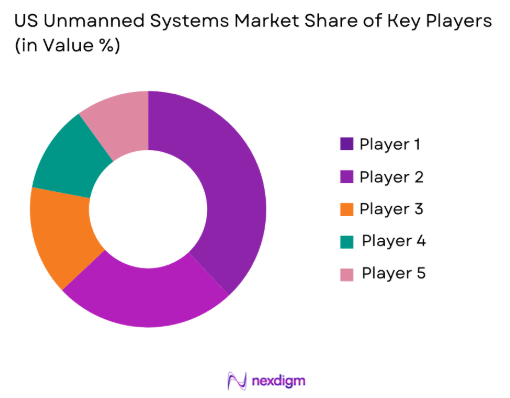
US Unmanned Systems Market Analysis
Growth Drivers
Increasing demand for UAVs in military applications
Unmanned aerial vehicles (UAVs) are becoming critical in military operations, serving as a primary tool for reconnaissance, surveillance, and targeted strikes. The growing need for aerial surveillance across military operations, including counter-terrorism and border patrol, is driving the demand for UAVs. UAVs offer several advantages, including cost-effectiveness, real-time data collection, and high operational efficiency. The increasing defense budgets across major global powers and the emphasis on modernizing defense strategies with unmanned systems have significantly contributed to the rise of UAV usage in military sectors. As nations continue to modernize their defense capabilities, UAVs will play a central role in future military operations, further accelerating the growth of the unmanned systems market. Innovations in UAV technology, such as longer flight times and better payload capabilities, are expected to continue boosting the market growth for UAVs in military applications. With advancements in AI, UAVs can autonomously perform complex missions, which further enhances their role in defense operations. The combination of military necessity and technological advancements ensures the sustained growth of UAV adoption in defense.
Commercial applications in logistics and agriculture
UAVs are becoming integral to commercial industries, particularly in logistics, agriculture, and infrastructure inspection. In the logistics sector, UAVs enable faster and more efficient delivery services, reducing human labor costs and improving operational efficiency. The rise of e-commerce and the need for last-mile delivery solutions are fueling the demand for drones in package delivery. In agriculture, UAVs provide benefits such as crop monitoring, pesticide spraying, and soil health analysis. These applications improve yields and reduce operational costs for farmers, leading to increased adoption in agricultural operations. The ease of use, relatively low cost, and minimal regulatory hurdles in non-defense sectors have made UAVs a popular choice for commercial applications. Additionally, UAVs are used for infrastructure inspections, monitoring construction sites, and surveying remote areas, providing significant growth opportunities in sectors requiring routine surveillance. As commercial use expands, technological improvements in battery life, AI integration, and autonomous flight systems will further accelerate market growth in these industries.
Market Challenges
Regulatory hurdles and airspace restrictions
One of the significant challenges in the growth of the US Unmanned Systems Market is navigating the regulatory landscape. The Federal Aviation Administration (FAA) and other regulatory bodies have implemented strict airspace restrictions and operational regulations for UAVs. These restrictions limit the potential applications of UAVs, particularly in densely populated areas and near airports. While commercial UAV usage has expanded rapidly, ensuring safe and efficient integration into the national airspace remains a significant concern. Regulatory bodies are working on creating frameworks that can accommodate the growth of unmanned systems while ensuring safety, security, and privacy. However, the slow pace of regulatory changes and the complexity of integrating UAVs into existing air traffic control systems pose a challenge to further market expansion. Additionally, there is an ongoing debate about privacy concerns related to the use of drones for surveillance, which further complicates regulatory approval processes.
Security risks and vulnerabilities in unmanned systems
The increasing reliance on unmanned systems, particularly in military and commercial sectors, exposes these technologies to cybersecurity risks. Drones and other unmanned vehicles rely heavily on communication systems and software, making them vulnerable to hacking, jamming, and cyberattacks. These security risks can result in compromised operations, including unauthorized access to sensitive data, system control, or even sabotage of UAVs during critical missions. For military applications, this could lead to catastrophic consequences, including the loss of valuable intelligence or the sabotage of defense operations. The potential for malicious attacks on unmanned systems raises concerns about their adoption, particularly in sectors where security is a top priority. Ensuring robust security protocols, encryption, and real-time monitoring of unmanned systems is essential to mitigate these risks. As unmanned systems become more widespread, enhancing their cybersecurity defenses will be crucial in ensuring their long-term viability.
Opportunities
Expansion of UAVs in autonomous cargo transport
The development of autonomous cargo transport solutions using UAVs presents a significant opportunity in the unmanned systems market. Drones have the potential to revolutionize logistics by enabling the delivery of goods faster, more efficiently, and at a lower cost compared to traditional delivery methods. The growth of e-commerce and the demand for quick and reliable delivery services are driving the adoption of UAVs for last-mile delivery. UAVs can transport small to medium-sized cargo over long distances, bypassing traditional transportation infrastructure and reducing transportation costs. This market is expanding rapidly, with several companies already testing autonomous delivery drones, including for medical supplies, consumer goods, and even groceries. As regulations evolve and technological advancements continue to improve the autonomy and payload capacities of UAVs, the market for autonomous cargo transport will continue to grow. This shift presents an exciting opportunity for businesses to invest in UAV-based delivery systems and capitalize on the growing demand for faster, cheaper delivery solutions.
Growth in agriculture and environmental monitoring
Unmanned systems, particularly UAVs, offer significant potential in agriculture and environmental monitoring. In agriculture, drones can assist farmers with crop monitoring, soil analysis, and pesticide spraying, helping them improve efficiency and reduce costs. UAVs enable real-time monitoring of crop health, providing actionable insights to optimize yields. In environmental monitoring, drones are used for tracking wildlife, monitoring forests, and assessing the health of ecosystems. UAVs equipped with specialized sensors can cover large areas in a fraction of the time it would take humans, providing critical data on environmental changes, pollution levels, and deforestation. The application of unmanned systems in these sectors presents a significant growth opportunity, as the adoption of UAVs in agriculture and environmental monitoring continues to expand. Technological advancements in sensors, AI, and autonomous flight systems will further enhance the capabilities of UAVs in these areas, driving market growth.
Future Outlook
The US Unmanned Systems Market is poised for strong growth in the coming years, with continued advancements in technology and regulatory frameworks supporting widespread adoption across commercial and defense sectors. The next five years will witness increased demand for autonomous UAVs in sectors such as logistics, agriculture, and infrastructure inspection. The ongoing development of AI and sensor technologies, coupled with greater regulatory clarity, will fuel growth in both military and commercial applications. Technological innovations such as enhanced battery life, autonomous systems, and real-time data processing will drive the evolution of unmanned systems. Additionally, as UAVs become more integrated into existing infrastructure, the market will see greater investments from private and government sectors, particularly in defense modernization and automation solutions.
Major Players
- Lockheed Martin
- Northrop Grumman
- Boeing
- General Dynamics
- AeroVironment
- Elbit Systems
- Textron Systems
- DJI Innovations
- L3 Technologies
- Raytheon Technologies
- General Atomics
- SAAB Group
- Kratos Defense & Security Solutions
- Parrot Drones
- Airbus
Key Target Audience
- Investments and venture capitalist firms
- Government and regulatory bodies
- Military and defense organizations
- Aerospace manufacturers
- Commercial drone service providers
- Logistics and supply chain companies
- Agricultural technology firms
- Environmental agencies
Research Methodology
Step 1: Identification of Key Variables
The key variables influencing the US Unmanned Systems Market are identified by analyzing market trends, customer needs, and technological advancements. This step also involves evaluating regulatory constraints and market dynamics.
Step 2: Market Analysis and Construction
A thorough market analysis is conducted using both primary and secondary research to construct a comprehensive model that reflects the market’s size, growth, and segmentation.
Step 3: Hypothesis Validation and Expert Consultation
The market model is validated by consulting with industry experts, conducting surveys, and gathering insights from key stakeholders in the unmanned systems sector.
Step 4: Research Synthesis and Final Output
The final research output synthesizes findings from multiple sources, providing actionable insights on market trends, opportunities, and competitive landscape.

- Executive Summary
- Research Methodology (Definitions, Scope, Industry Assumptions, Market Sizing Approach, Primary & Secondary Research Framework, Data Collection & Verification Protocol, Analytic Models & Forecast Methodology, Limitations & Research Validity Checks)

- Market Definition and Scope
- Value Chain & Stakeholder Ecosystem
- Regulatory / Certification Landscape
- Sector Dynamics Affecting Demand
- Strategic Initiatives & Infrastructure Growth

- Growth Drivers
Rising Demand for Surveillance & Reconnaissance
Advancements in Autonomous Technology
Government Investments in Defense & Security
Growth in Civilian Applications of Drones
Expansion of Commercial UAV Usage - Market Challenges
Regulatory & Certification Barriers
Security & Privacy Concerns
High Initial Capital Investments
Limited Payload Capabilities
Technological Integration and Interoperability - Market Opportunities
Expansion in Logistics & Delivery Systems
Partnerships Between Commercial & Defense Sectors
Increased Demand for AI-driven Unmanned Systems - Trends
Integration of AI for Autonomous Systems
Advances in Drone Swarming Technologies
Use of UAVs in Environmental Monitoring
Increasing UAV Adoption in Agriculture
Development of Hybrid Vehicle Systems - Government Regulations & Defense Policy
FAA Regulations on Drone Operations
Military Procurement Regulations
Privacy & Data Protection Legislation

- By Market Value, 2020-2025
- By Installed Units, 2020-2025
- By Average System Price, 2020-2025
- By System Complexity Tier, 2020-2025

- By System Type (In Value%)
Unmanned Aerial Vehicles (UAVs)
Unmanned Ground Vehicles (UGVs)
Unmanned Maritime Vehicles (UMVs)
Autonomous Underwater Vehicles (AUVs)
Hybrid Unmanned Systems - By Platform Type (In Value%)
Land Platforms
Air Platforms
Sea Platforms
Space Platforms
Integrated Platforms - By Fitment Type (In Value%)
Autonomous Systems
Remotely Piloted Systems
Hybrid Systems
Onboard Systems
Cloud-based Systems - By End User Segment (In Value%)
Military & Defense
Aerospace & Aviation
Law Enforcement & Security
Agriculture & Environmental
Commercial & Industrial - By Procurement Channel (In Value%)
Government Contracts
Private Sector Procurement
Defense Tenders
Commercial Bidding Platforms
Online Sales Platforms - By Material / Technology (In Value%)
Carbon Fiber
Lightweight Composites
Advanced Sensors & Imaging
AI & Machine Learning
Battery Technology

- Market structure and competitive positioning
- Market share snapshot of major players
- Cross Comparison Parameters (System Type, Platform Type, Procurement Channel, End User Segment, Fitment Type, Material/Technology, Market Value, Installed Units, Average System Price)
- SWOT Analysis of Key Players
- Pricing & Procurement Analysis
- Porter’s Five Forces
- Key Players
Lockheed Martin
Northrop Grumman
General Dynamics
BAE Systems
Textron Systems
AeroVironment
Elbit Systems
DJI Innovations
L3 Technologies
Boeing
General Atomics
Raytheon Technologies
SAAB Group
Kratos Defense & Security Solutions
Parrot Drones

- Military Forces’ Focus on Autonomous Systems
- Aerospace & Aviation’s Integration of Drones
- Agriculture Industry’s Dependence on UAVs
- Commercial Sector’s Growing Use of Drones

- Forecast Market Value, 2026-2035
- Forecast Installed Units, 2026-2035
- Price Forecast by System Tier, 2026-2035
- Future Demand by Platform, 2026-2035


 Request a Sample
 Ask for Customization
 Get a Quote
 Enquire Now