
 Download PDF
Market Overview
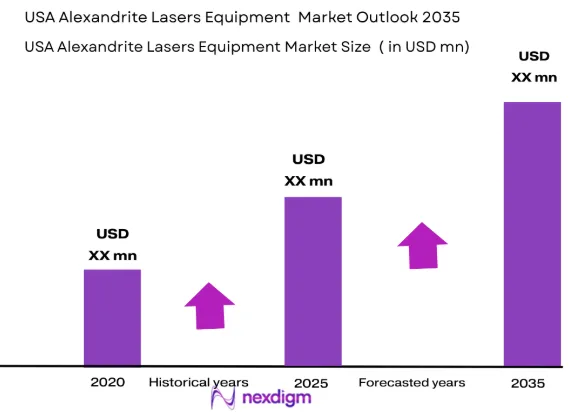
The USA Alexandrite Lasers Equipment market is valued at USD ~ million based on historical data and current trends. The market growth is primarily driven by increasing consumer demand for aesthetic treatments such as hair removal, skin rejuvenation, and tattoo removal. Moreover, advancements in laser technology, such as dual-wavelength platforms, have broadened the utility of Alexandrite lasers, further driving market growth. The demand for high-precision, non-invasive procedures has seen a significant rise, particularly in medical spas and dermatology clinics across the U.S. Additionally, the growing trend of consumer preference for advanced aesthetic treatments is influencing market expansion, with both dermatology professionals and patients increasingly opting for Alexandrite lasers for faster and effective results.
The dominant players in the USA Alexandrite Lasers Equipment market include regions with a high concentration of medical spas and dermatology clinics, such as California, New York, and Florida. These regions continue to lead due to the high number of aesthetic procedures conducted annually and the significant presence of well-established medspa chains. Areas like California, particularly Los Angeles, are known for their higher disposable income and a cultural trend favoring non-invasive beauty treatments, thereby supporting the dominance of Alexandrite lasers. New York and Florida also contribute significantly due to their dense population, high cosmetic surgery demand, and a large base of dermatology professionals.
Market Segmentation
By Product Type
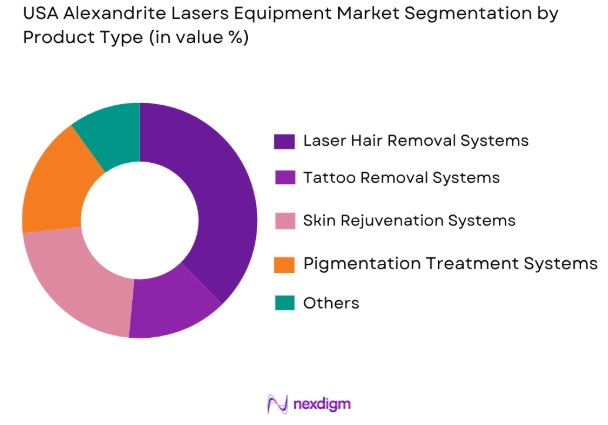
The USA Alexandrite Lasers Equipment market is segmented by product type. These systems provide flexibility in addressing both hair removal and vascular treatments, which makes them highly appealing to dermatologists and medspas that prefer systems capable of multi-indication treatments. As patients demand more comprehensive treatments, the dual-wavelength systems are seen as more cost-effective and efficient over standalone Alexandrite systems, driving their adoption. Furthermore, the ability to treat both pigmented and vascular lesions efficiently makes them increasingly favored in the market.
By End-User Segment
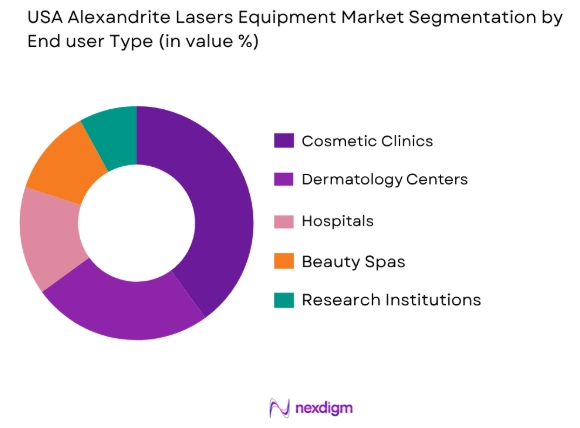
USA Alexandrite Lasers Equipment market is segmented by end-user segment into cosmetic clinics, dermatology centers, hospitals, beauty spas, and research institutions. Recently, cosmetic clinics have dominated the market share due to their accessibility, the increasing popularity of non-invasive procedures, and their ability to offer personalized treatments to a broad customer base. The growing trend of cosmetic enhancement and the high number of clinics providing cutting-edge laser technology further strengthen the market position of this sub-segment.
Competitive Landscape
The competitive landscape of the USA Alexandrite Lasers Equipment market is characterized by both established and emerging players investing in innovative technologies to maintain a competitive edge. The market is seeing a degree of consolidation with major players expanding their product offerings and forming strategic partnerships with healthcare institutions. The influence of key players in driving market trends is significant, especially with the introduction of advanced laser systems that are more efficient and offer better patient outcomes.
| Company Name | Establishment Year | Headquarters | Technology Focus | Market Reach | Key Products | Revenue (USD) | Laser Technology Focus |
| Cynosure | 1991 | Westford, MA, USA | ~ | ~ | ~ | ~ | ~ |
| Lumenis | 1992 | Yokneam, Israel | ~ | ~ | ~ | ~ | ~ |
| Candela | 1970 | Wayland, MA, USA | ~ | ~ | ~ | ~ | ~ |
| Syneron | 2000 | Israel | ~ | ~ | ~ | ~ | ~ |
| Palomar Technologies | 1991 | Burlington, MA, USA | ~ | ~ | ~ | ~ | ~ |
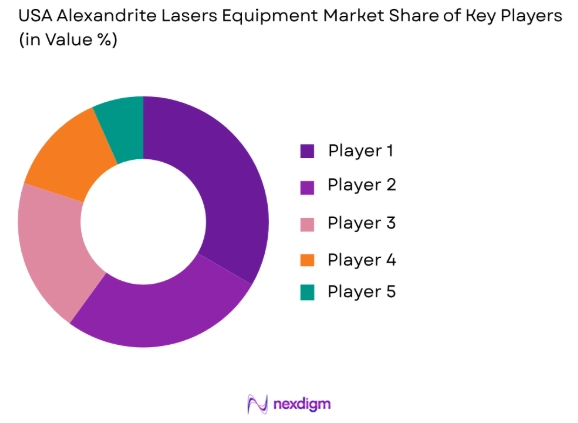
USA Alexandrite Lasers Equipment Market Analysis
Growth Drivers
Rising Demand for Non-Invasive Aesthetic Procedures
The demand for non-invasive aesthetic procedures has been accelerating, driven by changing consumer preferences towards less invasive and quicker recovery treatments. In 2022, the total number of non-surgical procedures performed in the U.S. reached 20 million, as per the American Society of Plastic Surgeons (ASPS). This figure continues to rise with consumer awareness of the benefits of non-invasive treatments such as laser hair removal, skin rejuvenation, and tattoo removal. The rise in disposable income, coupled with a growing emphasis on physical appearance, has further fueled this trend, with a 7% increase in spending on non-surgical cosmetic procedures observed in the U.S. in 2023. Non-invasive treatments like Alexandrite lasers, known for their efficiency and precision, have become increasingly sought-after due to their minimal recovery time and relatively low risk compared to traditional surgeries. According to the U.S. Bureau of Economic Analysis, the growing healthcare and wellness sector, driven by higher incomes, is expected to further contribute to this surge in demand.
Expansion of Medical Spas and Multi-Site Aesthetic Chains
The expansion of medical spas and multi-site aesthetic chains has been a significant growth driver for the Alexandrite laser market in recent years. According to the International Spa Association, the U.S. spa industry grew by 4.5% in 2022, generating approximately $24 billion in revenue. Medical spas, in particular, have seen an increased demand for advanced aesthetic treatments. As of 2023, there were over 17,000 medical spas in the U.S., with many offering multi-treatment options, including laser hair removal and skin care procedures. These establishments are capitalizing on the growing preference for less invasive and more cost-effective solutions. The increasing number of aesthetic chains reflects a larger trend of consumer demand for accessible, non-surgical aesthetic treatments. Many of these medical spas and clinics are investing in state-of-the-art technologies like Alexandrite lasers, ensuring that the market remains highly competitive. The strong presence of major medical spa chains in metropolitan areas, such as New York, Los Angeles, and Miami, further supports the market’s growth. [Source: International Spa Association, U.S. Census Bureau]
Market Challenges
High Upfront Acquisition and Maintenance Costs
One of the primary challenges faced by the Alexandrite laser market is the high upfront cost associated with purchasing and maintaining these systems. According to the U.S. Food and Drug Administration (FDA), the typical price for a high-quality Alexandrite laser system can range from $75,000 to $200,000, depending on the features, functionality, and included attachments. Additionally, maintenance and servicing costs, which can reach up to 10-15% of the initial purchase price annually, further strain the financial resources of dermatology clinics and medical spas. While these costs are justified by the device’s long-term utility and effectiveness, they remain a significant barrier, especially for smaller clinics and new entrants in the market. Furthermore, the need for regular upgrades and servicing to maintain FDA certification adds to the financial burden. This challenge is exacerbated by the high competition from alternative platforms, such as diode and IPL lasers, which often come at a lower initial investment. [Source: U.S. FDA]
Competition from Diode, Nd:YAG, IPL, and Multi-Energy Platforms
The competition from other laser technologies, including diode, Nd:YAG, IPL, and multi-energy platforms, presents a considerable challenge to the Alexandrite laser market. The diode laser, which offers similar hair removal efficacy, has gained significant traction due to its lower operational costs and ability to treat a wider range of skin types. Similarly, Nd:YAG lasers, while less effective for certain pigment-based treatments, have a strong foothold in treating vascular lesions and deeper skin layers, giving them an edge in dermatology. IPL, which can target a variety of skin issues, is widely used in both clinics and medical spas for its flexibility. Multi-energy platforms, such as those that combine IPL with Nd:YAG or radiofrequency, have also emerged as a formidable alternative by offering comprehensive treatment options in a single device. These alternatives are often more affordable and are perceived as a more versatile solution, which has intensified competition within the laser treatment market. The increasing adoption of these technologies, driven by their cost-effectiveness and broader appeal, has pressured Alexandrite laser manufacturers to innovate continually and improve their cost structures.
Market Opportunities
Penetration into Tier-II Aesthetic Clinics and Emerging Medspas
The penetration into Tier-II aesthetic clinics and emerging medical spas presents a significant opportunity for Alexandrite laser adoption. According to the U.S. Census Bureau, the healthcare and wellness industry is seeing rapid growth, particularly in smaller cities and suburban regions, which are increasingly becoming attractive locations for medical spas and dermatology clinics. As of 2023, there has been a marked rise in the number of aesthetic practices opening outside major metropolitan areas, supported by regional growth and increased consumer spending power in suburban and rural regions. The demand for non-invasive beauty treatments, including hair removal, has seen a boost in these areas due to more disposable income and a cultural shift towards personal grooming. Medical spas in these areas are expected to adopt Alexandrite lasers as part of their premium treatment offerings, seeing it as an investment to attract higher-income customers seeking advanced cosmetic treatments. [Source: U.S. Census Bureau]
Demand for Dual-Wavelength and Mixed-Emission Premium Platforms
There is a growing demand for dual-wavelength and mixed-emission Alexandrite laser platforms, which offer a broader range of applications and improved treatment precision. As of 2022, the increasing consumer preference for customized aesthetic procedures has driven clinics and medspas to seek more versatile systems capable of treating various skin types and conditions. Dual-wavelength systems, which combine Alexandrite and Nd:YAG lasers, are particularly popular due to their ability to treat both superficial and deeper skin issues, such as vascular lesions and pigmented lesions. These systems also cater to a broader demographic, including individuals with darker skin tones, expanding their appeal in diverse consumer segments. The market for multi-indication lasers is expected to continue growing as the demand for more flexible, multi-functional treatments increases. This shift toward dual-wavelength and mixed-emission lasers aligns with broader trends in the aesthetic medical market, where versatility and treatment efficacy are key drivers.
Future Outlook
Over the next 5 years, the USA Alexandrite Lasers Equipment market is expected to experience significant growth, driven by continued advancements in laser technology, increasing demand for non-invasive aesthetic procedures, and expanding applications in dermatology and cosmetic surgery. The market will likely witness increased adoption of dual-wavelength systems that provide versatility for a wide range of skin types and conditions. Furthermore, as the aesthetic industry continues to boom, both dermatology clinics and medical spas will increasingly invest in high-performance Alexandrite lasers, further fueling market expansion. Technological innovations, such as the integration of cooling systems and faster repetition rates, are expected to improve treatment outcomes and patient comfort, contributing to the broader adoption of Alexandrite laser systems.
Major Players
- Candela Corporation
- Cynosure
- Lumenis
- Alma Lasers
- Cutera
- Quanta System
- Sciton
- Fotona
- DEKA M.E.L.A
- Asclepion Laser Technologies
- Cartessa Aesthetics
- Bison Medical
- Light Age, Inc
- WaveLight / Alcon
- Bios S.r.l
Key Target Audience
- Investments and Venture Capitalist Firms
- Government and Regulatory Bodies
- Aesthetic Clinic Owners and Operators
- Dermatology Practices and Dermatologists
- Medspa Chains and Multi-Site Clinic Owners
- Plastic and Cosmetic Surgeons
- Healthcare Equipment Distributors and Dealers
- Healthcare Financing Institutions
Research Methodology
Step 1: Identification of Key Variables
The initial phase involves constructing an ecosystem map encompassing all major stakeholders within the USA Alexandrite Lasers Equipment Market. This step is underpinned by extensive desk research, utilizing a combination of secondary and proprietary databases to gather comprehensive industry-level information. The primary objective is to identify and define the critical variables that influence market dynamics.
Step 2: Market Analysis and Construction
In this phase, we will compile and analyze historical data pertaining to the USA Alexandrite Lasers Equipment Market. This includes assessing market penetration, the ratio of marketplaces to service providers, and the resultant revenue generation. Furthermore, an evaluation of service quality statistics will be conducted to ensure the reliability and accuracy of the revenue estimates.
Step 3: Hypothesis Validation and Expert Consultation
Market hypotheses will be developed and subsequently validated through computer-assisted telephone interviews (CATIs) with industry experts representing a diverse array of companies. These consultations will provide valuable operational and financial insights directly from industry practitioners, which will be instrumental in refining and corroborating the market data.
Step 4: Research Synthesis and Final Output
The final phase involves direct engagement with multiple Alexandrite laser manufacturers to acquire detailed insights into product segments, sales performance, consumer preferences, and other pertinent factors. This interaction will serve to verify and complement the statistics derived from the bottom-up approach, ensuring a comprehensive, accurate, and validated analysis of the USA Alexandrite Lasers Equipment market.

- Executive Summary
- Research Methodology (Market Definitions and Assumptions, Product Inclusion and Exclusion Criteria, Abbreviations, Historical Market Reconstruction, Forecasting Framework, Top-Down Market Estimation, Bottom-Up Installed Base Mapping, OEM Revenue Mapping, ASP Benchmarking, Primary Interviews with OEMs, Distributors, Clinic Owners, Dermatologists, Demand-Side Validation, Limitations and Future Conclusions)

- Definition and Scope
- Technology Genesis and Clinical Evolution of Alexandrite Lasers
- Market Structure and Operating Model
- Treatment Workflow and Business Cycle
- Supply Chain and Value Chain Analysis
- Regulatory and Reimbursement Snapshot
- Innovation Roadmap and Technology Transition Landscape
- Stakeholder Ecosystem and Purchase Chain Mapping

- Growth Drivers
Rising Demand for Non-Invasive Aesthetic Procedures
Expansion of Medical Spas and Multi-Site Aesthetic Chains
Preference for 755 nm Platforms in Fine Hair and Pigment Indications
Growing Demand for Faster Throughput and High-Spot-Size Systems
Installed Base Replacement and Technology Upgrade Cycles - Market Challenges
High Upfront Acquisition and Maintenance Costs
Competition from Diode, Nd:YAG, IPL, and Multi-Energy Platforms
Operator Skill Variability and Adverse Event Risk
State-Level Supervision and Practice Compliance Complexity
Price Pressure from Refurbished Equipment and Used Installed Base - Market Opportunities
Penetration into Tier-II Aesthetic Clinics and Emerging Medspas
Demand for Dual-Wavelength and Mixed-Emission Premium Platforms
Installed Base Monetization Through Service, Handpieces, and Software Upgrades
Secondary Market Formalization and Certified Refurbishment Programs
Pigment, Tattoo, and Scar Adjacent Indication Expansion - Market Trends
Shift Toward Dual-Wavelength Alexandrite + Nd:YAG Systems
Higher Repetition Rates and Larger Spot Sizes for Throughput Optimization
Cooling-Led Differentiation and Comfort Marketing
Multi-Indication Platform Selling vs Single-Application Procurement
Rise of Leasing, Subscription-Like Financing, and Trade-In Programs - Government Regulations and Compliance
- Pricing and Economics Analysis
- OEM-Level ASP Benchmarking
- New vs Refurbished Price Gap
- Cost of Ownership Analysis

- By Value, 2020-2025
- By Volume, 2020-2025
- By Average Selling Price, 2020-2025
- By Unit Shipments, 2020-2025
- By Installed Base, 2020-2025
- By Replacement Demand, 2020-2025

- By Product Configuration (In Value %)
Laser Hair Removal
Tatoo Removal
Skin Rejuvenation
Pigmentation Treatment
Others - By End User (In Value %)
Cosmetic Clinics
Hospitals
Dermatology Centers
Beauty Spas
Research Instituions - By Modality (In Value %)
Long-Pulsed Alexandrite Systems
Q-Switched Alexandrite Systems
Picosecond Alexandrite Systems
Mixed-Emission / Synchronized Alexandrite Platforms - By Cooling Technology (In Value %)
Dynamic Cooling Device-Based Systems
Contact Cooling Systems
Air-Cooling Integrated Systems
Sapphire Tip / In-Motion Cooling-Assisted Systems - By Price Tier (In Value %)
Entry-Level
Mid-Market
Premium
Super-Premium Flagship Platforms - By Distribution Channel (In Value %)
Direct OEM Sales
Exclusive Distributors
Independent Aesthetic Equipment Dealers
Refurbished / Secondary Equipment Channels
Leasing and Equipment Financing Partners - By U.S. Region
Northeast
Midwest
South
West

- Market Share of Major Players
- Competitive Benchmarking Matrix
- SWOT Analysis of Major Players
- Cross Comparison Parameters (Brand Equity, Technology Breadth, Installed Base Leverage, Service Dependence, Pricing Power, Channel Reach, Clinical Validation, Upgrade Strategy, Customer Experience (CX) ,Sustainability and Social Responsibility ,Talent & Innovation .Regulatory Compliance ,Global Expansion ,Digital Transformation)
- Detailed Profiles of Major Companies
Candela Corporation
Cynosure Lutronic
Lumenis
Alma Lasers
Cutera
Quanta System
Sciton
Fotona
DEKA M.E.L.A.
Asclepion Laser Technologies
Cartessa Aesthetics
Bison Medical
Light Age, Inc.
WaveLight / Alcon
Bios S.r.l.

- Aesthetic clinics and medspas for hair removal and skin treatments
- Dermatologists using lasers for skin condition
- Plastic surgeons for skin resurfacing and tightening
- Hospitals offering advanced laser treatments
- Distributors supplying clinics and medical professional

- By Value, 2026-2035
- By Volume, 2026-2035
- By Average Selling Price, 2026-2035
- By Unit Shipments, 2026-2035
- By Installed Base, 2026-2035
- By Replacement Demand, 2026-2035


 Request a Sample
 Ask for Customization
 Get a Quote
 Enquire Now