

 Download PDF
 Download PDF
Market Overview
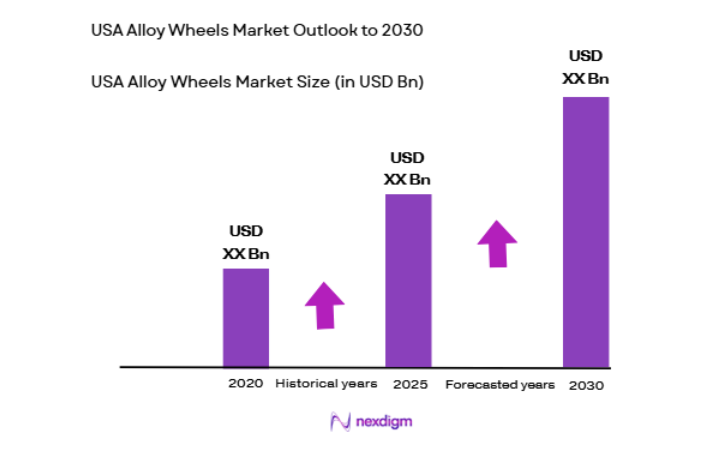
The USA Alloy Wheels market is a significant segment within the broader automotive wheels industry, supported by demand from both OEM and aftermarket channels. Based on a recent historical assessment, the North America alloy wheels market reached approximately USD ~ billion, with the U.S. representing the majority of that value at around USD ~ billion in USD terms due to strong consumer preference for lightweight and aesthetically enhanced wheels, across passenger and performance vehicles. Alloy wheels offer improvements in fuel efficiency, handling, and vehicle performance, which contribute to their adoption.
The United States stands out as a dominant country in the alloy wheels market, backed by its large automotive manufacturing base and a well‑established aftermarket ecosystem with hubs in states like Michigan, Ohio, and California. Michigan’s automotive heritage, combined with Ohio’s manufacturing infrastructure and California’s innovation in design and customization, supports both OEM integration and aftermarket upgrades. The U.S. aftermarket for alloy wheels is buoyed by consumer demand for aesthetic customization and performance upgrades.
Market Segmentation
By Product Type
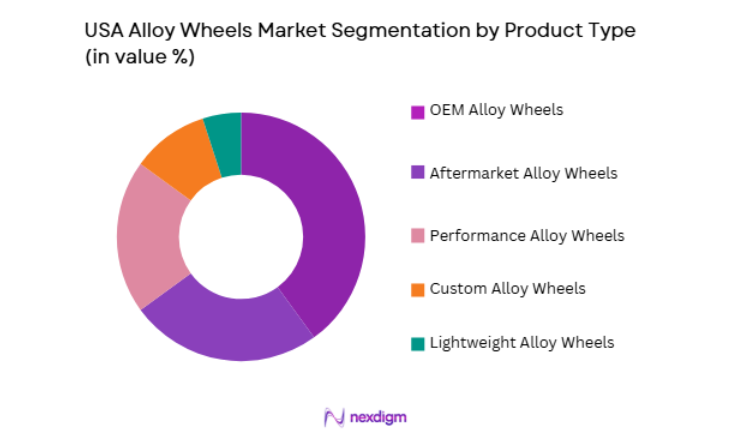
The USA Alloy Wheels Market is segmented by product type into OEM alloy wheels, aftermarket alloy wheels, performance alloy wheels, custom alloy wheels, and lightweight alloy wheels. Recently, OEM alloy wheels have dominated the market share due to the increasing demand from automotive manufacturers for high-performance, cost-effective, and durable wheels. OEM alloy wheels are commonly preferred for their integration with vehicle design and their ability to meet stringent regulatory standards. The rising trend of premium vehicles and the need for vehicle customization have further increased the demand for high-quality OEM alloy wheels. These wheels are seen as a key factor in enhancing vehicle aesthetics, performance, and safety features, contributing to their dominance in the market.
By Vehicle Type
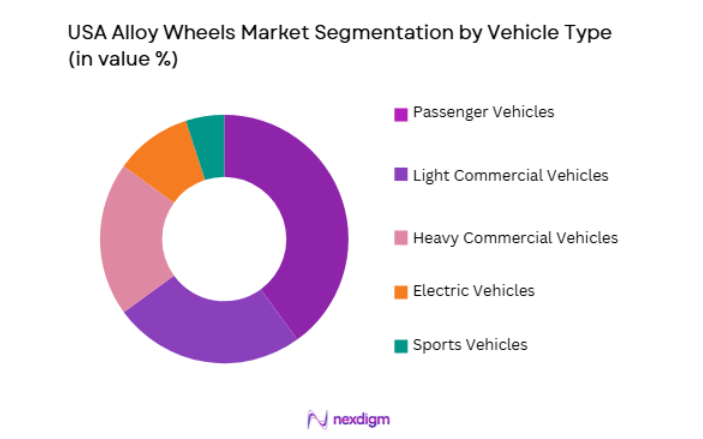
The USA Alloy Wheels Market is segmented by vehicle type, including passenger vehicles, light commercial vehicles, heavy commercial vehicles, electric vehicles, and sports vehicles. Among these, the passenger vehicle segment holds a dominant market share. This dominance is attributed to the growing consumer preference for stylish, durable, and performance-enhancing alloy wheels, which are widely used in both economy and luxury vehicles. The shift towards electric vehicles has further fueled the demand for specialized alloy wheels designed for weight reduction and energy efficiency, further strengthening the passenger vehicle segment’s leading position. The increasing focus on aesthetics, fuel efficiency, and vehicle performance continues to drive the market growth in this category.
Competitive Landscape
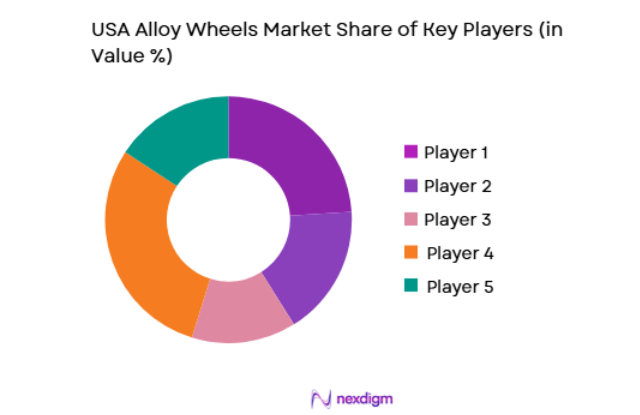
The USA Alloy Wheels Market is highly competitive, characterized by the presence of both global leaders and local players. The market is experiencing consolidation, with large-scale manufacturers expanding their product offerings and strengthening their market presence. The increasing demand for customized and high-performance alloy wheels has led to innovations in wheel design, materials, and manufacturing processes, which are driving the competitiveness among major players. These companies are continuously investing in R&D and forming strategic partnerships to capture a larger share of the growing market.
| Company Name | Establishment Year | Headquarters | Technology Focus | Market Reach | Key Products | Revenue (USD) | Material Innovation |
| Alcoa Wheels | 1888 | Pittsburgh, PA | ~ | ~ | ~ | ~ | ~ |
| BBS Automotive | 1970 | Schiltach, Germany | ~ | ~ | ~ | ~ | ~ |
| Enkei Wheels | 1950 | Tokyo, Japan | ~ | ~ | ~ | ~ | ~ |
| Ronal Wheels | 1969 | Ostermundigen, Switzerland | ~ | ~ | ~ | ~ | ~ |
| OZ Racing | 1971 | Verona, Italy | ~ | ~ | ~ | ~ | ~ |
USA Alloy Wheels Market Analysis
Growth Drivers
Increasing Demand for Lightweight Wheels
The demand for lightweight alloy wheels is a significant growth driver in the USA Alloy Wheels Market. As consumers and automotive manufacturers focus more on fuel efficiency, weight reduction has become a key priority for vehicle design. Lightweight alloy wheels contribute to lower vehicle weight, improving fuel economy and overall vehicle performance. This is especially true for electric vehicles, where every pound saved translates to longer driving range and better battery life. The automotive industry is also moving towards creating more fuel-efficient and eco-friendly vehicles, which has led to an increased reliance on lightweight alloy wheels, driving further demand in the market. Additionally, advancements in alloy wheel materials, such as magnesium alloys and high-strength aluminum, have led to improved wheel performance without compromising durability, making lightweight alloy wheels an attractive choice for both OEMs and aftermarket consumers.
Rising Customization Trends in the Automotive Industry
The increasing trend of vehicle customization has boosted the demand for alloy wheels, as consumers seek to personalize their vehicles to reflect their individual styles and preferences. Alloy wheels are considered a major component in vehicle customization, as they significantly enhance a vehicle’s appearance and performance. This trend has been driven by the growth of social media platforms, where car enthusiasts share their customizations, inspiring others to invest in premium wheels. In addition, the increasing availability of aftermarket alloy wheels has made it easier for consumers to access a wide variety of wheel designs, finishes, and sizes, further fueling the customization market. The rise of online platforms for wheel purchasing has also contributed to the ease of customization, making it a key growth driver in the USA Alloy Wheels Market.
Market Challenges
High Manufacturing Costs
One of the primary challenges facing the USA Alloy Wheels Market is the high manufacturing cost of alloy wheels. The production of high-quality alloy wheels involves sophisticated technology and the use of expensive materials, such as aluminum and magnesium, which contribute to the overall production cost. These high costs often lead to higher retail prices for alloy wheels, which can limit their affordability for some consumer segments. The increasing demand for lightweight and high-performance wheels, combined with the need for advanced materials, puts additional pressure on manufacturers to control costs while maintaining the quality and durability of their products. Moreover, fluctuations in the prices of raw materials can further complicate cost management for alloy wheel manufacturers, impacting their profitability.
Raw Material Price Volatility
Raw material price volatility is another significant challenge faced by the USA Alloy Wheels Market. The prices of key materials, such as aluminum, magnesium, and steel, are subject to fluctuations due to factors such as supply chain disruptions, geopolitical tensions, and changes in demand from other industries. These fluctuations can result in unpredictable production costs for alloy wheel manufacturers, who may struggle to maintain competitive pricing while absorbing these cost increases. Additionally, the rising demand for sustainable and eco-friendly materials in alloy wheel production adds complexity to material sourcing and cost control. Manufacturers must find innovative ways to manage these price fluctuations, either by negotiating with suppliers or exploring alternative materials, to ensure they can offer competitive pricing while maintaining product quality.
Opportunities
Technological Advancements in Alloy Wheel Manufacturing
Technological advancements in alloy wheel manufacturing present significant opportunities for growth in the USA Alloy Wheels Market. Innovations in materials science, such as the development of stronger and lighter alloys, are enabling manufacturers to produce more durable and high-performance wheels at lower costs. The use of advanced manufacturing processes, such as precision casting and forging, allows for greater design flexibility and the ability to produce complex wheel designs that cater to consumer demands for customization. Additionally, the integration of smart technologies, such as sensors and embedded electronics in alloy wheels, is becoming increasingly popular. These advancements open up new revenue streams for manufacturers, particularly in the performance and high-end vehicle segments.
Growth of the Electric Vehicle Market
The rapid growth of the electric vehicle (EV) market presents a major opportunity for the USA Alloy Wheels Market. EV manufacturers require specialized alloy wheels that are optimized for weight reduction, energy efficiency, and performance. Alloy wheels designed specifically for electric vehicles offer lower rolling resistance, which contributes to improved energy efficiency and extended driving range. As EV sales continue to rise, particularly with the support of government incentives and consumer demand for sustainable mobility solutions, alloy wheel manufacturers that focus on producing wheels tailored to the needs of electric vehicles will be well-positioned to capture a larger share of the market.
Future Outlook
The USA Alloy Wheels Market is expected to experience steady growth over the next five years, driven by advancements in wheel manufacturing technology, increasing consumer demand for customization, and the rise of electric vehicles. Innovations in materials, such as lightweight alloys and eco-friendly solutions, will play a crucial role in shaping the future of the market. Additionally, the growing focus on fuel efficiency, vehicle performance, and aesthetic appeal will continue to drive the demand for alloy wheels. As automotive manufacturers adapt to these trends, the alloy wheels market is poised for sustained growth.
Major Players
- Alcoa Wheels
- BBS Automotive
- Enkei Wheels
- Ronal Wheels
- OZ Racing
- Borbet GmbH
- Forgiato Wheels
- TSW Alloy Wheels
- American Racing
- HRE Performance Wheels
- Vossen Wheels
- SSR Wheels
- Magna International
- Apex Wheels
- RAYS Engineering
Key Target Audience
- Automotive OEMs
- Vehicle Aftermarket Retailers
- Fleet Operators
- Electric Vehicle Manufacturers
- Commercial Vehicle Manufacturers
- Car Enthusiasts and Customization Market
- Automotive Parts Suppliers
- Tire Manufacturers
Research Methodology
Step 1: Identification of Key Variables
Key market variables, including tire demand, raw material costs, and technological trends, were identified and analyzed.
Step 2: Market Analysis and Construction
A comprehensive analysis was conducted on alloy wheel production, distribution, and pricing trends across the USA.
Step 3: Hypothesis Validation and Expert Consultation
Market hypotheses were validated through consultations with industry experts and stakeholders to ensure accuracy.
Step 4: Research Synthesis and Final Output
The data collected was synthesized into a comprehensive report, highlighting key trends and forecasts for the USA Alloy Wheels Market.

- Executive Summary
- Research Methodology (Definitions, Scope, Industry Assumptions, Market Sizing Approach, Primary & Secondary Research Framework, Data Collection & Verification Protocol, Analytic Models & Forecast Methodology, Limitations & Research Validity Checks)

- Market Definition and Scope
- Value Chain & Stakeholder Ecosystem
- Regulatory / Certification Landscape
- Sector Dynamics Affecting Demand
- Strategic Initiatives & Infrastructure Growth

- Growth Drivers
Increasing Demand for Lightweight Wheels
Growing Popularity of Electric Vehicles
Rising Customization Trends in the Automotive Industry - Market Challenges
High Manufacturing Costs of Alloy Wheels
Raw Material Price Volatility
Demand Fluctuations in the Automotive Market - Market Opportunities
Growth in Electric Vehicle Alloy Wheel Demand
Technological Advancements in Alloy Wheel Manufacturing
Expansion of the Aftermarket Alloy Wheels Segment - Trends
Sustainability in Alloy Wheel Production
Technological Advancements in Alloy Wheel Materials
Increasing Focus on Aesthetic Customization in Vehicles - Government Regulations
- SWOT Analysis
- Porters 5 Forces

- By Market Value, 2019-2025
- By Installed Units, 2019-2025
- By Average System Price, 2019-2025
- By System Complexity Tier, 2019-2025

- By System Type (In Value%)
OEM Alloy Wheels
Aftermarket Alloy Wheels
Performance Alloy Wheels
Custom Alloy Wheels
Lightweight Alloy Wheels - By Platform Type (In Value%)
Passenger Vehicles
Light Commercial Vehicles
Heavy Commercial Vehicles
Electric Vehicles
Sports Vehicles - By Fitment Type (In Value%)
Original Equipment Manufacturer (OEM) Fitment
Aftermarket Fitment
Custom Fitment
Upgrade Fitment
Replacement Fitment - By End User Segment (In Value%)
Automotive OEMs
Vehicle Aftermarket Retailers
Fleet Operators
Electric Vehicle Manufacturers
Car Enthusiasts and Customization Market - By Procurement Channel (In Value%)
Direct Procurement from Manufacturers
Automotive Dealerships
Online Retailers

- Market Share Analysis
- Cross Comparison Parameters (Material Type, Manufacturing Cost, Wheel Size, OEM vs Aftermarket, Vehicle Type, Customization Level, Durability, Weight Efficiency, Design Complexity)
- SWOT Analysis of Key Competitors
- Pricing & Procurement Analysis
- Key Players
Alcoa Wheels
BBS Automotive
Enkei Wheels
OZ Racing
Mack Alloy Wheels
Ronal Wheels
American Racing
Toyo Tires
Magna International
SSR Wheels
TWS Wheels
HRE Performance Wheels
Forgiato Wheels
Vossen Wheels
Rotiform Wheels

- Increasing Demand for Custom Alloy Wheels
- Fleet Operators Preferring Lightweight Alloy Wheels for Fuel Efficiency
- Rising Sales of Electric Vehicles Driving Demand
- Automotive OEMs Focusing on High-performance Alloy Wheels

- Forecast Market Value, 2026-2030
- Forecast Installed Units, 2026-2030
- Price Forecast by System Tier, 2026-2030
- Future Demand by Platform, 2026-2030


 Request a Sample
 Ask for Customization
 Get a Quote
 Enquire Now