

 Download PDF
Market Overview
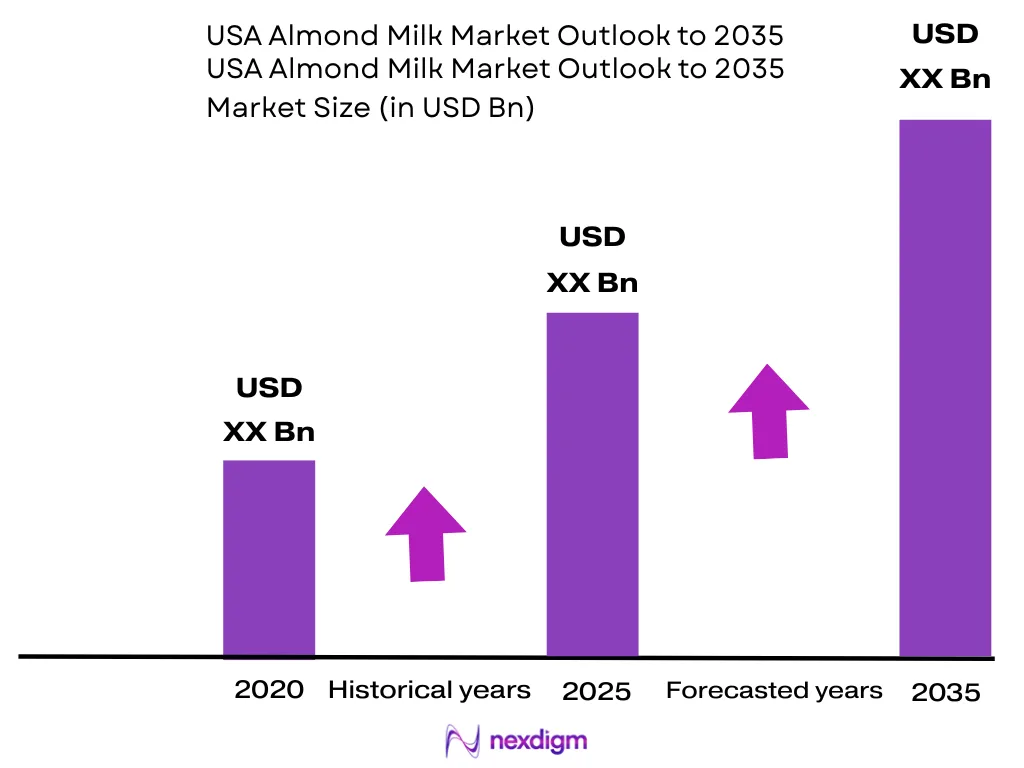
The USA Almond Milk Market was valued at approximately USD ~ billion in 2024, compared to USD ~ billion in 2023, based on industry consumption trends and retail sales performance. The market is primarily driven by rising demand for plant-based beverages, increasing lactose intolerance prevalence, and growing consumer preference for dairy alternatives. According to the United States Department of Agriculture (USDA), almond production in California exceeded ~ billion pounds in 2023 and remained above ~ billion pounds in 2024, ensuring a stable raw material supply. Additionally, plant-based milk sales in the United States surpassed USD ~ billion in 2023 and expanded further in 2024, supporting sustained demand for almond milk products across retail and foodservice channels.
Market Segmentation
By Product Type
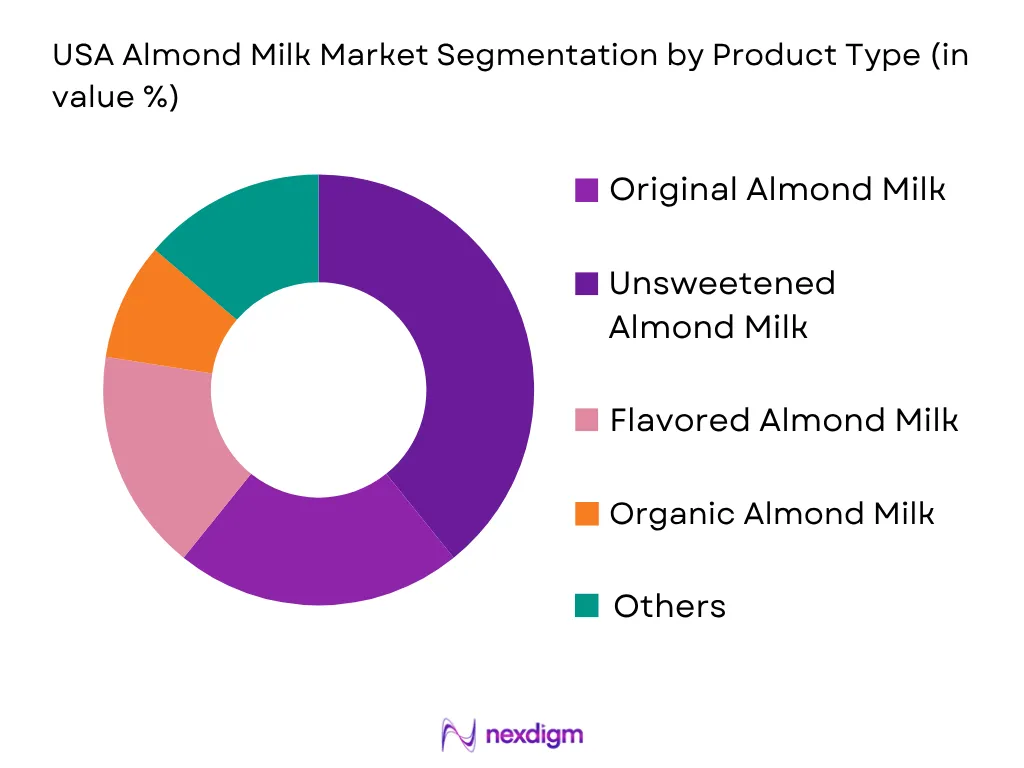
The USA Almond Milk Market is segmented by product type into Original Almond Milk, Unsweetened Almond Milk, Flavored Almond Milk, Organic Almond Milk, and Others. Recently, Original Almond Milk has maintained a dominant market share under this segmentation due to its widespread availability and strong consumer acceptance. Major brands including Almond Breeze, Silk, and Califia Farms have established extensive retail distribution networks and broad flavor portfolios, reinforcing the segment’s leadership. Original almond milk is commonly used as a direct substitute for dairy milk in cereals, coffee, baking, and cooking applications, increasing its household penetration. The segment also benefits from affordability compared to premium organic and specialty variants. Additionally, foodservice operators frequently prefer original formulations because of their versatility and compatibility with multiple beverage applications. Growing consumer familiarity and repeat purchase behavior continue to strengthen the dominance of this category within the overall market.
By Distribution Channel
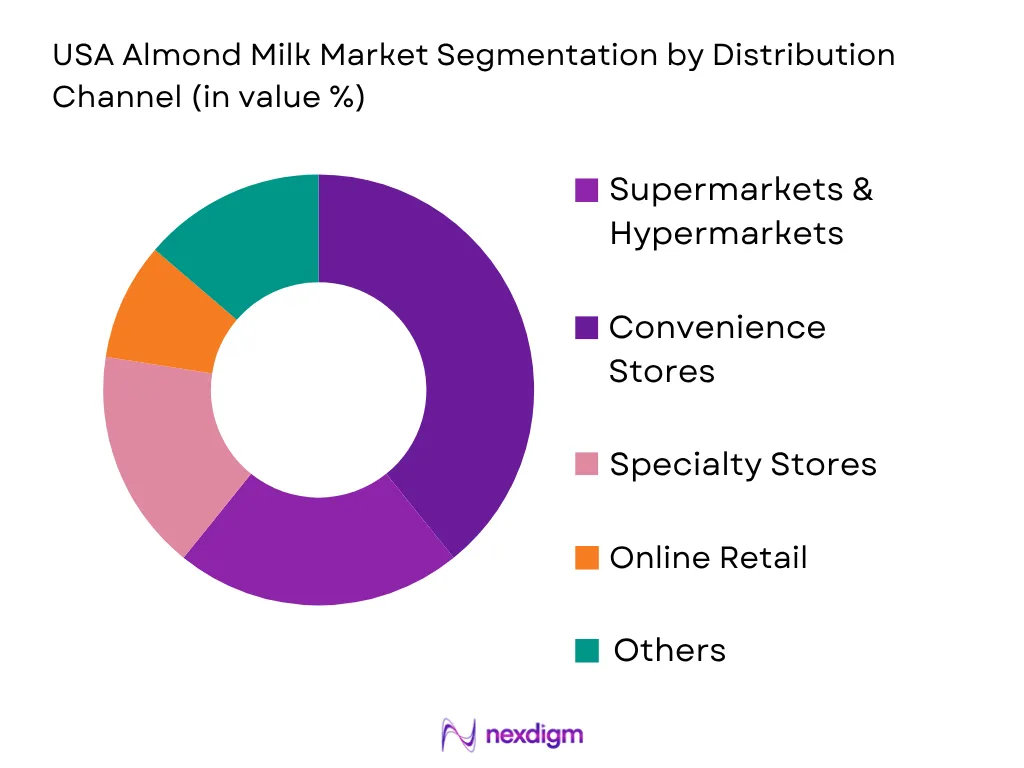
The USA Almond Milk Market is segmented by distribution channel into Supermarkets & Hypermarkets, Convenience Stores, Specialty Stores, Online Retail, and Others. Supermarkets and Hypermarkets currently dominate the market owing to their extensive geographic reach, broad product assortment, and strong consumer trust. Large retailers such as Walmart, Kroger, Costco, Target, and Whole Foods provide dedicated shelf space for plant-based beverages, enabling consumers to compare brands, formulations, and package sizes conveniently. These stores frequently run promotional campaigns, bundle offers, and loyalty programs that encourage repeat purchases. Furthermore, supermarkets serve as the preferred purchase destination for household grocery shopping, allowing almond milk brands to achieve high visibility and consistent sales volumes. The availability of premium, organic, and private-label products within the same retail environment further contributes to category growth. As a result, supermarkets and hypermarkets continue to account for the largest share of almond milk distribution across the United States.
Competitive Landscape
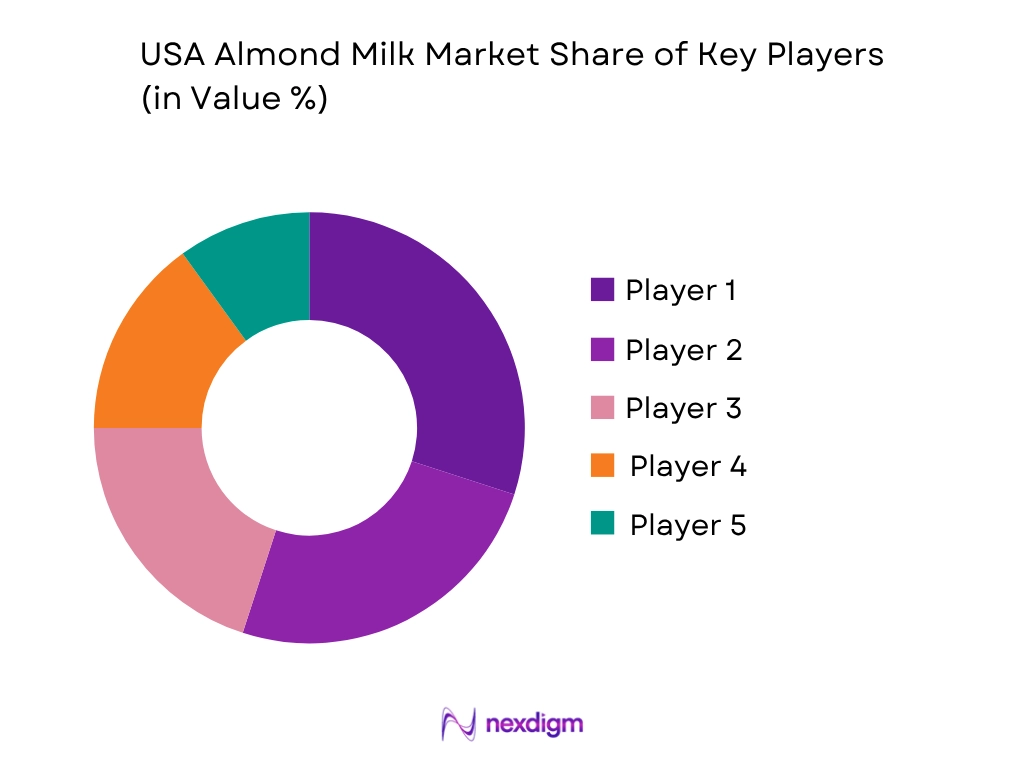
The USA Almond Milk Market is characterized by the presence of several established manufacturers and plant-based beverage specialists. Competition is driven by product innovation, organic certifications, fortified nutrition offerings, sustainability initiatives, and extensive retail partnerships. Major players continue investing in new formulations, improved packaging formats, and expansion across foodservice and e-commerce channels to strengthen their market positions.
| Company | Establishment Year | Headquarters | Product Portfolio | Distribution Reach | Organic Products | Manufacturing Facilities | Retail Presence | Sustainability Initiatives |
| Blue Diamond Growers (Almond Breeze) | 1910 | ~ | ~ | ~ | ~ | ~ | ~ | ~ |
| Danone North America (Silk) | 1942 | ~ | ~ | ~ | ~ | ~ | ~ | ~ |
| Califia Farms | 2010 | ~ | ~ | ~ | ~ | ~ | ~ | ~ |
| Elmhurst 1925 | 1925 | ~ | ~ | ~ | ~ | ~ | ~ | ~ |
| MALK Organics | 2015 | ~ | ~ | ~ | ~ | ~ | ~ | ~ |
USA Almond Milk Market Analysis
Growth Drivers
Expansion of Health and Wellness-Oriented Consumer Spending
Growing health awareness among American consumers is a significant growth driver for the USA almond milk market. According to the U.S. Bureau of Labor Statistics, annual consumer expenditures exceeded USD 77,000 per household, with food and health-related spending accounting for a substantial portion of household budgets. Consumers increasingly seek products perceived as lower in calories and cholesterol compared with conventional dairy products. The U.S. Food and Drug Administration continues to emphasize nutrition transparency through updated food labeling requirements, encouraging consumers to compare nutritional profiles across beverage categories. Almond milk manufacturers have responded by introducing fortified products containing calcium, vitamin D, vitamin E, and protein-enhanced formulations. Healthcare spending in the United States surpassed USD 4.8 trillion according to the Centers for Medicare & Medicaid Services. Rising healthcare expenditures have increased consumer focus on preventive nutrition and healthier dietary choices. Almond milk aligns with this trend due to its positioning as a plant-based beverage that supports various dietary preferences.
Increasing Competition from Alternative Plant-Based Beverages
The USA almond milk market faces growing competition from a rapidly expanding range of plant-based beverages. Consumers now have access to oat milk, soy milk, coconut milk, pea protein milk, rice milk, hemp milk, and blended dairy alternatives. This diversification creates competitive pressure on almond milk manufacturers seeking to maintain market leadership. The USDA reports increasing cultivation and utilization of alternative crops used in plant-based beverage production. Oat-based products have particularly expanded across retail and foodservice channels due to their texture and compatibility with coffee beverages. Large beverage manufacturers continue investing in multiple plant-based categories rather than focusing solely on almond milk. According to the U.S. Census Bureau, food manufacturing establishments continue to increase investment in specialty and functional beverage categories. Product innovation has accelerated across protein-enriched beverages, functional drinks, and sustainable nutrition products. As a result, consumers are presented with a wider variety of choices than ever before.
Market Opportunities
Product Innovation and Functional Nutrition Development
A major opportunity within the USA almond milk market lies in the development of value-added and functional nutrition products. Consumer interest in health-focused foods continues to rise, supported by strong spending on wellness products and preventive nutrition. According to the U.S. Bureau of Economic Analysis, consumer spending on food and beverage products remains among the largest expenditure categories in the economy. Manufacturers increasingly incorporate functional ingredients such as probiotics, omega fatty acids, plant proteins, vitamins, minerals, and immune-supporting nutrients into almond milk formulations. These innovations enable companies to target consumers seeking beverages with additional health benefits beyond basic nutrition.
Growth of Foodservice and E-Commerce Distribution Channels
The expansion of foodservice and digital retail channels presents substantial opportunities for the USA almond milk market. The U.S. Census Bureau reported e-commerce sales exceeding USD 1 trillion annually, demonstrating the growing importance of online purchasing across consumer goods categories. Digital grocery platforms have increased consumer access to specialty beverage products, including almond milk. Foodservice establishments also continue to expand their plant-based offerings. The National Restaurant Association highlights growing menu diversification across cafés, restaurants, and quick-service chains. Almond milk has become a standard option for coffee beverages, smoothies, specialty drinks, and plant-based menu items.
Future Outlook
The USA Almond Milk Market is expected to witness sustained growth throughout the forecast period. Demand for plant-based beverages continues to expand as consumers prioritize health, sustainability, and dairy-free nutrition. Product innovation in protein-enriched, sugar-free, and fortified almond milk categories is expected to create new growth avenues. Expansion of online grocery retailing and increasing adoption within cafés and foodservice establishments will further strengthen consumption. Investments in sustainable sourcing and environmentally friendly packaging are also likely to support long-term market development.
Major Players
- Blue Diamond Growers (Almond Breeze)
- Danone North America (Silk)
- Califia Farms
- Elmhurst 1925
- MALK Organics
- Pacific Foods
- Three Trees
- Mooala
- Forager Project
- Planet Oat
- Oatly North America
- Trader Joe’s Private Label
- Whole Foods 365
- Kirkland Signature
- Thrive Market
Key Target Audience
- Almond Milk Manufacturers
- Plant-Based Beverage Producers
- Almond Growers and Agricultural Cooperatives
- Foodservice Operators and Café Chains
- Supermarkets and Retail Chains
- E-Commerce Grocery Platforms
- Investments and Venture Capitalist Firms
- Government and Regulatory Bodies
Research Methodology
Step 1: Identification of Key Variables
The initial phase involves constructing an ecosystem map encompassing all major stakeholders within the USA Almond Milk Market. Extensive secondary research is conducted using industry databases, company reports, government publications, and trade statistics. The objective is to identify critical variables influencing production, distribution, pricing, and consumption patterns.
Step 2: Market Analysis and Construction
Historical industry data is compiled and analyzed to understand market penetration, consumer adoption rates, retail performance, and volume movement. Supply-side assessment includes evaluating production capacities, almond availability, processing infrastructure, and distribution efficiency. Demand-side analysis focuses on consumer purchasing patterns and category expansion.
Step 3: Hypothesis Validation and Expert Consultation
Market assumptions and hypotheses are validated through structured discussions with manufacturers, distributors, retailers, agricultural experts, and industry participants. These consultations provide insights into operational performance, product demand, innovation trends, and strategic priorities that shape market development.
Step 4: Research Synthesis and Final Output
The final stage combines findings from secondary and primary research. Data triangulation techniques are applied to validate market estimates and segment-level insights. The resulting analysis provides a comprehensive assessment of market structure, competition, opportunities, and future growth potential.

- Executive Summary
- Research Methodology (Market Definitions and Assumptions, Abbreviations, Market Sizing Approach, Demand-Side Assessment, Supply-Side Assessment, Primary Research Framework, Expert Validation Process, Data Triangulation, Limitations and Future Conclusions)

- Definition and Scope
- Market Evolution and Industry Genesis
- Timeline of Major Almond Milk Brands
- Business Cycle Analysis
- Almond Value Chain and Supply Chain Analysis

- Growth Drivers (Plant-Based Beverage Adoption, Lactose Intolerance Prevalence, Vegan Lifestyle Growth, Clean Label Demand, Health & Wellness Trends)
- Market Challenges (Almond Supply Volatility, Water Usage Concerns, Competitive Plant-Based Alternatives, Pricing Pressure, Labeling Regulations)
- Market Opportunities (Functional Almond Milk, Protein-Enriched Products, Sustainable Packaging, Premium Organic Variants, Foodservice Expansion)
- Market Trends (Barista Blends, Sugar-Free Variants, Fortified Nutrition Products, Private Label Expansion, Sustainable Sourcing)
- Government Regulations (FDA Labeling Standards, USDA Organic Certification, Food Safety Modernization Act Compliance, Nutrition Labeling Requirements, Sustainability Reporting Frameworks)
- SWOT Analysis
- Stakeholder Ecosystem
- PESTLE Analysis
- Porter’s Five Forces Analysis
- Competition Ecosystem

- By Market Value (2020-2025)
- By Volume Consumption (2020-2025)
- By Average Selling Price (2020-2025)

- By Product Type (In Value %)
Original Almond Milk
Unsweetened Almond Milk
Flavored Almond Milk
Organic Almond Milk
Functional/Fortified Almond Milk - By Formulation Type (In Value %)
Conventional
Organic
Non-GMO
Protein-Enriched
Vitamin-Fortified - By Distribution Channel (In Value %)
Supermarkets & Hypermarkets
Convenience Stores
Specialty Health Stores
Online Retail & E-Commerce
Warehouse Clubs
Direct-to-Consumer - By End User (In Value %)
Household Consumers
Cafés & Coffee Chains
Restaurants & Foodservice Operators
Bakeries & Confectionery
Food & Beverage Manufacturers - By Packaging Type (In Value %)
Cartons
PET Bottles
Glass Bottles
Multi-Pack Formats
Single-Serve Packs

- Market Share of Major Players (Value, Volume, By Product Category )
- Cross Comparison Parameters (Brand Portfolio, Almond Sourcing Strategy, Processing Capacity, Production Facilities, Product Innovation Pipeline, Organic Product Portfolio, Distribution Reach, Retail Shelf Presence)
- SWOT Analysis of Major Players
- SKU-Level Pricing Analysis
- Detailed Profiles of Major Companies
Blue Diamond Growers (Almond Breeze)
Danone North America (Silk)
Califia Farms
MALK Organics
Elmhurst 1925
Pacific Foods
Three Trees
Planet Oat
Oatly North America
Mooala
Forager Project
Trader Joe’s Private Label
Whole Foods 365
Kirkland Signature
Thrive Market

- Consumer Purchase Behavior
- Frequency of Consumption
- Household Penetration Analysis
- Consumer Preference by Age Group
- Consumer Preference by Income Group
- Consumer Preference by Lifestyle Segment
- Brand Loyalty Assessment
- Purchase Decision Factors
- Consumer Pain Point Analysis
- Customer Journey Mapping

- By Market Value (2026-2035)
- By Volume Consumption (2026-2035)
- By Average Selling Price (2026-2035)


 Request a Sample
 Ask for Customization
 Get a Quote
 Enquire Now