
 Download PDF
Market Overview
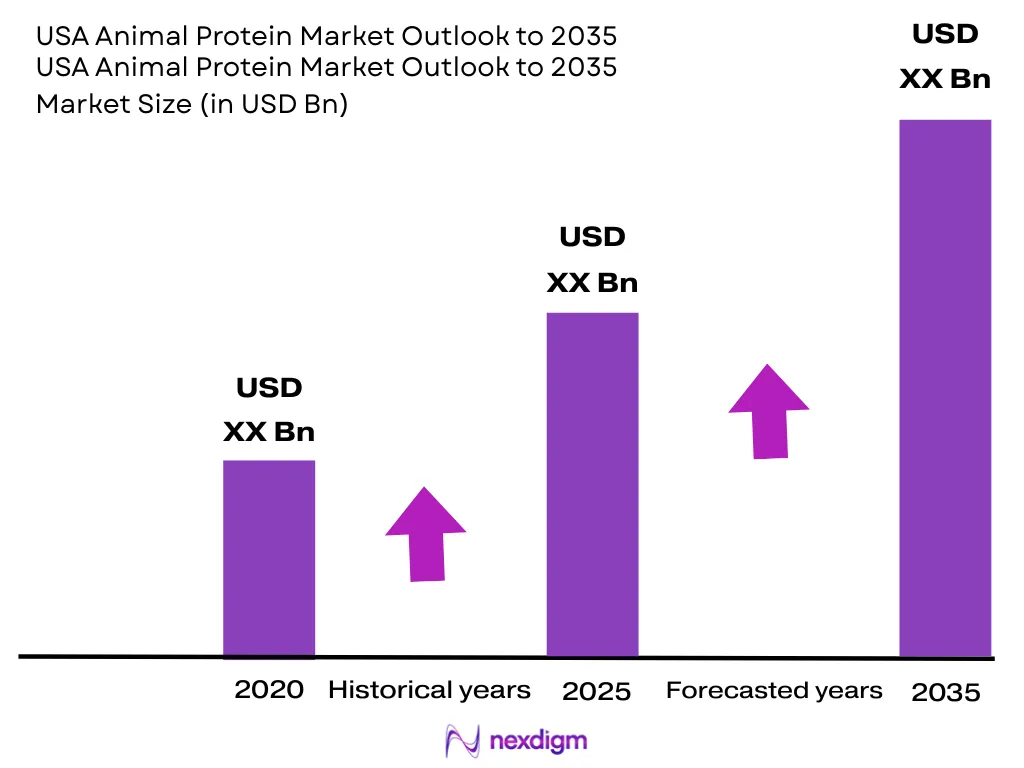
The USA Animal Protein Market was valued at USD ~ Billion in 2024, based on historical production, domestic consumption, exports, and processing revenues across poultry, beef, pork, fish, and egg products. The United States produced approximately 100 million metric tons of animal protein products during the latest reporting period, including around 22 million metric tons of chicken meat, over 12 million metric tons of beef, and more than 11 million metric tons of pork, according to statistics published by the United States Department of Agriculture (USDA), the National Chicken Council (NCC), and the North American Meat Institute (NAMI). The market continues to be driven by robust domestic consumer demand, advanced processing infrastructure, integrated production systems, and rising consumption of convenient and premium protein products.
Market Segmentation
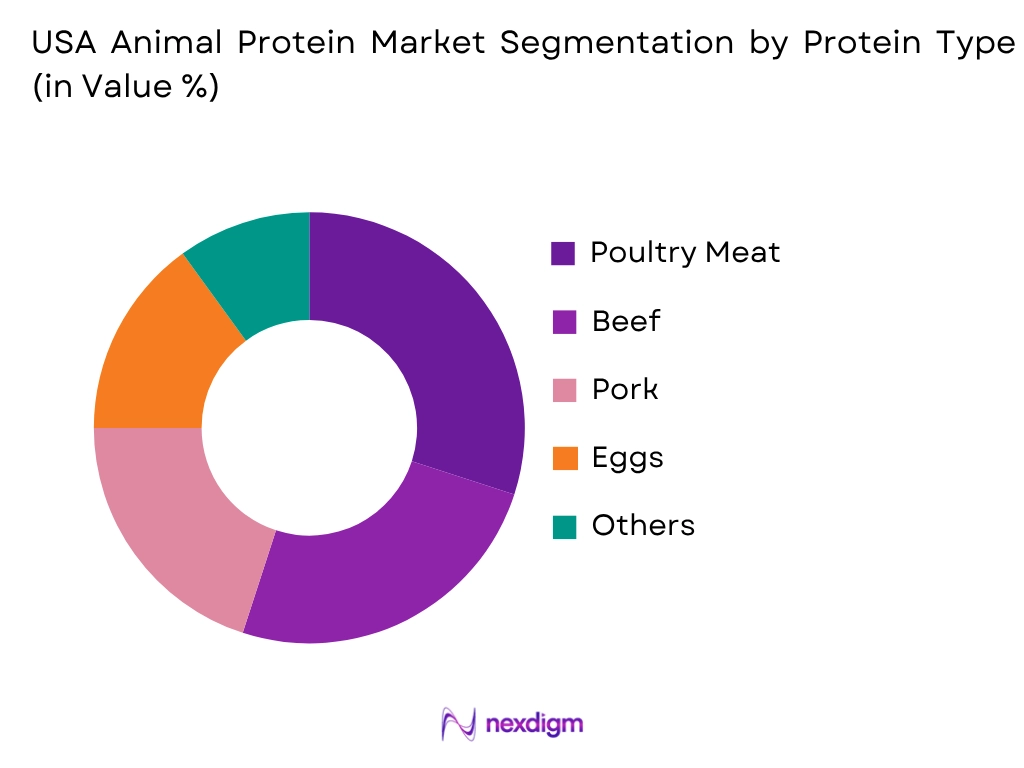
By Protein Type
The USA Animal Protein Market is segmented by protein type into Poultry Meat, Beef, Pork, Aquaculture & Fish Protein, Eggs, and Processed Animal Protein Products. Poultry meat accounts for the largest share of the market owing to its cost competitiveness, efficient production cycle, superior feed conversion ratio, and strong domestic as well as export demand. The United States remains one of the world’s largest poultry producers and exporters, supported by vertically integrated production models, advanced genetics, and internationally certified processing facilities. Poultry products also benefit from shorter production cycles compared to beef, allowing processors to respond rapidly to domestic and international demand fluctuations. Continuous investments in processing automation, halal-certified production, and value-added poultry products further strengthen the segment’s leadership across retail, foodservice, and export markets.
By Distribution Channel
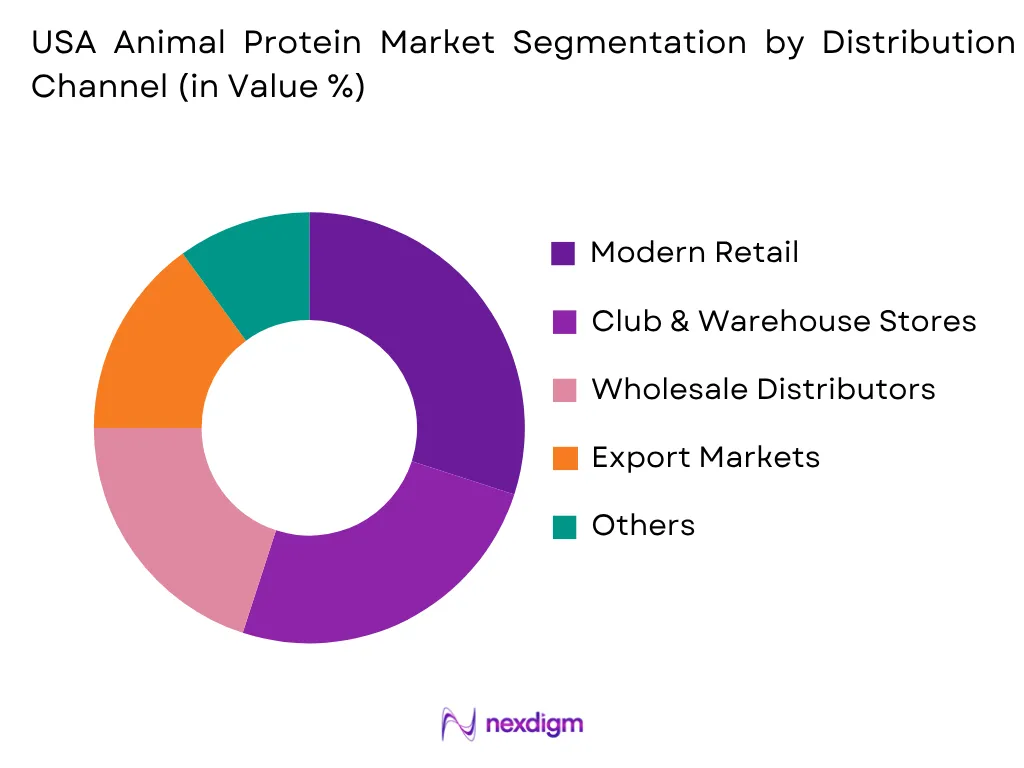
The USA Animal Protein Market is segmented by distribution channel into Modern Retail, Club & Warehouse Stores, Wholesale Distributors, Foodservice Distribution, Export Markets, and Online Grocery & Direct Sales. Modern retail remains the dominant distribution channel due to the widespread presence of supermarkets, hypermarkets, club stores, and organized retail chains across the United States. Consumers increasingly prefer modern retail outlets because of greater product assortment, food safety standards, refrigerated storage, promotional pricing, and convenient shopping experiences. These retailers maintain long-term procurement contracts with leading meat processors, ensuring consistent product availability and quality. Expansion of cold chain logistics, premium packaged meat offerings, and the rapid growth of online grocery platforms have further strengthened the role of organized retail in serving both urban households and institutional buyers.
Competitive Landscape
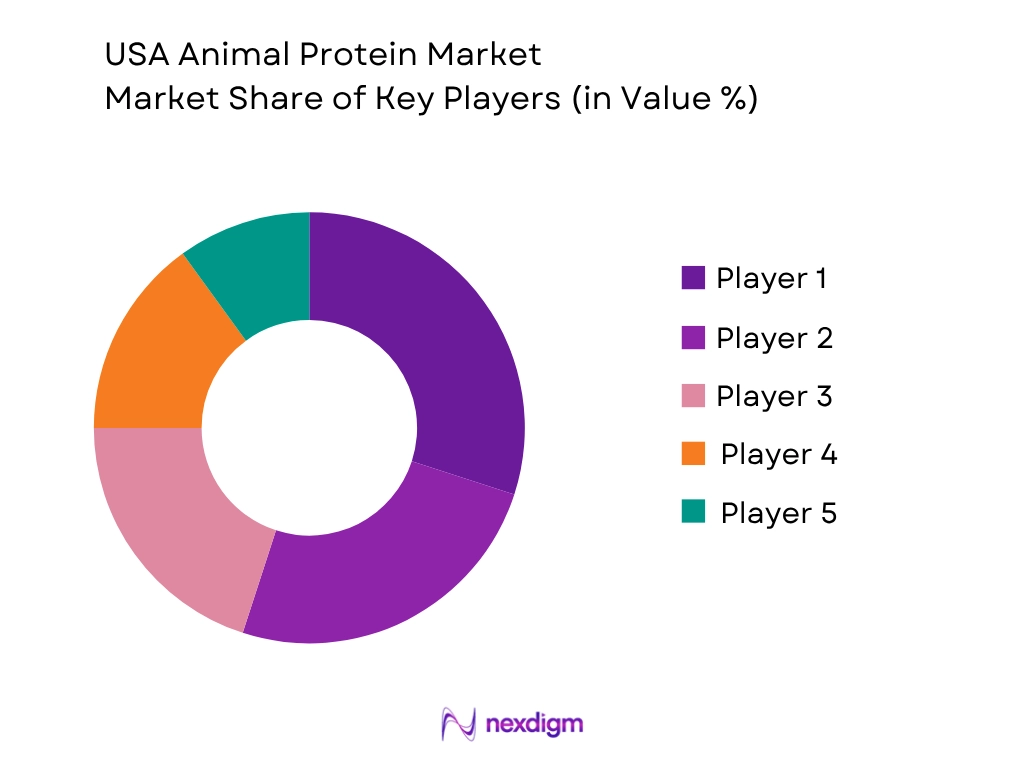
The USA Animal Protein Market is characterized by the presence of several globally competitive meat processors alongside large regional integrated producers and agricultural cooperatives. Companies compete on production scale, export capability, processing technology, sustainability certifications, product diversification, and distribution reach. Vertically integrated operations, efficient feed procurement, advanced slaughtering facilities, and extensive cold chain infrastructure provide competitive advantages to leading market participants. Export certifications, halal processing capabilities, and investments in value-added meat products continue to differentiate major companies in both domestic and international markets.
| Company | Establishment Year | Headquarters | Primary Protein Focus | Processing Facilities
|
Export Presence | Production Integration | Sustainability Programs | Value-Added Product Portfolio |
| JBS USA | 2007 | ~ | ~ | ~ | ~ | ~ | ~ | ~ |
| Tyson Foods | 1935 | ~ | ~ | ~ | ~ | ~ | ~ | ~ |
| Cargill Protein | 1865 | ~ | ~ | ~ | ~ | ~ | ~ | ~ |
| Smithfield Foods | 1936 | ~ | ~ | ~ | ~ | ~ | ~ | ~ |
| Perdue Farms | 1920 | ~ | ~ | ~ | ~ | ~ | ~ | ~ |
USA Animal Protein Market Analysis
Growth Drivers
Strong Domestic Consumer Demand for Animal Protein
The United States’ position as the world’s largest per capita consumer of animal protein continues to be a primary growth driver for the market. According to the USDA Economic Research Service, Americans consume approximately 225 pounds of meat per capita annually, reflecting deep cultural preferences for beef, poultry, and pork across all demographics. The National Chicken Council reported that broiler production reached approximately 47 billion pounds in 2024, underlining the massive scale of domestic consumption. The pork industry also maintained substantial output, supported by strong domestic retail and foodservice demand. The USDA reported that combined production of beef, poultry, and pork exceeded 100 million metric tons during the latest reporting period, underpinned by one of the world’s most efficient and integrated livestock production systems. In parallel, the World Bank estimated the United States’ GDP at approximately USD 28 trillion in 2024, reflecting the country’s strong macroeconomic foundation for agribusiness investment, while continued consumer spending on food at home and away from home sustained processing utilization across major protein categories. Continued domestic market access, combined with internationally recognized sanitary standards, enables US processors to diversify across retail, foodservice, and export destinations while maintaining high processing capacity utilization. Investments in advanced slaughterhouses, refrigerated logistics, traceability systems, and distribution infrastructure continue to strengthen the United States’ competitiveness in global protein supply chains.
Abundant Feed Resources and Integrated Livestock Production
The United States benefits from one of the world’s most competitive feed supply chains, creating a structural advantage for animal protein production. According to the USDA National Agricultural Statistics Service (NASS), the United States harvested approximately 389 million metric tons of corn and over 113 million metric tons of soybeans during the latest agricultural cycle, providing abundant raw materials for livestock feed at competitive costs. The Food and Agriculture Organization (FAO) continues to recognize the United States as one of the world’s largest producers and exporters of feed grains, supporting efficient and cost-effective livestock production systems. The World Bank reported that agriculture contributes meaningfully to US merchandise exports, while agribusiness remains a key pillar of national economic activity. Integrated production systems adopted by leading poultry and pork companies enable centralized feed manufacturing, genetics management, veterinary services, and processing operations, improving productivity throughout the value chain. Continuous investment in precision livestock farming, automated feeding technologies, improved breeding programs, and digital farm management further enhances operational productivity while maintaining biosecurity and food safety standards. These structural advantages continue to reinforce the United States’ position as one of the world’s most efficient and technologically advanced animal protein producers.
Market Challenges
Animal Disease Risks and Increasing Biosecurity Requirements
Maintaining animal health remains one of the most critical challenges facing the USA Animal Protein Market due to the country’s extensive livestock population and large export footprint. According to the USDA NASS, the United States maintains a cattle herd of approximately 86 million head, while annual slaughter includes billions of broiler chickens and tens of millions of hogs. The scale of livestock movement increases the importance of continuous veterinary surveillance and disease prevention measures. The USDA Animal and Plant Health Inspection Service (APHIS) continues to strengthen national animal health programs, inspection services, and export certification systems to preserve access to premium international markets. Highly Pathogenic Avian Influenza (HPAI) outbreaks in recent years have demonstrated how rapidly sanitary incidents can affect production volumes, international trade flows, and import access requirements. Consequently, producers continue investing in enhanced farm biosecurity, vaccination monitoring, traceability systems, laboratory testing, and integrated disease surveillance. Maintaining compliance with increasingly stringent sanitary and phytosanitary requirements imposed by importing countries remains essential for sustaining the United States’ export competitiveness across all major protein categories.
Environmental Compliance and Regulatory Constraints
The United States animal protein industry faces growing environmental compliance requirements related to greenhouse gas emissions, water usage, nutrient management, and land use. According to the Environmental Protection Agency (EPA), livestock agriculture contributes to methane emissions through enteric fermentation and manure management, increasing regulatory scrutiny across federal and state agencies. Major production states including Iowa, North Carolina, Nebraska, and Kansas have implemented increasingly stringent environmental regulations governing concentrated animal feeding operations (CAFOs), wastewater treatment, and air quality standards. The World Bank’s Environmental Performance Index continues to identify agricultural environmental footprint as an important determinant of long-term sector sustainability across global markets. Animal protein producers require continuous investment in anaerobic digesters, nutrient management systems, water recycling infrastructure, and carbon monitoring technologies to maintain regulatory compliance. Expansion of processing capacity has also increased demand for sustainable water usage, energy efficiency, and waste management improvements. Investments in environmental compliance programs, renewable energy adoption, and sustainable production certifications are therefore critical for maintaining operating licenses, consumer trust, and access to premium retail and export channels.
Market Opportunities
Expansion into Premium Export Markets Through Sustainability and Traceability
Growing international demand for sustainably produced animal protein presents significant opportunities for US producers. The USDA Foreign Agricultural Service (FAS) continues expanding electronic certification systems, traceability initiatives, and international sanitary agreements that facilitate access to premium export destinations. According to the USDA FAS, the United States exported approximately USD 10 billion worth of beef and poultry products annually to markets across Asia, the Middle East, and Latin America. Increasing demand from Japan, South Korea, Mexico, and high-value markets has accelerated investments in environmental compliance, animal welfare certification, halal processing, and digital traceability technologies. The World Bank identifies sustainable agricultural production and productivity improvements as important contributors to long-term rural economic development. Companies are increasingly implementing blockchain-enabled traceability, precision livestock monitoring, and environmental reporting systems to satisfy retailer and consumer requirements in premium international markets. These initiatives not only strengthen export competitiveness but also enhance brand positioning and operational transparency throughout the supply chain. As international buyers continue emphasizing food safety, sustainability, and responsible sourcing, US producers with certified production systems are well positioned to capture higher-value export opportunities.
Growth in Value-Added Processing and Premium Domestic Protein Consumption
The expansion of value-added meat processing offers another major opportunity for the USA Animal Protein Market. According to the US Census Bureau, the United States population exceeded 335 million people during the latest official estimates, supporting one of the world’s largest and most affluent domestic consumer markets for meat products. Urbanization, changing consumer lifestyles, and increasing demand for convenience foods continue encouraging greater consumption of processed meats, ready-to-cook products, portion-controlled packaging, and premium branded protein products. The National Chicken Council reported strong domestic chicken availability during 2024, highlighting the importance of the US internal market alongside exports. Rising investment in automated processing facilities, advanced packaging technologies, and cold chain expansion enables processors to diversify product portfolios while improving shelf life and distribution efficiency. The IMF projects continued economic stability for the United States, supporting household consumption and industrial investment. Increasing adoption of innovative packaging, higher food safety standards, and the expansion of organized retail and e-commerce networks further strengthen opportunities for value-added animal protein products. These developments allow processors to improve profitability while addressing evolving consumer preferences for convenience, transparency, quality, and product differentiation.
Future Outlook
The USA Animal Protein Market is expected to maintain steady long-term growth supported by increasing consumer demand for premium and convenient protein products, expansion of value-added meat processing, and continued investments in sustainable livestock production. Rising exports to Asia, the Middle East, and emerging markets are anticipated to strengthen production volumes, while technological advancements in genetics, animal nutrition, and precision livestock farming will improve productivity. Domestic consumption is also expected to benefit from evolving dietary preferences, rising demand for organic and natural protein products, and increasing adoption of convenient processed meat formats. Furthermore, improvements in traceability systems, environmental compliance, automation, and cold chain infrastructure are likely to enhance the United States’ competitiveness in premium international markets while sustaining domestic demand for high-quality protein products.
Major Players
- Tyson Foods
- JBS USA
- Cargill Protein
- Smithfield Foods
- Perdue Farms
- Wayne-Sanderson Farms
- Mountaire Farms
- OSI Group
- National Beef Packing Company
- Iowa Premium
- Prestage Foods
- Butterball
- Koch Foods
- Foster Farms
- Empire Kosher Poultry
Key Target Audience
- Animal Protein Producers and Meat Processing Companies
- Livestock Producers and Integrated Farming Companies
- Food Processing and Packaged Food Manufacturers
- Retail Chains, Wholesale Distributors and Foodservice Operators
- Exporters, Importers and International Trading Companies
- Investments and Venture Capitalist Firms
- Government and Regulatory Bodies (United States Department of Agriculture (USDA), Food Safety and Inspection Service (FSIS), Animal and Plant Health Inspection Service (APHIS), Environmental Protection Agency (EPA), North American Meat Institute (NAMI))
- Cold Chain Logistics, Storage and Distribution Companies
Research Methodology
Step 1: Identification of Key Variables
The research process begins by identifying the complete ecosystem of the USA Animal Protein Market, including livestock producers, feed suppliers, meat processors, distributors, exporters, retailers, and regulatory agencies. Extensive secondary research is conducted using government publications, trade associations, customs statistics, company reports, and proprietary industry databases. This stage helps determine the major variables influencing production, consumption, trade, pricing, and investment trends across the market.
Step 2: Market Analysis and Construction
Historical market information is compiled and analyzed to estimate the overall market size using both top-down and bottom-up approaches. Production volumes, domestic consumption, processing revenues, export statistics, livestock inventories, slaughter volumes, and pricing trends are evaluated to construct a comprehensive market model. Demand-side and supply-side assessments are performed to validate the consistency of market estimates across various industry participants.
Step 3: Hypothesis Validation and Expert Consultation
The preliminary market findings are validated through computer-assisted telephone interviews (CATIs) and structured discussions with executives from meat processing companies, livestock producers, exporters, distributors, industry associations, and regulatory authorities. These consultations provide valuable insights regarding production capacity, utilization rates, investment priorities, pricing dynamics, and emerging market opportunities, ensuring that the assumptions used in the research accurately reflect current industry conditions.
Step 4: Research Synthesis and Final Output
The final stage integrates findings obtained from secondary research and primary interviews to develop a comprehensive market assessment. Market estimates are cross-verified using company financial reports, trade databases, production statistics, and industry publications. The resulting analysis provides detailed insights into market size, competitive positioning, segmentation, growth drivers, challenges, future opportunities, and strategic recommendations for stakeholders operating within the USA Animal Protein Market.

- Executive Summary
- Research Methodology (Market Definitions and Assumptions, Abbreviations, Market Sizing Framework, Top-Down Analysis, Bottom-Up Analysis, Demand-Side Assessment, Supply-Side Assessment, Primary Industry Interviews, Trade Flow Validation, Data Triangulation, Forecasting Framework, Limitations and Future Conclusions)

- Definition and Scope
- Market Evolution and Industry Genesis
- Timeline of Major Industry Developments
- USA Animal Protein Industry Ecosystem
- Supply Chain Analysis

- Growth Drivers (Strong Domestic Consumer Demand, Advanced Processing Infrastructure, Feed Grain Availability, Integrated Production Systems, Government Agriculture Support, Premium Protein Market Expansion)
- Market Challenges (Feed Cost Volatility, Livestock Disease Risks, Environmental Compliance, Labor Availability, Supply Chain Disruptions, Climate Variability)
- Market Opportunities (Premium Protein Products, Value-Added Meat Processing, Sustainable Livestock Production, Export Market Diversification, Digital Livestock Technologies, Branded Meat Programs)
- Market Trends (Traceability Systems, Carbon-Neutral Beef Initiatives, Animal Welfare Certification, Precision Livestock Farming, Protein Product Premiumization, Automation in Meat Processing)
- Government Regulations (USDA FSIS Inspection Standards, National Animal Identification System (NAIS), Animal Welfare Regulations, Environmental Compliance, Export Certification, Sanitary & Phytosanitary Standards)
- Trade Policy Analysis (Export Agreements, Tariff Structure, Import Restrictions, Veterinary Protocols, Market Access Requirements)
- Feed Industry Assessment (Corn Availability, Soybean Meal Utilization, Feed Conversion Efficiency, Feed Cost Structure)
- SWOT Analysis
- PESTLE Analysis
- Porter’s Five Forces Analysis
- Stakeholder Ecosystem
- Competition Ecosystem

- By Market Value (2020-2025)
- By Volume Consumption (2020-2025)
- By Average Selling Price (2020-2025)

- By Protein Type (In Value %)
Poultry Meat
Beef
Pork
Aquaculture & Fish Protein
Eggs
Processed Animal Protein Products - By Product Form (In Value %)
Fresh/Chilled
Frozen
Processed & Value-Added
Cooked & Ready-to-Eat
Marinated & Seasoned Products - By End User (In Value %)
Retail Consumers
Foodservice & HoReCa
Food Processing Industry
Institutional Buyers
Export Buyers - By Distribution Channel (In Value %)
Modern Retail
Club & Warehouse Stores
Wholesale Distributors
Foodservice Distribution
Export Markets
Online Grocery & Direct Sales - By Production System (In Value %)
Conventional Production
Integrated Contract Farming
Pasture-Raised Livestock
Feedlot Production
Certified Organic Production - By Animal Protein Grade (In Value %)
Commodity Grade
Premium Grade
Certified Sustainable
Halal Certified
Kosher Certified - By Region (In Value %)
Midwest
Southeast
Southwest
Northeast
West

- Market Share of Major Players (By Value, Production Volume, Export Volume, Protein Category, Processing Capacity)
- Cross Comparison Parameters (Slaughter Capacity, Processing Capacity, Export Market Presence, Feed Integration Level, Cold Storage Capacity, Product Portfolio Diversity, Sustainability & Animal Welfare Certifications, Value-Added Product Portfolio)
- SWOT Analysis of Major Players
- Pricing Analysis (By Protein Category, Processing Level, Export vs Domestic Pricing)
- Detailed Profiles of Major Companies
Tyson Foods
JBS USA
Cargill Protein
Smithfield Foods
Perdue Farms
Wayne-Sanderson Farms
Mountaire Farms
OSI Group
National Beef Packing Company
Iowa Premium
Prestage Foods
Butterball
Koch Foods
Foster Farms
Empire Kosher Poultry

- Consumption Pattern Assessment (Per Capita Meat Consumption, Protein Preference, Meal Frequency, Household Penetration)
- Demographic Demand Analysis (Income Group, Age Group, Urban-Rural Split, Regional Preferences)
- Household Expenditure Analysis
- Protein Affordability Assessment
- Fresh vs Frozen Product Preference

- By Market Value (2026-2035)
- By Volume Consumption (2026-2035)
- By Average Selling Price (2026-2035)


 Request a Sample
 Ask for Customization
 Get a Quote
 Enquire Now