

 Download PDF
 Download PDF
Market Overview
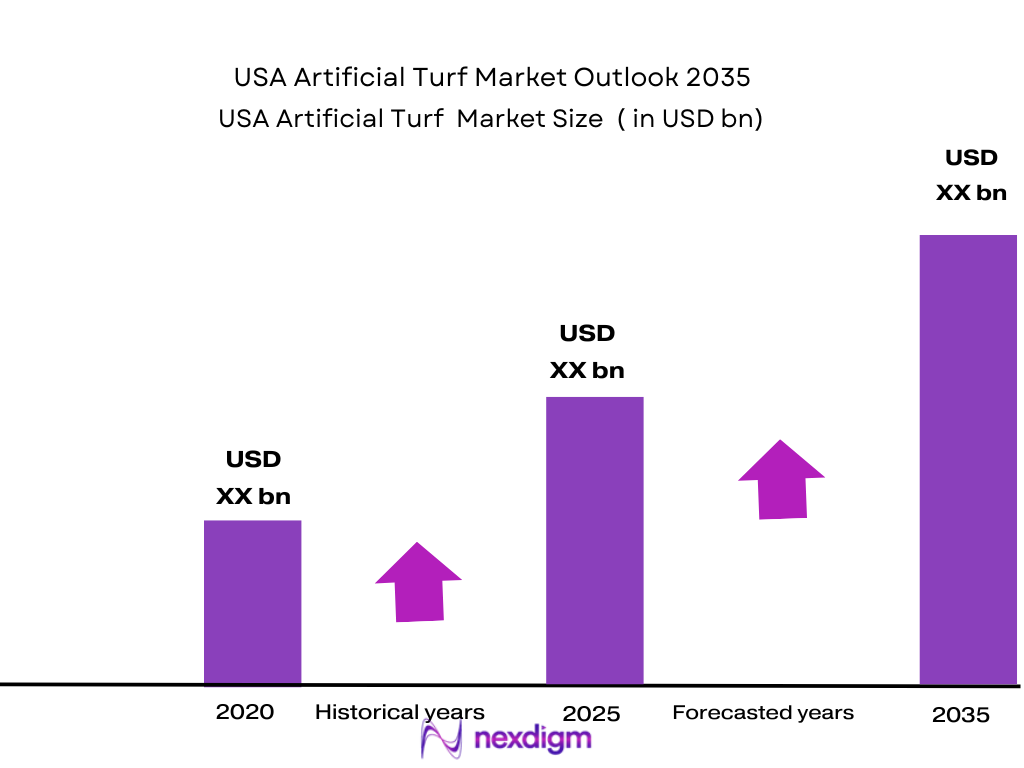
The USA Artificial Turf Market is valued at USD ~ billion, driven by increasing demand for low-maintenance, durable, and aesthetically pleasing landscaping solutions across residential, commercial, and sports applications. Factors such as the growing adoption of artificial turf in sports fields, the rise in urbanization, and government initiatives to promote sustainable landscaping have significantly contributed to this market’s growth. Moreover, technological advancements in turf materials and growing consumer awareness about environmental sustainability further fuel the expansion of the market.
The USA Artificial Turf Market is predominantly driven by regions such as California, Texas, and Florida. These states have witnessed significant growth due to their large urban populations, active sports cultures, and the emphasis on sustainable landscaping solutions. California, for example, has led the charge with a large number of residential and sports turf installations due to its water conservation efforts. Additionally, Texas and Florida’s high number of sports complexes and favorable weather conditions contribute to the continued dominance of these states in the artificial turf market.
Market Segmentation
By Product Type
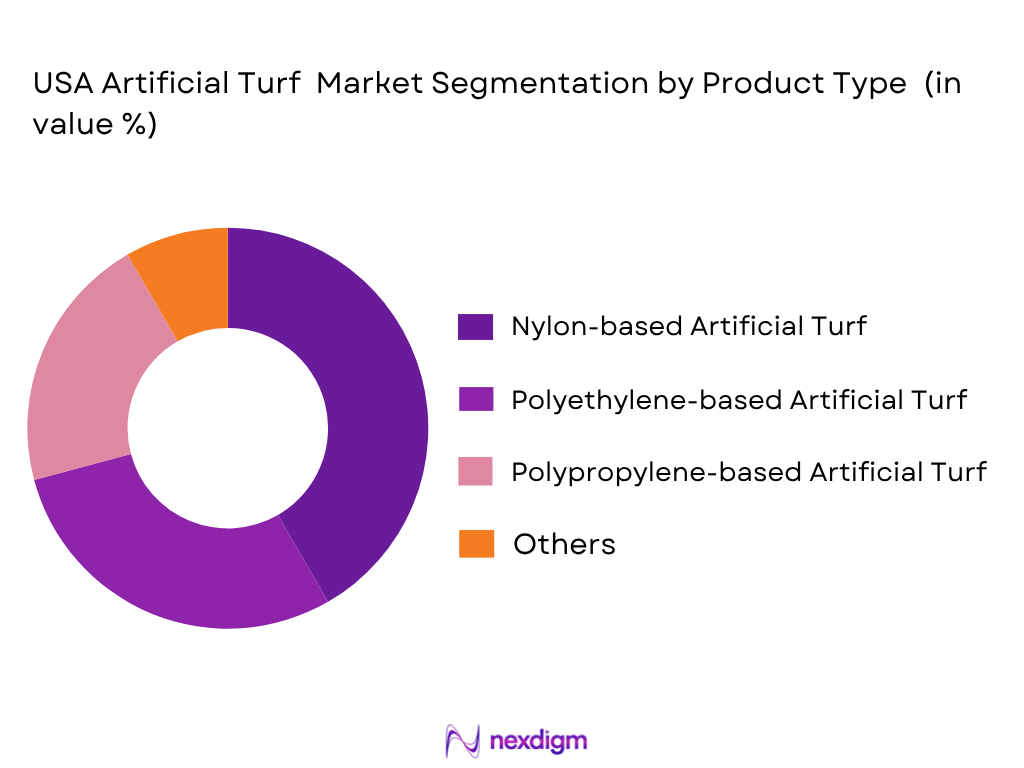
The USA Artificial Turf Market is segmented by turf type into nylon-based, polyethylene-based, polypropylene-based, and other synthetic turf types. Among these, polyethylene-based artificial turf dominates the market due to its durability, low maintenance requirements, and excellent performance in outdoor conditions. Polyethylene turf is widely used in sports fields, playgrounds, and residential applications because of its softer texture compared to nylon, making it more suitable for high-traffic areas. Additionally, advancements in polyethylene turf technology have increased its lifespan, driving its adoption across various sectors.
By Application
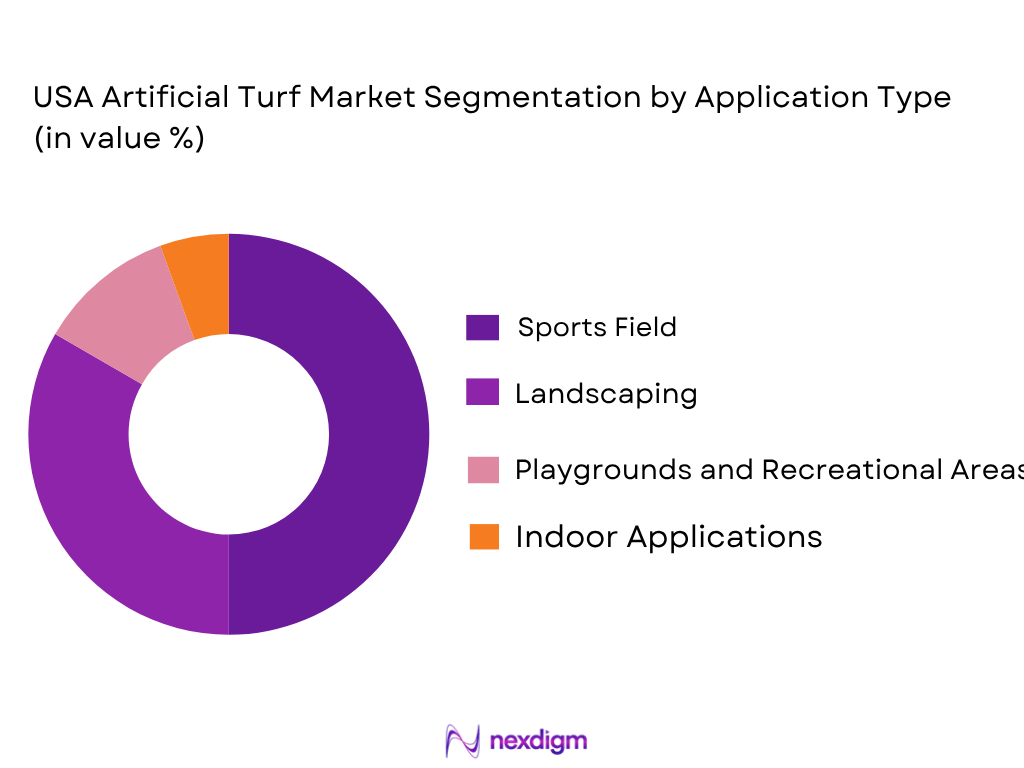
The USA Artificial Turf Market is segmented by application into sports fields, landscaping, playgrounds, and indoor applications. Sports fields represent the largest application segment due to the increasing demand for artificial turf in football, soccer, baseball, and other sports arenas. The adoption of artificial turf in sports fields is driven by the benefits of year-round usability, water conservation, and reduced maintenance costs compared to natural grass. Additionally, professional sports leagues and schools continue to upgrade their facilities with synthetic turf to improve performance and extend field usage.
Competitive Landscape
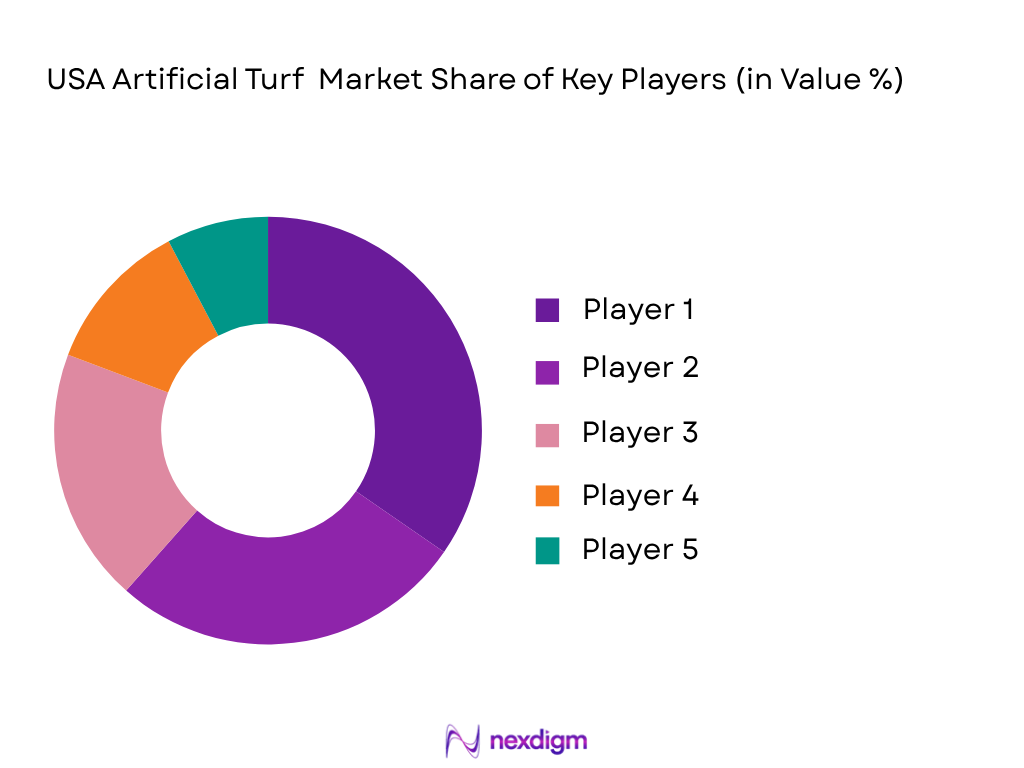
The USA Artificial Turf Market is highly competitive, with a few major players dominating the landscape. These key players include both global and regional manufacturers, each focusing on innovation, quality, and sustainability to capture market share. Companies like FieldTurf, AstroTurf, and Shaw Sports Turf are at the forefront, offering a range of products tailored to sports and landscaping applications. These players compete based on product offerings, performance characteristics, and regional presence, ensuring that they meet the increasing demand for artificial turf in the USA.
| Company Name | Establishment Year | Headquarters | Market Focus | Key Products | Distribution Channels | Annual Revenue |
| FieldTurf | 1997 | Georgia, USA | ~ | ~ | ~ | ~ |
| AstroTurf | 1965 | Georgia, USA | ~ | ~ | ~ | ~ |
| Shaw Sports Turf | 1999 | Georgia, USA | ~ | ~ | ~ | ~ |
| Polytan | 1969 | Germany, USA | ~ | ~ | ~ | ~ |
| Ecore International | 1997 | Pennsylvania, USA | ~ | ~ | ~ | ~ |
USA Artificial Turf Market Analysis
Growth Drivers
Increase in Sports and Recreational Activities
The USA Artificial Turf Market is significantly driven by the growing participation in sports and recreational activities. The increasing number of sports leagues, schools, and universities adopting synthetic turf for their fields is a key factor. Artificial turf offers year-round usability and requires lower maintenance than natural grass, making it a preferred choice for sports facilities. This shift toward synthetic turf is especially noticeable in sports like football, soccer, and baseball, where high foot traffic can damage natural grass. As sports activities continue to increase, demand for artificial turf in both public and private sectors is expected to rise, contributing to market growth.
Government Initiatives to Promote Sustainable Landscaping Solutions
Government initiatives encouraging water conservation and sustainable landscaping solutions are key drivers of the USA Artificial Turf Market. Many states, especially in regions with water scarcity, have introduced rebates and incentives for homeowners and businesses to switch from natural grass to artificial turf. These measures help conserve water by reducing the need for irrigation. In addition, local governments are also adopting artificial turf for public parks, playgrounds, and sports fields to decrease maintenance costs and minimize water usage. These initiatives, combined with increasing awareness about environmental sustainability, are driving the widespread adoption of artificial turf across the country.
Market Challenges
High Initial Installation Costs
One of the main challenges facing the USA Artificial Turf Market is the high initial installation cost. Although artificial turf offers long-term savings in terms of water, maintenance, and labor costs, the upfront investment required can be substantial. The cost of purchasing the turf, along with installation fees and the need for periodic maintenance or replacement, can deter some potential buyers, especially in residential and small-scale commercial sectors. Despite these challenges, the long-term savings and benefits often outweigh the initial cost, but price sensitivity remains a key barrier for widespread adoption.
Concerns About Environmental Impact and Sustainability
Despite its advantages, artificial turf has faced growing concerns regarding its environmental impact. Critics argue that while artificial turf helps conserve water and reduces the need for chemicals, its production involves non-renewable resources such as petroleum, and the material is often not biodegradable. Moreover, the disposal of old turf at the end of its lifecycle remains a major challenge. While some manufacturers are making strides in developing recyclable turf options, the lack of a comprehensive recycling infrastructure for synthetic materials continues to limit the sustainability of artificial turf. These concerns pose a challenge to the market’s growth, especially among eco-conscious consumers.
Opportunities
Emergence of Eco-friendly and Recyclable Artificial Turf Products
An exciting opportunity in the USA Artificial Turf Market lies in the development of eco-friendly and recyclable turf products. With growing awareness of environmental concerns, manufacturers are focusing on creating turf made from recycled materials or biodegradable components. These advancements aim to address the sustainability issues associated with traditional synthetic turf. Recyclable artificial turf, in particular, reduces the environmental impact by offering a solution for turf disposal after its useful life. As the demand for green solutions grows, these eco-friendly innovations will likely play a significant role in expanding the market and attracting environmentally conscious consumers.
Expansion in Commercial and Industrial Applications
There is a rising opportunity for artificial turf to penetrate commercial and industrial applications, particularly in the landscaping of office parks, corporate campuses, and industrial complexes. These spaces often require low-maintenance, aesthetically pleasing landscaping solutions, and artificial turf offers an ideal choice. With the growing trend toward sustainable business practices, many companies are opting for artificial turf to reduce water consumption and maintenance costs. Additionally, the increase in outdoor events, festivals, and exhibitions that require temporary yet durable surfaces further boosts the demand for synthetic turf in commercial and industrial sectors. This market expansion presents a promising opportunity for manufacturers.
Future Outlook
Over the next 5 years, the USA Artificial Turf Market is expected to grow at a significant pace, driven by technological advancements, increased demand for sustainable solutions, and the rise of artificial turf applications in urban landscaping. As sports organizations, schools, and municipalities continue to adopt artificial turf for its cost-effectiveness, durability, and environmental benefits, the market is poised for consistent growth. The rising trend of eco-friendly materials and innovations in artificial turf manufacturing will further fuel market expansion.
Major Players
- FieldTurf
- AstroTurf
- Shaw Sports Turf
- Polytan
- Ecore International
- Sprinturf
- Tarkett Sports
- GreenFields
- SportGroup
- Cooley Group
- Royal Grass
- SIS Pitches
- Nike Grind
- Synthetic Grass Warehouse
- Artificial Grass Recyclers
Key Target Audience
- Residential Property Owners
- Commercial Real Estate Developers
- Sports Facility Managers
- Government and Municipal Bodies
- Landscaping Contractors
- Investment and Venture Capitalist Firms
- Artificial Turf Manufacturers
- Regulatory Bodies
Research Methodology
Step 1: Identification of Key Variables
The first step involves identifying the major variables that impact the USA Artificial Turf Market. This is achieved through extensive desk research, where secondary data sources such as industry reports, government publications, and company records are used to understand the key factors that influence the market dynamics. The aim is to identify trends in artificial turf technology, regulations, and demand drivers in both sports and landscaping sectors.
Step 2: Market Analysis and Construction
In this phase, historical data is compiled to assess the market’s growth trajectory. By analyzing past market trends, market players, and consumer preferences, we construct a comprehensive understanding of how different sub-segments, such as sports fields and landscaping, have evolved. Market share of artificial turf types like polyethylene and nylon is also analyzed to construct a robust market size for the USA.
Step 3: Hypothesis Validation and Expert Consultation
In this phase, industry experts are consulted through computer-assisted telephone interviews (CATIs). These experts provide insight into market variables such as demand for sustainable turf solutions, preferences in sports applications, and future market trends. Their feedback helps to validate and refine market assumptions and ensures that the forecast is realistic and aligned with industry realities.
Step 4: Research Synthesis and Final Output
The final step involves synthesizing the research findings into a comprehensive report. This includes verifying data with artificial turf manufacturers, understanding product specifications, sales data, and consumer feedback. The synthesis ensures that all data points are accurately represented, providing stakeholders with a complete picture of the USA Artificial Turf Market.

- Executive Summary
- Research Methodology (Market Definitions and Assumptions, Abbreviations, Market Sizing Approach, Consolidated Research Approach, Understanding Market Potential Through In-Depth Industry Interviews, Primary Research Approach, Limitations and Future Conclusions)

- Definition and Scope
- Market Dynamics Overview
- Market Genesis
- Major Players and Market Timeline
- Business Cycle and Trends
- Supply Chain and Value Chain Analysis

- Growth Drivers
Increase in Sports and Recreational Activities
Government Initiatives to Promote Sustainable Landscaping Solutions
Rising Demand for Low-Maintenance Lawn Alternatives
Technological Advancements in Turf Materials
Environmental Benefits of Artificial Turf
Increase in Urbanization and Landscaping Demand - Market Challenges
High Initial Installation Costs
Concerns About Environmental Impact and Sustainability
Limited Awareness and Perception of Artificial Turf Durability
Competition from Natural Grass and Other Landscaping Alternatives
Regulatory and Compliance Challenges - Opportunities
Emergence of Eco-friendly and Recyclable Artificial Turf Products
Expansion in Commercial and Industrial Applications
Growing Popularity of Artificial Turf in Residential Landscaping
Advances in Turf Durability and Performance
Collaborations with Sports Organizations for Turf Installation - Key Trends
Shift Toward Sustainable and Eco-friendly Turf Solutions
Technological Innovations for Enhanced Performance and Durability
Growing Preference for Artificial Turf in Urban Landscaping
Rise in Sports and Recreational Use of Artificial Turf
Customizable Artificial Turf Solutions - Government Regulations
- SWOT Analysis
- Porter’s Five Forces

- By Value, 2020–2025
- By Volume, 2020–2025
- By Average Price, 2020–2025

- By Product Type (In Value %)
Nylon-based Artificial Turf
Polyethylene-based Artificial Turf
Polypropylene-based Artificial Turf
Others - By Application (In Value %)
Sports Field
Landscaping
Playgrounds and Recreational Areas
Indoor Applications - By End-User (In Value %)
Residential
Commercial
Industrial
Government and Municipal
Others - By Distribution Channel (In Value %)
Direct Sales
Retail Outlets
Online Channels
Supermarkets and Hypermarkets
Distributors and Dealers - By Region (In Value %)
Northeast
Midwest
South
West
Rest of USA

- Market Share of Major Players by Value/Volume
- Market Share of Major Players by Turf Type
- Cross Comparison Parameters(Company Overview, Business Strategies, Recent Developments, Strengths, Weaknesses, Organizational Structure, Revenues, Revenues by Turf Type, Number of Touchpoints, Distribution Channels, Number of Dealers and Distributors, Margins, Production Plants, Capacity, Unique Value Offering, and Others)
- SWOT Analysis of Major Players
- Pricing Analysis Based on Turf Categories for Major Players
- Detailed Profiles of Major Companies
FieldTurf
AstroTurf
Shaw Sports Turf
Sprinturf
Tarkett Sports
Cooley Group
Ecore International
Greenfields Outdoor Fitness
SportsGrass
Nike Grind
SIS Pitches
SportGroup
Polytan
Royal Grass
Artificial Grass Recyclers

- Market Demand and Utilization
- Purchasing Power and Budget Allocations
- Regulatory and Compliance Requirements
- Needs, Desires, and Pain Point Analysis
- Decision-Making Process

- By Value, 2026–2035
- By Volume, 2026–2035
- By Average Price, 2026–2035


 Request a Sample
 Ask for Customization
 Get a Quote
 Enquire Now