
 Download PDF
Market Overview
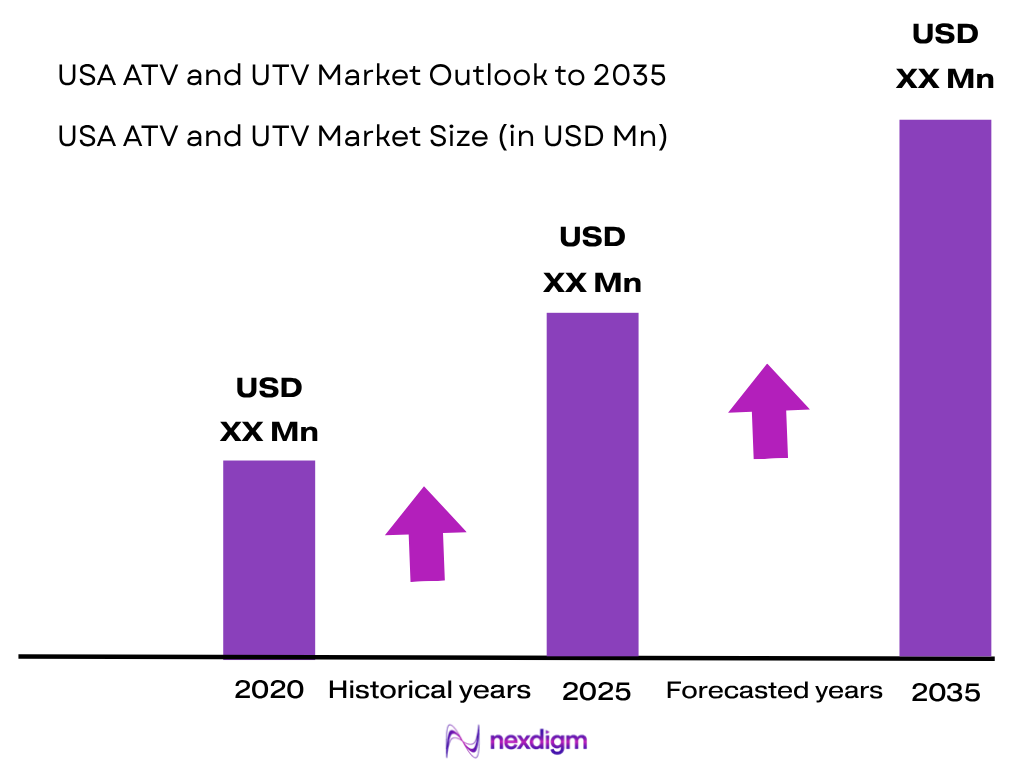
The USA ATV and UTV market is valued at ~USD XX billion in 2024, based on historical industry analysis, supported by strong demand from recreational off-roading, agriculture, hunting, forestry, ranching, military applications, and utility operations. The market includes All-Terrain Vehicles (ATVs) and Utility Terrain Vehicles (UTVs), with UTVs gaining stronger adoption due to higher passenger capacity, cargo capability, and operational flexibility. Industry estimates indicate North America recorded approximately 805,000 off-road vehicle retail sales in 2024, including around 240,000 ATVs and 565,000 side-by-side vehicles, reflecting continued consumer and commercial demand.
The USA ATV and UTV market is concentrated in states with extensive off-road trail infrastructure, agricultural activity, large private lands, and recreational tourism ecosystems. States including Texas, California, Florida, Arizona, Colorado, and Michigan represent major demand centers due to their large farming communities, hunting activities, desert landscapes, and established off-highway vehicle parks. The market benefits from strong outdoor recreation participation, with UTVs increasingly used across farms, ranches, construction sites, and adventure tourism locations. The availability of dedicated trail networks and recreational areas continues to support regional adoption.
Market Segmentation
By Vehicle Type
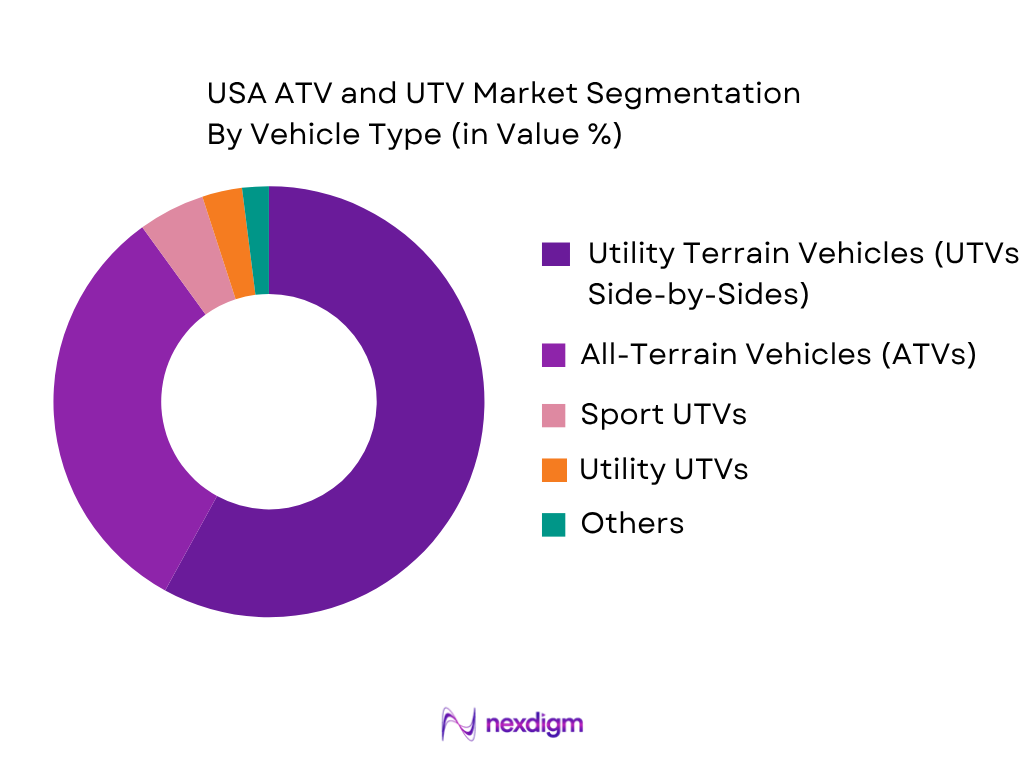
The USA ATV and UTV market is segmented by vehicle type into Utility Terrain Vehicles (UTVs), All-Terrain Vehicles (ATVs), sport UTVs, utility UTVs, and youth ATVs. UTVs represent the dominant segment, supported by their broader application across recreational and commercial activities. Unlike traditional ATVs designed primarily for single-rider operations, UTVs provide multi-passenger seating, larger cargo beds, improved safety structures, and higher suitability for agricultural, industrial, and outdoor applications. Demand from farmers, ranchers, property owners, and recreational users has accelerated UTV adoption. In 2024, North American side-by-side vehicle retail sales reached approximately 565,000 units, exceeding ATV sales of around 240,000 units, demonstrating stronger consumer preference toward UTV platforms.
By Application
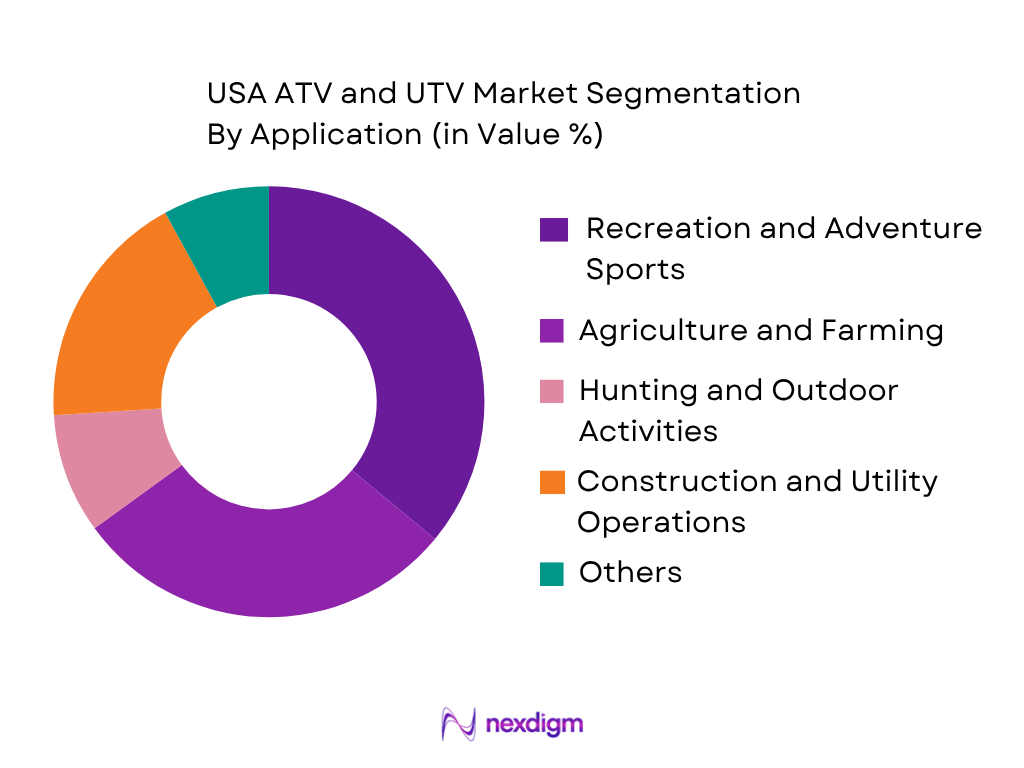
The USA ATV and UTV market is segmented by application into recreation, agriculture, hunting, construction, utility operations, and military usage. Recreation and adventure sports represent the leading application segment due to the country’s strong off-road culture, extensive trail networks, and increasing participation in outdoor activities such as camping, trail riding, and motorsports. Manufacturers have expanded product portfolios with performance-focused models featuring advanced suspension systems, enhanced safety technologies, and higher engine capacities. At the same time, agricultural and utility applications remain significant because ATVs and UTVs provide efficient mobility across farms, ranches, and large properties. The combination of recreational lifestyle demand and practical utility requirements supports sustained market expansion.
Competitive Landscape
The USA ATV and UTV market is highly competitive and dominated by established powersports manufacturers with extensive dealer networks, diversified product portfolios, and strong recreational as well as commercial applications. Polaris Industries, BRP (Can-Am), Honda, Yamaha, and Kawasaki remain among the most influential players due to their strong presence across utility, sport, agricultural, and adventure segments. UTV demand is increasingly driven by side-by-side adoption, while manufacturers are focusing on electric off-road vehicles, connected technologies, and specialized fleet solutions.
| Company | Establishment Year | Headquarters | Major Product Portfolio | ATV/UTV Product Lines | Dealer Network Strength | Electric Vehicle Development | Commercial Application Focus |
| Polaris Inc. | 1954 | Medina, Minnesota, USA | ~ | ~ | ~ | ~ | ~ |
| BRP Inc. (Can-Am) | 1942 | Valcourt, Quebec, Canada | ~ | ~ | ~ | ~ | ~ |
| American Honda Motor Co. | 1946 | Torrance, California, USA | ~ | ~ | ~ | ~ | ~ |
| Yamaha Motor Corporation | 1955 | Iwata, Japan | ~ | ~ | ~ | ~ | ~ |
| Kawasaki Motors Corp. | 1896 | Minato, Tokyo, Japan | ~ | ~ | ~ | ~ | ~ |
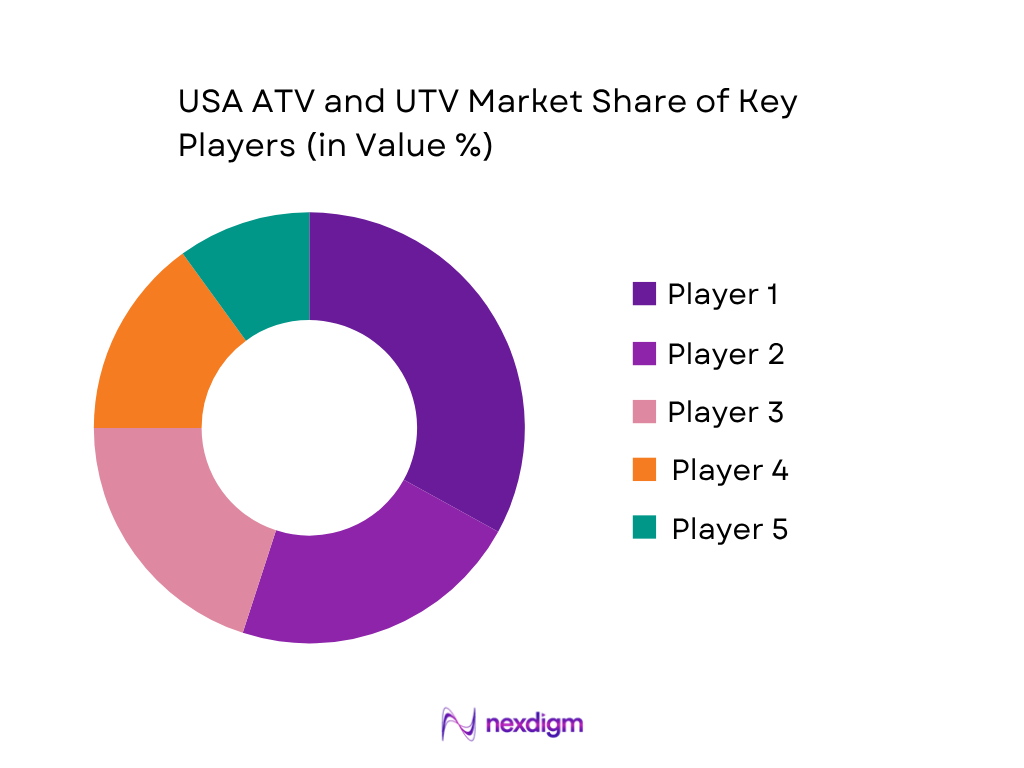
USA ATV and UTV Market Analysis
Growth Drivers
Expansion of Recreational Off-Road Activities
The expansion of recreational off-road activities remains a major growth driver for the USA ATV and UTV market, supported by increasing participation in trail riding, adventure sports, hunting, and outdoor leisure activities. The United States has more than 193 million acres of land managed by the Bureau of Land Management, providing extensive recreational areas suitable for off-highway vehicle usage. The U.S. Forest Service manages approximately 193 million acres of national forests and grasslands, where designated motorized trails support ATV and UTV recreation. Rising interest in outdoor recreation has encouraged consumers to purchase higher-performance sport ATVs and UTVs equipped with advanced suspension systems, connectivity features, and safety technologies. Government-supported trail development programs and increasing investment in recreational infrastructure have improved accessibility for off-road enthusiasts. UTVs, particularly side-by-side vehicles, are gaining popularity because they offer higher passenger capacity, cargo flexibility, and improved safety compared with traditional ATVs. The growth of organized off-road events, recreational parks, and adventure tourism destinations across states such as California, Utah, Colorado, Arizona, and Texas continues to strengthen demand for recreational vehicles.
Rising Agricultural Mechanization
Agricultural mechanization is significantly supporting demand for utility ATVs and UTVs across the USA, as farmers and ranch operators increasingly adopt compact off-road vehicles for transportation, crop monitoring, livestock management, and field operations. According to the United States Department of Agriculture, the country had approximately 1.9 million farms operating across more than 880 million acres of agricultural land, creating substantial demand for flexible utility equipment. UTVs are increasingly preferred by agricultural users because they provide higher payload capacity, improved terrain capability, and compatibility with attachments such as sprayers, trailers, and cargo systems. Large farming states including Texas, California, Iowa, Nebraska, and Kansas represent important demand centers due to extensive agricultural activity and large farm operations. Modern utility vehicles are also being integrated with digital technologies, including GPS navigation, electronic controls, and remote monitoring systems, improving operational efficiency. Rising labor challenges in agriculture are encouraging farmers to adopt multipurpose equipment that reduces manual workload. As precision agriculture expands, ATV and UTV manufacturers are increasingly developing specialized vehicles designed for farm automation and productivity improvement.
Market Challenges
High Vehicle Acquisition Cost
High vehicle acquisition costs remain a significant challenge for the USA ATV and UTV market, particularly for premium side-by-side vehicles equipped with advanced technology, high-performance engines, and specialized utility features. Modern UTVs increasingly include electronic suspension systems, integrated infotainment, safety cages, advanced drivetrains, and connectivity solutions, increasing manufacturing complexity and retail prices. Rising material costs, supply chain expenses, and advanced component requirements have affected affordability for some consumer segments. Utility-focused buyers such as farmers, small businesses, and recreational users often evaluate ATV and UTV purchases against alternative equipment investments. Financing availability and interest rate conditions also influence consumer purchasing decisions for recreational vehicles. Additionally, premium sport UTV models designed for extreme off-road applications require expensive components such as reinforced chassis systems and high-output engines. Manufacturers are responding by introducing entry-level models, financing programs, and simplified vehicle configurations to expand customer accessibility. However, maintaining profitability while offering competitively priced products remains a key challenge for market participants.
Regulatory Restrictions on Off-Road Usage
Regulatory restrictions related to off-road vehicle usage represent a challenge for ATV and UTV market expansion in the USA. Federal, state, and local authorities regulate trail access, emissions, noise levels, safety requirements, and environmental impact associated with off-highway vehicles. The Bureau of Land Management manages millions of acres where motorized recreation is permitted only in designated areas, requiring operators to comply with route restrictions and land-use regulations. Several states have introduced stricter environmental rules to protect sensitive ecosystems, wildlife habitats, and public lands, limiting available riding areas. Safety regulations also influence product development, with manufacturers required to improve rollover protection structures, lighting systems, braking performance, and operator safety features. Restrictions on recreational trail expansion can reduce consumer access and limit growth in certain regions. Additionally, increasing focus on reducing emissions from recreational vehicles is accelerating pressure on manufacturers to develop cleaner propulsion technologies. Companies are investing in electric ATV and UTV platforms to address environmental requirements while maintaining performance standards.
Market Opportunities
Electric ATV and UTV Development
Electric ATV and UTV development represents a major future opportunity as manufacturers respond to increasing demand for low-emission off-road vehicles. Advances in battery technology, electric motors, and power management systems are enabling manufacturers to introduce quieter and more efficient alternatives for recreational and commercial applications. Electric vehicles are particularly attractive for farms, resorts, conservation areas, and industrial facilities where reduced noise and emissions provide operational advantages. Companies including Polaris and other major powersports manufacturers are investing in battery-powered platforms designed for utility and recreational applications. The expansion of renewable energy adoption and government emphasis on reducing transportation emissions are supporting the transition toward electric mobility solutions. Electric UTVs are expected to gain adoption in environments where charging infrastructure can be managed, such as private farms, commercial properties, and controlled recreational areas. Improvements in battery range, charging speed, and durability will determine broader market acceptance. The development of electric off-road vehicles also creates opportunities for component suppliers specializing in batteries, motors, power electronics, and vehicle control systems.
Autonomous Utility Vehicles
Autonomous utility vehicles represent an emerging opportunity for the USA ATV and UTV market, particularly across agriculture, industrial operations, and remote applications. The integration of sensors, artificial intelligence, GPS systems, and automated driving technologies can improve productivity while reducing dependence on manual operators. Agriculture is a key application area, as farms increasingly adopt precision technologies for crop monitoring, spraying, and field management. The United States Department of Agriculture has highlighted increasing adoption of digital agricultural technologies, including automation and precision farming solutions, across farming operations. Autonomous UTV platforms can support tasks such as material transportation, inspection activities, and repetitive field operations. Industrial sectors including mining, forestry, and facility management may also benefit from autonomous off-road vehicles operating in challenging environments. Manufacturers are increasingly exploring connected vehicle architectures that allow remote monitoring, route planning, and fleet management. As autonomous technology becomes more reliable and cost-effective, ATV and UTV manufacturers have opportunities to develop specialized vehicles for commercial users seeking higher efficiency and reduced operational complexity.
Future Outlook
The USA ATV and UTV market is expected to experience continued transformation driven by electrification, increasing adoption of utility side-by-sides, and rising demand for connected off-road vehicles. The expansion of agricultural mechanization, recreational trail tourism, outdoor adventure activities, and commercial fleet usage will support long-term demand. Manufacturers are increasingly investing in battery-powered platforms, autonomous assistance technologies, digital connectivity, and advanced safety systems to address evolving consumer and commercial requirements.
Future growth will also be supported by increasing adoption of UTVs in agriculture, construction, forestry, and government applications. The market is expected to witness stronger differentiation between recreational performance models and utility-focused vehicles, with manufacturers expanding specialized product offerings. Electric UTV adoption is likely to accelerate as battery technology improves and users seek lower-emission alternatives for farms, resorts, conservation operations, and industrial sites.
Major Players
- Polaris Inc.
- BRP Inc. (Can-Am)
- American Honda Motor Co.
- Yamaha Motor Corporation
- Kawasaki Motors Corp.
- Textron Inc. (Arctic Cat / Tracker Off Road)
- Suzuki Motor Corporation
- Deere & Company (John Deere Gator)
- Kubota Corporation
- CFMOTO Powersports
- Mahindra Automotive North America
- Segway Powersports
- Hisun Motors Corporation
- Club Car LLC
- Toro Company
Key Target Audience
- ATV and UTV manufacturers and original equipment manufacturers
- Off-road vehicle component suppliers and powertrain manufacturers
- Agricultural equipment companies and farm machinery distributors
- Construction, forestry, and industrial fleet operators
- Defense and government agencies (U.S. Department of Defense, U.S. Forest Service, Bureau of Land Management)
- Investments and venture capitalist firms (Automotive mobility investors, recreational vehicle technology investors)
- Powersports dealership networks and aftermarket service providers
- Electric mobility technology companies and battery solution providers
Research Methodology
Step 1: Identification of Key Variables
The initial phase involves developing an ecosystem map covering ATV and UTV manufacturers, component suppliers, distributors, fleet operators, recreational users, and regulatory stakeholders. Secondary research is conducted through industry databases, government transportation records, company filings, and product catalogs to identify major market variables influencing demand and supply dynamics.
Step 2: Market Analysis and Construction
Historical market information is analyzed by evaluating vehicle registrations, production trends, dealership activity, application adoption, and product category performance. The analysis includes assessment of ATV, utility UTV, sport UTV, electric off-road vehicles, and commercial fleet segments to establish market structure.
Step 3: Hypothesis Validation and Expert Consultation
Market assumptions are validated through discussions with industry participants, including vehicle manufacturers, dealers, component suppliers, and fleet operators. These interactions provide insights into consumer preferences, technology adoption, procurement patterns, and operational challenges affecting the ATV and UTV ecosystem.
Step 4: Research Synthesis and Final Output
The final stage combines primary and secondary research findings to create a comprehensive market assessment. Data points are triangulated across manufacturers, regulatory sources, and industry stakeholders to provide validated insights on market trends, competitive positioning, and future opportunities.

- Executive Summary
- Research Methodology (Market Definition and Scope, Research Framework, Market Sizing Methodology, Demand-Side Assessment, Supply-Side Assessment, Primary Industry Interviews, Secondary Data Analysis, Bottom-Up Market Estimation, Top-Down Validation, Forecasting Model, Data Triangulation, Research Limitations)

- Definition and Scope of ATV and UTV Market
- Evolution of Recreational and Utility Off-Road Vehicle Industry
- Historical Development Timeline of ATV and UTV Adoption
- Major Industry Milestones and Product Innovation Evolution
- ATV and UTV Ecosystem Analysis
- Off-Road Vehicle Value Chain Analysis
- Manufacturing and Component Supply Chain Analysis
- Dealer Network and Distribution Ecosystem Analysis

- Growth Drivers (Expansion of Recreational Off-Road Activities, Rising Agricultural Mechanization, Increasing Demand for Utility Vehicles, Growth of Outdoor Tourism, UTV Adoption in Industrial Applications, Electric Off-Road Vehicle Development)
- Market Challenges (High Vehicle Acquisition Cost, Regulatory Restrictions on Off-Road Usage, Seasonal Demand Fluctuations, Maintenance and Repair Requirements, Safety Concerns and Accident Regulations, Environmental Restrictions on Trail Access)
- Market Opportunities (Electric ATV and UTV Development, Autonomous Utility Vehicles, Expansion of Rental Fleets, Agriculture Automation Applications, Connected Off-Road Vehicle Technologies, Premium Performance Vehicle Demand)
- Market Trends (Electric Powertrain Integration, Advanced Suspension Systems, Connected Vehicle Features, GPS and Telematics Adoption, High-Performance UTV Growth, Customization and Aftermarket Accessories Expansion)
- Government Regulations (Consumer Product Safety Commission ATV Safety Standards, Environmental Protection Agency Emission Regulations, Bureau of Land Management Off-Road Access Regulations, State-Level Trail Usage Regulations, Recreational Vehicle Registration Requirements)
- SWOT Analysis
- Porter’s Five Forces Analysis
- PESTLE Analysis

- By Market Value (2020-2025)
- By Unit Sales Volume (2020-2025)
- By Average Selling Price (2020-2025)
- By New Vehicle Sales (2020-2025)
- By Replacement and Aftermarket Demand (2020-2025)

- By Vehicle Type (In Value %)
All-Terrain Vehicles (ATVs)
Utility ATVs
Sport ATVs
Youth ATVs
Recreational ATVs
Side-by-Side Vehicles (UTVs)
Utility UTVs
Sport UTVs
Recreational UTVs
Performance UTVs - By Engine Displacement (In Value %)
Below 400cc
400cc-700cc
700cc-1,000cc
Above 1,000cc - By Application (In Value %)
Agriculture and Farming
Hunting and Outdoor Recreation
Sports and Racing
Construction and Industrial Utility
Military and Defense Applications
Search and Rescue Operations - By Fuel Type (In Value %)
Gasoline-Powered ATV and UTVs
Electric ATV and UTVs
Hybrid ATV and UTVs - By Drive Configuration (In Value %)
Two-Wheel Drive
Four-Wheel Drive
Selectable Drive Systems - By Distribution Channel (In Value %)
Authorized Dealerships
Independent Powersports Dealers
Online Retail Platforms
Direct Manufacturer Sales
Rental and Fleet Operators

- Market Share Analysis of Major Players (By Vehicle Type, Engine Category, Application Segment, Distribution Channel, Regional Presence)
- Cross Comparison Parameters (Product Portfolio Breadth, ATV and UTV Model Range, Engine Technology Portfolio, Electric Vehicle Development Capability, Dealer Network Coverage, Manufacturing Capacity, Aftermarket Accessory Ecosystem, Racing and Brand Sponsorship Presence)
- Detailed Profiles of Major Companies
Major ATV and UTV Manufacturers
Polaris Inc.
Yamaha Motor Co., Ltd.
Honda Motor Co., Ltd.
Kawasaki Heavy Industries
BRP Inc.
Textron Inc.
Suzuki Motor Corporation
CFMOTO
Segway Powersports
Can-Am
Arctic Cat
Hisun Motors
KYMCO
Massimo Motor Sports
Intimidator UTV

- Consumer Demographic Assessment
- Purchase Behavior Analysis
- Application-Based Consumer Demand Analysis
- Consumer Spending Analysis
- Product Preference Assessment
- Brand Loyalty Assessment
- Premium vs Entry-Level Vehicle Demand Analysis

- By Market Value (2026-2035)
- By Unit Sales Volume (2026-2035)
- By Average Selling Price (2026-2035)
- By New Vehicle Sales (2026-2035)
- By Replacement and Aftermarket Demand (2026-2035)


 Request a Sample
 Ask for Customization
 Get a Quote
 Enquire Now