

 Download PDF
 Download PDF
Market Overview
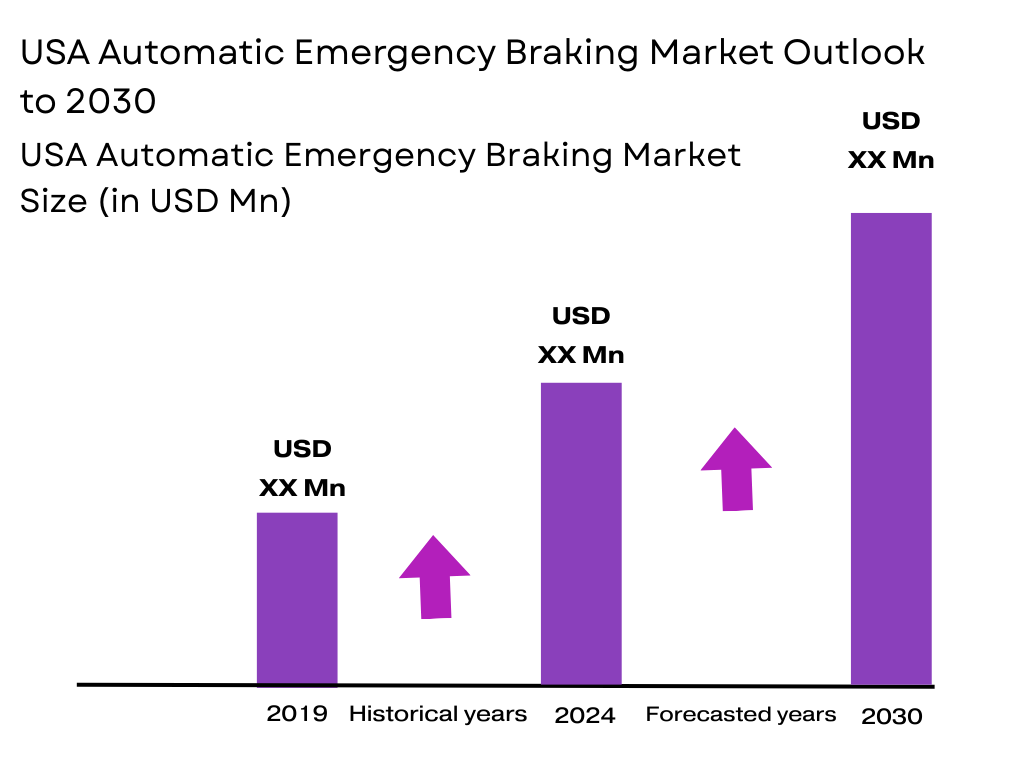
The USA Automatic Emergency Braking market is expected to see significant growth due to advancements in automotive safety technologies and an increasing demand for driver assistance systems. Based on a recent historical assessment, the market size is driven by the growing adoption of safety regulations and consumer preference for vehicles equipped with autonomous safety features. The market size for this segment in the USA is projected at $1.2 billion. The rise in traffic accidents and government mandates for enhanced vehicle safety are key drivers for market expansion.
The dominant cities in the USA for Automatic Emergency Braking systems include major metropolitan areas like Los Angeles, New York, and Detroit, where the automotive industry is concentrated. Detroit, being the hub for automotive manufacturing, drives much of the innovation and integration of such technologies in new vehicles. These cities see a high demand for advanced safety systems due to the dense population, high traffic volume, and increasing awareness around safety. The regulatory frameworks in these regions also support the growth of this market, facilitating a surge in automotive technological advancements.
Market Segmentation
By Product Type
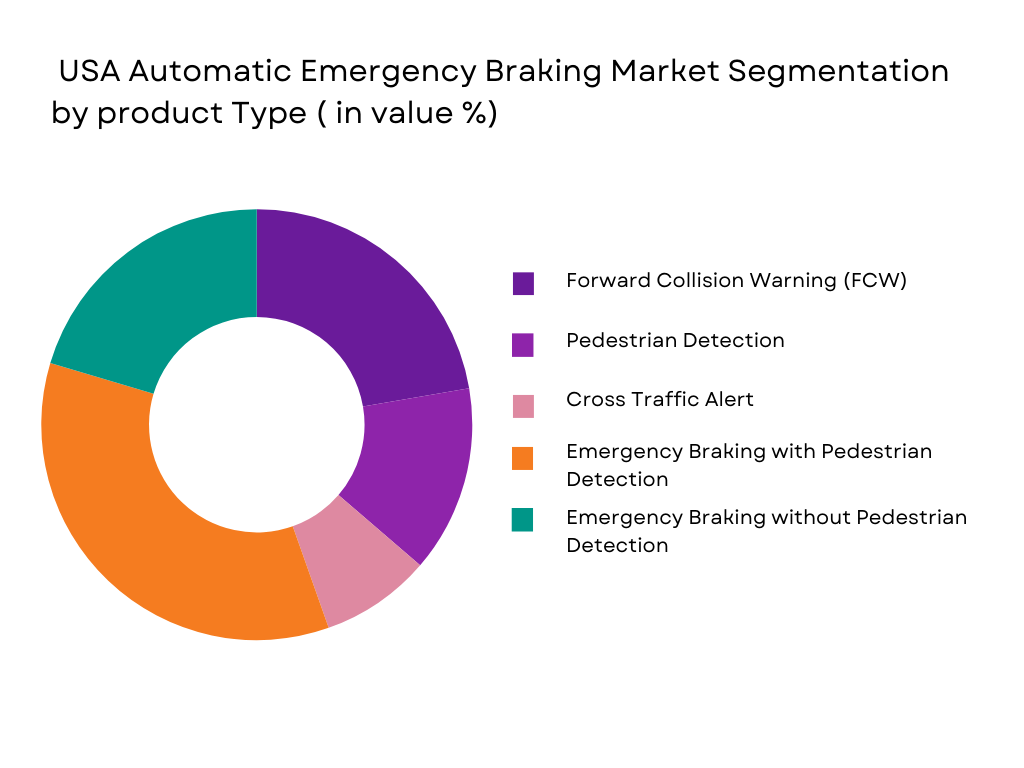
USA Automatic Emergency Braking market is segmented by product type into Forward Collision Warning (FCW), Pedestrian Detection, Cross Traffic Alert, Emergency Braking with Pedestrian Detection, and Emergency Braking without Pedestrian Detection. Recently, Forward Collision Warning has a dominant market share due to its ability to offer early detection of potential accidents, making it a preferred choice in vehicle safety systems. The rising demand for vehicles with proactive safety features, driven by both regulatory standards and consumer preference, has significantly contributed to the FCW segment’s dominance.
By End-Use Application
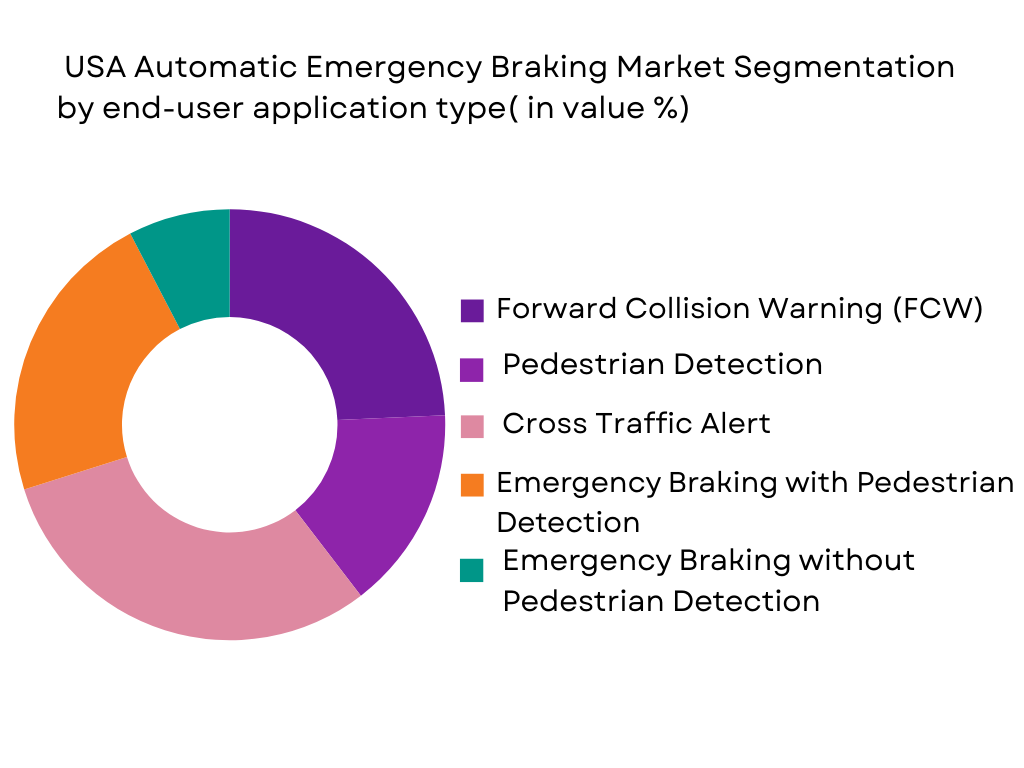
USA Automatic Emergency Braking market is segmented by end-use application into Passenger Cars, Commercial Vehicles, and Electric Vehicles (EVs). The Passenger Cars segment holds the dominant share due to the widespread demand for safety features in private automobiles. As consumers become more safety-conscious and regulations become stricter, manufacturers are increasingly integrating automatic emergency braking in their passenger vehicle models to meet the safety standards.
Competitive Landscape
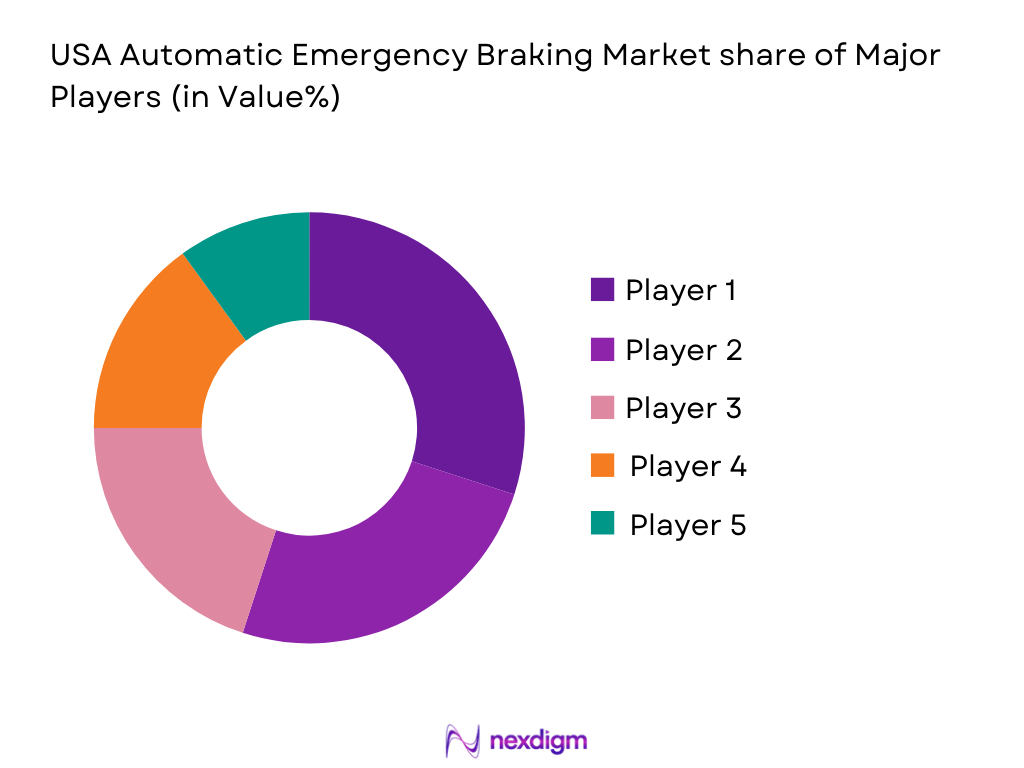
The competitive landscape of the USA Automatic Emergency Braking market is characterized by significant consolidation, with large players dominating the market. Companies are focusing on technological innovations and strategic collaborations to maintain a competitive edge. Major players in the market influence product development and drive the integration of new safety features in vehicles. These companies are also working to meet regulatory standards and address growing consumer demand for safer vehicles.
| Company Name | Establishment Year | Headquarters | Technology Focus | Market Reach | Key Products | Revenue | Innovation in Vehicle Safety |
| Bosch | 1886 | Gerlingen, Germany | – | – | – | – | – |
| Continental | 1871 | Hanover, Germany | – | – | – | – | – |
| Delphi Technologies | 1994 | Troy, USA | – | – | – | – | – |
| ZF Friedrichshafen | 1915 | Friedrichshafen, Germany | – | – | – | – | – |
| Aisin Seiki | 1949 | Kariya, Japan | – | – | – | – | – |
USA Automatic Emergency Braking Market Analysis
Growth Drivers
Government Regulations
Stringent government regulations in the USA regarding vehicle safety have been a major driver of the Automatic Emergency Braking market. In recent years, regulations such as the National Highway Traffic Safety Administration (NHTSA) mandate for all new vehicles to be equipped with AEB systems have spurred widespread adoption. This has encouraged both OEMs and tier-1 suppliers to integrate AEB as a standard feature in vehicles. Additionally, evolving insurance guidelines and increased incentives for vehicle safety systems are prompting manufacturers to develop advanced braking technologies that ensure compliance with safety standards, contributing to the market’s growth. With an ever-increasing focus on road safety, these regulations are expected to continue driving demand for automatic emergency braking systems across various vehicle categories, especially in the passenger car segment.
Consumer Demand for Safety Features
Another significant growth driver is the rising consumer demand for advanced safety features in vehicles. As consumers become more aware of road safety and the benefits of features like AEB, there is a growing inclination toward vehicles that offer these technologies. Factors such as increased traffic congestion, concerns about road accidents, and high insurance premiums have raised consumer awareness regarding vehicle safety systems. In addition, consumers are more willing to invest in vehicles equipped with advanced driver-assistance systems (ADAS), including AEB, as a proactive approach to accident prevention. This demand is particularly noticeable among affluent consumers and those purchasing family vehicles, where safety is a key priority. Consequently, automakers are prioritizing the integration of automatic emergency braking systems into their models to meet market expectations.
Market Challenges
High Cost of Implementation
The high cost of integrating automatic emergency braking systems into vehicles remains one of the significant challenges for the market. While AEB systems are becoming more common in mid- to high-end vehicle models, their integration into low-cost and budget models presents cost-related difficulties. The advanced sensors, radar systems, and software required for AEB technologies significantly increase vehicle manufacturing costs. This price hike can deter automakers from offering AEB as a standard feature in entry-level cars, thus limiting the broader adoption of AEB systems in the mass market. Additionally, the cost of research, development, and testing of these systems is substantial, further complicating cost-effective implementation, especially for smaller manufacturers who lack the resources of major industry players.
Integration Complexity with Legacy Systems
Another challenge lies in the integration of Automatic Emergency Braking systems with legacy vehicle platforms. Many older vehicles are not built to accommodate the advanced sensors and software required for AEB functionality, making retrofitting these systems complex and costly. This issue is particularly challenging for fleet operators and aftermarket service providers, who are looking to upgrade existing vehicle fleets with new safety technologies. Additionally, different automotive manufacturers use varying vehicle architectures and proprietary technologies, making standardization of AEB systems across different models difficult. These integration issues not only increase costs but also delay the widespread deployment of AEB across the vehicle fleet.
Opportunities
Advancements in Sensor Technologies
One of the key opportunities for the USA Automatic Emergency Braking market lies in advancements in sensor and radar technologies. With continued innovation in sensors, such as lidar, radar, and ultrasonic sensors, the effectiveness of AEB systems in detecting pedestrians, cyclists, and other vehicles in various environmental conditions is expected to improve. These advancements will increase the accuracy and reliability of AEB systems, making them more effective in preventing accidents. Additionally, the integration of artificial intelligence (AI) in AEB systems offers further opportunities for customization and improved performance. As technology advances, the cost of sensors is also expected to decrease, making it more feasible to integrate AEB into lower-priced vehicles, thus expanding its reach in the market.
Growth in Electric Vehicle (EV) Adoption
The growing adoption of electric vehicles (EVs) presents a unique opportunity for the Automatic Emergency Braking market. EVs are typically equipped with advanced safety features, including AEB, as part of their integration with other driver assistance systems. As the demand for EVs continues to rise, the market for AEB systems is also expected to grow. Additionally, the growing focus on autonomous vehicles and their integration with AEB systems provides another opportunity for innovation and expansion. With EV manufacturers prioritizing safety features, AEB is becoming an integral part of EVs, thereby driving market growth. The shift toward EVs offers a new avenue for manufacturers to target safety-conscious consumers while aligning with global sustainability efforts.
Future Outlook
The future of the USA Automatic Emergency Braking market looks promising, with the continuous integration of advanced safety technologies into passenger cars, commercial vehicles, and electric vehicles. Over the next five years, regulatory support is expected to strengthen, creating a favorable environment for the widespread adoption of AEB systems. Technological advancements, particularly in sensor technologies and AI, will drive the development of more effective and cost-efficient AEB systems. Additionally, consumer demand for safer vehicles, combined with ongoing advancements in electric vehicles, is expected to propel the market’s growth. The USA’s increasing focus on reducing road accidents and enhancing vehicle safety further supports the positive market trajectory.
Major Players
- Bosch
- Continental
- Delphi Technologies
- ZF Friedrichshafen
- Aisin Seiki
- Denso Corporation
- Mobileye
- Hitachi Automotive Systems
- Autoliv
- Valeo
- Bendix Commercial Vehicle Systems
- NXP Semiconductors
- TRW Automotive
- Mitsubishi Electric
- Panasonic Automotive
Key Target Audience
- Investments and venture capitalist firms
- Government and regulatory bodies
- OEMs (Original Equipment Manufacturers)
- Tier-1 automotive suppliers
- Automotive parts manufacturers
- Aftermarket service providers
- Insurance companies
- Fleet operators
Research Methodology
Step 1: Identification of Key Variables
The key variables influencing the market, such as regulations, technological advancements, and consumer behavior, are identified and analyzed to form a basis for market estimation.
Step 2: Market Analysis and Construction
Comprehensive data analysis is conducted on current and historical market trends to build a clear picture of the market’s structure, size, and future potential.
Step 3: Hypothesis Validation and Expert Consultation
Insights and data from industry experts, manufacturers, and government bodies are gathered to validate hypotheses and refine market projections.
Step 4: Research Synthesis and Final Output
The final report synthesizes all data and insights to produce a comprehensive overview of the market, outlining growth drivers, challenges, and future trends.

- Executive Summary
- Research Methodology (Definitions, Scope, Industry Assumptions, Market Sizing Approach, Primary & Secondary Research Framework, Data Collection & Verification Protocol, Analytic Models & Forecast Methodology, Limitations & Research Validity Checks)

- Market Definition and Scope
- Value Chain & Stakeholder Ecosystem
- Regulatory / Certification Landscape
- Sector Dynamics Affecting Demand
- Strategic Initiatives & Infrastructure Growth

- USA Automatic Emergency Braking Market Dynamics
- Growth Drivers
Government Regulations
Consumer Demand for Vehicle Safety Features
Technological Advancements in Sensors - Market Challenges
High Cost of Implementation
Integration Complexity with Legacy Systems
Consumer Perception and Adoption Barriers - Market Opportunities
Advancements in Sensor Technologies
Growth in Electric Vehicle (EV) Adoption
Increasing Focus on Autonomous Driving - Trends
Integration of AI in AEB Systems
Shift Towards Autonomous Vehicles
Development of Multi-Modal AEB Systems - Government Regulations
Enhanced Safety Standards
Mandatory AEB in New Vehicles
State-Level Regulations and Incentives

- By Market Value 2019-2025
- By Installed Units 2019-2025
- By Average System Price 2019-2025
- By System Complexity Tier 2019-2025

- By System Type (In Value%)
Forward Collision Warning (FCW)
Pedestrian Detection
Cross Traffic Alert
Emergency Braking with Pedestrian Detection
Emergency Braking without Pedestrian Detection - By Platform Type (In Value%)
Passenger Cars
Commercial Vehicles
Electric Vehicles (EVs)
Luxury Vehicles
Light Trucks - By Fitment Type (In Value%)
OEM (Original Equipment Manufacturer)
Aftermarket
Integrated Fitment
Standalone Systems
Advanced Driver Assistance Systems (ADAS) - By EndUser Segment (In Value%)
Private Vehicle Owners
Fleet Operators
OEMs
Automotive Suppliers
Insurance Companies - By Procurement Channel (In Value%)
Direct Sales
Distributors
Online Platforms
Automotive Retailers
OEM Partnerships

- Market Share Analysis
- Cross Comparison Parameters (Forward Collision Warning, Pedestrian Detection, Cross Traffic Alert, Emergency Braking, System Complexity, Technology Integration)
- SWOT Analysis of Key Competitors
- Pricing & Procurement Analysis
- Porter’s Five Forces
- Key Players
Bosch
Continental
Delphi Technologies
ZF Friedrichshafen
Aisin Seiki
Denso Corporation
Mobileye
Hitachi Automotive Systems
Autoliv
Valeo
Bendix Commercial Vehicle Systems
NXP Semiconductors
TRW Automotive
Mitsubishi Electric
Panasonic Automotive

- Private Vehicle Owners’ Demand for Safety
- Fleet Operators’ Investment in AEB
- OEM Requirements for AEB Integration
- Insurance Companies’ Role in Promoting AEB

- Forecast Market Value 2026-2030
- Forecast Installed Units 2026-2030
- Price Forecast by System Tier 2026-2030
- Future Demand by Platform 2026-2030


 Request a Sample
 Ask for Customization
 Get a Quote
 Enquire Now