
 Download PDF
 Download PDF
Market Overview
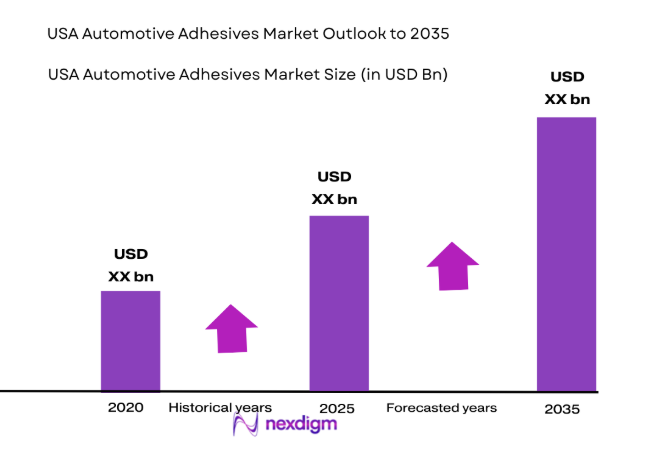
The USA automotive adhesives market size is valued at USD ~ billion, driven by the growing demand for lightweight vehicles and the increasing adoption of electric vehicle (EV) technology. The market is influenced by advancements in adhesive technologies that improve vehicle performance, enhance safety, and reduce overall vehicle weight. The growing trend toward sustainability and regulatory pressure to reduce emissions has also spurred the demand for adhesives in automotive manufacturing. Additionally, the rise in consumer demand for better fuel efficiency and longer-lasting vehicles is contributing to the market’s growth.
Key regions like California and Michigan are dominating the USA automotive adhesives market due to their established automotive manufacturing bases and high demand for electric and hybrid vehicles. California’s stringent emissions regulations and Michigan’s pivotal role in the U.S. automotive industry drive significant demand for advanced adhesives in vehicle production. The automotive sector in these states benefits from strong infrastructure, a skilled workforce, and a high concentration of automotive manufacturers and suppliers, making them critical areas for adhesive usage in vehicle manufacturing.
Market Segmentation
By Product Type
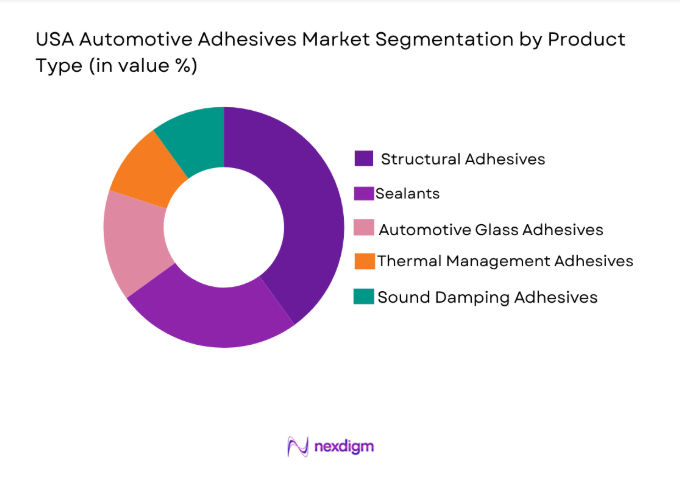
The USA automotive adhesives market is segmented by product type into structural adhesives, sealants, automotive glass adhesives, thermal management adhesives, and sound damping adhesives. Recently, structural adhesives have gained a dominant market share due to their essential role in providing strength, flexibility, and weight reduction in automotive components. These adhesives are widely used in manufacturing lightweight vehicles and are crucial for bonding materials such as metal, plastics, and composites, contributing to their increased use in EV and high-performance vehicle production.
By Platform Type
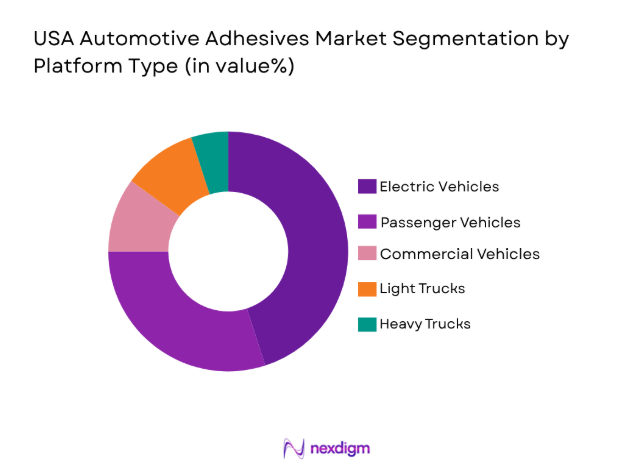
The market is segmented by platform type into passenger vehicles, commercial vehicles, electric vehicles, light trucks, and heavy trucks. Electric vehicles (EVs) have emerged as the dominant sub-segment, primarily driven by the push for sustainability and reduced emissions. The demand for EVs is influencing the need for specialized adhesives for battery packaging, electric systems, and lightweight structures. Furthermore, the increasing installation of electric vehicle charging infrastructure and government incentives are making EVs the preferred platform for automotive manufacturers.
Competitive Landscape
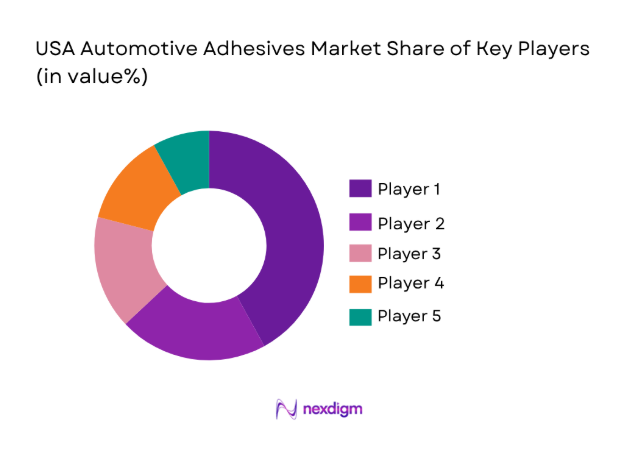
The competitive landscape of the USA automotive adhesives market is highly concentrated with key players dominating the market. Major companies are focusing on mergers and acquisitions to strengthen their product portfolio and expand market presence. The increasing trend of sustainability is influencing these companies to develop eco-friendly and innovative adhesive solutions. Furthermore, the influence of major players is critical in driving technological advancements and improving the efficiency of automotive adhesives, catering to evolving demands for electric and lightweight vehicles.
| Company Name | Establishment Year | Headquarters | Technology Focus | Market Reach | Key Products | Revenue | Technology Development Focus |
| 3M | 1902 | Minnesota, USA | ~ | ~ | ~ | ~ | ~ |
| Henkel AG | 1876 | Düsseldorf, Germany | ~ | ~ | ~ | ~ | ~ |
| Dow Inc. | 1897 | Michigan, USA | ~ | ~ | ~ | ~ | ~ |
| BASF SE | 1865 | Ludwigshafen, Germany | ~ | ~ | ~ | ~ | ~ |
| H.B. Fuller | 1887 | Minnesota, USA | ~ | ~ | ~ | ~ | ~ |
USA Automotive Adhesives Market Analysis
Growth Drivers
The Increasing Adoption of Electric Vehicles (EVs)
The rise in electric vehicle production has become one of the most significant growth drivers in the USA automotive adhesives market. As electric vehicle manufacturers focus on reducing weight, enhancing battery safety, and improving overall vehicle efficiency, adhesives are playing an increasingly critical role in vehicle assembly. The demand for lightweight and durable adhesives used to bond materials such as carbon fiber, aluminum, and plastics is growing. These advanced adhesive technologies are essential for ensuring the structural integrity, strength, and performance of the vehicle while reducing the overall weight, a key factor in improving vehicle range and fuel efficiency. Additionally, government incentives for EV adoption, along with growing consumer preference for environmentally friendly alternatives, continue to drive the demand for electric vehicles. Adhesives that cater specifically to electric vehicle requirements, such as battery pack bonding, thermal management solutions, and lightweight frame assembly, are seeing an increase in demand, which is further propelling the growth of the automotive adhesives market. As automakers accelerate their production of electric vehicles, adhesives will continue to be an essential component in meeting the unique design and performance challenges of EV manufacturing, thereby contributing to the market’s expansion.
Technological Advancements in Adhesive Materials
Another key driver for the growth of the USA automotive adhesives market is the continuous innovation in adhesive technology. Manufacturers are focusing on developing more efficient, durable, and eco-friendly adhesives that can meet the increasingly stringent performance demands of modern vehicles. New adhesive formulations, such as UV-curing, heat-resistant, and solvent-free adhesives, are being introduced to cater to the latest advancements in vehicle construction. These specialized adhesives are crucial for bonding materials that are commonly used in modern vehicles, such as composites, lightweight metals, and high-strength polymers. As automotive manufacturers push for higher performance standards, adhesives play a vital role in ensuring that automotive components are bonded securely and remain durable throughout the vehicle’s lifecycle. Additionally, adhesive manufacturers are focusing on producing eco-friendly adhesives that reduce the environmental impact of automotive production, responding to growing consumer demand for sustainable solutions. As a result, adhesive technology continues to evolve, providing automotive manufacturers with reliable, high-performance bonding solutions, which in turn fuels the overall growth of the automotive adhesives market. The demand for these advanced adhesives will continue to increase, as they help meet the growing need for safety, efficiency, and sustainability in the automotive industry.
Market Challenges
Raw Material Price Volatility
One of the significant challenges faced by the USA automotive adhesives market is the volatility of raw material prices. Adhesive production relies on a variety of chemical ingredients, such as resins, solvents, and additives, which are often subject to price fluctuations due to supply chain disruptions, geopolitical factors, and changes in raw material availability. These price fluctuations can result in increased production costs, which may reduce profit margins for adhesive manufacturers. In addition, raw material shortages, particularly for specialty chemicals used in the production of advanced adhesives, can lead to production delays, supply chain interruptions, and an inability to meet growing consumer demand. As the automotive adhesives market continues to grow, particularly with the increased demand for adhesives in electric vehicles, this challenge becomes more pronounced. Manufacturers will need to find ways to mitigate the impact of raw material price volatility through strategic sourcing, long-term contracts, and innovation in materials science to ensure a steady and cost-effective supply of high-quality adhesives. Addressing these challenges will be crucial for maintaining cost efficiency, sustaining market growth, and meeting the needs of the automotive industry.
Stringent Regulatory Requirements
The automotive adhesives market faces growing challenges due to stringent environmental regulations regarding the chemical products used in vehicle manufacturing. With increasing concerns over volatile organic compound (VOC) emissions, environmental impact, and sustainability, automotive adhesive manufacturers must comply with increasingly strict global and regional regulations. These regulations require manufacturers to develop adhesives that meet both performance and environmental standards, which often necessitates significant investments in research and development. The need to create adhesives that are not only effective in bonding materials but also environmentally friendly is a complex challenge. Additionally, the evolving regulatory landscape can slow down the product development cycle, making it more challenging to bring new adhesive products to market quickly. As automotive manufacturers push for greener vehicles and aim to comply with regulations that limit harmful emissions, the pressure on adhesive suppliers to create more sustainable and safer products intensifies. This challenge requires ongoing innovation and adaptation from adhesive manufacturers, who must navigate the regulatory complexity while maintaining the performance standards required by the automotive industry.
Opportunities
Expansion of Adhesive Applications in Autonomous Vehicles
The rise of autonomous vehicles presents an exciting opportunity for the USA automotive adhesives market. As the automotive industry moves towards self-driving technology, vehicles are being equipped with advanced sensor systems, cameras, and other high-tech components that require secure, durable, and lightweight bonding solutions. Adhesives are increasingly being used to bond lightweight materials such as composites and high-strength plastics that are essential for the design of autonomous vehicles. These vehicles require advanced adhesives for various applications, including sensor and camera bonding, battery enclosures, and structural bonding of high-performance materials. The growth in autonomous vehicles also provides an opportunity for adhesive manufacturers to develop specialized products that meet the unique requirements of autonomous systems, such as resistance to extreme temperatures and long-lasting performance. The demand for advanced adhesive solutions in autonomous vehicles will continue to rise as the technology matures, providing a significant growth opportunity for adhesive manufacturers. As the market for autonomous vehicles expands, adhesives will play a crucial role in supporting the complex assembly and safety requirements of these innovative vehicles, driving further demand for advanced bonding solutions.
Growth in Automotive Aftermarket Services
Another notable opportunity for the USA automotive adhesives market is the expansion of automotive aftermarket services, particularly in vehicle repair and maintenance. The growing vehicle fleet in the USA, along with an increasing focus on vehicle longevity and efficiency, is driving the demand for high-performance adhesives in the automotive aftermarket sector. Adhesives are essential in various repair and replacement applications, such as windshield and body panel repairs, interior component installations, and adhesive bonding for car accessories. The expanding network of automotive repair shops and service centers is creating an increased demand for automotive adhesives that can meet the high standards required in vehicle repairs and upgrades. Additionally, adhesives that provide durable, long-lasting bonds for both interior and exterior components are becoming increasingly popular in the aftermarket segment. As the demand for vehicle repairs and maintenance continues to grow, especially with an aging vehicle fleet, automotive adhesive manufacturers have an excellent opportunity to tap into this expanding segment. Developing specialized adhesive solutions tailored for aftermarket needs will be critical for capturing a larger share of this growing market.
Future Outlook
Over the next five years, the USA automotive adhesives market is expected to witness steady growth, driven by technological advancements and the increasing adoption of electric and autonomous vehicles. Demand for lightweight materials and high-performance adhesives will continue to rise, alongside regulatory initiatives promoting environmental sustainability. Innovations in adhesive technologies, including the use of eco-friendly materials and efficient bonding solutions, will further contribute to market growth. With the automotive industry’s shift towards electric and autonomous vehicles, adhesive manufacturers will focus on developing specialized products to meet the evolving needs of this dynamic sector.
Major Players
- 3M
- Henkel AG
- Dow Inc.
- BASF SE
- H.B. Fuller
- Avery Dennison Corporation
- Sika AG
- LORD Corporation
- Permabond Engineering Adhesives
- Jowat AG
- ITW Performance Polymers
- Master Bond Inc.
- Scapa Group
- Parker Hannifin Corporation
- Freudenberg Group
Key Target Audience
- Investments and venture capitalist firms
- Government and regulatory bodies
- Automotive OEMs
- Adhesive material suppliers
- Automotive manufacturers
- Automotive aftermarket distributors
- Electric vehicle manufacturers
Research Methodology
Step 1: Identification of Key Variables
We identify the key variables that impact the USA automotive adhesives market, such as technology trends, regulatory requirements, and demand patterns.
Step 2: Market Analysis and Construction
We analyze the market through a combination of primary and secondary research, examining market dynamics, competitor activities, and growth drivers.
Step 3: Hypothesis Validation and Expert Consultation
We validate our findings with industry experts to ensure the accuracy and relevance of our hypotheses and market insights.
Step 4: Research Synthesis and Final Output
We synthesize the data into actionable insights and prepare the final market report, ensuring all findings are clearly presented and backed by credible sources.

- Executive Summary
- Research Methodology (Definitions, Scope, Industry Assumptions, Market Sizing Approach, Primary & Secondary Research Framework, Data Collection & Verification Protocol, Analytic Models & Forecast Methodology, Limitations & Research Validity Checks)

- Market Definition and Scope
- Value Chain & Stakeholder Ecosystem
- Regulatory / Certification Landscape
- Sector Dynamics Affecting Demand
- Strategic Initiatives & Infrastructure Growth

- Growth Drivers
Increasing Adoption of Electric Vehicles (EVs)
Technological Advancements in Adhesive Materials
Rising Demand for Lightweight Vehicles - Market Challenges
Raw Material Price Volatility
Stringent Regulatory Requirements
Supply Chain Disruptions - Market Opportunities
Expansion of Adhesive Applications in Autonomous Vehicles
Growth in Automotive Aftermarket Services
Technological Advancements in Bonding Solutions - Trends
Integration of Smart Adhesives
Shift Toward Sustainable Adhesives - Government Regulations
Emissions Standards for Automotive Materials
VOC Regulations for Adhesives
Government Incentives for EV Manufacturing - SWOT Analysis
- Porter’s Five Forces

- By Market Value, 2020-2025
- By Installed Units, 2020-2025
- By Average System Price, 2020-2025
- By System Complexity Tier, 2020-2025

- By System Type (In Value%)
Structural Adhesives
Sealants
Automotive Glass Adhesives
Thermal Management Adhesives
Sound Damping Adhesives - By Platform Type (In Value%)
Passenger Vehicles
Commercial Vehicles
Electric Vehicles
Light Trucks
Heavy Trucks - By Fitment Type (In Value%)
OEM Fitment
Aftermarket Fitment - By End User Segment (In Value%)
OEM Manufacturers
Tier 1 Suppliers
Aftermarket Distributors

- Market Share Analysis
- Cross Comparison Parameters (System Type, Platform Type, Fitment Type, End User Segment, Raw Material Used, Adhesive Technology, Regional Presence)
- SWOT Analysis of Key Competitors
- Pricing & Procurement Analysis
- Key Players
3M
Henkel AG
Dow Inc.
BASF SE
H.B. Fuller
Avery Dennison Corporation
Sika AG
LORD Corporation
Permabond Engineering Adhesives
Jowat AG
ITW Performance Polymers
Master Bond Inc.
Scapa Group
Parker Hannifin Corporation
Freudenberg Group

- OEM Manufacturers’ Increasing Use of Adhesives
- Tier 1 Suppliers’ Focus on Efficiency
- Aftermarket Distributors’ Role in Expanding Market Reach
- Technological Innovations Driving End-User Demand

- Forecast Market Value, 2026-2035
- Forecast Installed Units, 2026-2035
- Price Forecast by System Tier, 2026-2035
- Future Demand by Platform, 2026-2035


 Request a Sample
 Ask for Customization
 Get a Quote
 Enquire Now