

 Download PDF
Market Overview
The USA Automotive Diagnostic Scan Tools Market is valued at approximately ~ USD billion, supported by increasing vehicle complexity, rising electronic system integration, and growing demand for professional automotive repair diagnostics. The market is driven by the expanding vehicle parc in the country, with the United States having more than 280 million registered vehicles, creating continuous demand for maintenance and diagnostic solutions. Increasing adoption of advanced driver assistance systems, electric vehicles, connected vehicle technologies, and software-based vehicle architectures is accelerating the requirement for advanced diagnostic equipment across repair workshops, dealerships, and fleet maintenance operations.
The USA Automotive Diagnostic Scan Tools Market is supported by the country’s mature automotive service ecosystem and concentration of automotive technology hubs. Regions including Michigan, California, Texas, Ohio, and Illinois dominate due to their strong presence of automotive manufacturers, repair networks, fleet operators, and technology providers. Michigan remains a major automotive engineering and manufacturing center due to the presence of OEM headquarters and supplier networks, while California leads in electric vehicle innovation and connected mobility development. Texas and Florida contribute significantly through large vehicle populations, commercial fleet operations, and expanding aftermarket repair networks.
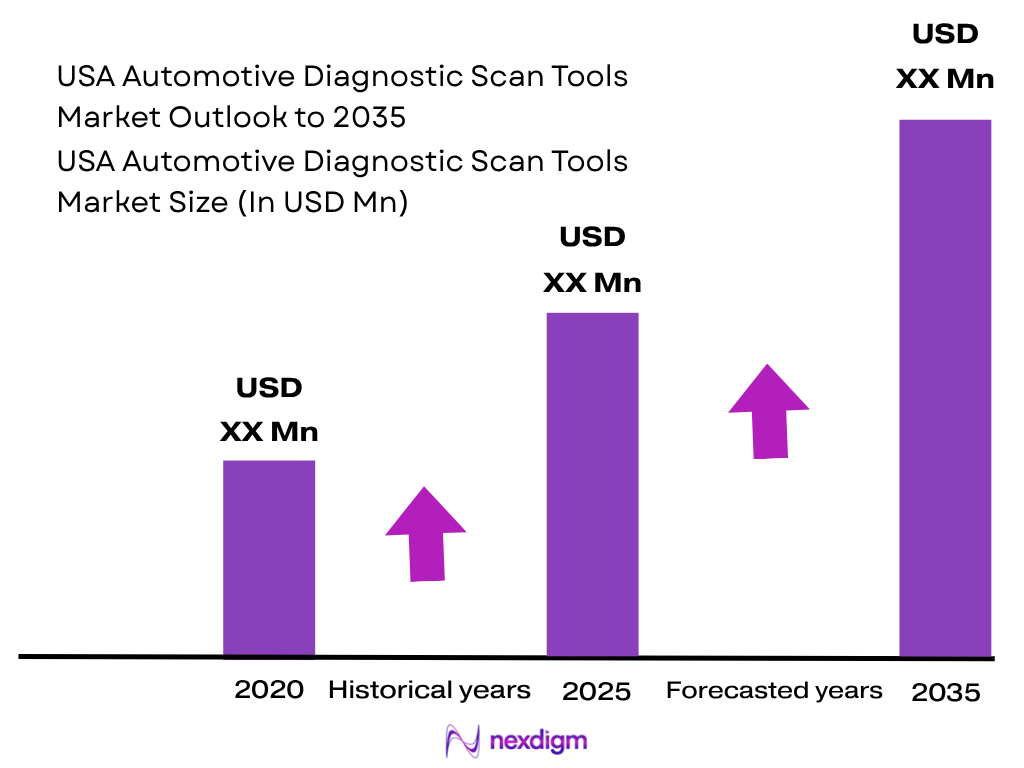
Market Segmentation
By Product Type
The USA Automotive Diagnostic Scan Tools Market is segmented by product type into OBD-II code readers, professional automotive scan tools, OEM diagnostic scan tools, multibrand diagnostic systems, ECU programming tools, ADAS calibration tools, EV diagnostic tools, TPMS diagnostic tools, heavy-duty vehicle diagnostic tools, and remote diagnostic platforms. Professional automotive scan tools represent the dominant segment due to their extensive diagnostic coverage, compatibility with multiple vehicle brands, and adoption among independent repair workshops and dealership service centers. These tools provide advanced capabilities including ECU coding, live data monitoring, system programming, and fault analysis. Increasing complexity of vehicle electronics, integration of ADAS systems, and growth of hybrid and electric vehicles are increasing demand for high-end diagnostic solutions. Professional-grade tools from established manufacturers are preferred by technicians due to their reliability, software updates, and ability to support multiple vehicle generations.
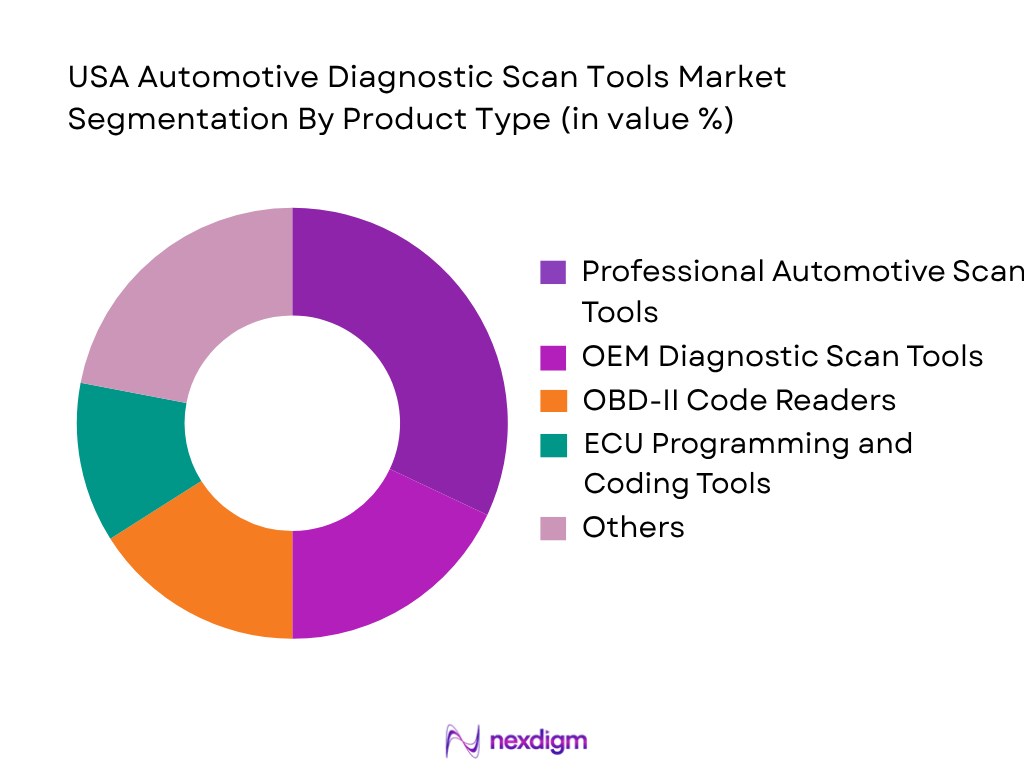
By End User Type
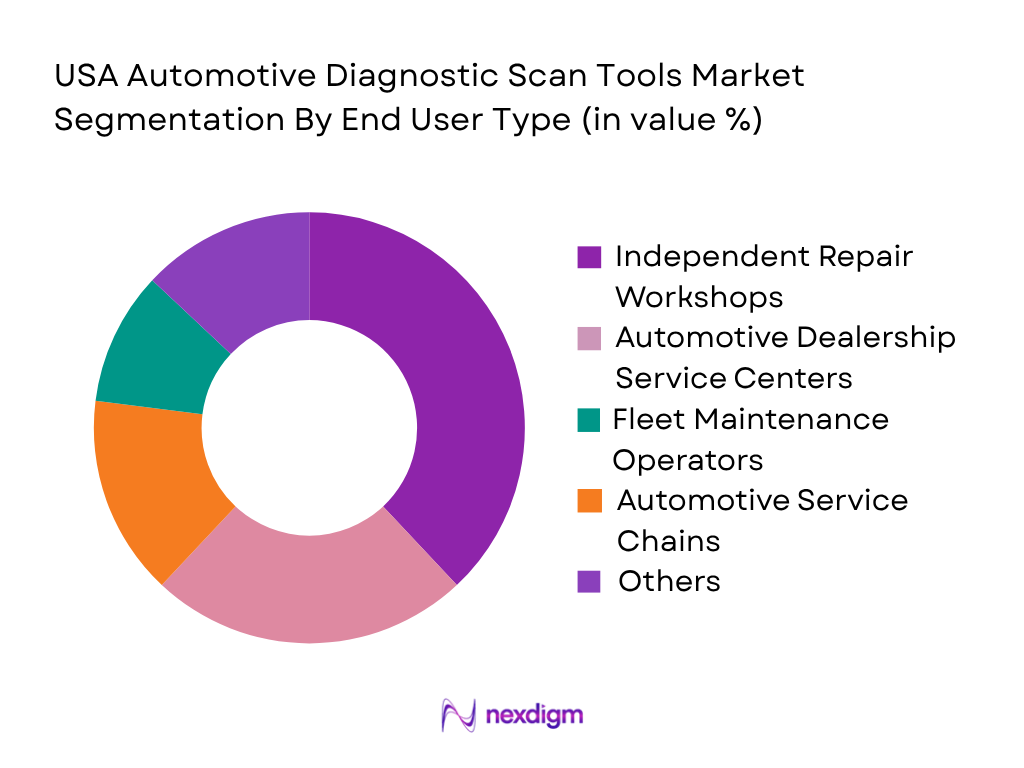
The USA Automotive Diagnostic Scan Tools Market is segmented by end user into independent repair workshops, automotive dealership service centers, fleet maintenance operators, automotive service chains, vehicle inspection centers, and DIY vehicle owners. Independent repair workshops represent the leading segment due to the large number of aftermarket repair facilities operating across the United States and their increasing requirement for multibrand diagnostic solutions. Independent technicians rely on advanced scan tools to service vehicles from multiple manufacturers without investing in separate OEM systems. Growth in average vehicle age, increasing repair complexity, and rising demand for cost-effective maintenance solutions continue to support adoption among independent workshops. Additionally, the expansion of mobile repair services and technology-enabled garages is increasing demand for portable and cloud-connected diagnostic equipment.
Competitive Landscape
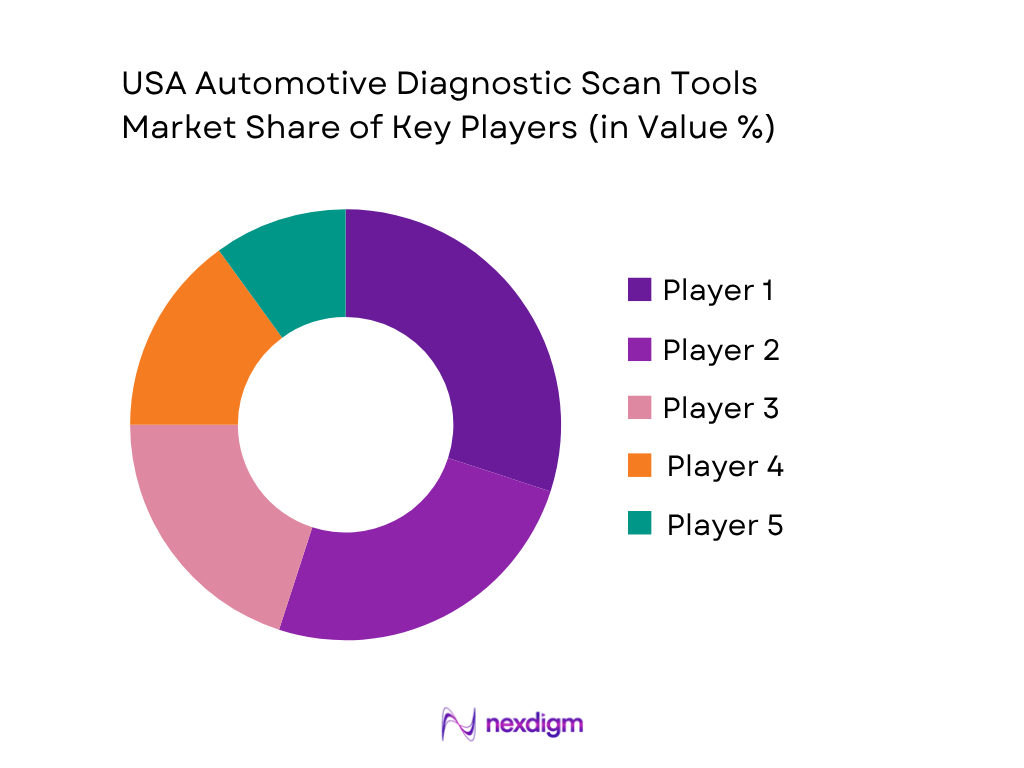
The USA Automotive Diagnostic Scan Tools Market is highly competitive, consisting of global diagnostic equipment manufacturers, automotive technology companies, and specialized aftermarket tool providers. Major players including Bosch Automotive Service Solutions, Snap-on Incorporated, Autel Intelligent Technology, Launch Tech USA, and TOPDON compete through diagnostic coverage, software capabilities, vehicle compatibility, ADAS support, EV diagnostic functions, and professional repair network presence. Market competition is influenced by continuous software updates, integration of artificial intelligence, cloud-based diagnostics, and expanding requirements for electric and connected vehicle servicing.
| Company | Establishment Year | Headquarters | Diagnostic Coverage | Key Product Portfolio | EV Diagnostic Capability | ADAS Calibration Capability | Software Update Platform | Primary End Users |
| Bosch Automotive Service Solutions | 1886 | Germany | ~ | ~ | ~ | ~ | ~ | ~ |
| Snap-on Incorporated | 1920 | USA | ~ | ~ | ~ | ~ | ~ | ~ |
| Autel Intelligent Technology | 2004 | China | ~ | ~ | ~ | ~ | ~ | ~ |
| Launch Tech USA | 1992 | USA | ~ | ~ | ~ | ~ | ~ | ~ |
| TOPDON USA | 2017 | USA | ~ | ~ | ~ | ~ | ~ | ~ |
USA Automotive Diagnostic Scan Tools Market Analysis
Growth Drivers
Increasing Vehicle Utilization and Large Installed Vehicle Base
The USA Automotive Diagnostic Scan Tools Market is strongly supported by the scale and utilization intensity of the U.S. vehicle fleet. Federal Highway Administration data records 297,525,836 registered motor vehicles and 3,294,031 million vehicle-miles traveled in the United States, creating a substantial recurring requirement for fault detection, electronic system testing, preventive maintenance, and post-repair verification. Light-duty vehicles alone accounted for 271,085,742 registered units, while the average annual distance traveled across all motor vehicles reached 11,071 miles, sustaining frequent interaction with automotive repair and maintenance facilities. The broader economic environment also supports continued vehicle-service expenditure: the World Bank reports U.S. GDP of USD 28.75 trillion, GDP per capita of USD 84,534, and real GDP growth of 2.8. This combination of a very large vehicle population, high annual vehicle utilization, and strong household purchasing capacity creates a substantial installed base requiring diagnostic intervention throughout the vehicle lifecycle. Higher mileage increases exposure to electronic faults, powertrain issues, sensor failures, emissions-system faults, and calibration requirements, thereby supporting recurring demand for professional scan tools. The expanding complexity of modern vehicles further increases the diagnostic content required per service event.
Rising Electronic Complexity and Expansion of ADAS Diagnostic Requirements
Increasing integration of electronic control systems and advanced driver assistance technologies is creating a structural requirement for more capable diagnostic scan tools in the USA Automotive Diagnostic Scan Tools Market. NHTSA’s current regulatory and safety-development framework identifies technologies including lane-keeping assistance, blind-spot warning, blind-spot intervention, pedestrian automatic emergency braking, and rear automatic braking as part of its evolving New Car Assessment Program roadmap. NHTSA also recorded 1,000 vehicle, equipment, tire, car-seat and related recalls during 2023, with nearly 35 million vehicles recalled, demonstrating the operational scale of vehicle fault identification and corrective servicing in the U.S. ecosystem. Federal Highway Administration data further shows 205,550,881 light-duty short-wheelbase vehicles and 65,534,861 light-duty long-wheelbase vehicles registered, providing a large installed base for electronically controlled systems. The diagnostic requirement is moving beyond conventional engine fault-code retrieval toward ECU communication, sensor validation, ADAS fault diagnosis, calibration support, programming, and system-level troubleshooting. As manufacturers incorporate more electronically controlled safety and convenience functions, workshops require scan tools capable of communicating with multiple vehicle control modules. This transition strengthens demand for professional diagnostic platforms rather than basic code readers and expands the addressable application base across independent workshops, dealerships, fleets, and specialized service providers.
Market Challenges
Increasing Diagnostic Complexity Across Software-Defined and Connected Vehicles
The increasing sophistication of vehicle electronics creates a significant technical challenge for the USA Automotive Diagnostic Scan Tools Market because diagnostic platforms must continuously expand their communication, programming, calibration, and software capabilities. EPA states that its automotive trends database contains official manufacturer-submitted information covering model years through 2024, while preliminary information is also incorporated for 2025, illustrating the continuing evolution of vehicle configurations that diagnostic equipment must support. NHTSA’s vehicle-safety framework is simultaneously expanding attention toward electronically controlled functions, including ADAS technologies and rear automatic braking, creating additional diagnostic requirements beyond conventional powertrain systems. The challenge is particularly relevant because a single vehicle can incorporate multiple ECUs, sensors, cameras, radar systems, infotainment modules, telematics units, battery-management systems, and network architectures. Diagnostic-tool manufacturers therefore face continuous requirements for database expansion, vehicle-coverage updates, cybersecurity controls, bidirectional testing, ECU programming, and calibration functionality. The U.S. vehicle base also spans 297,525,836 registered motor vehicles, meaning suppliers must support a broad mix of legacy internal-combustion vehicles alongside newer connected, hybrid, and electric platforms. Maintaining compatibility across this heterogeneous fleet increases engineering requirements and can make product development, validation, and software maintenance increasingly resource-intensive.
Regulatory, Recall and Vehicle-Safety Compliance Complexity
Regulatory and safety requirements create another challenge because automotive diagnostic equipment increasingly operates within a repair environment where accurate identification and resolution of electronic and safety-system faults are critical. NHTSA’s recall infrastructure covers vehicles, equipment, tires, and other regulated products and provides manufacturer-specific recall information through a national database. Its 2024 Annual Recall Report also tracks emerging categories involving autonomous-driving systems, demonstrating that vehicle safety oversight increasingly encompasses advanced software and electronic functionality. NHTSA’s framework recorded 1,000 recalls across vehicles, equipment, tires, car seats, and related products in 2023, while nearly 35 million vehicles were recalled, illustrating the scale of corrective-service activity. For diagnostic-tool suppliers, this environment increases the need for reliable fault identification, accurate vehicle communication, appropriate software updates, and compatibility with evolving manufacturer service procedures. Diagnostic providers must also accommodate differences between OEM-specific architectures and aftermarket repair environments. The challenge becomes more pronounced as ADAS functions require calibration and verification after repairs involving cameras, radar, steering components, windshields, suspension systems, or collision damage. The combination of a 340,110,988-person U.S. population, a USD 28.75 trillion economy, and a vehicle fleet exceeding 297 million registered motor vehicles makes regulatory compliance commercially significant while increasing the technical burden placed on diagnostic-platform developers and professional repair users.
Market Opportunities
Expansion of Advanced ADAS Calibration and Electronic Diagnostic Solutions
The increasing deployment and regulatory attention surrounding advanced driver assistance technologies creates an opportunity for suppliers of higher-value diagnostic and calibration platforms in the USA Automotive Diagnostic Scan Tools Market. NHTSA’s NCAP roadmap identifies lane-keeping assistance, blind-spot warning, blind-spot intervention, pedestrian automatic emergency braking, and rear automatic braking among technologies receiving increased evaluation attention. NHTSA states that consumer-facing identification of certain additional ADAS technologies is planned through its vehicle-safety information framework, while rear automatic braking evaluation is planned within the broader NCAP development process. This creates a growing requirement for repair facilities to diagnose electronic sensors, cameras, radar-related systems, control modules, and associated vehicle networks. The opportunity is reinforced by the size of the U.S. fleet: FHWA records 297,525,836 registered motor vehicles and 3,294,031 million vehicle-miles traveled, generating a large installed base requiring collision repair, preventive maintenance, diagnostics, and calibration services. Suppliers can therefore expand beyond conventional scan tools into integrated diagnostic-and-calibration platforms combining fault-code retrieval, live-data analysis, ECU programming, sensor testing, and ADAS calibration. The opportunity is particularly relevant for independent workshops seeking broader capabilities without relying exclusively on manufacturer-specific equipment, while dealerships and collision-repair networks can use increasingly integrated platforms to reduce diagnostic fragmentation across electronically intensive vehicles.
Growth of EV, Connected-Vehicle and Remote Diagnostic Capabilities
The transition toward electronically intensive vehicles creates opportunities for diagnostic-tool providers to develop EV-specific battery, power-electronics, connectivity, and remote-diagnostic capabilities. EPA’s automotive trends database contains final official data through 2024 and preliminary manufacturer information for 2025, reflecting the continuing introduction of new vehicle configurations and technologies into the U.S. market. Modern diagnostic requirements increasingly extend into battery-management systems, electric-drive components, charging systems, thermal-management controls, telematics, and connected vehicle architectures. The scale of the vehicle ecosystem provides a substantial base for these services, with FHWA reporting 297,525,836 registered motor vehicles and 11,071 average miles traveled per motor vehicle. At the same time, the U.S. economy provides a strong technology adoption environment, with World Bank data showing USD 84,534 GDP per capita and USD 28.75 trillion GDP. Diagnostic companies can use this environment to develop cloud-connected platforms that combine vehicle data acquisition, remote fault analysis, guided diagnostics, software updating, and service-history management. Fleet operators represent an especially relevant application because centralized diagnostic visibility can support maintenance planning across geographically dispersed vehicles. Independent repair networks can similarly use connected platforms to access updated vehicle databases and remote technical assistance. This creates an opportunity to shift diagnostic tools from standalone hardware toward recurring software-enabled vehicle-service ecosystems.
Future Outlook
Over the next decade, the USA Automotive Diagnostic Scan Tools Market is expected to experience sustained growth driven by increasing vehicle electronics complexity, rising adoption of electric vehicles, and expansion of connected vehicle technologies. Diagnostic solutions are expected to evolve from traditional fault-code readers toward intelligent platforms integrating artificial intelligence, cloud connectivity, remote diagnostics, and predictive maintenance capabilities. Growing requirements for ADAS calibration, EV battery analysis, and cybersecurity-compliant diagnostics will create new opportunities for technology providers. The transition toward software-defined vehicles will further increase demand for advanced diagnostic platforms capable of supporting continuous vehicle updates and system-level analysis.
Major Players
- Bosch Automotive Service Solutions
- Snap-on Incorporated
- Autel Intelligent Technology
- Launch Tech USA
- TOPDON USA
- Hella Gutmann Solutions
- Drew Technologies
- Hunter Engineering Company
- Actron
- Innova Electronics
- NAPA Autotech
- DENSO Corporation
- Continental Automotive
- Harman International
- TEXA USA
Key Target Audience
- Automotive Diagnostic Equipment Manufacturers
- Automotive Repair Workshop Networks
- Automotive Dealership Service Centers
- Fleet Management Companies
- Electric Vehicle Service Providers
- Automotive Electronics and Software Companies
- Investments and Venture Capitalist Firms (Andreessen Horowitz, General Motors Ventures, BMW i Ventures)
- Government and Regulatory Bodies (National Highway Traffic Safety Administration, Environmental Protection Agency, Department of Transportation)
Research Methodology
Step 1: Identification of Key Variables
The initial phase involves developing an ecosystem map covering diagnostic tool manufacturers, automotive repair networks, OEM service providers, fleet operators, and technology suppliers operating within the USA Automotive Diagnostic Scan Tools Market. This stage includes extensive secondary research to identify critical market variables such as diagnostic technology adoption, vehicle compatibility requirements, software capabilities, aftermarket demand patterns, and regulatory influences affecting automotive diagnostics.
Step 2: Market Analysis and Construction
This phase focuses on compiling historical market information related to automotive diagnostic equipment deployment, repair facility adoption, vehicle diagnostic requirements, and technology integration trends. The analysis evaluates demand across passenger vehicles, commercial vehicles, electric vehicles, and fleet applications while assessing hardware, software, and service revenue contribution. Market sizing is validated through supply-side and demand-side evaluation.
Step 3: Hypothesis Validation and Expert Consultation
Market assumptions are validated through consultations with automotive repair professionals, diagnostic equipment suppliers, technology providers, and industry participants. These discussions provide operational insights regarding product adoption, software requirements, vehicle coverage expectations, and competitive positioning. Expert feedback helps refine market understanding and validate industry trends.
Step 4: Research Synthesis and Final Output
The final phase integrates findings from manufacturers, service providers, automotive technology companies, and repair ecosystem participants. Data from primary and secondary research is analyzed to generate a comprehensive assessment of market structure, competitive landscape, segmentation, future opportunities, and technology developments within the USA Automotive Diagnostic Scan Tools Market.

- Executive Summary
- Research Methodology (Market Definition and Scope, USA Automotive Diagnostic Scan Tools Classification, On-Board Diagnostics (OBD-I and OBD-II) System Assessment, Automotive Diagnostic Hardware Classification, OEM Diagnostic Equipment Evaluation, Aftermarket Scan Tool Mapping, Advanced Driver Assistance System (ADAS) Calibration Tool Assessment, Electric Vehicle Diagnostic System Analysis, Hybrid Vehicle Diagnostic Technology Evaluation, ECU Programming and Coding Tool Assessment, Vehicle Communication Interface (VCI) Technology Analysis, Automotive Repair Ecosystem Mapping, Automotive Software and Diagnostic Platform Assessment, OEM and Aftermarket Supplier Ecosystem Mapping)

- Definition and Scope
- USA Automotive Diagnostic Scan Tools Industry Evolution and Development of Vehicle Diagnostics and Repair Technology Ecosystem
- Automotive Diagnostic Scan Tool Architecture, Hardware Configuration and Software Integration Structure
- USA Automotive Diagnostic Scan Tools Value Chain Analysis
- USA Automotive Diagnostic Scan Tools Supply Chain Analysis
- OBD-II Scanner, OEM Diagnostic Platform, Multibrand Scan Tool, ECU Programming Tool, ADAS Calibration System, EV Diagnostic Tool and Telematics Diagnostic Ecosystem Analysis
- Automotive Diagnostic Technology Integration Assessment Across Internal Combustion Engine Vehicles, Hybrid Vehicles, Electric Vehicles and Connected Vehicles

- Growth Drivers (Increasing Vehicle Electronic System Complexity, Rising Average Vehicle Age, Expansion of Advanced Driver Assistance Systems, Growth of Electric Vehicle Diagnostics Requirement, Increasing Automotive Aftermarket Repair Activities, Rising Demand for Remote Vehicle Diagnostics, Increasing OBD-II Compliance Requirements)
- Market Challenges (High Cost of Advanced Diagnostic Equipment, Rapid Vehicle Software Architecture Changes, Increasing OEM Diagnostic Software Restrictions, Need for Continuous Tool Software Updates, Complexity of EV and Hybrid Vehicle Diagnostics, Data Access and Cybersecurity Challenges)
- Market Opportunities (Expansion of Electric Vehicle Diagnostic Solutions, Growth of Connected Vehicle Diagnostics Platforms, Increasing Demand for ADAS Calibration Equipment, Development of AI-Based Predictive Maintenance Solutions, Expansion of Fleet Diagnostic Management Systems, Growth of Cloud-Based Automotive Repair Platforms)
- Market Trends (Adoption of Wireless Diagnostic Scan Tools, Integration of Artificial Intelligence in Vehicle Diagnostics, Growth of Cloud-Based Repair Software Platforms, Increasing Use of OEM-Level Multibrand Diagnostic Tools, Expansion of EV Battery Diagnostic Technologies, Growth of Remote Vehicle Health Monitoring, Increasing Integration of Cybersecurity Features in Diagnostic Systems)
- Government Regulations and Standards (OBD-II Emission Diagnostic Requirements, Environmental Protection Agency Vehicle Emission Standards, National Highway Traffic Safety Administration Vehicle Safety Regulations, Automotive Repair Data Access Regulations, Right-to-Repair Legislation Framework, Electric Vehicle Safety and Diagnostic Standards)
- SWOT Analysis
- Porter’s Five Forces Analysis
- PESTLE Analysis
- Stakeholder Ecosystem
- Competition Ecosystem

- By Market Value (2020-2025)
- By Diagnostic Scan Tool Unit Sales Volume (2020-2025)
- By Professional Workshop Diagnostic Tool Deployment Volume (2020-2025)
- By Passenger Vehicle Diagnostic Tool Demand Volume (2020-2025)
- By Commercial Vehicle Diagnostic Tool Demand Volume (2020-2025)
- By Electric Vehicle Diagnostic Tool Deployment Volume (2020-2025)
- By Aftermarket Vehicle Diagnostic Equipment Replacement Volume (2020-2025)
- By Average Selling Price of Automotive Diagnostic Scan Tools (2020-2025)

- By Product Type (In Value %)
OBD-II Code Readers
Professional Automotive Scan Tools
OEM Diagnostic Scan Tools
Multibrand Diagnostic Scan Tools
ECU Programming and Coding Tools
ADAS Calibration and Diagnostic Tools
Battery and EV Diagnostic Tools
TPMS Diagnostic Tools
Heavy-Duty Vehicle Diagnostic Tools
Remote Diagnostic and Telematics-Based Tools - By Vehicle Type (In Value %)
Passenger Cars
Luxury and Premium Vehicles
Electric Vehicles
Hybrid Electric Vehicles
Light Commercial Vehicles
Heavy Commercial Vehicles
Fleet Vehicles
Off-Highway and Specialty Vehicles - By End User (In Value %)
Independent Repair Workshops
Automotive Dealership Service Centers
Fleet Maintenance Operators
Automotive Service Chains
Vehicle Inspection Centers
Automotive Training and Technical Service Providers
Do-It-Yourself Vehicle Owners - By Sales Channel (In Value %)
Automotive Tool Distributors
OEM Service Networks
Automotive Parts Retailers
Specialized Diagnostic Equipment Suppliers
Online Automotive Equipment Platforms
Direct Manufacturer Sales - By Region (In Value %)
Northeast USA
Midwest USA
South USA
West USA
California Automotive Technology Cluster
Texas Automotive Service Market
Michigan Automotive Manufacturing Cluster
Florida Aftermarket Repair Market

- Market Share of Major Players (By Revenue, Product Type, Diagnostic Function, Vehicle Compatibility, End User Segment, OEM Partnership Network, Software Platform Capability, Distribution Channel Presence)
- Cross Comparison Parameters (Diagnostic Coverage Across Vehicle Brands and Models, ECU Programming and Coding Capability, ADAS Calibration Technology Capability, EV and Hybrid Diagnostic Capability, Software Update Frequency and Database Coverage, Vehicle Communication Protocol Support, Cloud-Based Diagnostic Platform Integration, Professional Workshop Network Coverage)
- SWOT Analysis of Major Players
- Competitive Positioning Matrix
- Pricing Analysis by Diagnostic Tool Category and End User Segment
- Detailed Profiles of Major Companies
Bosch Automotive Service Solutions – Professional Diagnostic Scan Tools, Workshop Equipment and Vehicle Diagnostic Platforms
Snap-on Incorporated – Professional Automotive Diagnostic Tools, Scan Systems and Repair Information Solutions
Autel Intelligent Technology – Multibrand Diagnostic Scan Tools, ADAS Calibration Systems and EV
Diagnostic Solutions
Launch Tech USA – Automotive Diagnostic Equipment, Programming Tools and Workshop Solutions
TOPDON USA – Advanced Diagnostic Scan Tools, Battery Testing Systems and ADAS Calibration Equipment
Hella Gutmann Solutions – Professional Vehicle Diagnostics and Workshop Diagnostic Systems
Drew Technologies – Vehicle Communication Interfaces and OEM Diagnostic Solutions
Hunter Engineering Company – Vehicle Service Equipment and Diagnostic Technology Solutions
Actron – Consumer and Professional OBD Diagnostic Tools
Innova Electronics – OBD Readers, Automotive Diagnostic Tools and Repair Solutions
NAPA Autotech – Automotive Diagnostic Equipment and Service Technology Solutions
DENSO Corporation – Automotive Electronics Diagnostics and Vehicle Technology Solutions
Continental Automotive – Vehicle Electronics Diagnostics and Automotive System Solutions
Harman International – Connected Vehicle Diagnostic Platforms and Automotive Software Solutions
TEXA USA – Professional Diagnostic Equipment and Multi-Brand Vehicle Service Solutions

- End User Segmentation Assessment
- Independent Automotive Repair Workshop Analysis
- Automotive Dealership Service Center Analysis
- Fleet Maintenance Operator Analysis
- Automotive Technician Diagnostic Requirement Assessment
- Vehicle Inspection and Emission Testing Center Analysis
- Automotive Parts Retailer Analysis
- DIY Vehicle Owner Diagnostic Behavior Assessment
Commercial Vehicle Maintenance Provider Analysis

- By Market Value (2026-2035)
- By Diagnostic Scan Tool Unit Sales Volume (2026-2035)
- By Professional Workshop Diagnostic Tool Deployment Volume (2026-2035)
- By Passenger Vehicle Diagnostic Tool Demand Volume (2026-2035)
- By Commercial Vehicle Diagnostic Tool Demand Volume (2026-2035)
- By Electric Vehicle Diagnostic Tool Deployment Volume (2026-2035)
- By Aftermarket Automotive Diagnostic Equipment Replacement Volume (2026-2035)
- By Average Selling Price of Automotive Diagnostic Scan Tools (2026-2035)


 Request a Sample
 Ask for Customization
 Get a Quote
 Enquire Now