
 Download PDF
Market Overview
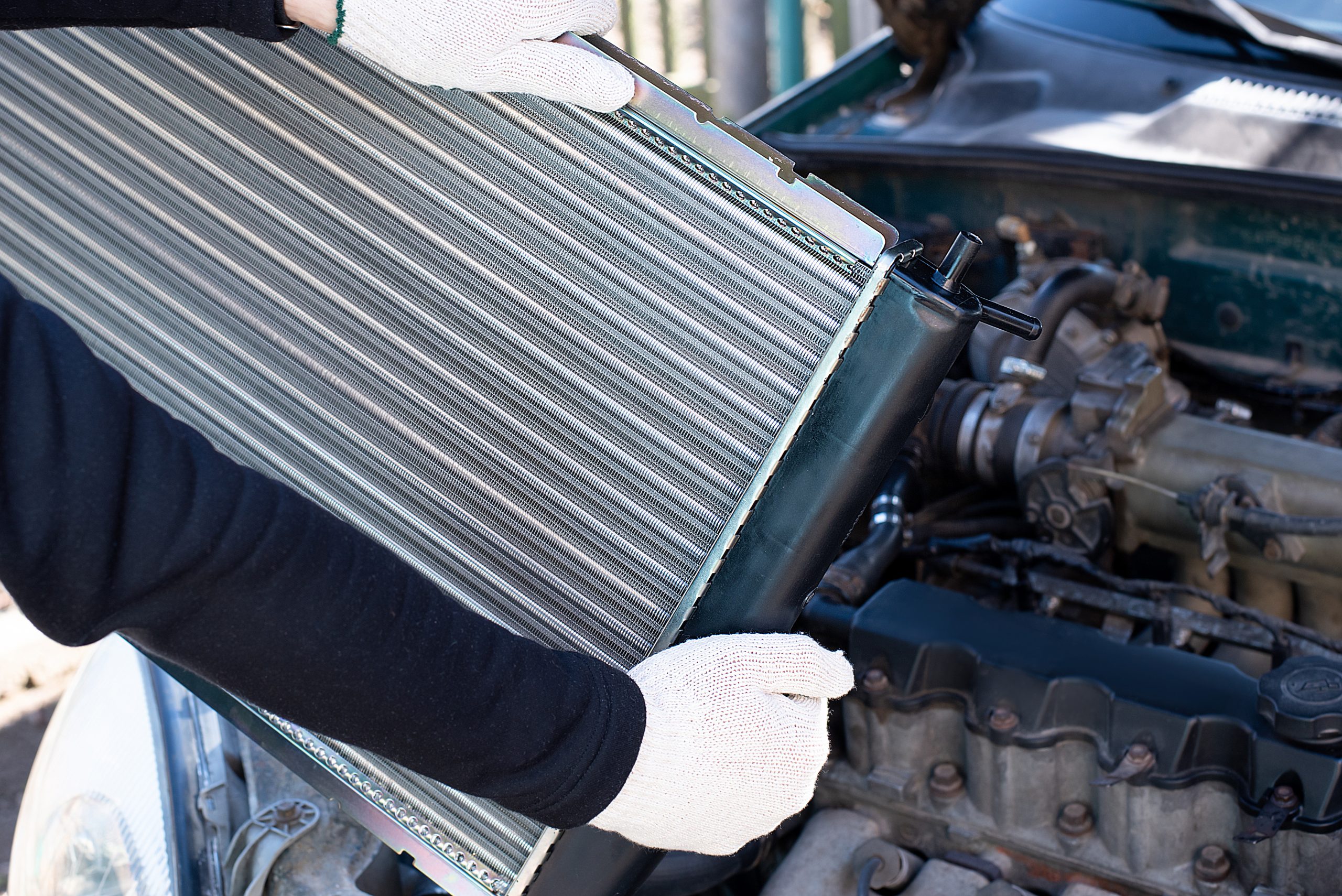
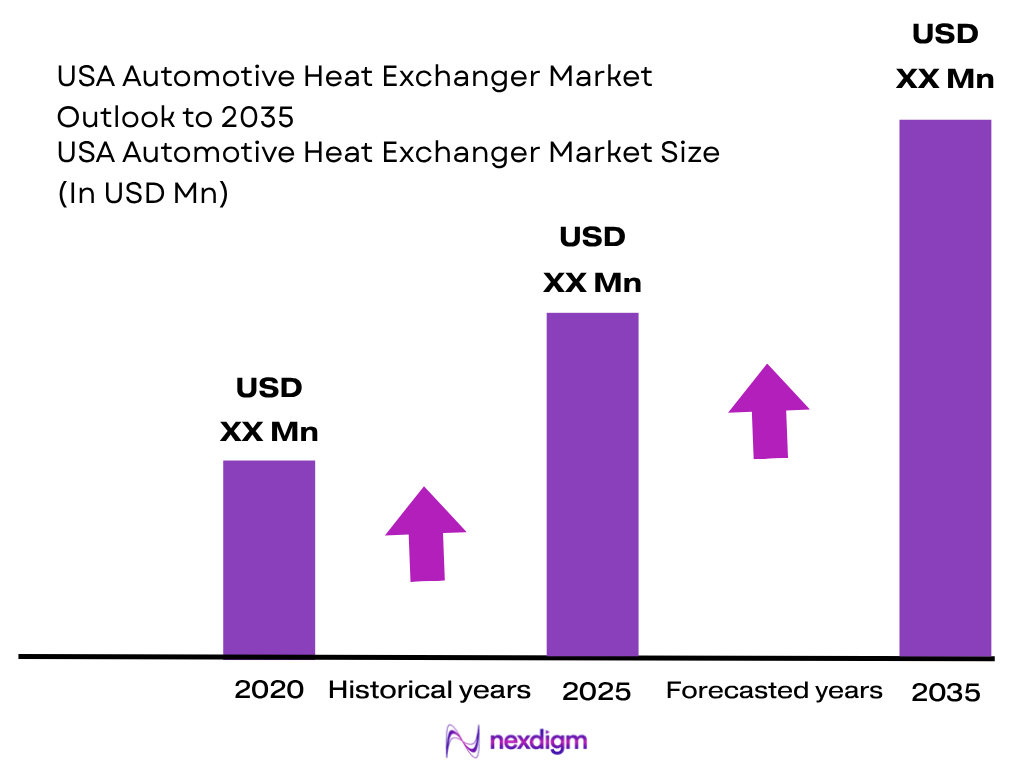
The USA automotive heat exchanger market is valued at approximately ~ USD million, supported by increasing vehicle production, rising adoption of electric vehicles, and growing demand for advanced thermal management systems. Automotive heat exchangers are critical components used in engine cooling, battery thermal management, HVAC systems, transmission cooling, and power electronics temperature regulation. The market is influenced by vehicle electrification trends, lightweight component adoption, and increasing complexity of thermal systems. The USA produced approximately 10.6 million light vehicles in 2023 and around 10.5 million light vehicles in 2024 according to the International Organization of Motor Vehicle Manufacturers, supporting demand for automotive cooling components across passenger and commercial vehicle applications.
The dominant automotive heat exchanger manufacturing and consumption regions in the USA include Michigan, Ohio, Indiana, Kentucky, Tennessee, Texas, and California due to their established automotive manufacturing ecosystems, presence of OEM production facilities, and concentration of Tier-1 and Tier-2 suppliers. Michigan remains a major automotive hub because of its strong vehicle manufacturing and engineering base, while California drives demand for EV-focused thermal management technologies due to its large electric vehicle ecosystem. The USA automotive industry operates through extensive supplier networks supporting vehicle manufacturers, commercial fleets, and aftermarket channels.
Market Segmentation
By Heat Exchanger Type
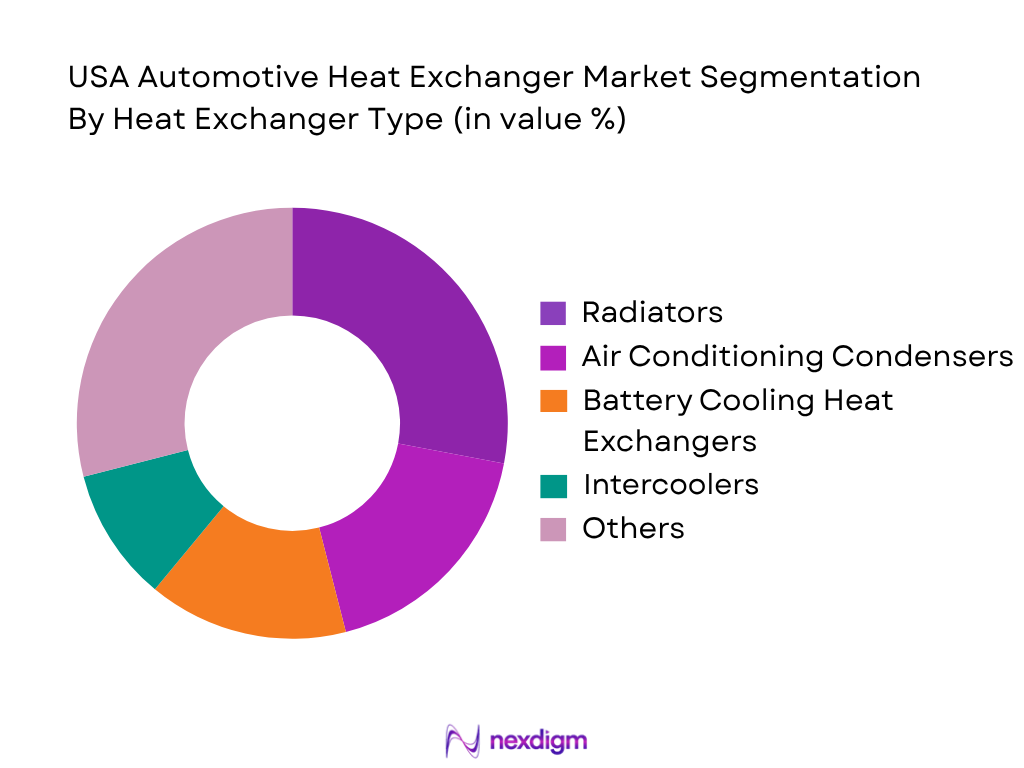
The USA automotive heat exchanger market is segmented by heat exchanger type into radiators, intercoolers, oil coolers, transmission oil coolers, air conditioning condensers, evaporators, battery cooling heat exchangers, power electronics cooling systems, exhaust gas recirculation (EGR) coolers, and integrated thermal management modules. Radiators represent the dominant segment due to their widespread application across internal combustion engine vehicles, commercial vehicles, and hybrid platforms. Despite increasing electrification, conventional engine cooling systems continue to represent a significant installed base across passenger cars, pickup trucks, and commercial vehicles in the USA. Additionally, advanced radiators integrated with lightweight aluminium materials and compact designs are increasingly adopted to improve vehicle efficiency and packaging performance. Battery cooling heat exchangers are gaining importance due to electric vehicle expansion; however, traditional radiator systems maintain higher adoption because of the large existing vehicle fleet.
By Vehicle Type
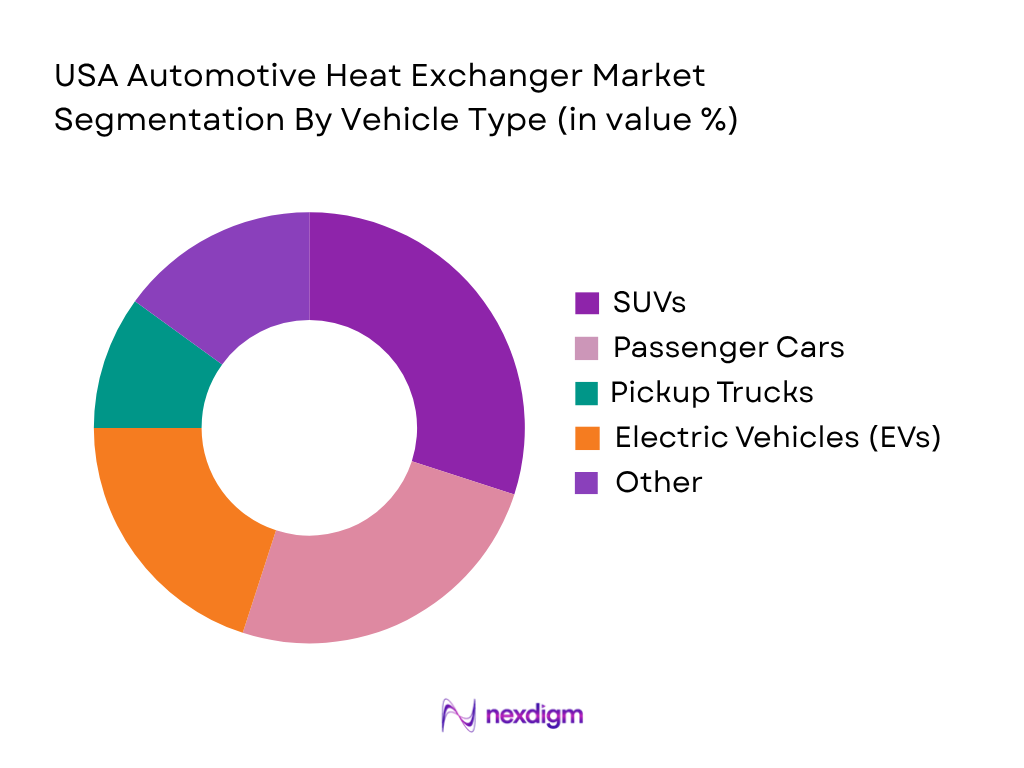
The USA automotive heat exchanger market is segmented by vehicle type into passenger cars, SUVs, pickup trucks, light commercial vehicles, medium commercial vehicles, heavy commercial vehicles, electric vehicles, hybrid vehicles, and fuel cell vehicles. Passenger vehicles and SUVs represent the leading segment due to their high production volumes and extensive requirement for thermal management systems. The USA automotive market has strong demand for SUVs and pickup trucks, which require advanced cooling systems due to higher engine capacity, towing requirements, and increased thermal loads. Electric vehicles are becoming an important growth segment because battery packs, power electronics, and electric motors require dedicated cooling solutions. However, conventional vehicles continue to dominate heat exchanger demand due to the existing vehicle population and continued production of internal combustion engine platforms.
Competitive Landscape
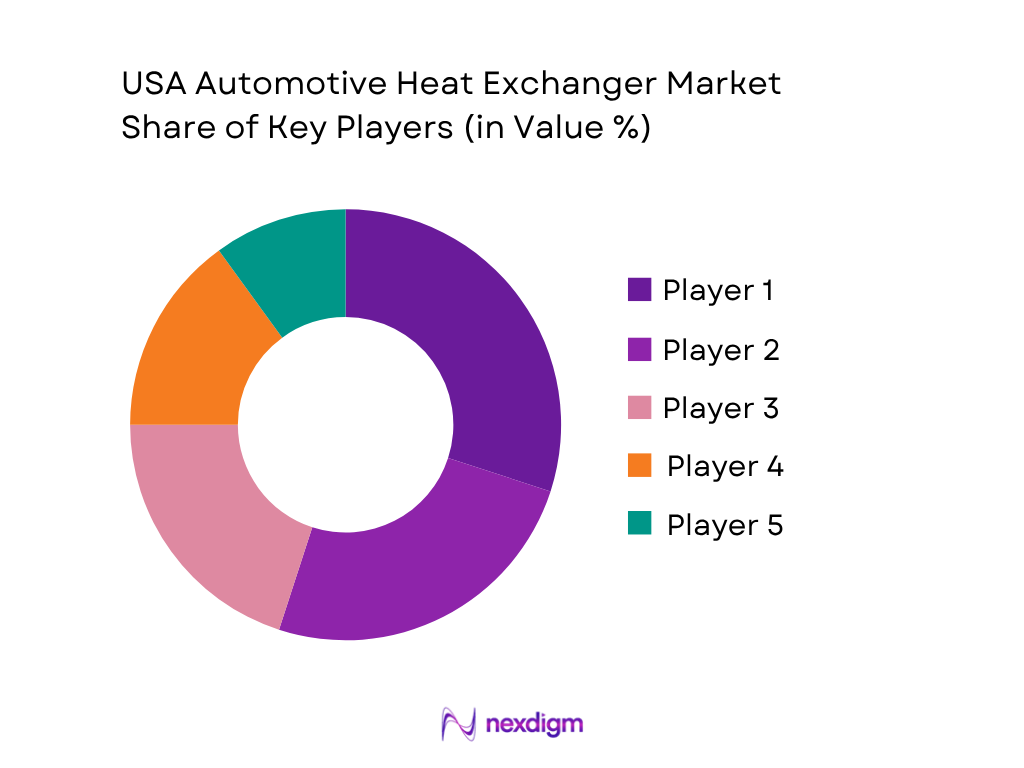
The USA automotive heat exchanger market is highly competitive, with major global thermal management suppliers providing components to automotive manufacturers including passenger vehicle OEMs, commercial vehicle producers, and electric vehicle manufacturers. Companies such as DENSO, MAHLE, Valeo, Modine, and Hanon Systems maintain strong market positions due to advanced thermal technologies, established OEM relationships, manufacturing capabilities, and product portfolios covering both conventional and electric vehicle applications. Competition is increasingly focused on battery thermal management, lightweight materials, integrated cooling modules, and improved thermal efficiency.
| Company | Establishment Year | Headquarters | Major Product Portfolio | Primary Vehicle Application | EV Thermal Management Capability | OEM Supply Presence | Manufacturing Capability | Technology Focus |
| DENSO Corporation | 1949 | Japan | ~ | ~ | ~ | ~ | ~ | ~ |
| MAHLE GmbH | 1920 | Germany | ~ | ~ | ~ | ~ | ~ | ~ |
| Valeo | 1923 | France | ~ | ~ | ~ | ~ | ~ | ~ |
| Modine Manufacturing Company | 1916 | USA | ~ | ~ | ~ | ~ | ~ | ~ |
| Hanon Systems | 1986 | South Korea | ~ | ~ | ~ | ~ | ~ | ~ |
USA Automotive Heat Exchanger Market Analysis
Growth Drivers
Increasing Vehicle Electrification and Advanced Thermal Management Requirements
The rising transition toward electric and hybrid vehicles is creating stronger demand for advanced automotive heat exchanger systems in the USA market. Electric vehicles require dedicated thermal management solutions for battery packs, electric motors, inverters, and power electronics, unlike conventional internal combustion vehicles that primarily depend on engine cooling systems. According to the U.S. Department of Energy, electric vehicle registrations in the USA continued expanding, with more than 1.4 million electric vehicles sold in 2024, increasing the requirement for efficient battery cooling technologies and compact thermal systems. The USA automotive manufacturing ecosystem also supports this growth, with the International Energy Agency reporting that global electric car sales exceeded 17 million units in 2024, increasing pressure on suppliers to develop next-generation cooling solutions. Additionally, the U.S. Bureau of Economic Analysis reported that motor vehicle and parts manufacturing contributed significantly to industrial output, supporting investments in advanced automotive component production. The increasing complexity of thermal architectures, adoption of aluminium-based lightweight heat exchangers, and demand for improved vehicle efficiency are encouraging automotive manufacturers and Tier-1 suppliers to enhance heat exchanger capabilities for future vehicle platforms.
Expansion of Domestic Automotive Production and Vehicle Technology Integration
The USA automotive heat exchanger market benefits from the country’s large vehicle manufacturing base, increasing production of technologically advanced vehicles, and continuous integration of thermal management systems. The National Highway Traffic Safety Administration reported that more than 15 million light vehicles were produced and sold across the USA automotive ecosystem in 2024, supporting demand for radiators, condensers, intercoolers, transmission coolers, and HVAC-related heat exchangers. The U.S. International Trade Administration highlighted that the automotive industry remains one of the largest manufacturing sectors in the country, with extensive production networks across Michigan, Ohio, Kentucky, Tennessee, Alabama, and Texas. According to the World Bank, the USA maintained a GDP level above USD 28 trillion in 2024, reflecting strong industrial capacity and supporting automotive technology investments. Increased production of premium vehicles, hybrid powertrains, commercial vehicles, and electric platforms requires advanced cooling architectures capable of handling higher thermal loads. This development is supporting manufacturers that provide integrated heat exchanger modules, lightweight materials, and high-efficiency cooling solutions for passenger vehicles, trucks, and emerging mobility applications.
Market Challenges
Complexity of Electric Vehicle Thermal Systems and Higher Engineering Requirements
The increasing complexity of automotive thermal management systems represents a major challenge for heat exchanger manufacturers operating in the USA market. Traditional vehicles generally use separate cooling systems for engines, transmissions, and air conditioning, whereas electric vehicles require multiple interconnected thermal circuits for batteries, motors, inverters, and charging systems. The U.S. Department of Energy reported continued growth in battery electric vehicle deployment, creating additional engineering requirements for suppliers developing compact and high-performance thermal solutions. The challenge is intensified by the requirement for improved heat transfer efficiency, reduced weight, corrosion resistance, and compatibility with advanced refrigerants. According to the International Energy Agency, global battery electric vehicle sales reached approximately 11 million units during the first half of 2024, increasing technology pressure across automotive supply chains. USA-based manufacturers must continuously invest in research, testing capabilities, and manufacturing flexibility to meet changing OEM specifications. The requirement for integrated thermal modules, advanced materials, and precise temperature control increases product development complexity and places pressure on suppliers to maintain technological competitiveness.
Supply Chain Dependency and Material Availability Constraints
The USA automotive heat exchanger market faces challenges related to supply chain stability, raw material availability, and dependence on specialised manufacturing inputs. Automotive heat exchangers commonly use aluminium, copper, and specialised alloys due to their thermal conductivity and lightweight characteristics, making material supply consistency important for manufacturers. According to the U.S. Geological Survey, aluminium remained one of the most widely consumed industrial metals in the USA, with domestic industries relying on both domestic production and international supply chains for processing requirements. The U.S. Census Bureau reported that automotive parts remain among the significant categories within manufactured goods trade, reflecting the importance of international supplier networks. Disruptions affecting metals, semiconductor-linked thermal systems, and specialised components can influence production schedules and supplier operations. Additionally, automotive manufacturers are increasing localisation efforts to strengthen supply resilience following recent global supply chain disruptions. Heat exchanger producers must therefore balance cost efficiency, material sourcing security, manufacturing capacity, and customer requirements while maintaining quality standards for increasingly sophisticated vehicle platforms.
Market Opportunities
Growth of Battery Thermal Management Systems for Electric Vehicles
The expansion of electric vehicle manufacturing creates significant opportunities for automotive heat exchanger suppliers specialising in battery thermal management solutions. Electric vehicles require advanced cooling systems to maintain battery temperature, improve performance, and extend component life. The U.S. Department of Energy reported continued expansion of domestic battery manufacturing investments, supported by large-scale investments in battery production facilities across multiple states. The U.S. Energy Information Administration highlighted increasing electricity consumption from transportation electrification, reflecting the growing integration of electric mobility infrastructure. These developments are creating opportunities for manufacturers producing battery cooling plates, liquid cooling systems, compact condensers, and integrated thermal modules. The increasing adoption of electric SUVs, pickup trucks, commercial electric vehicles, and hybrid platforms is further expanding application areas for advanced heat exchangers. Suppliers capable of providing lightweight, efficient, and digitally controlled thermal management systems are positioned to support future vehicle development. The opportunity extends beyond passenger vehicles into electric buses, delivery vehicles, and industrial mobility platforms requiring reliable temperature management solutions.
Development of Lightweight and High-Efficiency Thermal Technologies
Increasing demand for vehicle efficiency and improved performance is creating opportunities for manufacturers developing lightweight and high-efficiency automotive heat exchanger technologies. Automotive OEMs are focusing on reducing vehicle weight to improve fuel efficiency, extend electric vehicle range, and optimize overall performance. According to the U.S. Environmental Protection Agency, vehicle manufacturers continue implementing efficiency improvements through advanced technologies and improved vehicle engineering approaches. Aluminium-based heat exchangers, compact cooling modules, and integrated thermal systems are gaining importance because they provide reduced weight while maintaining heat transfer performance. The National Highway Traffic Safety Administration continues enforcing vehicle efficiency and safety standards, encouraging manufacturers to adopt technologies that improve overall vehicle performance. The USA’s strong automotive research ecosystem, supported by manufacturing facilities and engineering centres, provides opportunities for suppliers developing advanced materials, microchannel heat exchangers, and intelligent thermal control systems. These technologies are expected to become increasingly important as automotive manufacturers develop next-generation passenger vehicles, commercial vehicles, and electrified mobility solutions.
Future Outlook
Over the next decade, the USA automotive heat exchanger market is expected to experience significant transformation driven by vehicle electrification, increasing demand for advanced thermal management solutions, and the rising complexity of automotive cooling architectures. The transition from conventional engine cooling systems toward integrated thermal modules for batteries, electric motors, and power electronics will create new opportunities for suppliers. Growing adoption of lightweight aluminium-based heat exchangers, compact cooling systems, and intelligent thermal control technologies will influence future product development. The USA market will continue benefiting from its established automotive manufacturing ecosystem, strong OEM presence, and increasing investments in electric vehicle production infrastructure.
Major Players
- DENSO Corporation
- MAHLE GmbH
- Valeo
- Modine Manufacturing Company
- Hanon Systems
- BorgWarner Inc.
- Dana Incorporated
- T.RAD Co., Ltd.
- Gentherm Incorporated
- Marelli Holdings Co., Ltd.Sanden Holdings Corporation
- Bosch Mobility
- Spectra Premium
- Calsonic Kansei Corporation
- Gränges AB
Key Target Audience
- Investments and venture capitalist firms (Automotive technology investment funds, electric vehicle component investors, mobility-focused private equity firms, advanced manufacturing investors)
- Government and regulatory bodies (Environmental Protection Agency, National Highway Traffic Safety Administration, Department of Energy, Department of Transportation)
- Automotive original equipment manufacturers (OEMs) and vehicle manufacturers
- Automotive Tier-1 thermal management system suppliers
- Automotive component manufacturers and aluminium heat exchanger producers
- Electric vehicle manufacturers and battery system developers
- Commercial vehicle manufacturers and fleet operators
- Automotive aftermarket distributors and vehicle service networks
Research Methodology
Step 1: Identification of Key Variables
The initial phase involves developing an ecosystem map covering automotive OEMs, heat exchanger manufacturers, Tier-1 suppliers, raw material providers, electric vehicle manufacturers, aftermarket distributors, and regulatory stakeholders operating in the USA automotive thermal management industry. Extensive secondary research is conducted using automotive production databases, government publications, company filings, and industry information to identify variables influencing demand, supply, technology adoption, and competitive dynamics.
Step 2: Market Analysis and Construction
In this phase, historical data related to automotive heat exchanger production, vehicle manufacturing trends, thermal management technology adoption, and component supply networks is analyzed. The assessment includes evaluation of heat exchanger types, propulsion systems, vehicle categories, material preferences, OEM requirements, and application-specific demand patterns to develop a comprehensive understanding of market performance.
Step 3: Hypothesis Validation and Expert Consultation
Market assumptions are validated through discussions with automotive component manufacturers, thermal management suppliers, OEM representatives, distributors, and industry specialists. These consultations provide operational insights regarding product development strategies, technology adoption, supplier relationships, manufacturing capabilities, and future requirements for electric and hybrid vehicle cooling systems.
Step 4: Research Synthesis and Final Output
The final stage involves consolidating primary and secondary research findings to prepare a validated USA automotive heat exchanger market assessment. Information obtained from manufacturers, suppliers, vehicle producers, and industry participants is analyzed to verify market trends, competitive positioning, technology developments, and future opportunities across automotive applications.

- Executive Summary
- Research Methodology (Market Definition and Scope, USA Automotive Heat Exchanger Classification, Automotive Thermal Management System Assessment, Vehicle Cooling Architecture Mapping, Internal Combustion Engine Vehicle Cooling System Analysis, Hybrid Electric Vehicle Thermal Management Evaluation, Battery Electric Vehicle Thermal Management Classification, Fuel Cell Vehicle Cooling System Assessment, Heat Exchanger Component Taxonomy, Cooling Circuit Mapping)

- Definition and Scope
- USA Automotive Heat Exchanger Industry Evolution and Development of Vehicle Thermal Management Ecosystem
- Automotive Heat Exchanger Architecture, Manufacturing Technology and Industry Structure
- USA Automotive Heat Exchanger Value Chain Analysis
- USA Automotive Heat Exchanger Supply Chain Analysis
- Automotive Cooling Module Integration Assessment Across Passenger Vehicles, Commercial Vehicles, Electric Vehicles and Hybrid Vehicles
- Radiator, Condenser, Intercooler, Oil Cooler, Transmission Cooler, Battery Cooling Heat Exchanger, EGR Cooler and HVAC Heat Exchanger Component Ecosystem Analysis

- Growth Drivers (Increasing Electric Vehicle Production, Rising Battery Thermal Management Requirements, Expansion of USA Automotive Manufacturing Ecosystem, Growth of Hybrid Vehicle Adoption, Increasing Vehicle Thermal Efficiency Requirements, Rising Demand for Lightweight Aluminium Heat Exchangers)
- Market Challenges (High Manufacturing Investment Requirements for Advanced Thermal Systems, Increasing Complexity of EV Thermal Management Architectures, Aluminium and Raw Material Price Volatility, Automotive Supply Chain Disruptions, Cost Pressure from OEM Electrification Transition, Requirement for Advanced Manufacturing Capabilities)
- Market Opportunities (Expansion of EV Battery Cooling Systems, Development of Integrated Thermal Management Modules, Growth of Fuel Cell Vehicle Cooling Applications, Increasing Demand for Lightweight Cooling Solutions)
- Market Trends (Adoption of Integrated Vehicle Thermal Management Systems, Increasing Battery Cooling Plate Deployment, Growth of Compact High Efficiency Heat Exchanger Designs, Increasing Use of Aluminium Brazing Technologies)
- Regulatory and Standards Landscape (USA Vehicle Emission Regulations, Corporate Average Fuel Economy Standards, Zero Emission Vehicle Requirements, Automotive Component Quality Standards, Environmental Manufacturing Regulations, Vehicle Thermal Safety Standards)
- SWOT Analysis
- Porter’s Five Forces Analysis
- PESTLE Analysis
- Stakeholder Ecosystem
- Competition Ecosystem

- By Market Value (2020-2025)
- By Heat Exchanger Unit Production Volume (2020-2025)
- By Passenger Vehicle Heat Exchanger Demand Volume (2020-2025)
- By Commercial Vehicle Heat Exchanger Demand Volume (2020-2025)
- By Electric Vehicle Thermal Management Heat Exchanger Deployment Volume (2020-2025)
- By Hybrid Vehicle Cooling System Heat Exchanger Deployment Volume (2020-2025)
- By Automotive Aftermarket Heat Exchanger Replacement Volume (2020-2025)
- By Average Selling Price of Automotive Heat Exchanger Systems (2020-2025)

- By Heat Exchanger Type (In Value %)
Engine Radiators
Automotive Condensers
Charge Air Coolers / Intercoolers
Engine Oil Coolers
Transmission Oil Coolers
Battery Thermal Management Heat Exchangers
Power Electronics Cooling Heat Exchangers
EGR Coolers
HVAC Heat Exchangers
Fuel Cell Thermal Management Heat Exchangers - By Vehicle Type (In Value %)
Passenger Cars
Premium Passenger Vehicles
Electric Passenger Vehicles
Hybrid Passenger Vehicles
Light Commercial Vehicles
Heavy Commercial Vehicles
Buses and Transit Vehicles
Off-Highway Vehicles
Performance and Sports Vehicles - By Design Type (In Value %)
Tube and Fin Heat Exchangers
Bar and Plate Heat Exchangers
Plate Type Heat Exchangers
Microchannel Heat Exchangers
Compact Integrated Thermal Modules - By Material Type (In Value %)
Aluminium Heat Exchangers
Copper-Brass Heat Exchangers
Composite Material Heat Exchangers
Lightweight Alloy Heat Exchangers
Advanced Thermal Conductive Material Heat Exchangers - By Sales Channel (In Value %)
Automotive OEM Supply
Tier-1 Automotive Supplier Network
Automotive Component Distributors
Independent Aftermarket Suppliers
Vehicle Repair and Service Networks
Online Automotive Component Platforms - By Region (In Value %)
Northeast USA
Midwest USA
South USA
West USA
Michigan Automotive Manufacturing Cluster
California Automotive Technology Cluster
Texas Automotive Manufacturing Cluster
Southern Automotive Manufacturing Belt

- Market Share of Major Players (By Revenue, Heat Exchanger Type, Vehicle Segment, Propulsion Type, OEM Supply Contracts, EV Thermal Management Presence, Manufacturing Capacity, Production Location, Customer Base Distribution)
- Cross Comparison Parameters (Automotive Heat Exchanger Product Portfolio Across ICE, Hybrid and EV Applications, Battery Thermal Management Technology Capability, Heat Transfer Efficiency and Cooling Performance, Lightweight Aluminium Manufacturing Expertise, Integrated Thermal Management System Capability, OEM and Tier-1 Supply Network Coverage, Manufacturing Automation and Production Capacity, Innovation Capability in Advanced Cooling Technologies)
- SWOT Analysis of Major Players
- Competitive Positioning Matrix
- Product and Technology Portfolio Benchmarking
- Pricing and Product Category Benchmarking
- Detailed Profiles of Major Companies
MAHLE GmbH – Automotive Heat Exchangers, Cooling Modules and Thermal Management Solutions
DENSO Corporation – Automotive Condensers, Radiators and EV Thermal Systems
Valeo SE – Thermal Systems, HVAC Heat Exchangers and Battery Cooling Solutions
Modine Manufacturing Company – Automotive Cooling Systems and Heat Transfer Technologies
T.RAD Co., Ltd.
Dana Incorporated
BorgWarner Inc.
Hanon Systems
Nissens Automotive
Sanden Holdings Corporation
AKG Group
Cummins Inc.
Gates Corporation
Aptiv PLC
Marelli Holdings Co., Ltd.

- End User Segmentation Assessment
- Passenger Vehicle Manufacturers Analysis
- Electric Vehicle Manufacturers Analysis
- Hybrid Vehicle Manufacturers Analysis
- Commercial Vehicle Manufacturers Analysis
- Automotive Tier-1 Supplier Analysis
- Fleet Operator and Commercial Vehicle User Analysis
- Automotive Repair and Aftermarket Network Analysis
- Off-Highway Vehicle Manufacturer Analysis

- By Market Value (2026-2035)
- By Heat Exchanger Unit Production Volume (2026-2035)
- By Passenger Vehicle Heat Exchanger Demand Volume (2026-2035)
- By Commercial Vehicle Heat Exchanger Demand Volume (2026-2035)
- By Electric Vehicle Thermal Management Heat Exchanger Deployment Volume (2026-2035)
- By Hybrid Vehicle Cooling System Heat Exchanger Deployment Volume (2026-2035)


 Request a Sample
 Ask for Customization
 Get a Quote
 Enquire Now