

 Download PDF
 Download PDF
Market Overview
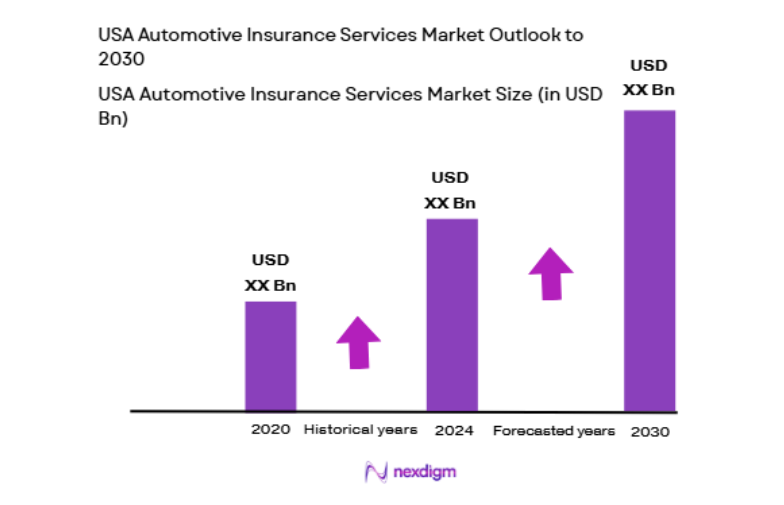
The USA Automotive Insurance Services market is projected to see a significant growth trajectory, driven by a rising demand for personalized insurance coverage, technological advancements, and a robust automotive sector. The market size in 2024 is expected to be valued at approximately USD ~ billion, with increasing insurance premiums being attributed to factors such as rising vehicle ownership and the incorporation of telematics technology. Furthermore, customer preferences are shifting towards digital platforms for purchasing and managing policies, spurring the growth of the online insurance segment. The market is bolstered by growing awareness regarding the benefits of automotive insurance and government initiatives promoting coverage options.
Dominant markets in the USA include key states such as California, Texas, and Florida, where high vehicle penetration rates and insurance demand significantly drive market trends. These regions benefit from a combination of high vehicle ownership rates, economic affluence, and a strong regulatory framework supporting automotive insurance. Companies are increasingly targeting these areas due to their large customer bases and favorable operating environments, with urban centers showing the highest growth rates. Additionally, local regulations in these states encourage competition, ensuring that consumers benefit from better service offerings and enhanced insurance solutions.
Market Segmentation
By Product Type
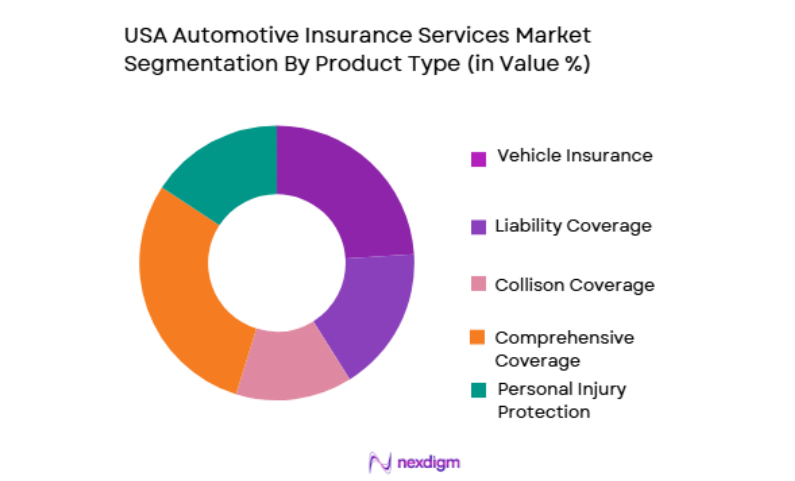
The USA Automotive Insurance Services market is segmented by product type into Liability Insurance, Collision Insurance, Comprehensive Insurance, Uninsured Motorist Coverage, and Personal Injury Protection. Recently, Liability Insurance has dominated the market share due to regulatory requirements in most states and its affordability for consumers. The dominance of liability insurance stems from the mandatory nature of the coverage in a majority of U.S. states, ensuring that all drivers are covered for damages caused to third parties. Moreover, it serves as the foundational product in any automotive insurance plan, making it the most widely purchased option for individuals seeking minimal legal compliance. As regulatory bodies continue to enforce stringent requirements, the demand for liability insurance is expected to remain high, further solidifying its position as a market leader.
By Platform Type
The USA Automotive Insurance Services market is also segmented by platform type into Online Platforms, Mobile Applications, Agent-Based Platforms, Direct-to-Consumer Platforms, and Hybrid Platforms. Among these, Online Platforms have seen a substantial increase in market share as consumers prefer the ease of purchasing and managing policies from the comfort of their homes. The growth of online platforms has been fueled by the increasing penetration of internet services and the growing adoption of e-commerce. Insurance providers have adopted digital-first strategies to cater to tech-savvy consumers, who appreciate the convenience of comparing plans, getting quotes, and managing policies online. As the trend toward digitalization accelerates, online platforms are expected to capture an even larger share of the market in the coming years.

Competitive Landscape
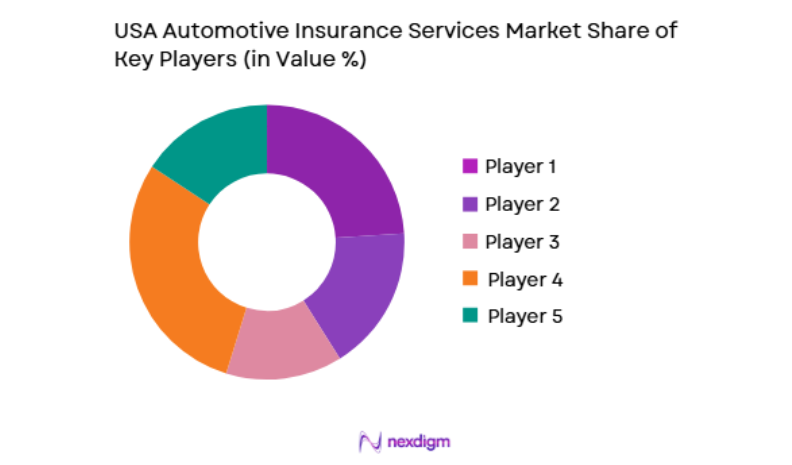
The competitive landscape of the USA Automotive Insurance Services market is characterized by a mix of well-established companies and emerging Insurtech startups. The market has seen consolidation, with large players acquiring smaller firms to expand their product offerings and enhance their technological capabilities. These acquisitions enable companies to integrate new technology, such as AI and machine learning, into their operations, allowing for more personalized and efficient services. With the industry’s ongoing digital transformation, players with robust online and mobile platforms are gaining a competitive edge in attracting younger, tech-savvy customers.
| Company Name | Establishment Year | Headquarters | Technology Focus | Market Reach | Key Products | Revenue | Market-Specific Parameter |
| State Farm Insurance | 1922 | Bloomington, IL | ~ | ~ | ~ | ~ | ~ |
| Geico | 1936 | Chevy Chase, MD | ~ | ~ | ~ | ~ | ~ |
| Progressive | 1937 | Mayfield Village, OH | ~ | ~ | ~ | ~ | ~ |
| Allstate | 1931 | Northbrook, IL | ~ | ~ | ~ | ~ | ~ |
| Liberty Mutual | 1912 | Boston, MA | ~ | ~ | ~ | ~ | ~ |
USA Automotive Insurance Services Market Analysis
Growth Drivers
Increase in Vehicle Ownership
Vehicle ownership has been rising steadily across the United States, creating a higher demand for automotive insurance. As the number of vehicles on the road increases, the need for insurance products that protect against damages, theft, and liability also grows. With an estimated 270 million registered vehicles in the U.S., car insurance has become a necessity for a larger segment of the population, driving overall market growth. The trend is supported by an increasing number of households owning more than one vehicle, especially in urban areas. Furthermore, higher vehicle ownership rates in developing regions and urbanization trends contribute significantly to the demand for automotive insurance, as more people look for coverage to protect their assets. The continuous improvement in vehicle safety and technology also drives the demand for specialized coverage options that cater to newer, more advanced vehicle models, further expanding the market.
Technological Advancements in Telematics
Telematics technology has significantly changed the landscape of the automotive insurance market by enabling insurance providers to offer usage-based insurance (UBI). This has proven attractive to consumers seeking lower premiums based on actual driving behavior. Insurers are increasingly integrating telematics into their policies, which track driving habits and adjust rates accordingly. As consumers become more comfortable with technology and data privacy concerns are addressed, the adoption of telematics-based insurance will continue to rise. This technological shift provides insurers with new tools to personalize pricing, manage risks more effectively, and reduce fraudulent claims, making it a key driver for market growth. The rise of connected cars also enhances the effectiveness of telematics, as vehicles become smarter and more integrated with data-sharing platforms, further driving this trend.
Market Challenges
Regulatory Compliance
The USA Automotive Insurance Services market faces a complex regulatory environment that varies by state, with each state implementing its own insurance rules and requirements. Navigating this patchwork of regulations presents challenges for insurers, particularly those operating on a national scale. The increasing stringency of laws related to data privacy, telematics, and claims management further complicates compliance, as insurance providers must ensure their systems adhere to federal and state standards. For instance, regulations surrounding the use of telematics data for pricing policies are still being debated in several states, creating uncertainty for insurers looking to expand their offerings. Compliance costs are rising as insurers invest in new technologies and legal expertise to meet these regulatory demands, which in turn increases operational costs.
High Operational Costs
As competition increases in the automotive insurance sector, companies are facing higher operational costs related to claims management, customer service, and technology integration. The cost of acquiring customers has been rising, especially with the shift towards digital platforms. While digital marketing offers insurers a broader reach, it also requires significant investments in technology infrastructure and marketing strategies to stand out in a crowded market. Additionally, insurers must continue investing in AI, data analytics, and claims automation to remain competitive, which requires ongoing capital expenditures. These high operational costs can erode profit margins, particularly for smaller players who lack the economies of scale enjoyed by larger firms.
Opportunities
Expansion of Usage-Based Insurance
The growth of usage-based insurance (UBI) presents a significant opportunity for insurers to tap into a new customer base. UBI allows insurers to offer personalized premiums based on actual driving behavior, making it an attractive option for low-mileage drivers and those who prioritize cost savings. This opportunity is enhanced by advancements in telematics technology, which allows for more accurate monitoring of driving patterns. As more consumers seek flexible and affordable insurance options, UBI is expected to gain traction in the market, especially as millennials and younger generations, who are more comfortable with technology, become the primary consumers. Insurers that embrace UBI can differentiate themselves in a competitive market while offering customers a more customized experience.
Partnerships with Insurtech Firms
Collaborations between traditional insurance companies and insurtech firms provide an opportunity for growth in the automotive insurance market. These partnerships allow insurers to leverage the latest technologies, such as artificial intelligence, machine learning, and blockchain, to streamline their operations and improve customer experiences. Insurtech firms offer innovations in areas such as underwriting, claims management, and risk assessment, which can help insurers reduce costs and improve efficiency. For instance, integrating AI into claims processing allows insurers to automate routine tasks, freeing up resources for more complex claims. By partnering with insurtech firms, traditional insurers can stay ahead of technological trends and cater to the growing demand for digital-first services.
Future Outlook
The future of the USA Automotive Insurance Services market appears strong, with growth expected in both the short and long term. The market is likely to continue expanding due to rising vehicle ownership, increased demand for personalized coverage, and the widespread adoption of telematics and usage-based insurance. Technological advancements in AI, machine learning, and data analytics are expected to play a key role in improving operational efficiencies, reducing claims costs, and offering more customized products to consumers. Additionally, regulatory support and the push for greater digital transformation will drive innovation and provide a favorable environment for market players. As a result, the industry is poised for continued growth over the next five years.
Major Players
- State Farm Insurance
- Geico
- Progressive
- Allstate
- Liberty Mutual
- Farmers Insurance
- Nationwide
- USAA
- The Hartford
- Travelers
- MetLife
- American Family Insurance
- Auto-Owners Insurance
- Chubb
- American International Group
Key Target Audience
- Investments and venture capitalist firms
- Government and regulatory bodies
- Insurance brokers
- Car manufacturers
- Fleet operators
- Technology providers for insurance
- Third-party service providers
- Consumer groups
Research Methodology
Step 1: Identification of Key Variables
Identify the critical drivers, challenges, and growth factors impacting the automotive insurance market.
Step 2: Market Analysis and Construction
Collect quantitative and qualitative data on market trends, competition, and technology innovations.
Step 3: Hypothesis Validation and Expert Consultation
Consult industry experts and stakeholders to validate assumptions and refine market forecasts.
Step 4: Research Synthesis and Final Output
Synthesize the findings to create a comprehensive, well-supported market analysis report.

- Executive Summary
- Research Methodology (Definitions, Scope, Industry Assumptions, Market Sizing Approach, Primary & Secondary Research Framework, Data Collection & Verification Protocol, Analytic Models & Forecast Methodology, Limitations & Research Validity Checks)

- Market Definition and Scope
- Value Chain & Stakeholder Ecosystem
- Regulatory / Certification Landscape
- Sector Dynamics Affecting Demand

- Growth Drivers
Increase in Vehicle Ownership
Rising Awareness of Insurance Benefits
Technological Advancements in Telematics - Market Challenges
Regulatory Compliance and Variability
Intense Market Competition
High Operational Costs - Market Opportunities
Growing Demand for Usage-Based Insurance
Integration of AI and Big Data
Expansion into Emerging Markets - Trends
Rise of Connected Car Insurance
Growth of On-Demand Insurance Models
Shift to Personalized Insurance Policies - Government regulations
- SWOT analysis
- Porters 5 forces

- By Market Value, 2019-2024
- By Installed Units, 2019-2024
- By Average System Price, 2019-2024
- By System Complexity Tier, 2019-2024

- By System Type (In Value%)
Liability Insurance
Collision Insurance
Comprehensive Insurance
Uninsured Motorist Coverage
Personal Injury Protection - By Platform Type (In Value%)
Online Platforms
Mobile Applications
Agent-Based Platforms
Direct-to-Consumer Platforms
Hybrid Platforms - By Fitment Type (In Value%)
Policy-Based Solutions
Claims Management Solutions
Risk Assessment Solutions
Telematics-Based Solutions
Fraud Detection Solutions - By EndUser Segment (In Value%)
Individual Policyholders
Commercial Fleet Owners
Automotive Manufacturers
Insurance Brokers
Third-Party Administrators - By Procurement Channel (In Value%)
Direct Sales
Brokerage Firms
Online Insurance Marketplaces

- Market Share Analysis
- Cross Comparison Parameters (Market Value, Growth Rate, System Complexity, Regional Penetration, Customer Satisfaction, Product Differentiation, Cost Structure, Regulatory Compliance, Technological Adoption, Competitive Intensity)
- SWOT Analysis of Key Competitors
- Pricing & Procurement Analysis
- Key Players
State Farm Insurance
Geico
Progressive
Allstate
Farmers Insurance
Liberty Mutual
Nationwide
USAA
Travelers
The Hartford
MetLife
American Family Insurance
Auto-Owners Insurance
Chubb
American International Group

- Growing Importance of Telematics for Individual Policyholders
- Demand for Fleet Management Solutions among Commercial Owners
- Insurance Brokers’ Increasing Role in Product Distribution
- Technological Advancements in Claims Management for Third-Party Administrators

- Forecast Market Value, 2025-2030
- Forecast Installed Units, 2025-2030
- Price Forecast by System Tier, 2025-2030
- Future Demand by Platform, 2025-2030


 Request a Sample
 Ask for Customization
 Get a Quote
 Enquire Now