
 Download PDF
 Download PDF
Market Overview
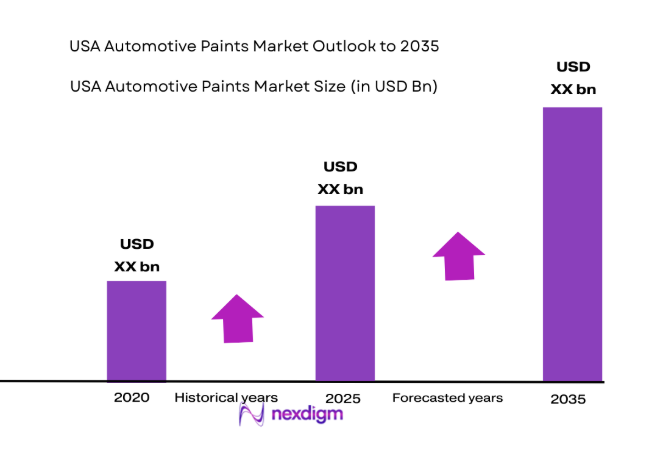
The USA automotive paints market is driven by the increasing demand for automotive production and repairs, with a market size of USD ~ billion based on a recent historical assessment. Factors such as growing vehicle production, technological advancements in paint technology, and increasing consumer demand for customization contribute to market growth. Additionally, government regulations promoting eco-friendly paints and safety standards are further boosting market expansion.
The dominance of the USA automotive paints market is attributed to key cities like Detroit, California, and Texas, which have a strong automotive manufacturing presence. These regions benefit from a well-established supply chain, advanced manufacturing facilities, and a high concentration of automotive OEMs. The trend towards electric vehicles in these cities is also accelerating demand for specialized automotive paints, further cementing their dominance.
Market Segmentation
By Product Type
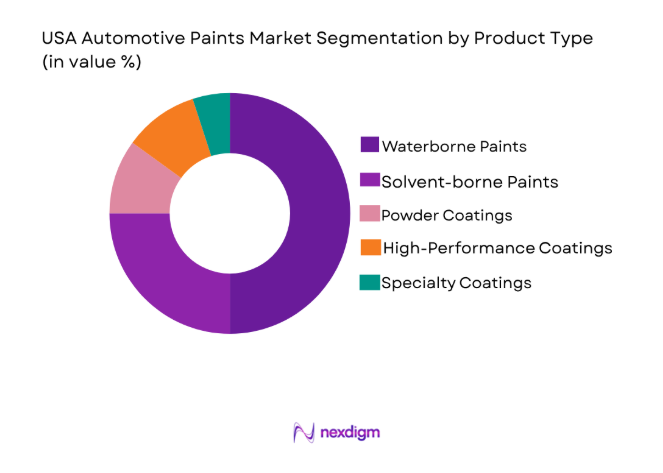
The USA automotive paints market is segmented by product type into waterborne paints, solvent-borne paints, powder coatings, high-performance coatings, and specialty coatings. Recently, waterborne paints have dominated the market share due to increasing demand for eco-friendly solutions and stricter environmental regulations. These paints are favored for their low volatile organic compound (VOC) emissions, aligning with consumer preference for sustainability and compliance with environmental standards. With growing awareness about the harmful effects of solvent-borne paints, the shift to waterborne solutions has been significant. Furthermore, advancements in waterborne technologies have improved their durability, making them an attractive option for both OEMs and aftermarket applications.
By Platform Type
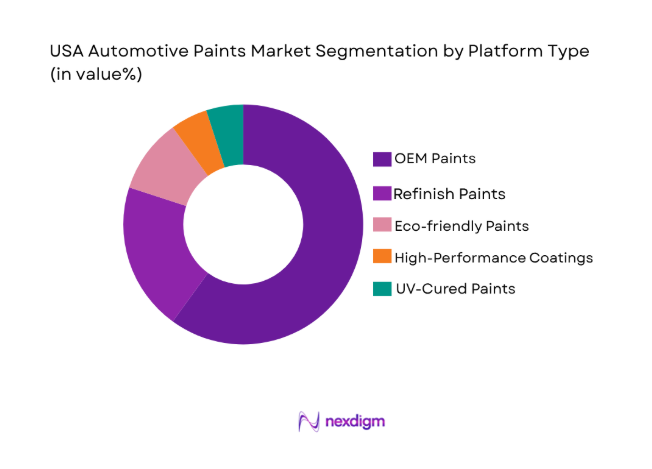
The USA automotive paints market is segmented by platform type into OEM (Original Equipment Manufacturer) paints, refinish paints, eco-friendly paints, high-performance coatings, and UV-cured paints. OEM paints hold a dominant market share due to their widespread application in vehicle production. The demand for OEM paints is driven by the growing vehicle manufacturing sector, which requires durable and high-quality finishes to meet regulatory and consumer demands. Additionally, the adoption of eco-friendly paints, driven by stringent environmental regulations, has created opportunities for new formulations in OEM applications. With advances in coating technology, OEM paints are becoming more efficient, offering better protection and aesthetics for a wide variety of vehicles.
Competitive Landscape
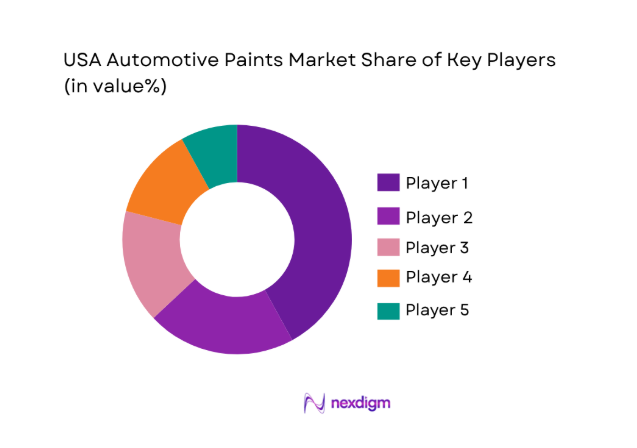
The USA automotive paints market is highly competitive, with key players such as PPG Industries, AkzoNobel, and BASF Coatings leading the charge. These companies dominate the market through innovation, extensive distribution networks, and strategic partnerships with automotive OEMs. Consolidation has been prominent, with mergers and acquisitions fueling the growth of these major players. Additionally, the market is witnessing the rise of regional players offering competitive pricing and localized services.
| Company Name | Establishment Year | Headquarters | Technology Focus | Market Reach | Key Products | Revenue | Market-Specific Parameter |
| PPG Industries | 1883 | Pittsburgh, PA, USA | ~ | ~ | ~ | ~ | ~ |
| AkzoNobel | 1646 | Amsterdam, Netherlands | ~ | ~ | ~ | ~ | ~ |
| BASF Coatings | 1865 | Ludwigshafen, Germany | ~ | ~ | ~ | ~ | ~ |
| Sherwin-Williams | 1866 | Cleveland, OH, USA | ~ | ~ | ~ | ~ | ~ |
| Axalta Coating Systems | 1866 | Philadelphia, PA, USA | ~ | ~ | ~ | ~ | ~ |
USA Automotive Paints Market Analysis
Growth Drivers
Increasing Vehicle Production
The USA automotive paints market is significantly driven by the rising vehicle production, with manufacturers focusing on expanding their production facilities to meet consumer demand. The growing trend of vehicle customization and a preference for high-quality, durable finishes have led to an increased need for premium paints. In addition to this, the rise of electric vehicles (EVs) has also boosted the demand for specialized coatings that provide enhanced protection, improved aesthetics, and better energy efficiency. With strong government incentives for vehicle manufacturing, the automotive sector is expected to maintain its growth trajectory, further driving demand for automotive paints. The innovation in manufacturing processes, such as the introduction of automated painting techniques, has also contributed to the increased production capacity of vehicle manufacturers, which ultimately drives the growth of the automotive paints market. Furthermore, a focus on sustainable paint solutions such as low-VOC and water-based paints is reshaping the industry. The robust development of the EV market in the USA is also pushing automakers to adopt specialized paint solutions to meet new consumer demands.
Demand for Eco-Friendly Paints
Environmental concerns and government regulations aimed at reducing harmful emissions have made eco-friendly paints a key growth driver in the USA automotive paints market. Waterborne paints, which release fewer volatile organic compounds (VOCs), have become increasingly popular due to their environmental benefits. In response to regulatory pressures, automotive manufacturers and paint suppliers have invested heavily in developing and commercializing low-VOC and VOC-free coatings. These eco-friendly alternatives not only help meet government regulations but also align with consumer preferences for sustainable products. The implementation of eco-friendly coatings extends beyond environmental concerns to include product safety, durability, and high-quality finishes, making them increasingly viable for use in both OEM and aftermarket segments. Additionally, advancements in the formulation of these paints have improved their performance, offering benefits such as quicker drying times, superior scratch resistance, and long-lasting durability, further promoting their adoption in the automotive industry.
Market Challenges
High Raw Material Costs
One of the major challenges facing the USA automotive paints market is the increasing cost of raw materials. The rising prices of key ingredients such as titanium dioxide, resins, and solvents are putting pressure on paint manufacturers. This increase in raw material costs leads to higher production costs, which can negatively impact the pricing structure of automotive paints. In turn, manufacturers may face difficulties in maintaining profit margins while also keeping the final product affordable for consumers. Moreover, the fluctuation in the prices of crude oil, which affects the cost of solvents and resins used in automotive paints, makes it harder for companies to forecast costs. The volatile pricing of raw materials is a significant challenge for businesses operating in the automotive paints market as it creates uncertainty in financial planning and profitability. Additionally, competition in the market is intensifying, with the need for cost-efficient production processes to remain competitive in a rapidly changing market environment. Manufacturers are increasingly focusing on streamlining operations and enhancing efficiency to counterbalance the effects of rising material costs.
Environmental Regulations
Stringent environmental regulations pose another challenge for the USA automotive paints market. While regulatory measures aimed at reducing VOCs and other harmful chemicals are crucial for public health and the environment, they also add complexity and cost to manufacturing processes. Compliance with these regulations requires manufacturers to invest in new technologies, materials, and systems that comply with emissions standards and safety protocols. This can lead to higher costs for manufacturers and, in some cases, force them to reformulate products or switch to more expensive eco-friendly solutions. While many manufacturers have embraced these regulations as part of their commitment to sustainability, the associated costs and time required for compliance can create barriers to entry for smaller companies. Additionally, international regulations and standards may vary, requiring companies to adapt their products and processes for different markets, further complicating production and distribution.
Opportunities
Shift Toward Electric Vehicle Paints
With the growing popularity of electric vehicles (EVs) in the USA, there is a significant opportunity for automotive paint manufacturers to develop specialized coatings tailored to the needs of EVs. These vehicles often require unique finishes that offer enhanced protection against battery heat, higher resistance to corrosion, and improved energy efficiency. The rise of the EV market presents an opportunity for manufacturers to create coatings that not only meet these specific requirements but also enhance the aesthetic appeal of EVs with custom colors and finishes. Furthermore, the demand for lightweight and durable coatings that contribute to the overall performance of EVs is driving innovations in paint technologies. Manufacturers that focus on providing innovative, EV-specific paints can capitalize on this emerging trend and establish a strong foothold in the rapidly growing EV market.
Increasing Vehicle Customization
The growing trend of vehicle customization in the USA presents a lucrative opportunity for the automotive paints market. Consumers are increasingly seeking personalized paint jobs that reflect their unique tastes and preferences. This demand is being driven by the increasing availability of advanced paint technologies, such as multi-layered finishes, pearlescent paints, and special effect coatings. In addition to aesthetic customization, vehicle owners are also looking for high-performance coatings that offer superior durability, protection against environmental factors, and easy maintenance. Automotive paint suppliers that can offer a broad range of customizable options, including unique color palettes and finishes, are well-positioned to capitalize on this opportunity. The continued development of high-quality, durable, and easily customizable coatings is expected to further fuel the growth of the market in the coming years.
Future Outlook
The future of the USA automotive paints market looks promising with steady growth expected over the next five years. Technological advancements in eco-friendly paint solutions, along with a growing emphasis on sustainability, will be major driving factors. The increasing shift towards electric vehicles (EVs) will also open new opportunities for specialized paints designed to meet the unique needs of EVs. Regulatory support and government incentives for green technologies will further accelerate market growth. The continued innovation in paint formulations, improving performance and environmental compliance, will shape the industry’s future. Demand from both OEM and aftermarket sectors is expected to remain strong as vehicle production and customization trends rise.
Major Players
- PPG Industries
- AkzoNobel
- BASF Coatings
- Sherwin-Williams
- Axalta Coating Systems
- Valspar
- RPM International
- Kansai Paint Co.
- Nippon Paints
- Jotun Group
- Sikkens
- Hempel A/S
- Hochwald
- Kraton Polymers
- Clariant
Key Target Audience
- Investments and venture capitalist firms
- Government and regulatory bodies
- Automotive OEMs
- Vehicle Aftermarket Service Providers
- Commercial Vehicle Manufacturers
- Paint Suppliers and Distributors
- Automotive Customization Firms
Research Methodology
Step 1: Identification of Key Variables
Identification of relevant market variables such as product types, technologies, and market dynamics.
Step 2: Market Analysis and Construction
Detailed analysis of market segments, trends, and competitive landscape based on historical data and forecasts.
Step 3: Hypothesis Validation and Expert Consultation
Consultation with industry experts and stakeholders to validate assumptions and refine market models.
Step 4: Research Synthesis and Final Output
Synthesis of findings into a comprehensive report with actionable insights and market recommendations.

- Executive Summary
- Research Methodology (Definitions, Scope, Industry Assumptions, Market Sizing Approach, Primary & Secondary Research Framework, Data Collection & Verification Protocol, Analytic Models & Forecast Methodology, Limitations & Research Validity Checks)

- Market Definition and Scope
- Value Chain & Stakeholder Ecosystem
- Regulatory / Certification Landscape
- Sector Dynamics Affecting Demand
- Strategic Initiatives & Infrastructure Growth

- Growth Drivers
Increase in Vehicle Production
Demand for Eco-friendly Paints
Technological Advancements in Paints - Market Challenges
High Raw Material Costs
Environmental Regulations
Volatility in Supply Chain - Market Opportunities
Shift Towards Electric Vehicle Paints
Growth in Vehicle Customization
Increase in Automotive Refinish Market - Trends
Use of Waterborne Paints
Growth in Sustainable Coating Solutions - Government Regulations
- SWOT Analysis
- Porter’s Five Forces

- By Market Value, 2020-2025
- By Installed Units, 2020-2025
- By Average System Price, 2020-2025
- By System Complexity Tier, 2020-2025

- By System Type (In Value%)
Passenger Vehicle Paints
Commercial Vehicle Paints
Electric Vehicle Paints
Specialty Vehicle Paints
Motorcycle Paints - By Platform Type (In Value%)
OEM (Original Equipment Manufacturer) Paints
Refinish Paints
Eco-Friendly Paints
High-Performance Coatings
UV-Cured Paints - By Fitment Type (In Value%)
Factory Applied Paints
Aftermarket Applied Paints
Custom Applied Paints
Repair Paints - By End User Segment (In Value%)
Automotive Manufacturers
Vehicle Aftermarket
Automotive Refinishers

- Market Share Analysis
- Cross Comparison Parameters (OEM Paints, Refinish Paints, Eco-Friendly Paints, Factory Applied Paints, Aftermarket Applied Paints, High-Performance Coatings, Electric Vehicle Paints)
- SWOT Analysis of Key Competitors
- Pricing & Procurement Analysis
- Key Players
PPG Industries
AkzoNobel
Sherwin-Williams
BASF Coatings
Axalta Coating Systems
Valspar
RPM International
Kansai Paint Co.
Nippon Paints
Jotun Group
Sikkens
Hempel A/S
Hochwald
Kraton Polymers
Clariant

- Increasing Vehicle Production and Repair Needs
- Shift Towards Sustainable Paint Solutions
- Rising Demand for Custom Paints
- Technological Innovations in Paints

- Forecast Market Value, 2026-2035
- Forecast Installed Units, 2026-2035
- Price Forecast by System Tier, 2026-2035
- Future Demand by Platform, 2026-2035


 Request a Sample
 Ask for Customization
 Get a Quote
 Enquire Now