

 Download PDF
Market Overview
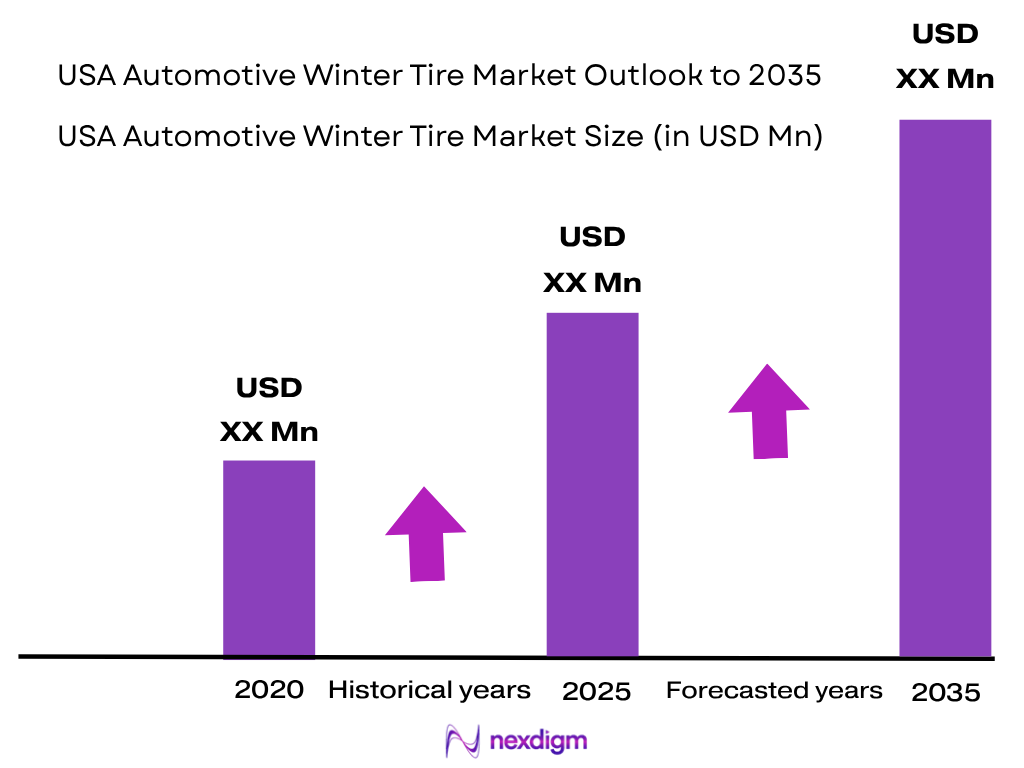
The USA automotive winter tire market is valued at ~USD XX billion, based on historical industry analysis, supported by seasonal demand across northern states, replacement tire cycles, and increasing consumer awareness regarding winter driving safety. The market is primarily driven by passenger vehicle ownership, adverse winter weather conditions, and demand for enhanced traction technologies. The United States recorded approximately 284 million registered vehicles, according to the Federal Highway Administration, creating a large replacement tire ecosystem. States including Michigan, New York, Pennsylvania, Minnesota, Colorado, and Massachusetts contribute significantly due to recurring snowfall, icy road conditions, and mandatory winter preparedness among consumers.
The USA automotive winter tire market is concentrated across northern and mountainous regions where prolonged cold temperatures create higher adoption of seasonal tire solutions. States surrounding the Great Lakes region, including Michigan, Wisconsin, Ohio, and New York, experience frequent snowfall and freezing conditions, increasing demand for specialized winter compounds and tread designs. Colorado and Utah also represent important demand centers due to mountainous terrain and winter tourism activity. Metropolitan areas such as Detroit, Minneapolis, Denver, Boston, and Buffalo contribute strongly because of high vehicle ownership, commuter dependency, and fleet replacement requirements.
Market Segmentation
By Tire Type
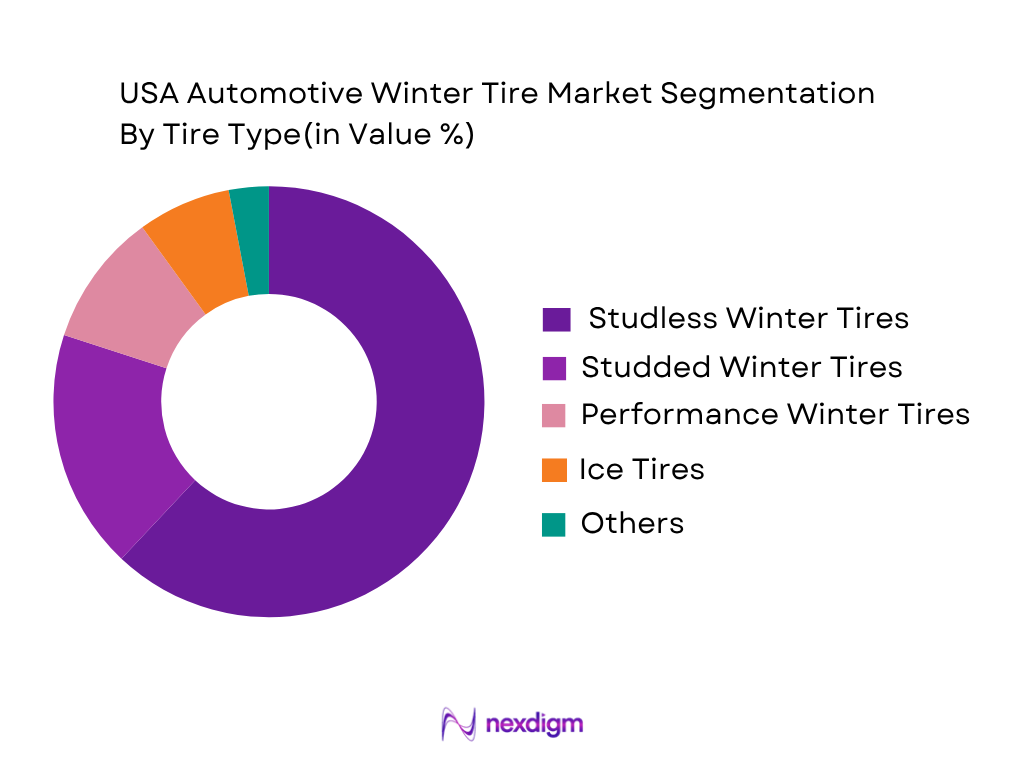
The USA automotive winter tire market is segmented into studless winter tires, studded winter tires, performance winter tires, ice tires, and run-flat winter tires. Studless winter tires represent the dominant segment due to their suitability across diverse winter conditions, including snow-covered highways, wet roads, and icy urban environments. These tires use advanced silica compounds, flexible rubber formulations, and optimized siping technologies to maintain traction at low temperatures without requiring metal studs. Consumer preference is also influenced by regional restrictions on studded tires in several states due to road surface damage concerns. Premium vehicle owners increasingly adopt performance winter tires because of demand for improved handling and braking capability during winter conditions. However, studless winter tires continue to dominate because they provide a balance between safety, regulatory compliance, and year-round usability during colder months.
By Vehicle Type
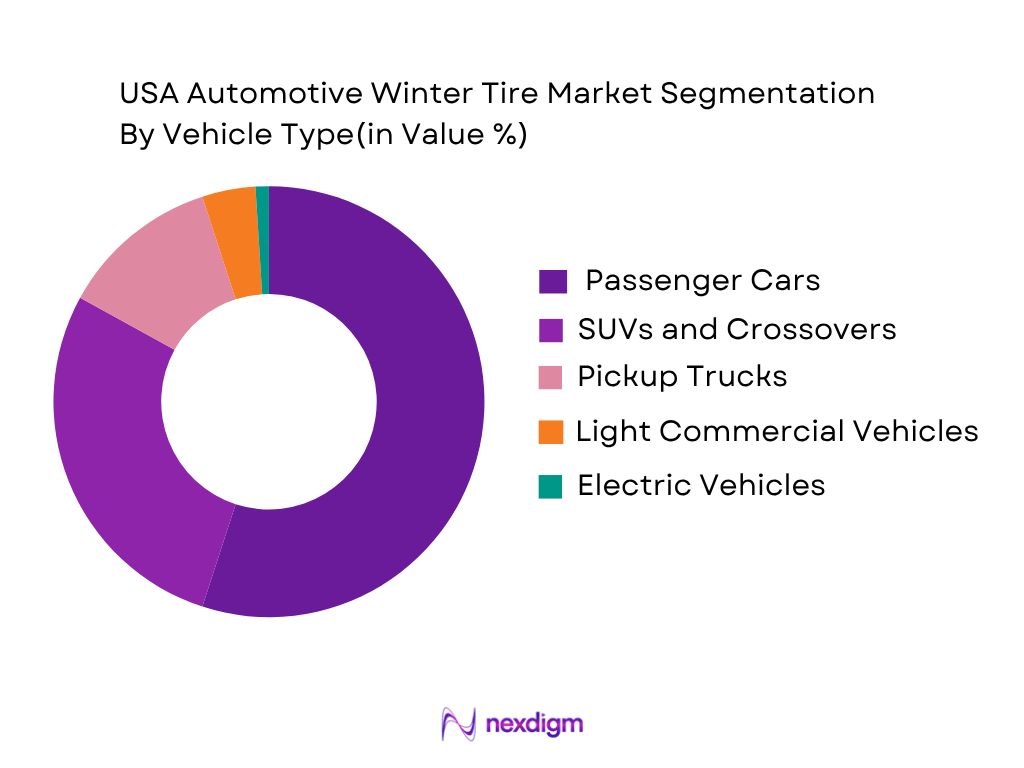
The USA automotive winter tire market is segmented into passenger cars, SUVs and crossovers, pickup trucks, light commercial vehicles, and electric vehicles. SUVs and crossovers account for the leading share due to their increasing penetration in the American automotive fleet and strong adoption in snow-prone regions. Consumers operating SUVs in northern states prefer winter-specific tires to maximize traction despite having all-wheel-drive systems. Passenger cars remain a significant segment due to high urban commuting requirements in regions experiencing seasonal snowfall. Electric vehicles represent an emerging category as manufacturers and consumers recognize the importance of winter tires for maintaining efficiency, braking performance, and safety in cold climates. Commercial vehicles also contribute to demand due to logistics operations requiring reliable mobility during winter disruptions.
Competitive Landscape
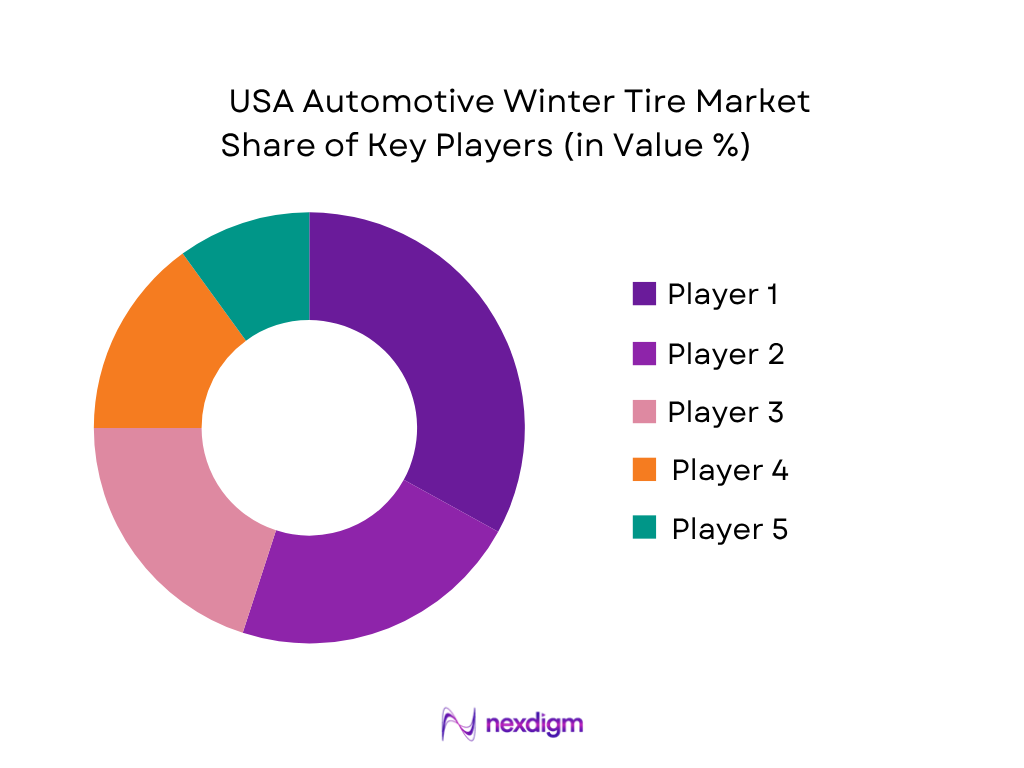
The USA automotive winter tire market is characterized by strong competition among global tire manufacturers and regional distributors. Leading companies compete through winter compound innovation, tread pattern development, OEM partnerships, distribution expansion, and premium product positioning. Global manufacturers maintain strong presence due to established dealer networks, advanced research capabilities, and broad product portfolios covering passenger vehicles, SUVs, and commercial applications.
| Company | Establishment Year | Headquarters | Major Winter Tire Brands | Key Product Focus | Winter Tire Technology | Distribution Network | EV Winter Tire Capability | Key Market Strength |
| Bridgestone Corporation | 1931 | Tokyo, Japan | ~ | ~ | ~ | ~ | ~ | ~ |
| Michelin Group | 1889 | Clermont-Ferrand, France | ~ | ~ | ~ | ~ | ~ | ~ |
| The Goodyear Tire & Rubber Company | 1898 | Akron, Ohio, USA | ~ | ~ | ~ | ~ | ~ | ~ |
| Continental AG | 1871 | Hanover, Germany | ~ | ~ | ~ | ~ | ~ | ~ |
| Pirelli & C. S.p.A. | 1872 | Milan, Italy | ~ | ~ | ~ | ~ | ~ | ~ |
USA Automotive Winter Tire Market Analysis
Growth Drivers
Seasonal Snowfall Intensity
Seasonal snowfall intensity remains a primary factor influencing winter tire adoption across the USA, particularly in northern and mountainous regions where low temperatures, snow accumulation, and icy road conditions create demand for specialized tire solutions. According to the National Oceanic and Atmospheric Administration (NOAA), several U.S. regions recorded significant winter precipitation patterns, with states across the Northeast, Midwest, and Mountain West experiencing recurring snowfall events affecting road safety conditions. The Federal Highway Administration identifies snow, ice, and winter weather as major contributors to hazardous driving conditions, increasing the importance of traction-focused tire technologies. States such as Alaska, Maine, Vermont, Michigan, Minnesota, and Colorado experience prolonged cold-weather periods, supporting replacement demand for studless winter tires, studded tires, and performance winter tires. Increasing variability in winter weather patterns is also encouraging consumers and fleet operators to prioritize dedicated seasonal tires. The demand is further strengthened by transportation agencies emphasizing winter road safety measures and improved vehicle preparedness during severe weather periods.
Increasing SUV and Crossover Adoption
The rising penetration of SUVs and crossovers in the U.S. automotive fleet is creating additional demand for winter tires designed for heavier vehicles and enhanced traction requirements. According to the U.S. Environmental Protection Agency (EPA), light-duty trucks, including SUVs, pickups, and crossovers, represent a significant portion of new vehicle sales, reflecting continued consumer preference for larger vehicles with improved utility and all-weather capability. SUVs and crossovers require specialized tire engineering due to higher vehicle weight, altered center of gravity, and increased torque requirements compared with traditional passenger cars. Winter tire manufacturers are developing reinforced sidewalls, optimized tread patterns, and low-temperature rubber compounds specifically for these vehicle categories. The growing adoption of electric SUVs is further increasing demand for winter tires capable of handling higher vehicle mass and instant torque delivery. Automotive manufacturers are also expanding OEM-approved winter tire fitments for crossover platforms, improving availability through dealership and aftermarket channels. This trend supports continued expansion of premium winter tire categories across consumer and fleet applications.
Market Challenges
Seasonal Demand Concentration
The USA Automotive Winter Tire Market faces challenges due to concentrated purchasing behavior during limited winter periods. Consumer replacement decisions are strongly influenced by regional weather patterns, causing demand fluctuations between colder northern states and warmer southern regions. According to the U.S. Census Bureau, population distribution remains concentrated across diverse climate zones, resulting in uneven adoption of seasonal tire products. Many consumers in moderate winter regions continue using all-season tires throughout the year, limiting dedicated winter tire penetration. Tire retailers also experience inventory management challenges because demand peaks before and during winter weather periods rather than remaining consistent throughout the year. Manufacturers must balance production schedules, warehousing requirements, and distribution planning to prevent excess inventory after seasonal demand declines. The seasonal nature of the market also affects promotional activities, retail staffing requirements, and supply chain efficiency. Additionally, consumers may delay winter tire purchases until the first major snowfall event, creating short-term demand spikes that pressure retailers and distributors. These factors increase operational complexity for tire manufacturers and aftermarket suppliers.
Competition from All-Season Tires
Competition from advanced all-season tires represents a significant challenge for dedicated winter tire adoption in the USA. Modern all-season tires have improved through advancements in tread design, silica compounds, and performance balancing, allowing consumers in regions with moderate winters to avoid purchasing separate winter tire sets. According to the U.S. Department of Transportation, vehicle ownership continues to expand across diverse climatic regions, where many drivers prioritize convenience and reduced maintenance requirements. All-season tires provide year-round usability, eliminating storage requirements and seasonal replacement costs associated with winter tires. This consumer preference creates pressure on winter tire manufacturers to demonstrate superior braking performance, ice traction, and cold-temperature handling benefits. The challenge is more pronounced in states with occasional snowfall rather than prolonged winter conditions, where consumers may perceive limited value from dedicated winter products. Manufacturers are addressing this challenge through education initiatives, performance testing demonstrations, and development of advanced winter tire compounds. Increasing awareness among EV owners and performance vehicle users is also creating opportunities to differentiate winter tires from conventional all-season alternatives.
Market Opportunities
EV Winter Tire Development
The increasing adoption of electric vehicles is creating opportunities for specialized winter tire development in the USA. Electric vehicles require tire technologies that address higher vehicle weight due to battery packs, instant torque delivery, and efficiency requirements affecting driving range. According to the U.S. Department of Energy, electric vehicle adoption continues expanding as manufacturers introduce new battery-electric models across passenger cars, SUVs, and light trucks. Winter tire manufacturers are responding by developing EV-specific products with lower rolling resistance, enhanced load capacity, and improved cold-weather traction. Dedicated EV winter tires help optimize vehicle stability and performance under snow and ice conditions while supporting energy efficiency objectives. Automakers are increasingly collaborating with tire suppliers to provide approved winter tire options for electric vehicle platforms. The growth of electric SUVs and crossovers further strengthens demand for advanced winter tire technologies. Future innovation areas include smart tire sensors, adaptive tread technologies, and sustainable rubber compounds designed specifically for electric mobility applications.
Digital Tire Retail Expansion
The expansion of digital tire retail platforms presents significant opportunities for winter tire manufacturers and aftermarket distributors by improving consumer access and seasonal purchasing convenience. According to the U.S. Census Bureau, e-commerce continues to represent an important component of retail activity in the United States, supporting increased online purchasing behavior across automotive categories. Digital platforms enable consumers to compare winter tire specifications, vehicle compatibility, installation options, and seasonal promotions more efficiently. Online tire marketplaces are increasingly integrating vehicle identification tools, mobile installation services, and automated recommendations based on geographic conditions. These developments help overcome traditional barriers such as limited consumer awareness and difficulty selecting appropriate winter tire products. Tire manufacturers are investing in digital channels to strengthen direct-to-consumer engagement and improve aftermarket visibility. Fleet operators are also adopting digital tire management systems to monitor seasonal replacement schedules, maintenance requirements, and safety compliance. The combination of online retail growth and data-driven tire solutions is expected to support broader adoption of winter tire technologies across consumer and commercial vehicle segments.
Future Outlook
The USA automotive winter tire market is expected to experience steady expansion driven by increasing vehicle ownership, growing safety awareness, changing climate patterns, and rising adoption of advanced tire technologies. The transition toward electric vehicles is expected to create additional demand for specialized winter tires designed for heavier vehicle platforms and optimized cold-weather performance. Manufacturers are focusing on smart tire technologies, sustainable materials, and improved tread compounds to enhance efficiency and safety. Growth opportunities will emerge from digital tire retailing, fleet management solutions, and increasing adoption among SUV and crossover owners.
Major Players
- Michelin
- Bridgestone Corporation
- Goodyear Tire & Rubber Company
- Continental AG
- Pirelli & C. S.p.A.
- Yokohama Rubber Company
- Hankook Tire & Technology
- Toyo Tire Corporation
- Sumitomo Rubber Industries
- Nokian Tyres
- Cooper Tire & Rubber Company
- BFGoodrich
- Firestone
- Falken Tires
- General Tire
Key Target Audience
- Automotive Tire Manufacturers and Tire Technology Companies
- Automotive OEMs and Vehicle Manufacturers
- Automotive Aftermarket Retailers and Tire Service Networks
- Fleet Operators and Commercial Vehicle Companies
- Electric Vehicle Manufacturers and Battery-Electric Mobility Companies
- Investments and Venture Capitalist Firms
- Government and Regulatory Bodies
- Automotive Component Suppliers and Rubber Chemical Companies
Research Methodology
Step 1: Identification of Key Variables
The initial phase involves developing a comprehensive ecosystem map of the USA Automotive Winter Tire Market by identifying key stakeholders, including tire manufacturers, automotive OEMs, aftermarket distributors, fleet operators, and regulatory authorities. Extensive secondary research is conducted using automotive databases, government transportation records, tire industry publications, and trade association resources to identify variables influencing market dynamics such as winter weather conditions, vehicle adoption patterns, tire replacement cycles, and regional demand patterns.
Step 2: Market Analysis and Construction
This stage focuses on collecting and analyzing historical market information related to winter tire demand, product categories, vehicle applications, distribution channels, and regional adoption trends. The analysis evaluates passenger vehicles, SUVs, pickup trucks, light commercial vehicles, and electric vehicles to understand application-specific demand. Supply-side assessment includes evaluation of production capacity, manufacturing facilities, raw material availability, distribution networks, and technology developments influencing winter tire adoption.
Step 3: Hypothesis Validation and Expert Consultation
Market assumptions and identified growth patterns are validated through consultations with industry professionals across tire manufacturing, automotive production, aftermarket retail, and transportation sectors. Primary discussions focus on winter tire purchasing behavior, technology adoption, competitive positioning, regulatory influence, and changing requirements due to electric vehicle penetration. Expert insights are used to validate market structure, identify emerging opportunities, and refine demand-side and supply-side analysis.
Step 4: Research Synthesis and Final Output
The final stage involves integrating insights collected from primary and secondary research to develop a comprehensive analysis of the USA Automotive Winter Tire Market. Direct industry inputs are combined with vehicle registration trends, winter weather statistics, automotive production data, and distribution channel analysis. The final assessment provides insights into market segmentation, competitive landscape, future growth opportunities, technology trends, and strategic recommendations for industry stakeholders.

- Executive Summary
- Research Methodology (Market Definitions and Assumptions, Automotive Winter Tire Classification Framework, Tire Replacement Cycle Assessment, Market Sizing Approach, Top-Down Analysis, Bottom-Up Analysis, Demand-Side Vehicle Parc Assessment, Supply-Side Manufacturer Assessment, Primary Industry Interviews, Dealer Network Validation, Distribution Channel Mapping, Data Triangulation, Forecasting Framework, Limitations and Future Conclusions)

- Definition and Scope
- Market Evolution and Development Timeline of Winter Tire Adoption in the USA
- Key Industry Milestones and Technological Advancements in Winter Tire Manufacturing
- Automotive Winter Tire Value Chain Analysis
- Winter Tire Supply Chain Analysis

- Growth Drivers (Seasonal Snowfall Intensity, Increasing SUV and Crossover Adoption, Rising EV Winter Performance Requirements, Growing Vehicle Safety Awareness, Expansion of Tire Replacement Services)
- Market Challenges (Seasonal Demand Concentration, Tire Storage Requirements, Competition from All-Season Tires, Raw Material Price Volatility, Limited Consumer Awareness in Mild Winter Regions)
- Market Opportunities (EV Winter Tire Development, Premium Tire Technology Adoption, Digital Tire Retail Expansion, Fleet Winter Safety Programs, Advanced Rubber Compound Innovation)
- Market Trends (Silica-Based Winter Compounds, Low Rolling Resistance Winter Tires, EV-Compatible Tire Designs, Smart Tire Monitoring Integration, Sustainable Tire Materials)
- Government Regulations and Safety Standards (National Highway Traffic Safety Administration Tire Regulations, Department of Transportation Safety Requirements, Tire Labeling Standards, State-Level Winter Driving Regulations, Snow Tire Usage Policies)
- SWOT Analysis
- Porter’s Five Forces Analysis
- PESTLE Analysis
- Stakeholder Ecosystem Analysis
- Competition Ecosystem Analysis

- By Market Value (2020-2025)
- By Tire Volume Sales (2020-2025)
- By Average Selling Price (2020-2025)
- By Replacement Tire Demand (2020-2025)
- By OEM-Fitted Winter Tire Demand (2020-2025)
- By Aftermarket Winter Tire Demand (2020-2025)

- By Tire Type (In Value %)
Studded Winter Tires
Studless Ice and Snow Tires
Performance Winter Tires
All-Weather Winter-Rated Tires
Run-Flat Winter Tires
EV-Specific Winter Tires - By Vehicle Type (In Value %)
Passenger Cars
SUVs and Crossovers
Pickup Trucks
Light Commercial Vehicles
Electric Vehicles
Luxury Vehicles - By Tire Size (In Value %)
Compact Tire Sizes
Mid-Size Tire Sizes
Large Diameter Tire Sizes
Performance Tire Sizes
Commercial Tire Sizes - By Sales Channel (In Value %)
Independent Tire Dealers
Company-Owned Tire Stores
Automotive Service Centers
Online Tire Retail Platforms
OEM Dealerships
Warehouse Clubs - By Application Region (In Value %)
Northeast USA
Midwest USA
Mountain States
Pacific Northwest
Northern Plains
Great Lakes Region - By Consumer Segment (In Value %)
Individual Vehicle Owners
Fleet Operators
Commercial Transportation Companies
Government and Municipal Fleets
Automotive Enthusiasts

- Market Share Analysis of Major Players (By Value, Volume, Tire Category, Vehicle Segment, Distribution Channel, Regional Presence)
- Cross Comparison Parameters (Tire Product Portfolio Breadth, Winter Tire SKU Availability, Snow and Ice Performance Rating, Rubber Compound Technology, EV Winter Tire Development Capability, Manufacturing Footprint, Dealer Network Coverage, Innovation and Product Launch Frequency
- SWOT Analysis of Major Players
- Pricing Analysis by Tire Category (Studless Winter Tires, Studded Winter Tires, Performance Winter Tires, EV Winter Tires, Commercial Winter Tires)
- Detailed Profiles of Major Companies
Michelin North America
Bridgestone Americas
Goodyear Tire & Rubber Company
Continental Tire Americas
Pirelli Tire North America
Yokohama Tire Corporation
Hankook Tire America
Toyo Tire U.S.A.
Sumitomo Rubber North America
Cooper Tire & Rubber Company
Nokian Tyres
BFGoodrich
General Tire
Falken Tire
Kumho Tire USA

- Winter Tire Purchase Behaviour Assessment
- Regional Consumer Demand Analysis
- Vehicle Ownership Influence Analysis
- Consumer Awareness Assessment
- EV Consumer Winter Tire Requirements
- Fleet Consumer Analysis
- Purchase Decision-Making Factors
- Online vs Offline Buying Behaviour

- By Market Value (2026-2035)
- By Tire Volume Sales (2026-2035)
- By Average Selling Price (2026-2035)
- By Replacement Tire Demand (2026-2035)
- By OEM-Fitted Winter Tire Demand (2026-2035)
- By Aftermarket Winter Tire Demand (2026-2035)


 Request a Sample
 Ask for Customization
 Get a Quote
 Enquire Now