

 Download PDF
 Download PDF
Market Overview
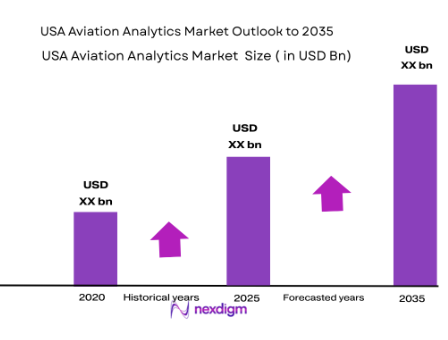
The USA aviation analytics market is valued at approximately USD ~ billion, driven by advancements in data analytics and the increasing adoption of predictive maintenance systems, AI, and machine learning technologies. These solutions are being adopted across airlines, airports, and aviation authorities to enhance operational efficiency, improve safety, and reduce maintenance costs. The market is witnessing robust growth as aviation companies continue to invest in digital transformation to meet regulatory demands and improve customer experience. Dominating the market are cities like New York, Los Angeles, and Chicago, where key players in aviation analytics, such as airlines, MRO service providers, and government agencies, are concentrated. These cities lead in technological infrastructure, regulatory frameworks, and their strategic positions as major aviation hubs, making them pivotal in driving the demand for advanced analytics solutions across the industry.
Market Segmentation
By Product Type
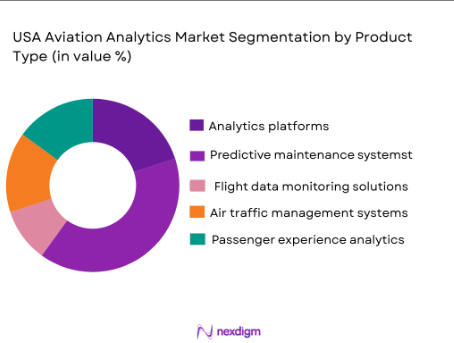
USA Aviation Analytics market is segmented by product type into analytics platforms, predictive maintenance systems, flight data monitoring solutions, air traffic management systems, and passenger experience analytics. Recently, predictive maintenance systems had a dominant market share due to the increasing need for operational efficiency, cost reduction, and proactive maintenance practices that help minimize unexpected failures, enhancing operational performance and safety in aviation.
By Platform Type
USA Aviation Analytics market is segmented by platform type into on-premises platforms, cloud-based platforms, hybrid platforms, mobile-based platforms, and SaaS (Software as a Service) platforms. Recently, cloud-based platforms have dominated the market due to their scalability, cost efficiency, and enhanced data-sharing capabilities across diverse systems and stakeholders, helping airlines and aviation authorities access real-time data and insights from multiple sources in a centralized manner.

Competitive Landscape
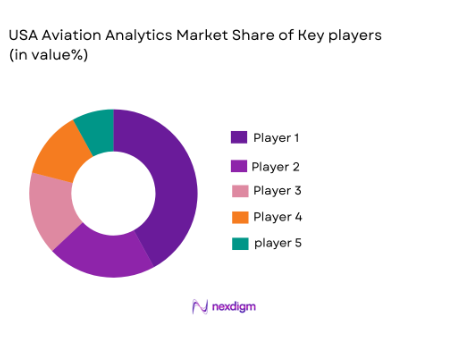
The USA Aviation Analytics market is highly competitive, with consolidation observed in key areas such as predictive maintenance and cloud-based analytics solutions. Major players are focusing on advanced analytics, machine learning, and AI integration to optimize aviation operations. These companies are expanding their market share by acquiring smaller firms with niche analytics technologies, thus influencing the market dynamics.
| Company Name | Establishment Year | Headquarters | Technology Focus | Market Reach | Key Products | Revenue (USD) | Market-Specific Parameter |
| IBM | 1911 | Armonk, NY, USA | ~ | ~ | ~
|
~
|
~
|
| Honeywell | 1906 | Charlotte, NC, USA | ~
|
~
|
~
|
~
|
~
|
| GE Aviation | 1917 | Cincinnati, OH, USA | ~ | ~
|
~
|
~
|
~
|
| SAS | 1976 | Cary, NC, USA | ~
|
~
|
~
|
~
|
~
|
| Airbus | 1970 | Toulouse, France | ~
|
~
|
~
|
~
|
~
|
USA aviation analytics Market Analysis
Growth Drivers
Technological Advancements in Predictive Maintenance
Predictive maintenance has seen significant technological advancements, contributing greatly to the USA aviation analytics market’s growth. The integration of machine learning and AI into predictive maintenance solutions allows airlines to optimize aircraft maintenance schedules, reduce downtime, and prevent costly emergency repairs. This shift from reactive to proactive maintenance improves overall fleet reliability and safety, ultimately enhancing operational efficiency and reducing operational costs. The increasing need to ensure passenger safety and compliance with stringent regulatory requirements further drives the adoption of predictive maintenance systems. Furthermore, these technologies have enabled airlines to improve asset management, reduce fuel consumption, and improve flight operations, thereby driving market growth. The demand for these solutions is expected to grow as more airlines look to leverage big data and analytics to improve their operational workflows, contributing significantly to the market’s expansion.
Regulatory Support and Safety Compliance
The increasing emphasis on aviation safety regulations and the push for compliance with international safety standards is another key growth driver in the USA aviation analytics market. Government regulations and industry standards are continuously evolving, pushing airlines to adopt advanced analytics systems to meet stringent safety and operational requirements. The FAA and other regulatory bodies across the globe are increasingly mandating the use of advanced analytics to ensure the operational integrity of commercial fleets. This regulatory support is creating a favorable environment for the expansion of the market, particularly for flight data monitoring and air traffic management systems, as airlines seek to comply with these mandates while improving safety and operational efficiency. The focus on safety and compliance is anticipated to be a long-term growth driver, leading to the adoption of more sophisticated analytics platforms by operators in the aviation sector.
Market Challenges
Data Privacy and Security Concerns
With the rise in data generation and the widespread use of cloud-based platforms, the USA aviation analytics market faces significant challenges related to data privacy and security. Aviation companies are required to handle vast amounts of sensitive data, including passenger information, flight data, and operational logs. Protecting this data from cyberattacks and breaches is a top concern, especially as cyber threats become more sophisticated. The implementation of robust data protection measures and compliance with data security regulations like GDPR is critical to mitigating these risks. However, the complexity and cost of maintaining secure data infrastructure can be challenging for smaller aviation analytics firms, limiting their ability to compete with larger, more established players in the market. Additionally, as the market becomes more interconnected, the potential for data breaches across interconnected systems increases, further exacerbating security concerns.
High Initial Costs and Integration Complexities
Another significant challenge facing the USA aviation analytics market is the high upfront cost of implementing advanced analytics systems, which can be prohibitive for some players, especially smaller airlines and operators. The cost of hardware, software, and system integration required to deploy analytics platforms can be significant, making it difficult for smaller firms to adopt these solutions. Additionally, integrating new analytics systems with existing infrastructure, including legacy systems, can be complex and time-consuming. This often results in increased implementation costs and longer deployment timelines. These challenges may limit the widespread adoption of aviation analytics solutions, particularly among smaller players in the aviation industry. While the long-term benefits of these systems may justify the initial investment, the high costs and complex integration requirements remain a barrier to entry for many companies.
Opportunities
Expansion of Smart Airport Infrastructure
The development of smart airports presents a significant opportunity for the USA aviation analytics market. As airports continue to modernize and adopt digital solutions, there is a growing need for advanced analytics platforms to monitor and optimize airport operations, improve passenger experience, and ensure safety. Smart airports rely heavily on data from various sources, such as sensors, cameras, and IoT devices, to optimize flight schedules, baggage handling, and security operations. Analytics platforms that aggregate and process this data can provide actionable insights to improve decision-making and streamline airport processes. With governments and airport authorities investing in infrastructure upgrades, the demand for smart airport solutions is expected to drive the adoption of analytics platforms, creating substantial growth opportunities for the market. Additionally, the integration of AI and machine learning into smart airport systems can provide new opportunities for predictive analytics, further enhancing operational efficiency.
Increasing Use of Artificial Intelligence for Flight Data Analysis
The growing adoption of AI and machine learning in flight data analysis presents a significant opportunity for the USA aviation analytics market. AI-powered analytics platforms are capable of processing vast amounts of flight data in real-time, providing insights that help optimize flight operations, enhance safety, and reduce costs. AI can also be used to identify patterns in flight data that human analysts might miss, offering the potential for improved decision-making. This shift towards AI-driven analytics platforms is already gaining momentum in the aviation sector, with more airlines and aviation companies investing in AI technologies to improve operational performance. As AI technologies continue to evolve and mature, their integration into aviation analytics platforms is expected to accelerate, providing new opportunities for growth and innovation in the market.
Future Outlook
The future outlook for the USA aviation analytics market is positive, with continued growth expected over the next five years. Technological advancements in AI, machine learning, and predictive maintenance are likely to drive market expansion. The aviation industry’s focus on safety, operational efficiency, and cost reduction will remain in strong demand-side factors. Additionally, regulatory support for digital aviation solutions and the development of smart airports will further boost market growth. As these trends continue to unfold, the adoption of advanced analytics platforms in the aviation sector is expected to become more widespread.
Major Players
- IBM
- Honeywell
- GE Aviation
- SAS
- Airbus
- Boeing
- Oracle
- Rockwell Collins
- Thales Group
- Lockheed Martin
- SAP
- Raytheon Technologies
- Collins Aerospace
- L3 Technologies
- Amadeus IT Group
Key Target Audience
- Airlines and aviation operators
- Government and regulatory bodies
- Aviation analytics solution providers
- Aircraft manufacturers
- Maintenance, repair, and overhaul (MRO) service providers
- Airports and airport authorities
- Aviation safety organizations
- Investments and venture capitalist firms
Research Methodology
Step 1: Identification of Key Variables
Key market variables, such as product types, platforms, and regulatory frameworks, are identified through initial research and expert consultations.
Step 2: Market Analysis and Construction
Comprehensive analysis of the USA aviation analytics market is conducted, utilizing both primary and secondary research methods to construct a detailed market model.
Step 3: Hypothesis Validation and Expert Consultation
Market trends and assumptions are validated through consultations with industry experts, ensuring accurate market insights and projections.
Step 4: Research Synthesis and Final Output
The final market report is synthesized from the collected data, providing a clear and concise analysis of the USA aviation analytics market with actionable insights.

- Executive Summary
- Research Methodology (Definitions, Scope, Industry Assumptions, Market Sizing Approach, Primary & Secondary Research Framework, Data Collection & Verification Protocol, Analytic Models & Forecast Methodology, Limitations & Research Validity Checks)

- Market Definition and Scope
- Value Chain & Stakeholder Ecosystem
- Regulatory / Certification Landscape
- Sector Dynamics Affecting Demand
- Strategic Initiatives & Infrastructure Growth

- Growth Drivers
Rising demand for operational efficiency and cost reduction
Increasing adoption of AI and machine learning in aviation
Regulatory emphasis on safety and compliance analytics
Growth of connected aircraft and IoT sensor integration
Expansion of cloud-based analytics solutions - Market Challenges
Data privacy and cybersecurity concerns
Integration complexity with legacy aviation systems
High implementation costs for advanced analytics platforms
Shortage of skilled aviation data professionals
Interoperability issues among aviation data standards - Market Opportunities
Growth in predictive maintenance adoption
Expansion of analytics services for emerging airline models
Development of AI-driven real-time decision support tools - Trends
Shift towards real-time analytics and edge computing
Increasing use of digital twins in aviation systems
Integration of passenger experience analytics
Focus on sustainability and emissions analytics
Collaborative analytics platforms between airlines and airports - Government Regulations & Defense Policy
FAA regulations on aviation data standards
Mandates on safety analytics for commercial operators
Government initiatives promoting aviation digitalization - SWOT Analysis
- Stakeholder and Ecosystem Analysis
- Porter’s Five Forces Analysis
- Competition Intensity and Ecosystem Mapping

- By Market Value, 2020-2025
- By Installed Units, 2020-2025
- By Average System Price, 2020-2025
- By System Complexity Tier, 2020-2025

- By Solution Type (In Value%)
Flight Operations Analytics
Maintenance Analytics
Passenger Analytics
Revenue Management Analytics
Safety & Compliance Analytics - By Deployment Mode (In Value%)
Cloud-based Analytics
On-premises Analytics
Hybrid Analytics
Edge Analytics
Mobile Analytics - By End User (In Value%)
Airlines
Airports
MRO Service Providers
Aviation OEMs
Government & Defense - By Application (In Value%)
Predictive Maintenance
Operational Efficiency Optimization
Fuel Efficiency & Emissions Analytics
Customer Experience Management
Safety & Risk Analytics - By Procurement Channel (In Value%)
Direct Vendor Contracts
System Integrators
Cloud Marketplaces
Third-party Resellers
Value-added Distributors - By Technology (In Value%)
Artificial Intelligence & Machine Learning
Big Data Analytics
IoT & Sensor Analytics
Blockchain-enabled Analytics
Real-time Streaming Analytics

- Market share snapshot of major players
- Cross Comparison Parameters (Technology Innovation, Deployment Flexibility, Market Reach, Solution Depth, Customer Base)
- SWOT Analysis of Key Competitors
- Pricing & Procurement Analysis
- Key Players
IBM Corporation
SAS Institute
Oracle Corporation
SAP SE
Honeywell Aerospace
GE Aviation
Microsoft Corporation
Rockwell Collins
Accenture plc
Booz Allen Hamilton
Amadeus IT Group
Salesforce, Inc.
Palantir Technologies
Aviation Analytics LLC

- Airlines leveraging data for network planning
- Airports applying analytics for passenger flow optimization
- MROs using predictive maintenance analytics
- Government agencies monitoring safety compliance

- Forecast Market Value, 2026-2035
- Forecast Installed Units, 2026-2035
- Price Forecast by System Tier, 2026-2035
- Future Demand by Deployment Mode, 2026-2035


 Request a Sample
 Ask for Customization
 Get a Quote
 Enquire Now