

 Download PDF
Market Overview
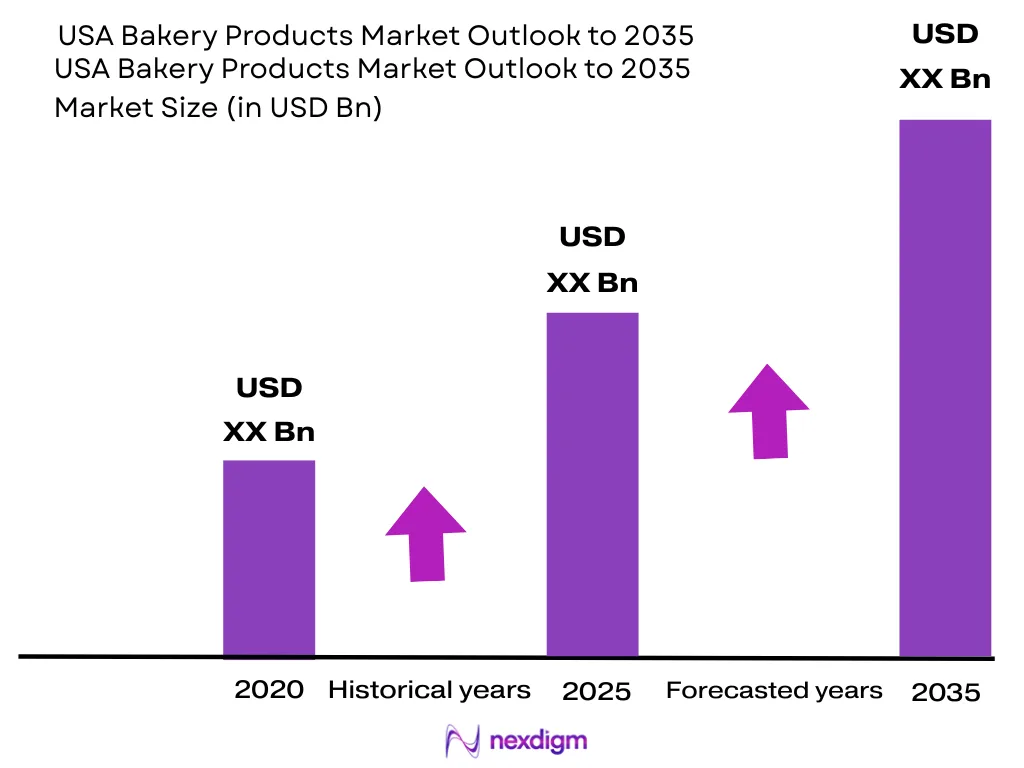
The USA bakery products market is valued at approximately USD ~ billion, supported by strong consumer demand for bread, cakes, cookies, pastries, tortillas, and frozen bakery products. According to data published by the American Bakers Association, the U.S. commercial baking industry generates over USD ~ billion in economic activity and supports more than 800,000 jobs. Retail sales of baked goods continue to benefit from increasing demand for convenience foods, private-label offerings, premium bakery products, and healthier alternatives such as whole-grain and gluten-free products. Rising household food expenditures and the expansion of supermarket in-store bakeries further strengthen market demand.
Market Segmentation
By Product Type
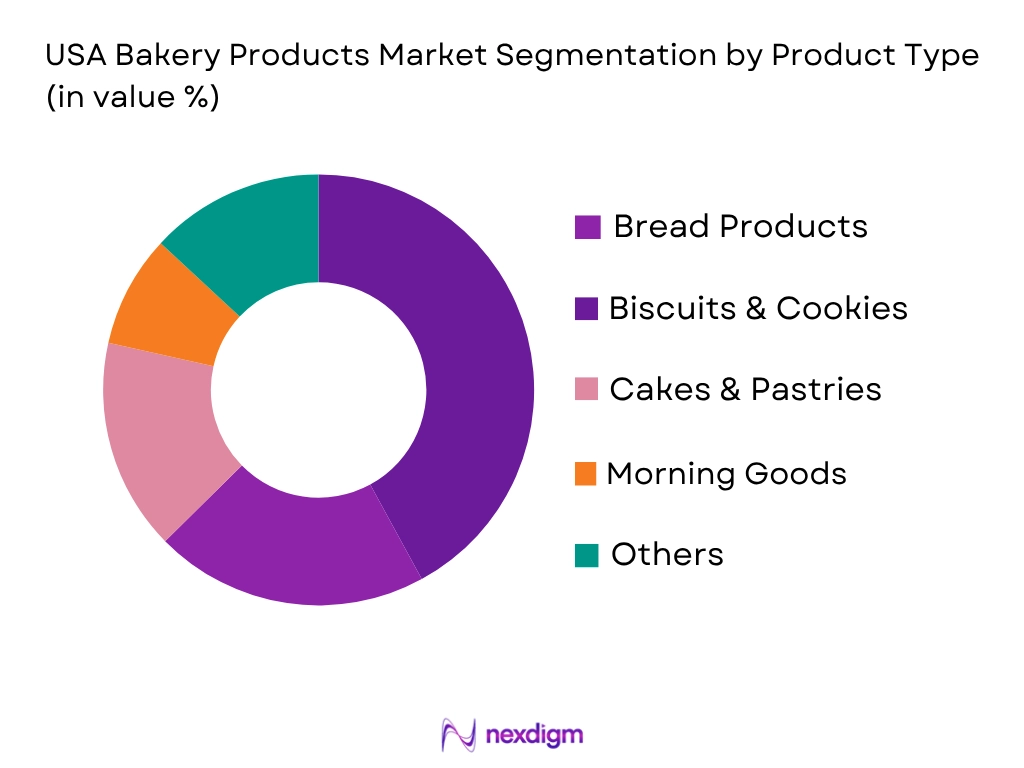
The USA bakery products market is segmented into bread products, cookies & biscuits, cakes & pastries, morning goods, frozen bakery products, tortillas & flatbreads, and artisan bakery products. Recently, bread products have maintained the dominant market share under this segmentation due to their status as a staple food item across American households. Bread remains one of the most frequently purchased grocery products and is consumed across multiple meal occasions including breakfast, lunch, and snacks. The category benefits from widespread availability through supermarkets, convenience stores, club stores, and foodservice channels. Continuous innovation in whole-grain, high-protein, organic, and gluten-free bread offerings has further expanded consumer appeal. Major manufacturers have also strengthened distribution capabilities, ensuring consistent availability nationwide, thereby supporting the segment’s leadership position.
By Distribution Channel
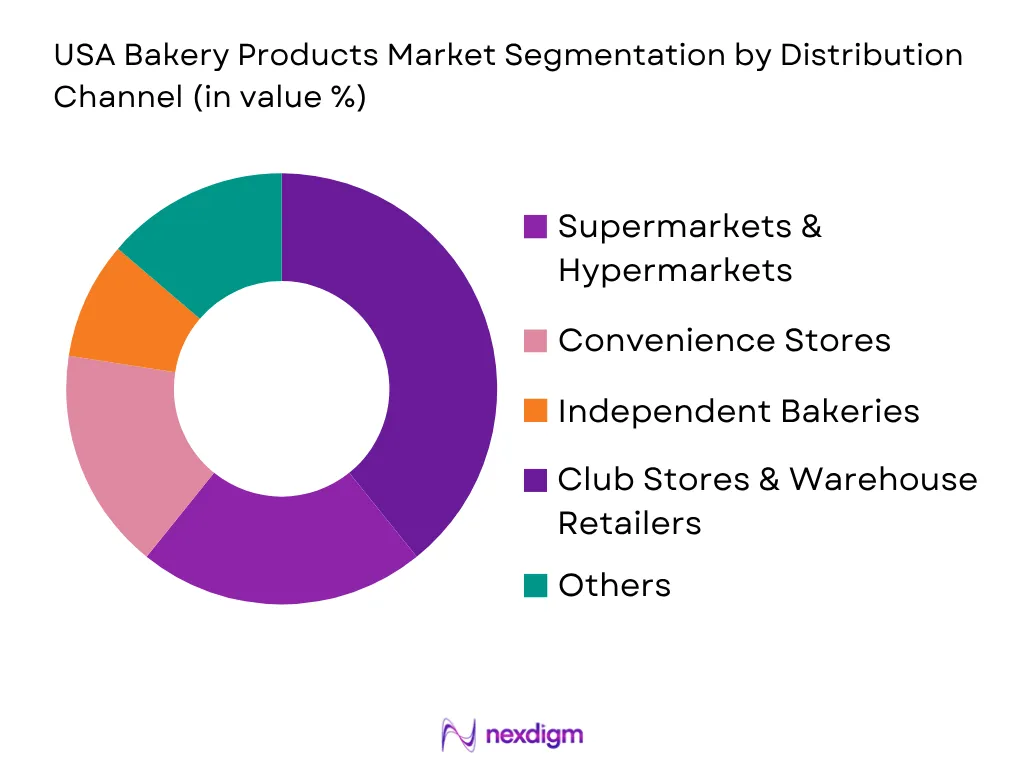
By Distribution Channel, Supermarkets & Hypermarkets account for the largest share due to their ability to provide extensive product variety under one roof. Major retailers offer fresh bakery products, packaged baked goods, private-label offerings, and premium imported bakery items. Consumers increasingly prefer organized retail channels because of convenience, product consistency, promotional discounts, and quality assurance. The expansion of retail chains throughout USA has strengthened product accessibility. Additionally, in-store bakeries within supermarkets provide freshly baked bread, pastries, and cakes, attracting high foot traffic and encouraging impulse purchases. Strong cold chain and inventory management systems further support efficient distribution of bakery products across multiple regions.
Competitive Landscape
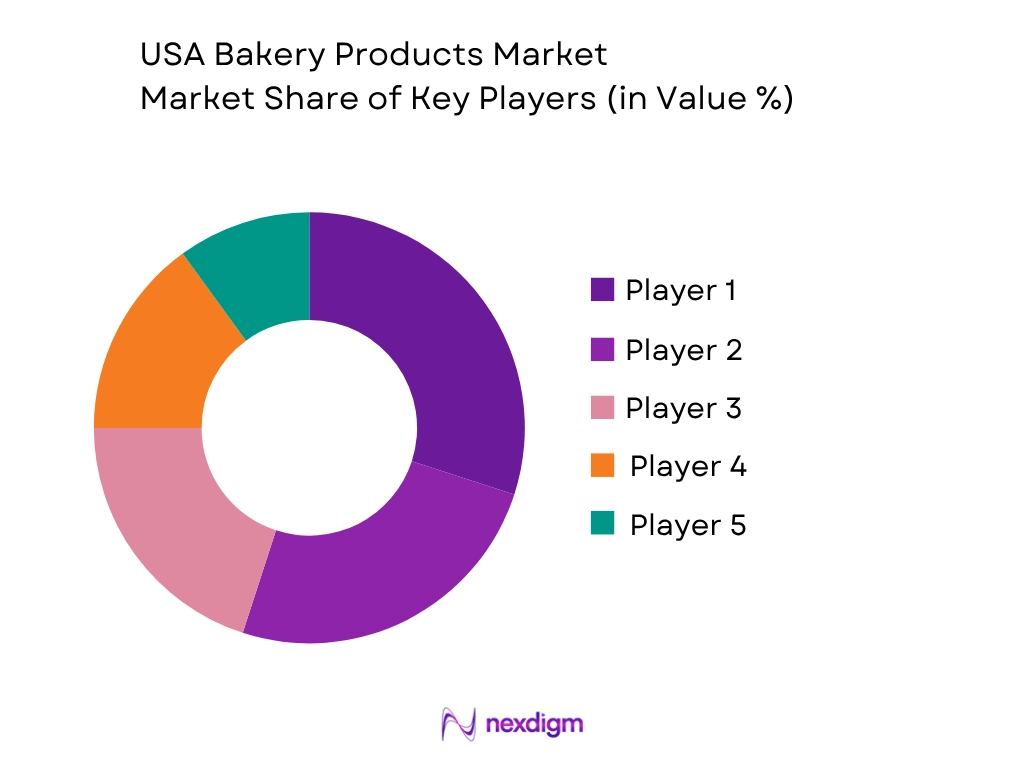
The USA bakery products market is characterized by the presence of several large-scale commercial bakery manufacturers alongside regional and specialty bakery brands. Industry leadership is concentrated among companies with extensive production capabilities, diversified product portfolios, nationwide distribution networks, and strong retail partnerships. The competitive environment is shaped by product innovation, premiumization strategies, health-focused formulations, private-label manufacturing, and investments in automation technologies.
| Company | Establishment Year | Headquarters | Key Brands | Product Portfolio | Distribution Reach | Manufacturing Presence | Retail Penetration | Innovative Focus |
| Grupo Bimbo | 1945 | ~ | ~ | ~ | ~ | ~ | ~ | ~ |
| Flowers Foods | 1919 | ~ | ~ | ~ | ~ | ~ | ~ | ~ |
| Campbell Soup Company | 1869 | ~ | ~ | ~ | ~ | ~ | ~ | ~ |
| Lewis Bakeries | 1925 | ~ | ~ | ~ | ~ | ~ | ~ | ~ |
| United States Bakery | 1906 | ~ | ~ | ~ | ~ | ~ | ~ | ~ |
USA Bakery Products Market Analysis
Growth Drivers
Rising Household Food Consumption and Bakery Demand
The USA bakery products market continues to benefit from strong household food consumption patterns and the essential role of bakery products in daily diets. According to the U.S. Department of Agriculture (USDA) Food Expenditure Series, total U.S. food spending reached approximately USD 2.58 trillion, with food-away-from-home expenditure increasing from USD 1.45 trillion to USD 1.52 trillion between recent reporting periods, demonstrating sustained demand for prepared food products that heavily utilize bread, buns, rolls, tortillas, pastries, and other bakery items. The U.S. population exceeded 340 million people, creating one of the world’s largest consumer bases for staple food products. Rising disposable incomes have also supported bakery consumption. According to the U.S. Bureau of Labor Statistics, annual consumer expenditures reached USD 150,342 for households in the highest income quintile during the latest reporting period, indicating substantial purchasing power for premium bakery products, artisan offerings, and convenience-oriented baked foods. Additionally, USDA data indicates that consumers allocated 10.4% of disposable personal income to food expenditures, highlighting the continued importance of food purchases within household budgets. Bread products remain among the most frequently purchased grocery items due to their affordability, versatility, and widespread availability across retail channels. Growth in sandwich consumption, breakfast bakery products, and convenience meals continues to drive commercial bakery production throughout the country.
Expansion of Foodservice, Quick-Service Restaurants, and Retail Bakery Infrastructure
The extensive U.S. foodservice ecosystem acts as a major demand generator for bakery products. USDA Economic Research Service data shows that food-away-from-home expenditures reached approximately USD 1.52 trillion, surpassing food-at-home spending and reinforcing the growing role of restaurants, cafes, bakeries, institutional kitchens, and quick-service restaurant chains as major consumers of bakery products. Major fast-food chains, coffee outlets, convenience stores, and grocery retailers rely heavily on buns, sandwich bread, bagels, muffins, croissants, tortillas, and sweet baked goods. The continued expansion of foodservice establishments across urban and suburban areas increases procurement volumes for commercial bakeries. Foodservice price growth of 4.1 in the latest reporting period further reflects sustained demand across restaurant and hospitality channels. Retail infrastructure also supports market expansion. The United States maintains one of the largest grocery retail networks globally, including supermarkets, warehouse clubs, mass merchandisers, and specialty bakery chains. The increasing presence of in-store bakeries allows retailers to offer fresh bread and premium baked products daily. Furthermore, food processing, wholesaling, and retailing account for approximately 63–67 cents of every food-at-home dollar, highlighting the significant economic role of downstream food distribution channels that support bakery product availability nationwide.
Market Challenges
Wheat Supply Volatility and Agricultural Input Pressures
The bakery industry remains highly dependent on wheat flour, making it vulnerable to agricultural supply fluctuations and commodity market pressures. Wheat serves as the primary raw material for bread, rolls, cakes, pastries, cookies, and numerous baked products. Variability in weather conditions, drought events, transportation bottlenecks, and global grain market disruptions can directly affect flour availability and production planning for bakery manufacturers. The USDA reports continued volatility across food categories and agricultural supply chains, with food prices increasing by 2.3 during the latest reporting period. Although bakery price inflation moderated relative to previous years, ingredient procurement remains a significant operational concern for manufacturers. Flour millers, ingredient suppliers, and bakery operators must continuously adjust sourcing strategies to maintain production efficiency and stable inventories. In addition, the large scale of the U.S. food economy creates substantial raw material requirements. Total food expenditures exceeded USD 2.5 trillion, reflecting the enormous volume of agricultural inputs required throughout the food manufacturing sector. Bakery producers must compete with other food processors for wheat-based ingredients, creating supply-side challenges during periods of constrained agricultural production. These factors increase operational complexity and require advanced procurement, storage, and inventory management systems across the bakery value chain.
Labor Constraints and Rising Operational Complexity
Commercial bakeries face ongoing labor challenges across manufacturing, packaging, logistics, quality assurance, and distribution operations. The bakery industry relies heavily on skilled workers to manage production lines, maintain food safety standards, and operate increasingly automated manufacturing systems. Labor shortages have become particularly significant for large-scale commercial bakeries operating around-the-clock production schedules. The size of the U.S. consumer market amplifies this challenge. With more than 340 million residents and food expenditures surpassing USD 2.5 trillion, bakeries must maintain extensive production and distribution networks to satisfy nationwide demand. This requires a substantial workforce across manufacturing plants, distribution centers, and retail operations. At the same time, increasing consumer demand for fresh bakery products, clean-label ingredients, gluten-free formulations, and specialty baked goods has expanded production complexity. Manufacturers must manage shorter product lifecycles, stricter quality requirements, and more diverse product portfolios. These operational demands increase workforce training requirements and create additional pressure on production efficiency. As bakery companies continue investing in automation technologies, workforce adaptation and technical skill development remain critical challenges affecting overall industry productivity.
Market Opportunities
Premium, Health-Oriented, and Functional Bakery Product Innovation
Changing consumer preferences present significant opportunities for bakery manufacturers focused on premium and health-oriented product categories. Consumers are increasingly seeking products made with whole grains, natural ingredients, high-protein formulations, fiber enrichment, and reduced sugar content. These trends are creating new revenue opportunities across both retail and foodservice channels. Strong consumer spending supports this transition toward premium bakery products. According to the U.S. Bureau of Labor Statistics, households in the highest income segment reported annual expenditures of USD 150,342, demonstrating considerable purchasing power for value-added bakery offerings. Premium bread, artisan loaves, organic baked goods, and specialty dietary products are benefiting from these spending patterns. The overall food expenditure environment remains highly supportive. Consumers continue allocating more than 10% of disposable personal income toward food purchases, while food-at-home spending exceeds USD 1 trillion annually. These spending levels provide bakery manufacturers with opportunities to differentiate products through nutrition, ingredient transparency, sustainability, and convenience features. As health awareness continues to influence purchasing behavior, companies that expand functional bakery portfolios are well-positioned to capture future demand growth.
Growth of E-Commerce, Convenience Retail, and Frozen Bakery Distribution
The rapid evolution of food distribution channels creates substantial opportunities for bakery manufacturers. Online grocery platforms, direct-to-consumer food delivery services, convenience stores, and warehouse retailers are expanding access to bakery products across the country. These channels allow manufacturers to reach consumers beyond traditional supermarket networks. USDA data shows that food-away-from-home spending exceeded USD 1.5 trillion, illustrating the growing importance of convenience-driven food purchasing behaviors. Consumers increasingly prioritize ready-to-eat, ready-to-bake, and easy-to-prepare food products, which supports demand for frozen bakery items, packaged bread products, and portable snack bakery categories. The scale of the U.S. food economy further strengthens this opportunity. Total food expenditures reached approximately USD 2.58 trillion, while food-at-home spending surpassed USD 1 trillion. These figures demonstrate the extensive distribution ecosystem available for bakery manufacturers. Expansion of cold-chain logistics, fulfillment centers, and omnichannel retail strategies enables broader market penetration for frozen dough, frozen bread, premium baked goods, and specialty bakery products. Companies capable of integrating digital retail channels with efficient distribution systems are expected to benefit from continued structural changes in consumer purchasing behavior.
Future Outlook
The USA bakery products market is expected to maintain steady growth throughout the forecast period, supported by evolving consumer preferences, product innovation, and expanding retail distribution. Demand for healthier bakery offerings such as whole-grain, gluten-free, organic, and protein-enriched products is expected to accelerate product development initiatives. Manufacturers are increasingly investing in automation, digital supply chain management, and sustainable packaging solutions to improve operational efficiency and profitability. The frozen bakery segment is anticipated to experience substantial expansion as consumers seek convenience-oriented meal solutions. Growth in e-commerce grocery platforms and direct-to-consumer bakery sales will further diversify distribution opportunities. Premium artisan products and clean-label formulations are expected to gain traction among health-conscious consumers, while private-label bakery products are likely to strengthen their market presence due to value-focused purchasing behavior.
Major Players
- Grupo Bimbo
- Flowers Foods
- Pepperidge Farm
- Lewis Bakeries
- Sara Lee Bread
- Nature’s Own
- Wonder Bread
- Dave’s Killer Bread
- Canyon Bakehouse
- Franz Bakery
- Martin’s Famous Pastry Shoppe
- United States Bakery
- Hostess Brands
- Entenmann’s
- Tastykake
Key Target Audience
- Commercial Bakery Manufacturers
- Bread and Bakery Product Brands
- Frozen Bakery Product Manufacturers
- Wheat Flour Millers and Ingredient Suppliers
- Foodservice Operators and Restaurant Chains
- Supermarket and Grocery Retail Chains
- Investments and Venture Capitalist Firms
- Government and Regulatory Bodies (U.S. Food and Drug Administration, United States Department of Agriculture)
Research Methodology
Step 1: Identification of Key Variables
The initial phase involves constructing a comprehensive ecosystem map covering bakery manufacturers, ingredient suppliers, distributors, retailers, foodservice operators, and consumers. Extensive secondary research is conducted through industry publications, company reports, trade associations, and government databases to identify critical variables affecting market performance and demand dynamics.
Step 2: Market Analysis and Construction
Historical market data related to bakery product production, consumption, pricing trends, retail sales, and distribution channels are analyzed. Revenue generation patterns, category penetration, consumer purchasing behavior, and regional demand variations are evaluated to establish reliable market estimates and industry benchmarks.
Step 3: Hypothesis Validation and Expert Consultation
Preliminary market findings are validated through structured interviews with bakery manufacturers, distributors, retail buyers, ingredient suppliers, and industry executives. These consultations provide insights regarding product demand, operational challenges, competitive strategies, and future growth opportunities within the bakery sector.
Step 4: Research Synthesis and Final Output
The final stage integrates findings from both primary and secondary research sources. Data triangulation techniques are applied to validate market assumptions and forecasts. The resulting analysis delivers a comprehensive assessment of market size, segmentation, competitive landscape, consumer trends, and future growth prospects within the USA bakery products market.

- Executive Summary
- Research Methodology (Market Definitions and Assumptions, Abbreviations, Market Sizing Approach, Top-Down Analysis, Bottom-Up Analysis, Demand-Side Assessment, Supply-Side Assessment, Primary Industry Interviews, Data Triangulation, Forecasting Framework, Limitations and Future Conclusions)

- Definition and Scope
- Market Evolution and Industry Genesis
- Timeline of Major Industry Developments
- Bakery Industry Value Chain Analysis
- Supply Chain Analysis

- Growth Drivers (High Household Bread Consumption, Expansion of Retail Bakery Sections, Growing Demand for Convenient Meal Solutions, Rising Health-Conscious Consumer Base, Increasing Demand for Whole Grain Products, Strong Foodservice Utilization, Population Growth, Private Label Expansion)
- Market Challenges (Wheat Price Volatility, Labor Shortages in Commercial Bakeries, Shelf-Life Limitations, Energy Cost Inflation, Distribution Complexity for Fresh Products, Ingredient Cost Pressures, Health Concerns Around Refined Carbohydrates, Supply Chain Disruptions)
- Market Opportunities (Premium Artisan Bread Expansion, Functional Bread Innovation, High-Protein Bread Demand, Clean Label Product Development, Organic Bread Penetration, Frozen Bread Growth, E-Commerce Grocery Expansion, Ethnic and Specialty Bread Categories)
- Market Trends (Sourdough Popularity, Whole Grain Adoption, Clean Label Reformulation, Protein-Fortified Bread Launches, Gluten-Free Innovation, Premiumization of Bread Products, Sustainable Packaging Adoption, Private Label Growth)
- Government Regulations (FDA Food Safety Regulations, FSMA Compliance Requirements, Nutritional Labeling Standards, Enriched Flour Standards, Ingredient Disclosure Requirements, Allergen Labeling Rules, Packaging Compliance Standards, Interstate Food Distribution Regulations)
- SWOT Analysis
- Porter’s Five Forces Analysis
- PESTLE Analysis
- Stakeholder Ecosystem
- Competition Ecosystem

- By Market Value (2020-2025)
- By Volume Consumption (2020-2025)
- By Average Selling Price (2020-2025)

- By Product Type (In Value %)
Bread Products
Cakes and Pastries
Cookies and Biscuits
Morning Goods (Muffins, Donuts, Croissants, Bagels)
Frozen Bakery Products
Artisan and Specialty Bakery Products
Tortillas and Flatbreads
Bakery Snacks and Sweet Baked Goods - By Ingredient Type (In Value %)
Conventional Bakery Products
Whole Grain Bakery Products
Gluten-Free Bakery Products
Organic Bakery Products
High-Protein Bakery Products
Low Sugar Bakery Products - By Distribution Channel (In Value %)
Supermarkets and Hypermarkets
Convenience Stores
Club Stores and Warehouse Retailers
Independent Bakeries
Specialty Bakery Chains
Online Retail and Direct-to-Consumer
Foodservice and Institutional Sales - By Region (In Value %)
Northeast USA
Midwest USA
South USA
West USA - By Packaging Type (In Value %)
Flexible Packaging
Paper Packaging
Plastic Containers
Cartons and Boxes
Sustainable and Recyclable Packaging

- Market Share of Major Players (By Value, Volume, Product Type, Distribution Channel, Production Format)
- Cross Comparison Parameters (Product Portfolio Breadth, Bread SKU Count, Bread Production Capacity, Fresh Bread Distribution Reach, Route-to-Market Strength, Private Label Manufacturing Capability, Health-Oriented Bread Portfolio, New Product Launch Frequency)
- SWOT Analysis of Major Players
- Pricing Analysis by SKU and Product Category
- Detailed Profiles of Major Companies
Grupo Bimbo USA
Flowers Foods
Pepperidge Farm
Lewis Bakeries
Schmidt Baking Company
Sara Lee Bread
Nature’s Own
Wonder Bread
Dave’s Killer Bread
Canyon Bakehouse
Franz Bakery
Martin’s Famous Pastry Shoppe
United States Bakery
Hostess Brands Bakery Division
Aldi Private Label Bakery

- Consuption Behavior Assessment
- Demographic Consumption Trends
- Household Bread Expenditure Analysis
- Fresh Bread vs Packaged Bread Preference Analysis
- Premium vs Mass Market Consumption Analysis
- Health and Wellness Influence on Purchasing Decisions
- Product Attribute Preference Analysis
- Consumer Pain Point Analysis
- Brand Loyalty Assessment
- Online vs Offline Purchase Behavior
- Purchase Decision-Making Process

- By Market Value (2026-2035)
- By Volume Consumption (2026-2035)
- By Average Selling Price (2026-2035)


 Request a Sample
 Ask for Customization
 Get a Quote
 Enquire Now