
 Download PDF
 Download PDF
Market Overview
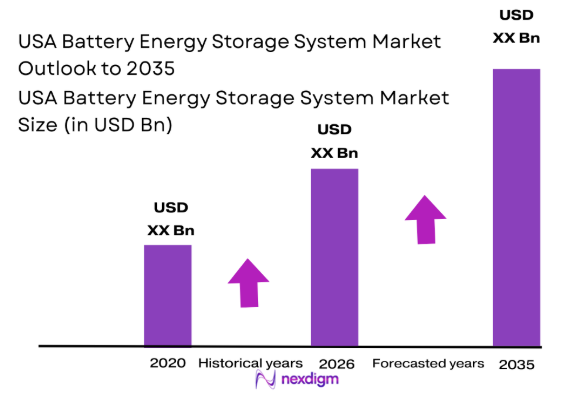
The USA battery energy storage system market has experienced significant growth, driven by the increasing demand for renewable energy integration, grid modernization, and energy storage technologies. The market size, based on a recent historical assessment, stands at approximately USD ~ billion, with growth being fueled by advancements in lithium-ion battery technologies and rising government incentives for clean energy adoption. Utility-scale storage systems continue to dominate the landscape, as energy storage becomes essential for balancing supply and demand in renewable energy grids.
Dominant regions in the USA for battery energy storage systems are California, Texas, and New York, driven by high energy consumption rates, a growing commitment to renewable energy, and robust state policies. California, in particular, leads due to its ambitious renewable energy goals and regulatory framework, which have accelerated the adoption of energy storage systems. Texas has seen a surge in demand thanks to its large-scale wind and solar farms, while New York benefits from strong state-backed incentives for green technologies.
Market Segmentation
By System Type
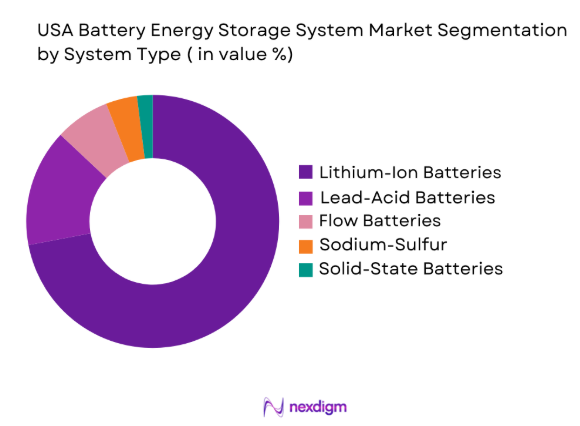
The USA battery energy storage system market is segmented by system type into lithium-ion, lead-acid, flow battery, sodium-sulfur, and solid-state battery systems. Recently, lithium-ion battery systems have seen a dominant market share due to their higher efficiency, longer lifespan, and decreasing costs. Their widespread adoption in both grid-scale and residential energy storage systems is driven by continuous improvements in battery performance, reductions in manufacturing costs, and increased energy demand across various sectors. The scalability and flexibility of lithium-ion batteries have positioned them as the preferred choice for both commercial and residential installations.
By Platform Type
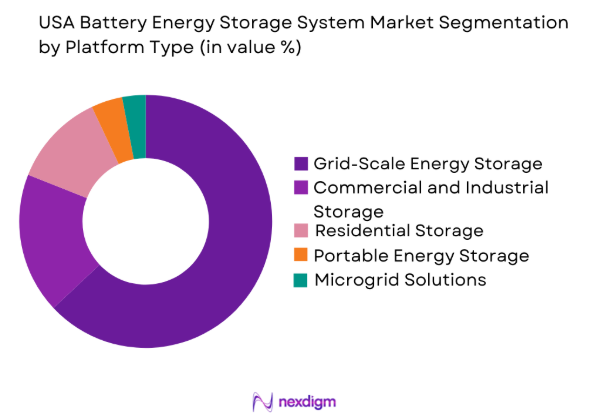
The USA battery energy storage system market is segmented by platform type into grid-scale energy storage, commercial and industrial storage, residential storage, portable energy storage, and microgrid solutions. Grid-scale energy storage has recently dominated the market share, driven by its ability to store large amounts of energy generated by renewable sources. The increasing demand for energy reliability and the need to balance intermittent renewable energy generation have spurred the growth of this platform. Utility companies are deploying grid-scale storage systems to support grid stability and reduce dependence on fossil fuels, enhancing energy security and reducing operational costs.
Competitive Landscape
The competitive landscape of the USA battery energy storage system market is characterized by consolidation and a few key players who dominate the sector. Companies like Tesla, Fluence, and LG Chem lead the market, driving innovation and influencing the direction of industry standards. These companies have established strong market positions through strategic partnerships, technological advancements, and consistent product development. As the market grows, competition intensifies, leading to further mergers and acquisitions in the sector.
| Company Name | Establishment Year | Headquarters | Technology Focus | Market Reach | Key Products | Revenue (USD) | Additional Parameter |
| Tesla | 2003 | Palo Alto, CA | ~ | ~ | ~ | ~ | ~ |
| Fluence | 2018 | Arlington, VA | ~ | ~ | ~ | ~ | ~ |
| LG Chem | 1947 | Seoul, South Korea | ~ | ~ | ~ | ~ | ~ |
| Samsung SDI | 1970 | Seoul, South Korea | ~ | ~ | ~ | ~ | ~ |
| VARTA AG | 1887 | Ellwangen, Germany | ~ | ~ | ~ | ~ | ~ |
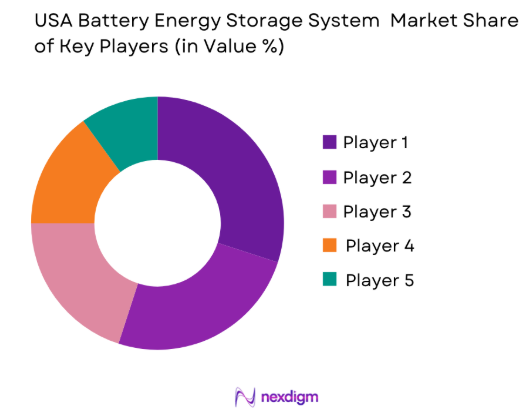
USA Battery Energy Storage System Market Analysis
Growth Drivers
Technological Advancements in Battery Energy Storage Systems
The rapid evolution of battery technologies is driving growth in the USA battery energy storage system market. Improvements in lithium-ion battery performance, such as higher energy density, faster charging, and lower costs, make energy storage more viable for both residential and commercial uses. As storage becomes more affordable, it supports the widespread adoption of renewable energy sources like solar and wind. Additionally, the growth of electric vehicle (EV) adoption, which shares similar battery technologies, accelerates innovation and reduces costs through economies of scale. As energy storage systems become more efficient and cost-effective, they are expected to drive greater market adoption, advancing the USA’s transition to a sustainable energy grid.
Government Support and Policy Incentives
Government incentives and policies play a crucial role in driving the growth of the USA battery energy storage market. Federal and state-level initiatives, such as tax credits, grants, and renewable energy targets, have accelerated the adoption of energy storage solutions. Significant investments in grid-scale storage have been made through programs like the Department of Energy’s funding for advanced battery storage research. States like California and New York have introduced policies to support energy storage, particularly for utilities integrating renewable energy into the grid. These policies, coupled with ongoing technological innovation, are expected to boost market growth as businesses and households adopt energy storage to enhance reliability, reduce costs, and support sustainability.
Market Challenges
High Initial Capital Investment for Energy Storage Solutions
A key challenge in the USA battery energy storage system market is the high initial capital investment required for deployment. While long-term savings are substantial, the upfront costs remain a barrier for businesses, utilities, and residential users. This is especially true for large-scale installations, where infrastructure, land acquisition, and installation costs are significant. Despite price reductions in recent years, the financial burden remains a critical issue, particularly in areas with lower energy prices or fewer policy incentives. Models like power purchase agreements (PPAs) and Energy Storage as a Service (ESaaS) help mitigate costs, but high initial investment remains a major hurdle.
Regulatory and Compliance Barriers in Energy Storage Adoption
Regulatory and compliance challenges significantly impact the adoption of battery energy storage systems in the USA. The market is faced with complex standards and codes, especially at the grid scale, as each state has different rules for installation, operation, and safety. These inconsistencies create difficulties for energy storage providers and utilities. Additionally, systems must meet the varying standards of grid operators across regions, which can cause delays and increased costs. The absence of clear frameworks for integrating storage into existing grids further complicates project deployment. While regulatory updates may alleviate these issues over time, they remain a barrier to market growth in the short term.
Opportunities
Growth of Energy Storage as a Service (ESaaS)
The growth of the Energy Storage as a Service (ESaaS) model is driven by the increasing demand for flexible, scalable energy storage solutions. ESaaS allows businesses and utilities to deploy energy storage systems without high upfront costs by offering storage capacity on a subscription or lease basis, where customers pay only for the energy they use. This model is especially beneficial for commercial and industrial users seeking energy reliability and cost reduction without substantial capital investments. As ESaaS adoption grows, it enhances the integration of renewable energy, allowing customers to store surplus energy during off-peak times and reduce dependency on fossil fuels during peak demand periods.
Expansion of Electric Vehicle Charging Infrastructure
The rapid expansion of electric vehicle (EV) charging infrastructure presents a significant opportunity for the USA battery energy storage market. As more consumers transition to EVs, the demand for charging stations and energy storage solutions will increase. Battery energy storage systems can help optimize the operation of charging stations by storing electricity during off-peak hours and discharging it during peak demand times, improving grid stability and reducing costs. Additionally, EV batteries themselves are being integrated into energy storage systems, creating new opportunities for energy storage providers. This trend toward utilizing vehicle-to-grid (V2G) technology, where EVs act as mobile energy storage units, will drive further adoption of storage systems across the USA, particularly in urban areas with high EV penetration.
Future Outlook
The future outlook of the USA battery energy storage system market is highly promising, with significant growth anticipated over the next five years. The increasing demand for renewable energy integration, coupled with government support for energy storage technologies, is expected to drive the market. Technological advancements in battery performance and cost reduction will further accelerate adoption, particularly in grid-scale applications and electric vehicle charging infrastructure. As the market matures, we anticipate more widespread deployment of energy storage systems, with a particular focus on integrating them into smart grids and microgrid systems.
Major Players
- Tesla
- Fluence
- LG Chem
- Samsung SDI
- VARTA AG
- AES Energy Storage
- Panasonic
- BYD Company
- Siemens
- Eos Energy
- General Electric
- NTT Data
- RWE AG
- Sonnen
- Nexans
Key Target Audience
- Investments and venture capitalist firms
- Government and regulatory bodies
- Utility companies
- Renewable energy providers
- Commercial and industrial consumers
- Residential energy consumers
- Electric vehicle manufacturers
- Energy storage solution providers
Research Methodology
Step 1: Identification of Key Variables
The first step involves identifying the key variables impacting the USA battery energy storage system market, including market size, technology trends, and regulatory influences.
Step 2: Market Analysis and Construction
This step involves analyzing historical data, trends, and current market dynamics to build a comprehensive model of the market’s present and future state.
Step 3: Hypothesis Validation and Expert Consultation
Expert consultation and market surveys are conducted to validate assumptions and refine market projections.
Step 4: Research Synthesis and Final Output
The final step involves synthesizing all data and insights into a cohesive report, presenting the findings with recommendations and actionable insights.

- Executive Summary
- Research Methodology (Definitions, Scope, Industry Assumptions, Market Sizing Approach, Primary & Secondary Research Framework, Data Collection & Verification Protocol, Analytic Models & Forecast Methodology, Limitations & Research Validity Checks)

- Market Definition and Scope
- Value Chain & Stakeholder Ecosystem
- Regulatory / Certification Landscape
- Sector Dynamics Affecting Demand
- Strategic Initiatives & Infrastructure Growth

- Growth Drivers
Rising Demand for Renewable Energy Integration
Government Incentives and Policy Support for Energy Storage
Technological Advancements in Energy Storage Systems - Market Challenges
High Initial Capital Investment for Energy Storage Solutions
Regulatory and Compliance Barriers in Energy Storage Adoption
Supply Chain Constraints in Energy Storage Manufacturing - Market Opportunities
Growth of Energy Storage as a Service (ESaaS)
Expansion of Electric Vehicle Charging Infrastructure
Increased Deployment of Microgrids and Distributed Energy Resources - Trends
Advancements in Lithium-Ion Battery Efficiency
Integration of AI and IoT in Battery Management Systems
Rising Adoption of Decentralized Energy Storage Solutions - Government Regulations
- SWOT Analysis of Key Competitors
- Porter’s Five Forces

- By Market Value, 2020-2025
- By Installed Units, 2020-2025
- By Average System Price, 2020-2025
- By System Complexity Tier, 2020-2025

- By System Type (In Value%)
Lithium-Ion Battery Systems
Flow Battery Systems
Sodium-Sulfur Battery Systems
Lead-Acid Battery Systems
Solid-State Battery Systems - By Platform Type (In Value%)
Grid-Scale Energy Storage
Commercial and Industrial Storage
Residential Storage
Portable Energy Storage
Microgrid Solutions - By Fitment Type (In Value%)
On-site Solutions
Off-site Solutions
Hybrid Solutions
Modular Systems
Integrated Systems - By End User Segment (In Value%)
Utility Companies
Industrial Consumers
Residential Consumers
Government & Defense
Renewable Energy Providers - By Procurement Channel (In Value%)
Direct Procurement
Government Tenders
Private Sector Procurement
Online Bidding Platforms
Third-party Distributors

- Market Share Analysis
- Cross Comparison Parameters (System Type, Platform Type, Procurement Channel, End User Segment, Fitment Type, Battery Chemistry, Storage Capacity, Charging Speed, System Lifecycle, Installation Location)
- SWOT Analysis of Key Competitors
- Pricing & Procurement Analysis
- Key Players
Tesla
AES Energy Storage
LG Chem
Samsung SDI
Fluence
Siemens
VARTA AG
Eos Energy
Panasonic
Sonnen
EDF Energy
General Electric
NTT Data
BYD Company
RWE AG

- Utility Companies’ Shift to Cleaner Energy Storage Solutions
- Industrial Consumers’ Interest in Energy Resilience
- Residential Market Growth Driven by Solar Energy Storage
- Government and Defense Adoption for Energy Security
Renewable Energy Providers’ Push for Battery Storage

- Forecast Market Value, 2026-2035
- Forecast Installed Units, 2026-2035
- Price Forecast by System Tier, 2026-2035
- Future Demand by Platform, 2026-2035


 Request a Sample
 Ask for Customization
 Get a Quote
 Enquire Now