
 Download PDF
Market Overview
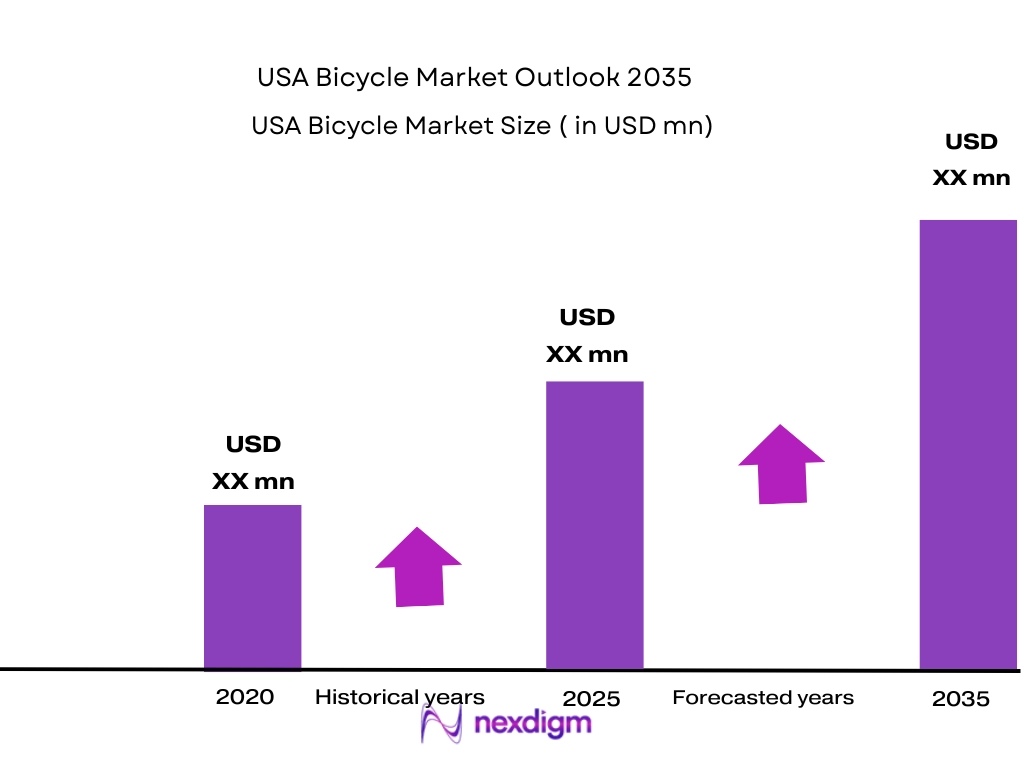
The USA bicycle market is valued at approximately USD ~ million in 2025, supported by strong outdoor recreation participation, rising interest in health and fitness, growing adoption of e-bikes, expanding cycling infrastructure, and increasing use of bicycles for leisure, commuting, and last-mile mobility. The United States remains one of the largest global bicycle markets due to its large consumer base, developed retail ecosystem, high disposable income, and strong presence of premium bicycle brands. The U.S. population was estimated at more than 340 million, while median household income during 2020–2024 stood at USD 80,734, supporting consumer spending on recreational, fitness, and mobility products.
The market is driven by both traditional bicycles and electric bicycles. People For Bikes reported that 112 million Americans, representing 35% of people aged three and above, rode a bicycle at least once in 2024, the highest participation rate since its study began in 2014. This indicates a broad user base across recreational riders, children, commuters, fitness users, and casual cyclists. The USA bicycle market is concentrated in regions with strong outdoor culture, urban cycling infrastructure, higher household spending, and established retail networks. The West and Northeast have strong demand for premium bicycles, e-bikes, road bikes, gravel bikes, and commuter bicycles due to cycling-friendly cities, trail access, and higher consumer awareness. The South and Midwest contribute significantly through mass-market bicycles, children’s bicycles, recreational cycling, and sporting goods retail channels.
Market Segmentation
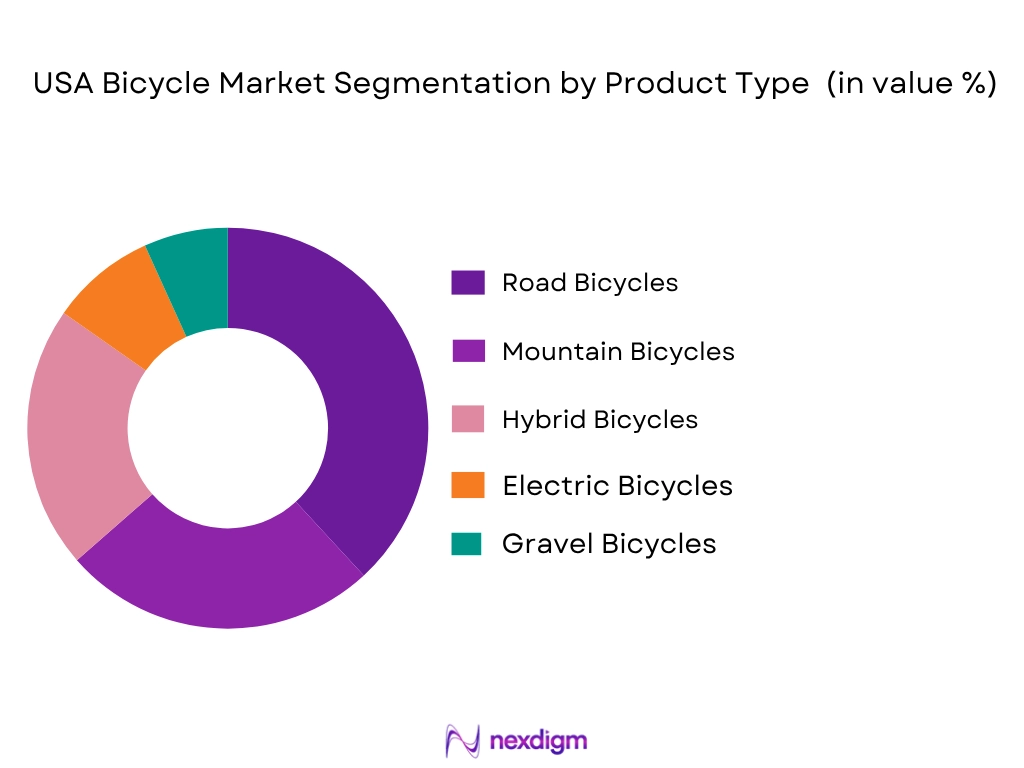
By Product Type
The USA bicycle market is segmented by product type into road bicycles, mountain bicycles, hybrid bicycles, electric bicycles, gravel bicycles, kids bicycles, BMX bicycles, and specialty bicycles. Electric bicycles are one of the fastest-growing segments due to their suitability for commuting, older riders, delivery users, recreational riders, and consumers seeking assisted mobility. Traditional bicycles continue to dominate in volume due to strong demand from children, recreational riders, fitness users, and mass-market retail consumers.
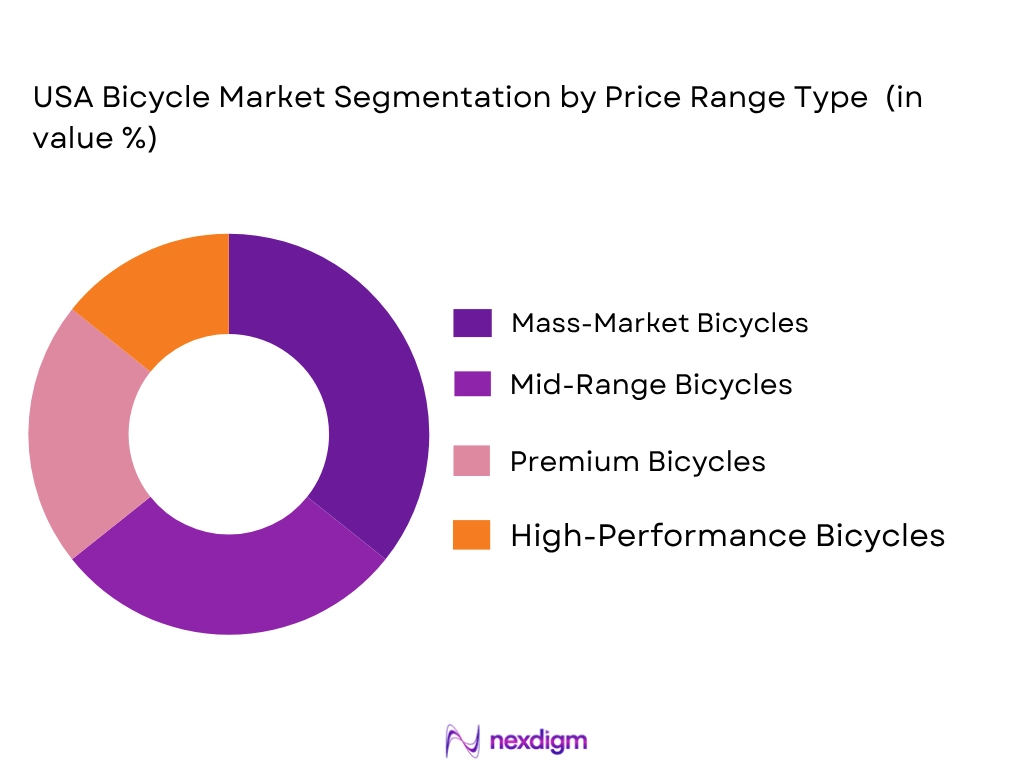
By Price Range
The USA bicycle market is segmented by price range into mass-market bicycles, mid-range bicycles, premium bicycles, and high-performance bicycles. Mass-market bicycles dominate unit sales because they are widely available through Walmart, Target, Amazon, sporting goods stores, and general retailers. These bicycles are generally purchased by families, casual riders, and children’s bicycle buyers.
Competitive Landscape
The USA bicycle market is highly competitive, with global bicycle manufacturers, domestic premium brands, e-bike specialists, mass-market brands, sporting goods retailers, private-label brands, and online marketplace sellers competing across price points. Premium brands compete through performance technology, lightweight frames, component quality, brand reputation, dealer relationships, and cycling community engagement. E-bike brands compete through battery range, motor performance, safety certification, design, price, and direct-to-consumer distribution. Trek Bicycle Corporation is a major U.S.-based bicycle brand with strong presence across road bikes, mountain bikes, hybrid bikes, e-bikes, and accessories. Specialized Bicycle Components competes strongly in performance road, mountain, gravel, and e-bike categories. Giant Bicycles USA benefits from global manufacturing scale and broad product coverage. Cannondale, Santa Cruz, Scott, Cervélo, and Bianchi compete in premium and enthusiast segments.
| Company | Establishment Year | Headquarters | Product Focus | Distribution Network | Key Consumer Segment | Import/Local Presence | Competitive Advantage |
| Trek Bicycle Corporation | 1976 | United States | ~ | ~ | ~ | ~ | ~ |
| Specialized Bicycle Components | 1974 | United States | ~ | ~ | ~ | ~ | ~ |
| Giant Bicycles USA | 1972 | Taiwan / United States | ~ | ~ | ~ | ~ | ~ |
| Cannondale | 1971 | United States | ~ | ~ | ~ | ~ | ~ |

USA Bicycle Market Analysis
Growth Drivers
Rising Health, Fitness, and Outdoor Recreation Participation
The USA bicycle market is strongly supported by rising consumer focus on health, fitness, and outdoor recreation. Bicycles are increasingly used for low-impact exercise, weight management, cardiovascular fitness, and mental wellness. Consumers across different age groups are choosing cycling as a convenient activity that combines recreation with physical activity. Family cycling, weekend trail riding, road cycling, and urban leisure rides have become more common, especially among health-conscious households. The growth of parks, trails, and outdoor recreation spaces further supports bicycle usage. Consumers are also becoming more aware of sustainable and active lifestyles, which increases interest in cycling as a regular habit. This trend supports demand across hybrid bicycles, mountain bicycles, road bicycles, kids bicycles, and recreational models.
Growing Adoption of Electric Bicycles
Electric bicycles are one of the strongest growth drivers in the USA bicycle market. E-bikes make cycling easier for older adults, commuters, delivery users, and recreational riders who want pedal assistance for longer distances, hills, or daily travel. They reduce the physical effort required while still offering mobility, convenience, and fitness benefits. Consumers are increasingly using e-bikes for short urban trips, workplace commuting, leisure riding, and car replacement for nearby travel. Improvements in battery range, motor performance, frame design, and affordability have made e-bikes more attractive. Direct-to-consumer brands and online platforms have also improved product visibility. As consumers seek convenient and eco-friendly mobility options, e-bikes are expected to support strong value growth in the market.
Market Challenges
High Inventory Pressure and Post-Pandemic Demand Correction
The USA bicycle market faces challenges from high inventory levels and post-pandemic demand correction. During the pandemic, bicycle demand increased sharply as consumers looked for outdoor recreation, fitness, and safer mobility options. Many brands, retailers, and distributors expanded orders to meet this surge. However, as consumer behavior normalized, demand slowed in several bicycle categories, creating excess inventory across retail and distribution channels. This led to discounting, margin pressure, delayed new product launches, and weaker profitability for many companies. Specialty bicycle retailers were especially affected because they carry higher-value inventory and depend on seasonal sales. Brands now need better demand forecasting, leaner inventory planning, flexible supply chains, and stronger retail coordination to manage market volatility and protect profitability.
Import Dependence and Tariff-Linked Cost Pressure
The USA bicycle market is highly dependent on imported bicycles, components, frames, batteries, motors, drivetrains, tires, and accessories. Many products are sourced from Asian manufacturing hubs, making the market sensitive to freight costs, trade policies, tariffs, currency fluctuations, and supply chain disruptions. Any increase in import duties or logistics costs can directly raise retail prices and reduce affordability for consumers. This creates pressure on brands and retailers to either absorb higher costs or pass them on to buyers. Import dependence also limits flexibility during periods of shipping delays or geopolitical uncertainty. While some companies are exploring alternative sourcing and local assembly, shifting production is complex and costly. Therefore, supply chain risk remains a major challenge for the market.
Opportunities
Growth in Electric Bicycle Adoption
The growth of electric bicycle adoption presents a major opportunity for the USA bicycle market. E-bikes appeal to a wide range of consumers, including commuters, older adults, students, recreational riders, delivery workers, and families. Their ability to reduce travel effort makes them suitable for longer rides, hilly routes, and daily urban trips. E-bikes also provide an affordable alternative to cars for short-distance travel, especially in cities with traffic congestion and parking challenges. Brands can benefit by offering commuter e-bikes, cargo e-bikes, folding e-bikes, fat-tire e-bikes, and premium performance models. Retailers can also generate recurring revenue through accessories, battery replacement, maintenance, warranties, and repair services. As awareness improves, e-bikes are expected to capture higher market value.
Growth in Repair, Maintenance, and Aftermarket Services
Repair, maintenance, and aftermarket services offer strong opportunities in the USA bicycle market. As the number of bicycles and e-bikes in use increases, consumers require regular servicing, replacement parts, accessories, and safety upgrades. Demand is rising for tires, tubes, brake pads, chains, helmets, lights, locks, racks, batteries, chargers, and apparel. Specialty bicycle retailers can improve profitability by offering tune-ups, fitting services, maintenance plans, e-bike diagnostics, and warranty support. E-bikes create additional service opportunities because they include batteries, motors, displays, sensors, and electrical systems that require skilled technicians. Mobile repair services and subscription-based maintenance models can also expand in urban markets. This opportunity supports retailers, component suppliers, accessory brands, and service providers across the bicycle ecosystem.
Future Outlook
Over the next ten years, the USA bicycle market is expected to grow steadily, supported by e-bike adoption, outdoor recreation participation, urban cycling infrastructure, health-conscious lifestyles, and continued demand for recreational and family cycling. Market value growth is expected to be stronger than volume growth because e-bikes, premium bicycles, gravel bicycles, cargo bikes, and high-performance models carry higher average selling prices. By 2035, e-bikes are expected to hold a much larger share of market value, while traditional bicycles will continue to dominate entry-level family, children’s, recreational, and fitness categories. Brands that combine affordability, product quality, safety compliance, after-sales service, and strong omnichannel distribution will be better positioned in the U.S. market.
Major Players
- Trek Bicycle Corporation
- Specialized Bicycle Components
- Giant Bicycles USA
- Cannondale
- Santa Cruz Bicycles
- Scott Sports USA
- Cervélo
- Bianchi USA
- Rad Power Bikes
- Aventon
- Lectric eBikes
- Juiced Bikes
- Pedego Electric Bikes
- Kent International
- Huffy Corporation
- Schwinn
- REI Co-op Cycles
- Decathlon USA
- Walmart Bicycle Brands
- Amazon Bicycle Marketplace Sellers
Key Target Audience
- Bicycle manufacturers
- Electric bicycle manufacturers
- Bicycle component suppliers
- Battery and motor system suppliers
- Specialty bicycle retailers
- Sporting goods retailers
- Mass merchandisers
- Online bicycle platforms
- Direct-to-consumer bicycle brands
- Cycling accessory companies
- Repair and maintenance service providers
- Fleet operators and delivery companies
- Urban mobility planners
- Outdoor recreation companies
- Investors and venture capital firms
- Government and regulatory bodies
Research Methodology
Step: Identification of Key Variables
The initial phase involves mapping stakeholders in the USA bicycle market, including bicycle manufacturers, e-bike brands, component suppliers, retailers, online platforms, distributors, repair service providers, cycling associations, fleet operators, and end users. Secondary sources such as industry reports, government statistics, company disclosures, trade publications, participation studies, product listings, and retail channel data are used to identify key market variables.
Step: Market Analysis and Construction
Historical data is analyzed to understand bicycle sales trends, e-bike adoption, pricing movement, consumer participation, retail channel performance, import dependency, and product category shifts. The study evaluates demand across adults, children, commuters, recreational riders, performance riders, and commercial users to construct a reliable market model.
Step: Hypothesis Validation and Expert Consultation
Industry experts are consulted to validate assumptions and provide insights into market dynamics. These include specialty bicycle retailers, e-bike distributors, product managers, cycling industry consultants, repair service providers, urban mobility experts, and outdoor recreation specialists. These interactions help refine demand estimates, pricing assumptions, segmentation, competitive positioning, and future growth outlook.
Step: Research Synthesis and Final Output
The final phase integrates primary and secondary research findings to deliver a validated market assessment. Data triangulation ensures consistency across market size, segmentation, growth drivers, challenges, opportunities, competitive analysis, and future market outlook.

- Executive Summary
- Research Methodology (USA Bicycle Market Overview, Definition and Scope, Market Dynamics Overview, Market Genesis, Major Players and Market Timeline, Business Cycle and Trends, Supply Chain and Value Chain Analysis)

- Definition and Scope
- Market Dynamics Overview
- Market Genesis
- Major Players and Market Timeline
- Business Cycle and Trends
- Supply Chain and Value Chain Analysis

- Growth Drivers
Rising Health, Fitness, and Outdoor Recreation Participation
Growing Adoption of Electric Bicycles
Expansion of Urban Cycling Infrastructure
Increasing Use of Bicycles for Recreation and Commuting
Growth of Direct-to-Consumer and Online Bicycle Sales - Market Challenges
High Inventory Pressure and Post-Pandemic Demand Correction
Import Dependence and Tariff-Linked Cost Pressure
Safety Concerns Around E-Bikes and Lithium-Ion Batteries
Seasonality and Weather-Dependent Demand
Competition from Alternative Mobility Options - Opportunities
Growth in Electric Bicycle Adoption
Expansion of Gravel, Adventure, and Lifestyle Cycling
Rising Demand for Kids and Youth Bicycles
Growth in Repair, Maintenance, and Aftermarket Services
Expansion of Subscription, Leasing, and Fleet-Based Bicycle Models - Key Trends
Shift toward e-bikes and pedal-assist mobility
Growth in gravel and adventure cycling
Rising preference for lightweight and performance-oriented bicycles
Expansion of online bicycle purchases and DTC brands
Increasing focus on safety-certified batteries and compliant e-bike systems - Government Regulations
- SWOT Analysis
- Porter’s Five Forces

- By Value, 2020–2025
- By Volume, 2020–2025
- By Average Price, 2020–2025

- By Product Type (In Value %)
Road Bicycles
Mountain Bicycles
Hybrid Bicycles
Electric Bicycles
Gravel Bicycles
Kids Bicycles
BMX and Specialty Bicycles - By Price Range (In Value %)
Mass-Market Bicycles
Mid-Range Bicycles
Premium Bicycles
High-Performance Bicycles - By End User (In Value %)
Adults
Children and Teenagers
Commuters
Recreational Riders
Professional and Performance Riders
Delivery and Commercial Users - By Distribution Channel (In Value %)
Specialty Bicycle Retailers
Mass Merchandisers
Sporting Goods Stores
Online Channels
Direct-to-Consumer Brand Websites - By Region (In Value %)
West
South
Midwest
Northeast

- Market Share of Major Players by Value and Volume
- Market Share of Major Players by Product Type
- Cross Comparison Parameters (Company Overview, Business Strategies, Recent Developments, Strength, Weakness, Organizational Structure, Revenues, Revenues by Product Type, Number of Touchpoints, Distribution Channels, Number of Dealers and Distributors, Margins, Production Plant, Capacity,
Unique Value Offering) - SWOT Analysis of Major Players
- Pricing Analysis Based on Product Categories for Major Players
- Detailed Profiles of Major Companies
Trek Bicycle Corporation
Specialized Bicycle Components
Giant Bicycles USA
Cannondale
Santa Cruz Bicycles
Scott Sports USA
Cervélo
Bianchi USA
Rad Power Bikes
Aventon
Lectric eBikes
Juiced Bikes
Pedego Electric Bikes
Kent International
Huffy Corporation
Schwinn
Walmart Private Label Bicycle Brands
REI Co-op Cycles
Decathlon USA
Amazon Bicycle Marketplace Sellers

- Market Demand and Utilization
- Purchasing Power and Budget Allocations
- Regulatory and Compliance Requirements
- Needs, Desires, and Pain Point Analysis
- Decision-Making Process

- By Value, 2026–2035
- By Volume, 2026–2035
- By Average Price, 2026–2035


 Request a Sample
 Ask for Customization
 Get a Quote
 Enquire Now