
 Download PDF
Market Overview
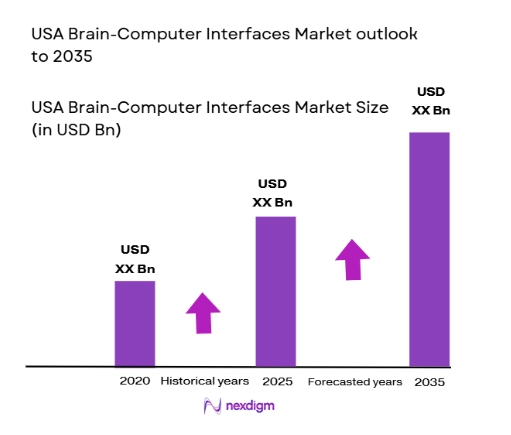
The USA Brain-Computer Interfaces market demonstrates a rapidly evolving landscape driven by healthcare innovation, neurotechnology investments, and increasing neurological disorder prevalence. Based on a recent historical assessment, the market size reached approximately USD ~ billion, supported by advancements in neural signal processing, FDA approvals of implantable devices, and rising funding from both private and public sectors. Demand is further accelerated by integration with AI systems and growing clinical adoption for paralysis and neurodegenerative disease treatments.
The United States dominates this market, with cities such as San Francisco, Boston, and New York acting as key innovation hubs due to strong biotech ecosystems and venture capital presence. Silicon Valley leads in technology-driven BCI development, while Boston benefits from proximity to leading hospitals and research centers. Government-backed initiatives and defense funding programs further strengthen adoption across regions, enabling rapid commercialization and clinical translation of advanced brain-computer interface technologies.
Market Segmentation
By Product Type:
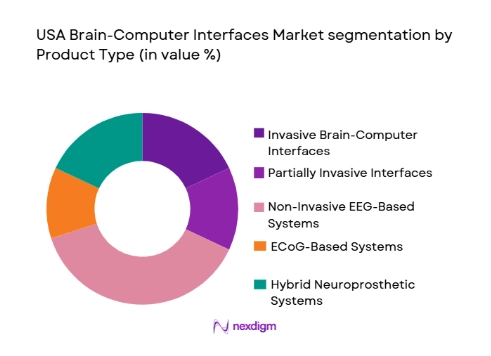
USA Brain-Computer Interfaces market is segmented by product type into invasive brain-computer interfaces, partially invasive interfaces, non-invasive EEG-based systems, ECoG-based systems, and hybrid neuroprosthetic systems. Recently, non-invasive EEG-based systems have a dominant market share due to factors such as ease of use, lower risk compared to surgical alternatives, and increasing adoption in both medical and consumer applications. These systems benefit from strong demand in neurorehabilitation and wellness applications, supported by technological advancements in wearable headsets and AI-driven analytics. Additionally, cost efficiency and broader accessibility have enabled rapid penetration across hospitals and home-care settings, making non-invasive solutions the preferred choice among healthcare providers and end users.
By EndUser:
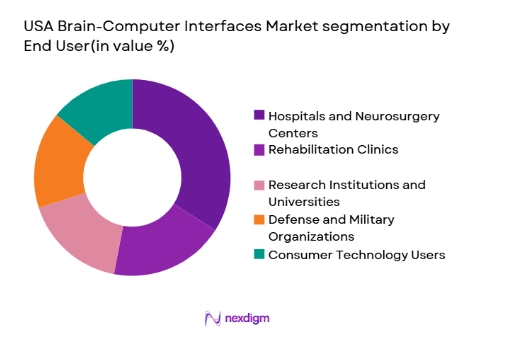
USA Brain-Computer Interfaces market is segmented by end user into hospitals and neurosurgery centers, rehabilitation clinics, research institutions and universities, defense and military organizations, and consumer technology users. Recently, hospitals and neurosurgery centers have a dominant market share due to the increasing number of neurological procedures and the need for advanced patient monitoring systems. These institutions benefit from access to funding, specialized expertise, and infrastructure necessary for deploying invasive and high-complexity BCI systems. Additionally, clinical demand for treating paralysis, epilepsy, and neurodegenerative diseases continues to rise, further driving adoption in hospital environments. Integration of BCIs into surgical workflows and rehabilitation programs reinforces their dominance.
Competitive Landscape
The USA Brain-Computer Interfaces market is moderately consolidated, with a mix of established neurotechnology firms and emerging startups competing through innovation and strategic collaborations. Major players focus on advancing implantable devices, AI integration, and wireless neural interfaces to strengthen their market positioning. Partnerships with healthcare providers, research institutions, and defense agencies play a critical role in accelerating product development and commercialization, while significant venture capital investments continue to shape competitive dynamics.
| Company Name | Establishment Year | Headquarters | Technology Focus | Market Reach | Key Products | Revenue | Neural Interface Type |
| Neuralink Corporation | 2016 | USA | ~ | ~ | ~ | ~ | ~ |
| Blackrock Neurotech | 2008 | USA | ~ | ~ | ~ | ~ | ~ |
| Synchron Inc | 2016 | USA | ~ | ~ | ~ | ~ | ~ |
| Kernel Inc | 2016 | USA | ~ | ~ | ~ | ~ | ~ |
| Emotiv Inc | 2011 | USA | ~ | ~ | ~ | ~ | ~ |
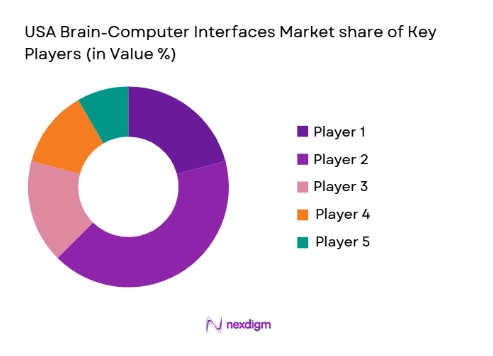
USA Brain-Computer Interfaces Market Analysis
Growth Drivers
Advancements in Neurotechnology and AI Integration:
The rapid evolution of neurotechnology combined with artificial intelligence has significantly enhanced the capabilities of brain-computer interfaces, enabling real-time neural signal decoding and improved accuracy. These advancements have allowed for the development of more responsive and adaptive systems that can be used in both clinical and consumer applications. AI-driven algorithms improve pattern recognition in neural signals, which enhances device performance in areas such as prosthetic control and communication systems. Continuous innovation in machine learning models is enabling more efficient processing of complex brain data. The integration of cloud computing further supports scalability and real-time analysis of neural information. Companies are increasingly investing in research and development to create more efficient and cost-effective solutions. This technological convergence is also reducing barriers to entry for new applications, including gaming and virtual reality. As a result, adoption across multiple sectors is accelerating, driving market expansion.
Increasing Prevalence of Neurological Disorders and Rehabilitation Demand:
The growing incidence of neurological conditions such as Parkinson’s disease, epilepsy, and spinal cord injuries has created a strong demand for advanced treatment solutions like brain-computer interfaces. These devices offer new therapeutic possibilities for patients who have limited options with traditional treatments. BCIs are increasingly being used in neurorehabilitation to restore lost motor functions and improve patient outcomes. Healthcare providers are adopting these systems to enhance treatment precision and patient monitoring capabilities. Rising awareness among patients and healthcare professionals is also contributing to increased adoption. Government funding and insurance coverage improvements are further supporting the use of BCIs in clinical settings. The ability of these systems to provide real-time feedback and adaptive therapy makes them highly valuable in rehabilitation programs. This growing medical need continues to drive significant investments and innovation in the market.
Market Challenges
High Cost and Limited Accessibility of Advanced BCI Systems:
The high cost associated with brain-computer interface technologies remains a major barrier to widespread adoption, particularly for invasive and high-complexity systems. These devices require sophisticated components, specialized surgical procedures, and highly trained professionals for implantation and operation. The overall cost burden is further increased by the need for ongoing maintenance, calibration, and software updates. Many healthcare institutions face budget constraints, limiting their ability to invest in such advanced technologies. Insurance coverage for BCI treatments is still evolving, creating financial challenges for patients. Additionally, the lack of standardized pricing models across manufacturers contributes to cost variability. This economic barrier restricts access to these technologies, particularly in smaller healthcare facilities. As a result, adoption remains concentrated in well-funded institutions, slowing overall market growth.
Ethical and Data Privacy Concerns in Neural Data Processing:
The use of brain-computer interfaces raises significant ethical and privacy concerns, particularly regarding the collection and use of neural data. These systems have the ability to capture highly sensitive information related to thoughts and cognitive patterns. Ensuring data security and preventing unauthorized access is a critical challenge for developers and healthcare providers. Regulatory frameworks governing neural data are still in development, creating uncertainty for market participants. Public perception and trust play a crucial role in the adoption of these technologies. Concerns about potential misuse of neural data for surveillance or manipulation further complicate acceptance. Developers must invest in robust cybersecurity measures to address these issues. Balancing innovation with ethical considerations is essential to ensure sustainable market growth.
Opportunities
Expansion into Consumer Applications and Wellness Technologies:
The growing interest in consumer-focused applications of brain-computer interfaces presents a significant opportunity for market expansion. Wearable BCI devices are being developed for applications such as mental wellness, gaming, and productivity enhancement. These devices offer non-invasive solutions that are more accessible and user-friendly compared to clinical systems. Increasing consumer awareness and acceptance of neurotechnology is driving demand in this segment. Companies are leveraging advancements in miniaturization and wireless connectivity to create compact and portable devices. Integration with smartphones and other digital platforms is enhancing user experience and functionality. This expansion into consumer markets is opening new revenue streams for manufacturers. As technology continues to evolve, the potential for mass-market adoption is expected to grow significantly.
Integration with Defense and Human Augmentation Programs:
The use of brain-computer interfaces in defense and human augmentation programs represents a major growth opportunity. Governments are investing in these technologies to enhance soldier performance, communication, and situational awareness. BCIs can enable direct brain-to-machine communication, improving operational efficiency in complex environments. Defense agencies are also exploring applications in training and rehabilitation for injured personnel. Collaboration between private companies and government organizations is accelerating innovation in this space. These programs provide substantial funding and long-term contracts, supporting market growth. The development of advanced neural interfaces for defense applications is also driving technological advancements that can be applied in other sectors. This dual-use potential further enhances the commercial viability of BCI technologies.
Future Outlook
The USA Brain-Computer Interfaces market is expected to witness strong growth over the next five years, driven by continuous advancements in neural engineering and artificial intelligence. Increasing regulatory clarity and support for clinical trials will accelerate product approvals and commercialization. Demand from healthcare, defense, and consumer sectors is likely to expand simultaneously, creating diverse revenue streams. Technological breakthroughs in non-invasive systems and wireless communication will further enhance accessibility and adoption.
Major Players
- Neuralink Corporation
- Blackrock Neurotech
- Synchron Inc
- Kernel Inc
- Paradromics Inc
- NeuroPace Inc
- BrainCo Inc
- OpenBCI
- Cognixion Inc
- Neurable Inc
- Emotiv Inc
- NextMind
- MindMaze
- G.TEC Medical Engineering USA
- Neurosky Inc
Key Target Audience
- Medical device manufacturers
- Healthcare providers and hospital networks
- Defense and military organizations
- Biotechnology companies
- Neurotechnology startups
- Pharmaceutical companies
- Investments and venture capitalist firms
- Government and regulatory bodies
Research Methodology
Step 1: Identification of Key Variables
Relevant variables such as product types, technology adoption, pricing trends, and regulatory frameworks are identified through secondary research. These variables form the foundation for market modeling and segmentation analysis.
Step 2: Market Analysis and Construction
Market data is collected from industry reports, company filings, and verified databases. Quantitative and qualitative analyses are conducted to construct a comprehensive market model reflecting real-world dynamics.
Step 3: Hypothesis Validation and Expert Consultation
Findings are validated through consultations with industry experts, including healthcare professionals and technology developers. This step ensures accuracy and alignment with current market conditions.
Step 4: Research Synthesis and Final Output
All validated data is synthesized into a structured format, providing actionable insights. Final outputs are reviewed for consistency, accuracy, and completeness before publication.

- Executive Summary
- Research Methodology Definitions, Scope, Industry Assumptions, Market Sizing Approach, Primary & Secondary Research Framework, Data Collection & Verification Protocol, Analytic Models & Forecast Methodology, Limitations & Research Validity Checks)

- Market Definition and Scope
- Value Chain & Stakeholder Ecosystem
- Regulatory / Certification Landscape
- Sector Dynamics Affecting Demand
- Strategic Initiatives & Infrastructure Growth

- Growth Drivers
Rising prevalence of neurological disorders and paralysis cases
Increasing investments in neurotechnology and AI integration
Advancements in neural signal decoding and machine learning
Growing adoption of BCIs in defense and human augmentation programs
Expansion of clinical trials and FDA approvals for neurodevices - Market Challenges
High cost of invasive BCI systems and surgical procedures
Ethical concerns around neural data privacy and security
Technical limitations in long-term signal stability
Regulatory complexities and approval delays
Limited skilled professionals for BCI implementation - Market Opportunities
Expansion into consumer wellness and gaming applications
Integration with AR/VR ecosystems for immersive experiences
Development of minimally invasive and wireless BCI systems - Trends
Shift toward non-invasive and wearable BCI solutions
Increasing use of AI for real-time neural interpretation
Collaboration between tech firms and healthcare providers
Emergence of brain-controlled prosthetics and exoskeletons
Growth in cloud-based neural data analytics platforms - Government Regulations & Defense Policy
Increasing FDA oversight on neurotechnology safety and efficacy
Rising defense funding for cognitive enhancement programs
Development of neuroethics frameworks and compliance standards - SWOT Analysis
- Stakeholder and Ecosystem Analysis
- Porter’s Five Forces Analysis
- Competition Intensity and Ecosystem Mapping

- By Market Value, 2020-2025
- By Installed Units, 2020-2025
- By Average System Price, 2020-2025
- By System Complexity Tier, 2020-2025

- By System Type (In Value%)
Invasive Brain-Computer Interfaces
Partially Invasive Interfaces
Non-Invasive EEG-Based Systems
ECoG-Based Systems
Hybrid Neuroprosthetic Systems - By Platform Type (In Value%)
Medical Therapeutics Platforms
Neurorehabilitation Platforms
Consumer Wearable Platforms
Defense & Aerospace Platforms
Research & Academic Platforms - By Fitment Type (In Value%)
Implantable Devices
Wearable Headsets
Portable Handheld Systems
Stationary Clinical Systems
Cloud-Integrated BCI Systems - By EndUser Segment (In Value%)
Hospitals and Neurosurgery Centers
Rehabilitation Clinics
Research Institutions and Universities
Defense and Military Organizations
Consumer Technology Users - By Procurement Channel (In Value%)
Direct Institutional Procurement
Government Contracts
Distributor Networks
Online Medical Equipment Platforms
Research Grants and Funding Programs - By Material / Technology (in Value %)
Silicon-Based Neural Chips
Flexible Polymer Electrodes
AI-Driven Signal Processing Algorithms
Wireless Neural Transmission Modules
Nanomaterial-Based Interfaces

- Market structure and competitive positioning
- Market share snapshot of major players
- CrossComparison Parameters (Technology Innovation, Product Portfolio Breadth, Clinical Trial Pipeline, Regulatory Approvals, Pricing Strategy, Partnerships & Collaborations, Geographic Presence, R&D Investment, Data Processing Capabilities, Device Accuracy)
- SWOT Analysis of Key Players
- Pricing & Procurement Analysis
- Key Players
Neuralink Corporation
Blackrock Neurotech
Synchron Inc
Kernel Inc
Paradromics Inc
NeuroPace Inc
BrainCo Inc
OpenBCI
Cognixion Inc
Neurable Inc
Emotiv Inc
NextMind
MindMaze
G.TEC Medical Engineering USA
Neurosky Inc

- Hospitals driving demand through neurosurgical applications and patient recovery solutions
- Research institutions leading innovation and early-stage adoption of advanced BCIs
- Defense sector investing heavily in cognitive performance and communication systems
- Consumer segment gradually expanding with wearable and wellness-focused BCI devices

- Forecast Market Value, 2026-2035
- Forecast Installed Units, 2026-2035
- Price Forecast by System Tier, 2026-2035
- Future Demand by Platform, 2026-2035


 Request a Sample
 Ask for Customization
 Get a Quote
 Enquire Now