
 Download PDF
 Download PDF
Market Overview
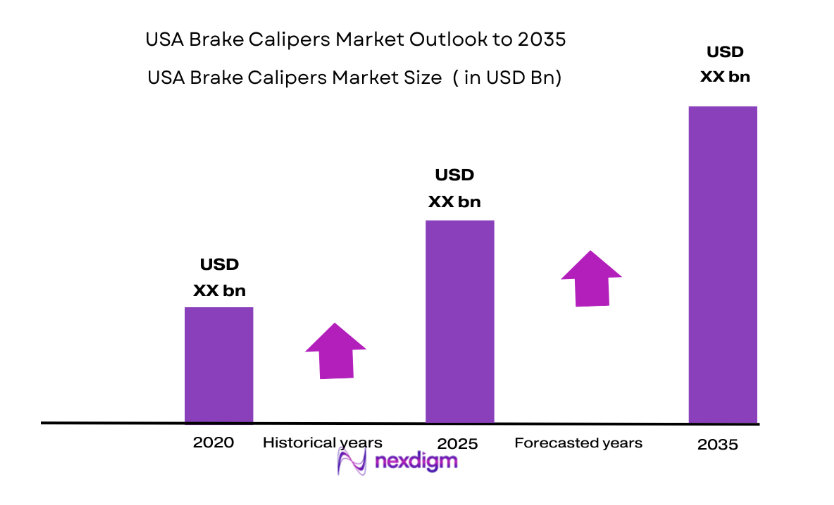
The USA Brake Calipers market is experiencing steady growth driven by advancements in braking technologies and the increasing demand for high-performance automotive components. In 2024, the market size is expected to reach USD ~ billion, reflecting the robust growth of the automotive industry and technological innovations. This expansion is primarily attributed to the rising demand for enhanced braking systems in passenger vehicles, electric vehicles (EVs), and commercial vehicles, as manufacturers prioritize safety, performance, and efficiency.
The USA remains a dominant player in the market, driven by the large-scale presence of automotive manufacturers and suppliers, particularly in states like Michigan and California. These regions benefit from strong manufacturing capabilities, advanced infrastructure, and innovation hubs. The automotive industry in the USA continues to embrace cutting-edge braking technologies, spurred by government regulations, the growing adoption of EVs, and the need for safer, more reliable brake systems in both traditional and electric vehicles.
Market Segmentation
By Product Type:
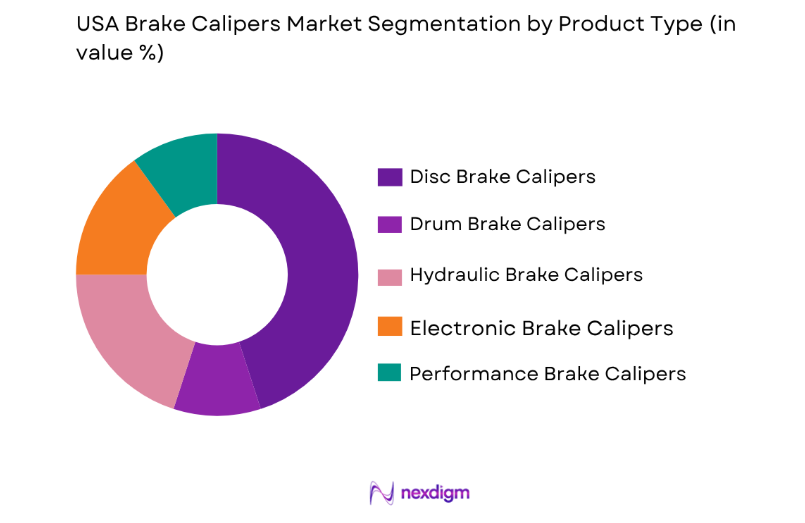
The USA Brake Calipers market is segmented by product type into disc brake calipers, drum brake calipers, hydraulic brake calipers, electronic brake calipers, and performance brake calipers. Recently, disc brake calipers have a dominant market share due to their widespread adoption in both passenger vehicles and commercial applications. Their ability to provide higher performance, safety, and reliability in various vehicle types has significantly boosted their demand. Additionally, the automotive industry’s transition towards performance-enhanced vehicles and the increasing emphasis on safety standards have made disc brake calipers the preferred choice in the market.
By Platform Type:
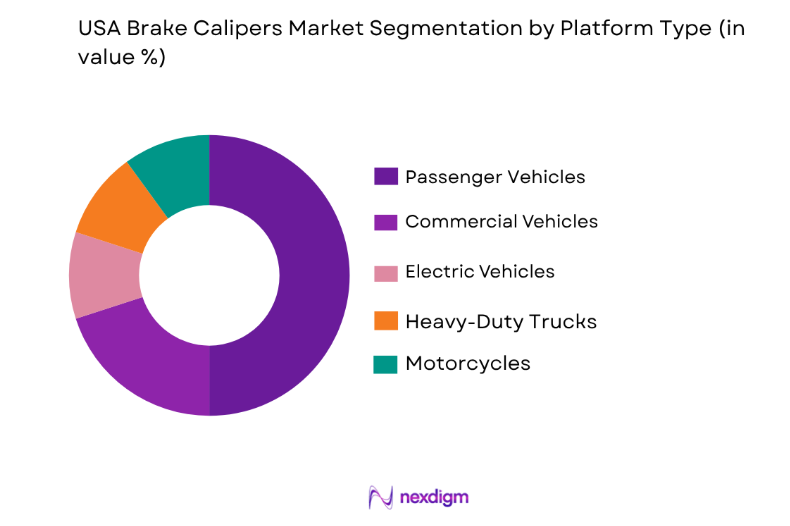
The USA Brake Calipers market is segmented by platform type into passenger vehicles, commercial vehicles, electric vehicles (EVs), heavy-duty vehicles, and sports/performance vehicles. Recently, passenger vehicles have a dominant market share due to the continuous growth in consumer demand for personal transportation, coupled with the increasing focus on safety, comfort, and high-performance vehicle features. As automotive technology evolves, passenger vehicles are equipped with advanced braking systems, including electronic and regenerative brake technologies, which has significantly enhanced the demand for high-quality brake calipers in this segment.
Competitive Landscape
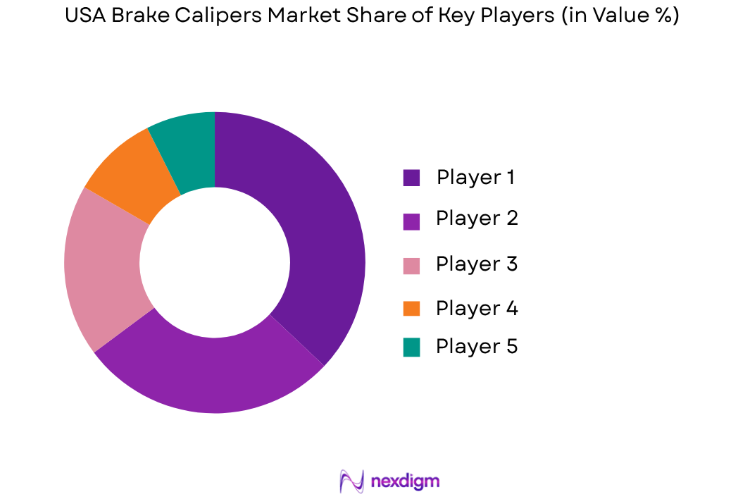
The USA Brake Calipers market is highly competitive, with major players continuously innovating to capture market share. The market sees a mix of established global companies and emerging players, leading to industry consolidation through strategic partnerships and acquisitions. The competition is primarily driven by product innovation, quality, and price competitiveness, with companies focusing on enhancing braking performance and developing environmentally friendly solutions. Leading players are leveraging advancements in materials and technologies, such as lightweight components and electronic brake systems, to maintain a competitive edge.
| Company Name | Establishment Year | Headquarters | Technology Focus | Market `Reach | Key Products | Revenue | Additional Parameter |
| Brembo | 1961 | Italy | ~ | ~ | ~ | ~ | ~ |
| ZF Friedrichshafen | 1915 | Germany | ~ | ~ | ~ | ~ | ~ |
| Akebono Brake Industry | 1929 | Japan | ~ | ~ | ~ | ~ | ~ |
| MIBA AG | 1945 | Austria | ~ | ~ | ~ | ~ | ~ |
| TMD Friction | 1991 | UK | ~ | ~ | ~ | ~ | ~ |
USA Brake Calipers Market Analysis
Growth Drivers
Technological Advancements in Brake Systems:
The development of advanced brake technologies has been a major driver of growth in the USA Brake Calipers market. The integration of lightweight materials, regenerative braking systems, and electronic brake control systems has significantly enhanced braking performance and safety. These innovations not only improve vehicle efficiency but also reduce energy consumption, making them particularly valuable for electric and hybrid vehicles. This technological shift has driven demand for more advanced calipers that offer greater durability, efficiency, and performance, which in turn propels market growth.
Rising Demand for Electric Vehicles (EVs):
The growing adoption of electric vehicles has emerged as a key driver for the USA Brake Calipers market. As the EV market continues to expand, the need for specialized brake systems that cater to the unique demands of electric vehicles is increasing. Electric vehicles require advanced braking systems to handle the higher torque and regenerative braking features that are common in electric drivetrains. As the number of electric vehicles on the road increases, so does the demand for sophisticated brake calipers designed specifically for EVs, further boosting market growth.
Market Challenges
High Cost of Advanced Braking Systems:
The introduction of advanced braking systems, particularly in electric vehicles and high-performance cars, has increased the cost of brake calipers. The use of lightweight materials, advanced coatings, and electronic systems has driven up manufacturing costs, making these systems less accessible for budget-conscious consumers. This poses a significant challenge for manufacturers who need to balance performance and cost-effectiveness. As a result, market penetration of these advanced calipers is slower in certain segments, such as the low-cost vehicle market.
Supply Chain Disruptions and Raw Material Shortages:
The USA Brake Calipers market faces significant challenges related to global supply chain disruptions and the availability of raw materials. Shortages of critical materials like aluminum and steel, as well as disruptions in logistics networks, have led to delays in production and higher costs. These challenges are further compounded by the global semiconductor shortage, which affects the production of braking systems and automotive parts. Manufacturers are struggling to meet growing demand due to these supply chain issues, which may hinder overall market growth.
Opportunities
Expansion of Aftermarket Brake Caliper Services:
As the demand for replacement brake parts continues to rise, the aftermarket segment presents a significant opportunity for companies in the brake calipers market. Consumers are increasingly turning to aftermarket solutions due to their cost-effectiveness and the growing number of vehicles in need of maintenance. This trend is particularly strong in the USA, where a large fleet of aging vehicles creates a continuous need for replacement parts. Companies that focus on providing high-quality, affordable aftermarket brake calipers can capture a larger share of the market.
Adoption of Regenerative Braking Systems in Commercial Vehicles:
The adoption of regenerative braking systems in commercial vehicles represents a key opportunity for growth in the brake calipers market. These systems, which allow energy to be recovered during braking and stored for later use, are increasingly being incorporated into buses, trucks, and other heavy-duty vehicles. The need for specialized brake calipers that can handle the unique demands of these systems is growing, and companies that develop products suited for commercial applications will be well-positioned to capitalize on this emerging trend.
Future Outlook
The USA Brake Calipers market is expected to see continued growth over the next five years, driven by advancements in braking technologies, the increasing demand for electric vehicles, and the expansion of the aftermarket segment. Technological innovations, such as lightweight brake calipers and regenerative braking systems, will continue to drive the market forward. Moreover, the regulatory push towards safer and more efficient braking systems will also support market growth. With these factors in place, the market is poised for steady expansion and innovation.
Major Players
- Brembo
- ZF Friedrichshafen
- Akebono Brake Industry
- MIBA AG
- TMD Friction
- Haldex
- Mat Foundry Group
- Aisin Seiki Co., Ltd.
- Valeo
- Federal-Mogul Motorparts
- Delphi Technologies
- EBC Brakes
- Centric Parts
- Knorr-Bremse
- Bosch
Key Target Audience
- Investments and venture capitalist firms
- Government and regulatory bodies
- Vehicle manufacturers
- Commercial vehicle fleet operators
- Automotive aftermarket distributors
- Electric vehicle manufacturers
- Logistics and transportation
- Automotive parts suppliers
Research Methodology
Step 1: Identification of Key Variables
In this step, the key variables influencing the brake calipers market are identified, focusing on product type, technology trends, and regulatory factors. This step involves the collection of data from primary and secondary sources.
Step 2: Market Analysis and Construction
Here, market segmentation is carried out based on geographic regions, product types, and consumer preferences. Analyzing the data helps in constructing a robust market model.
Step 3: Hypothesis Validation and Expert Consultation
Hypotheses regarding market trends and growth drivers are tested by consulting industry experts and stakeholders to ensure the validity of the research.
Step 4: Research Synthesis and Final Output
The final output is synthesized by consolidating all findings and presenting them in a structured report format for decision-makers in the automotive industry.

- Executive Summary
- Research Methodology (Definitions, Scope, Industry Assumptions, Market Sizing Approach, Primary & Secondary Research Framework, Data Collection & Verification Protocol, Analytic Models & Forecast Methodology, Limitations & Research Validity Checks)

- Market Definition and Scope
- Value Chain & Stakeholder Ecosystem
- Regulatory / Certification Landscape
- Sector Dynamics Affecting Demand

- Growth Drivers
Increasing Vehicle Production
Technological Advancements in Brake Systems
Growth of the Electric Vehicle Market - Market Challenges
High Cost of Advanced Brake Calipers
Strict Environmental Regulations
Demand for Lightweight and High-Performance Materials - Market Opportunities
Rising Demand for Electric Vehicle Brake Systems
Technological Innovations in Braking Efficiency
Increase in Aftermarket Brake Caliper Replacement - Trends
Integration of Smart Braking Systems
Demand for Lightweight Brake Components
Emergence of Regenerative Braking Systems - Government Regulations
- SWOT Analysis of Key Competitors

- By Market Value,2020-2025
- By Installed Units, 2020-2025
- By Average System Price, 2020-2025
- By System Complexity Tier, 2020-2025

- By System Type (In Value%)
Disc Brake Calipers
Drum Brake Calipers
Hydraulic Brake Calipers
Electronic Brake Calipers
Performance Brake Calipers - By Platform Type (In Value%)
Passenger Vehicles
Commercial Vehicles
Electric Vehicles
Heavy-duty Vehicles
Sports and Performance Vehicles - By Fitment Type (In Value%)
Original Equipment Manufacturer (OEM)
Aftermarket Replacement
Performance Upgrade
Retrofitted Solutions
Custom Fitment - By EndUser Segment (In Value%)
Automotive Manufacturers
Aftermarket Distributors
OEM Parts Suppliers
Vehicle Fleet Operators

- Market Share Analysis
- CrossComparison Parameters (System Type, Platform Type, Fitment Type, EndUser Segment, Procurement Channel)
- SWOT Analysis of Key Competitors
- Pricing & Procurement Analysis
- Porter’s Five Forces
- Key Players
Brembo
ZF Friedrichshafen
Akebono Brake Industry Co.
MIBA AG
TMD Friction
Friction Materials of North America
Haldex
Mat Foundry Group
Aisin Seiki Co., Ltd.
Valeo
Federal-Mogul Motorparts
Delphi Technologies
EBC Brakes
Centrala Produktów Motoryzacyjnych
Knorr-Bremse

- Shift in Consumer Preferences towards Performance
- Increasing Focus on Brake System Safety
- Rising Demand for Electric and Hybrid Vehicles
- Expanding Vehicle Fleets in Commercial and Industrial Sectors

- Forecast Market Value, 2026-2035
- Forecast Installed Units, 2026-2035
- Price Forecast by System Tier, 2026-2035
- Future Demand by Platform, 2026-2035


 Request a Sample
 Ask for Customization
 Get a Quote
 Enquire Now