
 Download PDF
 Download PDF
Market Overview
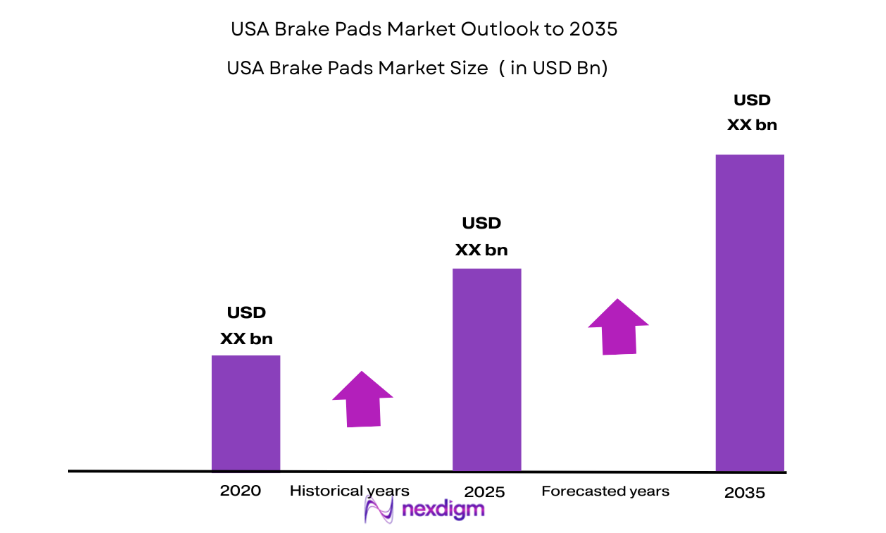
The USA Brake Pads Market is driven by increasing automotive production and stringent safety regulations. The market size, based on a recent historical assessment, is estimated to reach USD ~ billion, supported by high vehicle production rates and ongoing vehicle maintenance trends. Demand is also influenced by vehicle aging, increasing the replacement needs for brake pads. Technological advancements in brake materials and enhanced safety standards are significant contributors to market growth, with a growing trend toward electric vehicles (EVs) further adding to market dynamics.
The USA market is primarily concentrated in key automotive hubs such as Michigan, Ohio, and California, where major automotive manufacturers and suppliers are based. The dominance of these states is due to their strong automotive manufacturing ecosystem and advanced infrastructure for both production and distribution. California, in particular, stands out due to its progressive automotive regulations and large number of vehicle registrations. Additionally, areas with growing electric vehicle adoption, such as California and New York, contribute significantly to market growth.
Market Segmentation
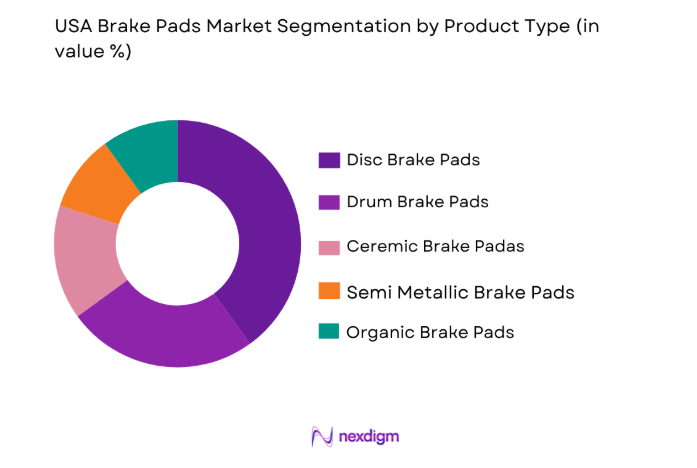
By Product Type:
The USA Brake Pads market is segmented by product type into disc brake pads, drum brake pads, ceramic brake pads, semi-metallic brake pads, and organic brake pads. Disc brake pads currently dominate the market due to their superior performance in safety and durability, along with their widespread application in passenger vehicles and commercial trucks. Their increasing adoption is supported by advancements in materials that offer better heat resistance, lower wear, and improved noise reduction. As a result, disc brake pads are preferred by both original equipment manufacturers (OEMs) and aftermarket suppliers.
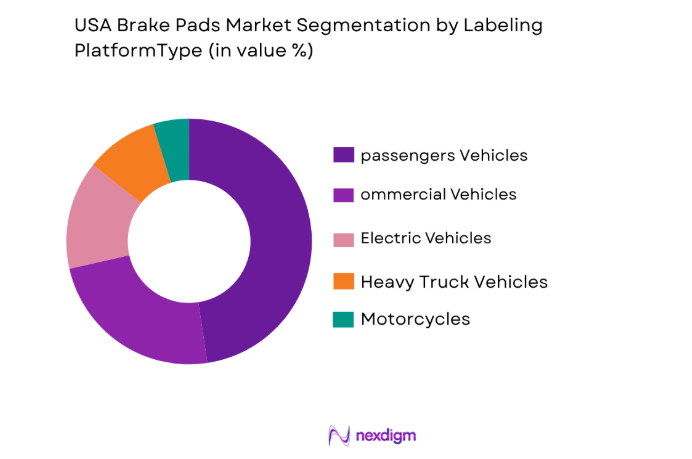
By Platform Type:
The market is segmented by platform type into passenger vehicles, commercial vehicles, electric vehicles, heavy-duty trucks, and motorcycles. The passenger vehicle segment has a dominant share due to the vast number of vehicles on the road and continuous demand for brake replacement in aging vehicles. As vehicle safety features continue to evolve, passenger vehicle manufacturers are increasingly focusing on high-performance brake systems that ensure better safety standards, driving the demand for brake pads in this segment.
Competitive Landscape
The USA Brake Pads market is highly competitive, with several established players and continuous innovation in braking technologies. Major companies are engaged in expanding their product portfolios through technological advancements, focusing on improved performance, durability, and eco-friendly materials. The market sees a strong presence of key players from both OEMs and aftermarket suppliers. Consolidation is visible, with major brands continuing to acquire smaller companies to broaden their market reach and strengthen their R&D capabilities.
| Company Name | Establishment Year | Headquarters | Technology Focus | Market Reach | Key Products | Revenue | Additional Parameter |
| Brembo | 1961 | Italy | ~ | ~ | ~ | ~ | ~ |
| Akebono Brake Industry | 1929 | Japan | ~ | ~ | ~ | ~ | ~ |
| TRW Automotive | 1901 | USA | ~ | ~ | ~ | ~ | ~ |
| Bosch | 1886 | Germany | ~ | ~ | ~ | ~ | ~ |
| Federal-Mogul | 1899 | USA | ~ | ~ | ~ | ~ | ~ |
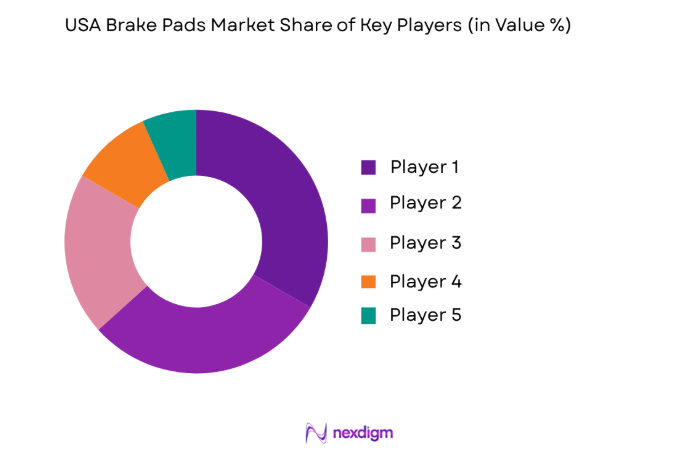
USA Brake Pads Market Analysis
Growth Drivers
Increased Vehicle Production and Sales:
The growth of the USA Brake Pads market is primarily driven by the steady increase in vehicle production and sales. The automotive sector is experiencing robust growth, supported by higher consumer demand and technological innovations in vehicle design. This translates into an increasing need for brake pads as more vehicles require routine maintenance and replacement parts. With the surge in car ownership and fleet operations, the demand for brake pads is expected to remain strong. The steady growth in automotive production also bolsters aftermarket sales, as aging vehicles often require brake replacements, providing a sustained demand for brake pads in the market. Additionally, the rise of electric vehicles (EVs) contributes to this growth by adding a new segment of vehicles that require specialized braking systems. This segment’s demand for high-performance brake pads further drives market growth. As consumer preferences shift towards safer and more efficient vehicles, OEMs are increasingly focusing on developing innovative braking solutions, which will support the market’s expansion. Innovations such as regenerative braking systems in EVs also create new opportunities for brake pad manufacturers. In addition to conventional vehicles, the growth of the EV sector and the need for more sustainable braking systems are pushing the market toward eco-friendly materials and advancements in braking technologies.
Technological Advancements in Brake Materials:
The increasing focus on advanced materials for brake pads is another key driver for market growth. Traditional materials like semi-metallic and organic compounds are being replaced by more advanced ceramic and carbon composite materials that offer improved performance, better heat dissipation, and lower noise. These innovations are driving the demand for higher-quality brake pads, which are becoming increasingly popular in both OEMs and aftermarket sales. Additionally, advancements in braking technologies, such as regenerative braking in electric vehicles, require specialized brake pads that enhance energy efficiency. This has led to increased investments in R&D by major players to develop brake pads with superior durability, reduced wear, and enhanced environmental compatibility. The demand for low-noise, eco-friendly brake pads is also increasing as consumers become more aware of the environmental impact of their vehicles. Manufacturers are now focusing on producing brake pads that meet stringent environmental standards, contributing to sustainable vehicle solutions. Technological advancements are expected to continue driving market growth as new materials and manufacturing techniques are developed to meet evolving automotive needs, especially in the context of the electric vehicle market, which has specific braking system requirements.
Market Challenges
Regulatory Compliance and Safety Standards:
One of the most significant challenges in the USA Brake Pads market is the constant need to comply with stringent regulatory requirements and safety standards. Government regulations around brake safety, emissions, and environmental sustainability are becoming more rigorous, pushing manufacturers to develop brake pads that meet these evolving standards. This often involves high costs related to research, development, and certification. Furthermore, with the increasing emphasis on eco-friendly materials and lower emissions, manufacturers face the challenge of ensuring that their products comply with these green standards while maintaining optimal performance. Failing to meet regulatory requirements could result in product recalls, penalties, and damage to brand reputation. Companies need to stay ahead of these regulations, especially with the growing trend towards the electrification of vehicles, which often comes with additional braking system requirements. Meeting these safety and environmental regulations while still maintaining cost-efficiency and high performance is a constant balancing act for manufacturers in the market. Furthermore, regulations vary across regions, adding complexity to global market operations, especially for companies with international reach. These challenges require continuous investment in R&D to develop compliant and competitive products.
Raw Material Volatility and Supply Chain Disruptions:
The USA Brake Pads market faces significant challenges due to fluctuations in raw material costs and supply chain disruptions. Brake pads are made from a variety of materials, including metal, rubber, and friction compounds, whose prices can fluctuate due to market conditions, geopolitical factors, and supply chain issues. The automotive sector is highly sensitive to these fluctuations, which can lead to increased production costs. The volatility in raw material prices, particularly for metals such as copper and iron, impacts the cost structure of brake pads, making it difficult for manufacturers to maintain profitability while offering competitive prices. Additionally, supply chain disruptions, often caused by external factors such as global pandemics, natural disasters, or trade restrictions, can lead to delays in production and delivery. Manufacturers rely on a consistent supply of materials to meet market demand, and any disruptions in the supply chain can lead to production slowdowns, increasing lead times and affecting customer satisfaction. The ongoing challenges related to the availability and cost of raw materials and the complexity of global supply chains remain significant barriers to market growth and profitability.
Opportunities
Expansion of Electric Vehicle (EV) Market:
The growing popularity of electric vehicles (EVs) presents a significant opportunity for the USA Brake Pads market. As the EV market expands, there is a need for specialized braking systems that cater to the unique requirements of electric vehicles. EVs generally require regenerative braking systems that capture energy during braking and feed it back into the vehicle’s battery. These braking systems need to be designed with specific materials and technologies, offering manufacturers the opportunity to develop and supply specialized brake pads that meet these requirements. The demand for brake pads in the EV sector is expected to grow as more consumers adopt electric vehicles, supported by government incentives, environmental concerns, and advancements in battery technology. Brake pads designed for electric vehicles must focus on low wear rates and high thermal stability, making it an attractive segment for manufacturers looking to expand their product offerings. The rise of EVs also presents a growing market for brake pads in both OEM and aftermarket segments, creating new revenue streams for companies in the market. With the global push towards sustainability and reduced carbon emissions, the growth of the EV market is expected to drive demand for innovative braking solutions in the coming years.
Focus on Sustainable and Eco-Friendly Brake Pads:
Another significant opportunity in the USA Brake Pads market lies in the growing demand for sustainable and eco-friendly brake pads. As environmental concerns rise, consumers and automotive manufacturers alike are increasingly seeking products that reduce environmental impact. Brake pads, which traditionally generate a significant amount of dust and wear particles, are being developed using greener materials that are less harmful to the environment. Manufacturers are exploring alternative materials, such as ceramic composites and other eco-friendly compounds, to create brake pads that reduce brake dust and improve air quality. Additionally, regulatory pressure is driving automotive companies to adopt more sustainable manufacturing processes. These trends are creating a market for green brake pads that offer high performance while meeting environmental standards. As consumers become more environmentally conscious, the demand for eco-friendly products is expected to increase, providing a lucrative opportunity for manufacturers to differentiate themselves in a competitive market. By investing in sustainable materials and production processes, companies can cater to the growing demand for environmentally friendly solutions in the automotive sector.
Future Outlook
The USA Drum Brakes market is expected to experience steady growth over the next five years, driven by increased vehicle production and technological advancements in brake systems. The demand for cost-effective braking solutions in passenger and commercial vehicles will continue to be a key factor supporting market expansion. Additionally, the growing focus on electric vehicles and the need for sustainable, low-cost brake systems will provide new opportunities for innovation and market entry. Manufacturers will need to focus on enhancing the performance and durability of drum brakes to maintain their competitiveness, particularly against the growing adoption of disc brake systems.
Major Players
- Brembo
- ZF Friedrichshafen
- Akebono Brake Industry Co.
- Haldex
- TMD Friction
- MibaAG
- Friction Materials of North America
- SBS Friction
- MAT Foundry Group
- Kongsberg Automotive
- Aisin Seiki Co., Ltd.
- Mitsubishi Motors
- Delphi Technologies
- Federal-MogulMotorparts
- Disc Brake Engineering
Key Target Audience
- Investments and venture capitalist firms
- Government and regulatory bodies
- Vehicle manufacturers
- Commercial vehicle fleet operators
- Automotive aftermarket distributors
- Electric vehicle manufacturers
- Logistics and transportation companies
- Automotivecomponentsuppliers
Research Methodology
Step 1: Identification of Key Variables
The first step involves identifying the critical factors influencing the market, such as technological advancements, vehicle production rates, and the competitive landscape.
Step 2: Market Analysis and Construction
Market segmentation is carried out by analyzing the demand for different types of drum brakes across various vehicle categories and platforms.
Step 3: Hypothesis Validation and Expert Consultation
Consultation with industry experts helps validate assumptions, ensuring the accuracy and relevance of the research findings.
Step 4: Research Synthesis and Final Output
The final research report is synthesized, focusing on the most significant trends, challenges, and opportunities identified in the analysis.

- Executive Summary
- Research Methodology (Definitions, Scope, Industry Assumptions, Market Sizing Approach, Primary & Secondary Research Framework, Data Collection & Verification Protocol, Analytic Models & Forecast Methodology, Limitations & Research Validity Checks)

- Market Definition and Scope
- Value Chain & Stakeholder Ecosystem
- Regulatory / Certification Landscape
- Sector Dynamics Affecting Demand

- Growth Drivers
Rising Vehicle Production and Sales
Increased Vehicle Safety Standards
Technological Advancements in Brake Materials - Market Challenges
High Competition in Price-sensitive Segments
Environmental Regulations on Brake Materials
Volatility in Raw Material Costs - Market Opportunities
Growth in Electric Vehicle Brake Systems
Increasing Demand for Lightweight Brake Pads
Technological Innovation in Brake Efficiency - Trends
Shift Toward Ceramic and Eco-friendly Brake Pads
Growing Adoption of Regenerative Braking Systems
Increase in Brake Pad Customization for Performance Vehicles - Government Regulations

- By Market Value, 2020-2025
- By Installed Units, 2020-2025
- By Average System Price, 2020-2025
- By System Complexity Tier, 2020-2025

- By System Type (In Value%)
Disc Brake Pads
Drum Brake Pads
Ceramic Brake Pads
Semi-Metallic Brake Pads
Organic Brake Pads - By Platform Type (In Value%)
Passenger Vehicles
Commercial Vehicles
Electric Vehicles
Heavy Duty Trucks
Motorcycles - By Fitment Type (In Value%)
OEM Brake Pads
Aftermarket Brake Pads
Replacement Brake Pads
Performance Brake Pads
Custom Brake Pads - By EndUser Segment (In Value%)
Automotive Manufacturers
Vehicle Maintenance Centers
Fleet Operators
Retail Customers
OEMs - By Procurement Channel (In Value%)
Direct Procurement
Distributors and Suppliers
Online Sales Channels
Retail Stores

- Market Share Analysis
- CrossComparison Parameters (System Type, Platform Type, Procurement Channel, EndUser Segment, Fitment Type)
- SWOT Analysis of Key Competitors
- Pricing & Procurement Analysis
- Porter’s Five Forces
- Key Players
Brembo
Akebono Brake Corporation
TRW Automotive
Bosch
ZF Friedrichshafen AG
Federal-Mogul
Aisin Seiki
TMD Friction
Raybestos
Nisshinbo
Delphi Automotive
ADVICS
Mahle
Valeo
EBC Brakes

- Demand from OEMs for Advanced Brake Solutions
- Increased Focus on Brake System Efficiency in Fleets
- Consumer Shift Toward Aftermarket Brake Products
- Vehicle Maintenance Centers Adapting to New Technologies

- Forecast Market Value 2026-2035
- Forecast Installed Units 2026-2035
- Price Forecast by System Tier 2026-2035
- Future Demand by Platform 2026-2035


 Request a Sample
 Ask for Customization
 Get a Quote
 Enquire Now