
 Download PDF
Market Overview
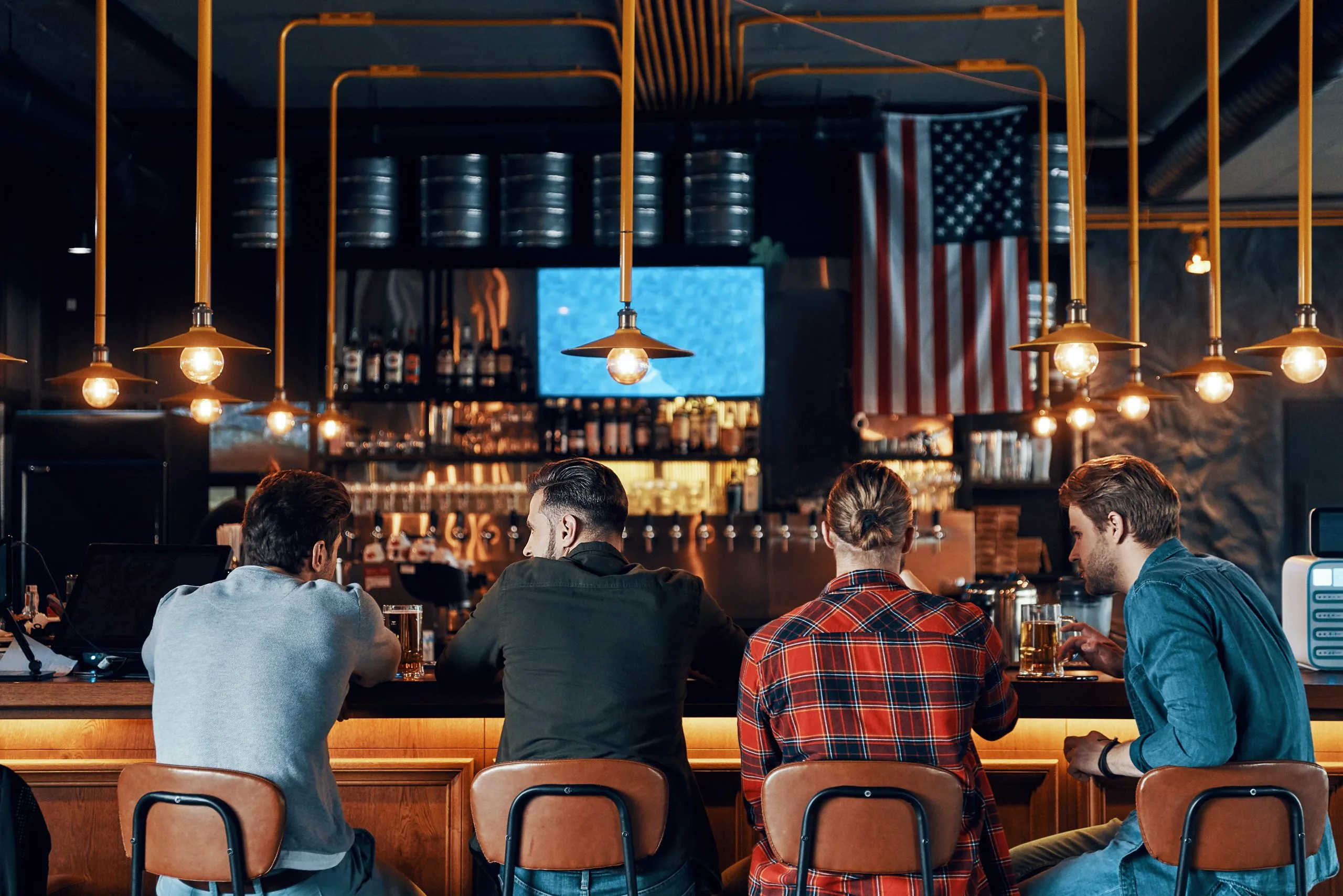
The USA Cafes & Bars Market is valued at USD ~ billion, based on the latest closed-year market assessment by Nexdigm. The market is driven by specialty coffee, alcohol-led social occasions, takeaway beverages, loyalty apps, and experience-led dine-in traffic. The wider foodservice base also supports demand, with U.S. foodservice outlet sales reaching USD ~ trillion, including USD~ billion from full-service establishments and USD ~ billion from limited-service establishments.
New York City, Los Angeles, Las Vegas, Seattle, Chicago, Miami, Austin, Nashville, San Francisco, and Portland dominate the USA Cafes & Bars Market because of dense tourism, office traffic, nightlife districts, airport corridors, specialty coffee culture, and strong disposable spending. New York attracted 64.3 million visitors, while Los Angeles recorded 49.1 million visitors and over USD ~ billion in tourism-linked business sales, creating high-frequency demand for cafés, bars, lounges, and hybrid social venues.
Market Segmentation
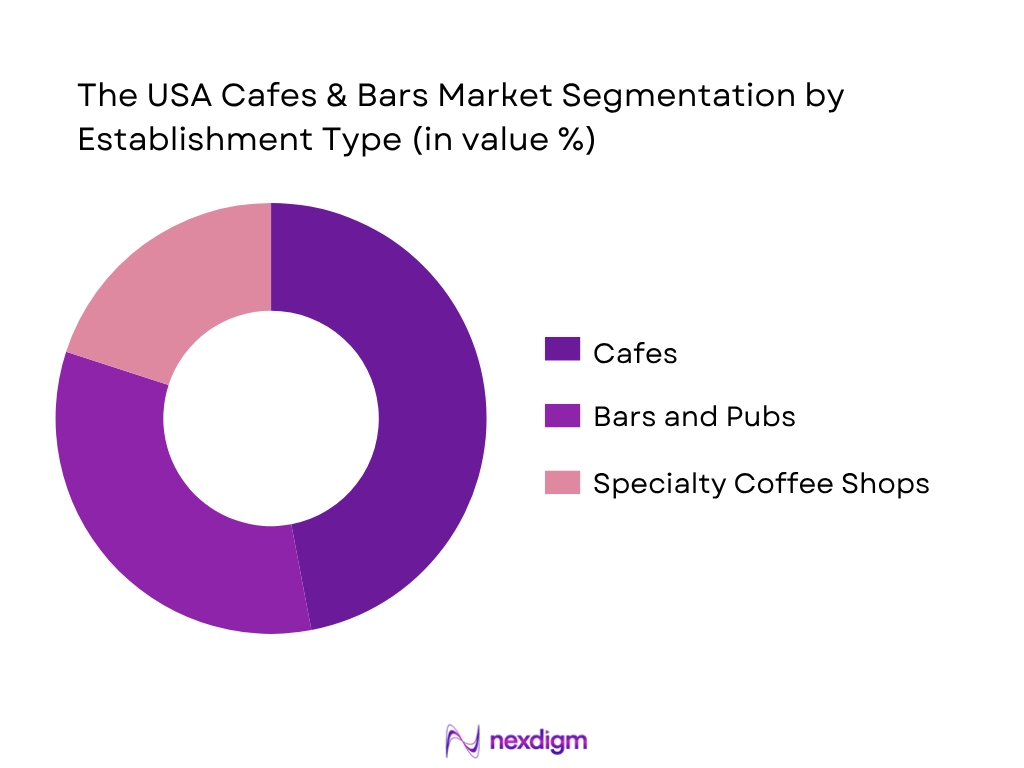
By Establishment Type
The USA Cafes & Bars Market is segmented by establishment type into cafes, bars and pubs, and specialty coffee shops. Cafes hold the dominant market share due to their high visit frequency, broader daypart coverage, lower ticket resistance, and ability to serve both work and social occasions. The segment benefits from U.S. specialty coffee demand, with 45% of American adults consuming specialty coffee in the past day, surpassing traditional coffee consumption at 44%. Cafes also monetize breakfast, lunch, remote-work seating, mobile ordering, and loyalty-linked repeat visits more consistently than late-night bars. Bars and pubs remain important in urban entertainment corridors, but they are more exposed to alcohol regulation, labor cost, discretionary spending pressure, and late-night footfall volatility. Specialty coffee shops outperform on price premium and beverage customization, but their smaller footprint compared with general cafes limits total share.
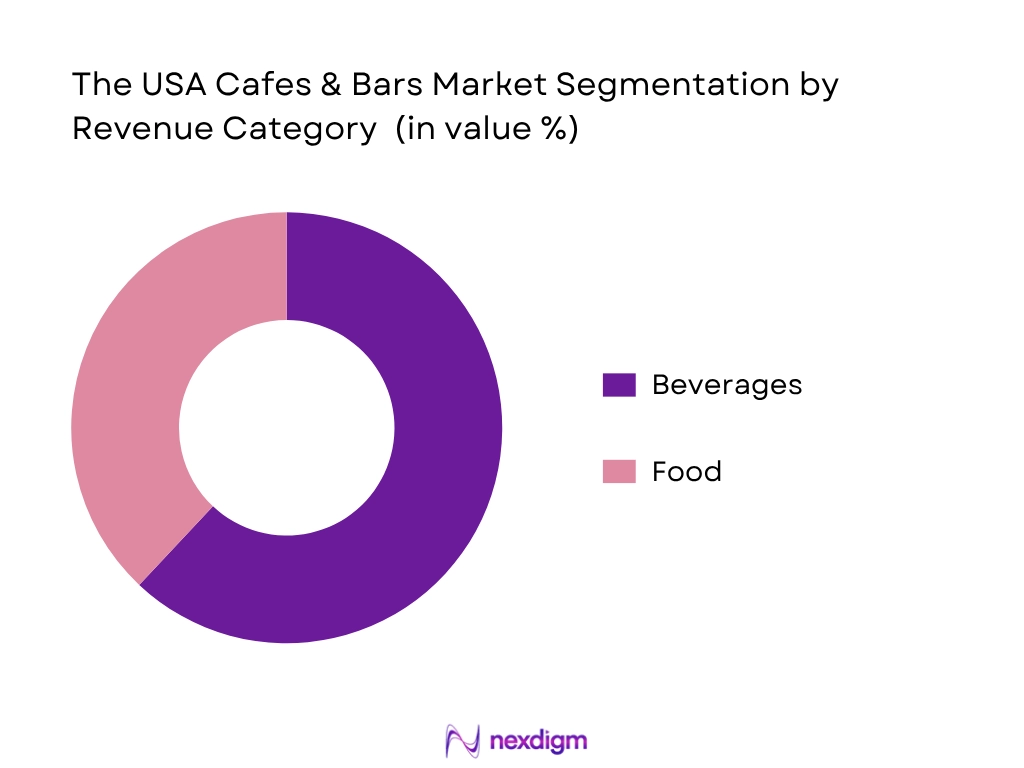
By Revenue Category
The USA Cafes & Bars Market is segmented by revenue category into beverages and food. Beverages dominate because cafes and bars are structurally built around repeat beverage occasions: espresso, cold brew, tea, energy drinks, beer, wine, cocktails, mocktails, and premium mixed drinks. Beverage margins are generally stronger than food margins because operators can engineer pricing through size, customization, alcohol mix, seasonal limited-time offers, syrups, plant-based milk, craft spirits, and zero-proof cocktails. Coffee-led chains also use beverages to drive app engagement and loyalty frequency, while bars rely on cocktails and draft programs to improve ticket size during happy hour and late-night periods. Food remains necessary for attach rate, licensing support, and dwell time, but it usually carries greater labor, spoilage, and kitchen complexity.
Competitive Landscape
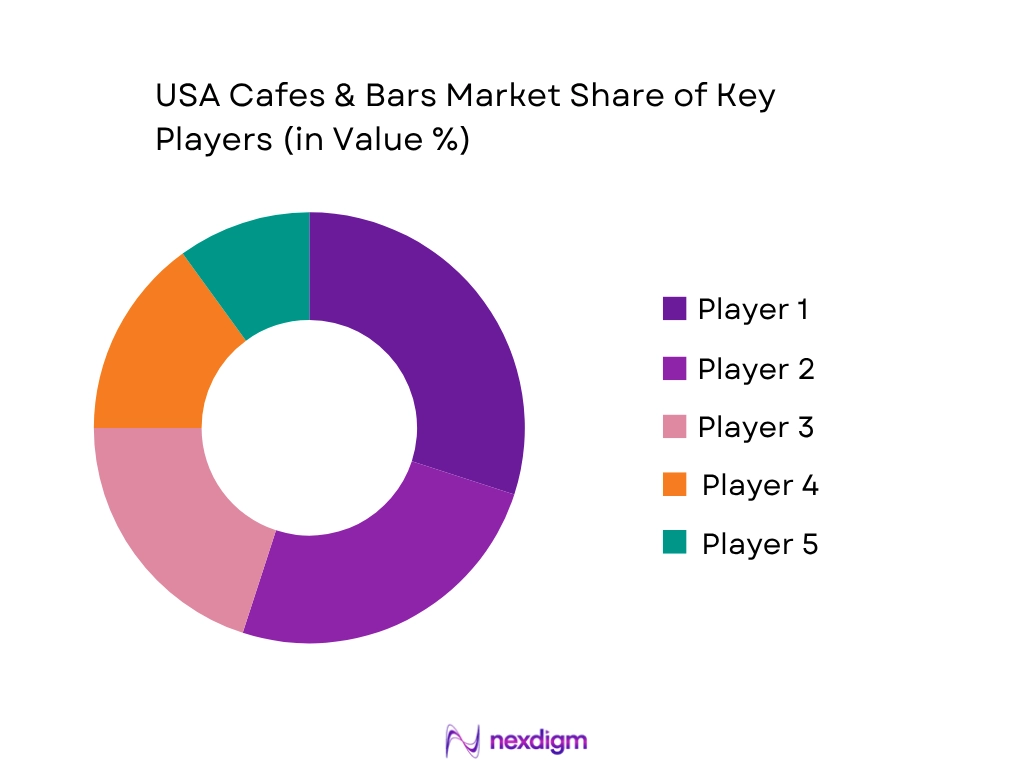
The USA Cafes & Bars Market is moderately consolidated at the chain end and highly fragmented across independents. Starbucks, Dunkin’, Dutch Bros, Tim Hortons USA, and 7 Brew shape the organized café and beverage-chain landscape, while the bar side remains more localized through taverns, cocktail bars, hotel bars, sports bars, and hospitality groups. Chains compete on store density, app loyalty, beverage innovation, drive-thru productivity, and franchise expansion; independents compete on neighborhood relevance, ambience, craft credentials, and local identity. Nexdigm identifies Starbucks, Dunkin’, Dutch Bros, Tim Hortons, and 7 Brew among major U.S. cafés and bars players.
| Company | Establishment Year | Headquarters | Store / Stand Footprint | Core Format | Market-Specific Strength | Beverage Platform | Ownership / Expansion Model | Digital / Loyalty Capability |
| Starbucks | 1971 | Seattle, Washington | ~ | ~
|
~
|
~
|
~
|
~
|
| Dunkin’ | 1950 | Canton, Massachusetts | ~
|
~
|
~
|
~
|
~
|
~
|
| Dutch Bros | 1992 | Grants Pass, Oregon | ~
|
~
|
~
|
~
|
~
|
~
|
| 7 Brew Coffee | 2017 | Fayetteville / Rogers, Arkansas | ~
|
~
|
~
|
~
|
~
|
~
|
| Tim Hortons USA | 1964 | Toronto, Canada / U.S. operations under RBI | ~
|
~
|
~
|
~
|
~
|
~
|
USA Cafes & Bars Market Analysis
Growth Drivers
Specialty Coffee Adoption
Specialty coffee adoption is supported by a large, import-dependent coffee system that gives cafés access to multiple roast profiles, origins, espresso blends, cold brew bases, and premium beverage platforms. USDA data shows U.S. domestic coffee consumption at 26,220 thousand 60-kg bags in the 2024/25 marketing year and 26,550 thousand 60-kg bags in the December 2025/26 forecast. Total U.S. coffee imports stood at 26,170 thousand 60-kg bags in 2024/25 and 26,500 thousand 60-kg bags in the December 2025/26 forecast, while bean imports alone were 23,400 thousand 60-kg bags and 23,800 thousand 60-kg bags, respectively. This supports specialty café demand because cafés depend on steady green coffee availability for espresso, cold brew, single-origin, seasonal blends, and premium milk-based drinks. The demand base is also supported by U.S. scale: Census Bureau QuickFacts reports 340,110,988 residents in July 2024 and 341,784,857 residents in July 2025, giving cafés a broad consumer pool for daily beverage occasions. World Bank data shows U.S. GDP per capita at USD 84,534.0, supporting premiumization within everyday beverage consumption.
Affordable Indulgence
Affordable indulgence is a key growth driver because cafés and bars sit between low-cost at-home consumption and high-ticket hospitality, allowing consumers to make smaller discretionary purchases without committing to large dining occasions. BEA data shows personal consumption expenditures for food services and accommodations at USD 1,463.839 billion in Q1 2025, USD 1,516.307 billion in Q4 2025, and USD 1,520.320 billion in Q1 2026 on a seasonally adjusted annual-rate basis. This indicates that away-from-home foodservice occasions remain embedded in household spending behavior despite value sensitivity. The broader macro base is also supportive: World Bank data places U.S. GDP at USD 28.75 trillion and GDP per capita at USD 84,534.0, while Census Bureau data shows the resident population increasing from 340,110,988 to 341,784,857. For cafés, affordable indulgence appears in espresso upgrades, cold foam, flavored lattes, matcha, bakery attachments, and premium iced drinks. For bars, it appears in happy-hour cocktails, craft beer, shareable appetizers, zero-proof cocktails, and event-led visits that offer social experience at controlled spend levels.
Market Challenges
Wage Inflation
Wage inflation remains a structural challenge for the USA Cafes & Bars Market because the sector depends on baristas, bartenders, cooks, servers, shift supervisors, and counter-service employees across long operating windows. BLS reported 12,437.9 thousand employees in food services and drinking places in May 2026, up from 12,327.7 thousand in February 2026, showing the sector’s continued labor intensity. Average hourly earnings for all employees in the same subsector were USD 21.58 in January 2026 and USD 21.86 in April 2026, while production and nonsupervisory employee earnings were USD 19.69 in January 2026 and USD 20.10 in April 2026. Median weekly earnings for full-time workers in the industry were USD 728 in 2024 and USD 731 in 2025. These figures matter for cafés and bars because small changes in hourly labor requirements affect opening hours, throughput, service speed, bar coverage, kitchen staffing, and manager scheduling. Operators with lower automation, fragmented shifts, or heavy table service face greater pressure than drive-thru cafés and digitally enabled chains.
Coffee Bean Volatility
Coffee bean volatility is a market-specific challenge because U.S. cafés rely heavily on imported green coffee and are exposed to production shifts in origin countries rather than domestic crop availability. USDA data shows U.S. bean imports at 23,400 thousand 60-kg bags in 2024/25 and 23,800 thousand 60-kg bags in the December 2025/26 forecast, while total imports were 26,170 thousand 60-kg bags and 26,500 thousand 60-kg bags, respectively. Ending stocks for the United States were listed at 5,700 thousand 60-kg bags in 2024/25 and 5,700 thousand 60-kg bags in the December 2025/26 forecast, leaving operators dependent on flow continuity from global producers. USDA also reports 2025/26 production at 63 million 60-kg bags for Brazil, 30.8 million 60-kg bags for Vietnam, 13.8 million 60-kg bags for Colombia, and 12.45 million 60-kg bags for Indonesia. This concentration affects cafés because espresso blends, cold brew bases, and single-origin programs depend on stable availability, consistent quality, and reliable shipment timing.
Market Opportunities
Menu Engineering
Menu engineering offers future growth potential because cafés and bars can use existing traffic, labor, and beverage platforms more efficiently without depending only on new outlet expansion. BLS productivity data for food services and drinking places shows output increasing 1.2 in 2024, labor input increasing 0.4, and labor productivity, measured as output per hour, increasing 1.6, while total factor productivity was -0.5. These operating indicators show why operators need tighter SKU architecture, faster-prep beverages, better food attachments, and higher-throughput menu design. BLS also reports large labor pools tied to core café and bar operations, including 3,351,390 combined food preparation and serving workers, 1,235,200 restaurant cooks, 1,009,330 first-line supervisors/managers of food preparation and serving workers, and 1,943,380 waiters and waitresses in 2025. For cafés, this supports menu moves such as standardized cold beverage platforms, premium add-ons, breakfast bundles, and reduced prep complexity. For bars, the opportunity is cocktail batching, shareables, zero-proof menus, beer-flight formats, and simplified late-night menus that improve service speed and table turns.
Daypart Expansion
Daypart expansion reflects future growth opportunity because cafés and bars can stretch asset utilization across morning, afternoon, happy hour, evening, and late-night occasions. BLS reports 717,686 private food services and drinking places establishments in Q1 2025, rising to 731,324 in Q4 2025, creating a large installed base that can capture more transactions through extended operating occasions. The workforce base also supports multi-daypart operations: employment in food services and drinking places reached 12,437.9 thousand in May 2026, while average weekly hours for all employees were 24.3 in January 2026 and 25.1 in April 2026. BEA data shows food services and accommodations PCE at USD 1,520.320 billion in Q1 2026, indicating continued away-from-home foodservice participation. Cafés can expand from breakfast into afternoon iced beverages, work-café usage, bakery snacks, and evening non-alcoholic drinks. Bars can extend into brunch, early happy hour, sports viewing, low-ABV menus, and pre-event traffic, improving real-estate productivity across more consumption windows.
Future Outlook
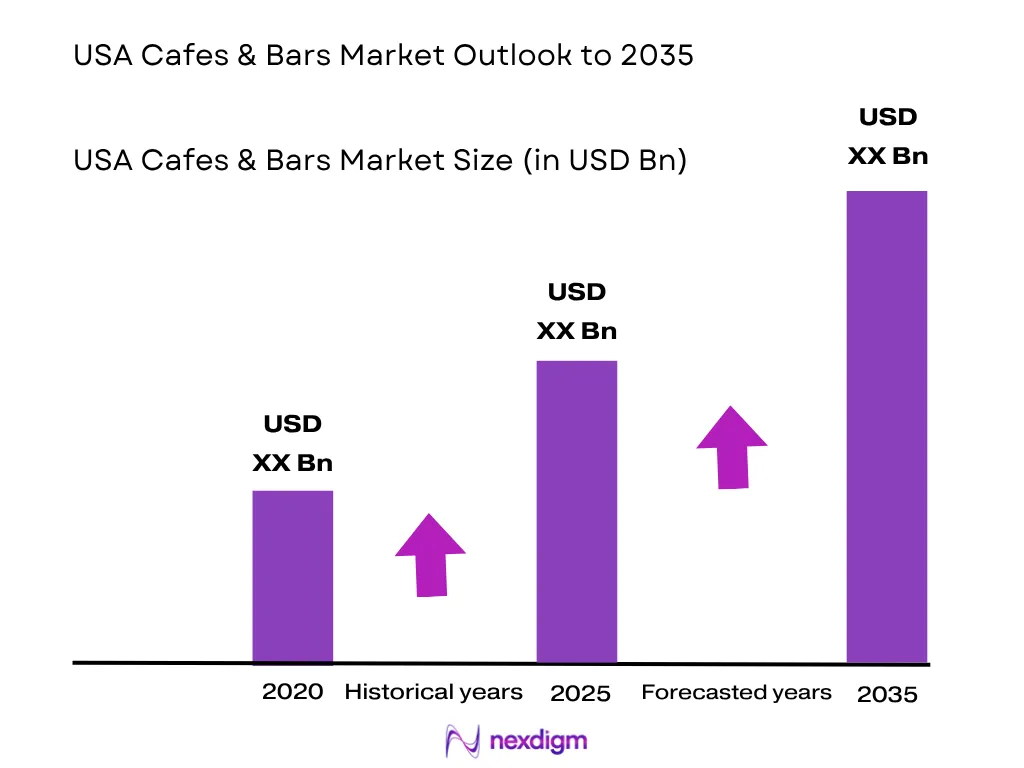
The USA Cafes & Bars Market is expected to expand at a 10.20% CAGR during the 2026–2035 forecast period, reaching USD 231.27 billion by 2035, according to Nexdigm Market Research. Growth will be led by specialty coffee, premium cold beverages, cocktail culture, delivery, lodging-based cafés and bars, and franchise-led outlet expansion. Operators are expected to focus on throughput, loyalty data, labor productivity, and beverage-margin engineering. Future growth will be strongest in formats that combine convenience and experience. Drive-thru beverage shops, specialty coffee chains, hybrid cafe-bars, hotel bars, airport cafés, sports bars, and zero-proof cocktail menus are expected to attract investment. The Far West, Rocky Mountain, Southwest, Southeast, and New England regions will remain attractive because of tourism, urban density, coffee culture, and social venue demand.
Major Players
- Starbucks
- Dunkin’
- Dutch Bros Coffee
- Tim Hortons USA
- 7 Brew Coffee
- Scooter’s Coffee
- Peet’s Coffee
- The Coffee Bean & Tea Leaf
- Caribou Coffee
- Black Rock Coffee Bar
- Panera Bread
- First Watch
- Applebee’s
- Buffalo Wild Wings
- Yard House
Key Target Audience
- Cafe chains and specialty coffee operators
- Bar, pub, lounge and nightlife operators
- Foodservice franchise owners and multi-unit operators
- Coffee roasters, alcohol distributors and beverage suppliers
- Commercial real estate developers and retail leasing firms
- Hospitality groups, hotel chains and airport concession operators
- Investments and venture capitalist firms
- Government and regulatory bodies: U.S. Food and Drug Administration, Alcohol and Tobacco Tax and Trade Bureau, Federal Trade Commission, U.S. Small Business Administration, state alcohol beverage control boards
Research Methodology
Step 1: Identification of Key Variables
The initial phase involves constructing an ecosystem map covering cafés, coffee shops, bars, pubs, brewpubs, lounges, distributors, roasters, franchise groups, landlords, POS vendors, and delivery platforms. Desk research is used to identify key variables such as outlet count, average ticket, beverage mix, labor cost, rent-to-sales ratio, daypart traffic, and alcohol licensing exposure.
Step 2: Market Analysis and Construction
Historical market performance is analyzed through published market-size sources, foodservice expenditure data, operator filings, trade associations, and location intelligence. The market is constructed using a top-down foodservice-spend approach and a bottom-up outlet economics approach based on average unit volume, transaction frequency, menu mix, and service format.
Step 3: Hypothesis Validation and Expert Consultation
Market hypotheses are validated through interviews with café operators, bar owners, beverage directors, alcohol distributors, coffee roasters, franchisees, commercial real estate specialists, and POS platform providers. These discussions help verify revenue assumptions, beverage margin structures, labor pressure, customer frequency, and emerging format-level opportunities.
Step 4: Research Synthesis and Final Output
The final stage synthesizes secondary data, company disclosures, expert interviews, menu benchmarking, and competitive profiling. The output is checked through triangulation across published market data, operator-level performance indicators, and demand-side consumption signals to ensure a consistent and defensible view of the USA Cafes & Bars Market.

- Executive Summary
- Research Methodology (Market Definitions and Assumptions, Abbreviations and Industry Terminology, Market Sizing Approach, Top-Down Market Estimation, Bottom-Up Market Estimation, Demand-Side Validation, Side Validation, Primary Research Approach, Secondary Research Approach, Limitations and Assumptions)

- Definition and Scope
- Market Genesis and Evolution
- Timeline of Major Cafe and Bar Formats
- Business Cycle
- Supply Chain and Value Chain Analysis
- Operating Model Overview
- Revenue Model Overview
- Licensing and Compliance Landscape
- Role of Cafes and Bars in U.S. Foodservice and Social Consumption

- Growth Drivers (Specialty Coffee Adoption, Affordable Indulgence, Social Drinking Occasions, Drive-Thru Expansion)
- Market Challenges (Wage Inflation, Coffee Bean Volatility, Alcohol Compliance, Shrinking Late-Night Footfall)
- Market Opportunities (Menu Engineering, Daypart Expansion, Non-Alcoholic Mixology, Franchise White Spaces)
- Trends (Cold Beverage Mix, Hybrid Work, Value Bundles, AI Ordering, Experience-Led Bars)
- Government Regulation (Liquor Licensing, Tipped Wage, Food Safety, Age Verification, Taxation)
- SWOT Analysis (Brand Loyalty, High Fixed Costs, Beverage Margins, Regulatory Fragmentation)
- Stakeholder Ecosystem (Roasters, Brewers, Distillers, Distributors, POS Vendors, Delivery Platforms, Franchisees)
- Porter’s Five Forces (Supplier Power, Buyer Choice, Substitutes, New Entrants, Competitive Rivalry)
- PESTLE Analysis (Consumer Spending, Alcohol Policy, Technology Adoption, Labor Law, Sustainability)
- Unit Economics Analysis (AUV, COGS, Labor Cost, Rent-to-Sales, Beverage Margin, EBITDA Margin)
- Pricing Analysis (Coffee Cup Price, Cocktail Price, Beer Pour Price, Happy Hour Discounting, Menu Mix)
- Demand Forecasting Variables (Footfall, Ticket Size, Repeat Rate, Weather, Events, Office Occupancy)

- By Value (2020-2025)
- By Transaction Volume (2020-2025)
- By Outlet Count (2020-2025)
- By Average Ticket Size (2020-2025)
- By Average Unit Volume (2020-2025)
- By Same-Store Sales (2020-2025)
- By On-Premise and Off-Premise Revenue Contribution (2020-2025)
- By Alcoholic and Non-Alcoholic Beverage Revenue (2020-2025)

- By Establishment Type [In Value%]
Specialty Coffee Shops
Chain Cafes
Independent Neighborhood Cafes
Bakery-Cafes
Drive-Thru Coffee Kiosks
Traditional Bars and Taverns
Cocktail Bars and Lounges
Sports Bars
Brewpubs and Taprooms
Hybrid Cafe-Bars - By Beverage Category [In Value%]
Hot Coffee
Iced Coffee and Cold Brew
Espresso-Based Beverages
Tea, Matcha and Chai
Functional and Wellness Beverages
Beer
Wine
Spirits
Cocktails and Mixed Drinks
Non-Alcoholic Beer, Mocktails and Low-ABV Beverages - By Food Attachment [In Value%]
Breakfast Sandwiches
Bakery and Pastry Items
Salads and Light Meals
Bar Snacks and Shareables
Burgers, Wings and Casual Dining Items
Brunch Menus
Desserts and Sweet Treats - By Service Channel [In Value%]
Dine-In
Takeaway
Drive-Thru
Delivery Aggregators
Direct Mobile Ordering
Curbside Pickup
Catering and Group Orders - By Daypart [In Value%]
Early Morning Coffee
Breakfast
Midday Work-Cafe Visits
Afternoon Beverage Break
Happy Hour
Dinner and Pre-Event Drinks
Late-Night Bar Traffic
Weekend Brunch - By Customer Cohort [In Value%]
Gen Z Consumers
Millennials
Gen X Consumers
Baby Boomers
Remote and Hybrid Workers
Students
Tourists and Event-Driven Visitors - By Ownership Model [In Value%]
Company-Owned Chains
Franchised Chains
Independent Single-Unit Operators
Multi-Unit Independent Groups
Hospitality Groups
Hotel-Affiliated Bars and Cafes - By Price Positioning [In Value%]
Value Coffee and Quick Beverage
Mid-Market Cafes
Premium Specialty Cafes
Neighborhood Bars
Premium Cocktail Bars
High-End Lounges - By Location Type [In Value%]
High-Street Retail
Office Districts
Suburban Retail Centers
University Districts
Airports and Travel Hubs
Hotels and Casinos
Entertainment Districts
Residential Neighborhoods - By Region [In Value%]
Northeast
Midwest
South
West
Pacific Coast Urban Markets
Sun Belt Growth Markets

- Market Share of Major Players (System Sales, Beverage Revenue, Store Count, Traffic Share)
- Market Share by Establishment Type (Coffee Chains, Bakery-Cafes, Drive-Thru Coffee, Casual Bars, Sports Bars, Brewpubs)
- Competitive Positioning Matrix (Value, Convenience, Premiumization, Experience, Digital Maturity)
- Cross Comparison Parameters (Store Count, Average Unit Volume, Beverage Menu Breadth, Alcohol Mix, Drive-Thru Penetration, Loyalty App Members, Franchise Ratio, Daypart Strength)
- SWOT Analysis of Major Players (Brand Equity, Menu Innovation, Cost Structure, Real Estate Portfolio)
- Pricing Analysis of Major Players (Coffee SKUs, Cold Beverage SKUs, Cocktail SKUs, Beer Pour, Happy Hour Bundles, Food Attachments)
- Menu Benchmarking of Major Players (Core Beverages, LTO Frequency, Food Pairings, Zero-Proof Options, Premium Add-Ons)
- Digital Capability Benchmarking (Mobile Ordering, Loyalty, CRM, Delivery Integrations, Kiosk Adoption, Payments)
- Expansion Strategy Benchmarking (Company-Owned Rollout, Franchise Growth, Suburban Expansion, Airport and Campus Units)
- Detailed Profiles of Major Companies
Starbucks
Dunkin’
Dutch Bros Coffee
Tim Hortons USA
Scooter’s Coffee
The Coffee Bean & Tea Leaf
Peet’s Coffee
Panera Bread
Black Rock Coffee Bar
Caribou Coffee
First Watch
Chili’s Grill & Bar
Applebee’s
Buffalo Wild Wings
Yard House

- Consumer Demand and Utilization (Daily Coffee Rituals, Social Drinking, Work Meetings, Weekend Brunch)
- Purchasing Power and Budget Allocation (Affordable Indulgence, Premium Cocktail Spend, Value Bundles)
- Needs, Desires and Pain Point Analysis (Speed, Customization, Ambience, Seating, Wi-Fi, Safety, Price Transparency)
- Decision-Making Process (Location, Wait Time, Menu Variety, Reviews, Loyalty Rewards, Happy Hour Offers)
- Customer Journey Mapping (Discovery, Ordering, Payment, Dwell Time, Revisit, Review)
- Frequency and Occasion Analysis (Daily Coffee, Weekly Cafe Visits, Monthly Bar Visits, Event-Driven Consumption)
- Trade-Down and Trade-Up Behavior (At-Home Coffee, Convenience Coffee, Premium Specialty Cafes, Craft Cocktails)
- Channel Preference Analysis (Walk-In, Mobile App, Drive-Thru, Delivery, Reservation Platforms)
- Customer Retention Analysis (Rewards Enrollment, Visit Streaks, Personalization, Subscription Coffee Models)
- Pain Points for Business Customers (Office Catering, Corporate Events, Group Tabs, Venue Buyouts)

- By Value (2026-2035)
- By Transaction Volume (2026-2035)
- By Outlet Count (2026-2035)
- By Average Ticket Size (2026-2035)
- By Average Unit Volume (2026-2035)
- By Same-Store Sales (2026-2035)
- By Beverage Revenue Contribution (2026-2035)
- By On-Premise and Off-Premise Revenue Contribution (2026-2035)


 Request a Sample
 Ask for Customization
 Get a Quote
 Enquire Now