

 Download PDF
Market Overview
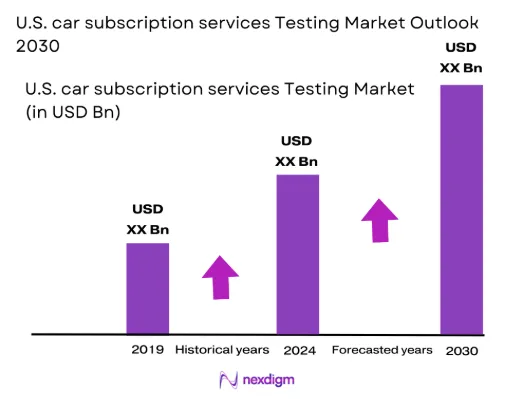
The USA car subscription services market is valued at approximately USD ~, driven by increasing consumer preference for flexible and convenient transportation options. The rise in urban mobility solutions, combined with advancements in telematics, has led to more consumers adopting car subscriptions instead of traditional car ownership. The market’s growth is further fueled by the shift towards electric vehicles (EVs) and sustainability efforts. Car subscription models that provide users with maintenance, insurance, and flexibility in vehicle choice are rapidly becoming more popular across various regions in the United States. In 2024, this market is expected to continue its growth trajectory, supported by demand for more personalized transportation solutions and government incentives promoting clean energy alternatives like EVs.
Cities like Los Angeles, New York, and San Francisco dominate the U.S. car subscription services market due to their high population density, urbanization, and progressive attitude toward mobility solutions. These cities are key hubs for technology adoption, with consumers seeking alternatives to car ownership, such as subscription services. The appeal of these services is further amplified by the presence of a strong tech ecosystem, extensive public transportation infrastructure, and environmental policies encouraging more sustainable transportation options. The growing EV adoption in these urban areas also contributes to the dominance, where car subscription models offer more flexibility in accessing electric vehicles without long-term commitments.
Market Segmentation
By Service Provider Type
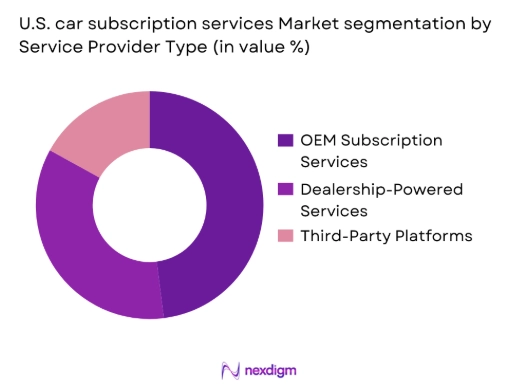
The U.S. car subscription services market is segmented by service provider type into Original Equipment Manufacturer (OEM) subscription services, dealership-powered subscriptions, and third-party platform providers. Among these, the OEM subscription services have seen the dominant market share. OEMs like BMW, Volvo, and Mercedes-Benz have introduced their own subscription programs to provide customers with a streamlined experience that combines vehicle access with additional benefits such as insurance, maintenance, and roadside assistance. The dominance of OEMs is due to their established brand trust, direct connection to the vehicle manufacturing process, and ability to offer exclusive services tailored to specific models. Their established customer loyalty and higher-quality vehicles further ensure this segment’s strong market position.
By Vehicle Type
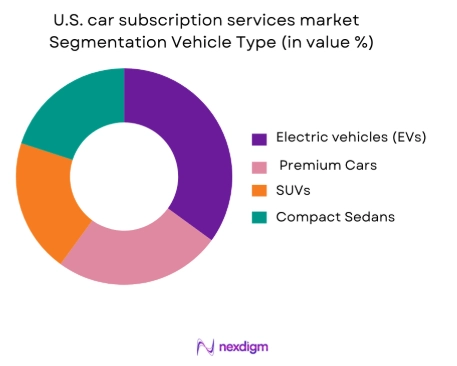
The market is also segmented by vehicle type, including premium cars, electric vehicles (EVs), SUVs, and compact sedans. The electric vehicle (EV) segment is currently leading the market. With increasing environmental consciousness and government incentives to reduce carbon footprints, many consumers are now opting for EVs through subscription services, particularly in urban areas. Car subscription models that feature EVs cater to the rising interest in eco-friendly transportation solutions. Moreover, the lower upfront costs associated with subscribing to EVs make them attractive options for consumers who want the flexibility of changing vehicles without long-term commitment. This is driving the growth of the EV segment in the U.S. car subscription services market.
Competitive Landscape
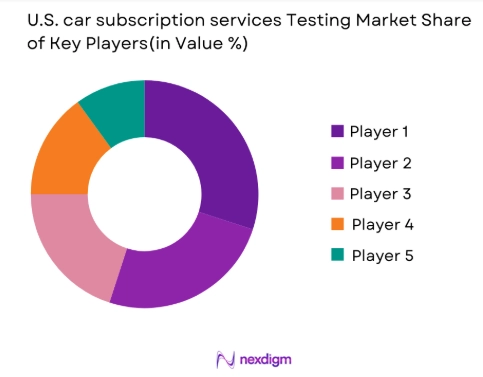
The U.S. car subscription services market is dominated by a few key players. Major global car manufacturers such as Volvo, BMW, and Mercedes-Benz have made significant strides in offering car subscription services directly to consumers. Additionally, third-party platforms like Clutch Technologies and Fair have gained traction by offering multi-brand access to customers. These companies have capitalized on the growing shift in consumer preferences towards flexible and personalized mobility services. The market has seen increasing consolidation, where OEMs are partnering with tech platforms to enhance the customer experience.
| Company | Establishment Year | Headquarters | Fleet Size | Subscription Offerings | Technology Integration | Partnerships | Revenue Source |
| Volvo | 1927 | Gothenburg, Sweden | ~ | ~ | ~ | ~ | ~ |
| BMW Group | 1916 | Munich, Germany | ~ | ~ | ~ | ~ | ~ |
| Mercedes-Benz | 1926 | Stuttgart, Germany | ~ | ~ | ~ | ~ | ~ |
| Clutch Technologies | 2017 | Atlanta, Georgia | ~ | ~ | ~ | ~ | ~ |
| Fair | 2016 | Santa Monica, California | ~ | ~ | ~ | ~ | ~ |
U.S. car subscription services market Analysis
Growth Drivers
Urbanization
The urbanization trend is significantly shaping the USA car subscription services market. In 2024, ~ of the U.S. population lived in urban areas, according to the World Bank. This percentage is projected to increase steadily through 2025, leading to a rising demand for flexible, on-demand transportation solutions. Urban areas with dense populations are witnessing increased traffic congestion and limited parking, making traditional car ownership less appealing. As cities expand and new developments emerge, car subscription services are gaining traction, offering urban dwellers a convenient alternative that eliminates the need for vehicle ownership.
Consumer Mobility Shift
Consumer preferences in mobility are shifting towards more flexible, on-demand transportation models. In 2024, there were over ~ cars on the road in the U.S., but the average number of hours cars are used daily has decreased due to a growing inclination towards shared, rented, or subscription-based services. According to a study from the U.S. Department of Transportation, the number of car subscriptions has increased by ~ annually, with rising consumer interest in avoiding long-term financial commitments, insurance, and maintenance. This shift is further amplified by the desire for cost-effective, on-demand solutions.
Market Challenges
Subscription Pricing
A significant challenge for the U.S. car subscription services market is the high cost of subscriptions, particularly for premium and luxury vehicles. The pricing for subscription services often includes the cost of the car, insurance, maintenance, and other services, which may exceed the costs associated with traditional leasing or ownership. The U.S. Bureau of Labor Statistics reported that the average American household spent approximately $ ~ on transportation annually, with a significant portion allocated towards car-related costs. This makes subscription models an expensive option for many consumers, limiting widespread adoption despite growing interest.
Fleet Maintenance Costs
Maintaining large fleets of vehicles for subscription services presents significant challenges in terms of operational costs. Fleet management requires a constant investment in vehicle maintenance, repairs, and servicing. According to the U.S. Bureau of Transportation Statistics, the average maintenance cost for a vehicle is approximately ~ per year. These costs rise with the fleet’s size and the frequency of vehicle use, posing financial challenges for car subscription providers who need to keep the fleet in top condition while ensuring profitability. Fleet managers are thus under pressure to balance costs with consumer expectations for high-quality vehicles.
Opportunities
Fleet Partnerships
One of the major opportunities in the U.S. car subscription services market is the potential for fleet partnerships between automotive manufacturers and subscription platforms. As of 2024, major OEMs, such as Ford and GM, are already forming alliances with tech platforms like Clutch Technologies to offer seamless vehicle access. This is expected to continue as the demand for flexible mobility solutions grows. Fleet partnerships allow subscription providers to expand their vehicle options without managing the entire fleet themselves, improving service diversity and customer satisfaction. Such collaborations can reduce operational costs and expand market reach.
Subscription for Corporate Fleets
The growing trend of companies shifting to flexible transportation models presents a significant opportunity for car subscription services. With the rise in remote work and decentralized operations, companies are exploring fleet subscription services for employee transportation. According to a study by the U.S. Chamber of Commerce, nearly ~ of U.S. companies have reported exploring alternative vehicle leasing options for their staff, with many preferring subscription models for their flexibility. Corporate fleet subscriptions allow businesses to provide their employees with easy access to vehicles without committing to long-term ownership, thereby reducing overhead and ensuring flexibility.
Future Outlook
Over the next 5 years, the U.S. car subscription services market is expected to show significant growth. Key drivers for this expansion include continuous government support for electric vehicles (EVs), technological advancements in telematics and fleet management, and the rising demand for eco-friendly transportation solutions. Consumer preferences are shifting towards more flexible mobility options, and subscription services provide a cost-effective alternative to traditional vehicle ownership. With the growing emphasis on sustainability and the increasing adoption of electric vehicles, the market is poised for continuous innovation, especially in urban areas where demand for flexible car ownership models is high.
Major Players
- Volvo Cars
- BMW Group
- Mercedes-Benz
- Fair
- Clutch Technologies
- Sixt SE
- Hertz Corporation
- Avis Budget Group
- Toyota
- Ford
- Hyundai
- Maven by GM
- Care by Volvo
- Carmoola
- Revolve
Key Target Audience
- Investments and Venture Capitalist Firms
- Government and Regulatory Bodies
- Automobile Manufacturers
- Fleet Operators
- Car Subscription Platforms
- Insurance Companies
- Technology Providers for Fleet Management
- Automotive Dealerships
Research Methodology
Step 1: Identification of Key Variables
In this step, an ecosystem map was created to identify and define key variables influencing the U.S. car subscription services market. This was done by leveraging industry-specific data from proprietary databases and secondary sources to identify the factors that drive market demand, growth, and competition.
Step 2: Market Analysis and Construction
Market analysis involved gathering historical data and assessing market penetration across various regions in the U.S. The goal was to evaluate subscription models, fleet utilization rates, and customer preferences. The collected data was used to develop precise revenue generation estimates for the 2024 period.
Step 3: Hypothesis Validation and Expert Consultation
A combination of expert consultations and market hypothesis validation was carried out. Industry experts, including executives from car manufacturers, tech platforms, and dealerships, were interviewed to ensure the accuracy of the market model. This step provided insights into real-world challenges and opportunities for car subscription services.
Step 4: Research Synthesis and Final Output
The final phase involved synthesizing all data collected, validating it through bottom-up analysis, and engaging directly with car manufacturers. This engagement helped refine insights into subscription offerings, consumer preferences, and financial performance. The final output presents a validated and comprehensive analysis of the U.S. car subscription services market.

- Executive Summary
- Research Methodology (Definitions & Assumptions, Market Sizing Approach, Data Collection & Analysis Methodology, Limitations and Scope of Study)

- Definition and Scope
- Market Dynamics
- Historical Overview
- Timeline of Key Players

- Growth Drivers
Urbanization
Consumer Mobility Shift
EV Adoption - Market Challenges
Subscription Pricing
Fleet Maintenance Costs
Consumer Retention - Opportunities
Fleet Partnerships
Subscription for Corporate Fleets
Expansion of EV Fleet - Trends
Rise in EV Subscriptions
Tech-Enabled Customization
Digital Platforms

- By Value, 2019-2025
- By Volume , 2019-2025
- By Average Price , 2019-2025

- By Service Provider Type (In value %)
OEM Subscription Services
Dealership-Powered Subscription
Third-Party Platforms - By Subscription Duration (In value %)
Short-Term
Mid-Term
Long-Term - By Vehicle Type (In value %)
Premium & Luxury Cars
Electric Vehicles
SUVs & Crossovers
Sedans & Compacts - By End-User Type (In value %)
Individual Consumer
Corporate & Fleet Customers
Government & Institutional Users

- Market Share of Major Players
- Cross Comparison Parameters (Service Portfolio Depth, Subscription Pricing Structure, Fleet Size & Vehicle Variety, Platform Technology & Mobile App Integration, Customer Retention Metrics, Market Expansion & Regional Reach, Dealer & OEM Partnerships, Operating Margins)
- SWOT Analysis of Key Players
- Pricing Analysis
- Porter’s Five Forces
- Detailed Profiles
Hertz Corporation
Avis Budget Group
Sixt SE
Fair
Care by Volvo
BMW Group
Mercedes-Benz
Toyota Subscription Services
Ford Canvas
Lyft Subscription Program
Clutch Technologies
Revolve Car Subscription
PrimeFlip
LESS Car Subscription Services
Maven by GM

- Consumer Needs & Preferences
- Purchasing Power and Budget Allocation
- Decision-Making Process
- Customer Retention Factors

- By Value, 2026-2030
- By Volume, 2026-2030
- By Average Price, 2026-2030


 Request a Sample
 Ask for Customization
 Get a Quote
 Enquire Now