
 Download PDF
 Download PDF
Market Overview
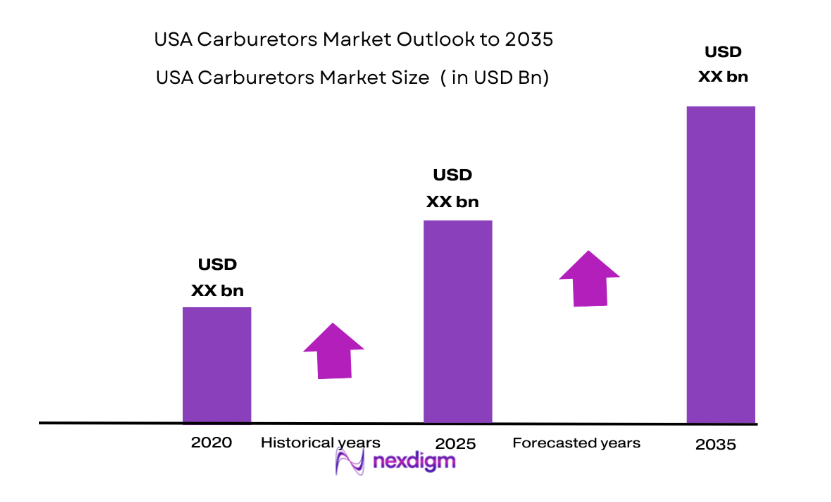
The USA Carburetors market has been consistently growing in recent years, with the market size expected to reach USD ~ billion based on a recent historical assessment. This growth is driven by factors such as increasing demand for high-performance carburetors in the automotive sector, expansion of the motorcycle and marine industries, and advancements in carburetor technology. Furthermore, the trend towards customization in the automotive market and rising preference for efficient fuel systems have also contributed to the market’s expansion. Additionally, improvements in carburetor design and the demand for higher fuel efficiency are significant drivers of this growth.
The USA remains a dominant region in the carburetors market, largely due to its strong automotive manufacturing sector and large consumer base. Key states such as California, Texas, and Michigan have played a pivotal role due to their established infrastructure for automotive production and repair services. The high concentration of manufacturing plants, coupled with growing aftermarket service demand, has reinforced the USA’s dominance in the global carburetor market. Additionally, regions with robust motorcycle and marine industries further contribute to the widespread use of carburetors, ensuring steady market growth.
Market Segmentation
By Product Type:
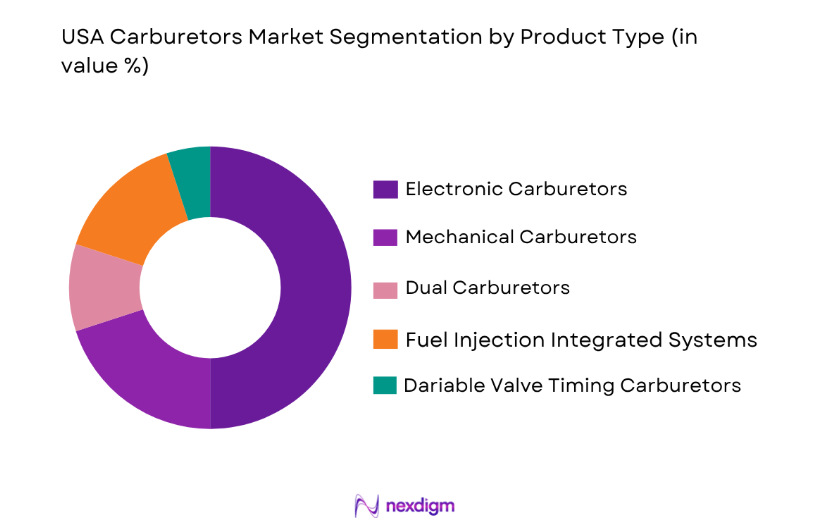
The USA Carburetors market is segmented by product type into various sub-segments. Recently, the electronic carburetor sub-segment has been dominating the market share due to factors such as increased fuel efficiency, precise control over air-fuel mixtures, and reduced emissions. The growing demand for advanced technology in automotive and motorcycle engines, alongside stringent emission regulations, has made electronic carburetors a preferred choice for both OEMs and aftermarket suppliers. This segment’s growth is further supported by the increasing trend toward digitalization in automotive systems and the consumer demand for higher performance and fuel efficiency.
By End User Segment:
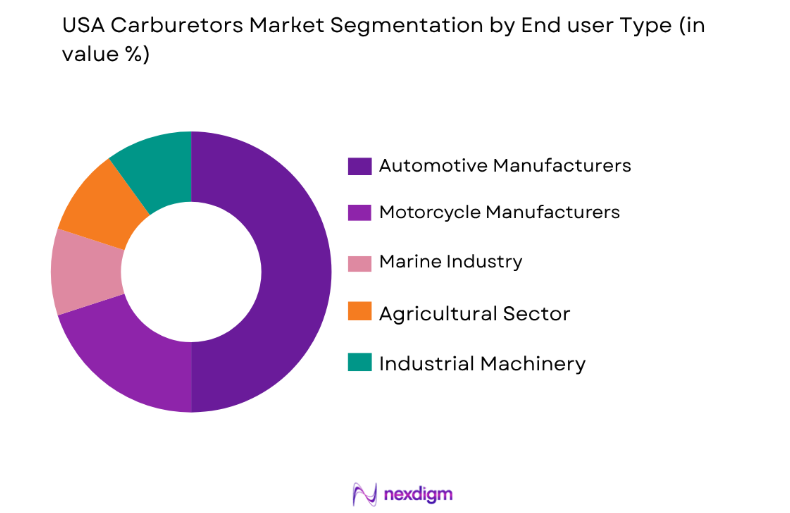
The automotive sector has the dominant market share within the end user segment of the carburetors market in the USA. This dominance is attributed to the growing production of vehicles and the increasing demand for high-performance automotive engines. Additionally, the automotive industry’s focus on engine efficiency and reduced fuel consumption has driven the adoption of carburetors in both OEM and aftermarket sectors. The rise of car enthusiasts seeking customized performance vehicles further propels the demand for carburetors in the USA, particularly in the sports car and vintage vehicle market.
Competitive Landscape
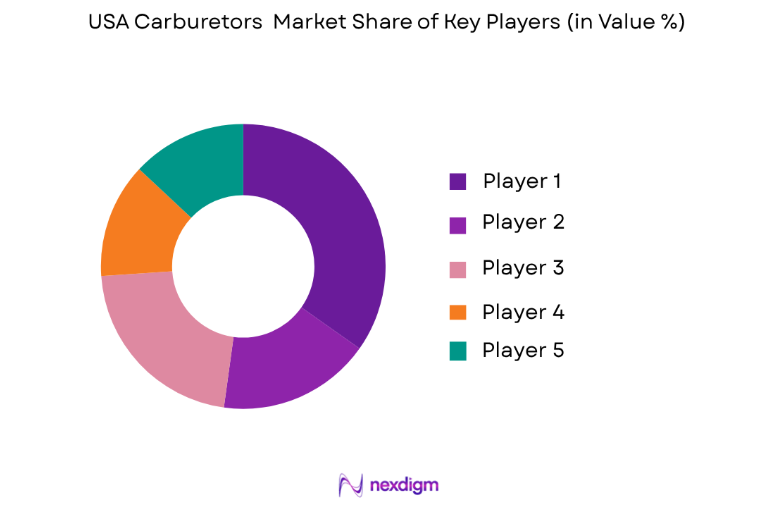
The competitive landscape of the USA Carburetors market is characterized by both established and emerging players focusing on technological innovation and expanding product offerings. Major players dominate the market by leveraging their strong R&D capabilities and strategic partnerships, thus maintaining their market position. The landscape also reflects consolidation within the sector, with leading companies acquiring smaller firms to strengthen their portfolios in fuel management systems. This trend is expected to continue as companies aim to expand their reach and adopt newer technologies to meet consumer demands.
| Company Name | Establishment Year | Headquarters | Technology Focus | Market Reach | Key Products | Revenue (USD) | Additional Parameter |
| Edelbrock | 1938 | Torrance, CA | ~ | ~ | ~ | ~ | ~ |
| Holley Performance Products | 1903 | Bowling Green, KY | ~ | ~ | ~ | ~ | ~ |
| Weber Carburetors | 1936 | Italy | ~ | ~ | ~ | ~ | ~ |
| Mikuni American Corporation | 1923 | Santa Fe Springs, CA | ~ | ~ | ~ | ~ | ~ |
| Keihin North America | 1956 | Japan | ~ | ~ | ~ | ~ | ~ |
USA Carburetors Market Analysis
Growth Drivers
Increasing demand for fuel-efficient systems:
Fuel efficiency has become one of the primary driving factors in the USA Carburetors market. The rising focus on fuel economy among consumers, manufacturers, and regulatory bodies has made carburetors more desirable, particularly in automotive and motorcycle applications. The shift towards energy-efficient vehicles has also led to greater demand for carburetors that can improve fuel management while reducing emissions. As fuel economy continues to be a priority, carburetors are being increasingly integrated into various vehicle systems to meet the stringent regulations set by the government. Technological advancements in carburetor design, such as electronic fuel management, also play a role in addressing fuel efficiency concerns. Manufacturers are constantly working to optimize carburetor systems to balance performance with fuel economy, which is likely to drive continued market growth.
Technological advancements in carburetor systems:
Another significant growth driver in the USA Carburetors market is the ongoing technological advancements in carburetor systems. The development of electronic carburetors, which allow for more precise control over air-fuel ratios, is a key factor in enhancing engine performance and reducing fuel consumption. Moreover, carburetors are evolving to meet stricter emission regulations, with improvements that reduce pollutants and increase engine efficiency. This technological innovation is particularly significant in the automotive and motorcycle sectors, where high performance and low emissions are key priorities. As consumer demand for fuel-efficient, high-performance, and environmentally friendly vehicles grows, these advancements in carburetor technology are expected to fuel the market further.
Market Challenges
Regulatory and compliance challenges:
One of the significant challenges facing the USA Carburetors market is compliance with increasingly stringent environmental regulations. Government policies designed to reduce vehicle emissions and improve fuel efficiency have pushed manufacturers to develop advanced carburetors that meet these regulatory standards. However, staying compliant with these evolving laws and standards requires significant investment in research and development, which can be costly. Furthermore, the introduction of alternative fuel systems and fuel injection technologies in automotive engines poses additional challenges for carburetor manufacturers. With these systems offering superior fuel efficiency and emissions control, the carburetor market faces competition from alternative fuel technologies, which may hinder growth if manufacturers do not innovate rapidly enough to meet the market demands.
High manufacturing costs and supply chain disruptions:
Another significant challenge facing the USA Carburetors market is the high cost of manufacturing and supply chain disruptions. Carburetor production involves the use of specialized materials and manufacturing processes, which can be expensive. As the cost of raw materials continues to rise, manufacturers may face challenges in maintaining competitive pricing while also improving product quality. Additionally, global supply chain disruptions, such as those caused by the COVID-19 pandemic or geopolitical tensions, can affect the timely availability of components required for carburetor production. These disruptions can delay product launches, increase costs, and ultimately reduce profitability for manufacturers. The combined impact of high manufacturing costs and supply chain issues poses a significant challenge to the long-term sustainability of the market.
Opportunities
Rising interest in customization and performance vehicles:
The increasing consumer interest in customized and high-performance vehicles presents a significant opportunity for the USA Carburetors market. As enthusiasts continue to demand tailored solutions for their vehicles, there is a growing need for specialized carburetors that can enhance engine performance. This trend is particularly strong in the automotive and motorcycle markets, where consumers seek to modify their vehicles for improved power, fuel efficiency, and aesthetics. The demand for customized carburetors is expected to continue growing as the culture of vehicle personalization expands. Furthermore, this trend presents an opportunity for manufacturers to differentiate themselves by offering specialized products that cater to the needs of performance-driven consumers.
Growth in the marine and agriculture sectors:
Another key opportunity for the USA Carburetors market lies in the growing demand for carburetors in the marine and agricultural sectors. Both sectors are experiencing increasing demand for more efficient and durable carburetors that can withstand harsh environmental conditions while delivering optimal performance. In the marine industry, carburetors are essential for ensuring smooth engine performance in boats and recreational vehicles. In the agriculture sector, carburetors are used in various machinery, including tractors and harvesters, where reliability and fuel efficiency are crucial. As these sectors expand, manufacturers have the opportunity to develop carburetors tailored to the specific needs of marine and agricultural equipment, further driving market growth.
Future Outlook
The future outlook for the USA Carburetors market over the next five years is promising, with steady growth anticipated. Technological advancements, particularly in electronic carburetors and fuel-efficient solutions, will continue to drive demand across automotive, motorcycle, and marine applications. Additionally, regulatory support for greener and more efficient fuel systems will likely spur further innovation. As the trend toward vehicle customization grows, carburetor manufacturers are expected to increasingly cater to consumer preferences for performance-driven products, further boosting market demand.
Major Players
- Edelbrock
- Holley Performance Products
- Weber Carburetors
- Mikuni American Corporation
- Keihin North America
- Carter Automotive
- Autolite
- Summit Racing Equipment
- Denso Corporation
- Bosch Automotive
- Pierburg
- Mr. Gasket
- Solex Carburetors
- Fuji Oozx Co., Ltd.
- Delorto
Key Target Audience
- Investments and venture capitalist firms
- Government and regulatory bodies
- Automotive manufacturers
- Motorcycle manufacturers
- Marine industry suppliers
- Agricultural machinery manufacturers
- Industrial equipment companies
- Retailers and aftermarket distributors
Research Methodology
Step 1: Identification of Key Variables
The first step involves identifying the key variables that impact the carburetor market, including product types, end user segments, and geographic distribution.
Step 2: Market Analysis and Construction
Market analysis is conducted through primary and secondary research, gathering data on historical market trends, consumer behavior, and competitive landscape.
Step 3: Hypothesis Validation and Expert Consultation
Expert consultation helps validate initial hypotheses by gathering insights from industry leaders and technical experts, ensuring the research aligns with market realities.
Step 4: Research Synthesis and Final Output
The final output synthesizes the gathered data into a comprehensive market report, detailing trends, forecasts, and actionable insights for stakeholders.

- Executive Summary
- Research Methodology (Definitions, Scope, Industry Assumptions, Market Sizing Approach, Primary & Secondary Research Framework, Data Collection & Verification Protocol, Analytic Models & Forecast Methodology, Limitations & Research Validity Checks)

- Market Definition and Scope
- Value Chain & Stakeholder Ecosystem
- Regulatory / Certification Landscape
- Sector Dynamics Affecting Demand

- Growth Drivers
Increasing Vehicle Production
Rise in Automotive Customization
Technological Advancements in Carburetor Systems - Market Challenges
Regulatory Compliance with Emission Standards
High Initial Costs for Carburetor Systems
Competition from Fuel Injection Systems - Market Opportunities
Growing Demand for Customization
Increase in Demand for Fuel-Efficient Vehicles
Rising Investments in Aftermarket Solutions - Trends
Shift Towards Electric and Hybrid Vehicles
Advancements in Engine Performance Technologies
Growth in the Marine and Agricultural Sectors - Government Regulations
- SWOT Analysis of Key Competitors

- By Market Value, 2020-2025
- By Installed Units, 2020-2025
- By Average System Price, 2020-2025
- By System Complexity Tier, 2020-2025

- By System Type (In Value%)
Electronic Carburetors
Mechanical Carburetors
Dual Carburetors
Fuel Injection Integrated Systems
Variable Valve Timing Carburetors - By Platform Type (In Value%)
Automotive Platforms
Motorcycle Platforms
Marine Platforms
Agricultural Platforms
Industrial Platforms - By Fitment Type (In Value%)
OEM Solutions
Aftermarket Solutions
Retrofit Solutions
Replacement Solutions
Custom Fit Solutions - By EndUser Segment (In Value%)
Automotive Manufacturers
Motorcycle Manufacturers
Marine Industry
Agriculture Sector

- Market Share Analysis
- CrossComparison Parameters (System Type, Platform Type, Procurement Channel, EndUser Segment, Fitment Type)
- SWOT Analysis of Key Competitors
- Pricing & Procurement Analysis
- Porter’s Five Forces
- Key Players
Edelbrock
Holley Performance Products
Carter Automotive
Mikuni American Corporation
Weber Carburetors
Mr. Gasket
Keihin North America
Solex Carburetors
Dell’Orto
Pierburg
Autolite
Summit Racing Equipment\
Denso Corporation
Bosch Automotive
Fuji Oozx Co., Ltd.

- Increased Adoption by Automotive OEMs
- Expanding Marine Industry Usage
- Growing Agricultural Sector Demand
- Rising Need for High-Performance Carburetors

- Forecast Market Value, 2026-2035
- Forecast Installed Units, 2026-2035
- Price Forecast by System Tier, 2026-2035
- Future Demand by Platform, 2026-2035


 Request a Sample
 Ask for Customization
 Get a Quote
 Enquire Now