

 Download PDF
Market Overview
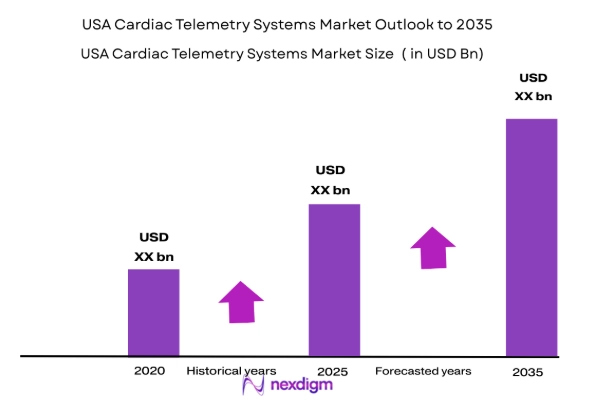
The USA Cardiac Telemetry Systems Market is poised for significant growth, with the market size based on a recent historical assessment reaching USD ~ billion. This growth is driven by the increasing prevalence of cardiovascular diseases, which creates a rising demand for remote monitoring systems. Additionally, advancements in wireless communication technologies, along with healthcare system shifts toward patient-centric approaches, further bolster market expansion. Telemetry systems provide real-time monitoring, offering both healthcare providers and patients enhanced access to care, contributing to their growing adoption.
The market is primarily dominated by key cities such as New York, Los Angeles, and Chicago, driven by their advanced healthcare infrastructure, large hospital networks, and the growing population of elderly patients requiring continuous monitoring. These cities have also seen increased government and private sector investments in healthcare technologies, pushing the demand for cardiac telemetry systems. The presence of established healthcare providers and a strong regulatory framework also supports the widespread implementation of these systems.
Market Segmentation
By Product Type:
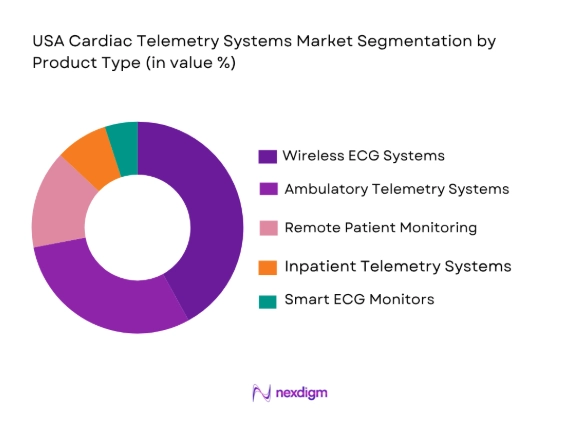
The USA Cardiac Telemetry Systems market is segmented by product type into ambulatory telemetry systems, inpatient telemetry systems, wireless ECG systems, remote patient monitoring systems, and smart ECG monitors. Recently, wireless ECG systems have held the dominant market share due to the increasing demand for non-invasive and patient-friendly solutions that offer mobility and real-time monitoring. The flexibility of wireless ECG devices, combined with the ability to transmit patient data directly to healthcare providers, makes them a preferred choice for both hospitals and outpatient settings. The growing emphasis on reducing patient hospital stays, along with technological advancements in wireless connectivity, has further fueled the demand for these systems, leading to their widespread adoption.
By Platform Type:
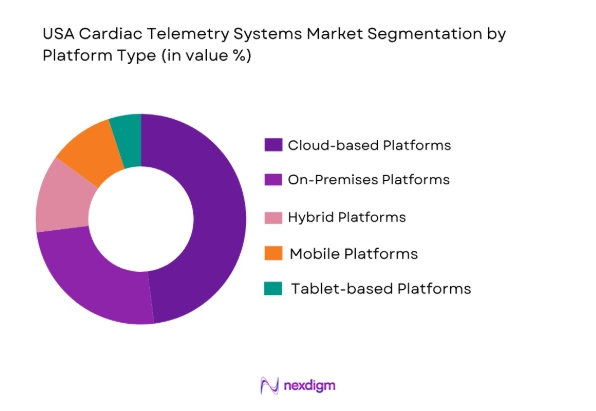
The USA Cardiac Telemetry Systems market is also segmented by platform type into cloud-based platforms, on-premise platforms, hybrid platforms, mobile platforms, and tablet-based platforms. Among these, cloud-based platforms have emerged as the dominant sub-segment due to their scalability, ease of access, and secure data storage capabilities. The ability to access patient data remotely and securely over the cloud makes it an ideal solution for healthcare providers looking to enhance patient care while maintaining operational efficiency. As the demand for telemedicine and remote healthcare services rises, cloud-based platforms provide a crucial infrastructure that aligns with these trends, driving their market leadership.
Competitive Landscape
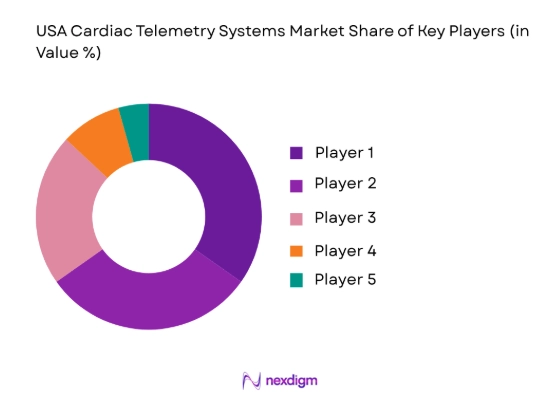
The USA Cardiac Telemetry Systems market is highly competitive, characterized by the presence of both established medical device manufacturers and new entrants focusing on innovative technology solutions. Major players have been consolidating through strategic partnerships, mergers, and acquisitions to expand their product portfolios and geographic reach. These collaborations enable the integration of advanced technologies like AI and machine learning, which enhance the functionality of cardiac telemetry systems. The market is increasingly influenced by these large players who are developing integrated solutions to address the growing demand for remote cardiac monitoring services.
| Company Name | Establishment Year | Headquarters | Technology Focus | Market Reach | Key Products | Revenue (USD) |
| Medtronic | 1949 | Dublin, Ireland | ~ | ~ | ~ | ~ |
| Philips Healthcare | 1891 | Amsterdam, NL | ~ | ~ | ~ | ~ |
| GE Healthcare | 1892 | Chicago, IL | ~ | ~ | ~ | ~ |
| Biotronik | 1963 | Berlin, Germany | ~ | ~ | ~ | ~ |
| Masimo | 1989 | Irvine, CA | ~ | ~ | ~ | ~ |
USA Cardiac Telemetry Systems Market Analysis
Growth Drivers
Technological Advancements in Cardiac Telemetry:
The USA Cardiac Telemetry Systems market is being significantly driven by technological advancements that have made cardiac telemetry systems more efficient and patient-friendly. The rapid progress in wireless communication technologies, such as Bluetooth and Wi-Fi, has enabled the development of mobile, wearable, and remote monitoring devices. These technologies allow healthcare providers to remotely monitor patients in real-time, offering immediate intervention if necessary. In addition, the integration of artificial intelligence (AI) and machine learning algorithms into these systems is further optimizing cardiac care by providing predictive analytics, improving diagnosis accuracy, and reducing false alarms. As these systems continue to evolve, the demand for smarter, more reliable cardiac telemetry solutions is expected to grow, driving the overall market forward.
Aging Population and Increasing Cardiovascular Diseases:
Another key growth driver for the USA Cardiac Telemetry Systems market is the rising incidence of cardiovascular diseases (CVDs) and the aging population. As people live longer, the number of individuals at risk for cardiovascular issues, such as heart failure, arrhythmia, and hypertension, is steadily increasing. This trend is fueling the need for continuous monitoring and early intervention. Cardiac telemetry systems play a crucial role in the early detection of cardiac events, allowing for timely treatment and reducing hospital readmissions. The growing emphasis on preventive healthcare, coupled with the demand for better quality care, is expected to significantly boost the adoption of cardiac telemetry systems in both clinical and home settings.
Market Challenges
High Initial Costs:
One of the primary challenges faced by the USA Cardiac Telemetry Systems market is the high initial cost of implementing these advanced monitoring systems. While these systems offer long-term benefits, such as improved patient outcomes and reduced hospitalization rates, the upfront investment required to purchase and deploy them can be prohibitive, particularly for smaller healthcare facilities. Many hospitals and clinics, especially in rural or underserved areas, may find it difficult to afford these systems, leading to slower adoption rates. Additionally, the ongoing maintenance and software updates for these systems further add to the financial burden. Overcoming these cost-related barriers will be crucial for ensuring broader accessibility to cardiac telemetry solutions.
Data Security and Privacy Concerns:
Another significant challenge facing the USA Cardiac Telemetry Systems market is the increasing concern over data security and privacy. Cardiac telemetry systems often involve the transmission of sensitive patient data, which makes them susceptible to cyber-attacks and data breaches. The healthcare industry has stringent regulations such as HIPAA (Health Insurance Portability and Accountability Act) that aim to protect patient data, but ensuring compliance with these regulations can be complex and costly for healthcare providers. Furthermore, as more patients use wearable devices that collect and transmit personal health data, the risk of unauthorized access to this data increases. Ensuring robust cybersecurity measures and maintaining patient trust will be essential for the continued growth of the cardiac telemetry market.
Opportunities
Expansion of Remote Healthcare:
The growing trend of remote healthcare and telemedicine presents significant opportunities for the USA Cardiac Telemetry Systems market. As healthcare providers increasingly adopt telemedicine solutions, there is a greater need for effective remote monitoring tools that allow for continuous, real-time observation of patients’ cardiovascular health. This demand is expected to surge as more individuals seek healthcare from the comfort of their homes, driven by the convenience and efficiency offered by remote monitoring systems. The COVID-19 pandemic has accelerated the adoption of telemedicine, and as remote healthcare becomes more mainstream, there will be a greater reliance on cardiac telemetry systems to provide continuous care for patients with chronic heart conditions.
Integration with Artificial Intelligence:
The integration of artificial intelligence (AI) with cardiac telemetry systems presents an exciting opportunity for the market. AI-powered algorithms can analyze vast amounts of patient data and detect early signs of abnormalities, such as arrhythmias or other cardiac events, much more efficiently than human clinicians alone. This can significantly improve the accuracy of diagnoses, enhance patient outcomes, and reduce the workload for healthcare providers. As AI technology continues to advance, the synergy between cardiac telemetry systems and AI will lead to the development of even more sophisticated solutions. This integration will likely drive further adoption and open up new opportunities for growth in the USA Cardiac Telemetry Systems market.
Future Outlook
The future outlook of the USA Cardiac Telemetry Systems market is highly positive, with continued advancements in technology and rising healthcare needs driving growth. Over the next five years, the market is expected to expand as demand for remote monitoring solutions increases, especially with the growing elderly population and the prevalence of cardiovascular diseases. The integration of AI and machine learning in telemetry systems will likely lead to more accurate diagnoses and predictive analytics, further enhancing the efficiency of cardiac care. Additionally, favorable regulatory frameworks and continued investment in healthcare infrastructure will contribute to the broader adoption of these systems, ensuring that cardiac telemetry remains a critical tool in modern healthcare.
Major Players
- Medtronic
- Philips Healthcare
- GE Healthcare
- Biotronik
- Masimo
- Honeywell Life Care Solutions
- Fitbit Health Solutions
- Analog Devices
- Hill-Rom
- Omron Healthcare
- Spacelabs Healthcare
- Abbott Laboratories
- Boston Scientific
- St. Jude Medical
- Biotelemetry
Key Target Audience
- Investments and venture capitalist firms
- Government and regulatory bodies
- Healthcare providers and hospitals
- Medical device distributors and resellers
- Home healthcare service providers
- Research and development organizations
- Insurance companies
- Cardiologists and medical professionals
Research Methodology
Step 1: Identification of Key Variables
The first step involves identifying key market variables, including product types, platform technologies, and market dynamics. This is achieved through secondary research and expert consultations to determine critical factors influencing market growth.
Step 2: Market Analysis and Construction
Data is gathered to analyze market size, trends, and segment performance. The market is then segmented into relevant categories such as product type, platform, and end-users for detailed analysis.
Step 3: Hypothesis Validation and Expert Consultation
Hypotheses are validated with primary market participants, including manufacturers, healthcare providers, and industry experts. This helps refine the market model and ensures its accuracy.
Step 4: Research Synthesis and Final Output
The final step synthesizes the gathered data, insights, and expert opinions into a comprehensive report. This includes a thorough analysis of market trends, challenges, growth drivers, and opportunities.

- Executive Summary
- Research Methodology (Definitions, Scope, Industry Assumptions, Market Sizing Approach, Primary & Secondary Research Framework, Data Collection & Verification Protocol, Analytic Models & Forecast Methodology, Limitations & Research Validity Checks)

- Market Definition and Scope
- Value Chain & Stakeholder Ecosystem
- Regulatory / Certification Landscape
- Sector Dynamics Affecting Demand
- Strategic Initiatives & Infrastructure Growth

- Growth Drivers
Increasing Prevalence of Cardiac Diseases
Technological Advancements in Telemetry Systems
Rising Adoption of Remote Monitoring in Healthcare - Market Challenges
High Cost of Telemetry Systems
Lack of Skilled Workforce for Telemetry Systems
Data Privacy and Security Concerns - Market Opportunities
Expansion in Emerging Markets
Integration of AI and Machine Learning for Diagnostics
Partnerships and Collaborations with Healthcare Providers - Trends
Rise of Wearable and Portable Devices
Integration with Telemedicine Platforms
Focus on Real-Time Monitoring and Analytics
Government Regulations
SWOT Analysis of Key Competitors
Porter’s Five Force

- By Market Value, 2020-2025
- By Installed Units, 2020-2025
- By Average System Price, 2020-2025
- By System Complexity Tier, 2020-2025

- By System Type (In Value%)
Ambulatory Telemetry Systems
Inpatient Telemetry Systems
Wireless ECG Systems
Remote Patient Monitoring Systems
Smart ECG Monitors - By Platform Type (In Value%)
Cloud-Based Platforms
On-Premise Platforms
Hybrid Platforms
Mobile Platforms
Tablet-Based Platforms - By Fitment Type (In Value%)
Wearable Systems
Non-Wearable Systems
Patch-Based Systems
Implantable Systems
Portable Monitors - By EndUser Segment (In Value%)
Hospitals
Ambulatory Surgical Centers
Clinics
Home Healthcare Providers
Research & Academic Institutes - By Procurement Channel (In Value%)
Direct Sales
Distributors
Third-Party Resellers
Online Marketplaces
Group Purchasing Organizations

- Market Share Analysis
- CrossComparison Parameters (Market Share, Pricing Trends, Technological Advancements, Regulatory Impact, End-User Preferences)
- SWOT Analysis of Key Competitors
- Pricing & Procurement Analysis
- Porter’s Five Forces
- Key Players
Medtronic
Philips Healthcare
GE Healthcare
Biotronik
Honeywell Life Care Solutions
Fitbit Health Solutions
Masimo
Analog Devices
Medtronic
Biotelemetry
Hill-Rom
Omron Healthcare
St. Jude Medical
Smiths Medical
Boston Scientific
Spacelabs Healthcare

- Hospitals Adoption Trends
- Clinics and Ambulatory Centers
- Home Healthcare Providers
- Research Institutions’ Role

- Forecast Market Value, 2026-2035
- Forecast Installed Units, 2026-2035
- Price Forecast by System Tier, 2026-2035
- Future Demand by Platform, 2026-2035


 Request a Sample
 Ask for Customization
 Get a Quote
 Enquire Now