

 Download PDF
 Download PDF
Market Overview
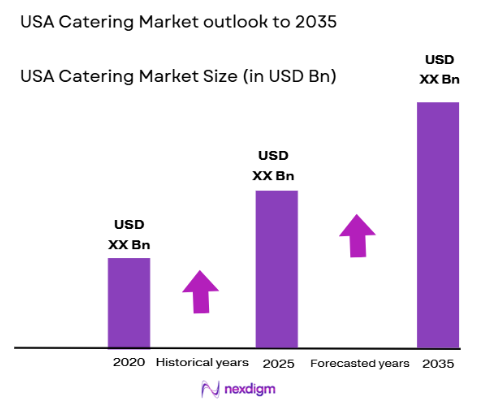
The USA Catering Market has witnessed significant growth, driven by increasing demand for personalized, corporate, and event catering services. Based on a recent historical assessment, the market is valued at USD ~ billion and is influenced by factors such as rising disposable incomes, shifting consumer preferences, and the increasing popularity of niche catering services. The rise in corporate events, weddings, and social gatherings has further propelled the demand for catering solutions, especially in urban areas.
The market is dominated by cities such as New York, Los Angeles, and Chicago, known for their robust event sectors and large corporate hubs. These cities, with their diverse populations and high demand for high-quality food services, contribute significantly to the market’s expansion. Additionally, California leads in terms of organic and health-conscious catering trends, while New York sees high demand for international cuisines, catering to the cosmopolitan workforce. This geographical distribution is heavily shaped by local preferences and consumer lifestyles.
Market Segmentation
By Product Type:
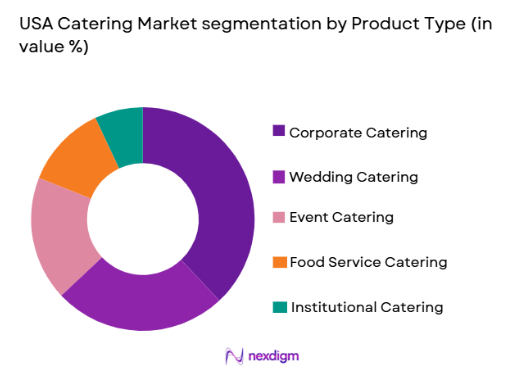
USA Catering Market is segmented by product type into Corporate Catering, Wedding Catering, Event Catering, Food Service Catering, and Institutional Catering. Recently, Corporate Catering has a dominant market share due to the increasing number of corporate events, conferences, and employee gatherings. Businesses are seeking professional catering services that offer customized food solutions, which has led to the growth of this sub-segment. This demand is fueled by corporate budgets for events, the growing trend of employee wellness programs, and a preference for convenient, high-quality food services for large-scale functions. Corporate catering has become a significant focus for established players looking to cater to multinational corporations and large enterprises.
By Platform Type:
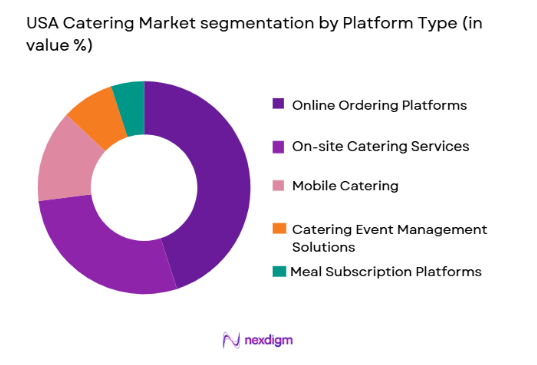
USA Catering Market is segmented by platform type into Online Ordering Platforms, On-site Catering Services, Mobile Catering, Catering Event Management Solutions, and Meal Subscription Platforms. Recently, Online Ordering Platforms have gained a dominant market share due to the increasing preference for convenience and the rise of digital platforms for food service booking. The shift to online ordering for both corporate and personal events is being driven by the need for simplicity and the ability to cater to a wide variety of tastes and dietary requirements. Mobile platforms, coupled with easy-to-use apps and efficient payment systems, have made online ordering more accessible, appealing to tech-savvy consumers who value ease of use.
Competitive Landscape
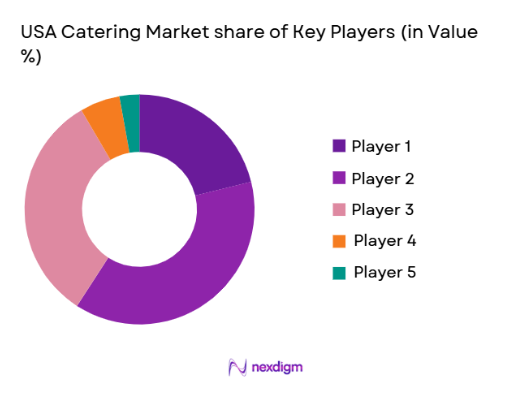
The USA Catering Market exhibits a highly competitive landscape with a strong presence of major players such as Aramark, Compass Group, and Sodexo. These companies continue to consolidate the market by acquiring smaller catering services and expanding their product offerings. Additionally, regional players leverage niche catering services and local trends to strengthen their market position. The increasing demand for corporate and event catering services, as well as the trend towards organic and sustainable food options, is driving the competition. Players that offer unique, high-quality services and cater to the changing consumer preferences in urban areas are expected to dominate the market in the coming years.
| Company Name | Establishment Year | Headquarters | Technology Focus | Market Reach | Key Products | Revenue (USD Billion) | Additional Market-Specific Parameter |
| Aramark | 1959 | Philadelphia, PA | ~ | ~ | ~ | ~ | ~ |
| Compass Group | 1941 | Chertsey, UK | ~ | ~ | ~ | ~ | ~ |
| Sodexo | 1966 | Paris, France | ~ | ~ | ~ | ~ | ~ |
| Delaware North | 1915 | Buffalo, NY | ~ | ~ | ~ | ~ | ~ |
| Bon Appétit | 1987 | Palo Alto, CA | ~ | ~ | ~ | ~ | ~ |
USA Catering Market Analysis
Growth Drivers
Rising Demand for Customized Catering Services:
The demand for customized catering services is increasing as consumers seek tailored dining experiences. With a focus on unique menus and specialized services, this driver has become particularly important in corporate events and private gatherings. Customized catering solutions allow consumers to select specific menus that match dietary preferences, cultural requirements, or event themes. The ability to personalize events has become a key selling point for catering businesses, especially with the increasing popularity of destination weddings and themed corporate events. Catering companies are innovating their offerings to include gluten-free, vegan, and organic options, catering to a more health-conscious market. Additionally, customization also extends to the level of service provided, such as buffet setups, plated meals, or cocktail-style events. These offerings are further enhanced by technology, allowing clients to choose their meals via online platforms, which has helped propel the growth of this sub-segment.
Technological Advancements in Catering Management:
Technological advancements are driving the growth of the USA Catering Market by offering more efficient and streamlined catering management solutions. Innovations such as AI-driven catering software, cloud-based platforms for event management, and automated ordering systems are changing the way catering companies operate. The integration of these technologies allows businesses to offer a seamless customer experience from booking to meal delivery. Automated processes also help catering companies optimize their resources and reduce overhead costs, which ultimately translates to better pricing and services for customers. Furthermore, these advancements make it easier for clients to place orders, customize their menus, track deliveries, and manage large-scale events more efficiently. As catering services evolve with the aid of technology, this growth driver is set to continue shaping the industry and attracting new players into the market.
Market Challenges
Labor Shortages in the Catering Industry:
One of the significant challenges faced by the USA Catering Market is the shortage of skilled labor, particularly chefs and food service workers. This issue is compounded by the increasing demand for catering services, especially in urban centers where events and gatherings are more frequent. The labor shortage has led to higher wages and recruitment costs, which can impact the profitability of catering businesses. Additionally, retaining staff during peak seasons, such as holidays or major corporate events, poses another challenge. Many catering businesses are turning to temporary or part-time labor, which may not provide the same level of quality service as experienced full-time employees. Furthermore, the shortage of skilled labor in the industry also affects food quality and service consistency, which may affect customer satisfaction and loyalty.
Rising Food Prices and Supply Chain Disruptions:
Rising food prices, coupled with supply chain disruptions, are major challenges facing catering companies across the USA. Fluctuating prices for ingredients such as meat, vegetables, and dairy products are driving up operational costs for catering businesses. Additionally, disruptions in the global supply chain, exacerbated by events such as the COVID-19 pandemic, have made it difficult for companies to source ingredients reliably and cost-effectively. These issues result in higher prices for catering services and sometimes limited availability of specific menu items. To mitigate these challenges, many catering companies are exploring local sourcing options and creating seasonal menus to reduce dependency on international suppliers. However, these measures may not fully offset the impact of global supply chain disruptions and ongoing price hikes.
Opportunities
Sustainability and Green Catering Solutions:
With growing consumer awareness around sustainability, there is a significant opportunity for catering businesses to offer eco-friendly and green catering solutions. Consumers are increasingly concerned about the environmental impact of their choices, particularly when it comes to food waste, plastic packaging, and carbon footprints. Catering companies can tap into this opportunity by adopting sustainable practices such as sourcing local and organic ingredients, reducing food waste, and using eco-friendly packaging. Additionally, businesses can offer plant-based or vegan catering options, which have gained popularity due to their lower environmental impact compared to traditional meat-based meals. By embracing sustainability, catering companies can not only differentiate themselves in the market but also meet the growing demand for environmentally conscious services.
Integration of Virtual and Hybrid Events:
The rise of virtual and hybrid events presents a unique opportunity for the catering industry to expand its offerings. With the shift toward online and remote gatherings, businesses are seeking innovative catering solutions that can be delivered directly to attendees’ homes or offices. Catering companies can capitalize on this opportunity by offering meal delivery services for virtual events, such as corporate meetings, webinars, and online conferences. Additionally, hybrid events, which combine both in-person and virtual elements, require catering companies to provide flexible and scalable solutions that can cater to diverse audiences. The ability to offer customized meal packages, catering kits, and home delivery services will allow catering businesses to tap into the growing demand for virtual and hybrid event catering services.
Future Outlook
The future of the USA Catering Market is promising, with continued growth expected due to the increasing demand for customized, tech-enabled, and sustainable catering services. The industry is poised to benefit from ongoing technological innovations, such as cloud-based event management platforms and AI-driven catering solutions. Additionally, regulatory support, particularly around food safety and sustainability, will play a crucial role in shaping the market. As consumers increasingly demand personalized and eco-friendly catering options, businesses that can offer tailored services and sustainable practices will be well-positioned for success.
Major Players
- Aramark
- Compass Group
- Sodexo
- Delaware North
- Bon Appétit
- Elior Group
- Guckenheimer
- CulinArt Group
- Chartwells
- Restaurant Associates
- Ovation Food Services
- HMSHost
- Sodexo Live!
- Food First Group
- Flik Hospitality Group
Key Target Audience
- Investments and venture capitalist firms
- Government and regulatory bodies
- Large corporations
- Event organizers and planners
- Hospitality groups
- Educational institutions
- Healthcare providers and hospitals
- Restaurants and food service operators
Research Methodology
Step 1: Identification of Key Variables
The first step involves identifying the key variables that impact the market, such as consumer preferences, food trends, and market demand for catering services.
Step 2: Market Analysis and Construction
This step focuses on analyzing the data collected from secondary sources to construct an accurate market size and segmentation framework.
Step 3: Hypothesis Validation and Expert Consultation
Expert consultations and hypothesis validation are conducted to refine the analysis and ensure the accuracy of predictions.
Step 4: Research Synthesis and Final Output
In the final stage, the gathered data is synthesized, conclusions are drawn, and a detailed market report is prepared.

- Executive Summary
- Research Methodology(Definitions, Scope, Industry Assumptions, Market Sizing Approach, Primary & Secondary Research Framework, Data Collection & Verification Protocol, Analytic Models & Forecast Methodology, Limitations & Research Validity Checks)

- Market Definition and Scope
- Value Chain & Stakeholder Ecosystem
- Regulatory / Certification Landscape
- Sector Dynamics Affecting Demand
- Strategic Initiatives & Infrastructure Growth

- Growth Drivers
Rising demand for personalized catering services
Increase in corporate and private events
Growth in demand for healthy and sustainable food options
Technological advancements in catering management
Expanding service offerings in niche segments - Market Challenges
Rising labor costs in catering services
Supply chain disruptions affecting ingredient availability
Stringent food safety regulations
Increasing competition in local markets
Fluctuations in demand due to seasonal events - Market Opportunities
Rising demand for plant-based and organic catering options
Growth in virtual and hybrid events
Expansion of catering services in the healthcare and education sectors - Trends
Growing preference for eco-friendly packaging
Increase in demand for local and sustainable ingredients
Technological advancements in food delivery logistics
Rising popularity of meal-prep and subscription services
Integration of AI for catering management - Government Regulations & Defense Policy
Food Safety Standards Compliance
Sustainability Regulations in Catering
Health Guidelines for Institutional Catering - SWOT Analysis
- Stakeholder and Ecosystem Analysis
- Porter’s Five Forces Analysis
- Competition Intensity and Ecosystem Mapping

- By Market Value, 2020-2025
- By Installed Units, 2020-2025
- By Average System Price, 2020-2025
- By System Complexity Tier, 2020-2025

- By System Type (In Value%)
Corporate Catering
Wedding Catering
Event Catering
Food Service Catering
Institutional Catering - By Platform Type (In Value%)
Online Ordering Platforms
On-site Catering Services
Mobile Catering
Catering Event Management Solutions
Meal Subscription Platforms - By Fitment Type (In Value%)
Standard Catering
Customized Catering
Vegan Catering
Gluten-Free Catering
Ethnic & International Catering - By EndUser Segment (In Value%)
Corporate Clients
Private Events
Educational Institutions
Healthcare Facilities
Government Agencies - By Procurement Channel (In Value%)
Direct Procurement
Third-party Procurement
Online Procurement Platforms
Private Catering Distributors
Event Planners - By Material / Technology (in Value%)
Local Sourcing of Ingredients
Sustainable Catering Materials
Food Packaging Innovations
Cloud-based Catering Management
Automation in Catering Operations

- Market structure and competitive positioning
- Market share snapshot of major players
- CrossComparison Parameters (System Type, Platform Type, Procurement Channel, EndUser Segment, Fitment Type, Material/Technology, Market Value, Average Price, Installed Units, System Complexity Tier)
- SWOT Analysis of Key Players
- Pricing & Procurement Analysis
- Key Players
Aramark
Compass Group
Sodexo
Eurest Services
Delaware North
Bon Appétit Management Company
The Elior Group
Guckenheimer
US Foods
Sysco Corporation
CulinArt Group
Chartwells
Restaurant Associates
Catering By Design
Ovation Food Services

- Corporate clients’ growing preference for tailored catering
- Private events seeking personalized food options
- Educational institutions focusing on nutritious meal plans
- Healthcare facilities focusing on dietary-specific meals

- Forecast Market Value, 2026-2035
- Forecast Installed Units, 2026-2035
- Price Forecast by System Tier, 2026-2035
- Future Demand by Platform, 2026-2035


 Request a Sample
 Ask for Customization
 Get a Quote
 Enquire Now