

 Download PDF
Market Overview
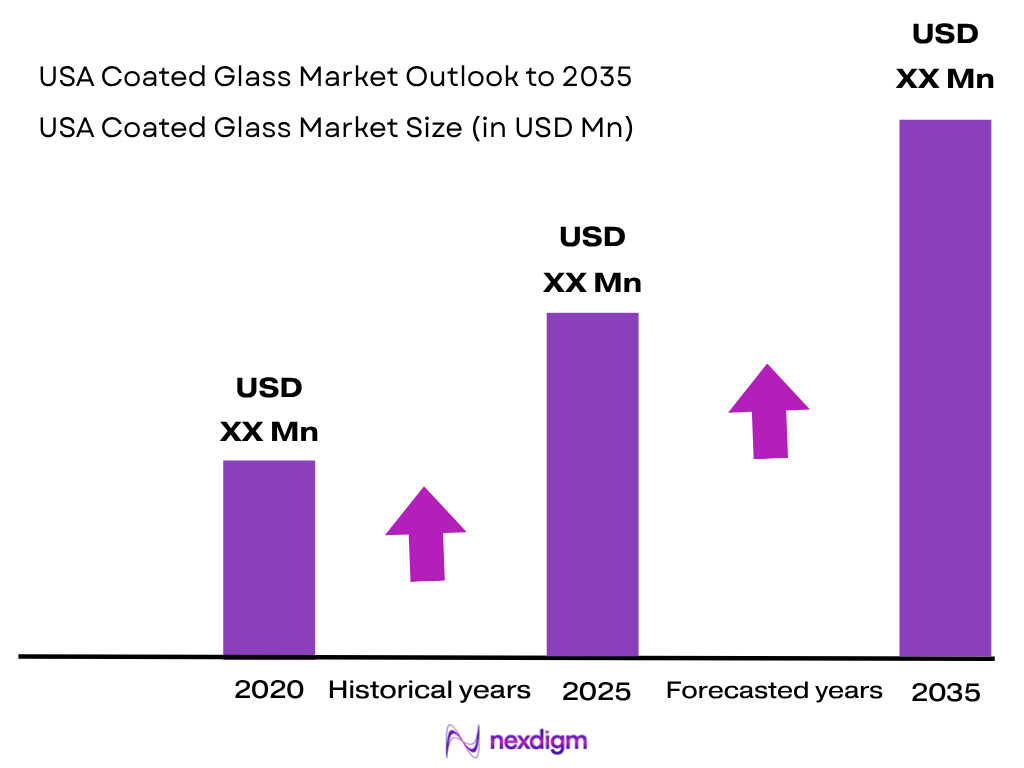
The USA coated glass market is valued at approximately ~USD XX billion based on historical market analysis and is supported by increasing demand for energy-efficient glazing solutions across commercial and residential construction. The market size is driven by the adoption of Low-E coated glass, solar control glazing, and advanced architectural glass solutions that improve thermal insulation and reduce energy consumption. According to industry sources including the U.S. Department of Energy and glass industry associations, the increasing focus on building efficiency standards, renovation activities, and sustainable construction practices has strengthened coated glass demand across the country.
The USA coated glass market is primarily concentrated across major construction and industrial hubs including California, Texas, New York, Florida, Illinois, and Michigan due to high construction activity, commercial infrastructure development, automotive manufacturing presence, and renewable energy investments. California dominates demand due to stringent building energy regulations and green construction initiatives, while Texas benefits from large-scale commercial projects and solar energy expansion. Michigan remains significant due to automotive manufacturing activities requiring advanced glazing technologies.
Market Segmentation
By Product Type
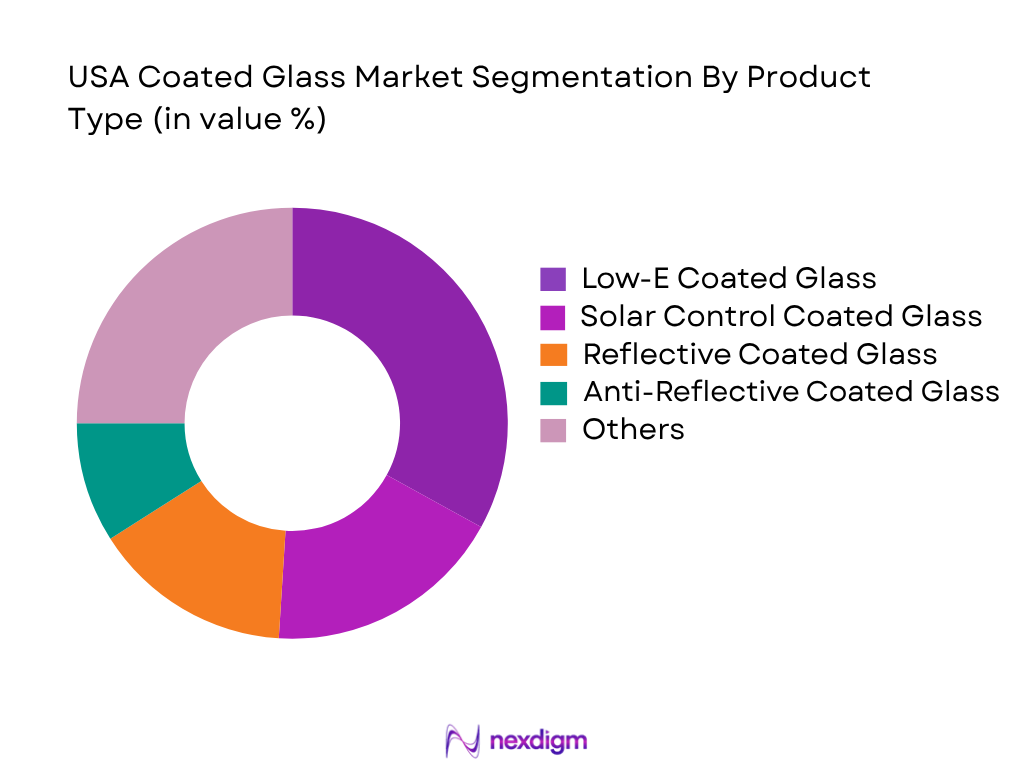
The USA coated glass market is segmented by product type into Low-E coated glass, solar control coated glass, reflective coated glass, anti-reflective coated glass, self-cleaning coated glass, and smart glass coatings. Among these segments, Low-E coated glass holds the dominant market position due to its extensive application in residential windows, commercial buildings, and energy-efficient glazing systems. The segment benefits from increasing adoption of insulated glass units (IGUs), rising demand for reduced heating and cooling costs, and compliance with building energy efficiency standards. Leading architectural glass manufacturers including Guardian Industries, Vitro Architectural Glass, and Saint-Gobain have expanded their Low-E product portfolios to address growing demand for high-performance building envelopes.
By Application
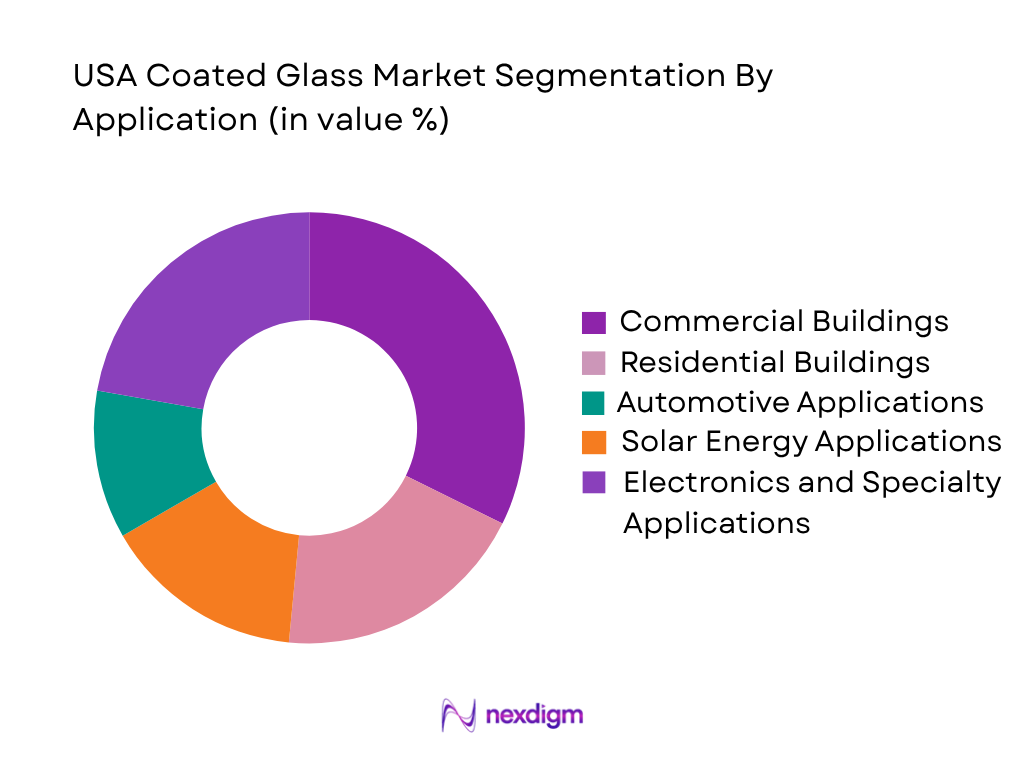
The USA coated glass market is segmented by application into commercial buildings, residential buildings, automotive applications, solar energy applications, electronics and specialty applications. Commercial buildings represent the leading application segment due to extensive utilization of coated glass in office towers, high-rise buildings, retail spaces, healthcare facilities, and institutional infrastructure. The increasing focus on green buildings, LEED certification, and energy-efficient facades has accelerated adoption among commercial developers. Large-scale renovation activities in metropolitan regions and growing demand for advanced glazing systems have further strengthened coated glass consumption in commercial construction projects.
Competitive Landscape
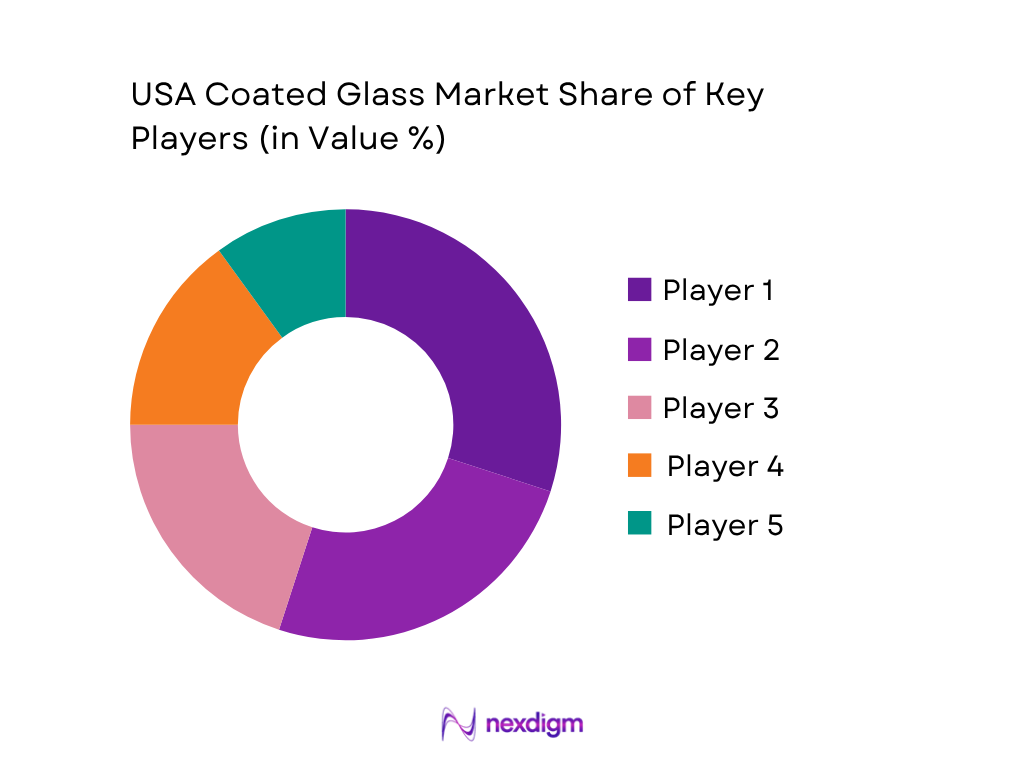
The USA coated glass market is moderately consolidated with major global and domestic glass manufacturers competing through product innovation, coating technology development, manufacturing capacity expansion, and application-specific solutions. Companies such as Saint-Gobain, AGC Inc., Guardian Industries, Vitro Architectural Glass, and Cardinal Glass Industries maintain strong market positions through extensive distribution networks, advanced coating technologies, and diversified product portfolios across architectural, automotive, and solar applications.
| Company | Establishment Year | Headquarters | Major Product Portfolio | Key Technology | Major Application | Manufacturing Presence | Strategic Focus |
| Saint-Gobain | ~1665 | France | ~ | ~ | ~ | ~ | ~ |
| AGC Inc. | ~1907 | Japan | ~ | ~ | ~ | ~ | ~ |
| Guardian Industries | ~1932 | USA | ~ | ~ | ~ | ~ | ~ |
| Vitro Architectural Glass | ~1909 | Mexico | ~ | ~ | ~ | ~ | ~ |
| Cardinal Glass Industries | ~1962 | USA | ~ | ~ | ~ | ~ | ~ |
USA Coated Glass Market Analysis
Growth Drivers
Increasing Energy Efficiency Requirements and Green Building Adoption
The USA coated glass market is strongly driven by increasing demand for energy-efficient building solutions as commercial and residential construction sectors focus on reducing operational energy consumption. According to the U.S. Department of Energy, buildings accounted for approximately 37% of total U.S. energy consumption, highlighting the requirement for advanced glazing technologies such as Low-E coated glass and solar control glass to improve thermal performance. The U.S. Census Bureau reported that construction spending reached approximately USD 2 trillion in 2024, supported by continued investment in residential, commercial, and institutional infrastructure. Additionally, the U.S. Green Building Council reported continued expansion of LEED-certified projects across the country, increasing demand for high-performance building materials. States such as California, New York, and Washington have strengthened energy efficiency regulations through building codes requiring improved window performance and reduced heat transfer. The International Energy Conservation Code and ASHRAE standards have further encouraged adoption of coated glass solutions in new construction and renovation projects. These factors are supporting greater integration of Low-E coatings, insulated glass units, and solar control glazing systems in modern building envelopes.
Expansion of Automotive Manufacturing and Advanced Vehicle Glazing Demand
The USA coated glass market is supported by increasing demand from the automotive sector, where manufacturers are adopting advanced glazing technologies to improve vehicle efficiency, passenger comfort, and thermal management. According to the U.S. Bureau of Economic Analysis, the automotive industry remains a major manufacturing contributor, with motor vehicle and parts manufacturing contributing significant industrial output in 2024. The International Energy Agency reported that electric vehicle sales in the United States exceeded 1 million units in 2024, increasing demand for lightweight materials and advanced glass solutions that support vehicle efficiency and battery performance. The Federal Highway Administration reported that the U.S. registered more than 280 million vehicles, creating a large replacement and aftermarket demand base for automotive glazing products. Coated glass technologies including solar control windshields, infrared reflective glass, and functional coatings are increasingly being integrated into premium vehicles, electric vehicles, and connected mobility solutions. Automotive manufacturers are also focusing on reducing vehicle weight while improving cabin temperature control, increasing the importance of advanced coated glass applications across passenger and commercial vehicles.
Market Challenges
High Manufacturing Complexity and Dependence on Advanced Coating Technologies
The USA coated glass market faces challenges due to the technical complexity involved in manufacturing advanced coated glass products, particularly Low-E glass, solar control glass, and smart glazing solutions. Production requires specialized vacuum coating equipment, precise deposition processes, and controlled manufacturing environments, increasing operational complexity for manufacturers. According to the U.S. Geological Survey, the United States produced approximately 2.4 million metric tons of flat glass-related materials in recent reporting periods, but advanced coated glass manufacturing requires additional processing capabilities beyond conventional glass production. The U.S. Department of Commerce reported continued dependence on global supply chains for certain specialized industrial equipment and materials used in advanced manufacturing processes. Coating technologies such as magnetron sputtering require sophisticated machinery, technical expertise, and continuous investment in process optimization. Additionally, maintaining coating durability, optical performance, and long-term weather resistance remains technically demanding for manufacturers serving architectural and automotive applications. These requirements create barriers for smaller producers and increase dependence on established manufacturers with advanced production infrastructure and technical capabilities.
Supply Chain Constraints for Raw Materials and Industrial Inputs
The USA coated glass market experiences challenges related to availability and supply chain management of specialized raw materials, coating chemicals, and industrial inputs required for advanced glass production. The U.S. Geological Survey reported that the United States consumed significant quantities of industrial minerals including silica sand, which is a key raw material for glass manufacturing. According to the U.S. Energy Information Administration, industrial manufacturing activities continue to face fluctuations in energy demand, affecting energy-intensive industries such as glass production. Coated glass manufacturing requires materials including silver compounds, metal oxides, specialty gases, and coating chemicals that depend on global supply networks. The U.S. Bureau of Labor Statistics reported continued volatility in industrial production input conditions during 2024, influencing manufacturing planning across material-intensive sectors. Transportation constraints, international trade conditions, and availability of specialized inputs can affect production timelines and inventory management. These supply chain factors create operational challenges for manufacturers seeking consistent production output while meeting increasing demand from construction, automotive, and renewable energy sectors.
Market Opportunities
Growth Potential from Renewable Energy and Solar Photovoltaic Expansion
The USA coated glass market has significant opportunities from expanding solar energy infrastructure, particularly through increased demand for anti-reflective coated glass used in photovoltaic modules. According to the U.S. Energy Information Administration, solar photovoltaic capacity continued expanding across the United States, with utility-scale solar capacity exceeding 100 GW in 2024. The Solar Energy Industries Association reported continued growth in solar installations, supported by clean energy investments and federal incentives under the Inflation Reduction Act. Increasing solar deployment requires advanced glass technologies that improve light transmission, durability, and module efficiency. Anti-reflective coatings help reduce surface reflection losses and improve photovoltaic performance, creating additional demand for specialty coated glass products. The U.S. Department of Energy has also emphasized renewable energy expansion as part of national decarbonization initiatives, supporting continued investment in solar infrastructure. As solar manufacturing capacity expands within the United States, coated glass suppliers have opportunities to provide locally produced high-performance glass solutions for photovoltaic applications, reducing reliance on conventional glass materials and supporting domestic clean energy supply chains.
Increasing Retrofit Activities and Smart Building Development
The USA coated glass market has opportunities from renovation activities and the transition toward smart, energy-efficient buildings. According to the U.S. Energy Information Administration, commercial and residential buildings represent a significant portion of national energy consumption, creating demand for technologies that improve building efficiency. The U.S. Census Bureau reported continued investment in residential improvements and construction activity during 2024, supporting demand for replacement windows and advanced glazing solutions. Aging building infrastructure across major urban regions including New York, Chicago, Los Angeles, and Boston creates opportunities for coated glass adoption through retrofit projects focused on reducing energy consumption. Smart building development is also increasing demand for dynamic glazing technologies such as electrochromic glass and advanced solar control coatings. The General Services Administration has promoted energy-efficient upgrades across federal buildings, encouraging adoption of high-performance materials. These trends create opportunities for coated glass manufacturers to expand into renovation markets, energy-saving building upgrades, and digitally integrated building systems requiring advanced glazing technologies.
Future Outlook
Over the next decade, the USA coated glass market is expected to show significant growth driven by increasing adoption of energy-efficient building materials, expanding green construction initiatives, and technological advancements in smart and functional glass solutions. Demand will be supported by commercial building renovations, residential energy upgrades, automotive lightweight glazing requirements, and solar energy infrastructure development.
Growth opportunities will emerge from triple silver Low-E coatings, dynamic smart glass, vacuum insulated glazing, and advanced solar control technologies. Manufacturers are expected to focus on improving coating durability, reducing production costs, and developing sustainable glass solutions.
Major Players
- Saint-Gobain
- AGC Inc.
- Guardian Industries
- Vitro Architectural Glass
- Cardinal Glass Industries
- NSG Group
- SCHOTT AG
- Corning Incorporated
- Eastman Chemical Company
- 3M
- PPG Industries
- Koch Industries
- Fuyao Glass Industry Group
- Xinyi Glass Holdings Limited
- Central Glass Co., Ltd.
Key Target Audience
- Architectural Glass Manufacturers
- Float Glass Producers and Glass Processing Companies
- Automotive Glass Manufacturers and Suppliers
- Solar Photovoltaic Module Manufacturers
- Building Material Manufacturers and Distributors
- Investments and Venture Capitalist Firms (Blackstone, KKR, Brookfield Asset Management, Carlyle Group)
- Government and Regulatory Bodies (U.S. Department of Energy, Environmental Protection Agency, International Code Council, National Institute of Standards and Technology)
- Construction Developers and Infrastructure Companies
Research Methodology
Step 1: Identification of Key Variables
The initial phase involves developing an ecosystem map covering major stakeholders operating within the USA coated glass market. This process includes extensive secondary research through industry databases, glass manufacturing reports, regulatory publications, and proprietary sources. The objective is to identify critical market variables including product categories, coating technologies, applications, supply chain structure, and demand drivers.
Step 2: Market Analysis and Construction
In this phase, historical market data related to coated glass production, consumption patterns, application demand, and pricing trends is analyzed. The assessment includes evaluation of architectural construction activity, automotive glazing requirements, solar glass adoption, and manufacturing capacity to establish market size estimates and industry growth patterns.
Step 3: Hypothesis Validation and Expert Consultation
Market hypotheses are developed and validated through discussions with industry professionals, manufacturers, distributors, and technology providers operating in the coated glass ecosystem. Expert consultations provide insights into production trends, competitive positioning, technology adoption, pricing structures, and future demand outlook.
Step 4: Research Synthesis and Final Output
The final phase includes consolidation of primary and secondary research findings to develop a comprehensive market assessment. Direct industry interactions are used to validate product segmentation, competitive analysis, application trends, and future market projections, ensuring accuracy and reliability of the final report.

- Executive Summary
- Research Methodology (Market Definition and Scope, USA Coated Glass Market Classification, Architectural Low-E Glass Demand Assessment, Solar Control Glass Consumption Mapping, Commercial Building Energy Efficiency Glass Requirement Analysis, Residential Fenestration Coated Glass Demand Assessment, Automotive Coated Glass Adoption Mapping, Solar Photovoltaic Glass Coating Assessment, Smart Glass and Functional Coating Technology Evaluation, Domestic Float Glass Coating Capacity Assessment, Import Dependency Analysis, Magnetron Sputtering Pyrolytic Coating Chemical Vapor Deposition and Physical Vapor Deposition Technology Assessment)

- Definition and Scope
- USA Coated Glass Industry Evolution and Development
- Low-E Coated Glass, Solar Control Coated Glass, Reflective Coated Glass, Anti-Reflective Glass, Self-Cleaning Coated Glass, Electrochromic Smart Glass, Functional Specialty Coatings
- USA Coated Glass Value Chain Analysis
- USA Coated Glass Supply Chain Analysis
- Raw Material Supplier

- Growth Drivers (Increasing Demand for Energy Efficient Building Materials, Expansion of Green Building Certifications, Rising Adoption of LEED Certified Buildings, Growing Commercial Construction Activities, Increasing Replacement of Conventional Glass with Low-E Glass, Rising Demand for Solar Control Glazing Solutions, Expansion of Smart Building Infrastructure, Growth of Electric Vehicle Production, Increasing Solar Photovoltaic Installations, Stringent Building Energy Codes, Rising Demand for Sustainable Construction Materials, Increasing Architectural Facade Applications)
- Market Challenges (High Manufacturing Cost of Advanced Coated Glass, Complex Coating Process Requirements, High Capital Investment for Coating Equipment, Raw Material Price Volatility, Limited Domestic Production Capacity for Specialty Coatings, Durability and Scratch Resistance Concerns, Installation Complexity of Advanced Glazing Systems, Competition from Alternative Energy Efficient Materials, Supply Chain Disruptions for Coating Chemicals and Equipment)
- Market Opportunities (Expansion of Net-Zero Energy Buildings, Retrofit and Renovation of Existing Buildings, Growth of Smart Glass Technologies, Increasing Demand for Triple Silver Low-E Glass, Expansion of Solar Glass Applications, Automotive Advanced Glazing Growth, Development of Self-Cleaning and Anti-Microbial Coatings, Growth of Energy Efficient Residential Construction, Integration of IoT Enabled Smart Windows, Domestic Coating Manufacturing Expansion)
- Market Trends (Growth of Triple Silver Low-E Glass Adoption, Increasing Use of Vacuum Insulated Glass, Smart Glass and Dynamic Glazing Integration, Sustainable Building Envelope Development, Energy Performance Based Building Design, Growing Demand for Neutral Solar Control Glass, Lightweight Automotive Glazing Adoption, Digital Building Management Integration, Advanced Multi-Layer Coating Technologies, Circular Economy in Glass Manufacturing, Carbon Reduction Focus in Glass Production)
- Regulatory and Standards Landscape (Department of Energy Building Energy Efficiency Standards, International Energy Conservation Code Requirements, ASHRAE Building Performance Standards, ENERGY STAR Building Requirements, LEED Green Building Certification Requirements, California Title 24 Energy Efficiency Standards, Automotive Safety Glazing Regulations, Solar Photovoltaic Module Standards, Environmental Compliance Requirements for Glass Manufacturing, Occupational Safety Requirements)
- Patent and Innovation Landscape (Thin Film Coating Development, Multi-Layer Optical Coating Technology, Advanced Silver Coating Systems, Smart Glass Technology Patents, Solar Control Coating Innovation, Low-Emissivity Enhancement Technologies, Functional Glass Surface Treatment Technologies)
- Import Export Analysis (Coated Glass Import Dependency, Domestic Production Capability, Major Import Sources, Architectural Glass Trade Flow, Specialty Coated Glass Import Trends, Automotive Glass Import Analysis, Solar Glass Trade Assessment)
- SWOT Analysis
- Porter’s Five Forces Analysis
- PESTLE Analysis
- Stakeholder Ecosystem
- Competition Ecosystem

- By Market Value (2020-2025)
- By Coated Glass Consumption Volume (2020-2025)
- By Low-E Glass Consumption Volume (2020-2025)
- By Solar Control Coated Glass Consumption Volume (2020-2025)
- By Architectural Coated Glass Consumption Volume (2020-2025)
- By Automotive Coated Glass Consumption Volume (2020-2025)
- By Solar Photovoltaic Coated Glass Consumption Volume (2020-2025)
- By Domestic Coated Glass Production Volume (2020-2025)
- By Coated Glass Import Value (2020-2025)
- By Average Selling Price (2020-2025)

- By Coating Type (In Value %)
Low-E Coated Glass
Single Silver Low-E Glass
Double Silver Low-E Glass
Triple Silver Low-E Glass
Vacuum Insulated Low-E Glass
Solar Control Coated Glass
Reflective Solar Control Glass
Neutral Solar Control Glass
High Performance Solar Control Glass
Anti-Reflective Coated Glass
Photovoltaic Anti-Reflective Glass
Display and Electronics Anti-Reflective Glass
Self-Cleaning Coated Glass
Titanium Dioxide-Based Coatings
Hydrophilic Functional Coatings
Electrochromic Smart Glass Coatings
Thermochromic Glass Coatings
Photochromic Glass Coatings
Anti-Microbial and Specialty Functional Coatings - By Glass Substrate Type (In Value %)
Float Glass
Tempered Glass
Heat Strengthened Glass
Laminated Glass
Insulated Glass Units (IGUs)
Tinted Glass
Ultra Clear Glass
Patterned Glass - By Coating Technology (In Value %)
Magnetron Sputtering Vacuum Deposition
Pyrolytic On-Line Coating Technology
Chemical Vapor Deposition (CVD)
Physical Vapor Deposition (PVD)
Sol-Gel Coating Technology
Hybrid Multi-Layer Coating Technology - By Application (In Value %)
Commercial Buildings
Office Buildings
High-Rise Buildings
Retail Complexes
Hospitality Buildings
Healthcare Facilities
Educational Buildings
Government Infrastructure
Residential Buildings
Single-Family Homes
Multi-Family Housing
Luxury Residential Projects
Automotive Applications
Passenger Vehicles
Electric Vehicles
Commercial Vehicles
Rail Transportation
Aerospace Applications
Solar Energy Applications
Photovoltaic Modules
Concentrated Solar Power Systems
Solar Thermal Applications
Electronics and Display Applications
Smart Displays
Touch Panels
Electronic Devices
Specialty Applications
Marine Glass
Security Glass
Industrial Glass Applications - By Performance Parameter (In Value %)
Solar Heat Gain Coefficient (SHGC) Reduction
Visible Light Transmission (VLT) Performance
U-Value Improvement
Thermal Insulation Efficiency
Infrared Radiation Control
Ultraviolet Radiation Blocking
Energy Saving Performance
Light Management Capability - By Region (In Value %)
Northeast USA
Midwest USA
South USA
West USA

- Market Share of Major Players (By USA Revenue, Coated Glass Production Volume, Low-E Glass Sales Volume, Solar Control Glass Sales Volume, Architectural Glass Segment, Automotive Glass Segment, Manufacturing Capacity, Distribution Network Coverage)
- Cross Comparison Parameters (Coated Glass Product Portfolio Breadth, Low-E Glass Manufacturing Capability, Solar Control Glass Technology Strength, Domestic Coating Production Capacity, Architectural Glass Market Presence, Automotive Glazing Capability, R&D and Coating Innovation Strength, Sustainability and Energy Efficiency Product Portfolio)
- SWOT Analysis of Major Players
- Competitive Positioning Matrix
- Detailed Profiles of Major Companies
AGC Inc.
Saint-Gobain
Guardian Industries
Vitro Architectural Glass
Cardinal Glass Industries
NSG Group
SCHOTT AG
Eastman Chemical Company
3M
PPG Industries
Koch Industries
Fuyao Glass Industry Group
Xinyi Glass Holdings Limited
Central Glass Co., Ltd.
Corning Incorporated

- Architectural Industry Demand Assessment
- Commercial Construction Coated Glass Requirement Analysis
- Residential Construction Coated Glass Demand Assessment
- Automotive Industry Coated Glass Requirement Analysis
- Solar Industry Coated Glass Consumption Assessment
- Electronics and Display Industry Demand Analysis
- Consumer Decision-Making Analysis
- Procurement Behavior Analysis
- Sustainability Preference Analysis

- By Market Value (2026-2035)
- By Coated Glass Consumption Volume (2026-2035)
- By Low-E Glass Consumption Volume (2026-2035)
- By Solar Control Coated Glass Consumption Volume (2026-2035)
- By Architectural Coated Glass Consumption Volume (2026-2035)
- By Automotive Coated Glass Consumption Volume (2026-2035)
- By Solar Photovoltaic Coated Glass Consumption Volume (2026-2035)
By Domestic Coated Glass Production Volume (2026-2035)
By Coated Glass Import Value (2026-2035)
By Average Selling Price (2026-2035)


 Request a Sample
 Ask for Customization
 Get a Quote
 Enquire Now