

 Download PDF
Market Overview
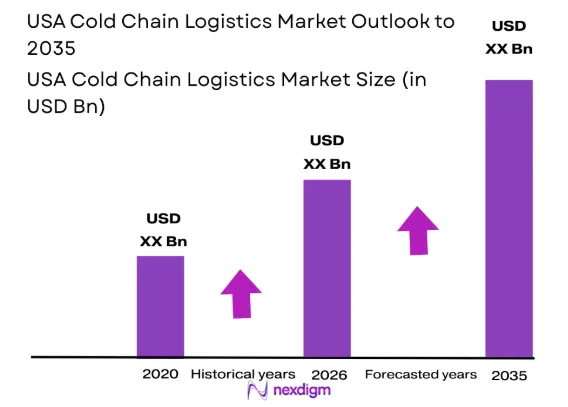
Based on a recent historical assessment, the USA Cold Chain Logistics market recorded an estimated market value of approximately USD ~ billion according to industry analysis derived from the United States Department of Agriculture and Global Cold Chain Alliance statistics. Market expansion is driven by strong demand for temperature-controlled distribution across pharmaceuticals, vaccines, dairy products, seafood, frozen foods, and fresh produce. The growing complexity of biologics supply chains and expansion of nationwide grocery retail logistics infrastructure further accelerate demand for advanced refrigerated storage and transportation services.
Major metropolitan logistics hubs including Chicago, Los Angeles, Dallas, Atlanta, and New York dominate the USA Cold Chain Logistics market due to strong food distribution infrastructure, proximity to major ports, and concentration of pharmaceutical manufacturing clusters. Coastal trade gateways such as Los Angeles and New York support international imports of seafood, fruits, and pharmaceuticals, while inland distribution centers in Chicago and Dallas enable nationwide refrigerated distribution networks. Strong highway infrastructure, advanced warehouse automation, and proximity to major consumer markets reinforce these cities as dominant cold chain logistics centers.
Market Segmentation
By Product Type
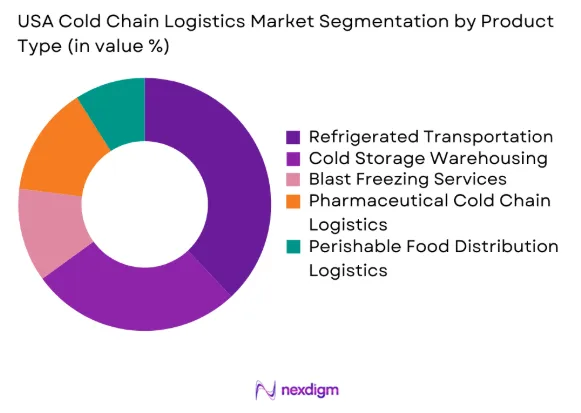
USA Cold Chain Logistics market is segmented by product type into refrigerated transportation, cold storage warehousing, blast freezing services, pharmaceutical cold chain logistics, and perishable food distribution logistics. Recently, refrigerated transportation has a dominant market share due to the increasing need for nationwide distribution of frozen food products, pharmaceuticals, dairy goods, and fresh produce across long distances. Large retail chains, foodservice distributors, and pharmaceutical manufacturers require reliable refrigerated trucking fleets to maintain product integrity during transit. Expansion of grocery retail distribution networks and growth of online grocery delivery platforms have further intensified demand for refrigerated transport capacity. Cold storage facilities remain essential for inventory buffering, but transportation infrastructure represents the most critical operational component connecting farms, processing facilities, warehouses, and retailers across interstate supply chains. Advanced temperature monitoring systems, regulatory compliance requirements for pharmaceuticals, and nationwide logistics coverage further reinforce the dominant role of refrigerated transportation services in the market.
By End User Industry
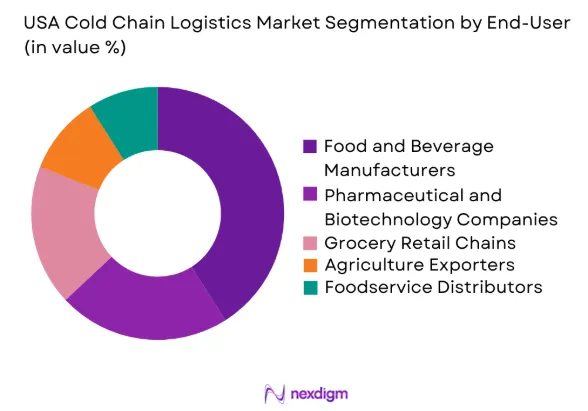
USA Cold Chain Logistics market is segmented by end user industry into food and beverage manufacturers, pharmaceutical and biotechnology companies, grocery retail chains, agriculture exporters, and foodservice distributors. Recently, food and beverage manufacturers hold a dominant market share due to the large volume of temperature sensitive products distributed throughout national retail networks. Processed frozen foods, dairy products, ready to eat meals, and packaged meats require strict temperature controlled logistics throughout storage and distribution stages. Large food manufacturing companies rely on third party cold chain providers to maintain product safety and comply with food safety regulations across the United States. Continuous expansion of supermarket chains and grocery distribution centers also increases demand for refrigerated logistics services connecting manufacturing facilities with retail distribution hubs. High consumption of frozen and packaged food products combined with strong domestic agricultural output reinforces the leading role of food and beverage manufacturers in cold chain logistics demand.
Competitive Landscape
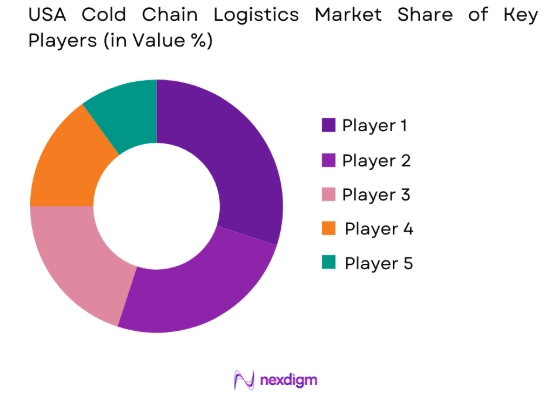
The USA Cold Chain Logistics market demonstrates a moderately consolidated structure dominated by large logistics providers operating extensive refrigerated warehouse networks and transportation fleets. Major players focus on expanding automated cold storage facilities, strengthening nationwide distribution networks, and integrating digital temperature monitoring technologies to maintain regulatory compliance. Strategic acquisitions and infrastructure investments continue to reshape the competitive landscape, allowing large operators to increase storage capacity and geographic reach while improving operational efficiency across pharmaceutical and food supply chains.
| Company Name | Establishment Year | Headquarters | Technology Focus | Market Reach | Key Products | Revenue | Cold Storage Capacity |
| Lineage Logistics | 2012 | Novi, Michigan | ~ | ~ | ~ | ~ | ~ |
| Americold Logistics | 1903 | Atlanta, Georgia | ~ | ~ | ~ | ~ | ~ |
| United States Cold Storage | 1899 | Camden, New Jersey | ~ | ~ | ~ | ~ | ~ |
| Burris Logistics | 1925 | Milford, Delaware | ~ | ~ | ~ | ~ | ~ |
| NewCold Advanced Cold Logistics | 2012 | Chicago, Illinois | ~ | ~ | ~ | ~ | ~ |
USA Cold Chain Logistics Market Analysis
Growth Drivers
Expansion of Pharmaceutical and Biologics Distribution Infrastructure
Rapid growth in pharmaceutical manufacturing and biologics distribution across the United States significantly increases demand for advanced cold chain logistics infrastructure capable of maintaining strict temperature control during storage and transportation. Products such as vaccines, insulin, biologic medicines, and specialty drugs require precise temperature management to preserve efficacy and comply with healthcare regulations. Biopharmaceutical companies continue expanding manufacturing facilities and research pipelines, increasing the volume of temperature sensitive shipments. Cold chain providers invest in validated refrigeration equipment, monitoring technologies, and compliance systems tailored for pharmaceutical distribution. Expanding hospital networks, specialty pharmacies, and biotechnology research hubs further strengthen nationwide demand for reliable pharmaceutical cold chain logistics services.
Growth of Frozen Food Consumption and Nationwide Retail Distribution Networks
Expansion of frozen food consumption across the United States significantly increases demand for cold chain logistics infrastructure supporting nationwide food distribution networks. Consumers increasingly purchase frozen meals, packaged meats, seafood, and dairy products due to changing lifestyles and convenience driven food preferences. Food manufacturers expand production of frozen products that require continuous refrigeration during transportation and storage. Grocery retail chains depend on refrigerated warehouses and trucking fleets to maintain product quality across large distribution networks. Online grocery delivery platforms further increase demand for temperature controlled logistics services. Cold storage warehouses support inventory management before retail distribution, while federal food safety regulations require strict temperature control throughout the supply chain.
Market Challenges
High Energy Consumption and Operational Costs in Refrigerated Infrastructure
Cold chain logistics operations require significant electricity and specialized equipment to maintain low temperature environments across warehouses, refrigerated trucks, and containerized storage systems transporting temperature sensitive goods. Refrigeration systems operate continuously to protect food and pharmaceutical products, leading to high energy consumption and increased operational costs for logistics providers. Cold storage facilities also require insulation materials, compressors, monitoring equipment, and backup power systems to maintain stable temperatures. Rising electricity prices further increase operating expenses for large refrigerated warehouses. Refrigerated transportation fleets consume additional fuel during long distance shipments. Environmental regulations on refrigerants and emissions also raise compliance costs, forcing companies to invest in energy efficient refrigeration technologies.
Complex Temperature Compliance and Product Integrity Management
Maintaining strict temperature control across complex supply chains presents significant operational challenges for cold chain logistics providers handling pharmaceutical and perishable food products. Even small temperature deviations during storage or transportation can damage product quality and create financial losses for manufacturers and distributors. Pharmaceutical shipments require precise temperature ranges and documented handling procedures to comply with drug safety regulations. Logistics providers deploy advanced monitoring technologies that track temperature conditions from production facilities to final delivery points. Equipment failures, transportation delays, or improper handling can disrupt temperature stability and increase spoilage risks. Coordinating temperature control across warehouses, refrigerated fleets, and distribution hubs therefore remains a critical operational challenge.
Opportunities
Expansion of Biopharmaceutical Innovation and Specialty Drug Distribution
Rapid expansion of biotechnology research and specialty drug development across the United States creates strong opportunities for cold chain logistics providers supporting advanced pharmaceutical distribution. Many biologic medicines require strict temperature controlled transportation that differs from conventional pharmaceutical logistics. Biotechnology companies are expanding research programs and manufacturing facilities in regions such as California, Massachusetts, and Texas, increasing demand for specialized logistics infrastructure. Cold chain providers invest in validated containers, real time tracking systems, and regulatory compliant handling processes designed for pharmaceutical shipments. Growing supply chain complexity encourages long term partnerships between biotechnology firms and logistics providers, while rising investments in vaccines and gene therapies further increase demand for specialized temperature controlled distribution services.
Growth of Automated Cold Storage Warehousing and Smart Logistics Infrastructure
Technological innovation in automated warehousing systems creates significant opportunities for cold chain logistics providers to enhance operational efficiency and expand storage capacity while reducing labor dependency in refrigerated facilities. Automated high bay cold storage warehouses use robotics, conveyor networks, and automated retrieval systems to manage inventory within temperature controlled environments. These technologies improve accuracy in inventory management and protect workers from extreme cold conditions. Logistics companies continue investing in advanced automation platforms capable of handling large volumes of frozen food and pharmaceutical products within compact storage facilities. Integration of digital warehouse management, predictive analytics, and smart monitoring systems further improves distribution planning, shipment processing efficiency, and cold chain supply reliability.
Future Outlook
The USA Cold Chain Logistics market is expected to expand steadily over the next five years as demand for temperature controlled pharmaceutical distribution, frozen food logistics, and grocery retail supply chains continues increasing. Advancements in automated cold storage technologies and digital monitoring systems will enhance operational efficiency and compliance across logistics networks. Regulatory standards governing pharmaceutical and food safety logistics are also likely to strengthen infrastructure investment. Growing e-commerce grocery distribution and biotechnology innovation will further support long-term market expansion.
Major Players
- Lineage Logistics
- Americold Logistics
- United States Cold Storage
- Burris Logistics
- NewColdAdvanced Cold Logistics
- Preferred Freezer Services
- Nichirei Logistics Group USA
- RLS Logistics
- Hanson Logistics
- KloosterboerNorth America
- Interstate Warehousing
- Vertical Cold Storage
- AGRO Merchants Group
- VersaColdLogistics
- Conestoga Cold Storage
Key Target Audience
- Pharmaceutical manufacturers
- Food and beverage manufacturers
- Grocery retail chains
- Cold chainlogisticsproviders
- Foodservice distributors
- Investments and venture capitalist firms
- Government and regulatory bodies
- Biotechnology companies
Research Methodology
Step 1: Identification of Key Variables
The study begins with identification of key variables influencing the USA Cold Chain Logistics market including storage capacity, refrigerated transportation demand, pharmaceutical distribution growth, and frozen food consumption. Regulatory standards, infrastructure investments, and supply chain technologies are also evaluated. These variables form the foundation for market analysis and forecasting models.
Step 2: Market Analysis and Construction
Comprehensive analysis is conducted using logistics industry reports, cold storage capacity databases, trade statistics, and regulatory documentation. Supply chain structures, distribution networks, and infrastructure investments are examined to construct the overall market framework and segmentation model.
Step 3: Hypothesis Validation and Expert Consultation
Industry experts including logistics operators, cold storage facility managers, and pharmaceutical supply chain specialists are consulted to validate research assumptions. Expert insights ensure realistic interpretation of infrastructure development trends, regulatory impacts, and operational challenges affecting the market.
Step 4: Research Synthesis and Final Output
All data points are consolidated through comparative analysis and cross-verification across multiple industry sources. Quantitative findings and qualitative insights are integrated to produce a comprehensive market report outlining market structure, competitive dynamics, and future growth outlook.

- Executive Summary
- Research Methodology
- (Definitions, Scope, Industry Assumptions, Market Sizing Approach, Primary & Secondary Research Framework, Data Collection & Verification Protocol, Analytic Models & Forecast Methodology, Limitations & Research Validity Checks)

- Market Definition and Scope
- Value Chain & Stakeholder Ecosystem
- Regulatory / Certification Landscape
- Sector Dynamics Affecting Demand
- Strategic Initiatives & Infrastructure Growth

- Growth Drivers
Expansion of Pharmaceutical and Biologics Distribution Networks
Rapid Growth of Frozen Food Consumption and Retail Demand
Technological Integration in Temperature Monitoring and Logistics Automation - Market Challenges
High Operational Costs of Refrigerated Transport and Storage Infrastructure
Energy Consumption and Sustainability Compliance Pressures
Temperature Integrity Risks Across Long Distance Logistics Networks - Market Opportunities
Expansion of Vaccine and Biopharmaceutical Cold Chain Infrastructure
Development of Smart Cold Chain Monitoring Technologies
Growth of Cross Border Perishable Food Trade - Trends
Adoption of IoT Based Temperature Monitoring Systems
Expansion of Automated Cold Storage Warehouses
Increasing Deployment of Electric Refrigerated Delivery Fleets - Government Regulations
- SWOT Analysis of Key Competitors
- Porter’s Five Forces

- By Market Value, 2020-2025
- By Installed Units, 2020-2025
- By Average System Price, 2020-2025
- By System Complexity Tier, 2020-2025

- By System Type (In Value%)
Refrigerated Transportation Services
Temperature Controlled Warehousing
Blast Freezing and Rapid Cooling Systems
Pharmaceutical Cold Chain Distribution
Food and Beverage Cold Storage Solutions - By Platform Type (In Value%)
Road-Based Refrigerated Logistics
Rail Refrigerated Cargo Systems
Air Cargo Cold Chain Logistics
Maritime Reefer Container Logistics
Integrated Multimodal Cold Chain Platforms - By Fitment Type (In Value%)
Built-in Refrigeration Units
Containerized Refrigeration Systems
Portable Cold Storage Units
Hybrid Temperature Control Systems
Modular Cold Storage Infrastructure - By End User Segment (In Value%)
Food and Beverage Manufacturers
Pharmaceutical and Biotechnology Companies
Fresh Produce Exporters and Importers
Retail and Supermarket Chains
Foodservice and Hospitality Companies - By Procurement Channel (In Value%)
Direct Contracts with Logistics Providers
Third Party Logistics Service Agreements
Government and Healthcare Procurement Programs
Integrated Supply Chain Service Providers
Digital Freight and Logistics Platforms

- Market Share Analysis
- Cross Comparison Parameters (Cold Storage Capacity, Refrigerated Fleet Size, Temperature Monitoring Technology, Pharmaceutical Logistics Capability, Geographic Network Coverage)
- SWOT Analysis of Key Competitors
- Pricing & Procurement Analysis
- Key Players
Americold Logistics
Lineage Logistics
United States Cold Storage
Nichirei Logistics Group USA
Burris Logistics
Preferred Freezer Services
VersaCold Logistics Services
AGRO Merchants Group
Kloosterboer North America
Interstate Warehousing
Hanson Logistics
NewCold Advanced Cold Logistics
Conestoga Cold Storage
RLS Logistics
Vertical Cold Storage

- Rising Pharmaceutical Distribution Requirements Across Healthcare Networks
- Increasing Frozen Food Consumption Across Retail Chains
- Growth of Online Grocery and Meal Delivery Platforms
- Expansion of Export Oriented Perishable Food Supply Chains

- Forecast Market Value, 2026-2035
- Forecast Installed Units, 2026-2035
- Price Forecast by System Tier, 2026-2035
- Future Demand by Platform, 2026-2035


 Request a Sample
 Ask for Customization
 Get a Quote
 Enquire Now