
 Download PDF
 Download PDF
Market Overview
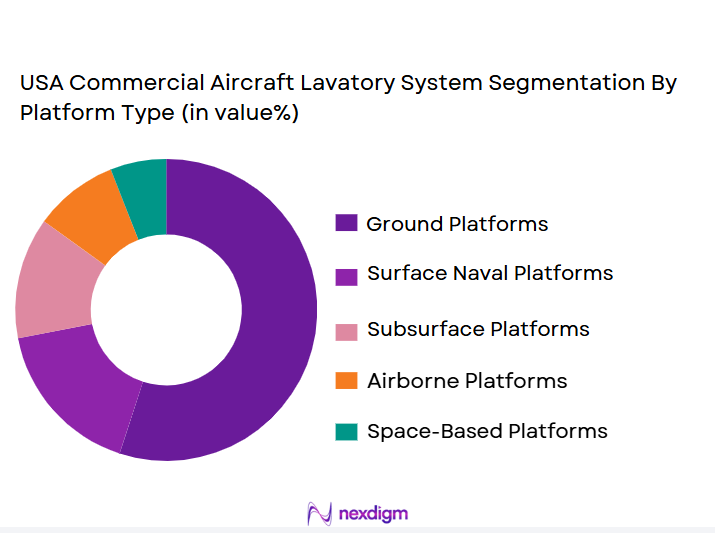
The USA commercial aircraft lavatory system market is expected to reach a size of USD ~ billion based on a recent historical assessment. The market is primarily driven by factors such as the growing demand for air travel, airline fleet expansion, and a focus on improving passenger experience. Lavatory systems are integral to aircraft interiors, and their development is influenced by advancements in design, hygiene, and sustainability. The market growth is also supported by the rise in disposable income, particularly in regions with increasing air passenger numbers.
The market is dominated by countries with a strong aviation infrastructure, such as the United States, Canada, and major European countries. The USA remains a dominant player due to the high volume of air traffic, robust aerospace manufacturing capabilities, and the presence of leading aircraft manufacturers. These nations benefit from advanced technological developments, significant investments in aircraft modernization, and strong regulatory support, which contribute to their leadership in the commercial aircraft lavatory system market.
Market Segmentation
By Product Type:
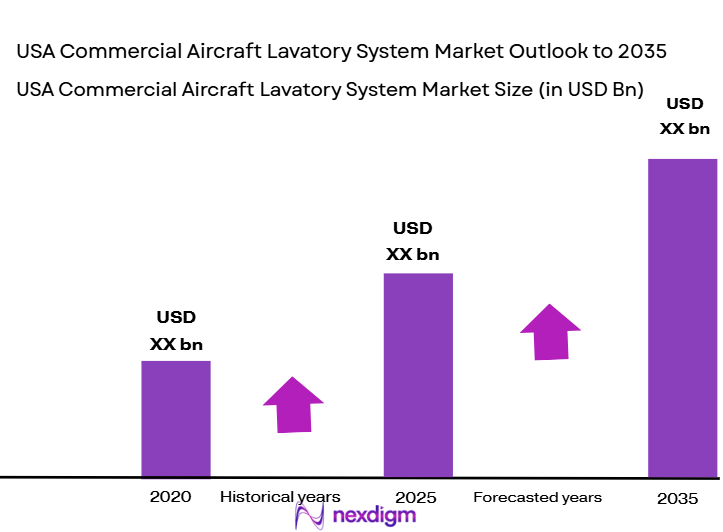
The USA commercial aircraft lavatory system market is segmented by product type into modular lavatories, standard lavatories, eco-friendly lavatories, premium lavatories, and compact lavatories. Recently, modular lavatories have a dominant market share due to their ability to be customized to meet specific airline requirements, flexibility in design, and easier installation and maintenance. Modular systems are particularly favored by airlines for their adaptability to various aircraft types and operational needs. These systems allow for easy upgrades, reconfigurations, and cost-effective solutions, driving their widespread adoption in both new aircraft and retrofit installations.
By Platform Type:
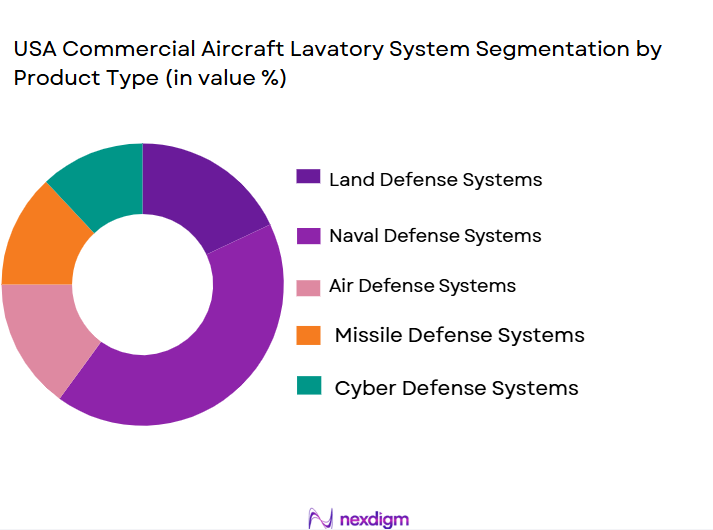
The market is segmented by fitment type into OEM, retrofit, aftermarket, upgrades, and replacements. OEM fitment has a dominant market share due to its inclusion in new aircraft designs and its integration with advanced aircraft technologies. Aircraft manufacturers prefer OEM installations because they offer the advantage of being built into the aircraft’s initial design, ensuring compatibility and optimal functionality. This segment benefits from the increasing production of new commercial aircraft, where OEM lavatories are specified as part of the overall interior system, ensuring streamlined design and installation.
Competitive Landscape
The competitive landscape of the USA commercial aircraft lavatory system market is highly consolidated, with major players playing a significant role in shaping industry trends. Key players continue to influence the market through technological innovations, strategic partnerships, and acquisitions, contributing to increased product offerings and market expansion. These players focus on sustainability, product innovation, and the integration of new materials to meet evolving consumer demands. Consolidation is evident as firms expand their global reach and refine their product portfolios to maintain a competitive edge.
| Company Name | Establishment Year | Headquarters | Technology Focus | Market Reach | Key Products | Revenue (USD Billion) | Additional Parameter |
| Honeywell | 1906 | Morris Plains, NJ | ~ | ~ | ~ | ~ | ~ |
| Safran | 2005 | Paris, France | ~ | ~ | ~ | ~ | ~ |
| Collins Aerospace | 1999 | Charlotte, NC | ~ | ~ | ~ | ~ | ~ |
| Zodiac Aerospace | 2002 | Plaisir, France | ~ | ~ | ~ | ~ | ~ |
| GKN Aerospace | 2000 | Redditch, UK | ~ | ~ | ~ | ~ | ~ |

USA Commercial Aircraft Lavatory System Market Analysis
Growth Drivers
Increased Air Travel Demand:
Increased air travel demand is one of the primary growth drivers for the USA commercial aircraft lavatory system market. With rising global air traffic, airlines are expanding their fleets to accommodate growing numbers of passengers. Lavatory systems play an essential role in enhancing the overall passenger experience. Airlines are increasingly investing in modern lavatories with improved features such as eco-friendly systems, better hygiene solutions, and more spacious designs. The increasing number of passengers and the continuous rise in air traffic contribute significantly to the demand for advanced lavatory systems. As airlines continue to modernize and expand, there is a growing need for better and more efficient lavatory systems that can meet the evolving preferences of passengers. Air travel demand is particularly robust in regions with strong economies and expanding tourism sectors, driving the need for larger aircraft with more advanced lavatory systems. The expansion of low-cost carriers and the increase in both domestic and international flights further fuel this demand.
Technological Advancements in Aircraft Interiors:
Another significant growth driver for the USA commercial aircraft lavatory system market is the continuous technological advancements in aircraft interiors. Aircraft manufacturers are increasingly focusing on developing innovative technologies to enhance passenger comfort and reduce operating costs. This includes the integration of intelligent lavatories with touchless systems, more sustainable materials, and advanced sanitation technologies. The push for eco-friendly lavatories that conserve water, reduce waste, and use energy-efficient materials is growing, in line with increasing environmental concerns in the aviation sector. Aircraft lavatories now incorporate smart technologies such as automatic sanitization, motion-sensing faucets, and water-saving systems. These technological advancements are making lavatory systems more efficient, sustainable, and cost-effective, further driving market growth. As airlines modernize their fleets, they are increasingly prioritizing the installation of these advanced lavatories to enhance passenger satisfaction and reduce maintenance costs.
Market Challenges
High Maintenance and Operational Costs:
High maintenance and operational costs present a significant challenge for the USA commercial aircraft lavatory system market. Lavatory systems require regular maintenance, which includes servicing the water, waste, and sanitation systems. The complexity of these systems and the need to adhere to strict hygiene and safety standards can drive up maintenance expenses. Airlines and operators face challenges in managing the costs associated with maintaining these advanced lavatory systems. Furthermore, the availability of spare parts and the need for skilled personnel to service these systems contribute to the overall operational costs. As the demand for more sophisticated lavatory systems increases, so do the associated maintenance requirements. This challenge is particularly relevant for airlines that operate older fleets or those with limited budgets, as the costs of upgrading or replacing lavatory systems can be prohibitive. Airlines must balance the need for high-quality lavatory systems with the desire to minimize operational costs, which can be a difficult task in a competitive market.
Regulatory and Compliance Barriers:
Regulatory and compliance barriers also pose a challenge to the USA commercial aircraft lavatory system market. Airlines and aircraft manufacturers must comply with a wide range of regulations set by aviation authorities such as the FAA (Federal Aviation Administration) and EASA (European Union Aviation Safety Agency). These regulations cover everything from health and safety standards to environmental requirements, and failure to comply can result in hefty fines and operational delays. The constant evolution of these regulations adds complexity to the development and implementation of new lavatory systems. For instance, stricter environmental standards, including regulations on water usage and waste disposal, are pushing manufacturers to develop more sustainable and efficient lavatory systems. Compliance with these standards requires significant investment in research and development, as well as modifications to existing systems. The need for constant updates to meet regulatory requirements can slow down the adoption of new technologies and add to the cost burden for manufacturers and airlines.
Opportunities
Eco-Friendly Lavatory Solutions:
One of the most promising opportunities in the USA commercial aircraft lavatory system market is the increasing demand for eco-friendly lavatory solutions. With growing concerns about environmental sustainability, there is a strong push within the aviation industry to develop and implement greener technologies. Lavatory systems that conserve water, reduce energy consumption, and minimize waste generation are becoming more popular. Airlines are adopting these systems not only to meet regulatory requirements but also to appeal to environmentally conscious passengers. Eco-friendly lavatories that use sustainable materials and offer energy-efficient designs are gaining traction. Manufacturers are investing heavily in research and development to create waterless or low-water-use lavatory systems that can significantly reduce the environmental impact of aircraft operations. This opportunity is further fueled by the aviation industry’s broader focus on reducing its carbon footprint and improving sustainability practices. As regulatory pressures increase and consumer expectations evolve, eco-friendly lavatory systems present a significant growth opportunity for both manufacturers and airlines.
Technological Advancements in Smart Systems:
Technological advancements in smart systems also present a major opportunity for growth in the USA commercial aircraft lavatory system market. The integration of smart technologies, such as motion-sensing faucets, touchless controls, and automatic sanitization, is transforming the passenger experience. These systems offer convenience, improved hygiene, and reduced contact points, which are especially important in the context of the COVID-19 pandemic. The demand for smart lavatory systems is expected to rise as passengers become more accustomed to high-tech solutions in their daily lives. These innovations not only enhance the user experience but also contribute to cost savings for airlines by reducing water and energy consumption. Additionally, smart lavatories can offer real-time monitoring of system performance, allowing airlines to detect potential issues early and improve maintenance scheduling. The growing trend of digitalization and automation in the aviation industry presents a significant opportunity for manufacturers to develop and introduce next-generation lavatory systems equipped with the latest smart technologies.
Future Outlook
The future of the USA commercial aircraft lavatory system market looks promising, with anticipated growth driven by advancements in technology, increasing air travel demand, and the focus on sustainability. Technological innovations, such as the integration of smart lavatories and eco-friendly solutions, are expected to reshape the market. Airlines will continue to prioritize passenger experience, leading to increased investments in lavatory system upgrades. Regulatory support for greener technologies will further propel market expansion, especially as environmental concerns take center stage. The market is also expected to benefit from the growing trend of fleet modernization, with new aircraft featuring state-of-the-art lavatory systems designed for efficiency and comfort.
Major Players
• Safran
• Collins Aerospace
• Zodiac Aerospace
• GKN Aerospace
• Diehl Aerosystems
• UTC Aerospace Systems
• Thales Group
• Rockwell Collins
• Lavatory Solutions Inc.
• Airbus
• Boeing
• Aircraft Interiors Expo
• Avia Interiors
• Jamco Corporation
Key Target Audience
•Aircraft Manufacturers
• Maintenance, Repair, and Overhaul (MRO) Providers
• Military and Defense Contractors
• Private Jet Operators
• Aircraft Leasing Companies
• OEMs (Original Equipment Manufacturers)
• Government Agencies
Research Methodology
Step 1: Identification of Key Variables
The first step involves identifying the key variables affecting the USA commercial aircraft lavatory system market, including market drivers, challenges, opportunities, and trends.
Step 2: Market Analysis and Construction
Next, we analyze data from both primary and secondary sources to construct an accurate picture of the market’s current size, growth rate, and segmentation.
Step 3: Hypothesis Validation and Expert Consultation
We then validate our hypotheses through consultation with industry experts, manufacturers, and market participants to ensure the accuracy of our findings.
Step 4: Research Synthesis and Final Output
The final step involves synthesizing the research data into a cohesive report, ensuring clarity and accuracy while meeting the objectives of the study.

- Executive Summary
- Research Methodology (Definitions, Scope, Industry Assumptions, Market Sizing Approach, Primary & Secondary Research Framework, Data Collection & Verification Protocol, Analytic Models & Forecast Methodology, Limitations & Research Validity Checks)

- Market Definition and Scope
- Value Chain & Stakeholder Ecosystem
- Regulatory / Certification Landscape
- Sector Dynamics Affecting Demand
- Strategic Initiatives & Infrastructure Growth

- Growth Drivers
Increased Air Travel Demand
Rising Focus on Passenger Comfort
Advancements in Eco-friendly Technology
Regulatory Push for Sanitation Improvements
Technological Advancements in Aircraft Interiors - Market Challenges
High Cost of Advanced Systems
Regulatory Compliance and Certification Issues
Maintenance Complexity
Material and Design Limitations
Technological Integration Barriers - Market Opportunities
Introduction of Eco-friendly Lavatory Solutions
Adoption of Advanced Sanitization Systems
Technological Innovations in Cabin Space Management - Trends
Growing Demand for Sustainable Aircraft Interiors
Increased Integration of Smart Systems in Lavatories
Use of Space-saving Designs
Shift Towards Fully Autonomous Aircraft Systems
Increase in Aircraft Cabin Customization - Government Regulations & Defense Policy
Airline Health and Safety Standards
Aviation Hygiene and Sanitation Regulations
Government Regulations on Aircraft Interior Standards
SWOT Analysis
Stakeholder and Ecosystem Analysis
Porter’s Five Forces Analysis
Competition Intensity and Ecosystem Mapping

- By Market Value, 2020-2025
- By Installed Units, 2020-2025
- By Average System Price, 2020-2025
- By System Complexity Tier, 2020-2025

- By System Type (In Value%)
Standard Lavatory Systems
Premium Lavatory Systems
Eco-friendly Lavatory Systems
Modular Lavatory Systems
Compact Lavatory Systems - By Platform Type (In Value%)
Narrow-body Aircraft
Wide-body Aircraft
Regional Aircraft
Private Jets
Freighters - By Fitment Type (In Value%)
OEM (Original Equipment Manufacturer)
Aftermarket
Retrofit
Upgrades
Replacements - By EndUser Segment (In Value%)
Airlines
Aircraft Manufacturers
MRO (Maintenance, Repair & Overhaul)
Military & Defense Contractors
Private Jet Operators - By Procurement Channel (In Value%)
Direct Procurement
Online Bidding Platforms
Private Sector Procurement
Government Tenders
Third-party Distributors - By Material / Technology (in Value%)
Aluminum
Carbon Fiber
Plastic
Composites
Advanced Ceramics

- Market structure and competitive positioning
- Market share snapshot of major players
CrossComparison Parameters (System Type, Platform Type, Procurement Channel, EndUser Segment, Fitment Type, Material/Technology, Region, Pricing, Customer Support, Innovation) - SWOT Analysis of Key Players
- Pricing & Procurement Analysis
- Key Players
Honeywell International
Rockwell Collins
Safran
Diehl Aerosystems
UTC Aerospace Systems
Zodiac Aerospace
GKN Aerospace
AeroTek
Thales Group
Aircraft Cabin Modification
Avionic Instruments
AD Aerospace
Cabin Systems
Snecma
Collins Aerospace

- Airlines’ Increasing Demand for Sustainable Solutions
- MRO Providers’ Growing Focus on Modernization
- Aircraft Manufacturers Adopting Eco-friendly Technologies
- Private Jet Operators Focusing on Luxury Lavatory Features

- Forecast Market Value, 2026-2035
- Forecast Installed Units, 2026-2035
- Price Forecast by System Tier, 2026-2035
- Future Demand by Platform, 2026-2035


 Request a Sample
 Ask for Customization
 Get a Quote
 Enquire Now