

 Download PDF
 Download PDF
Market Overview
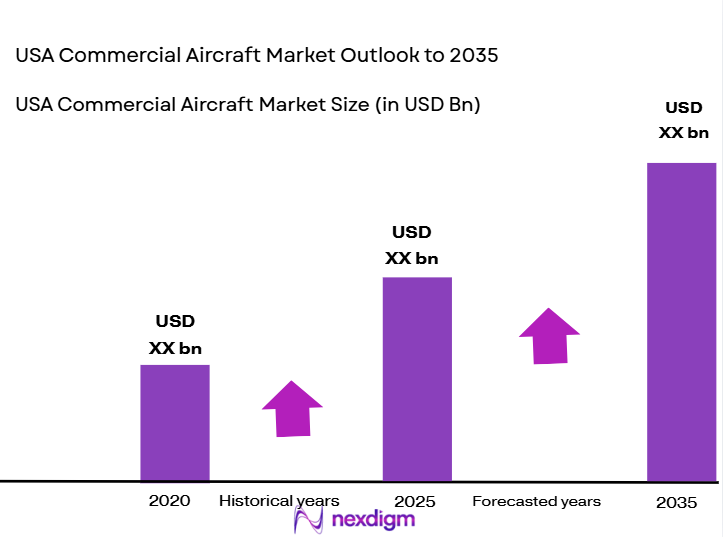
The USA Commercial Aircraft Market is experiencing significant growth, with the market size driven by the increasing demand for both passenger and cargo aircraft. Based on recent assessments, the market size is projected to reach USD ~billion by the end of the year. This growth is propelled by factors such as the rising air travel demand, advancements in aircraft technology, and global e-commerce expansion, which increases the need for air cargo services. Manufacturers and airlines alike are focusing on modernizing fleets to enhance fuel efficiency, reduce emissions, and improve passenger experience.
The dominant players in the USA Commercial Aircraft Market are primarily located in major aviation hubs, such as Seattle, Washington, and Wichita, Kansas, with a concentration of manufacturing and research activities in these regions. Companies like Boeing are headquartered in Seattle, capitalizing on the strategic location for aerospace innovation. The U.S. government’s support for the aviation sector, including policies aimed at increasing air travel infrastructure and promoting sustainability in aviation, further boosts the market’s growth. Other key regions include Southern California, where aerospace companies such as Northrop Grumman are located.
Market Segmentation
By Product Type:
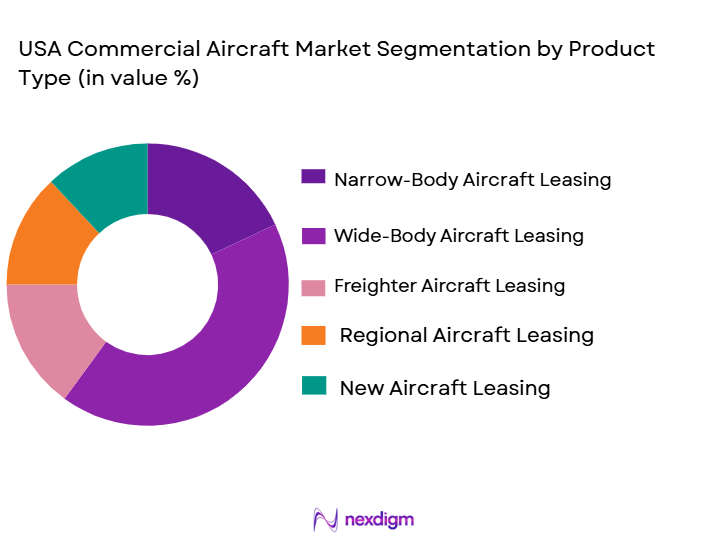
USA Commercial Aircraft market is segmented by product type into narrow-body aircraft, wide-body aircraft, regional aircraft, freighter aircraft, and private jet aircraft. Recently, narrow-body aircraft have dominated the market share due to their versatility, cost efficiency, and growing demand for domestic and short-haul international flights. Airlines and operators prefer narrow-body aircraft because they offer high fuel efficiency, lower operating costs, and the ability to serve high-demand routes with relatively low passenger numbers. Moreover, advancements in materials and manufacturing technologies have contributed to narrowing the cost gap between narrow-body and wide-body aircraft, making them an attractive option for many carriers.
By Platform Type:
USA Commercial Aircraft market is segmented by platform type into passenger aircraft, cargo aircraft, hybrid aircraft, private aircraft, and military-civil hybrid aircraft. Recently, passenger aircraft have dominated the market share due to the significant rise in air travel, particularly after the recovery of the global aviation industry. Airlines are investing heavily in expanding their fleets to meet the increasing demand for air travel. Additionally, the introduction of new models, such as the Airbus A320neo and Boeing 737 MAX, have fueled the growth in the passenger aircraft segment. These aircraft are known for their enhanced fuel efficiency, environmental benefits, and technological advancements.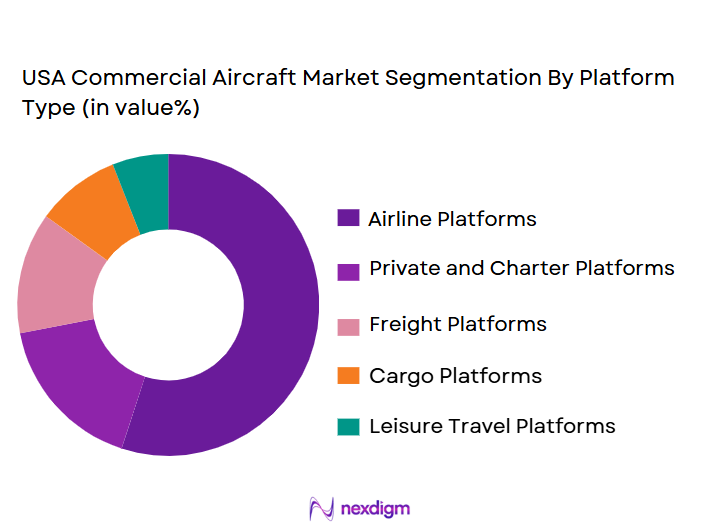
Competitive Landscape
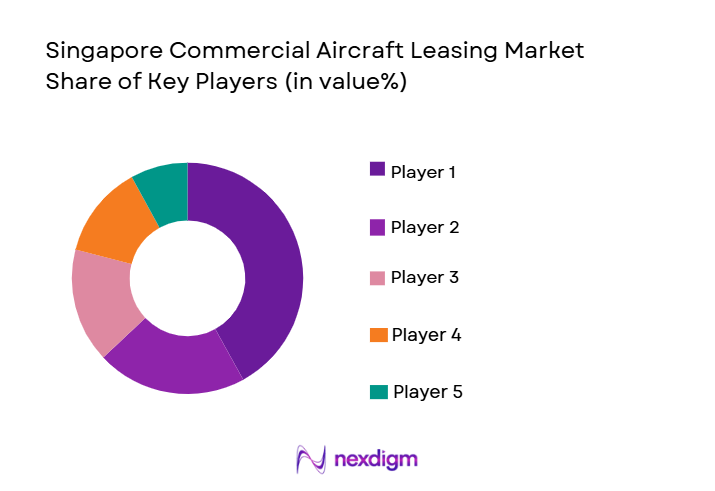
The USA Commercial Aircraft Market has a competitive landscape characterized by a few major players that dominate the market through strategic consolidation and continuous innovation. Companies such as Boeing, Airbus, and Lockheed Martin exert significant influence on the market due to their extensive product portfolios, advanced manufacturing capabilities, and strong relationships with governments and commercial airlines. The market also sees strong competition from suppliers of aircraft components, including engine manufacturers, avionics providers, and material suppliers. These companies continuously innovate to meet regulatory requirements, improve operational efficiency, and address the increasing demand for sustainable and cost-effective aircraft solutions.
| Company Name | Establishment Year | Headquarters | Technology Focus | Market Reach | Key Products | Revenue (USD) |
| Boeing | 1916 | Chicago, IL | ~ | ~ | ~ | ~ |
| Airbus | 1970 | Toulouse, France | ~ | ~ | ~ | ~ |
| Lockheed Martin | 1995 | Bethesda, MD | ~ | ~ | ~ | ~ |
| Northrop Grumman | 1939 | Falls Church, VA | ~ | ~ | ~ | ~ |
| Raytheon Technologies | 2020 | Waltham, MA | ~ | ~ | ~ | ~ |
USA Commercial Aircraft Market Analysis
Growth Drivers
Increased Air Travel Demand:
The USA Commercial Aircraft Market is being propelled by an increasing number of air travelers, especially with the rebound in both domestic and international travel. As global economies recover and disposable incomes rise, there has been a surge in the number of individuals choosing air travel for both business and leisure purposes. This demand is expected to continue growing, which will, in turn, fuel the need for more aircraft. Airlines and leasing companies are responding by expanding their fleets and updating their aircraft to meet this growing demand. In the U.S., the development of budget airlines and low-cost carriers has further increased access to air travel for consumers, adding to the overall demand for commercial aircraft. Additionally, the U.S. government’s support for infrastructure projects at airports has created a conducive environment for the growth of the air travel industry.
Technological Advancements in Aircraft Efficiency:
Another significant growth driver for the USA Commercial Aircraft Market is technological advancements in aircraft efficiency, particularly in fuel consumption and emission reduction. Innovations in lightweight materials, aerodynamics, and propulsion systems have enabled the development of aircraft that are more fuel-efficient and have a lower environmental impact. The introduction of next-generation aircraft such as the Boeing 787 and Airbus A350, which feature improved fuel economy and longer ranges, has allowed airlines to offer more competitive pricing and access to new markets. Furthermore, advances in engine technology, such as quieter, more efficient engines, have made these aircraft more attractive to airlines looking to reduce operating costs. As fuel efficiency becomes increasingly important due to rising fuel prices and stricter environmental regulations, these technological advancements are expected to drive market growth further.
Market Challenges
High Operational and Maintenance Costs:
A key challenge for the USA Commercial Aircraft Market is the high operational and maintenance costs associated with commercial aircraft. The price of fuel, which represents a substantial portion of operational costs, remains volatile and has been increasing in recent years. Furthermore, as aircraft fleets age, the costs related to maintenance, parts replacement, and repairs also rise. Airlines must ensure that their fleets remain operationally efficient, and this requires regular maintenance and investments in new parts, which can be expensive. These high operational costs pose a significant challenge, particularly for low-cost carriers and smaller operators. As a result, airlines may face pressures on their profit margins, which could limit their ability to invest in new aircraft or expand their fleets in the short term.
Regulatory and Certification Barriers:
The USA Commercial Aircraft Market is also constrained by stringent regulatory requirements and the complexity of the aircraft certification process. Aircraft manufacturers must comply with various regulatory standards set by agencies such as the Federal Aviation Administration (FAA), the European Union Aviation Safety Agency (EASA), and other national bodies. These regulations often lead to lengthy approval processes for new aircraft designs and technology integrations. Furthermore, safety concerns and certification delays, such as those seen with the Boeing 737 MAX, can significantly impact the market. The market players must not only meet current standards but also anticipate future regulatory changes regarding sustainability and emissions, which may require further investment in R&D and design adjustments.
Opportunities
Development of Hybrid and Electric Aircraft:
One of the most exciting opportunities in the USA Commercial Aircraft Market is the development of hybrid and electric aircraft. The growing concern over climate change and the need to reduce carbon emissions have led to increased investment in electric and hybrid propulsion technologies for commercial aviation. Companies like Boeing, Airbus, and startups like Zunum Aero are actively working on electric aircraft prototypes. These aircraft, which offer the potential for significantly reduced fuel consumption and lower operating costs, are expected to disrupt the market in the coming years. If successful, these aircraft could become particularly appealing for short-haul routes, where the benefits of electric propulsion are most apparent. Furthermore, government incentives and subsidies aimed at promoting clean technologies could help accelerate the development and adoption of these next-generation aircraft.
Expansion into Emerging Markets:
Another opportunity lies in the expansion of the USA Commercial Aircraft Market into emerging markets. As developing nations continue to experience growth in air travel demand, particularly in regions like Asia and Africa, American aircraft manufacturers are well-positioned to capitalize on this trend. Airlines in emerging markets are increasingly seeking to modernize their fleets and improve efficiency, creating a demand for new aircraft. The increasing number of middle-class consumers in these regions has also led to a rise in domestic and international travel, further increasing the need for aircraft. Additionally, governments in these regions are investing heavily in airport infrastructure, providing more opportunities for American aircraft manufacturers to expand their presence. The growing aviation industry in emerging markets will continue to be a key area of focus for U.S.-based manufacturers.
Future Outlook
The future outlook of the USA Commercial Aircraft Market is promising, with robust growth projected over the next five years. Technological advancements in fuel efficiency, environmental sustainability, and autonomous flight systems are expected to be key drivers of innovation. Furthermore, regulatory support for sustainable aviation technologies, such as electric and hybrid aircraft, will continue to shape the market. As air travel demand rises, particularly in emerging markets, commercial aircraft manufacturers are expected to expand their production capacity to meet this growing need.
Major Players
- Boeing
- Airbus
- Lockheed Martin
- Northrop Grumman
- Raytheon Technologies
- Bombardier
- Embraer
- GE Aviation
- Rolls-Royce
- Pratt & Whitney
- Honeywell Aerospace
- Safran
- Textron Aviation
- Mitsubishi Aircraft Corporation
- Gulfstream Aerospace
Key Target Audience
- Airlines and operators
- Aircraft leasing companies
- Government and defense agencies
- Aerospace manufacturers
- Commercial aircraft component suppliers
- Aviation maintenance and repair providers
- Venture capital and investment firms
- Regulatory bodies
Research Methodology
Step 1: Identification of Key Variables
We begin by identifying the key variables affecting the USA Commercial Aircraft Market, including technological innovations, government policies, and economic factors.
Step 2: Market Analysis and Construction
We analyze historical data and construct market models to estimate the current market size and growth potential for different segments of the commercial aircraft industry.
Step 3: Hypothesis Validation and Expert Consultation
We validate our hypotheses by consulting industry experts and stakeholders, including manufacturers, operators, and regulators, to ensure our findings align with the market’s reality.
Step 4: Research Synthesis and Final Output
We synthesize the data from multiple sources and finalize our research report, ensuring it provides comprehensive insights into the market, along with actionable recommendations.

- Executive Summary
- Research Methodology (Definitions, Scope, Industry Assumptions, Market Sizing Approach, Primary & Secondary Research Framework, Data Collection & Verification Protocol, Analytic Models & Forecast Methodology, Limitations & Research Validity Checks)

- Market Definition and Scope
- Value Chain & Stakeholder Ecosystem
- Regulatory / Certification Landscape
- Sector Dynamics Affecting Demand
- Strategic Initiatives & Infrastructure Growth

- Growth Drivers
Increased Air Travel Demand
Technological Advancements in Aircraft Efficiency
Growing E-commerce and Cargo Transportation
Rising Investment in Aircraft Fleet Expansion
Government Incentives for Sustainable Aviation - Market Challenges
High Operational and Maintenance Costs
Regulatory and Certification Barriers
Supply Chain Disruptions in Aircraft Manufacturing
Intense Competition Among Aircraft Manufacturers
Environmental Impact and Sustainability Concerns - Market Opportunities
Development of Hybrid and Electric Aircraft
Expansion into Emerging Markets
Increased Focus on Eco-Friendly Aviation Solutions - Trends
Increased Automation in Aircraft Manufacturing
Sustainability in Aircraft Design
Rise in Aircraft Leasing and Financing Models
Adoption of AI and Big Data in Aircraft Operations
Growth in Ultra-long-haul Flights - Government Regulations & Defense Policy
Environmental Regulations on Aircraft Emissions
Aviation Safety and Security Regulations
Government Funding for Aircraft Research & Development - SWOT Analysis
Stakeholder and Ecosystem Analysis
Porter’s Five Forces Analysis
Competition Intensity and Ecosystem Mapping

- By Market Value, 2020-2025
- By Installed Units, 2020-2025
- By Average System Price, 2020-2025
- By System Complexity Tier, 2020-2025

- By System Type (In Value%)
Narrow-body Aircraft
Wide-body Aircraft
Regional Aircraft
Freighter Aircraft
Private Jet Aircraft - By Platform Type (In Value%)
Passenger Aircraft
Cargo Aircraft
Hybrid Aircraft
Private Aircraft
Military-Civil Hybrid Aircraft - By Fitment Type (In Value%)
OEM Aircraft
Aftermarket Aircraft
Refurbished Aircraft
Upgraded Aircraft
Customized Aircraft - By EndUser Segment (In Value%)
Commercial Airlines
Private Operators
Cargo Operators
Government & Defense
Leasing Companies - By Procurement Channel (In Value%)
Direct Procurement
Government Procurement
Third-party Distributors
Online Bidding Platforms
OEM Agreements - By Material / Technology (in Value%)
Carbon Fiber Reinforced Polymer
Titanium Alloys
Aluminum Alloys
Advanced Avionics Systems
Sustainable Aviation Fuels

- Market structure and competitive positioning
- Market share snapshot of major players
CrossComparison Parameters (System Type, Platform Type, Procurement Channel, EndUser Segment, Fitment Type, Material, Technology, Market Value, Installed Units, System Complexity) - SWOT Analysis of Key Players
- Pricing & Procurement Analysis
- Key Players
Boeing
Airbus
Lockheed Martin
Northrop Grumman
Bombardier
Embraer
GE Aviation
Rolls-Royce
Pratt & Whitney
Raytheon Technologies
Safran
Textron Aviation
Airbus Helicopters
Lufthansa Technik
Sikorsky Aircraft

- Airlines Increasing Fleet Capacity
- Growth in Aircraft Leasing and Financing
- Private Operators Seeking Customization
- Government Interest in Hybrid Aircraft Technologies

- Forecast Market Value, 2026-2035
- Forecast Installed Units, 2026-2035
- Price Forecast by System Tier, 2026-2035
- Future Demand by Platform, 2026-2035


 Request a Sample
 Ask for Customization
 Get a Quote
 Enquire Now