
 Download PDF
Market Overview
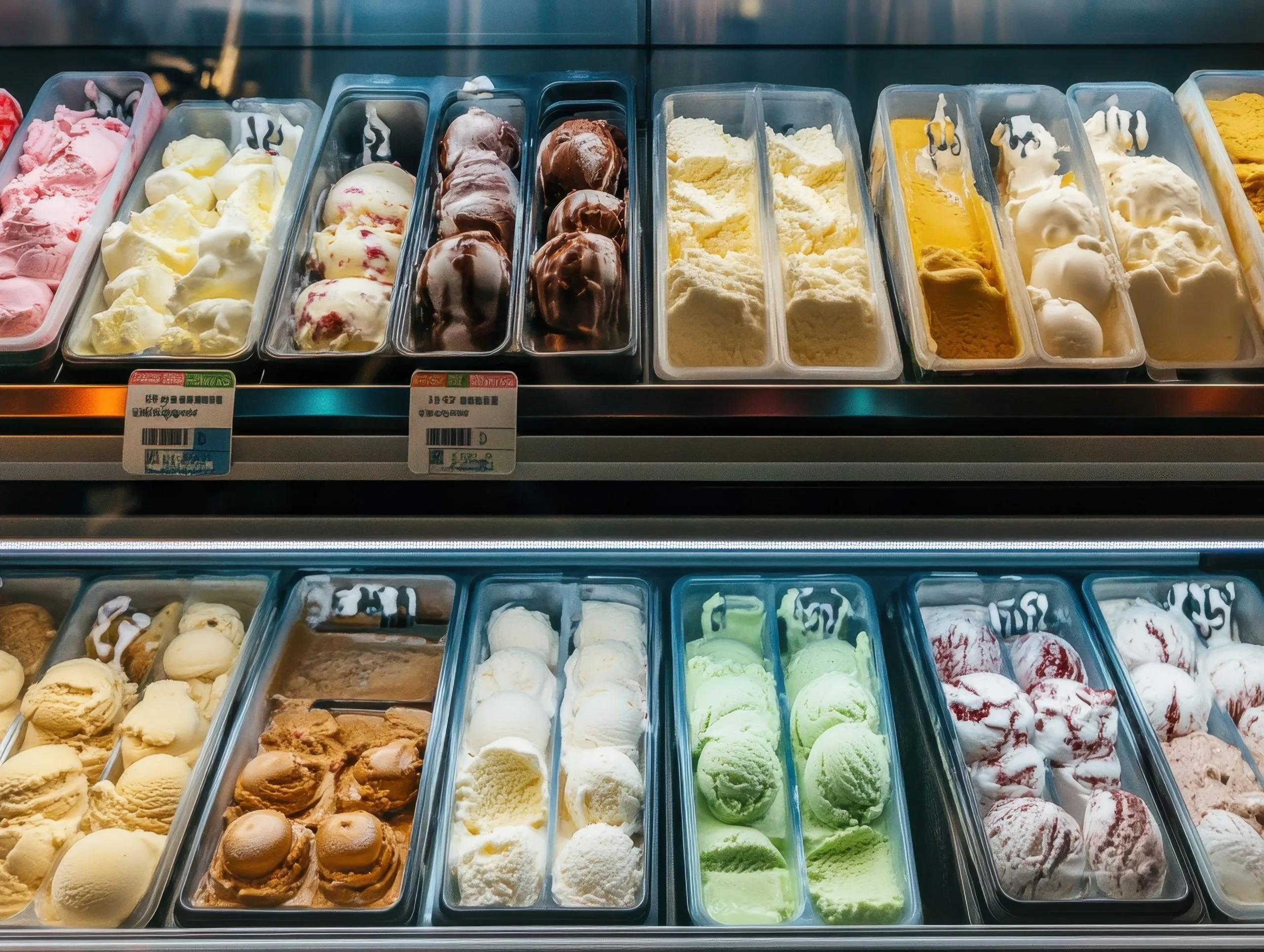
The USA commercial ice cream freezers market is anchored within the broader refrigeration sector, with commercial freezers and refrigerators collectively generating USD ~ million in revenue in 2024 for commercial refrigeration equipment, showing robust baseline demand for freezer units across food retail and foodservice industries. This market benefitted from expansion of supermarket chains, convenience store retailing, and specialty dessert outlets, which increased installations of dedicated ice cream freezer cabinets necessary to preserve product integrity and enhance impulse sales. Commercial ice cream freezers, as a vital component of that ecosystem, are driven by consumer consumption patterns of frozen desserts and fresh‑serve ice cream formats. The broader commercial refrigeration space, inclusive of ice cream freezers, demonstrated increased deployment of energy‑efficient and smart monitoring units, reflecting retailer capital expenditure patterns. These capital upgrades are being influenced by regulatory pushes for energy efficiency, increasing requirement for consistent product temperature control, and demand for expanded frozen dessert variety. Major macroeconomic indicators such as rising food service outlays and retail expansion support continued investment in freezer infrastructure.
Market Segmentation
By Product Type
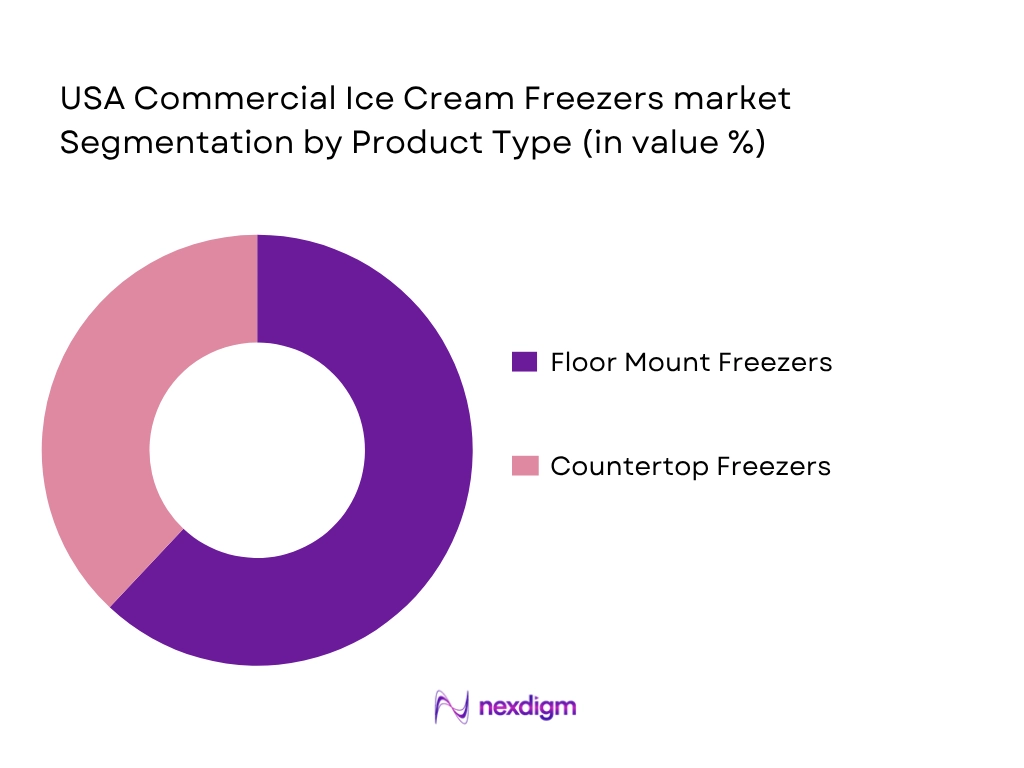
By product type, floor mount commercial ice cream freezers dominate the USA segment due to their superior storage capacity, visibility, and impulse selling advantages in large‑format retail environments such as supermarkets and hypermarkets. Floor mount units, accounting for a majority share of installations, offer key benefits including greater freezer capacity (typically 300–800+ liters per unit) and enhanced product display through sliding lids or transparent tops, which increase impulse purchase rates and overall sales uplift in high‑traffic aisles. Many retail chains and large distributors prioritize floor mount units over smaller countertop models because they can stock broader SKU assortments—premium, scoopable and packaged frozen desserts—within a single cabinet. Additionally, larger retail formats often negotiate centralized purchasing and installation contracts for floor mount units due to lifecycle cost advantages and integration with existing store layouts. While countertop freezers remain important in smaller convenience stores and specialty parlors, the floor mount segment’s operational flexibility and merchandising impact contribute to its leading market share.
By Application (End‑User Segments)
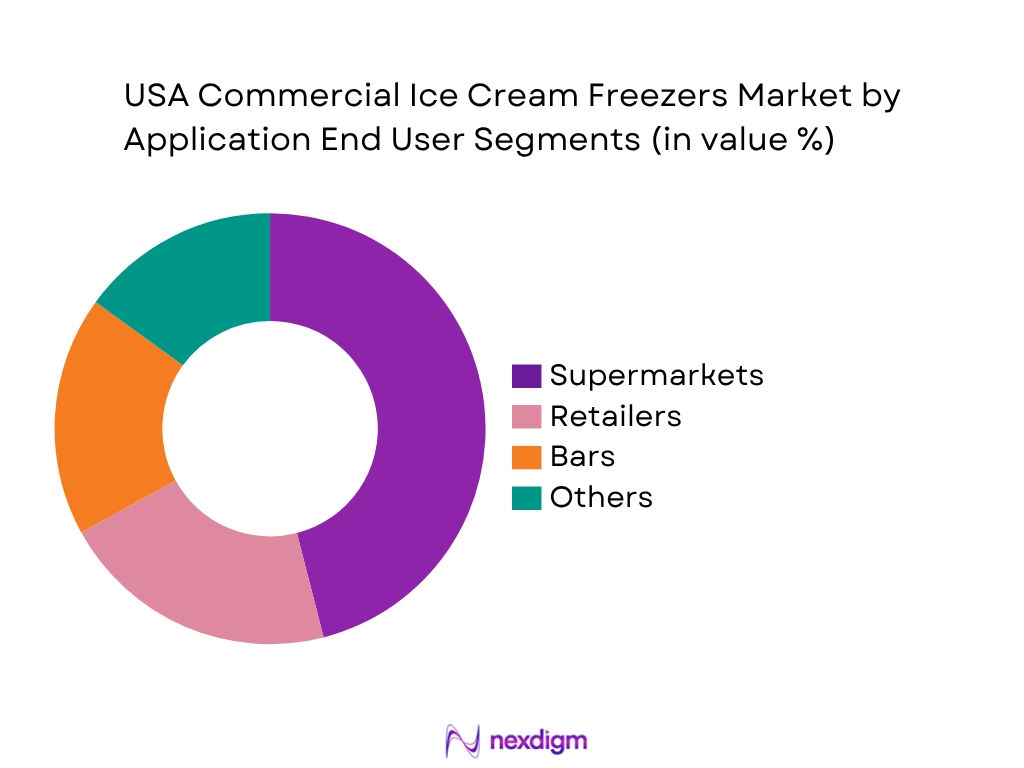
Within application segmentation, supermarkets and hypermarkets are the dominant end‑users for commercial ice cream freezers in the USA, reflecting their expansive retail footprints and high frozen dessert sales volume. These outlets place freezers at central store aisles to maximize product visibility for impulse purchases, attracting a broad customer base across demographics. Large supermarket chains frequently implement standardized freezer cabinets across multiple store locations, supported by centralized procurement and maintenance frameworks that optimize energy usage and product turnover. Hypermarkets also benefit from large store layouts that can accommodate both multiple freezer units and premium display cabinets that enhance merchandising impact for specialty ice creams and premium frozen desserts. These retail environments also tend to refresh freezer fleets regularly to maintain compliance with energy‑efficiency standards and improve product reliability, further bolstering installation demand. The scale of retail operations and strategic placement of freezer units in high footfall zones elevate this sub‑segment’s share relative to smaller specialty shops or niche foodservice players that operate with fewer unit installations.
Competitive Landscape
The USA commercial ice cream freezers market is competitive with a mix of established refrigeration OEMs and specialized freezer manufacturers. Several key companies focus on energy efficiency, refrigeration innovation, and extensive distribution networks to serve retail and foodservice buyers. The USA commercial ice cream freezers market features a competitive landscape where legacy refrigeration manufacturers and specialized cold‑appliance producers compete across product innovation, energy efficiency compliance, distribution reach, and service support. Firms with strong dealer networks and service capabilities tend to capture larger contracts with national supermarket chains and franchise foodservice operators. Product differentiation through advanced cooling technologies, remote monitoring systems, and eco‑friendly refrigerants further distinguishes competitors in procurement decisions.
| Company | Est. Year | Headquarters | Product Portfolio Breadth | Distribution Network Coverage | Energy Efficiency Compliance | Service & Maintenance Support | Technology Adoption (Digital/IoT) | Target End‑User Focus |
| Hussmann Corporation | 1906 | USA | ~ | ~ | ~ | ~ | ~ | ~ |
| True Manufacturing Co. | 1945 | USA | ~ | ~ | ~ | ~ | ~ | ~ |
| Beverage‑Air | 1945 | USA | ~ | ~ | ~ | ~ | ~ | ~ |
| Metalfrio Solutions | 1959 | Brazil/USA ops | ~ | ~ | ~ | ~ | ~ | ~ |
| Turbo Air Inc. | 1973 | USA | ~ | ~ | ~ | ~ | ~ | ~ |
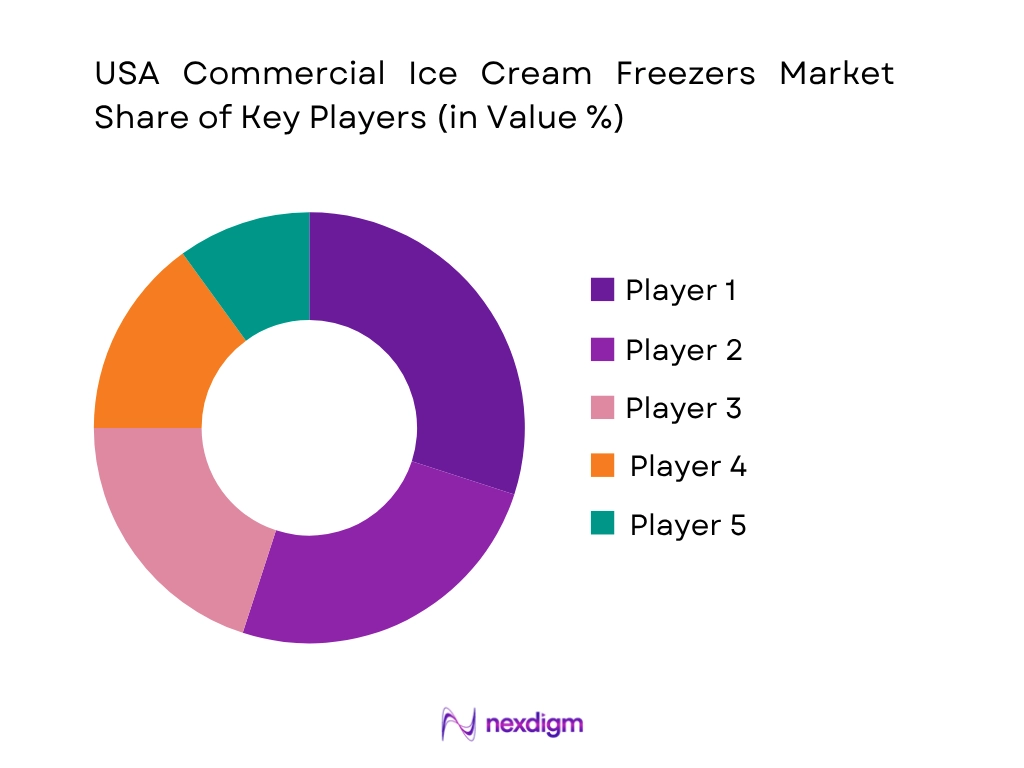
USA Commercial Ice Cream Freezers Market
Growth Drivers
High Ice Cream and Frozen Dairy Production Anchoring Freezer Demand
Commercial ice cream freezers in the United States remain driven by the enduring production and consumption ecosystem for ice cream and frozen dairy products. According to the USDA Economic Research Service, total production of ice cream and frozen dairy in the U.S. reached approximately ~ million gallons in 2024, reflecting tangible production volumes that form a baseline for freezer deployment in retail and foodservice installations. This volume, although lower than historical peaks, underscores the persistent base of frozen dessert output that must be stored, displayed, and merchandised using commercial freezer units in supermarkets, convenience stores, and specialty parlors. Regular ice cream accounts for the majority of output, with production of low‑fat and non‑fat variants also contributing significantly over recent years, and these production patterns establish consistent replacement and expansion demand for commercial cabinets and display freezers across the value chain. With robust output translated directly into retail shelf requirements and foodservice display demands, commercial freezers become indispensable infrastructure in cold chains and merchandising environments. This production volume is supported by a broader market context where total U.S. population exceeds 340 million people, indicating the scale of domestic consumption opportunity supported by these freezer assets.
Strong U.S. Economic Output Supporting Retail and Foodservice Investments
Macroeconomic strength in the United States underpins capital investment in commercial refrigeration, including ice cream freezers, through demand for frozen desserts and retail expansion. Data from the World Bank shows that U.S. gross domestic product was approximately USD ~ trillion in 2024, with a GDP per capita of around USD 84,534, signaling high overall economic output and consumer spending capability in food and beverage sectors. High economic output often correlates with robust consumer demand for discretionary and experiential purchases such as ice cream and frozen treats, which in turn supports retailer and foodservice expenditure on commercial freezer equipment to serve a broad base of products. Inflation metrics—such as a consumer price inflation rate of approximately 2.9% in 2024—also indicate a relatively stable pricing environment that fosters consumer purchases and business investment decisions. Additionally, unemployment estimates around 4.0% in 2024 reflect a labor market that supports disposable income levels conducive to eating out and impulse buying behaviors. These broader economic indicators create conditions in which supermarket chains, quick‑service restaurants, and specialty dessert shops invest in high‑performance freezer units to capture both retail and out‑of‑home consumption, especially when economic output supports stable demand and capital access.
Challenges
Declining Ice Cream and Frozen Dairy Production Trends Affecting Freezer Utilization Patterns
A tangible challenge for the USA commercial ice cream freezers market relates to shifts in production volumes within the frozen dairy segment, which influence overall refrigerated and freezer utilization. According to the USDA Economic Research Service dairy data, U.S. production of ice cream and other frozen dairy products decreased by approximately 10 percent between 2000 and 2024, falling from around 1,542 million gallons to 1,386 million gallons annually. This downward trend, which has applied pressure on certain sub‑segments such as frozen yogurt and sherbet, indicates that while regular ice cream remains dominant, overall production volumes are softer than in earlier periods. Softer production volumes translate into altered deployment patterns for commercial freezers, especially in environments where smaller SKU ranges or reduced turnover can diminish equipment utilization. Moreover, as low‑fat and non‑fat variants grow and shift production mix, retailers may reprioritize freezer space toward broader frozen food categories rather than dedicated ice cream zones. These evolving production dynamics challenge manufacturers and retailers to optimize freezer configurations and inventory strategies to align with changing output trends. This can lead to under‑utilization of legacy cabinets or reluctance to procure additional units in segments where frozen dairy volumes are not expanding meaningfully.
Retail Concentration and Consolidation Pressure on Commercial Freezer Buyers
The retail environment in the United States is increasingly characterized by high concentration among large supermarket chains and national convenience store groups, which poses a challenge for commercial freezer manufacturers in terms of pricing leverage and equipment standardization. Studies of U.S. retail concentration indicate that national and multi‑market firms are expanding their footprint and command larger shares of retail sales across product categories, including frozen desserts, which creates procurement power that limits differentiation on equipment purchases. Large retail chains often negotiate centralized contracts for freezer fleets, demanding standardized specifications and aggressive pricing structures, which can strain margins for equipment providers and restrict their ability to innovate or provide customized solutions for smaller operators. This dynamic also pressures mid‑tier foodservice outlets and independent grocery retailers, who may find it difficult to compete on freezer technology investments due to cost constraints imposed by national retailer buying standards. As a result, manufacturers face a market where a handful of large buyers dominate procurement decisions, compounding barriers to entry for new freezer technologies and competitive differentiation, and requiring strategic adaptation to large account sales cycles and specification demands.
Opportunities
Rising Premium & Specialty Ice Cream Consumption Supporting Feature‑Rich Freezer Demand
A key opportunity exists in aligning commercial freezer offerings with the growing trend toward premium, specialty, and artisanal ice cream consumption in the U.S. market. Market observations show that premium and specialty ice cream formats are gaining traction as consumer preferences shift toward differentiated taste experiences and quality positioning. This trend is reinforced by production patterns where regular ice cream continues to command a significant share, but niche premium flavors and specialty formats are increasingly prominent in retail freezers. As consumers increasingly seek experiential and indulgent products—reflected in retail insights showing top brands achieving significant sales (e.g., some leading brands exceeding USD 950 million in retail revenue)—retailers and foodservice providers are compelled to invest in freezers that provide superior display, temperature precision, and merchandising versatility. Retail ice cream freezers capable of showcasing premium pints, bars, and scoopable formats become high‑value assets that support incremental revenue generation. Additionally, as “premiumization” often commands higher per‑unit revenue on products, grocery and foodservice operators are willing to invest in enhanced freezer technologies to maximize appeal and turnover of these higher margin SKUs. This alignment between premium consumption patterns and freezer capabilities represents tangible growth potential for sophisticated commercial refrigeration solutions.
Growth of Novel Distribution Channels Enhancing Commercial Freezer Deployment
Another notable opportunity for the commercial ice cream freezers market lies in the expansion of non‑traditional distribution channels and experiential retail formats that increase the number of locations requiring dedicated freezer solutions. The U.S. frozen desserts market—anchored by ice cream but inclusive of gelato, novelties, and artisanal frozen treats—features retailers ranging from supermarkets to independent specialty shops. Retail data shows substantial sales volumes and investments in frozen dessert sections through both grocery and online channels, encouraging broader deployment of commercial freezer units. As frozen novelties and impulse formats continue to shape the category, convenience stores, travel retail outlets, regional ice cream parlors, and hybrid cafés are expanding their freezer footprints to capture cross‑category demand. Moreover, foodservice channels such as bars, clubs, and hospitality venues increasingly incorporate ice cream offerings as dessert options, creating new freezer deployment opportunities beyond traditional grocery shelves. Retailers with expanded last‑mile and e‑commerce fulfillment operations also require cold storage and display freezers for micro‑fulfillment center operations. This proliferation of outlets increases the addressable base for commercial freezer manufacturers, extending unit placement beyond long‑established segments into emerging experiential and convenience contexts.
Future Outlook
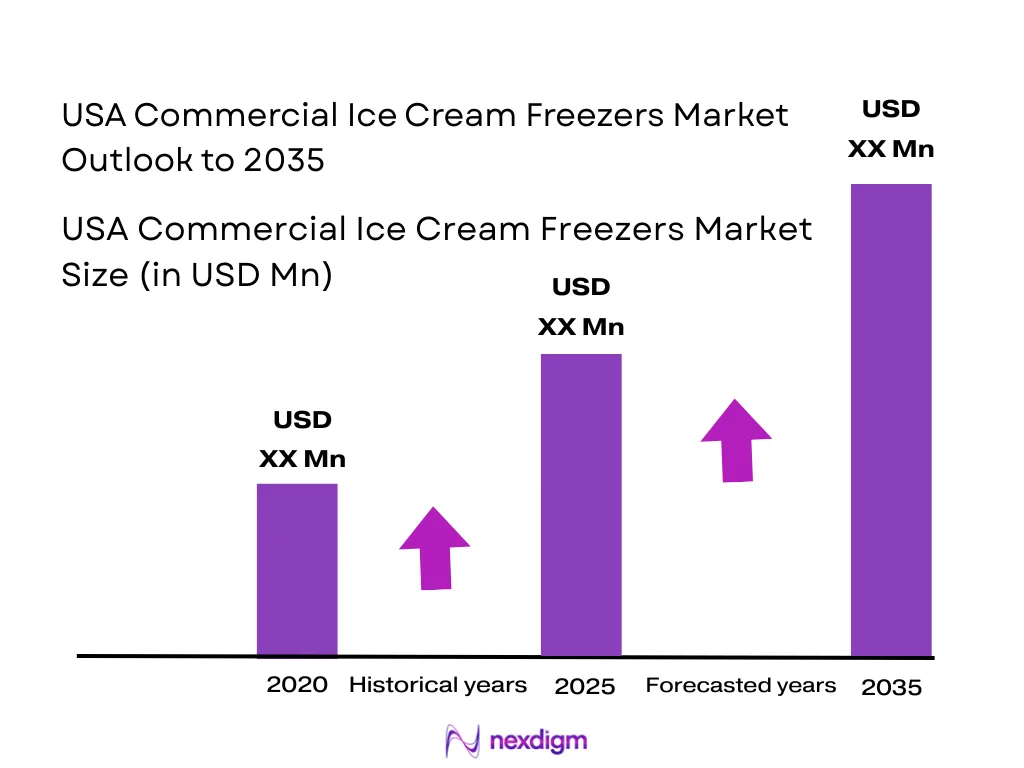
The USA commercial ice cream freezers market is expected to sustain growth driven by ongoing expansion in food retail and foodservice operations, rising consumer demand for frozen desserts, and integration of advanced energy‑efficient technologies. Digital temperature monitoring, eco‑friendly refrigerants, and data‑driven maintenance analytics are transforming how equipment lifecycle value is delivered to end‑users. Growth will also be supported by retailer investments in store modernization, impulse merchandising strategies, and replacement cycles influenced by regulatory changes in energy usage and refrigerant standards. Demand for smart and connected refrigeration solutions is anticipated to increase as retailers seek operational efficiencies and compliance with environmental guidelines.
Major Players
- Hussmann Corporation
- True Manufacturing Co., Inc.
- Beverage‑Air Corporation
- Turbo Air Inc.
- Metalfrio Solutions
- Nor‑Lake, Inc.
- Duke Manufacturing Co.
- Summit Appliance
- Precision Refrigeration
- Derby Refrigeration
- Husky Refrigeration
- Delfield
- Haier Commercial Refrigeration
- Electrolux Professional
- Middleby Celfrost
Key Target Audience
- Retail Chains Procurement Managers
- Foodservice Equipment Buyers
- Franchise & Quick‑Service Restaurant Owners
- Investments & Venture Capitalist Firms
- Hotel & Hospitality Facility Planners
- Refrigeration & Cold Storage Project Developers
- Government and Regulatory Bodies
- Institutional Buyers
Research Methodology
Step 1: Identification of Key Variables
Initial phase involved mapping commercial refrigeration ecosystem stakeholders in the USA, including OEMs, dealers, and end‑users. Secondary research aggregated public financials, industry reports, and regulatory standards to define product categories and demand drivers.
Step 2: Market Construction & Historical Analysis
Historical revenue and unit installations were compiled using verified reports and industry data. Segmentation by product type and application was cross‑checked with trade association sales data to estimate distribution channel impacts.
Step 3: Expert Validation & Consultation
Market insights and assumptions were validated through interviews with equipment dealers, refrigeration industry specialists, and end‑user procurement heads to refine adoption rates, replacement cycles, and technology preferences.
Step 4: Synthesis & Forecast Generation
Validated data was synthesized into comprehensive market models, forecasting future adoption based on regulatory shifts (energy and refrigerants), retail expansion, and technology trends. Scenarios were stress‑tested against macroeconomic indicators related to foodservice and retail investment levels.

- Executive Summary
- Research Methodology (Market Definitions & Assumptions, Abbreviations & Glossary, Historical Data Compilation Approach, Market Sizing & Forecast Framework, Primary & Secondary Data Sources, Validation through Industry Interviews, Limitations & Assumptions)

- Definition and Scope
- Market Genesis & Development Trajectory
- Business Cycle in Commercial Freezer Purchases
- Cold Chain & Ice Cream Cold Storage Value Chain
- Regulatory & Energy Efficiency Environment

- Growth Drivers
- Market Challenges
- Key Opportunities
- Market Trends (Energy Efficiency, IoT Integration)
- Policy & Regulatory Overview (Energy Standards & Refrigerant Phase-outs)
- SWOT Analysis
- Industry Value Chain Assessment
- Porter’s Five Forces

- Market Size by Revenue, 2024 (2020-2025)
- Market Size by Volume/Units Installed (2020-2025)
- Pricing Trends & Average Selling Price by Unit Class (2020-2025)

- By Product Type (In Value %)
Countertop Ice Cream Freezers
Floor Mount Ice Cream Freezers
Upright Freezers
Display Freezers
Soft Serve & Gelato Freezers - By End‑User Setting (In Value %)
Supermarkets
Ice Cream Parlors
Quick Service Restaurants
Convenience Stores
Bars, Cafés & Hospitality Units - By Sales/Distribution Channel (In Value %)
Direct OEM Sales
Distributor & Dealer Network
Retail & Foodservice Equipment Dealers
E‑commerce & Digital Marketplace
Lease & Rental Solutions - By Cooling & Control Technology (In Value %)
Direct Expansion
Remote Condensing Units
CO2 / Natural Refrigerant Systems
IoT / Smart Monitoring
High‑Efficiency Inverter Systems

- Key Company Positioning (Revenue & Installed Base Indicators)
- Cross Comparison Parameters (Company Overview, Product Portfolio Strength, Cooling Technology Range, Distribution Network Coverage, Dealer Reach & Sales Channels, Warranty & Service Offering, Energy Efficiency Certification & Compliance, After‑Sales Support & Spare Parts Availability)
- SWOT Profiles of Major Players
- Pricing Structure & Unit SKU Pricing Benchmarks
- Key Profiles of Major Companies
Hussmann Corporation
True Manufacturing Co., Inc.
Carrier Commercial Refrigeration
Duke Manufacturing Co.
Metalfrio Solutions, Inc.
Turbo Air Inc.
Beverage‑Air Corporation
Nor‑Lake, Inc.
Summit Appliance
Precision Refrigeration
Derby Refrigeration
Husky Refrigeration
Delfield
Tefcold

- Purchasing Drivers & Investment Considerations in Retail & F&B
- Retailer & Foodservice Decision Pathways
- Lease vs Purchase Decision Influencers
- End‑User Maintenance & Lifecycle Expectations
- End‑User Technology & Feature Demand

- By Revenue (2026-2035)
- By Units Installed (2026-2035)
- By Technology Deployment & Efficiency Adoption (2026-2035)


 Request a Sample
 Ask for Customization
 Get a Quote
 Enquire Now