
 Download PDF
 Download PDF
Market Overview
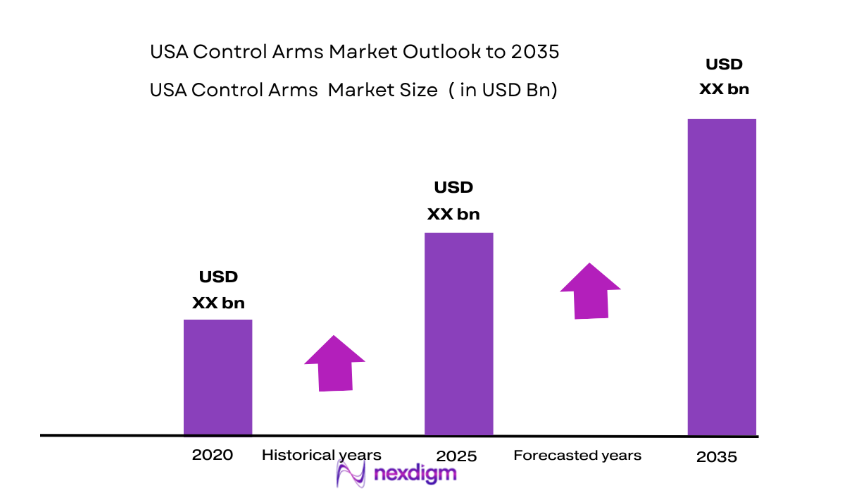
The USA control arms market is projected to experience substantial growth, driven by factors such as increasing demand for vehicle safety, advancements in suspension technologies, and a growing automotive production rate. Based on a recent historical assessment, the market size for control arms in the USA is valued at approximately USD ~ billion, supported by the rising trend toward passenger and commercial vehicle production. These vehicles are equipped with advanced suspension systems, with control arms being a crucial component in ensuring better ride quality, stability, and overall vehicle performance. With increasing consumer preference for safety features and vehicle efficiency, control arms play a critical role in meeting industry standards.
Dominant countries in the USA control arms market include the United States, where demand is primarily driven by technological advancements, robust automotive production, and the increasing shift towards electric vehicles. The automotive sector, particularly in cities like Detroit, Michigan, and other manufacturing hubs, continues to dominate control arms production. This dominance is attributed to extensive investments in automotive research and development, along with the presence of major players in the sector, making the USA a leader in the global control arms market.
Market Segmentation
By Product Type:
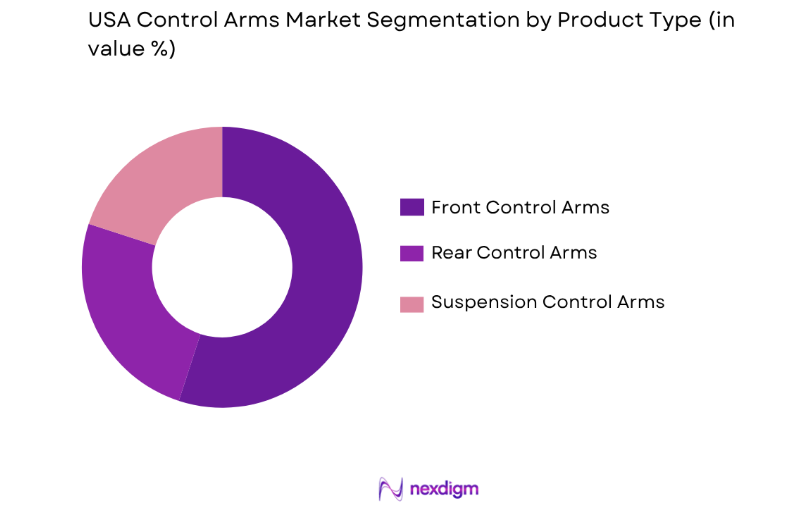
The USA control arms market is segmented by product type into front control arms, rear control arms, and suspension control arms. Recently, front control arms have dominated the market share due to their critical role in vehicle handling and stability, especially in the design of modern suspension systems. Factors such as increased vehicle safety requirements, the growing emphasis on suspension durability, and the advancements in lightweight materials have contributed to the rise in demand for front control arms. Their ability to reduce noise and improve ride quality in both passenger and commercial vehicles further solidifies their market dominance.
By Fitment Type:
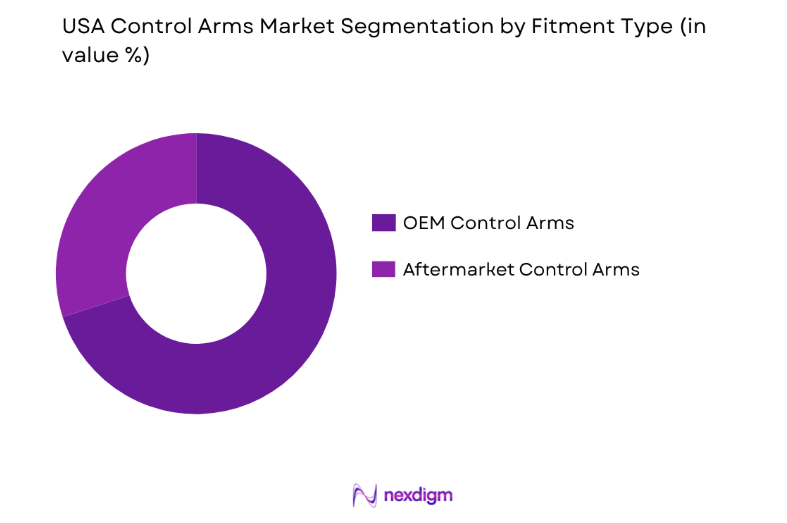
The market for control arms is segmented by fitment type into OEM (Original Equipment Manufacturer) and aftermarket control arms. The OEM segment has a dominant market share, as most vehicles are equipped with control arms directly from the manufacturer. This dominance is driven by the strict regulations and standards set by automakers, which prioritize OEM parts for their vehicles’ performance and safety. Additionally, OEM parts are often integrated with advanced suspension systems, offering superior durability and performance. The growing trend toward maintaining the original build quality of vehicles also supports the dominance of OEM control arms in the market.
Competitive Landscape
The USA control arms market is highly competitive, with several leading players focusing on advanced manufacturing technologies and new product innovations. These companies are investing heavily in research and development to cater to the increasing demand for high-performance, lightweight, and durable control arms. Major players like Magna International, American Axle & Manufacturing, and ZF Friedrichshafen are leveraging their technological expertise and extensive distribution networks to maintain a competitive edge. Market consolidation is evident as companies continue to expand their capabilities through mergers and acquisitions to enhance product portfolios and customer reach.
| Company Name | Establishment Year | Headquarters | Technology Focus | Market Reach | Key Products | Revenue (USD) | Key Industry Certifications |
| Magna International | 1957 | Aurora, Ontario | ~ | ~ | ~ | ~ | ~ |
| American Axle & Manufacturing | 1994 | Detroit, Michigan | ~ | ~ | ~ | ~ | ~ |
| ZF Friedrichshafen | 1915 | Friedrichshafen, Germany | ~ | ~ | ~ | ~ | ~ |
| Tenneco | 1940 | Lake Forest, Illinois | ~ | ~ | ~ | ~ | ~ |
| Delphi Technologies | 1994 | Troy, Michigan | ~ | ~ | ~ | ~ | ~ |

USA Control Arms Market Analysis
Growth Drivers
Technological Advancements in Suspension Systems:
The demand for advanced suspension systems, including control arms, is largely driven by innovations in vehicle safety and comfort. As consumers demand more comfortable and stable rides, automakers are prioritizing the integration of control arms that enhance vehicle performance. Innovations such as active suspension systems, lightweight materials, and noise-dampening designs are propelling the growth of control arms in the automotive market. Additionally, stringent safety regulations and the increased focus on reducing vehicle emissions are encouraging the adoption of more efficient control arm designs. The shift towards electric and hybrid vehicles, which require specific suspension technologies for better handling and weight distribution, further supports the growth of control arms in the market. These technological advancements, coupled with consumer demand for higher-quality vehicles, are contributing significantly to the market’s growth.
Regulatory and Safety Requirements:
Stringent vehicle safety standards imposed by government authorities are another key factor driving the demand for control arms in the market. Regulatory frameworks focusing on vehicle stability, crashworthiness, and suspension durability are pushing automakers to adopt superior suspension systems. Control arms are essential components of suspension systems that ensure vehicle stability during sudden maneuvers, contributing to safety. Regulatory standards, such as crash safety ratings and compliance with environmental regulations, are encouraging the adoption of advanced control arm systems that meet the safety criteria set by regulatory bodies. This is particularly significant in the context of passenger vehicles and commercial vehicles, where safety standards are continually evolving to enhance performance. As a result, automakers are investing heavily in upgrading their control arm systems to meet these requirements, which will further accelerate market growth.
Market Challenges
Rising Raw Material Costs:
One of the primary challenges affecting the USA control arms market is the increasing cost of raw materials used in the manufacturing of control arms. Materials such as steel, aluminum, and high-strength composites are critical in the production of control arms, and fluctuations in their prices can lead to significant cost increases. This, in turn, affects the overall production cost of control arms, making it difficult for manufacturers to maintain competitive pricing. Moreover, the ongoing global supply chain disruptions, exacerbated by factors such as trade tariffs, have caused delays in raw material deliveries, further complicating the situation. Manufacturers are faced with the challenge of balancing the cost of raw materials with the need to deliver high-performance control arms that meet safety standards. To mitigate these challenges, many players in the market are exploring alternative materials and manufacturing processes to reduce costs while maintaining product quality.
Technological Integration and Interoperability Issues:
Another significant challenge facing the USA control arms market is the integration of control arms with newer, more advanced suspension systems. As vehicle manufacturers increasingly adopt active and semi-active suspension technologies, the complexity of integrating control arms with these systems has risen. Control arms must work in tandem with other suspension components, such as dampers, struts, and shock absorbers, to ensure optimal performance. However, achieving seamless interoperability between traditional mechanical systems and newer electronic systems can be a complicated and costly process. Additionally, the rapid pace of technological advancements in suspension systems creates challenges for control arm manufacturers, who must continuously innovate and upgrade their products to stay ahead of industry demands. This technological integration challenge is further complicated by the need for precise manufacturing processes and stringent safety testing requirements.
Opportunities
Expansion in Electric Vehicle Manufacturing:
The rapid growth of the electric vehicle (EV) market presents a significant opportunity for the USA control arms market. As automakers increasingly focus on producing EVs, there is a rising demand for specialized suspension systems that can accommodate the unique design and weight distribution requirements of electric vehicles. EVs require specific suspension systems that ensure proper handling and comfort, especially given the heavier batteries used in these vehicles. Control arms are critical components in achieving these performance goals, as they contribute to vehicle stability and safety. With the expansion of the EV market, there is a growing need for innovative control arms designed to work with electric and hybrid vehicles, providing opportunities for manufacturers to develop tailored solutions that meet these demands.
Partnerships with Tier 1 Suppliers:
Another significant opportunity in the USA control arms market is the potential for partnerships with Tier 1 suppliers. These suppliers play a crucial role in the automotive supply chain, as they provide critical components to vehicle manufacturers. By collaborating with Tier 1 suppliers, control arm manufacturers can enhance their product offerings and expand their market reach. These partnerships allow manufacturers to leverage the expertise and distribution networks of established players, enabling them to access new markets and secure long-term contracts. Additionally, working closely with Tier 1 suppliers can lead to the development of more advanced control arm technologies, such as those that integrate with active suspension systems, providing manufacturers with a competitive advantage in the marketplace.
Future Outlook
The future outlook for the USA control arms market appears promising, with strong growth anticipated over the next five years. The market will continue to benefit from advancements in automotive technology, including the development of electric and autonomous vehicles. The growing emphasis on vehicle safety and comfort, coupled with stricter regulatory standards, will drive demand for high-performance control arms. Additionally, technological developments in suspension systems will create new opportunities for innovation in control arm design. As the automotive industry evolves, the control arms market is expected to expand, with increased investments in research and development, as well as strategic partnerships between manufacturers and suppliers.
Major Players
- Magna International
- American Axle & Manufacturing
- ZF Friedrichshafen
- Tenneco
- Delphi Technologies
- BWI Group
- CIE Automotive
- KYB Corporation
- Hitachi Automotive
- Mubea
- GKN Automotive
- Robert Bosch GmbH
- Schaeffler Group
- Gestamp
- Aisin Seiki
Key Target Audience
- Investments and venture capitalist firms
- Government and regulatory bodies
- Automotive manufacturers
- Automotive aftermarket suppliers
- Tier 1 suppliers
- Electric vehicle manufacturers
- Commercial vehicle manufacturers
- Original Equipment Manufacturers (OEMs)
Research Methodology
Step 1: Identification of Key Variables
Identification of key variables affecting the market, including technological trends, regulatory factors, and consumer preferences.
Step 2: Market Analysis and Construction
Comprehensive analysis of market trends, historical data, and competitive landscape to build market models.
Step 3: Hypothesis Validation and Expert Consultation
Validation of hypotheses and market models through consultations with industry experts and key stakeholders.
Step 4: Research Synthesis and Final Output
Final synthesis of findings, incorporating primary and secondary data sources to produce the final report.

- Executive Summary
- Research Methodology (Definitions, Scope, Industry Assumptions, Market Sizing Approach, Primary & Secondary Research Framework, Data Collection & Verification Protocol, Analytic Models & Forecast Methodology, Limitations & Research Validity Checks)

- Market Definition and Scope
- Value Chain & Stakeholder Ecosystem
- Regulatory / Certification Landscape
- Sector Dynamics Affecting Demand

- Growth Drivers
Increase in Vehicle Production
Rising Demand for Suspension System Innovations
Regulatory Pressures for Enhanced Vehicle Safety - Market Challenges
High Raw Material Costs
Stringent Manufacturing Regulations
Complexities in Vehicle Design Integration - Market Opportunities
Expansion in Electric Vehicle Manufacturing
Growing Demand for Lightweight Materials
Technological Advancements in Suspension Systems - Trends
Shift Towards Lightweight Materials in Control Arms
Increase in Electric Vehicle Demand
Advancements in Control Arm Manufacturing Technologies - Government Regulations
- SWOT Analysis of Key Competitors

- By Market Value, 2020-2025
- By Installed Units, 2020-2025
- By Average System Price, 2020-2025
- By System Complexity Tier, 2020-2025

- By System Type (In Value%)
Passenger Car Control Arms
Commercial Vehicle Control Arms
Light Truck Control Arms
Heavy Truck Control Arms
Electric Vehicle Control Arms - By Platform Type (In Value%)
OEM (Original Equipment Manufacturer)
Aftermarket
Hybrid Platforms
Electric Platforms
Luxury Vehicle Platforms - By Fitment Type (In Value%)
Front Suspension Control Arms
Rear Suspension Control Arms
Independent Suspension Control Arms
MacPherson Strut Control Arms
Double Wishbone Control Arms - By EndUser Segment (In Value%)
Automotive OEMs
Automotive Aftermarket
Commercial Vehicle Manufacturers
Electric Vehicle Manufacturers

- Market Share Analysis
- CrossComparison Parameters (System Type, Platform Type, EndUser Segment, Fitment Type, Procurement Channel)
- SWOT Analysis of Key Competitors
- Pricing & Procurement Analysis
- Porter’s Five Forces
- Key Players
American Axle & Manufacturing
Magna International
ZF Friedrichshafen
Thyssenkrupp
Tenneco
Delphi Technologies
Benteler International
Schaeffler Group
Faurecia
Aisin Seiki
Mubea
Iochpe-Maxion
Cie Automotive
Alcoa
GKN Automotive

- OEMs’ Shift Towards Advanced Suspension Technologies
- Growing Importance of Aftermarket Control Arm Replacement
- Increasing Demand from Commercial Vehicle Manufacturers
- Electric Vehicle Manufacturers’ Need for Specialized Control Arms

- Forecast Market Value, 2026-2035
- Forecast Installed Units, 2026-2035
- Price Forecast by System Tier, 2026-2035
- Future Demand by Platform, 2026-2035


 Request a Sample
 Ask for Customization
 Get a Quote
 Enquire Now