

 Download PDF
Market Overview
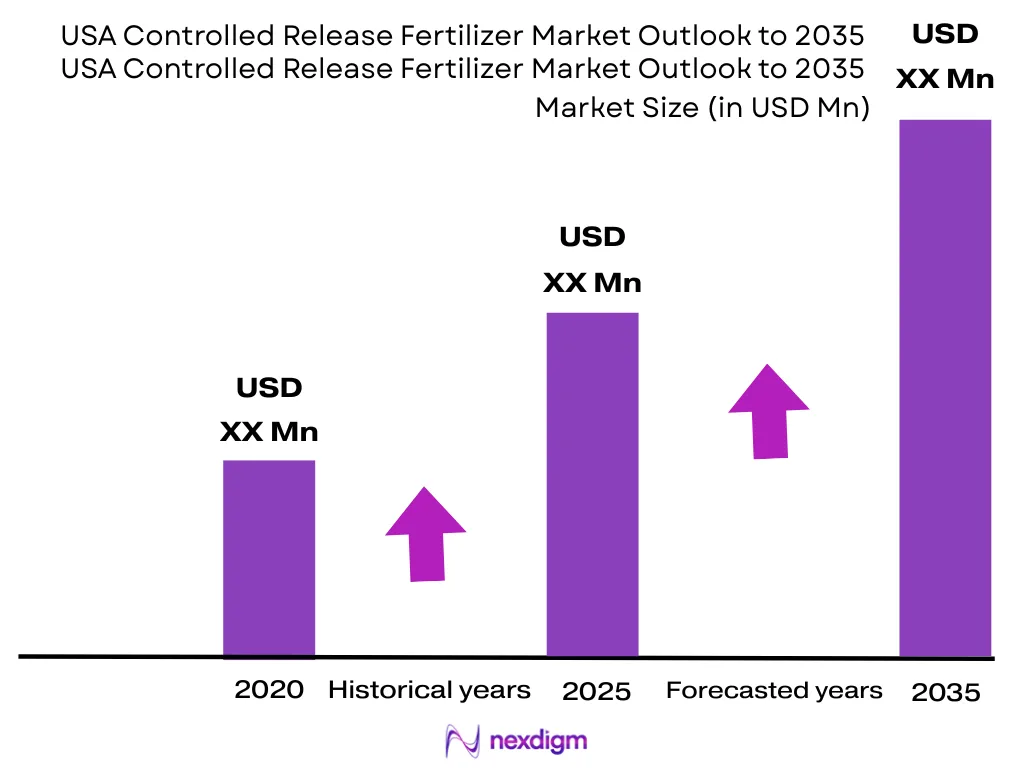
The USA Controlled Release Fertilizer Market was valued at approximately USD ~ Million. The market is supported by the country’s extensive agricultural sector and increasing emphasis on nutrient-use efficiency. According to the United States Department of Agriculture, U.S. corn production reached 15.3 billion bushels while soybean production exceeded 4.1 billion bushels, reflecting the significant nutrient requirements of large-scale farming operations. Additionally, U.S. fertilizer consumption remained among the highest globally, while specialty fertilizer adoption expanded across row crops, turf management, ornamentals, and horticulture applications. Growing concerns regarding nutrient runoff, environmental compliance, and precision agriculture implementation continue to support demand for controlled release fertilizer products that improve nutrient availability and reduce application frequency.
Market Segmentation
By Nutrient Type
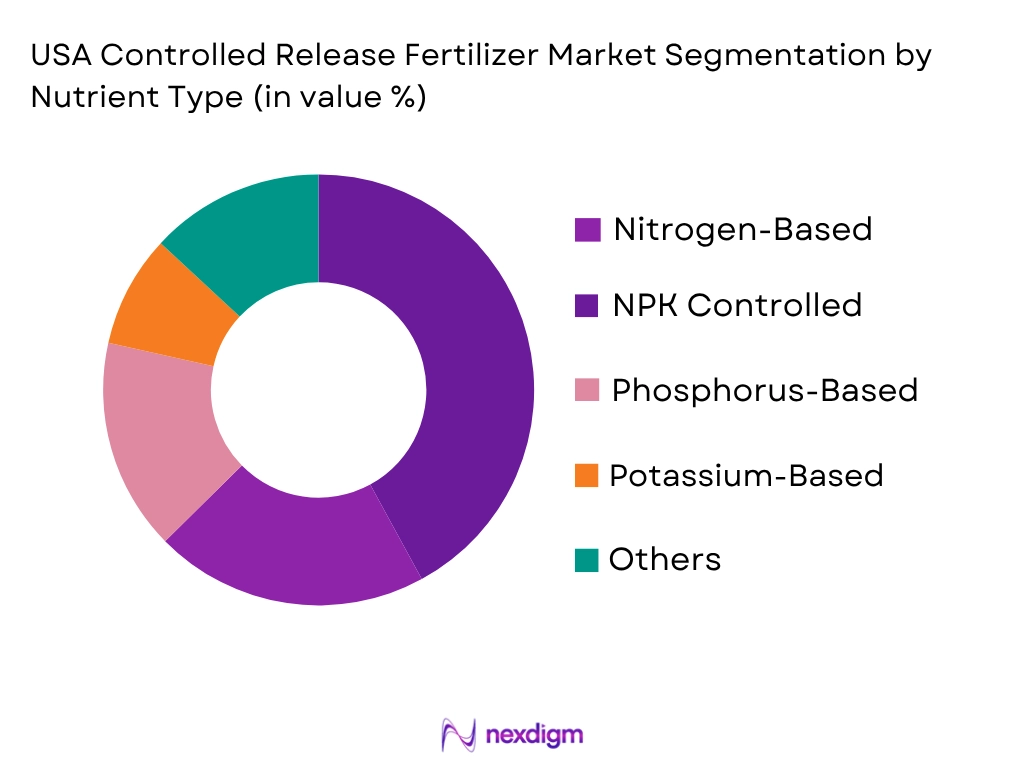
The USA Controlled Release Fertilizer Market is segmented into nitrogen-based, phosphorus-based, potassium-based, NPK, micronutrient, and secondary nutrient controlled release fertilizers. Nitrogen-based controlled release fertilizers dominate this segment due to the substantial nitrogen requirements of corn, wheat, cotton, and turfgrass production. Corn remains the largest fertilizer-consuming crop in the United States, requiring significant nitrogen applications throughout the growing season. Controlled release nitrogen products help reduce volatilization and leaching losses while improving nutrient availability over extended periods. Farmers increasingly prefer these products because they reduce application frequency, improve labor efficiency, and support precision nutrient management programs. Environmental regulations focused on nutrient runoff reduction have further accelerated adoption of controlled release nitrogen fertilizers. The dominance of large-scale row crop agriculture combined with growing interest in sustainable nutrient management continues to reinforce the leading position of nitrogen-based controlled release fertilizers across the U.S. market.
By Crop Type
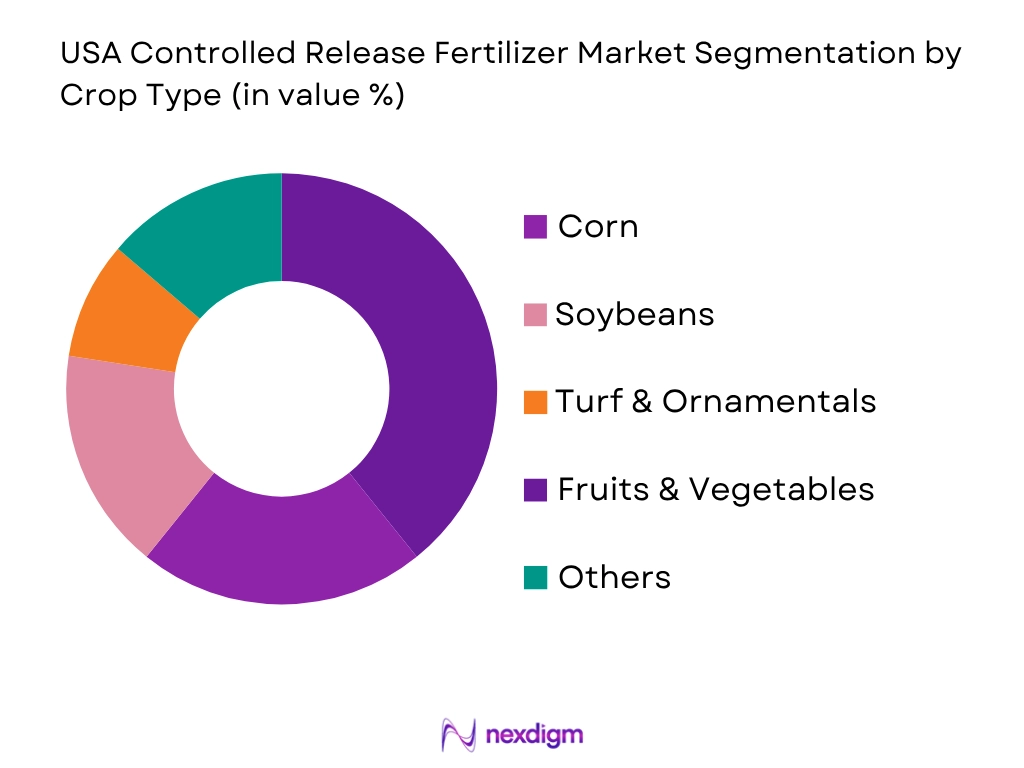
The USA Controlled Release Fertilizer Market is segmented into corn, soybeans, wheat, cotton, fruits and vegetables, turf and ornamentals, specialty crops, and greenhouse crops. Corn represents the dominant segment because it occupies the largest share of U.S. cropland and requires intensive nutrient management. Controlled release fertilizers provide corn growers with the ability to synchronize nutrient release with crop uptake, thereby improving nutrient-use efficiency and reducing losses. Large commercial farming operations increasingly utilize controlled release products to optimize yield performance while complying with environmental stewardship initiatives. Precision agriculture technologies, including variable-rate nutrient application systems, have further increased demand for advanced fertilizer products within corn production. In addition, the economic importance of corn in livestock feed, ethanol production, and export markets encourages growers to invest in premium crop nutrition solutions. These factors collectively contribute to corn maintaining the largest share within the crop-type segmentation.
Competitive Landscape
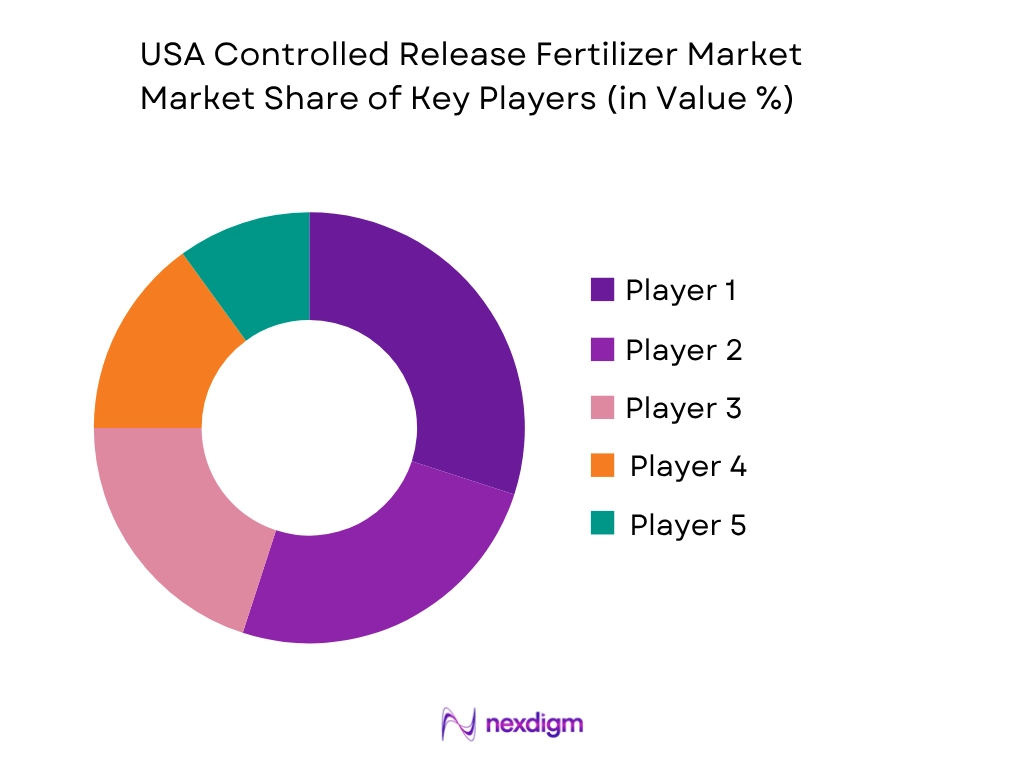
The USA Controlled Release Fertilizer Market is moderately concentrated, with competition led by multinational fertilizer manufacturers, specialty nutrient producers, and agronomic solution providers. Market leaders compete through advanced coating technologies, extensive distribution networks, strong agronomic support capabilities, and product innovation. Strategic partnerships with agricultural retailers and precision agriculture service providers further strengthen their market positions. Companies with diversified specialty fertilizer portfolios and strong presence across row crops, specialty crops, turf, and horticulture applications maintain a significant competitive advantage.
| Company | Establishment Year | Headquarters | Controlled Release Portfolio | Coating Technology Capability | Production Presence in USA | Crop Focus | Distribution Strength | Sustainability Focus |
| Nutrien Ltd. | 2018 | ~ | ~ | ~ | ~ | ~ | ~ | ~ |
| The Mosaic Company | 2004 | ~ | ~ | ~ | ~ | ~ | ~ | ~ |
| ICL Group | 1968 | ~ | ~ | ~ | ~ | ~ | ~ | ~ |
| Yara International | 1905 | ~ | ~ | ~ | ~ | ~ | ~ | ~ |
| Koch Agronomic Services | 1940 | ~ | ~ | ~ | ~ | ~ | ~ | ~ |
USA Controlled Release Fertilizer Market Analysis
Growth Drivers
Expansion of High-Acreage Row Crop Agriculture
The USA controlled release fertilizer market is significantly supported by the scale of domestic crop production, particularly corn and soybeans, which are among the most fertilizer-intensive crops globally. According to the USDA National Agricultural Statistics Service, U.S. farmers produced 14.9 billion bushels of corn and 4.37 billion bushels of soybeans in the latest full production cycle. Corn alone was harvested from approximately 82.9 million acres, while soybean harvested area exceeded 86.2 million acres. The United States also maintains one of the world’s largest agricultural land bases, with total national land area of 2.26 billion acres, including extensive cropland resources dedicated to commercial agriculture. Such large-scale cultivation requires efficient nutrient management systems capable of supplying nutrients throughout extended crop growth cycles. Controlled release fertilizers are increasingly adopted because they reduce nutrient losses while supporting yield stability across large farming operations. The combination of high production volumes, extensive cultivated acreage, and the growing emphasis on maximizing productivity per acre creates strong demand for enhanced-efficiency fertilizers throughout major agricultural states such as Iowa, Illinois, Nebraska, Minnesota, Indiana, and Kansas. The operational advantages of reduced application frequency and improved nutrient utilization further strengthen the market’s growth prospects across row crop agriculture.
Rising Focus on Nutrient Use Efficiency and Precision Agriculture
The increasing emphasis on nutrient-use efficiency is a major driver for the USA controlled release fertilizer market. According to fertilizer utilization studies compiled from USDA datasets, average nitrogen application rates on corn reached approximately 151.8 pounds per acre, while wheat application rates exceeded 77.1 pounds per acre. These figures highlight the substantial nutrient requirements of U.S. crop production systems and the economic importance of optimizing fertilizer performance. Simultaneously, U.S. agriculture continues to embrace precision farming technologies, variable-rate nutrient application systems, digital farm management platforms, and satellite-guided equipment. The country’s corn production generated 14.9 billion bushels from record average yields of approximately 179.3 bushels per acre, demonstrating the increasing focus on productivity optimization. Controlled release fertilizers support these objectives by synchronizing nutrient availability with crop uptake patterns, reducing nutrient losses from leaching and volatilization. As growers seek to improve return on fertilizer investments while complying with environmental stewardship requirements, demand for controlled release nutrient technologies continues to expand across row crops, specialty crops, turfgrass management, greenhouse operations, and horticultural applications. The convergence of high fertilizer application intensity and precision agriculture adoption creates a favorable environment for market growth.
Market Challenges
Dependence on Specialized Coating Materials and Manufacturing Inputs
A major challenge for the USA controlled release fertilizer market is its reliance on specialized coating materials, polymers, and advanced manufacturing technologies that are not required for conventional fertilizers. Controlled release fertilizers depend on precise nutrient encapsulation systems that involve sophisticated production processes and specialty raw materials. The U.S. agricultural sector operates at enormous scale, with fertilizer applications supporting crop production exceeding 14.9 billion bushels of corn and 4.37 billion bushels of soybeans annually. Any disruption in specialty material availability can affect production schedules and inventory planning. Furthermore, nutrient application intensity remains high, with nitrogen usage on corn averaging 151.8 pounds per acre according to agricultural fertilizer-use assessments. Manufacturers of controlled release fertilizers must continuously secure specialized coating technologies while maintaining consistent product performance across diverse climatic regions. Variability in polymer availability, supply chain disruptions, and regulatory scrutiny surrounding coating materials can increase operational complexity. These challenges become particularly significant because controlled release fertilizers are expected to deliver predictable nutrient-release characteristics under varying soil temperatures, moisture conditions, and crop management systems across multiple agricultural regions of the United States.
Environmental and Regulatory Compliance Complexity
The controlled release fertilizer market faces increasing regulatory and environmental scrutiny related to nutrient management, water quality protection, and sustainable agriculture practices. Concerns regarding nutrient runoff, groundwater contamination, and emerging contaminant issues continue to shape fertilizer regulations across multiple states. Recent discussions regarding agricultural nutrient inputs have highlighted the growing importance of environmental oversight within U.S. agriculture. At the same time, American agriculture operates on a massive scale, with cropland accounting for a substantial portion of the nation’s 2.26 billion acres of land resources. Large-scale corn and soybean production systems require extensive fertilizer use to sustain productivity, placing increased focus on nutrient stewardship programs. Controlled release fertilizer manufacturers must demonstrate environmental benefits, product safety, and compliance with federal and state regulations while ensuring product efficacy. The complexity increases because regulations vary across regions, watersheds, and crop production systems. Manufacturers must also invest in research, testing, and performance validation to support regulatory requirements. These factors create operational challenges and can extend commercialization timelines for new controlled release fertilizer technologies entering the U.S. market.
Market Opportunities
Expansion of Specialty Crop, Horticulture, and Turf Applications
A significant opportunity for the USA controlled release fertilizer market lies in specialty crops, horticulture, greenhouse production, nurseries, landscaping, and turf management applications. Unlike broad-acre row crops, these segments often prioritize nutrient precision, product performance, labor efficiency, and environmental stewardship. The United States possesses extensive agricultural diversity beyond corn and soybeans, with large areas devoted to fruits, vegetables, nuts, ornamentals, and specialty crops. According to USDA land-use assessments, the country manages 2.26 billion acres of land resources, supporting a broad range of agricultural production systems. Controlled release fertilizers are particularly attractive in these sectors because they provide long-lasting nutrient availability, reduce maintenance requirements, and improve crop quality. Turfgrass applications across golf courses, sports fields, commercial landscapes, and residential properties also benefit from controlled nutrient release characteristics. As demand for premium agricultural products and high-quality landscaping solutions continues to grow, end users increasingly seek fertilizer technologies that improve operational efficiency while minimizing nutrient losses. This creates substantial expansion opportunities for manufacturers offering crop-specific and application-specific controlled release fertilizer formulations throughout the United States.
Growth of Sustainable Agriculture and Environmental Stewardship Programs
The increasing adoption of sustainable agriculture practices creates a strong opportunity for controlled release fertilizer technologies. U.S. agriculture continues to focus on improving resource efficiency, reducing environmental impacts, and enhancing long-term soil productivity. Record crop yields demonstrate the sector’s commitment to productivity improvements, with corn yields reaching approximately 179.3 bushels per acre and soybean production exceeding 4.37 billion bushels. At the same time, fertilizer-use efficiency has become a key objective for producers seeking to optimize nutrient management strategies. Nitrogen application rates on major crops remain substantial, highlighting the importance of technologies that improve nutrient retention and uptake efficiency. Controlled release fertilizers directly support sustainability objectives by reducing nutrient losses, minimizing repeated field applications, and improving nutrient synchronization with crop demand. Government conservation initiatives, water-quality improvement programs, carbon-smart agriculture strategies, and environmental stewardship frameworks increasingly emphasize efficient nutrient management. As sustainability becomes a more prominent decision-making factor across the agricultural value chain, controlled release fertilizer manufacturers are well positioned to capitalize on growing demand for advanced nutrient-delivery solutions that align productivity goals with environmental performance.
Future Outlook
The USA Controlled Release Fertilizer Market is expected to demonstrate strong growth during the forecast period, supported by rising demand for sustainable nutrient management solutions and increasing adoption of precision agriculture technologies. Growing concerns regarding nutrient-use efficiency, water quality protection, and environmental compliance are expected to encourage greater use of controlled release fertilizers across row crops and specialty crops. Advances in biodegradable coatings, polymer technologies, and smart fertilizer formulations will further improve product performance. Expansion of controlled environment agriculture, greenhouse production, and specialty crop cultivation will create additional demand opportunities. Furthermore, increasing investments in precision nutrient management and carbon-smart agriculture initiatives are likely to accelerate market penetration across diverse agricultural applications.
Major Players
- Nutrien Ltd.
- The Mosaic Company
- Koch Agronomic Services
- ICL Group
- Yara International
- Helena Agri-Enterprises
- JR Simplot Company
- AgroLiquid
- Harrell’s LLC
- Florikan ESA LLC
- Pursell Agri-Tech
- The Andersons Inc.
- Wilbur-Ellis Agribusiness
- COMPO Expert
- Corteva Agriscience
Key Target Audience
- Fertilizer Manufacturers and Specialty Fertilizer Producers
- Agricultural Retailers and Distribution Networks
- Commercial Farming Enterprises and Agribusiness Operators
- Precision Agriculture Technology Providers
- Turf Management and Landscaping Companies
- Investments and Venture Capitalist Firms
- Government and Regulatory Bodies (United States Department of Agriculture (USDA), Environmental Protection Agency (EPA), Natural Resources Conservation Service (NRCS))
- Greenhouse, Nursery and Specialty Crop Operators
Research Methodology
Step 1: Identification of Key Variables
The initial phase involves constructing an ecosystem map encompassing all major stakeholders within the USA Controlled Release Fertilizer Market. Extensive desk research is conducted using government databases, agricultural statistics, fertilizer industry publications, company reports, and trade associations. The primary objective is to identify critical variables influencing demand, supply, adoption patterns, nutrient management practices, and technological developments within the market.
Step 2: Market Analysis and Construction
In this phase, historical market information relating to fertilizer consumption, crop acreage, specialty fertilizer penetration, nutrient utilization, and distribution structures is compiled and analyzed. Supply-side assessment includes manufacturing capacity, import-export trends, and retailer networks. Demand-side analysis evaluates adoption across crop categories, farm sizes, and end-user segments to establish accurate market estimates.
Step 3: Hypothesis Validation and Expert Consultation
Market hypotheses are developed and subsequently validated through structured interviews with fertilizer manufacturers, agronomists, agricultural retailers, crop consultants, distributors, and industry experts. These consultations provide operational insights regarding product adoption, nutrient management trends, technology performance, competitive positioning, and future growth opportunities within the controlled release fertilizer industry.
Step 4: Research Synthesis and Final Output
The final phase involves integrating findings from both primary and secondary research sources. Data triangulation techniques are applied to validate market estimates and segment shares. Direct engagement with industry participants helps verify product trends, demand dynamics, and competitive developments, ensuring a comprehensive and reliable assessment of the USA Controlled Release Fertilizer Market.

- Executive Summary
- Research Methodology (Market Definitions and Assumptions, Abbreviations, Market Sizing Approach, Top-Down Analysis, Bottom-Up Analysis, Demand-Side Assessment, Supply-Side Assessment, Primary Industry Interviews, Distributor Interviews, Agronomist Consultations, Data Triangulation, Forecasting Framework, Limitations and Future Conclusions)

- Definition and Scope
- Market Evolution and Industry Genesis
- Timeline of Major Industry Developments
- Controlled Release Fertilizer Ecosystem Overview
- Enhanced Efficiency Fertilizer Industry Structure

- Growth Drivers (Expansion of Precision Agriculture, Rising Nutrient Use Efficiency Requirements, Growth in High-Value Specialty Crops, Environmental Compliance Requirements, Increasing Corn and Soybean Acreage, Labor Cost Optimization, Sustainable Agriculture Adoption, Water Quality Protection Initiatives)
- Market Challenges (High Product Premium Compared to Conventional Fertilizers, Volatility in Polymer and Coating Material Prices, Limited Awareness Among Small Farmers, Nutrient Release Variability Across Climatic Conditions, Supply Chain Dependence on Specialty Inputs)
- Market Opportunities (Carbon-Smart Agriculture Programs, Bio-Based Coating Technologies, Controlled Environment Agriculture Expansion, Specialty Crop Nutrition Solutions, Smart Fertilizer Development, Digital Agriculture Integration, Enhanced Efficiency Fertilizer Adoption, Sustainable Landscaping Applications)
- Market Trends (Polymer Innovation, Biodegradable Coatings, Precision Nutrient Delivery Systems, Data-Driven Fertility Programs, Controlled Environment Farming Growth, Customized Crop Nutrition Formulations, Enhanced Efficiency Fertilizer Adoption, Environmental Stewardship Programs)
- Government Regulations (US EPA Nutrient Management Standards, USDA Fertilizer Programs, State Nutrient Runoff Regulations, Clean Water Act Compliance Requirements, Controlled Release Fertilizer Labeling Standards, Environmental Protection Guidelines)
- PESTLE Analysis
- SWOT Analysis
- Porter’s Five Forces Analysis
- Stakeholder Ecosystem
- Competition Ecosystem

- By Market Value (2020-2025)
- By Volume Consumption (2020-2025)
- By Average Selling Price (2020-2025)

- By Nutrient Type (In Value %)
Nitrogen-Based Controlled Release Fertilizers
Phosphorus-Based Controlled Release Fertilizers
Potassium-Based Controlled Release Fertilizers
NPK Controlled Release Fertilizers
Micronutrient Controlled Release Fertilizers
Secondary Nutrient Controlled Release Fertilizers - By Coating Technology (In Value %)
Polymer-Coated Fertilizers
Sulfur-Coated Fertilizers
Polymer-Sulfur Coated Fertilizers
Resin-Coated Fertilizers
Bio-Based Coated Fertilizers
Nano-Coated Fertilizers - By Release Duration (In Value %)
Up to 3 Months
3–6 Months
6–9 Months
Above 9 Months - By Crop Type (In Value %)
Corn
Soybeans
Wheat
Cotton
Fruits & Vegetables
Turf & Ornamentals
Specialty Crops
Nuts & Tree Crops
Greenhouse Crops - By Application Method (In Value %)
Broadcast Application
Band Placement
Fertigation
Seed Placement
Precision Variable Rate Application

- Market Share of Major Players (By Value, Volume, Nutrient Type, Crop Segment, Coating Technology, Distribution Channel)
- Cross Comparison Parameters (Product Portfolio Breadth, Controlled Release Technology Portfolio, Coating Technology Capability, Nutrient Release Duration Range, Production Capacity, Specialty Crop Focus, Distribution Network Reach, Agronomic Technical Support Strength)
- SWOT Analysis of Major Players
- Pricing Analysis by Nutrient Grade and Release Duration
- Detailed Profiles of Major Companies
Nutrien Ltd.
The Mosaic Company
Koch Agronomic Services
ICL Group
Yara International
Helena Agri-Enterprises
JR Simplot Company
AgroLiquid
Harrell’s LLC
Florikan ESA LLC
Pursell Agri-Tech
Andersons Inc.
Wilbur-Ellis Agribusiness
COMPO Expert
Corteva Agriscience

- Fertilizer Utilization Assessment
- Farmer Purchasing Behavior Analysis
- Farm Economics Assessment
- Precision Agriculture Adoption Analysis
- Sustainability Adoption Assessment
- Pain Point Analysis
- Product Attribute Preference Analysis
- Purchase Decision-Making Framework
- Agronomist and Crop Consultant Influence Analysis

- By Market Value (2026-2035)
- By Volume Consumption (2026-2035)
- By Average Selling Price (2026-2035)


 Request a Sample
 Ask for Customization
 Get a Quote
 Enquire Now