
 Download PDF
 Download PDF
Market Overview
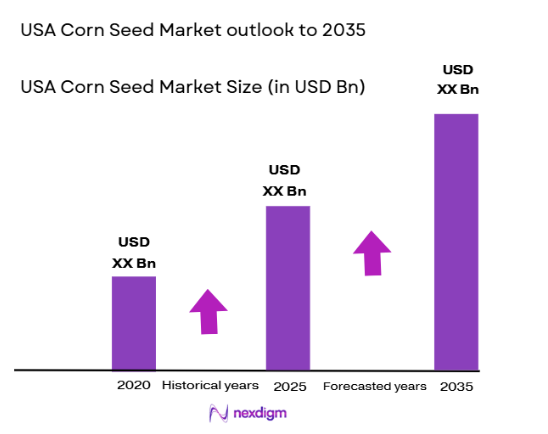
The USA Corn Seed Market, based on a recent historical assessment, is driven by factors like technological advancements, genetic innovations, and increasing demand for high-yield varieties. As of the most recent figures, the market size stands at approximately USD ~ billion. Major drivers include the rising need for food security, climate-resilient crops, and government subsidies that boost seed production. These drivers contribute significantly to the market’s expansion, fostering innovation and encouraging farmers to adopt more advanced seed varieties.
The USA continues to dominate the corn seed market due to its well-established agricultural infrastructure, large-scale farming operations, and adoption of precision farming techniques. Regions like the Midwest, especially states like Iowa, Illinois, and Nebraska, play a significant role due to favorable climates, high crop yields, and extensive acreage dedicated to corn cultivation. The strong presence of research and development initiatives in these regions further strengthens the country’s dominance in the global corn seed market.
Market Segmentation
By Product Type:
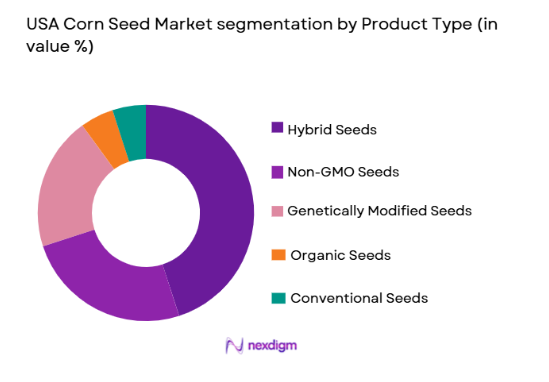
USA Corn Seed market is segmented by product type into Hybrid Seeds, Non-GMO Seeds, Genetically Modified Seeds, Organic Seeds, and Conventional Seeds. Recently, hybrid seeds have a dominant market share due to factors such as their ability to deliver higher yields, increased disease resistance, and better adaptability to varying climates. Hybrid seeds also benefit from widespread adoption by farmers, as they promise improved crop productivity, making them a preferred choice over non-GMO and conventional alternatives.
By Platform Type:
The USA Corn Seed market is segmented by platform type into Field Crops, Greenhouse Crops, Hydroponics, Vertical Farming, and Agroforestry. Field crops dominate the market share due to the large-scale, traditional methods of cultivation that are most suitable for corn production. With the vast expanse of arable land dedicated to field farming in states like Iowa and Nebraska, field crops continue to drive the growth of corn seed demand, while other segments like vertical farming remain niche.

Competitive Landscape
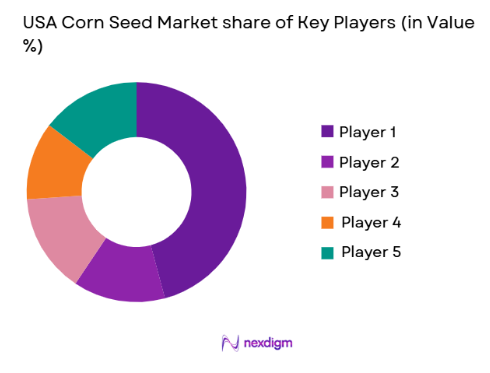
The competitive landscape of the USA Corn Seed market is characterized by strong competition from major seed manufacturers, which dominate the industry through constant innovation and R&D efforts. Market consolidation is occurring, with larger players acquiring smaller, specialized firms to expand their portfolio and reach. This trend is further facilitated by technological advancements in seed genetics, ensuring a continued push for efficiency and increased yields.
| Company Name | Establishment Year | Headquarters | Technology Focus | Market Reach | Key Products | Revenue | Additional Parameter |
| Bayer CropScience | 1863 | Leverkusen, Germany | ~ | ~ | ~ | ~ | ~ |
| Syngenta | 2000 | Basel, Switzerland | ~ | ~ | ~ | ~ | ~ |
| Corteva Agriscience | 2019 | Wilmington, USA | ~ | ~ | ~ | ~ | ~ |
| Dow AgroSciences | 1895 | Indianapolis, USA | ~ | ~ | ~ | ~ | ~ |
| Monsanto | 1901 | St. Louis, USA | ~ | ~ | ~ | ~ | ~ |
USA Corn Seed Market Analysis
Growth Drivers
Government Support and Subsidies:
Government programs and subsidies have significantly contributed to the growth of the USA Corn Seed market. These initiatives help offset the costs associated with high-quality seed procurement, fostering the adoption of advanced hybrid and genetically modified seeds. With the federal government focusing on improving food security and supporting the agricultural sector, these programs promote higher yields, which in turn increases the demand for seeds. Furthermore, subsidies for research and development in seed genetics encourage innovation, making it more feasible for farmers to invest in new, high-yield varieties. The stability provided by such government backing has created an environment in which the corn seed market can continue to thrive despite external challenges like market volatility or adverse weather conditions.
Technological Advancements in Seed Genetics:
Technological advancements in seed genetics have significantly driven growth in the USA Corn Seed market. Innovations such as genetic modification and hybrid seed development have allowed for crops that are not only more resilient to disease and environmental stress but also produce higher yields. As research into these technologies progresses, the quality and performance of corn seeds are continuously improving. These innovations have made genetically modified and hybrid seeds the preferred choice for most large-scale corn producers. They help increase productivity, reduce the need for chemical treatments, and ensure higher profitability for farmers. This technological leap, paired with growing demand for food production, has been crucial in driving the expansion of the corn seed market.
Market Challenges
Climate Change and Weather Dependency:
One of the significant challenges affecting the USA Corn Seed market is the dependency on favorable weather conditions for corn cultivation. Unpredictable weather patterns due to climate change, such as extended droughts, floods, and temperature fluctuations, threaten crop yields and disrupt farming cycles. Even with advanced seed varieties, adverse weather conditions can significantly impact production. These challenges lead to higher risks for farmers, reduced profitability, and an unstable market environment. The seed market must address these external factors by developing more resilient seed varieties capable of withstanding harsher climate conditions. However, the process of creating such seeds requires substantial research and investment, which can be difficult for many players to bear.
Regulatory Compliance and Genetic Modification Concerns:
Another challenge for the USA Corn Seed market is the complex regulatory landscape surrounding genetically modified organisms (GMOs). Farmers and seed companies must comply with stringent regulations, which vary by state and country. Additionally, the public’s growing concern over the use of GMOs in food production has led to debates over labeling and consumer choice. These issues create uncertainty within the market, as potential changes in regulations or public sentiment could affect demand for GM seeds. The challenge lies in balancing innovation with regulatory approval processes and public perception, all while continuing to meet the rising demand for food security and sustainability.
Opportunities
Expansion of Organic Farming Practices:
The growing trend toward organic farming presents a significant opportunity for the USA Corn Seed market. As consumers demand more organic products, corn producers are increasingly turning to organic seeds to meet market demand. Organic farming practices not only help cater to consumer preferences but also support sustainable agricultural practices. Organic seeds are gaining popularity among smaller farmers who prioritize environmentally friendly farming methods. While organic corn production remains a smaller segment of the overall market, its steady growth offers a lucrative opportunity for companies involved in the seed market to diversify their offerings and capture a share of this growing niche.
Rising Demand for Drought-Resistant Corn Varieties:
Another opportunity for the USA Corn Seed market is the growing demand for drought-resistant corn varieties. With climate change leading to unpredictable weather patterns, especially in regions prone to drought, farmers are increasingly looking for seed varieties that can withstand periods of water scarcity. Drought-resistant corn varieties offer higher yields even under stressful environmental conditions, which is a significant advantage for farmers facing water shortages. Companies focusing on developing these types of seeds stand to gain a competitive advantage, as these varieties can ensure greater food security and stable yields, particularly in regions where water availability is a concern.
Future Outlook
Over the next five years, the USA Corn Seed market is expected to experience steady growth driven by advances in genetic technologies, increased demand for sustainable agricultural practices, and government support for the farming sector. Technological innovations will continue to focus on developing high-yield and climate-resilient seed varieties. Furthermore, growing environmental concerns will prompt farmers to seek out seeds that are more sustainable and capable of thriving in increasingly unpredictable climates. Regulatory support for GMOs and hybrid seeds will remain essential to market growth, while the demand for organic and non-GMO varieties will provide new opportunities in the segment.
Major Players
- Bayer CropScience
- Syngenta
- Corteva Agriscience
- Dow AgroSciences
- Monsanto
- BASF
- Limagrain
- Land O’ Lakes
- FMC Corporation
- AG Leader Technology
- Seed Consultants
- DuPont Pioneer
- KWS Saat
- DLF Seeds
- Advanta Seeds
Key Target Audience
- Investments and venture capitalist firms
- Government and regulatory bodies
- Agricultural producers and farm cooperatives
- Seed distributors and retailers
- Large-scale commercial farmers
- Agricultural equipment manufacturers
- Technology firms involved in agriculture
- Environmental sustainability organizations
Research Methodology
Step 1: Identification of Key Variables
The first step in our research methodology involves identifying key variables that drive the USA Corn Seed market, including government policies, technological advancements, and consumer demand.
Step 2: Market Analysis and Construction
Our research team conducts a thorough analysis of market trends, historical data, and economic indicators to build a comprehensive understanding of the corn seed market’s structure and dynamics.
Step 3: Hypothesis Validation and Expert Consultation
Expert opinions from agronomists, farmers, and industry leaders are consulted to validate our findings and hypotheses, ensuring the research reflects real-world conditions.
Step 4: Research Synthesis and Final Output
The final step involves synthesizing data from various sources, including surveys, expert interviews, and market reports, to generate a comprehensive report detailing the USA Corn Seed market.

- Executive Summary
- Research Methodology(Definitions, Scope, Industry Assumptions, Market Sizing Approach, Primary & Secondary Research Framework, Data Collection & Verification Protocol, Analytic Models & Forecast Methodology, Limitations & Research Validity Checks)

- Market Definition and Scope
- Value Chain & Stakeholder Ecosystem
- Regulatory / Certification Landscape
- Sector Dynamics Affecting Demand
- Strategic Initiatives & Infrastructure Growth

- Growth Drivers
Rising Demand for High-Yield Varieties
Government Subsidies for Corn Production
Technological Advancements in Seed Genetics
Increase in Food Production Needs
Sustainability Initiatives in Agriculture - Market Challenges
High Dependency on Weather Conditions
Rising Cost of Production
Regulatory Compliance Issues
Market Saturation in Traditional Corn Growing Regions
Competition from Non-GMO and Organic Alternatives - Market Opportunities
Growth in Emerging Markets for Corn
Technological Innovations in Seed Treatment
Increasing Consumer Demand for Sustainable Practices - Trends
Rise in Precision Agriculture for Corn Production
Increased Focus on Drought-Resistant Corn Varieties
Use of AI in Agricultural Monitoring Systems
Growing Adoption of Organic Farming Methods
Expansion of Vertical Farming for Corn Cultivation - Government Regulations & Defense Policy
Seed Certification Standards
Agricultural Subsidies and Grants
Export/Import Regulations for GMOs - SWOT Analysis
- Stakeholder and Ecosystem Analysis
- Porter’s Five Forces Analysis
- Competition Intensity and Ecosystem Mapping

- By Market Value, 2020-2025
- By Installed Units, 2020-2025
- By Average System Price, 2020-2025
- By System Complexity Tier, 2020-2025

- By System Type (In Value%)
Hybrid Seeds
Non-GMO Seeds
Genetically Modified Seeds
Organic Seeds
Conventional Seeds - By Platform Type (In Value%)
Field Crops
Greenhouse Crops
Hydroponics
Vertical Farming
Agroforestry - By Fitment Type (In Value%)
On-farm Seeds
Retail Seeds
Wholesale Seeds
Certified Seeds
Uncertified Seeds - By EndUser Segment (In Value%)
Commercial Farmers
Private Farms
Government Programs
Agricultural Cooperatives
Seed Distributors - By Procurement Channel (In Value%)
Direct Procurement
Retail Chains
Online Marketplaces
Third-party Distributors
Agricultural Fairs & Events - By Material / Technology (in Value%)
Biotechnology
Seed Treatment
Conventional Farming Technology
Precision Agriculture
Sustainable Agriculture

- Market structure and competitive positioning
- Market share snapshot of major players
- CrossComparison Parameters (System Type, Platform Type, Procurement Channel, EndUser Segment, Fitment Type, Material / Technology, Average System Price, Regional Distribution, Growth Potential, and Market Demand)
- SWOT Analysis of Key Players
- Pricing & Procurement Analysis
- Key Players
BASF
Syngenta
Monsanto
DuPont Pioneer
Dow AgroSciences
Corteva Agriscience
Bayer CropScience
John Deere
AG Leader Technology
BASF Digital Farming
Seed Consultants
Land O’ Lakes
FMC Corporation
AgReliant Genetics
Limagrain

- Commercial Farmers’ Adoption of Advanced Seed Technologies
- Government Initiatives Supporting Local Farmers
- Rise of Agricultural Cooperatives for Bulk Seed Procurement
- Private Farms’ Shift Towards Organic and Sustainable Practices

- Forecast Market Value, 2026-2035
- Forecast Installed Units, 2026-2035
- Price Forecast by System Tier, 2026-2035
- Future Demand by Platform, 2026-2035


 Request a Sample
 Ask for Customization
 Get a Quote
 Enquire Now