
 Download PDF
Market Overview
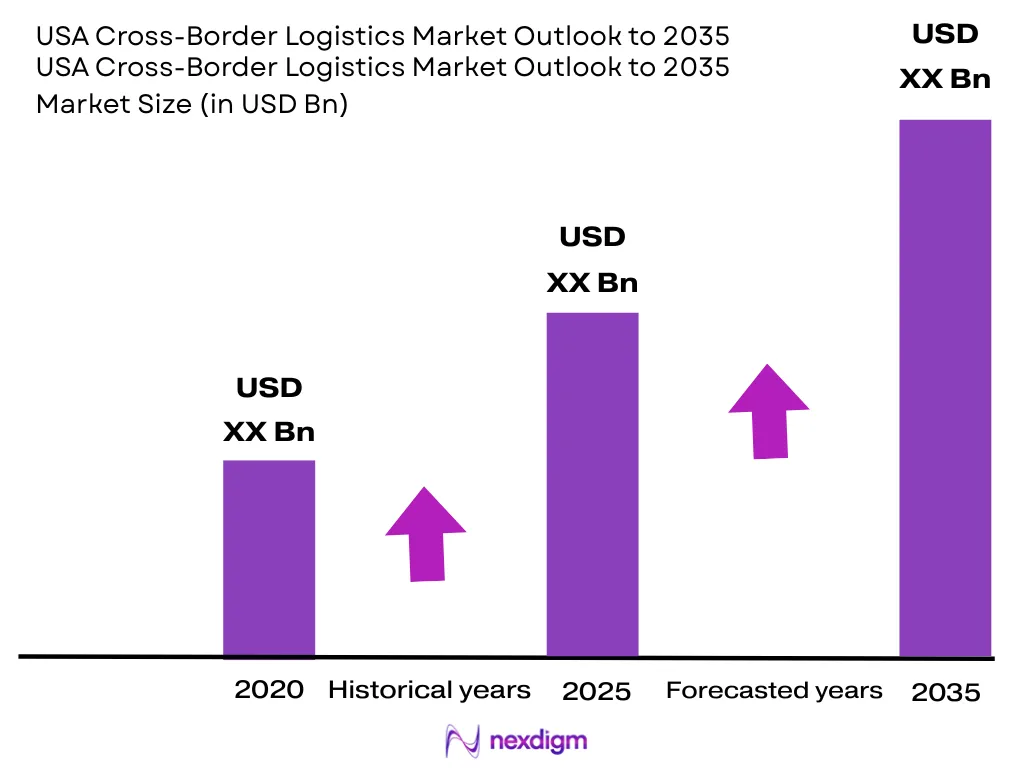
The USA Cross-Border Logistics Market was valued at USD ~ Billion in 2024 and is projected to grow at a ~% CAGR during 2026–2035. The market is driven by increasing merchandise trade with Canada and Mexico, expansion of cross-border e-commerce, nearshoring of manufacturing operations, and modernization of customs procedures. The United States recorded USD 3.29 trillion in total goods trade during 2024, while trade with Canada and Mexico remained the largest contributor to cross-border freight movement. Continued investments in border infrastructure, warehouse capacity, and transportation technology are further strengthening demand for integrated cross-border logistics services.
Market Segmentation
By Mode of Transportation
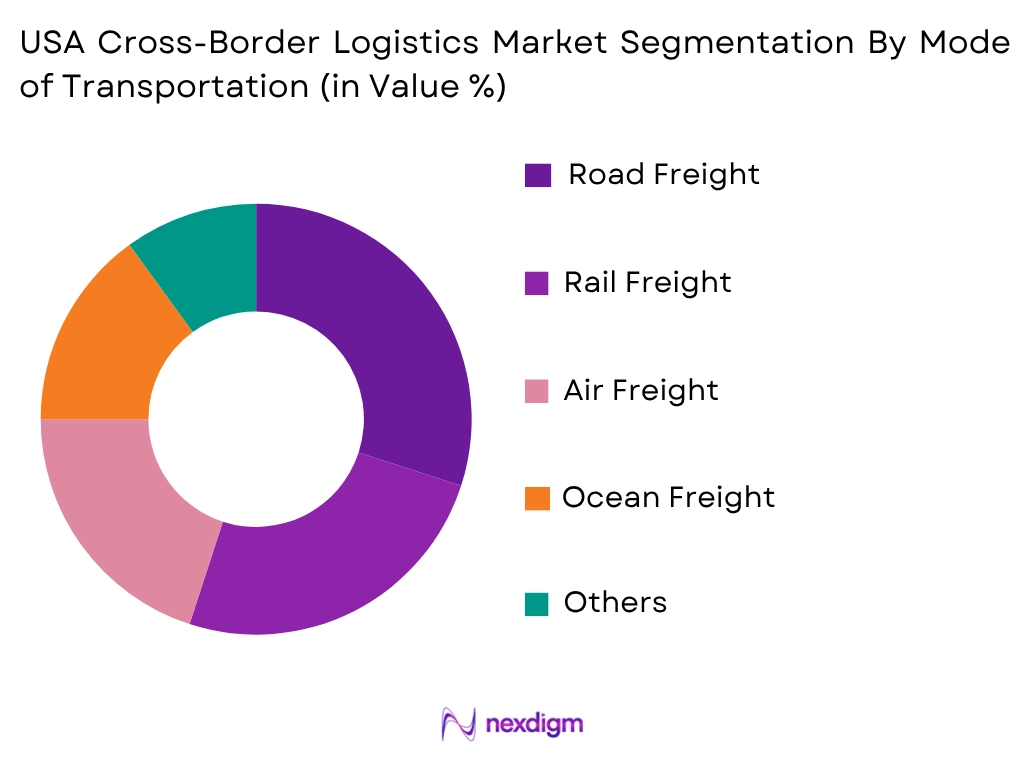
The USA Cross-Border Logistics Market is segmented by mode of transportation into Road Freight, Rail Freight, Air Freight, Ocean Freight, and Multimodal Transportation. Road freight continues to dominate the market because it offers the highest flexibility, shorter transit times, and extensive connectivity across the USA–Mexico and USA–Canada borders. Trucking remains the preferred transportation mode for automotive components, consumer goods, food products, retail shipments, pharmaceuticals, and industrial equipment requiring frequent deliveries. The extensive interstate highway network, integrated customs processing, and widespread availability of full truckload (FTL) and less-than-truckload (LTL) services enable efficient freight movement across North America. Continuous investments in fleet modernization, trailer tracking, electronic documentation, and border-crossing technology have further improved operational efficiency. While rail freight provides cost advantages for bulk commodities and ocean freight supports international imports, road transportation remains the dominant logistics solution because of its speed, flexibility, and ability to support just-in-time manufacturing and cross-border e-commerce operations.
By End-Use Industry
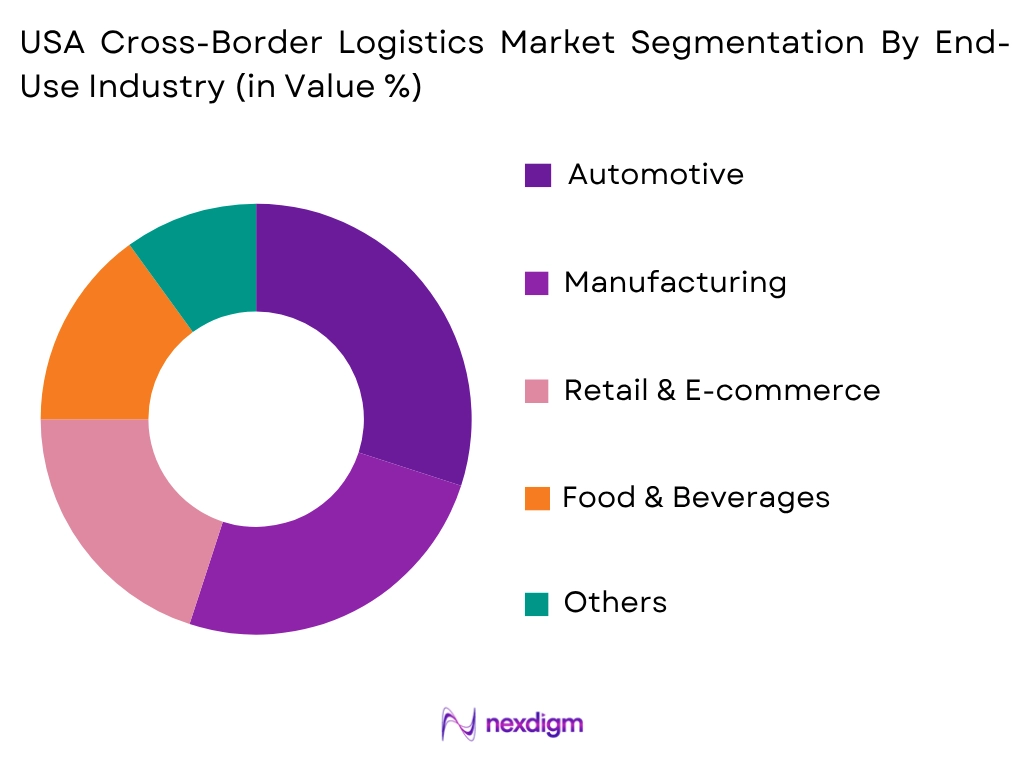
The USA Cross-Border Logistics Market is segmented by end-use industry into Automotive, Manufacturing, Retail & E-commerce, Food & Beverages, Pharmaceuticals & Healthcare, Consumer Electronics, Chemicals, and Agriculture & Agribusiness. The automotive sector represents the largest market segment because of the highly integrated North American manufacturing supply chain under the USMCA framework. Vehicle manufacturers and Tier-1 suppliers transport engines, transmissions, electronic systems, body components, and finished vehicles across the USA, Canada, and Mexico multiple times during production. Just-in-time manufacturing practices require dependable cross-border transportation with minimal customs delays and consistent delivery schedules. Automotive logistics providers have established dedicated trucking fleets, customs brokerage capabilities, warehousing facilities, and cross-docking operations near border crossings to support continuous production. Although retail and manufacturing continue expanding rapidly, automotive logistics remains the largest end-use sector due to the high frequency of shipments, complex supplier networks, and integrated regional manufacturing ecosystem.
Competitive Landscape
The USA Cross-Border Logistics Market is highly competitive, with global logistics providers, freight forwarders, trucking companies, customs brokers, and integrated supply chain service providers competing across the North American trade network. Market leaders differentiate themselves through extensive border infrastructure, customs brokerage expertise, digital shipment visibility, multimodal transportation capabilities, and strategically located warehousing facilities near major border crossings. Continued investments in automation, AI-powered transportation management systems, and real-time freight visibility are intensifying competition throughout the market.
| Company | Established | Headquarters | Primary Service | Cross-Border Network | Customs Brokerage | Digital Visibility Platform | Sustainability capability | Certifications & Complainces |
| UPS Supply Chain Solutions | 1907 | ~ | ~ | ~ | ~ | ~ | ~ | ~ |
| FedEx Logistics | 1971 | ~ | ~ | ~ | ~ | ~ | ~ | ~ |
| DHL Supply Chain | 1969 | ~ | ~ | ~ | ~ | ~ | ~ | ~ |
| C.H. Robinson | 1905 | ~ | ~ | ~ | ~ | ~ | ~ | ~ |
| Expeditors International | 1979 | ~ | ~ | ~ | ~ | ~ | ~ | ~ |
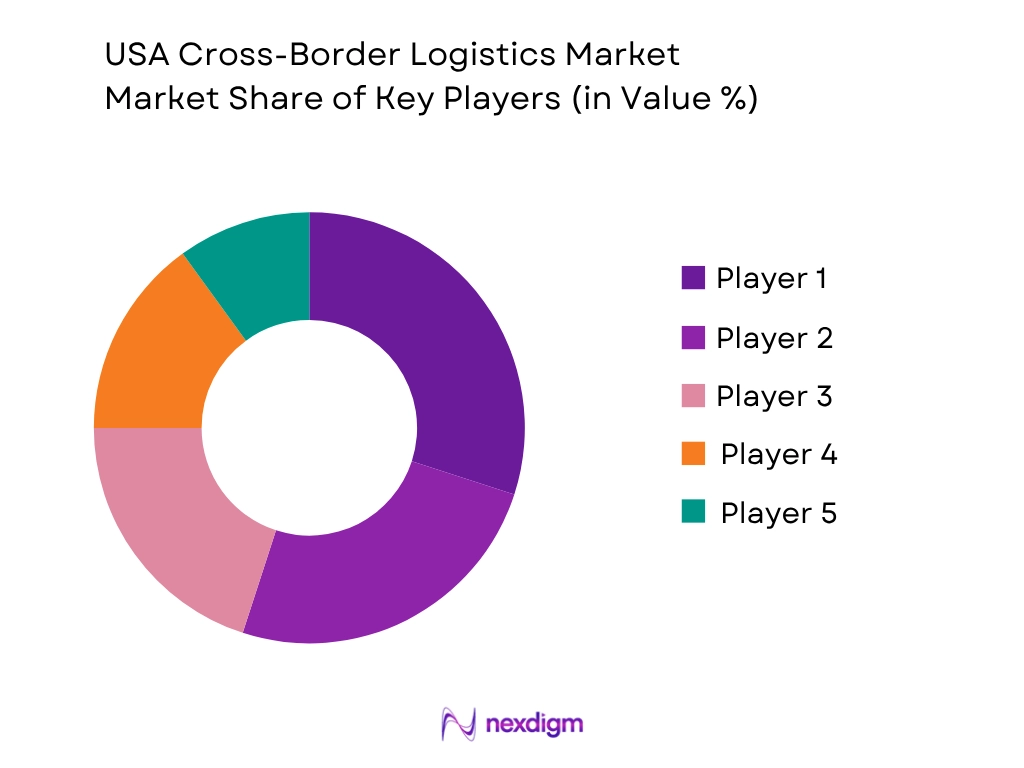
USA Cross-Border Logistics Market Analysis
Growth Drivers
Expansion of USMCA Trade and North American Supply Chain Integration
The continued expansion of trade under the United States-Mexico-Canada Agreement (USMCA) remains one of the strongest drivers of the USA Cross-Border Logistics Market. Total U.S. goods trade reached approximately USD 5.38 trillion in 2024, while Canada accounted for USD 762.1 billion in bilateral goods trade and Mexico accounted for USD 839.9 billion, making them the United States’ two largest trading partners. Combined, these two neighboring countries represented more than USD 1.60 trillion in merchandise trade requiring continuous cross-border freight movement through road, rail, air, and multimodal logistics networks. Land border freight between the United States, Canada, and Mexico continued to account for the majority of North American freight movements, with trucks remaining the dominant transport mode. The U.S. economy produced USD 29.18 trillion in nominal GDP during 2024, reflecting sustained industrial and consumer demand supporting cross-border logistics activities. Automotive, machinery, electronics, agriculture, and consumer goods manufacturers increasingly depend on synchronized North American production networks requiring multiple border crossings before final product assembly. The growth of regionalized manufacturing has increased demand for customs brokerage, bonded transportation, warehousing, freight forwarding, and integrated transportation management systems capable of minimizing border delays while ensuring regulatory compliance.
Growth of Nearshoring and Cross-Border E-commerce
Nearshoring investments and expanding cross-border e-commerce have significantly strengthened demand for cross-border logistics services throughout the United States. Companies continue relocating manufacturing operations from Asia to Mexico to shorten delivery timelines and improve supply chain resilience while maintaining access to the U.S. consumer market. Total U.S. retail e-commerce sales exceeded USD 1.19 trillion in 2024, increasing demand for international parcel delivery, customs processing, fulfillment centers, and last-mile logistics. The United States maintained a population of approximately 340 million people during 2024, creating one of the world’s largest consumer markets for imported retail goods. Meanwhile, Mexico’s GDP exceeded USD 1.99 trillion, supporting continued manufacturing expansion for export-oriented industries supplying U.S. markets. Large retailers increasingly establish fulfillment facilities near border regions such as Texas, Arizona, and California to reduce transit times for imported consumer goods. Logistics providers have consequently expanded customs brokerage capabilities, cross-border warehousing, digital freight platforms, and multimodal transportation services to accommodate higher shipment frequencies. These structural shifts continue increasing freight volumes moving across the U.S.-Mexico border and reinforce long-term demand for sophisticated cross-border logistics infrastructure.
Market Challenges
Border Congestion and Infrastructure Bottlenecks
Border congestion remains one of the most significant operational challenges affecting the USA Cross-Border Logistics Market. Major border crossings including Laredo, Detroit, El Paso, Otay Mesa, and Buffalo experience heavy freight traffic due to growing trade between the United States, Canada, and Mexico. Trucks transport the majority of North American cross-border merchandise, placing considerable pressure on highways, inspection facilities, customs checkpoints, and freight terminals. Combined goods trade with Canada and Mexico totaled approximately USD 1.60 trillion in 2024, illustrating the enormous volume of freight requiring customs processing each day. The National Highway System comprises more than 160,000 miles supporting domestic and international freight transportation. Increasing freight demand frequently exceeds available border processing capacity, creating delays that disrupt just-in-time manufacturing and inventory management for automotive, electronics, retail, and industrial supply chains. Logistics providers must therefore maintain additional warehouse capacity, contingency transportation routes, and advanced scheduling systems to minimize disruptions caused by congestion. Continued infrastructure modernization remains essential for improving freight efficiency across North America’s busiest trade corridors.
Complex Customs Compliance and Regulatory Requirements
Cross-border logistics operators must navigate highly complex customs procedures, documentation requirements, and regulatory compliance obligations that increase operational complexity. Every shipment crossing U.S. borders must comply with customs declarations, security regulations, product-specific import requirements, and multiple government agency inspections depending on commodity classification. More than 4 million import entries are processed annually across U.S. border checkpoints, airports, and seaports, reflecting the scale of customs administration supporting international trade. Merchandise imports totaled approximately USD 3.36 trillion in 2024, requiring extensive customs processing and documentation. Simultaneously, the U.S. economy generated more than USD 29 trillion in GDP, reflecting the scale of economic activity supported by international trade. Compliance requirements differ across industries including pharmaceuticals, agriculture, chemicals, electronics, and food products, requiring logistics providers to maintain specialized customs expertise and continuously update regulatory knowledge. Additional security initiatives such as trusted trader programs, cargo inspections, electronic filing systems, and supply chain security standards further increase documentation requirements. These regulatory complexities create administrative burdens for logistics providers while emphasizing the importance of digital customs management and experienced customs brokerage services.
Market Opportunities
Digitalization of Customs and Intelligent Logistics Technologies
The rapid digital transformation of international freight operations presents substantial opportunities for the USA Cross-Border Logistics Market. Government agencies continue expanding electronic customs processing while logistics providers increasingly invest in artificial intelligence, Internet of Things (IoT), cloud-based transportation management systems, predictive analytics, and blockchain-enabled trade documentation. The Automated Commercial Environment (ACE) remains the primary electronic platform supporting import and export processing across the United States, enabling millions of electronic filings annually. Approximately 850,000 registered interstate motor carriers operate throughout North America, creating significant demand for digital fleet management and shipment visibility solutions. The U.S. economy generated more than USD 29 trillion in GDP during 2024, supporting continued investment in logistics technology infrastructure. Companies increasingly adopt real-time shipment tracking, automated customs documentation, digital freight marketplaces, and predictive route optimization to reduce transit times and improve supply chain reliability. These technological developments enable logistics providers to improve operational efficiency while supporting the growing complexity of cross-border trade throughout North America.
Expansion of Cross-Border Warehousing and Near-Border Distribution Infrastructure
Growing trade volumes and nearshoring activities continue driving investments in cross-border warehousing, fulfillment centers, and distribution infrastructure throughout the United States. Logistics operators increasingly establish facilities near major border gateways including Laredo, El Paso, McAllen, Nogales, Detroit, and Buffalo to reduce customs clearance times and improve inventory management. Combined goods trade with Canada and Mexico exceeded USD 1.60 trillion in 2024, demonstrating sustained demand for strategically located logistics infrastructure. Industrial construction activity continued expanding during 2024, supporting manufacturing and logistics operations, while Mexico’s economy exceeded USD 1.99 trillion, reinforcing continued manufacturing investment near the U.S. border. Modern cross-border distribution centers increasingly integrate bonded warehousing, customs brokerage offices, cold-chain facilities, automated sorting systems, and multimodal transportation links within single logistics campuses. These integrated facilities reduce shipment dwell times, improve inventory visibility, and support rapid cross-border fulfillment for automotive, retail, pharmaceutical, food, and consumer goods manufacturers. Continued industrial investment along North American trade corridors therefore creates significant opportunities for logistics companies specializing in cross-border transportation and warehousing solutions.
Future Outlook
The USA Cross-Border Logistics Market is expected to demonstrate sustained expansion over the coming years as North American manufacturing supply chains become increasingly integrated and cross-border trade volumes continue growing. Nearshoring investments in Mexico, increasing cross-border e-commerce activity, expansion of regional fulfillment centers, and greater adoption of digital customs processing are expected to strengthen freight demand. Logistics providers are also investing heavily in automation, predictive analytics, fleet electrification, AI-enabled transportation management systems, and smart border technologies to improve efficiency and reduce shipment transit times. These developments are expected to create long-term growth opportunities for logistics companies serving North American trade corridors.
Major Players
- UPS Supply Chain Solutions
- FedEx Logistics
- DHL Supply Chain
- C.H. Robinson
- Expeditors International
- Kuehne + Nagel
- DSV A/S
- GXO Logistics
- XPO Logistics
- Ryder System Inc.
- J.B. Hunt Transport Services
- Schneider National
- Maersk Logistics
- GEODIS
- DB Schenker
Key Target Audience
- Automotive Manufacturers
- Manufacturing Companies
- Retail & E-commerce Companies
- Pharmaceutical & Healthcare Companies
- Importers and Exporters
- Investment and Venture Capitalist Firms
- Government and Regulatory Bodies (U.S. Customs and Border Protection (CBP), Federal Motor Carrier Safety Administration (FMCSA), U.S. Department of Transportation (DOT), U.S. Department of Commerce)
- Third-Party Logistics (3PL) and Freight Forwarding Companies
Research Methodology
Step 1: Identification of Key Variables
The initial phase involves constructing a comprehensive ecosystem map covering shippers, importers, exporters, freight forwarders, trucking companies, customs brokers, warehousing operators, border agencies, and technology providers operating within the USA Cross-Border Logistics Market. Extensive desk research utilizing government trade databases, customs statistics, transportation reports, company filings, and proprietary logistics databases is conducted to identify the primary variables influencing market demand and operational performance.
Step 2: Market Analysis and Construction
Historical market information is collected through detailed analysis of freight volumes, trade corridors, customs activity, transportation modes, warehousing capacity, and cross-border shipment patterns. Bottom-up market estimation is combined with top-down validation using trade statistics and macroeconomic indicators to ensure accurate assessment of market size, service utilization, and revenue generation across different logistics segments.
Step 3: Hypothesis Validation and Expert Consultation
Market hypotheses are validated through computer-assisted telephone interviews (CATIs) and consultations with logistics service providers, customs brokers, freight forwarders, trucking companies, warehouse operators, importers, exporters, and supply chain professionals. These discussions provide operational insights regarding border operations, transportation capacity, digital logistics adoption, customs compliance, and emerging market trends, enabling refinement of the market analysis.
Step 4: Research Synthesis and Final Output
The final stage integrates quantitative market estimates with qualitative findings obtained from industry stakeholders throughout the logistics ecosystem. Market forecasts incorporate trade policy developments, infrastructure investments, nearshoring trends, customs modernization initiatives, technological advancements, and changing customer requirements. Multiple validation stages are performed to ensure the final report provides comprehensive, reliable, and actionable insights into the USA Cross-Border Logistics Market.

- Executive Summary
- Research Methodology (Market Definitions and Assumptions, Abbreviations, Market Sizing Approach, Top-Down Analysis, Bottom-Up Analysis, Demand-Side Assessment, Supply-Side Assessment, Primary Industry Interviews, Trade Flow Assessment, Freight Intelligence Analysis, Data Triangulation, Forecasting Framework, Limitations and Future Conclusions)

- Definition and Scope
- Market Evolution and Industry Genesis
- Timeline of Major Industry Developments
- Cross-Border Trade Value Chain Analysis
- Cross-Border Logistics Supply Chain Analysis (Shippers, Freight Forwarders, Customs Brokers, Carriers, Warehousing, Border Inspection Agencies, Last-Mile Operators, Technology Providers)
- Trade Corridor Ecosystem Analysis

- Growth Drivers (Expansion of USMCA Trade, Growth in Nearshoring, Rising Cross-Border E-commerce, Increasing Automotive Trade, Manufacturing Supply Chain Diversification, Digital Customs Modernization)
- Market Challenges (Border Congestion, Customs Compliance Complexity, Driver Shortages, Trade Policy Uncertainty, Infrastructure Bottlenecks, Cargo Security Risks)
- Market Opportunities (AI-Driven Logistics Platforms, Nearshoring to Mexico, Cross-Border Cold Chain Expansion, Growth in Fulfillment Centers, Customs Automation, Electric Commercial Vehicle Adoption)
- Market Trends (Digital Freight Marketplaces, Real-Time Shipment Visibility, IoT-Enabled Fleet Management, Cross-Border Warehouse Expansion, Sustainable Transportation, Blockchain-Based Trade Documentation)
- Government Regulations (USMCA Trade Framework, U.S. Customs and Border Protection Regulations, CTPAT Requirements, FDA Import Regulations, DOT Transportation Regulations, ACE Electronic Filing System, FMCSA Cross-Border Trucking Rules)
- Trade Flow Analysis
- Freight Capacity Assessment
- Border Crossing Performance Analysis
- Customs Processing Time Analysis
- Supply-Demand Gap Assessment
- SWOT Analysis
- Porter’s Five Forces Analysis
- PESTLE Analysis
- Stakeholder Ecosystem
- Competition Ecosystem

- By Market Value (2020-2025)
- By Freight Volume (2020-2025)
- By Average Logistics Cost per Shipment (2020-2025)

- By Mode of Transportation (In Value %)
Road Freight
Rail Freight
Air Freight
Ocean Freight
Multimodal Transportation - By Border Trade Corridor (In Value %)
USA–Mexico
USA–Canada
USA–Latin America
USA–Europe
USA–Asia-Pacific - By Service Type (In Value %)
Freight Forwarding
Customs Brokerage
Transportation Management
Cross-Border Warehousing
Express Parcel & Courier
Third-Party Logistics (3PL)
Fourth-Party Logistics (4PL)
Reverse Logistics - By End-Use Industry (In Value %)
Automotive
Manufacturing
Retail & E-commerce
Food & Beverages
Pharmaceuticals & Healthcare
Consumer Electronics
Chemicals
Agriculture & Agribusiness - By Region (In Value %)
Southwest Border States
Northern Border States
West Coast
Midwest
Southeast
Northeast

- Market Share of Major Players (By Revenue, Freight Volume, Transportation Mode, Border Corridor)
- Cross Comparison Parameters (Cross-Border Network Coverage, Customs Brokerage Capability, Fleet Size, Warehousing Footprint, Border Crossing Presence, Digital Visibility Platform, Temperature-Controlled Logistics Capability, USMCA Trade Expertise)
- SWOT Analysis of Major Players
- Pricing Analysis (By Shipment Type, Transportation Mode and Trade Corridor)
- Fleet Capacity Benchmarking
- Border Infrastructure and Terminal Network Analysis
- Strategic Partnerships, Mergers & Acquisitions
- Detailed Profiles of Major Companies
UPS Supply Chain Solutions
FedEx Logistics
DHL Supply Chain
C.H. Robinson
Expeditors International
Kuehne + Nagel
DSV A/S
GXO Logistics
XPO Logistics
Ryder System Inc.
J.B. Hunt Transport Services
Schneider National
Maersk Logistics
GEODIS
DB Schenker

- Cross-Border Freight Demand Assessment
- Importer and Exporter Behavior Analysis
- Transportation Mode Preference Analysis
- Logistics Cost Allocation Analysis
- Customs Compliance Requirements

- By Market Value (2026-2035)
- By Freight Volume (2026-2035)
- By Average Logistics Cost per Shipment (2026-2035)


 Request a Sample
 Ask for Customization
 Get a Quote
 Enquire Now