

 Download PDF
 Download PDF
Market Overview
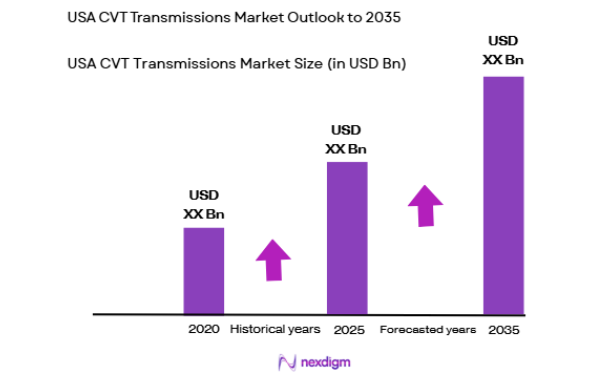
The USA CVT Transmissions Market is valued at approximately USD ~ billion, driven by the increasing demand for fuel-efficient and environmentally friendly automotive solutions. CVT (Continuously Variable Transmission) systems provide enhanced fuel efficiency and smoother driving experiences, which have become key selling points for consumers. The market is further supported by automakers’ focus on improving fuel economy and reducing emissions, as well as consumer preference for vehicles that offer a balance of performance and efficiency.
Dominant regions in the USA, such as Michigan, Ohio, and California, lead the CVT transmissions market due to the strong presence of automotive manufacturing hubs and R&D centers. Michigan, home to major manufacturers like General Motors and Ford, plays a central role in the adoption and development of transmission systems. Furthermore, California’s stringent emissions regulations and the growing demand for electric vehicles (EVs) also contribute to the market’s growth, as CVT systems are widely used in hybrids and electric vehicle models.
Market Segmentation
By Vehicle Type
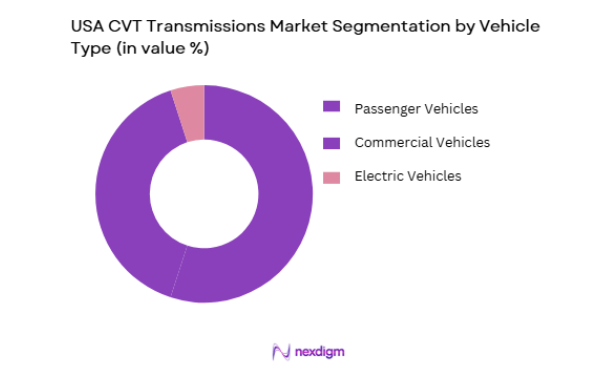
The USA CVT Transmissions Market is segmented by vehicle type into passenger vehicles, commercial vehicles, and electric vehicles. Passenger vehicles dominate the market, driven by the growing adoption of CVT systems for their fuel efficiency benefits and smooth performance. As fuel economy regulations tighten and consumer demand for better driving experiences increases, automakers have been incorporating CVT systems into a wide range of passenger vehicles, from compact cars to mid-sized sedans. The versatility of CVT systems, along with their ability to improve fuel efficiency without sacrificing power, has contributed significantly to their widespread use in this segment.
By Transmission Type
The USA CVT Transmissions Market is also segmented by transmission type into belt-driven CVT, chain-driven CVT, and others. The belt-driven CVT sub-segment holds a dominant market share, primarily due to its widespread use in small and medium-sized passenger vehicles. This type of CVT is widely adopted due to its simplicity, lower cost, and efficiency, making it ideal for compact and hybrid vehicles. Additionally, belt-driven CVTs are known for providing smooth acceleration and better fuel efficiency, which further drives their popularity among automakers looking to meet strict fuel economy standards.

Competitive Landscape
The USA CVT Transmissions Market is highly competitive, with a few major players dominating the production and development of transmission systems. Manufacturers are increasingly focusing on improving the efficiency and reliability of CVT systems to meet consumer expectations for fuel economy and performance. Consolidation is taking place as companies invest in R&D and form partnerships to enhance their product offerings and technological capabilities. The industry is also witnessing advancements in CVT technology, including the development of hybrid and electric vehicle-compatible transmissions.
| Company Name | Establishment Year | Headquarters | Technology Focus | Market Reach | Key Products | Revenue (USD) | Additional Parameter |
| Jatco Ltd | 1980 | Japan | ~ | ~ | ~ | ~ | ~ |
| Aisin Seiki Co. | 1949 | Japan | ~ | ~ | ~ | ~ | ~ |
| ZF Friedrichshafen | 1915 | Germany | ~ | ~ | ~ | ~ | ~ |
| BorgWarner | 1928 | Michigan, USA | ~ | ~ | ~ | ~ | ~ |
| Honda Motor Co. | 1948 | Japan | ~ | ~ | ~ | ~ | ~ |

USA CVT Transmissions Market Analysis
Growth Drivers
Increased Consumer Demand for Fuel Efficiency
The increased consumer demand for fuel-efficient vehicles is a major growth driver for the USA CVT Transmissions Market. With rising fuel costs and growing environmental awareness, consumers are increasingly seeking vehicles that offer better fuel economy without compromising on performance. CVT transmissions, known for their ability to adjust seamlessly to driving conditions and optimize engine performance, provide a solution to this demand. Automakers are increasingly adopting CVTs to meet the stringent fuel efficiency standards set by government regulations, particularly in the U.S. In addition, the popularity of hybrid and electric vehicles, which often use CVT systems, has further boosted the demand for these transmissions. As fuel economy remains a top priority for consumers, CVTs continue to gain traction as the preferred choice in modern vehicles.
Technological Advancements in CVT Systems
Technological advancements in CVT systems have significantly contributed to the growth of the USA CVT Transmissions Market. Manufacturers are continuously improving CVT designs to enhance their efficiency, reliability, and durability. Innovations such as the development of hybrid CVTs and the integration of electronic control systems have improved the performance and fuel efficiency of these transmissions. Additionally, advancements in materials and manufacturing techniques have made CVTs more cost-effective and lightweight, further driving their adoption. With ongoing research and development, CVT systems are becoming increasingly compatible with new engine types, including electric and hybrid engines. These advancements are expected to propel the growth of the market as automakers continue to seek ways to improve vehicle performance while meeting environmental and regulatory standards.
Market Challenges
High Production and Maintenance Costs
A key challenge in the USA CVT Transmissions Market is the high production and maintenance costs associated with CVT systems. While CVTs offer improved fuel efficiency and smoother driving experiences, they require advanced materials and specialized components, which increase manufacturing costs. Additionally, the complexity of CVT systems means that maintenance and repair can be expensive, particularly for consumers with older vehicles. As the market shifts toward more advanced CVT technologies, including hybrid and electric vehicle-compatible systems, the cost of production is likely to rise further, making it difficult for smaller automakers or startups to enter the market. This could limit the accessibility of CVT systems for budget-conscious consumers and slow down the adoption of these systems in certain market segments.
Limited Consumer Awareness of CVT Technology
Another challenge facing the USA CVT Transmissions Market is limited consumer awareness and understanding of CVT technology. While CVTs offer numerous benefits, including better fuel efficiency and smoother acceleration, many consumers remain unfamiliar with how CVT systems work or are hesitant to adopt them due to concerns about long-term durability and performance. Traditional automatic transmissions have been the dominant technology in vehicles for decades, and some consumers may prefer the familiarity and perceived reliability of these systems. To overcome this challenge, manufacturers must focus on educating consumers about the advantages of CVTs, particularly in terms of fuel efficiency, driving comfort, and environmental benefits. Overcoming this consumer knowledge gap is crucial for expanding the market for CVT-equipped vehicles.
Opportunities
Growth of Hybrid and Electric Vehicle Adoption
The increasing adoption of hybrid and electric vehicles (EVs) presents a significant opportunity for the USA CVT Transmissions Market. Hybrid vehicles, which often utilize CVT systems to maximize fuel efficiency, have gained significant traction among consumers who prioritize sustainability and fuel savings. Similarly, the rise in electric vehicle production and sales creates opportunities for CVT manufacturers to develop compatible transmission systems for electric drivetrains. As automakers focus on expanding their electric and hybrid vehicle offerings, the demand for CVTs that are compatible with these technologies will increase. This growth in alternative powertrains offers a valuable market opportunity for CVT manufacturers to diversify their product portfolios and capture a larger share of the eco-friendly vehicle market.
Increase in Demand for Compact and Fuel-Efficient Vehicles
The increasing demand for compact and fuel-efficient vehicles is another opportunity for the USA CVT Transmissions Market. As consumer preferences shift toward smaller, more efficient cars that offer better fuel economy, automakers are increasingly adopting CVTs in their compact vehicle lines. CVTs are ideal for small cars because they provide optimal power delivery and fuel savings, making them attractive to budget-conscious consumers. With rising fuel prices and growing environmental concerns, consumers are more likely to choose vehicles with CVTs, which offer improved fuel efficiency over traditional automatic transmissions. The demand for compact, fuel-efficient vehicles in urban and suburban markets presents a significant growth opportunity for CVT manufacturers as they focus on producing affordable, high-performance transmission systems for this segment.
Future Outlook
The future outlook for the USA CVT Transmissions Market is positive, with continued growth expected over the next five years. Advancements in CVT technology, the increasing demand for fuel-efficient vehicles, and the rise of hybrid and electric vehicles will drive demand for CVT systems. As automakers seek to meet fuel economy regulations and consumer preferences for sustainable vehicles, the adoption of CVTs is expected to expand. Additionally, improvements in manufacturing processes and materials will help reduce production and maintenance costs, making CVT systems more accessible to a broader range of consumers. These factors will ensure sustained growth and opportunities for innovation in the CVT transmissions market.
Major Players
- Jatco Ltd
- Aisin Seiki Co.
- ZF Friedrichshafen
- BorgWarner
- Honda Motor Co.
- Toyota Industries Corporation
- Delphi Automotive
- Magna International
- Getrag Transmission Systems
- Hyundai Motor Group
- Ford Motor Company
- Nissan Motor Co.
- General Motors
- Volkswagen Group
- Allison Transmission
Key Target Audience
- Investments and venture capitalist firms
- Government and regulatory bodies
- Automotive manufacturers
- Transmission system suppliers
- Electric vehicle manufacturers
- Automotive technology developers
- Research and development firms
- Fleet operators
Research Methodology
Step 1: Identification of Key Variables
Identification of key market variables influencing the USA CVT Transmissions Market, including technological trends, consumer preferences, and regulatory factors.
Step 2: Market Analysis and Construction
Detailed analysis of historical data and market trends to develop an accurate model for the market, identifying growth opportunities and challenges.
Step 3: Hypothesis Validation and Expert Consultation
Consulting with industry experts and stakeholders to validate assumptions and refine market predictions.
Step 4: Research Synthesis and Final Output
Synthesis of findings into a comprehensive, actionable report that provides insights into market trends, growth opportunities, and competitive dynamics.

- Executive Summary
- Research Methodology (Definitions, Scope, Industry Assumptions, Market Sizing Approach, Primary & Secondary Research Framework, Data Collection & Verification Protocol, Analytic Models & Forecast Methodology, Limitations & Research Validity Checks)

- Market Definition and Scope
- Value Chain & Stakeholder Ecosystem
- Regulatory / Certification Landscape
- Sector Dynamics Affecting Demand
- Strategic Initiatives & Infrastructure Growth

- Growth Drivers
Increasing Demand for Fuel-efficient Vehicles
Technological Advancements in Transmission Systems
Rising Adoption of Electric and Hybrid Vehicles - Market Challenges
High Production Costs
Complexity in Integration with Existing Vehicle Platforms
Regulatory and Environmental Challenges - Market Opportunities
Development of CVT for Electric and Hybrid Platforms
Growing Interest in Autonomous and Self-driving Vehicles
Innovation in Lightweight and Compact Transmission Systems - Trends
Shift Towards Electrification in Transmission Systems
Integration of Smart Transmission Control Systems
Increased Use of Lightweight Materials in Transmission Design - Government regulations
- SWOT analysis
- Porters 5 forces

- By Market Value, 2019-2025
- By Installed Units, 2019-2025
- By Average System Price, 2019-2025
- By System Complexity Tier, 2019-2025

- By System Type (In Value%)
Belt-Driven CVT
Chain-Driven CVT
Hydraulic CVT
Electric CVT
Magnetic CVT - By Platform Type (In Value%)
Passenger Vehicles
Commercial Vehicles
Motorcycles
Hybrid Vehicles
Electric Vehicles - By Fitment Type (In Value%)
OEM Systems
Aftermarket Systems
Retrofit Systems
Hybrid Fitments
Electric Fitments - By EndUser Segment (In Value%)
Automobile Manufacturers
Aftermarket Parts Suppliers
Fleet Operators
Vehicle OEMs
Government and Defense - By Procurement Channel (In Value%)
Direct Procurement
Third-Party Distribution
Online Retail

- Market Share Analysis
- Cross Comparison Parameters (System Type, Platform Type, Procurement Channel, End-user Segment, Fitment Type, Technological Advancements, Fuel Efficiency, Product Lifecycle, Manufacturing Cost, Regulatory Compliance, Market Share, Product Customization, Production Lead Time, Reliability)
- SWOT Analysis of Key Competitors
- Pricing & Procurement Analysis
- Key Players
Aisin Seiki
Jatco Ltd
Toyota Motor Corporation
Honda Motor Co.
ZF Friedrichshafen AG
Getrag Transmission GmbH
BorgWarner Inc.
Magna International
Hyundai Dymos
Delphi Technologies
Valeo S.A.
Eaton Corporation
Tremec
Schaeffler Group
Kongsberg Automotive

- Automobile Manufacturers Integrating CVTs in New Models
- Fleet Operators Seeking Cost-effective and Fuel-efficient Transmissions
- OEMs Focusing on Customization and Performance Optimization
- Government Implementing Policies for Clean Vehicle Technologies

- Forecast Market Value, 2026-2030
- Forecast Installed Units, 2026-2030
- Price Forecast by System Tier, 2026-2030
- Future Demand by Platform, 2026-2030


 Request a Sample
 Ask for Customization
 Get a Quote
 Enquire Now