
 Download PDF
Market Overview
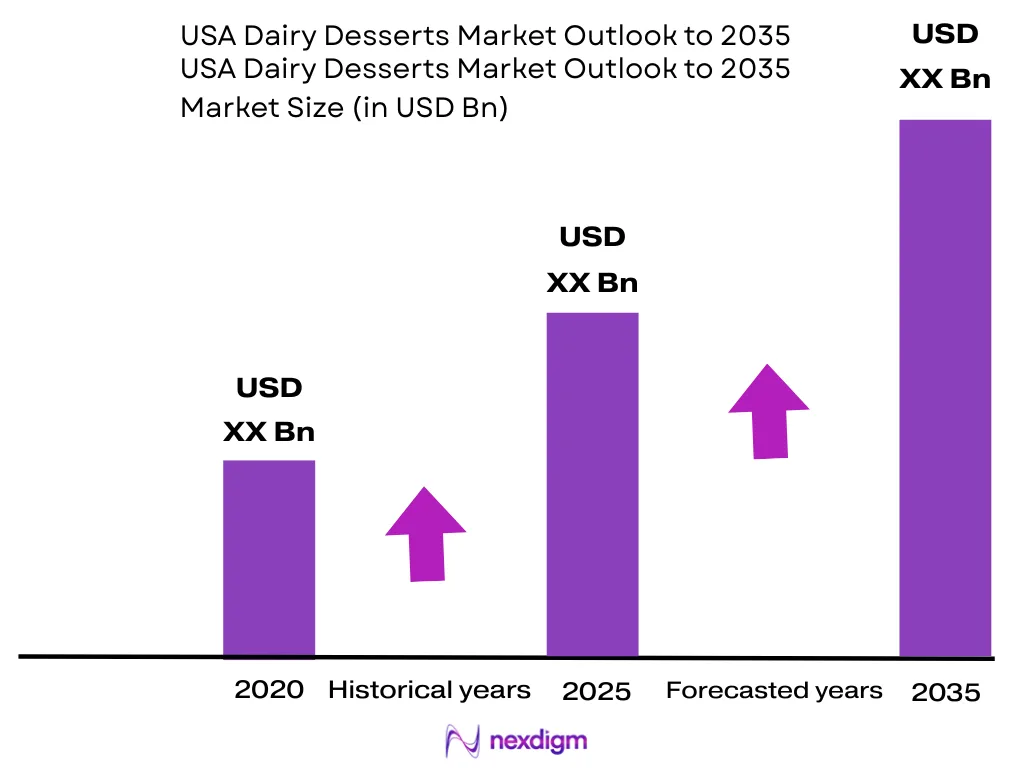
The USA Dairy Desserts Market was valued at approximately USD ~ billion in 2024, expanding from USD ~ billion in 2023, supported by increasing demand for premium ice cream, frozen yogurt, dairy-based puddings, cheesecakes, mousses, and indulgent refrigerated desserts. According to the United States Department of Agriculture (USDA), U.S. per capita dairy consumption exceeded 660 pounds milk-equivalent in 2024, while total milk production remained above 226 billion pounds, ensuring abundant raw material availability for dessert manufacturers. Growth is further driven by premiumization trends, increasing consumer spending on convenience desserts, expansion of private-label offerings, and continuous product innovation in high-protein, low-sugar, and functional dairy dessert categories.
Market Segmentation
By Product Type
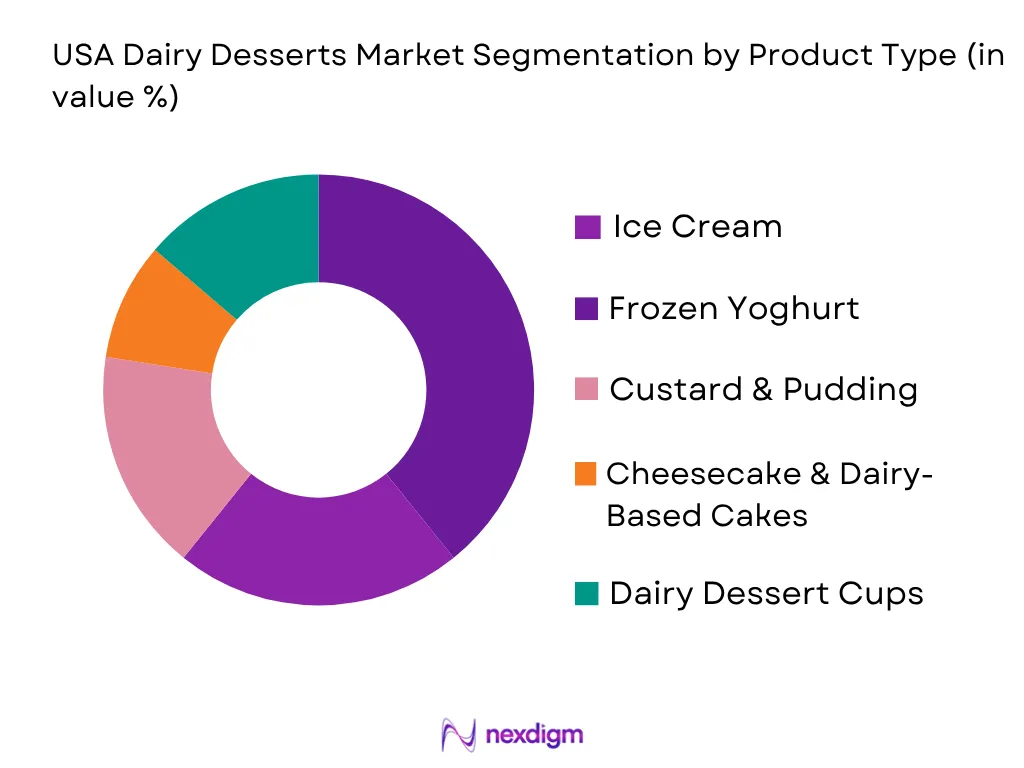
USA Dairy Desserts Market is segmented by product type into ice cream, frozen yogurt, custard and pudding, cheesecake and dairy-based cakes, mousse and cream desserts, gelato, and dairy dessert cups. Recently, ice cream has held the dominant market share under this segmentation due to its deep-rooted consumption culture, extensive flavor variety, and widespread retail availability. Major brands such as Ben & Jerry’s, Häagen-Dazs, Blue Bell, Breyers, and Talenti have built strong consumer loyalty through premium and indulgent offerings. Ice cream continues to benefit from impulse purchases, seasonal demand peaks, innovative flavor launches, and expanding premium product lines. The category also enjoys strong support from foodservice establishments, convenience stores, supermarkets, and online grocery platforms. Growth in family-pack formats and premium artisanal offerings further strengthens its leadership position within the overall dairy desserts landscape.
By Distribution Channel
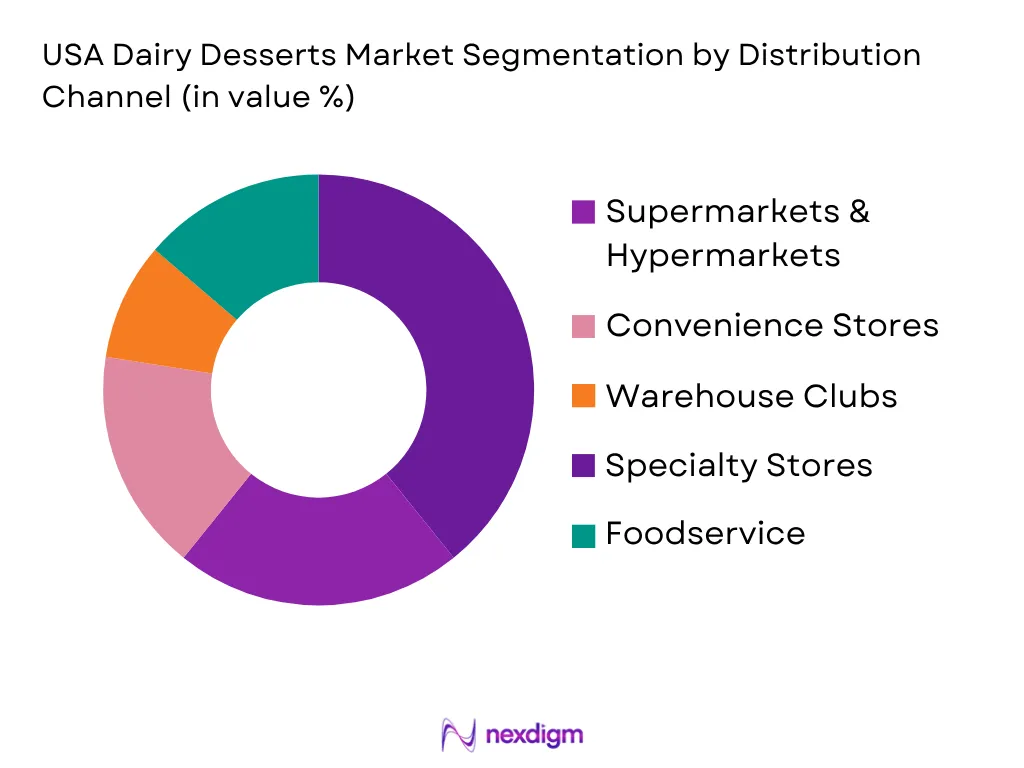
USA Dairy Desserts Market is segmented by distribution channel into supermarkets and hypermarkets, convenience stores, warehouse clubs, specialty stores, online retail, and foodservice. Recently, supermarkets and hypermarkets have maintained the largest market share due to their extensive freezer capacity, broad product assortment, promotional pricing strategies, and nationwide accessibility. Large retailers including Walmart, Kroger, Costco, Target, and Albertsons offer consumers access to premium, mainstream, and private-label dairy dessert products under one roof. These retail outlets facilitate impulse purchases through dedicated frozen dessert sections and frequent promotional campaigns. In addition, supermarkets remain the preferred purchasing destination for family-sized dairy desserts, multi-packs, and premium indulgent products. The strong presence of loyalty programs, omnichannel fulfillment, and private-label expansion further reinforces the dominance of this distribution channel.
Competitive Landscape
The USA Dairy Desserts Market is characterized by the presence of several established multinational and domestic manufacturers competing through product innovation, premiumization, flavor diversification, and retail partnerships. Market leadership is concentrated among companies with extensive cold-chain distribution capabilities, strong brand portfolios, and nationwide retail penetration. Premium brands, private-label manufacturers, and specialty dairy dessert producers collectively contribute to a highly competitive environment driven by consumer demand for indulgence, convenience, and healthier dessert alternatives.
| Company | Establishment Year | Headquarters | Key Brands | Product Portfolio | Distribution Reach | Premium Product Presence | Manufacturing Presence | Innovative Focus |
| Unilever | 1929 | ~ | ~ | ~ | ~ | ~ | ~ | ~ |
| General Mills | 1928 | ~ | ~ | ~ | ~ | ~ | ~ | ~ |
| Wells Enterprises | 1913 | ~ | ~ | ~ | ~ | ~ | ~ | ~ |
| Blue Bell Creameries | 1907 | ~ | ~ | ~ | ~ | ~ | ~ | ~ |
| Tilamook Creamery | 1909 | ~ | ~ | ~ | ~ | ~ | ~ | ~ |
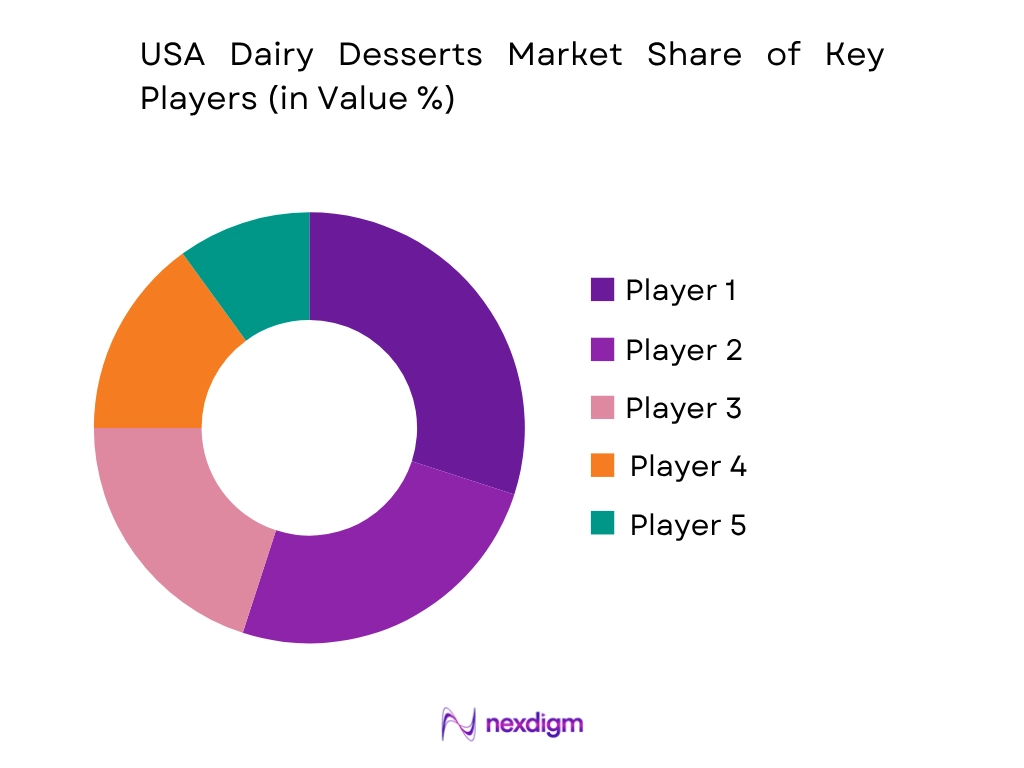
USA Dairy Desserts Market Analysis
Growth Drivers
Rising Premium and Indulgent Dessert Consumption
The growing consumer preference for premium and indulgent food experiences is a major driver for the USA Dairy Desserts Market. According to the USDA, total U.S. milk production reached approximately 226 billion pounds in 2024, supported by 9.3 million dairy cows, ensuring a stable supply of dairy ingredients used in ice cream, puddings, cheesecakes, mousses, and other dairy desserts. The U.S. economy generated over USD 29 trillion in GDP during 2024, while GDP per capita exceeded USD 86,000, reflecting strong consumer purchasing power for premium dessert categories. According to USDA Economic Research Service data, dairy consumption remains near record levels, with total dairy availability exceeding 660 pounds milk-equivalent per capita annually, demonstrating the continued importance of dairy products in American diets. Furthermore, USDA reported that U.S. ice cream production totaled approximately 1.3 billion gallons, highlighting the scale of frozen dairy dessert manufacturing. Premium flavors, artisanal products, high-protein dairy desserts, and indulgent snack formats continue to attract consumers seeking experiential food purchases. Expanding retail freezer space, strong household consumption expenditure, and the increasing popularity of premium dessert brands collectively strengthen growth prospects for dairy desserts across supermarkets, convenience stores, warehouse clubs, and foodservice channels.
Expansion of Retail and Foodservice Distribution Networks
The expansion of organized retail, warehouse clubs, quick-service restaurants, and food delivery ecosystems is significantly supporting dairy dessert consumption in the United States. The country has a population exceeding 340 million people, creating one of the largest consumer markets globally. The U.S. Census Bureau reported retail and foodservice sales exceeding USD 8 trillion annually, demonstrating the scale of consumer spending channels available to dairy dessert manufacturers. Large retailers such as Walmart, Costco, Kroger, Albertsons, and Target continue expanding refrigerated and frozen product offerings, improving accessibility of dairy desserts nationwide. USDA data shows frozen dairy product production reached 1.386 billion gallons in 2024, highlighting the extensive supply chain supporting retail distribution. Additionally, the growth of grocery e-commerce and food delivery services has increased consumer access to premium and specialty dairy desserts beyond traditional brick-and-mortar stores. Foodservice establishments including restaurants, cafés, entertainment venues, and quick-service chains increasingly incorporate dairy desserts into menus to improve average transaction values. The combination of large-scale retail infrastructure, sophisticated cold-chain logistics, and widespread foodservice adoption creates favorable conditions for sustained dairy dessert demand across multiple consumption occasions.
Market Challenges
Rising Competition from Non-Dairy Dessert Alternatives
One of the primary challenges facing the USA Dairy Desserts Market is the growing availability of plant-based and non-dairy dessert alternatives. According to the U.S. National Institutes of Health, approximately 36 million Americans experience some level of lactose intolerance, encouraging demand for dairy-free frozen desserts and alternative indulgent products. Consumer preferences are increasingly diversifying toward oat-based, almond-based, coconut-based, and other non-dairy offerings. While traditional dairy remains widely consumed, changing dietary preferences among younger consumers have intensified competition within frozen and refrigerated dessert categories. USDA data indicates per capita consumption of frozen dairy products has experienced long-term moderation, reaching approximately 20.3 pounds per person in historical assessments, reflecting evolving consumer choices. Additionally, health-conscious consumers increasingly evaluate sugar content, calorie density, and ingredient transparency before purchasing indulgent products. Manufacturers must therefore invest in product reformulation, innovation, and marketing to maintain relevance while competing against rapidly expanding non-dairy alternatives. Balancing indulgence with health-oriented consumer expectations remains a key operational and strategic challenge for dairy dessert producers.
Volatility in Dairy Ingredient Supply and Production Costs
The dairy dessert industry remains highly dependent on milk, cream, butterfat, and other dairy ingredients whose availability is influenced by agricultural production conditions. USDA data shows U.S. milk production reached nearly 226 billion pounds, but monthly production fluctuations continue to impact processing operations. In November 2024, U.S. milk production declined by approximately 176 million pounds year-over-year, illustrating the sensitivity of dairy supply chains to weather conditions, feed costs, herd management decisions, and labor availability. Dairy dessert manufacturers must also manage energy-intensive cold storage and transportation systems that are essential for maintaining product quality. The United States operates one of the largest refrigerated logistics networks globally, and fluctuations in transportation availability, warehousing capacity, and labor resources can create operational challenges. Furthermore, manufacturers increasingly face pressure to invest in sustainable packaging, clean-label ingredients, and product innovation while maintaining competitive pricing. These operational complexities can affect production planning, inventory management, and long-term profitability within the dairy desserts industry.
Market Opportunities
Development of Functional and High-Protein Dairy Desserts
The growing focus on health and wellness presents a significant opportunity for dairy dessert manufacturers to expand functional and high-protein product portfolios. The U.S. dairy industry benefits from a milk supply exceeding 226 billion pounds annually, providing abundant raw material for value-added dairy products. Rising participation in fitness, sports nutrition, and wellness lifestyles has increased demand for protein-enriched foods and snacks. Manufacturers are increasingly introducing high-protein ice creams, fortified puddings, reduced-sugar yogurts, and functional dairy desserts targeting health-conscious consumers. USDA data indicates that low-fat and non-fat ice cream production accounted for more than 35 percent of total ice cream volume during recent production periods, highlighting consumer acceptance of healthier dairy dessert formats. The large U.S. consumer base, high disposable income levels, and strong retail infrastructure create favorable conditions for expanding premium functional dairy dessert offerings. Companies that successfully combine indulgence with nutritional benefits are well positioned to capture evolving consumer demand while differentiating themselves from traditional dessert competitors.
Growth in Premium Artisanal and Foodservice Dairy Desserts
The expansion of premium foodservice concepts and experiential dining represents a substantial opportunity for dairy dessert manufacturers. The United States hosts more than 1 million restaurant locations, creating extensive demand for premium dairy-based desserts across foodservice channels. Rising consumer expenditure on dining experiences supports the inclusion of specialty cheesecakes, gelato, mousses, frozen custards, and gourmet ice cream offerings. According to USDA data, U.S. frozen dairy product production exceeded 1.386 billion gallons in 2024, providing significant manufacturing capacity to support retail and foodservice demand. Consumers increasingly seek unique flavor combinations, premium ingredients, and artisanal dessert experiences, encouraging manufacturers to develop differentiated product lines. The growth of entertainment venues, cafés, dessert bars, and quick-service chains further expands opportunities for customized dairy dessert solutions. Strong tourism activity, urbanization, and rising spending on out-of-home consumption continue to create favorable conditions for premium dairy dessert expansion within the foodservice ecosystem.
Future Outlook
The USA Dairy Desserts Market is expected to witness sustained expansion through the forecast period, driven by increasing premium dessert consumption, demand for indulgent snacking, and innovation in flavor profiles. Manufacturers are increasingly focusing on protein-enriched formulations, reduced-sugar offerings, clean-label ingredients, and functional dairy desserts to address evolving consumer preferences. The growth of e-commerce grocery platforms, private-label expansion, and premium artisanal products is expected to create additional revenue opportunities. Furthermore, advancements in packaging technology and cold-chain logistics are likely to support deeper market penetration across retail and foodservice channels.
Major Players
- Unilever (Breyers, Magnum, Talenti)
- General Mills (Häagen-Dazs)
- Wells Enterprises (Blue Bunny)
- Blue Bell Creameries
- Tillamook Creamery
- Dairy Farmers of America
- Prairie Farms Dairy
- Kemps LLC
- Friendly’s
- Graeter’s Ice Cream
- Jeni’s Splendid Ice Creams
- Nestlé USA
- Danone North America
- Turkey Hill Dairy
- Dean Foods Brands Portfolio
Key Target Audience
- Dairy Dessert Manufacturers
- Frozen Dessert Brands
- Dairy Ingredient Suppliers
- Retail Chains and Supermarket Operators
- Foodservice and Restaurant Chains
- Cold Chain and Logistics Providers
- Investments and Venture Capitalist Firms
- Government and Regulatory Bodies (U.S. Food and Drug Administration (FDA), United States Department of Agriculture (USDA), Federal Trade Commission (FTC))
Research Methodology
Step 1: Identification of Key Variables
The initial phase involves developing a comprehensive ecosystem of stakeholders operating within the USA Dairy Desserts Market. Extensive secondary research is conducted using industry publications, government databases, company reports, trade associations, and proprietary databases. The objective is to identify critical variables influencing market demand, supply dynamics, consumer preferences, retail penetration, and pricing structures.
Step 2: Market Analysis and Construction
Historical market data is collected and analyzed to evaluate revenue generation, product penetration, consumption patterns, retail distribution trends, and manufacturing output. Both top-down and bottom-up approaches are utilized to estimate market size while assessing demand across product categories, consumer groups, and distribution channels.
Step 3: Hypothesis Validation and Expert Consultation
Market assumptions and preliminary findings are validated through interviews with dairy processors, frozen dessert manufacturers, retailers, distributors, ingredient suppliers, and industry experts. These consultations provide practical insights regarding operational trends, product innovation, distribution challenges, and future market opportunities.
Step 4: Research Synthesis and Final Output
The final phase involves consolidating primary and secondary research findings into a structured market framework. Data triangulation techniques are applied to verify estimates and ensure consistency across all segments. The resulting report delivers a comprehensive analysis of market size, competitive dynamics, consumer behavior, growth drivers, challenges, opportunities, and future outlook.

- Executive Summary
- Research Methodology (Market Definitions and Assumptions, Abbreviations, Market Sizing Framework, Demand-Supply Assessment Model, Bottom-Up and Top-Down Validation Approach, Primary Industry Interviews, Consumer Purchase Behavior Analysis, Data Triangulation Methodology, Limitations and Forecast Assumptions)

- Definition and Scope
- Market Evolution and Industry Genesis
- Dairy Desserts Industry Lifecycle Analysis
- Historical Development of Refrigerated and Frozen Dairy Desserts
- Supply Chain Analysis

- Growth Drivers(Increasing Premium Ice Cream Consumption, Rising Demand for Indulgent Snacking, Expansion of Retail Freezer Space, Growth in On-the-Go Dessert Consumption, Product Innovation in Flavors and Formats)
- Market Challenges (Volatility in Dairy Ingredient Prices, Health Concerns Related to Sugar Intake, Cold Chain Logistics Costs, Competition from Non-Dairy Alternatives, Labor Shortages in Food Processing)
- Market Opportunities (Protein-Enriched Dairy Desserts, Functional and Gut-Health Desserts, Premium Artisan Product Expansion, E-Commerce Grocery Growth, Low-Sugar Product Development)
- Market Trends (Clean Label Desserts, High-Protein Ice Cream, Lactose-Free Dairy Desserts, Premium and Gourmet Flavors, Sustainable Packaging Adoption)
- Government Regulations (FDA Dairy Product Standards, USDA Dairy Compliance Requirements, Food Labeling Regulations, Nutritional Disclosure Standards, Food Safety Modernization Act Compliance)
- PESTLE Analysis
- SWOT Analysis
- Porter’s Five Forces Analysis
- Competition Ecosystem

- By Market Value (2020-2025)
- By Volume Consumption (2020-2025)
- By Average Selling Price (2020-2025)

- By Product Type (In Value %)
Ice Cream
Gelato
Frozen Yogurt
Custard and Pudding
Mousse and Cream Desserts
Cheesecake and Dairy-Based Cakes
Dairy Dessert Cups
Others - By Flavor Type (In Value %)
Chocolate
Vanilla
Strawberry
Caramel and Toffee
Coffee
Fruit-Based Flavors
Seasonal and Limited-Edition Flavors
Others - By Distribution Channel (In Value %)
Supermarkets and Hypermarkets
Convenience Stores
Warehouse Clubs
Specialty Dairy Stores
Online Retail and Quick Commerce
Foodservice and Institutional Sales - By Packaging Type (In Value %)
Single Serve Cups
Family Tubs
Multipacks
Dessert Jars
Pouches
Foodservice Bulk Packs - By Region (In Value %)
Northeast
Midwest
South
West

- Market Share of Major Players (By Value, Volume, Product Category, Distribution Channel )
- Cross Comparison Parameters (Product Portfolio Breadth, Dairy Dessert SKU Count, Premium Product Share, Frozen Dessert Manufacturing Capacity, Distribution Network Reach, Retail Shelf Presence, Foodservice Penetration, Innovation and New Product Launch Frequency)
- SWOT Analysis of Major Players
- Pricing Analysis by Product Category and Pack Size
- Detailed Profiles of Major Companies
Unilever (Breyers, Magnum, Talenti)
General Mills (Häagen-Dazs)
Wells Enterprises (Blue Bunny)
Dairy Farmers of America
Turkey Hill Dairy
Tillamook Creamery
Prairie Farms Dairy
Kemps LLC
Dean Foods Brands Portfolio
Friendly’s
Jeni’s Splendid Ice Creams
Graeter’s Ice Cream
Blue Bell Creameries
Danone North America
Nestlé USA

- Retail Consumption Analysis
- Foodservice Consumption Analysis
- Institutional Consumption Analysis
- Seasonal Demand Analysis
- Occasion-Based Consumption Analysis

- By Market Value (2026-2035)
- By Volume Consumption (2026-2035)
- By Average Selling Price (2026-2035)


 Request a Sample
 Ask for Customization
 Get a Quote
 Enquire Now