
 Download PDF
Market Overview
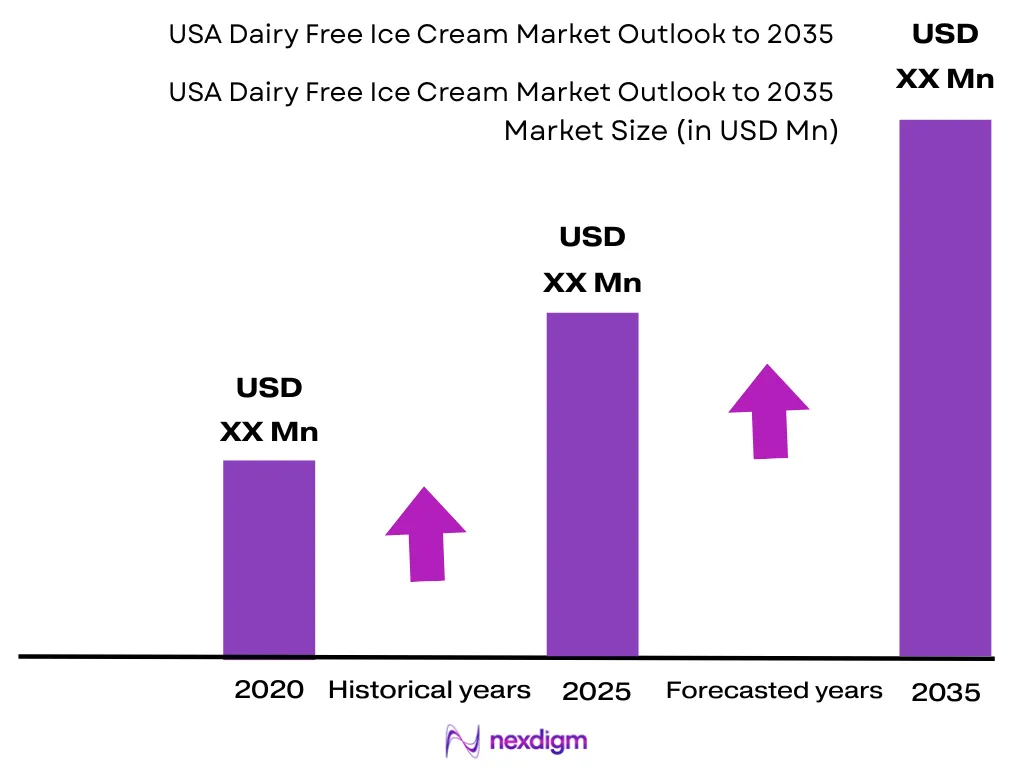
The USA Dairy Free Ice Cream Market was valued at approximately USD ~ Million in 2024, driven by the rapid expansion of plant-based food consumption and increasing demand for lactose-free frozen desserts. According to the United States Census Bureau, the U.S. population increased from 334.9 million to 340.1 million, while the U.S. Bureau of Economic Analysis reported personal consumption expenditures on food and beverages continued to rise alongside disposable personal income exceeding USD 21 trillion. The market is supported by growing vegan and flexitarian populations, higher consumer spending on premium food categories, and increased availability of dairy-free ice cream products across retail and foodservice channels. Product innovation utilizing oat, almond, coconut, and pea-protein bases has further accelerated consumer adoption and category expansion.
Market Segmentation
By Base Ingredient Type
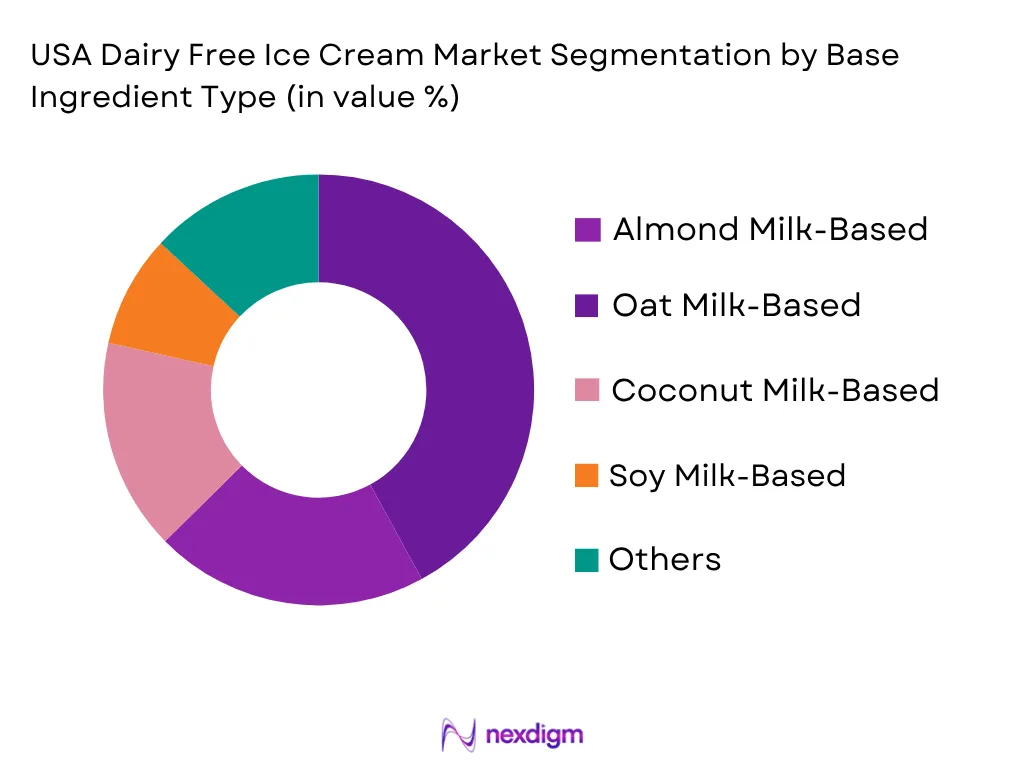
The USA Dairy Free Ice Cream Market is segmented into almond milk-based, oat milk-based, coconut milk-based, soy milk-based, cashew milk-based, pea protein-based, and mixed plant-based formulations. Almond milk-based ice cream currently holds the dominant market share due to its widespread consumer familiarity and established presence within the broader plant-based beverage category. Consumers often perceive almond-based products as healthier alternatives because of their low-calorie profile and clean-label appeal. Major brands such as Ben & Jerry’s, So Delicious, Talenti, and Häagen-Dazs have incorporated almond-based formulations into their dairy-free product lines, improving product visibility and consumer acceptance. Almond milk also provides a neutral flavor profile that complements a wide range of premium flavors, making it highly suitable for frozen desserts. The extensive availability of almond-based products across supermarkets, specialty retailers, and foodservice outlets has further strengthened its market leadership position.
By Distribution Channel
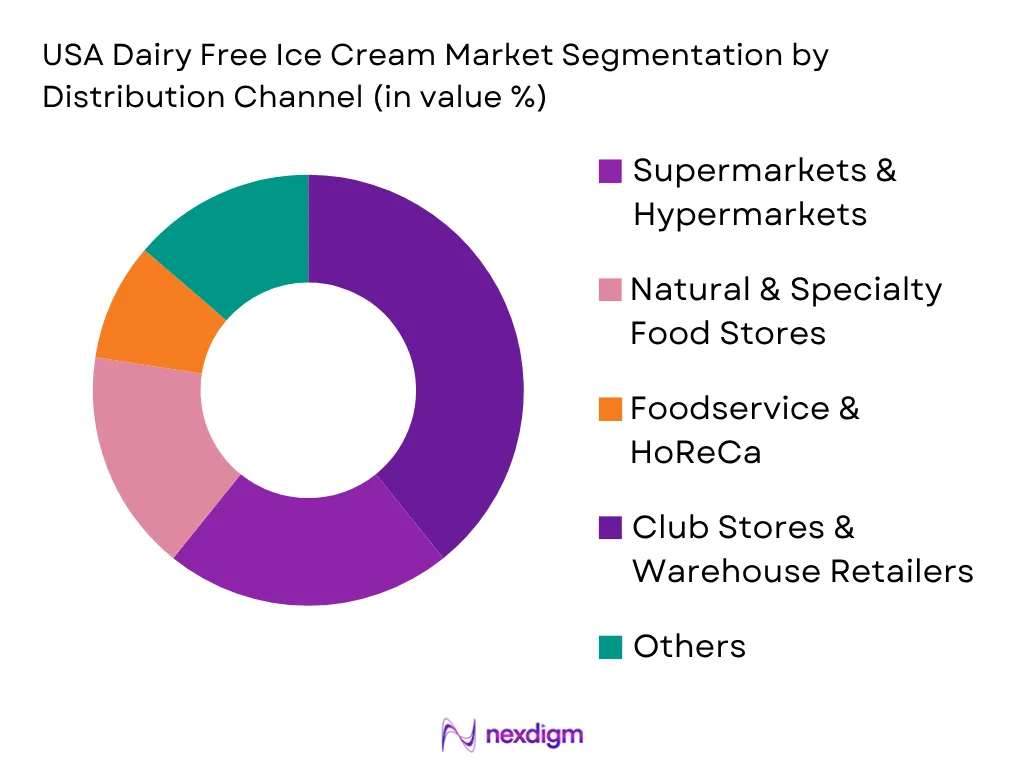
The USA Dairy Free Ice Cream Market is segmented into supermarkets & hypermarkets, natural & specialty food stores, club stores & warehouse retailers, convenience stores, online retail & direct-to-consumer channels, foodservice establishments, and dessert chains. Supermarkets and hypermarkets dominate the market because they provide consumers with extensive product variety, competitive pricing, and convenient access to both premium and mass-market dairy-free brands. Large retailers such as Walmart, Kroger, Target, Albertsons, and Whole Foods Market have significantly expanded shelf space dedicated to plant-based frozen desserts. The ability to compare multiple brands and flavors in one location encourages trial purchases and repeat consumption. Retailers also support category growth through promotional campaigns, loyalty programs, and private-label offerings. The presence of advanced cold-chain infrastructure and nationwide store networks ensures broad availability, making supermarkets the preferred purchasing channel for dairy-free ice cream consumers across the United States.
Competitive Landscape
The USA Dairy Free Ice Cream Market is characterized by strong competition among plant-based food specialists, premium ice cream manufacturers, and multinational consumer packaged goods companies. Competition is centered on ingredient innovation, flavor diversification, clean-label formulations, vegan certifications, sustainability initiatives, and distribution expansion. The market remains moderately consolidated, with a mix of established global brands and emerging plant-based innovators competing for consumer attention through product differentiation and premium positioning.
| Company | Establishment Year | Headquarters | Plant-Based Base Portfolio | Dairy-Free SKU Count | Distribution Reach | Premium Product Portfolio | Vegan Certification | Packaging Sustainability |
| Ben & Jerry’s | 1978 | ~ | ~ | ~ | ~ | ~ | ~ | ~ |
| So Delicious Dairy Free | 1987 | ~ | ~ | ~ | ~ | ~ | ~ | ~ |
| Oatly | 1994 | ~ | ~ | ~ | ~ | ~ | ~ | ~ |
| NadaMoo! | 2004 | ~ | ~ | ~ | ~ | ~ | ~ | ~ |
| Van Leeuwen Ice Cream | 2008 | ~ | ~ | ~ | ~ | ~ | ~ | ~ |
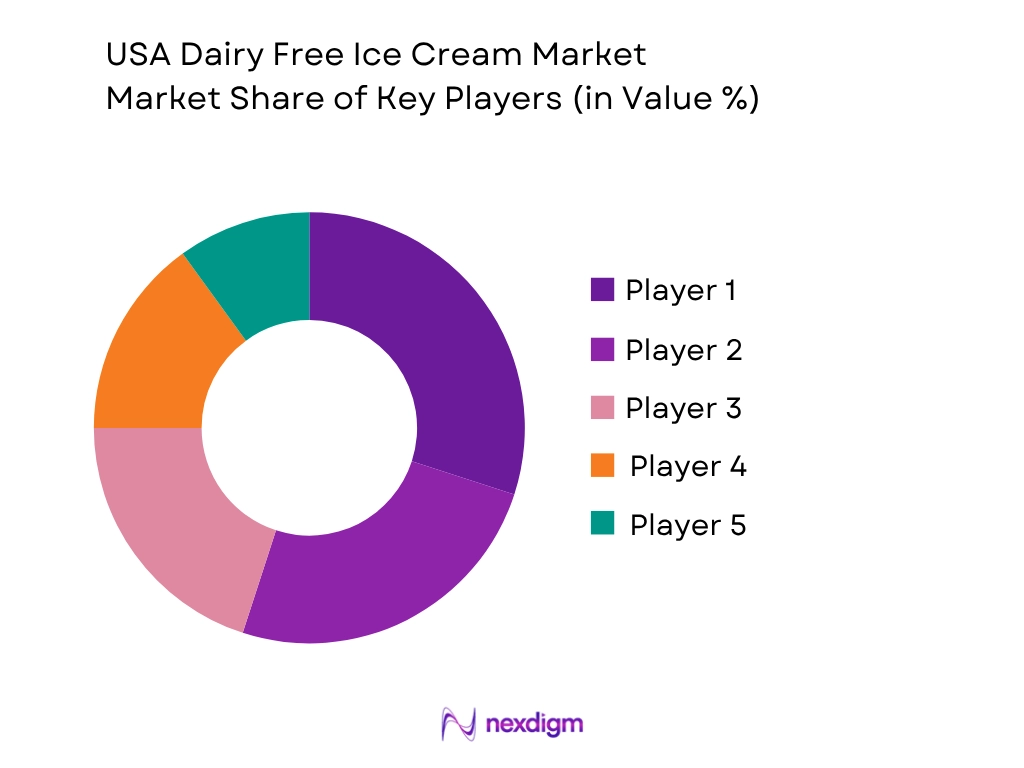
USA Dairy Free Ice Cream Market Analysis
Growth Drivers
Rising Health & Wellness Spending and Expanding Lactose-Free Consumer Base
The USA Dairy Free Ice Cream Market is benefiting from increasing health-conscious consumption patterns and strong household purchasing power. U.S. personal consumption expenditures reached USD 20.27 trillion in 2024, while disposable personal income exceeded USD 21.7 trillion, reflecting substantial consumer spending capacity for premium food products. The U.S. population reached 340.1 million people, creating a large addressable consumer base for dairy-free frozen desserts. Additionally, approximately 36 million Americans have diabetes, while lactose malabsorption affects approximately 68% of the global population, encouraging demand for lactose-free alternatives. Furthermore, U.S. GDP reached USD 29.18 trillion in 2024, supporting premium food category growth. As consumers increasingly prioritize digestive health, clean-label ingredients, and plant-based diets, manufacturers continue expanding dairy-free ice cream portfolios based on almond, oat, coconut, and pea protein formulations. Strong consumer purchasing power, growing awareness of dietary sensitivities, increasing spending on wellness-focused products, and expanding availability across retail and foodservice channels continue to strengthen demand for dairy-free frozen desserts throughout the United States.
Expansion of Plant-Based Food Ecosystem and Modern Retail Infrastructure
The growth of the USA Dairy Free Ice Cream Market is strongly linked to the expansion of the broader plant-based food ecosystem and the country’s advanced retail infrastructure. The United States recorded nominal GDP of USD 29.18 trillion in 2024, while GDP per capita exceeded USD 86,600, supporting consumer spending on premium and specialty food categories. Retail and food services sales exceeded USD 8.6 trillion, highlighting the scale of the country’s distribution ecosystem. The United States also maintains more than 63,000 supermarkets and grocery stores, facilitating broad availability of dairy-free products. Large retailers including Walmart, Kroger, Costco, Whole Foods Market, and Target have expanded plant-based product assortments and freezer allocations. Additionally, internet penetration exceeds 311 million users, supporting e-commerce growth for frozen food products. The combination of extensive retail networks, strong digital commerce infrastructure, increasing urban consumer density, higher disposable incomes, and growing consumer preference for plant-based foods continues to drive dairy-free ice cream consumption across both metropolitan and suburban markets.
Market Challenges
Dependence on Specialized Agricultural Inputs and Supply Chain Volatility
The USA Dairy Free Ice Cream Market faces challenges due to reliance on specialized agricultural commodities such as almonds, oats, coconuts, cocoa, and pea proteins. California accounts for approximately 80% of global almond production and produces more than 2.4 billion pounds of almonds annually, creating concentration risks within ingredient sourcing. Furthermore, the United States experienced 27 separate billion-dollar weather and climate disasters during 2024, affecting agricultural productivity and supply chain stability. Imports of food and agricultural products exceeded USD 213 billion, indicating continued reliance on imported ingredients including coconut-derived inputs used in dairy-free formulations. Supply chain disruptions can affect ingredient availability, production planning, inventory management, and formulation consistency. Since dairy-free ice cream products require carefully balanced ingredient combinations to replicate traditional dairy texture and taste, fluctuations in ingredient supply can create operational difficulties. Manufacturers must continuously manage procurement risks, inventory levels, and sourcing diversification strategies while maintaining consistent product quality and nationwide product availability.
Intense Competition within the Premium Frozen Dessert Category
The market faces substantial competitive pressure due to the crowded premium frozen dessert landscape. There are more than 44,000 food manufacturing establishments operating across the United States, contributing to intense innovation and product proliferation. Additionally, food expenditures in the country exceed USD 2.6 trillion annually, attracting significant investment and competition across food and beverage categories. Dairy-free ice cream brands must compete not only against other plant-based offerings but also against traditional dairy ice cream, frozen yogurt, gelato, low-calorie desserts, and functional frozen products. Shelf-space competition in supermarkets continues to intensify as retailers expand private-label offerings and prioritize high-performing SKUs. Furthermore, consumers have access to an increasingly diverse range of frozen dessert options, making brand differentiation more difficult. Manufacturers are required to invest heavily in flavor innovation, product quality improvements, packaging differentiation, marketing campaigns, and distribution expansion to maintain visibility and consumer loyalty within the premium frozen dessert segment.
Market Opportunities
Growth of Functional and High-Protein Plant-Based Food Categories
The USA Dairy Free Ice Cream Market is well-positioned to benefit from the growing consumer interest in functional nutrition and high-protein food products. Healthcare expenditures in the United States exceeded USD 5 trillion in 2024, reflecting strong consumer focus on health and wellness. Domestic oat production exceeded 67 million bushels, supporting ingredient availability for plant-based food manufacturers. Additionally, investments in alternative proteins, plant-based ingredients, and nutritional innovation continue expanding throughout the food industry. Consumers increasingly seek products that deliver both indulgence and health benefits, creating opportunities for dairy-free ice cream formulations featuring added protein, probiotics, fiber, vitamins, and reduced-sugar content. The convergence of wellness-focused consumption and premium frozen dessert demand supports innovation across multiple product categories. Manufacturers that successfully combine nutritional functionality with taste, texture, and clean-label ingredients are positioned to capture growing consumer interest in health-oriented frozen dessert alternatives while expanding their presence in premium retail and specialty food channels.
Expansion Through E-Commerce and Premium Grocery Retail Channels
The continued development of digital commerce and premium grocery retail channels presents a significant opportunity for dairy-free ice cream brands. U.S. e-commerce sales exceeded USD 1.19 trillion in 2024, while total retail sales surpassed USD 8.6 trillion, demonstrating the scale of consumer purchasing activity. Internet usage reached approximately 311 million individuals, creating a large customer base for online grocery shopping and direct-to-consumer food purchasing. Additionally, the United States maintains a consumer population exceeding 340 million people and one of the world’s most developed cold-chain logistics networks. Premium grocery chains and natural food retailers continue expanding shelf space dedicated to plant-based frozen desserts, increasing category visibility and accessibility. Online grocery platforms, rapid delivery services, and subscription-based food models are enabling emerging dairy-free brands to reach consumers without relying exclusively on traditional retail distribution. The combination of advanced retail infrastructure, growing digital commerce adoption, premium product demand, and increasing consumer interest in plant-based lifestyles creates favorable conditions for continued market expansion.
Future Outlook
The USA Dairy Free Ice Cream Market is expected to witness sustained growth over the forecast period, driven by rising consumer adoption of plant-based diets, increasing awareness of lactose intolerance, and continued product innovation. Manufacturers are expected to focus on improving texture, nutritional profiles, and ingredient transparency while expanding flavor portfolios. Growth in premium grocery retailing, foodservice adoption, and e-commerce distribution is likely to strengthen market accessibility. Increasing investments in alternative proteins, clean-label ingredients, and sustainable packaging solutions are expected to support long-term category expansion. The market is projected to register a CAGR of ~% during 2026–2035.
Major Players
- Ben & Jerry’s
- So Delicious Dairy Free
- Oatly
- NadaMoo!
- Cado
- Eclipse Foods
- Planet Oat
- Van Leeuwen Ice Cream
- Jeni’s Splendid Ice Creams
- Breyers Non-Dairy
- Häagen-Dazs Non-Dairy
- Talenti Dairy-Free
- Cosmic Bliss
- Whole Foods 365 Plant-Based
- Trader Joe’s Private Label
Key Target Audience
- Dairy-Free Ice Cream Manufacturers
- Plant-Based Food & Beverage Companies
- Frozen Dessert Manufacturers
- Supermarket and Hypermarket Chains
- Foodservice and HoReCa Operators
- Alternative Protein Ingredient Suppliers
- Investments and Venture Capitalist Firms
- Government and Regulatory Bodies (U.S. Food and Drug Administration (FDA), United States Department of Agriculture (USDA), Federal Trade Commission (FTC))
Research Methodology
Step 1: Identification of Key Variables
The initial phase involves constructing a comprehensive ecosystem map covering manufacturers, ingredient suppliers, distributors, retailers, foodservice operators, and consumers participating in the USA Dairy Free Ice Cream Market. Extensive desk research is conducted using industry publications, government databases, trade associations, company reports, and proprietary sources to identify variables affecting demand, supply, pricing, innovation, and consumer preferences.
Step 2: Market Analysis and Construction
Historical industry data is compiled and analyzed to evaluate consumption patterns, retail penetration, product availability, and revenue generation. Demand-side and supply-side assessments are integrated to estimate market size and segment shares. Additional analysis is conducted on distribution channels, product formats, and ingredient trends to establish a comprehensive market framework.
Step 3: Hypothesis Validation and Expert Consultation
Market hypotheses are validated through structured consultations with manufacturers, distributors, retailers, foodservice operators, and ingredient suppliers. These discussions provide operational insights regarding production capabilities, product innovation, pricing strategies, distribution dynamics, and consumer behavior. Expert feedback is incorporated to refine assumptions and improve analytical accuracy.
Step 4: Research Synthesis and Final Output
The final stage involves synthesizing findings from primary and secondary research into a validated market assessment. Bottom-up and top-down methodologies are reconciled through data triangulation to ensure consistency. The resulting output includes market sizing, segmentation analysis, competitive benchmarking, growth opportunities, future forecasts, and strategic recommendations for industry stakeholders.

- Executive Summary
- Research Methodology (Market Definitions and Assumptions, Abbreviations, Market Sizing Approach, Top-Down Analysis, Bottom-Up Analysis, Demand-Side Assessment, Supply-Side Assessment, Retail Audit Analysis, Consumer Panel Assessment, Primary Industry Interviews, Data Triangulation, Forecasting Framework, Limitations and Future Conclusions)

- Definition and Scope
- Market Evolution and Industry Genesis
- Timeline of Major Industry Developments
- Dairy-Free Frozen Dessert Ecosystem
- Industry Value Chain Analysis

- Growth Drivers (Rising Lactose Intolerance Prevalence, Expanding Vegan and Flexitarian Population, Growth of Plant-Based Food Industry, Premium Frozen Dessert Demand, Expansion of Modern Retail Channels, Increasing Health & Wellness Spending)
- Market Challenges (Premium Product Pricing, Volatility in Plant-Based Ingredient Supply, Texture and Taste Replication Challenges, Intense Brand Competition, Frozen Logistics Complexity, Regulatory Labeling Compliance)
- Market Opportunities (Functional Dairy-Free Ice Cream Development, High-Protein Plant-Based Formulations, Clean Label Product Expansion, Foodservice Penetration, E-Commerce Growth, Private Label Expansion)
- Market Trends (Oat Milk Innovation, Almond-Based Premium Products, Clean Label Formulations, Low-Sugar Dairy-Free Desserts, Sustainable Packaging Adoption, Protein-Enriched Frozen Desserts, Indulgent Plant-Based Flavors)
- Government Regulations (FDA Food Labeling Requirements, Nutrition Facts Compliance, Allergen Disclosure Requirements, Organic Certification Standards, Non-GMO Labeling Guidelines, Packaging Sustainability Regulations)
- Raw Material Analysis (Almond Supply Trends, Oat Ingredient Availability, Coconut Ingredient Procurement, Pea Protein Adoption, Natural Sweetener Utilization, Cocoa and Flavoring Trends)
- Consumer Preference Mapping (Taste Preference, Texture Acceptance, Ingredient Transparency, Functional Benefits, Sustainability Expectations)
- Supply-Demand Gap Assessment
- SWOT Analysis
- Porter’s Five Forces Analysis
- PESTLE Analysis

- By Market Value (2020-2025)
- By Volume Consumption (2020-2025)
- By Average Selling Price (2020-2025)

- By Base Ingredient Type (In Value %)
Almond Milk-Based Ice Cream
Oat Milk-Based Ice Cream
Coconut Milk-Based Ice Cream
Soy Milk-Based Ice Cream
Cashew Milk-Based Ice Cream
Pea Protein-Based Ice Cream
Mixed Plant-Based Formulations
Other Alternative Bases - By Flavor Type (In Value %)
Chocolate
Vanilla
Fruit-Based Flavors
Cookies & Cream
Caramel and Nut-Based Flavors
Coffee and Mocha Flavors
Premium Gourmet Flavors
Seasonal and Limited-Edition Flavors - By Distribution Channel (In Value %)
Supermarkets and Hypermarkets
Natural and Specialty Food Stores
Club Stores and Warehouse Retailers
Convenience Stores
Online Retail and Direct-to-Consumer
Foodservice and HoReCa
Ice Cream Parlors and Dessert Chains - By Region (In Value %)
Northeast USA
Midwest USA
South USA
West USA - By Packaging Type (In Value %)
Paperboard Tubs
Plastic Tubs
Cups and Mini Portions
Multipack Formats
Stick and Bar Packaging
Sustainable and Recyclable Packaging

- Market Share of Major Players (By Value, Volume, Product Format, Distribution Channel, Plant-Based Base Type)
- Market Concentration Analysis (Top Brands Revenue Contribution, Private Label Penetration, Regional Brand Presence, Premium Brand Dominance)
- Cross Comparison Parameters (Plant-Based Base Portfolio, Dairy-Free SKU Count, Production Capacity, Distribution Network Reach, Vegan Certification Portfolio, Innovation & New Product Launch Frequency, Premium Product Penetration, Sustainable Packaging Adoption)
- SWOT Analysis of Major Players
- Pricing Analysis by SKU, Pack Size and Product Category
- Detailed Profiles of Major Companies
Ben & Jerry’s
So Delicious Dairy Free
Oatly
NadaMoo!
Cado
Eclipse Foods
Planet Oat
Jeni’s Splendid Ice Creams
Van Leeuwen Ice Cream
Breyers Non-Dairy
Häagen-Dazs Non-Dairy
Trader Joe’s Private Label
Whole Foods 365 Plant-Based
Cosmic Bliss
Talenti Dairy-Free

- Consumption Behavior Assessment (Purchase Frequency, Consumption Occasions, Household Penetration, Repeat Purchase Rate, Seasonal Consumption Patterns)
- Demographic Consumption Trends (Age Group, Income Segment, Household Composition, Urban-Rural Split, Ethnic Consumption Patterns)
- Purchasing Power Analysis (Disposable Income, Premium Product Affordability, Health Food Spending, Frozen Dessert Expenditure)
- Premium vs Mass Market Demand Analysis (Willingness to Pay, Premium Brand Adoption, Trading-Up Behavior, Value Perception)
- Brand Loyalty Assessment (Repeat Purchases, Brand Switching Behavior, Consumer Retention Drivers, Trial Conversion Rates)

- By Market Value (2026-2035)
- By Volume Consumption (2026-2035)
- By Average Selling Price (2026-2035)


 Request a Sample
 Ask for Customization
 Get a Quote
 Enquire Now