
 Download PDF
Market Overview
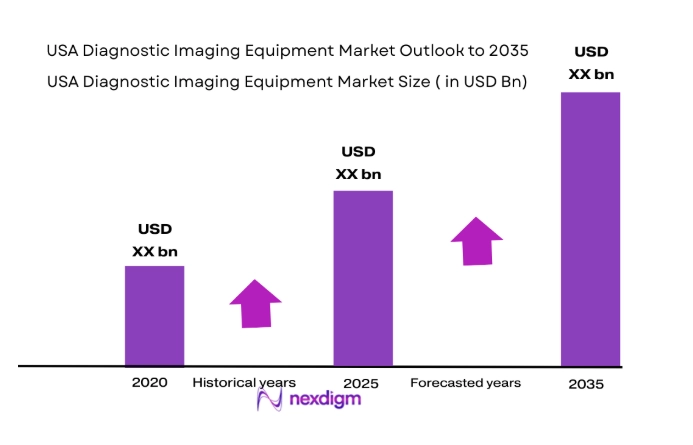
The USA diagnostic imaging equipment market is valued at approximately USD ~ billion, driven by increased demand for advanced imaging technologies in healthcare facilities. Growth is fueled by rising healthcare expenditure, technological advancements, and the growing prevalence of chronic diseases such as cancer and cardiovascular conditions. Furthermore, the adoption of minimally invasive procedures that require precise imaging has significantly contributed to market growth. This market is supported by government initiatives aimed at enhancing healthcare infrastructure and the increasing application of AI-driven diagnostic tools.
The dominant markets in the USA for diagnostic imaging equipment include major metropolitan areas such as New York, Los Angeles, and Chicago. These regions are characterized by well-established healthcare infrastructure, a high concentration of hospitals and diagnostic centers, and advanced technological adoption. Furthermore, these cities attract significant healthcare investments, including medical tourism, which drives demand for high-quality imaging equipment. The growing focus on digital health and integrated care models in these areas further supports the demand for advanced diagnostic imaging technologies.
Market Segmentation
By Product Type
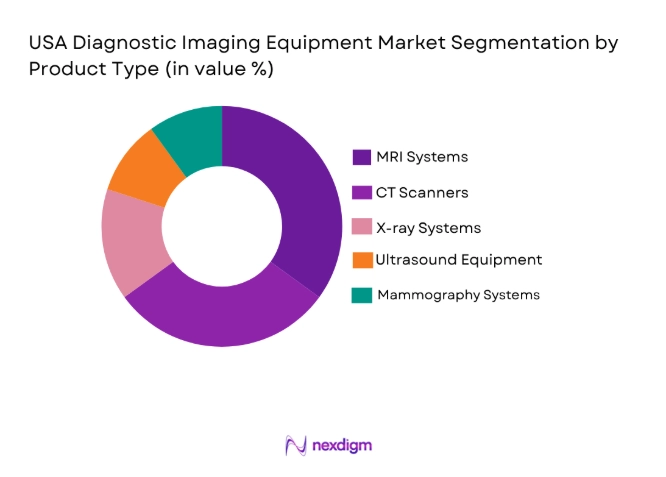
The USA diagnostic imaging equipment market is segmented by product type into MRI systems, CT scanners, X-ray systems, ultrasound equipment, and mammography systems. Recently, MRI systems have gained dominant market share due to the increasing demand for high-resolution imaging in diagnosing complex conditions like neurological disorders and cancers. The growth of MRI systems is further supported by the advancements in MRI technology, such as high-field MRI machines and functional imaging techniques, which offer better diagnostic capabilities.
By Platform Type
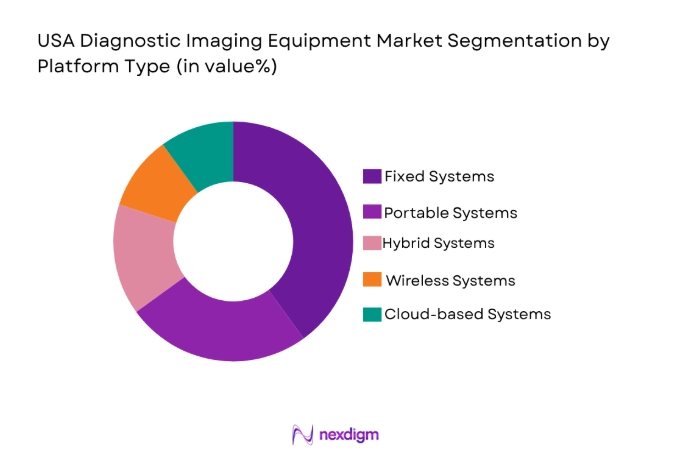
The USA diagnostic imaging equipment market is segmented by platform type into fixed systems, portable systems, hybrid systems, wireless systems, and cloud-based systems. Fixed systems dominate the market share due to their reliability, high resolution, and the ability to handle high patient volumes, making them a staple in hospitals and diagnostic centers. These systems benefit from technological advancements that improve imaging quality and workflow efficiency, further solidifying their position as the market leader.
Competitive Landscape
The USA diagnostic imaging equipment market is highly competitive, with leading companies constantly innovating to maintain their market position. Major players focus on strategic acquisitions, technological advancements, and partnerships with healthcare providers. Companies are increasingly investing in AI and machine learning to enhance diagnostic accuracy and improve patient outcomes. Additionally, regulatory compliance and post-sale support play critical roles in maintaining competitiveness.
| Company Name | Establishment Year | Headquarters | Technology Focus | Market Reach | Key Products | Revenue | Additional Parameter (R&D Focus) |
| GE Healthcare | 1892 | Chicago, USA | ~ | ~ | ~ | ~ | ~ |
| Siemens Healthineers | 1847 | Erlangen, Germany | ~ | ~ | ~ | ~ | ~ |
| Philips Healthcare | 1891 | Amsterdam, Netherlands | ~ | ~ | ~ | ~ | ~ |
| Canon Medical Systems | 1933 | Tokyo, Japan | ~ | ~ | ~ | ~ | ~ |
| Hitachi Healthcare | 1910 | Tokyo, Japan | ~ | ~ | ~ | ~ | ~ |
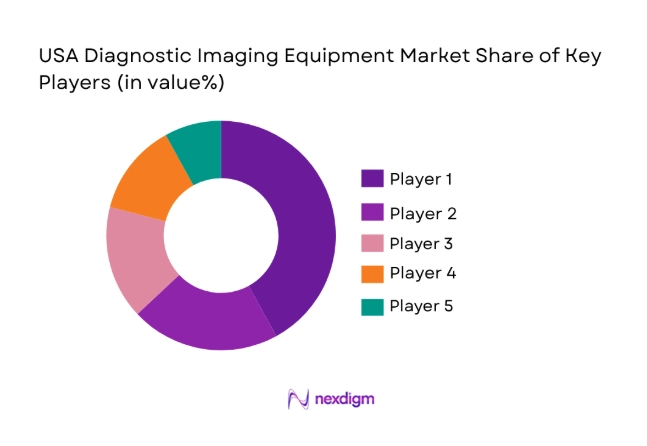
USA Diagnostic Imaging Equipment Market Analysis
Growth Drivers
Government Funding in Healthcare
Increased government funding in healthcare initiatives has played a pivotal role in the rapid adoption of advanced diagnostic imaging technologies in the USA. Government-run healthcare facilities have direct access to various grants and funding programs that help offset the high initial costs of acquiring advanced imaging systems, such as MRI and CT scanners. These government-driven initiatives also focus on building telemedicine networks, which integrate diagnostic imaging, making healthcare more accessible, especially in rural and underserved areas. As part of broader healthcare reforms, these efforts have expanded the reach of diagnostic tools, enabling healthcare providers to offer high-quality care. The funding has also spurred the integration of AI and machine learning in diagnostic imaging systems, facilitating more accurate and timely diagnoses. With this continued support, healthcare providers are better equipped to handle the increasing demand for diagnostic services, and the market for advanced imaging technologies is projected to grow further. As healthcare budgets continue to increase, the demand for efficient and cost-effective diagnostic systems will grow, further driving the adoption of advanced imaging technologies across the country.
Technological Advancements in Imaging Systems
Continuous innovations in imaging technologies, such as the development of higher-resolution MRI machines and AI-assisted diagnostic tools, have significantly contributed to the growth of the diagnostic imaging equipment market in the USA. These technological advancements improve diagnostic accuracy and enable earlier detection of a wide range of complex medical conditions, from neurological disorders to cardiovascular diseases. Additionally, the increasing sophistication of imaging systems allows healthcare providers to offer more precise and comprehensive diagnostics, which is a critical factor in improving patient outcomes. As imaging technologies become more advanced, they also become more accessible to a broader range of healthcare providers, from large hospitals to smaller clinics and diagnostic centers. This broad adoption of advanced diagnostic equipment is essential for meeting the growing healthcare demands of the population, particularly in urban areas where patient volumes are high. Furthermore, the rise in portable imaging systems, such as handheld ultrasound devices and mobile MRI units, has supported market growth by providing healthcare providers with greater flexibility and accessibility in delivering diagnostic services. The trend towards portable imaging solutions is expected to continue, as these technologies enable providers to meet patient needs more efficiently while lowering costs associated with large, stationary equipment.
Market Challenges
High Initial Costs of Advanced Imaging Systems
The high initial costs associated with the purchase and maintenance of advanced diagnostic imaging systems represent a significant barrier for healthcare providers, particularly in smaller or rural healthcare facilities. Systems such as high-resolution MRI, CT scanners, and advanced ultrasound machines require substantial capital investment, which may not be feasible for all healthcare providers, especially those with limited budgets. These initial costs include not only the price of the equipment but also the infrastructure needed for installation and setup. Furthermore, the ongoing operational costs, such as maintenance, software updates, and specialized training for staff, can significantly increase the financial burden on healthcare organizations. In some cases, these high costs have led to delays in the adoption of new imaging technologies, particularly in markets where healthcare budgets are more constrained. As a result, healthcare providers may face challenges in offering the latest diagnostic capabilities to their patients, which could affect the quality of care they deliver. This financial strain is especially problematic for smaller clinics, community hospitals, and rural healthcare facilities, where budget constraints are more pronounced, limiting their ability to invest in cutting-edge imaging technologies.
Regulatory Hurdles in New Product Approvals
The regulatory approval process for new diagnostic imaging equipment in the USA is complex, time-consuming, and costly. Medical imaging devices must undergo rigorous testing and certification procedures to ensure that they meet safety and quality standards set by regulatory bodies such as the FDA. This often involves extensive clinical trials, documentation, and review processes, which can delay the entry of new technologies into the market. The approval process is further complicated by varying state and federal regulations, as each state may have its own set of requirements for medical device approval and use. For imaging equipment manufacturers, this means navigating a complex landscape of regulations, which can be both time-consuming and costly. As a result, healthcare providers may face delays in accessing the latest diagnostic technologies, which can hinder their ability to deliver high-quality care. This regulatory challenge is particularly problematic for small and mid-sized manufacturers who may lack the resources to comply with complex approval procedures. Consequently, the pace of innovation in the diagnostic imaging market can be slowed, limiting the availability of the newest diagnostic tools and technologies for healthcare providers.
Opportunities
Expansion of AI Integration in Diagnostic Imaging
The increasing adoption of AI and machine learning in diagnostic imaging presents a significant opportunity for market growth. AI-powered imaging systems have the potential to revolutionize the way healthcare providers analyze medical images, offering enhanced accuracy, faster diagnostics, and improved patient outcomes. These systems can assist radiologists and clinicians by providing automated image analysis, which helps in detecting abnormalities, such as tumors or cardiovascular issues, more quickly and accurately. Additionally, AI-driven solutions have the ability to learn and improve over time, continuously enhancing diagnostic performance and enabling healthcare providers to make more informed decisions. As healthcare providers increasingly rely on AI to assist in decision-making, the demand for these technologies is expected to grow. AI’s ability to automate repetitive tasks, such as image analysis and interpretation, not only improves efficiency but also reduces the workload on healthcare professionals, allowing them to focus on more complex cases. As AI-driven diagnostic imaging systems continue to evolve and improve, the demand for these technologies is expected to rise across both large hospitals and smaller clinics. Furthermore, AI’s integration into diagnostic systems is helping reduce the cost of medical imaging, making these systems more affordable and accessible to a broader range of healthcare providers. As a result, this trend is creating opportunities for both new entrants and established players to capitalize on the growing need for AI-enhanced diagnostic systems.
Increase in Home Healthcare Solutions
The rise in home healthcare services presents an emerging market opportunity for portable diagnostic imaging systems. With more patients opting for home healthcare due to convenience, affordability, and a desire to avoid hospital visits, the demand for mobile imaging solutions, such as portable ultrasound and X-ray machines, is increasing. These portable imaging systems enable healthcare providers to perform diagnostic tests at home, improving patient access to essential healthcare services while reducing the need for hospital visits. The convenience of performing diagnostic imaging at home not only benefits patients by offering greater flexibility but also helps alleviate pressure on healthcare facilities, particularly as hospitals face increasing patient volumes. Furthermore, these portable systems are highly cost-effective, making them a valuable option for patients who may not have the financial resources to access traditional diagnostic imaging services in hospitals or clinics. As the demand for home healthcare services continues to grow, healthcare providers are increasingly investing in portable diagnostic technologies, fueling the market’s growth. These systems offer healthcare providers the ability to extend their services to a broader patient base, enabling them to deliver high-quality diagnostic care in a more efficient and patient-friendly manner. The increasing shift towards home healthcare is expected to drive further innovation in portable diagnostic technologies, creating opportunities for manufacturers to develop new, cutting-edge solutions that cater to this growing market.
Future Outlook
The USA diagnostic imaging equipment market is poised for continued growth over the next five years, driven by advancements in technology, increased healthcare investment, and the growing demand for early and accurate diagnostics. Technological developments, such as AI-powered imaging systems and portable diagnostic devices, are expected to lead to more efficient healthcare delivery. Regulatory support will continue to play a key role in fostering the adoption of innovative technologies. Demand-side factors such as aging populations and the increasing prevalence of chronic diseases will drive the need for more sophisticated imaging solutions in both hospital and home healthcare settings.
Major Players
- GE Healthcare
- Siemens Healthineers
- Philips Healthcare
- Canon Medical Systems
- Hitachi Healthcare
- Toshiba Medical Systems
- Fujifilm
- Mindray
- Samsung Medison
- Carestream Health
- Varian Medical Systems
- Agfa-Gevaert Group
- Accuray
- Esaote
- Neusoft Medical Systems
Key Target Audience
- Investments and venture capitalist firms
- Government and regulatory bodies
- Manufacturing companies
- Hospitals and healthcare providers
- Diagnostic centers
- Medical equipment distributors
- Private healthcare firms
Research Methodology
Step 1: Identification of Key Variables
Key variables such as market size, growth rate, and technological trends were identified through secondary research and expert consultations.
Step 2: Market Analysis and Construction
Data was collected through market research reports, industry publications, and interviews with key stakeholders to construct a detailed market overview.
Step 3: Hypothesis Validation and Expert Consultation
The hypotheses formed based on initial findings were validated through consultations with industry experts, ensuring accuracy and relevance.
Step 4: Research Synthesis and Final Output
All gathered data was synthesized to form a comprehensive and actionable market report, focusing on growth drivers, challenges, and key opportunities.

- Executive Summary
- Research Methodology (Definitions, Scope, Industry Assumptions, Market Sizing Approach, Primary & Secondary Research Framework, Data Collection & Verification Protocol, Analytic Models & Forecast Methodology, Limitations & Research Validity Checks)

- Market Definition and Scope
- Value Chain & Stakeholder Ecosystem
- Regulatory / Certification Landscape
- Sector Dynamics Affecting Demand
- Strategic Initiatives & Infrastructure Growth

- Growth Drivers
Increasing Healthcare Expenditure
Technological Advancements in Imaging
Rising Prevalence of Chronic Diseases - Market Challenges
High Initial Investment Costs
Regulatory Barriers
Limited Access in Rural Areas - Market Opportunities
Integration of AI in Imaging Systems
Growth of Home Healthcare Diagnostics
Expansion in Emerging Markets - Trends
Adoption of AI and Machine Learning in Diagnostics
Increased Use of Portable and Mobile Diagnostic Systems - Government Regulations
- SWOT Analysis
- Porter’s Five Forces

- By Market Value, 2020-2025
- By Installed Units, 2020-2025
- By Average System Price, 2020-2025
- By System Complexity Tier, 2020-2025

- By System Type (In Value%)
MRI Systems
CT Scanners
X-ray Systems
Ultrasound Equipment
Mammography Systems - By Platform Type (In Value%)
Fixed Systems
Portable Systems
Hybrid Systems
Wireless Systems
Cloud-based Systems - By Fitment Type (In Value%)
On-premise Solutions
Cloud-based Solutions
Integrated Solutions
Mobile Solutions - By End User Segment (In Value%)
Hospitals
Diagnostic Centers
Ambulatory Surgical Centers

- Market Share Analysis
- Cross Comparison Parameters (System Type, Platform Type, End User Segment, Fitment Type, Technology Integration, Pricing Model, Regulatory Compliance)
- SWOT Analysis of Key Competitors
- Pricing & Procurement Analysis
- Key Players
GE Healthcare
Siemens Healthineers
Philips Healthcare
Canon Medical Systems
Mindray
Hitachi Healthcare
Samsung Medison
Fujifilm
Carestream Health
Toshiba Medical Systems
Hologic
Esaote
Zonare Medical Systems
Neusoft Medical
Accuray

- Hospitals Expanding Diagnostic Offerings
- Diagnostic Centers Focusing on Advanced Imaging Solutions
- Ambulatory Centers Investing in Portable Systems
- Increased Demand from Rural Healthcare Facilities

- Forecast Market Value, 2026-2035
- Forecast Installed Units, 2026-2035
- Price Forecast by System Tier, 2026-2035
- Future Demand by Platform, 2026-2035


 Request a Sample
 Ask for Customization
 Get a Quote
 Enquire Now